
How to Write a Basic Disaster Response Plan
How to Write a Basic Disaster Response Plan Michele Stricker Library Development Bureau New Jersey State Library
Heritage Health Index www. heritagepreservation. org n A Public Trust at Risk: The Heritage Health Index Report on the State of America's Collections n A Public Trust at Risk summarizes the findings of the Heritage Health Index survey, which gathered collections data from over 3, 300 archives, libraries, historical societies, museums, archaeological repositories, and scientific research organizations.
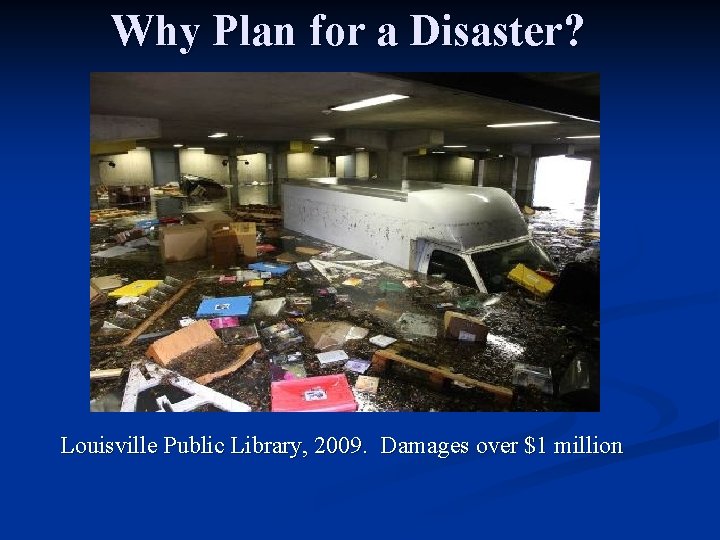
Why Plan for a Disaster? Louisville Public Library, 2009. Damages over $1 million
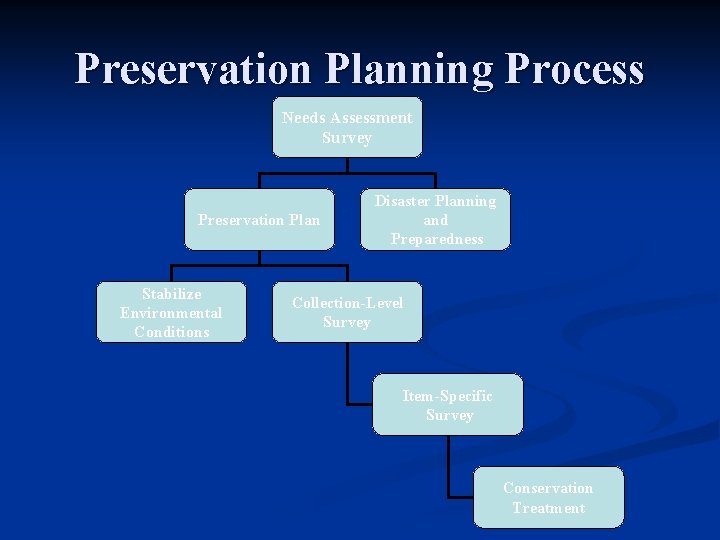
Preservation Planning Process Needs Assessment Survey Preservation Plan Stabilize Environmental Conditions Disaster Planning and Preparedness Collection-Level Survey Item-Specific Survey Conservation Treatment
Traits of a Good Disaster Plan Organized, Clear, Concise n Practical, Easy to Use n Adapted to Your Institution n Distributed & Reviewed with Staff n Updated Annually with Staff Retraining n

Components of Disaster Planning Internal & External Survey of the Building n Implementation of Preventative Measures n Survey of Staff Practices n Evaluation & Prioritization of Collections n
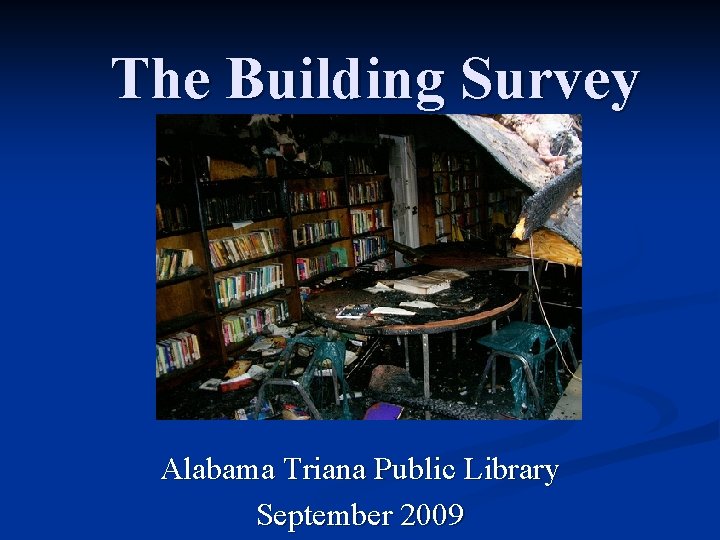
The Building Survey Alabama Triana Public Library September 2009
Implementation of Preventive Measures
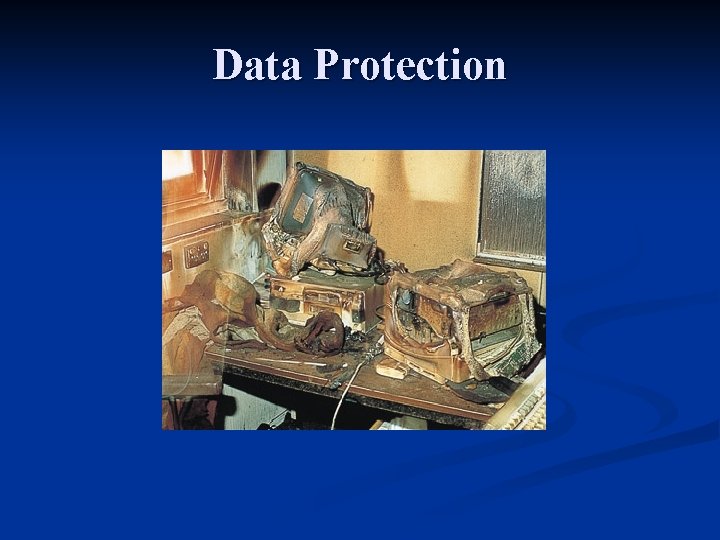
Data Protection
Survey of Staff Practices
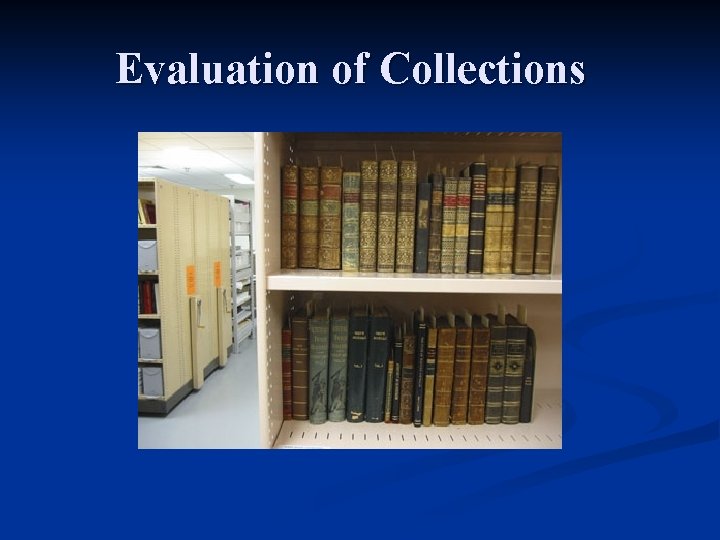
Evaluation of Collections
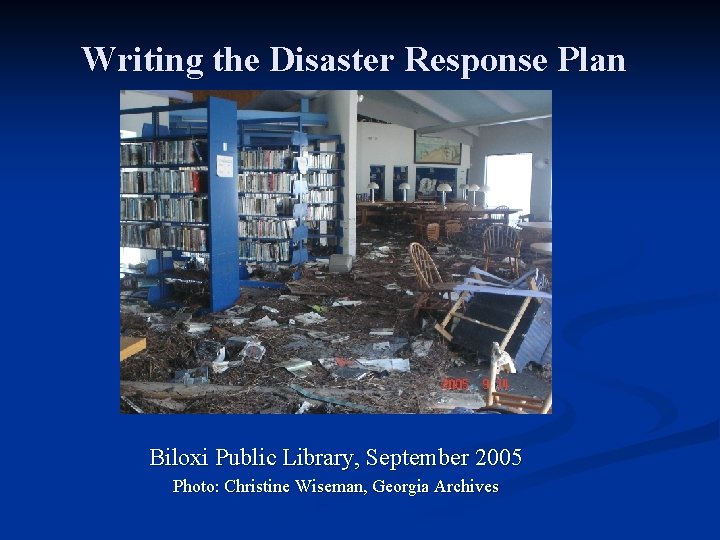
Writing the Disaster Response Plan Biloxi Public Library, September 2005 Photo: Christine Wiseman, Georgia Archives
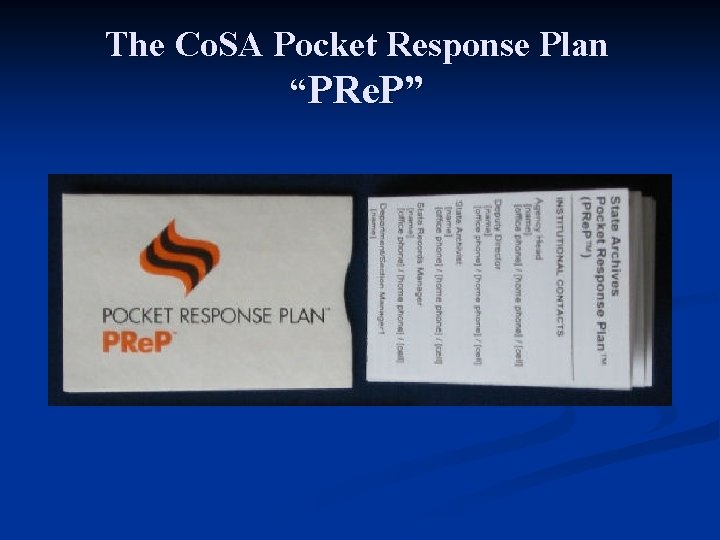
The Co. SA Pocket Response Plan “PRe. P”
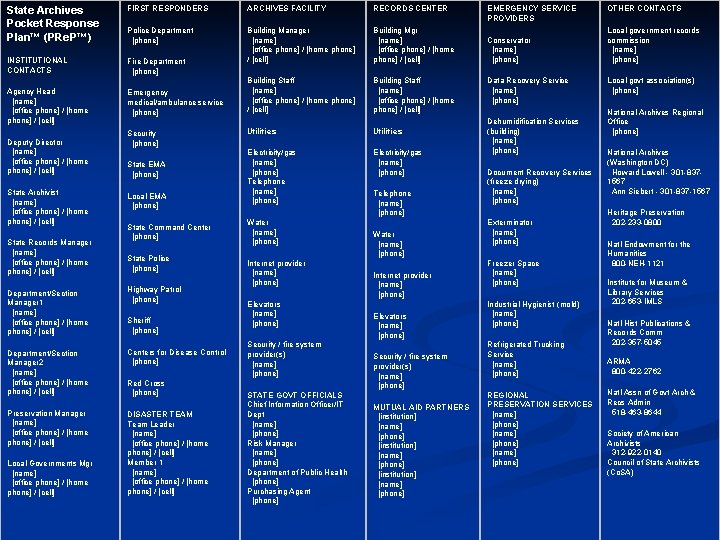
State Archives Pocket Response Plan™ (PRe. P™) FIRST RESPONDERS ARCHIVES FACILITY RECORDS CENTER Police Department [phone] INSTITUTIONAL CONTACTS Fire Department [phone] Building Manager [name] [office phone] / [home phone] / [cell] Building Mgr [name] [office phone] / [home phone] / [cell] Agency Head [name] [office phone] / [home phone] / [cell] Emergency medical/ambulance service [phone] Building Staff [name] [office phone] / [home phone] / [cell] Deputy Director [name] [office phone] / [home phone] / [cell] State Archivist [name] [office phone] / [home phone] / [cell] State Records Manager [name] [office phone] / [home phone] / [cell] Security [phone] State EMA [phone] Local EMA [phone] State Command Center [phone] State Police [phone] Department/Section Manager 1 [name] [office phone] / [home phone] / [cell] Highway Patrol [phone] Department/Section Manager 2 [name] [office phone] / [home phone] / [cell] Centers for Disease Control [phone] Preservation Manager [name] [office phone] / [home phone] / [cell] DISASTER TEAM Team Leader [name] [office phone] / [home phone] / [cell] Member 1 [name] [office phone] / [home phone] / [cell] Local Governments Mgr [name] [office phone] / [home phone] / [cell] Sheriff [phone] Red Cross [phone] Utilities Electricity/gas [name] [phone] Telephone [name] [phone] Electricity/gas [name] [phone] Water [name] [phone] Internet provider [name] [phone] Elevators [name] [phone] Security / fire system provider(s) [name] [phone] STATE GOVT OFFICIALS Chief Information Officer/IT Dept [name] [phone] Risk Manager [name] [phone] Department of Public Health [phone] Purchasing Agent [phone] Telephone [name] [phone] Water [name] [phone] Internet provider [name] [phone] Elevators [name] [phone] Security / fire system provider(s) [name] [phone] MUTUAL AID PARTNERS [institution] [name] [phone] EMERGENCY SERVICE PROVIDERS Conservator [name] [phone] Data Recovery Service [name] [phone] Dehumidification Services (building) [name] [phone] Document Recovery Services (freeze drying) [name] [phone] Exterminator [name] [phone] Freezer Space [name] [phone] Industrial Hygienist (mold) [name] [phone] Refrigerated Trucking Service [name] [phone] REGIONAL PRESERVATION SERVICES [name] [phone] OTHER CONTACTS Local government records commission [name] [phone] Local govt association(s) [phone] National Archives Regional Office [phone] National Archives (Washington DC) Howard Lowell - 301 -8371567 Ann Siebert - 301 -837 -1567 Heritage Preservation 202 -233 -0800 Natl Endowment for the Humanities 800 -NEH-1121 Institute for Museum & Library Services 202 -653 -IMLS Natl Hist Publications & Records Comm 202 -357 -5045 ARMA 800 -422 -2762 Natl Assn of Govt Arch & Recs Admin 518 -463 -8644 Society of American Archivists 312 -922 -0140 Council of State Archivists (Co. SA)
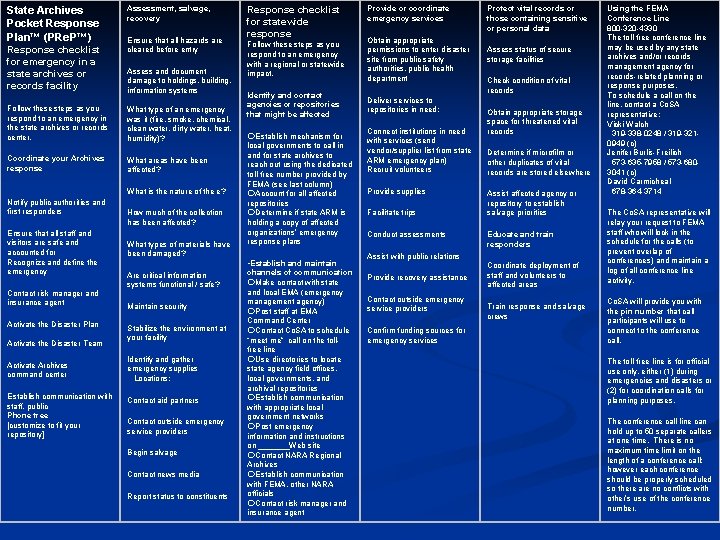
State Archives Pocket Response Plan™ (PRe. P™) Response checklist for emergency in a state archives or records facility Assessment, salvage, recovery Ensure that all hazards are cleared before entry Assess and document damage to holdings, building, information systems Follow these steps as you respond to an emergency in the state archives or records center. What type of an emergency was it (fire, smoke, chemical, clean water, dirty water, heat, humidity)? Coordinate your Archives response What areas have been affected? What is the nature of the e? Notify public authorities and first responders Ensure that all staff and visitors are safe and accounted for Recognize and define the emergency Contact risk manager and insurance agent Activate the Disaster Plan Activate the Disaster Team Activate Archives command center Establish communication with staff, public Phone tree [customize to fit your repository] How much of the collection has been affected? What types of materials have been damaged? Response checklist for statewide response Follow these steps as you respond to an emergency with a regional or statewide impact. Obtain appropriate permissions to enter disaster site from public safety authorities, public health department Identify and contact agencies or repositories that might be affected Deliver services to repositories in need: Establish mechanism for local governments to call in and for state archives to reach out using the dedicated toll-free number provided by FEMA (see last column) Account for all affected repositories Determine if state ARM is holding a copy of affected organizations’ emergency response plans • Establish and maintain Are critical information systems functional / safe? Maintain security Stabilize the environment at your facility Identify and gather emergency supplies Locations: Contact aid partners Contact outside emergency service providers Begin salvage Contact news media Report status to constituents Provide or coordinate emergency services channels of communication Make contact with state and local EMA (emergency management agency) Post staff at EMA Command Center Contact Co. SA to schedule “meet me” call on the tollfree line Use directories to locate state agency field offices, local governments, and archival repositories Establish communication with appropriate local government networks Post emergency information and instructions on _______Web site Contact NARA Regional Archives Establish communication with FEMA, other NARA officials Contact risk manager and insurance agent Connect institutions in need with services (send vendor/supplier list from state ARM emergency plan) Recruit volunteers Provide supplies Facilitate trips Conduct assessments Protect vital records or those containing sensitive or personal data Assess status of secure storage facilities Check condition of vital records Obtain appropriate storage space for threatened vital records Determine if microfilm or other duplicates of vital records are stored elsewhere Assist affected agency or repository to establish salvage priorities Educate and train responders Assist with public relations Provide recovery assistance Contact outside emergency service providers Confirm funding sources for emergency services Coordinate deployment of staff and volunteers to affected areas Train response and salvage crews Using the FEMA Conference Line 800 -320 -4330 The toll-free conference line may be used by any state archives and/or records management agency for records-related planning or response purposes. To schedule a call on the line, contact a Co. SA representative: Vicki Walch 319 -338 -0248 / 319 -3210949 (c) Jenifer Burlis-Freilich 573 -635 -7958 / 573 -6803041 (c) David Carmicheal 678 -364 -3714 The Co. SA representative will relay your request to FEMA staff who will lock in the schedule for the calls (to prevent overlap of conferences) and maintain a log of all conference line activity. Co. SA will provide you with the pin number that call participants will use to connect to the conference call. The toll-free line is for official use only, either (1) during emergencies and disasters or (2) for coordination calls for planning purposes. The conference call line can hold up to 50 separate callers at one time. There is no maximum time limit on the length of a conference call; however each conference should be properly scheduled so there are no conflicts with other’s use of the conference number.
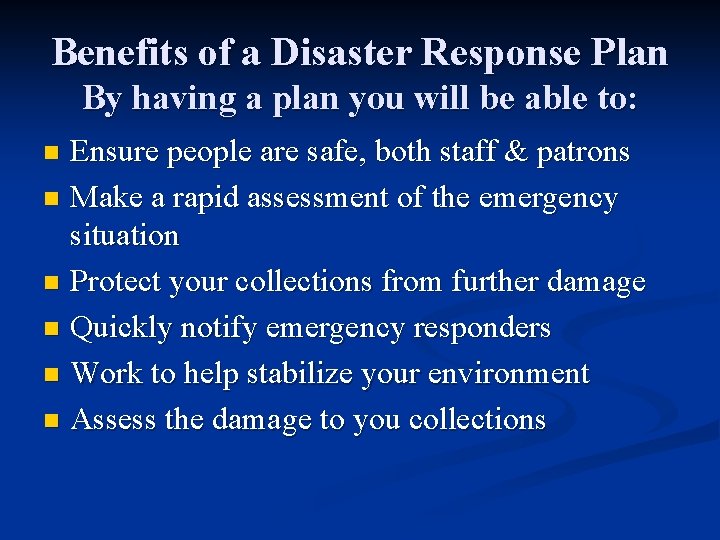
Benefits of a Disaster Response Plan By having a plan you will be able to: Ensure people are safe, both staff & patrons n Make a rapid assessment of the emergency situation n Protect your collections from further damage n Quickly notify emergency responders n Work to help stabilize your environment n Assess the damage to you collections n
New Jersey State Library Preservation Resources www. njstatelib. org/LDB/Preservation Northeast Document Conservation Center d. Plan www. nedcc. org/disaster/dplan. php Council of State Archives (Co. SA) Pocket Response Plan (PRe. P) www. statearchivists. org/prepare/framework/prep. htm Texas Association of Museums PREP Forms & Supplementary Materials www. io. com/~tam/Publications/prepfroms. html Michele Stricker mstricker@njstatelib. org
- Slides: 17