
How to work a Job Fair Different Types
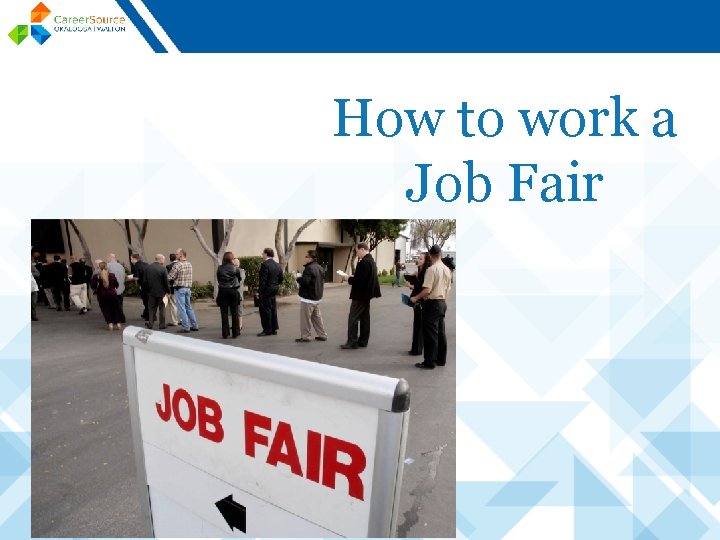
How to work a Job Fair
Different Types of Job Fairs • Campus-Sponsored Job Fairs • Specialty Job Fairs (P 4 P, Seasonal, Industry Specific) • Community Job Fairs

Community Job Fairs • “Free-for-all” fair offering everything • Make sure you are targeted and very direct about the type of jobs you are seeking • Identify employers you want to work for most – Research them thoroughly
Tips for Job Seekers • Attending a job fair is a great way to get exposure to multiple employers • It is a great way to develop your network • It is an opportunity to find valuable information about various industries, corporations and different job positions • Employers participate to meet job seekers and recruit employees – They can provide general information about career options – They can provide specific information about current openings within their company
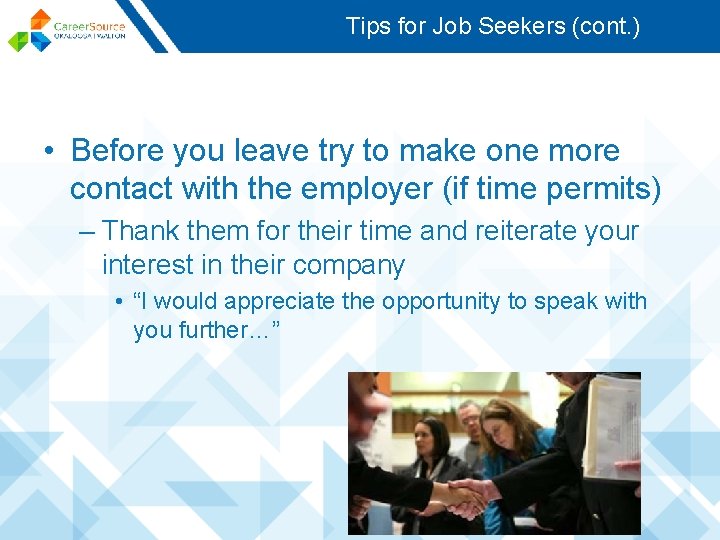
Tips for Job Seekers (cont. ) • Before you leave try to make one more contact with the employer (if time permits) – Thank them for their time and reiterate your interest in their company • “I would appreciate the opportunity to speak with you further…”
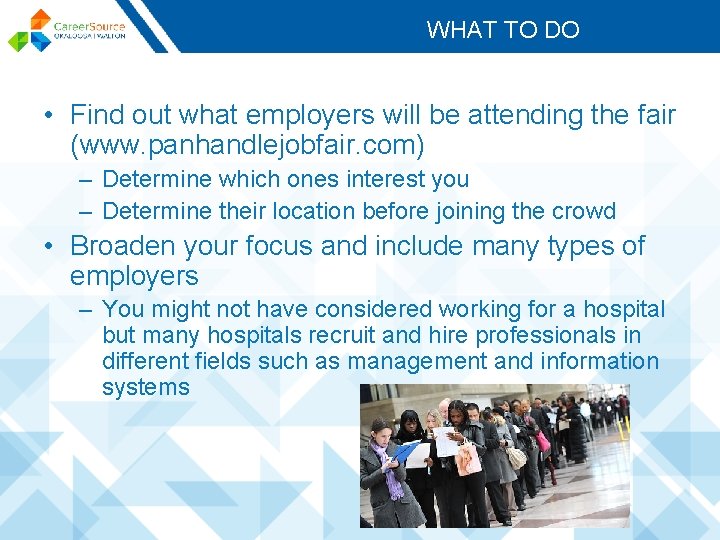
WHAT TO DO • Find out what employers will be attending the fair (www. panhandlejobfair. com) – Determine which ones interest you – Determine their location before joining the crowd • Broaden your focus and include many types of employers – You might not have considered working for a hospital but many hospitals recruit and hire professionals in different fields such as management and information systems
WHAT TO DO • Be organized • Bring plenty of copies of your resume – In a folder or portfolio so you appear professionally organized • Have a pen/pencil and paper to take notes • Introduce yourself (elevator speech) – This is a brief introduction telling the employer the type of position and career path you wish to follow • Be aware of time demands – Do not monopolize an employer’s time
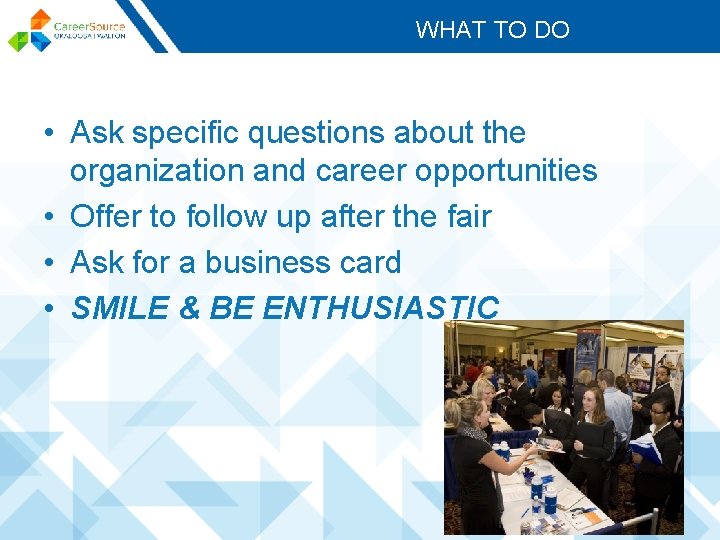
WHAT TO DO • Ask specific questions about the organization and career opportunities • Offer to follow up after the fair • Ask for a business card • SMILE & BE ENTHUSIASTIC
What to Learn From Employers • Employment and/or hiring trends • Skills necessary for different careers or jobs • Current and/or future openings • Salary, benefits, training and other information about the organization • Who to contact for follow-up discussions
What Employers May Want to Learn About You • Specific career objectives • Individual strengths and weaknesses • Contributions you will make to the organization • When you are available to start
A Typical Question • “What are you looking for here at the job fair? ” – “A job” is not an acceptable answer – Be ready with a clear and succinct description of exactly what you are seeking – After you’ve explained yourself feel comfortable asking the employer what type of candidates they are seeking
Tips for Success • NETWORK – Relatives, friends, co-workers • Target your resume – Ensure it’s easy to read – Are your most important credentials at the top of the resume? • Create a contact database – Listing of all employers you contact • Practice talking about yourself – Be comfortable addressing your accomplishments
Tips for Success (cont. ) • Practice interviewing skills • Follow-up on leads • Stay confident – Job hunting takes time and energy – Stay focused on your goal – Make finding a job your primary job and attend to it daily
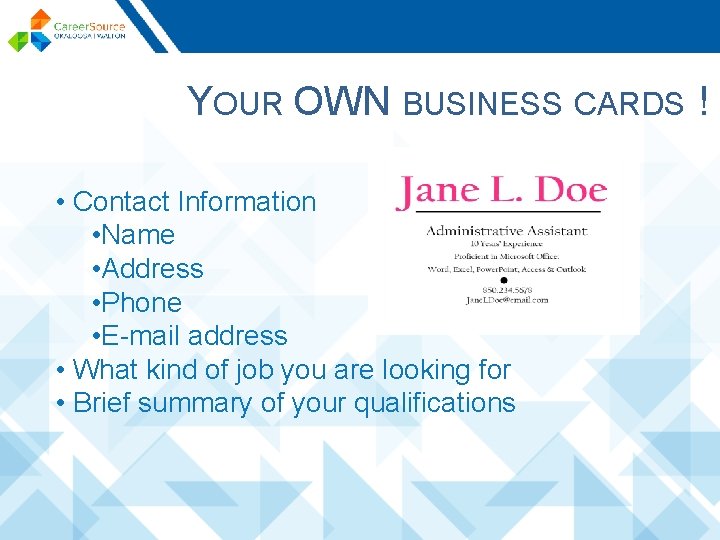
YOUR OWN BUSINESS CARDS ! • Contact Information • Name • Address • Phone • E-mail address • What kind of job you are looking for • Brief summary of your qualifications
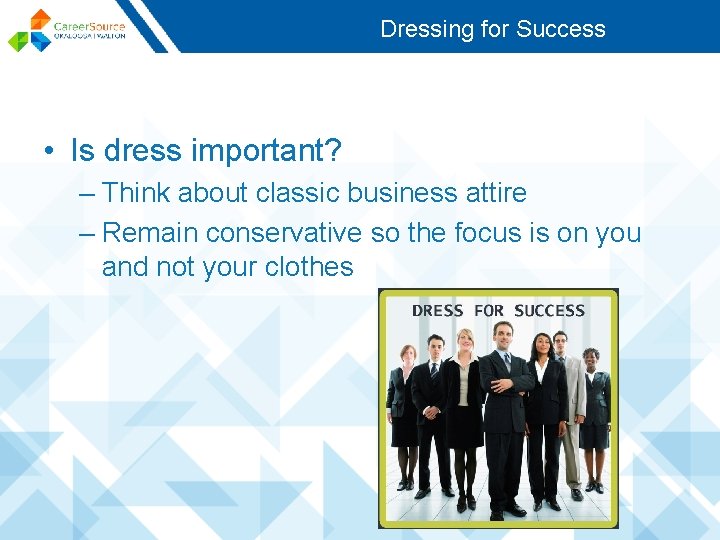
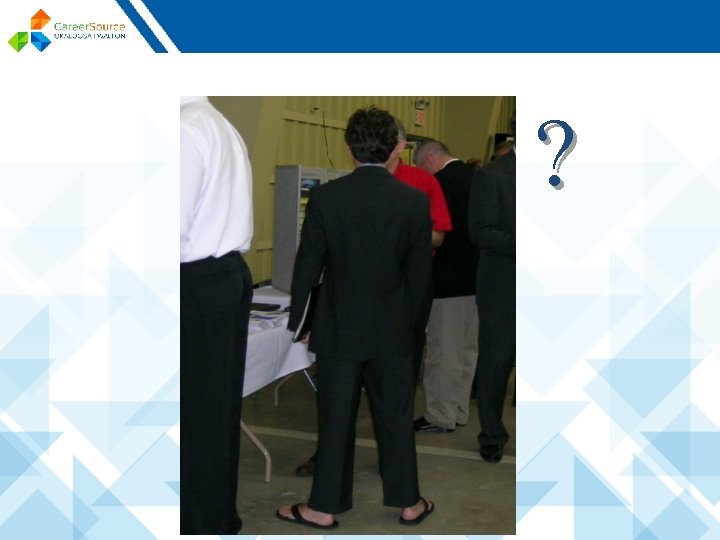
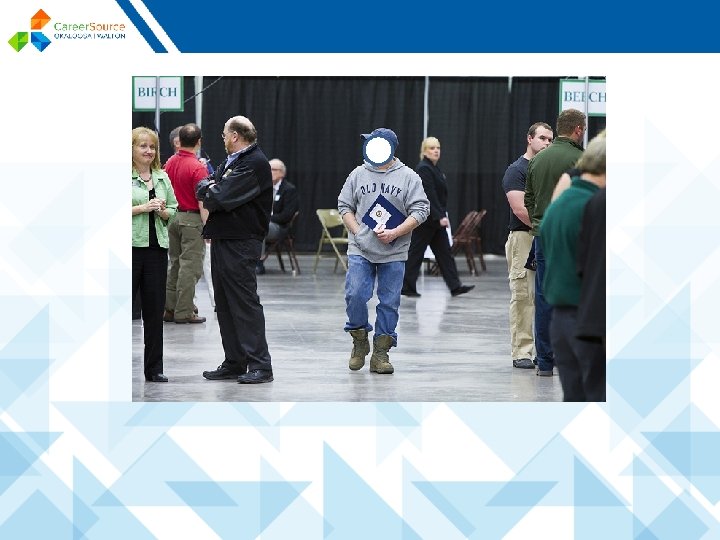
Dressing for Success • Is dress important? – Think about classic business attire – Remain conservative so the focus is on you and not your clothes


The Elevator Pitch
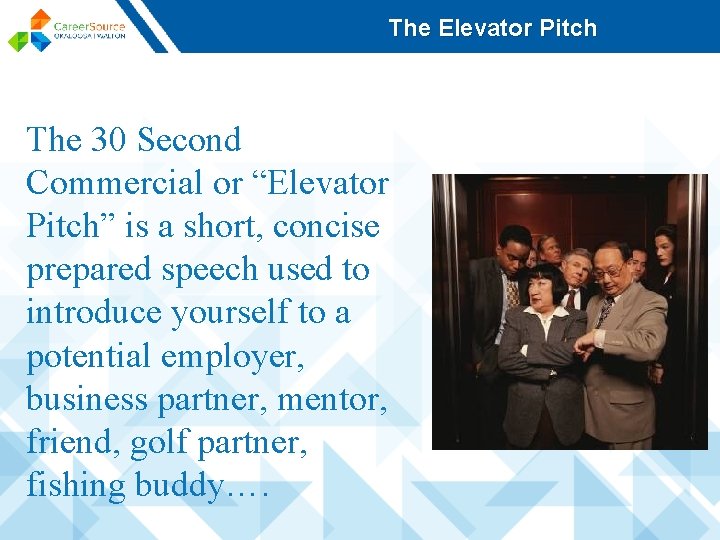
The Elevator Pitch The 30 Second Commercial or “Elevator Pitch” is a short, concise prepared speech used to introduce yourself to a potential employer, business partner, mentor, friend, golf partner, fishing buddy….
The Elevator Pitch 1. Lasts for about 30 seconds to 1 minute 2. Tells who you are professionally. 3. Consists of your relevant experience and education 4. Is so captivating that the employer wants to spend more time talking with you
The Elevator Pitch usually includes: • Greeting. . include your first and last name • Experience. . . . in your job or industry • Expertise. . . . major skills sets • Goal. . . what you want to do with your experience
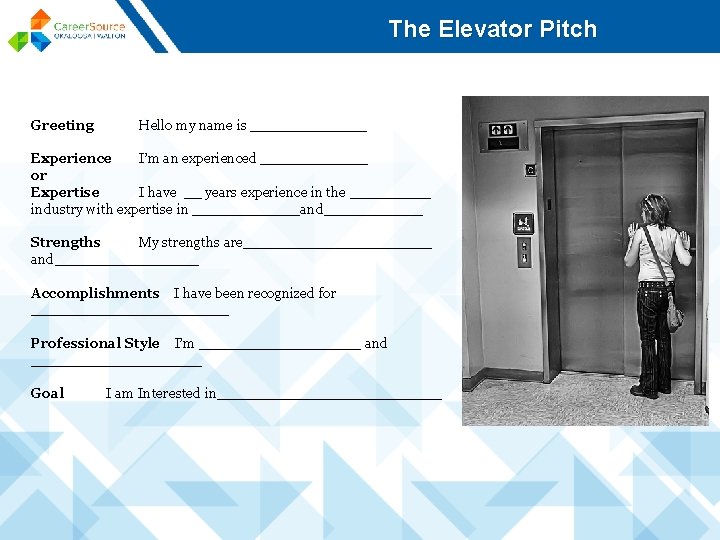
The Elevator Pitch Greeting Hello my name is _______ Experience I’m an experienced ______ or Expertise I have __ years experience in the _____ industry with expertise in ______and______ Strengths My strengths are___________ and________ Accomplishments I have been recognized for ___________ Professional Style I’m _________ and __________ Goal I am Interested in_____________
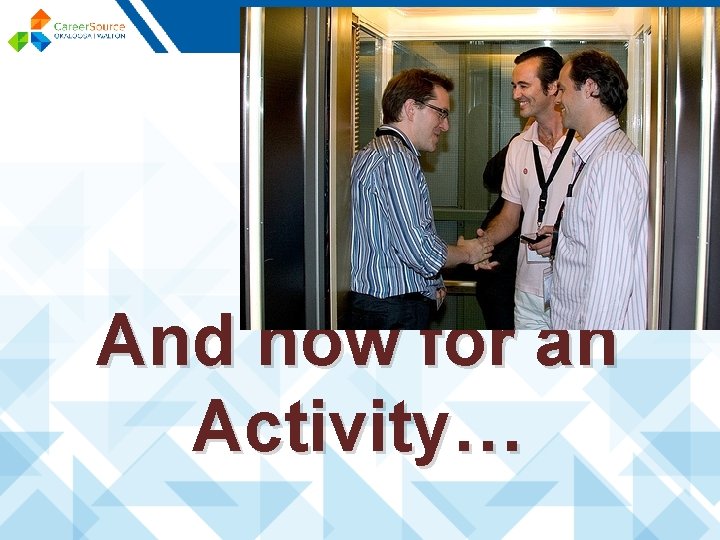
And now for an Activity…
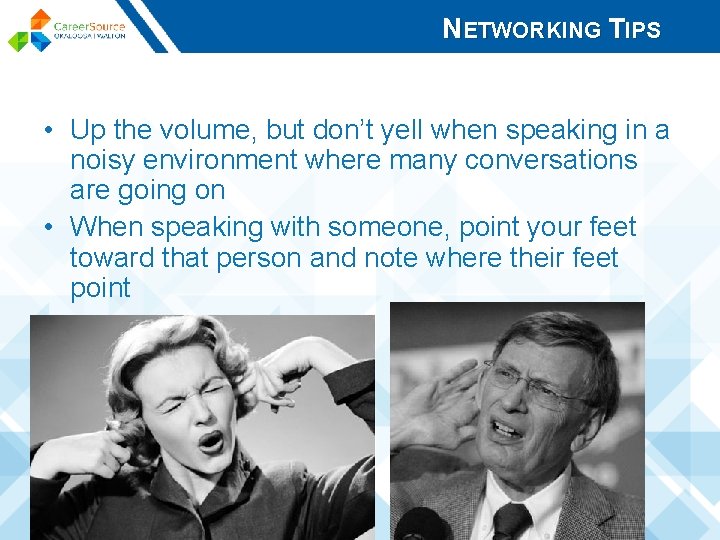
NETWORKING TIPS • Up the volume, but don’t yell when speaking in a noisy environment where many conversations are going on • When speaking with someone, point your feet toward that person and note where their feet point
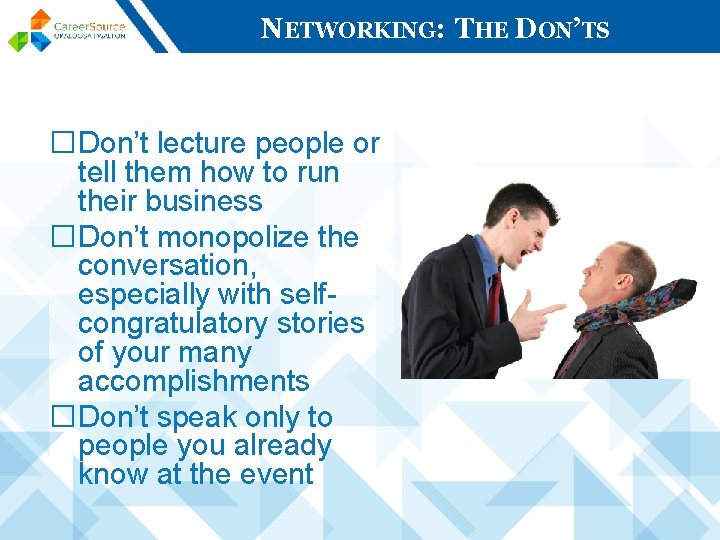
NETWORKING: THE DON’TS �Don’t lecture people or tell them how to run their business �Don’t monopolize the conversation, especially with selfcongratulatory stories of your many accomplishments �Don’t speak only to people you already know at the event
The Final Step • Follow-up is the most important thing you can do – Take those business cards and call the employer – Review your qualifications with the employer – Ask for feedback • Hard to do but important if you want to make head way with an employer
After the Job Fair • Utilize the business card – If the back is empty, write down where you met them – key points you talked about • Send a thank you note – even if it’s electronic – Review points brought up – Add ideas you forgot to mention
- Slides: 28