
How to Win Strategy Game Play Effective Design
- Slides: 37
“How to Win” Strategy, Game Play, & Effective Design
Who are we? • Andy Baker – – – Lead Engineer, Team 45 Mechanical Engineer, Delphi Corporation Co-Owner, Andy. Mark. biz ‘ 03 Championship Woodie Flowers Award Winner Coach of 1998 National Champion team • John V-Neun – Team 20, 229, 148 – Mechanical Engineer at Innovation First, Inc.
What We’ll Cover Today • • • Historical Successes – Who Won and Why? Strategy – What the robot does during a match. Design – How your robot will do it. Preparing for Competition At the Event – Successful Execution
Who Won and Why? • 2000 – Team # 25 – Blocked Center Field, Controlled Score
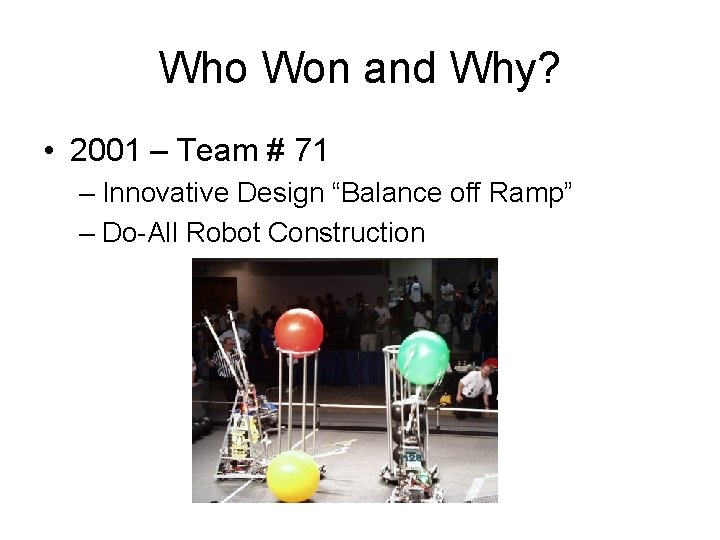
Who Won and Why? • 2001 – Team # 71 – Innovative Design “Balance off Ramp” – Do-All Robot Construction
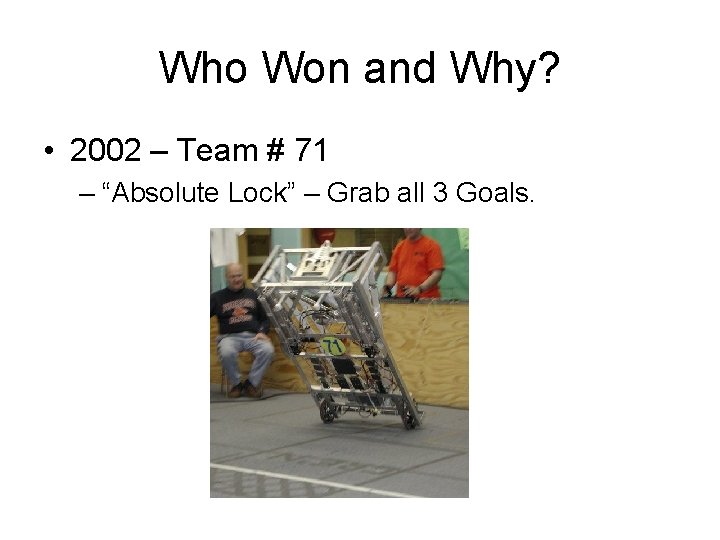
Who Won and Why? • 2002 – Team # 71 – “Absolute Lock” – Grab all 3 Goals.
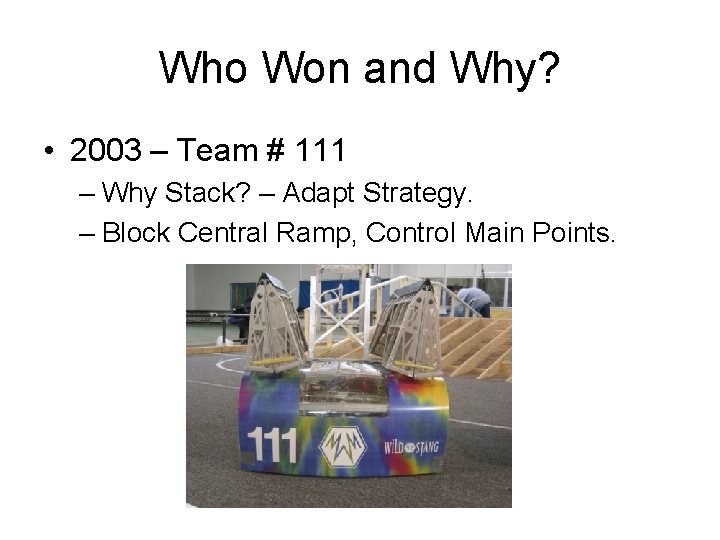
Who Won and Why? • 2003 – Team # 111 – Why Stack? – Adapt Strategy. – Block Central Ramp, Control Main Points.
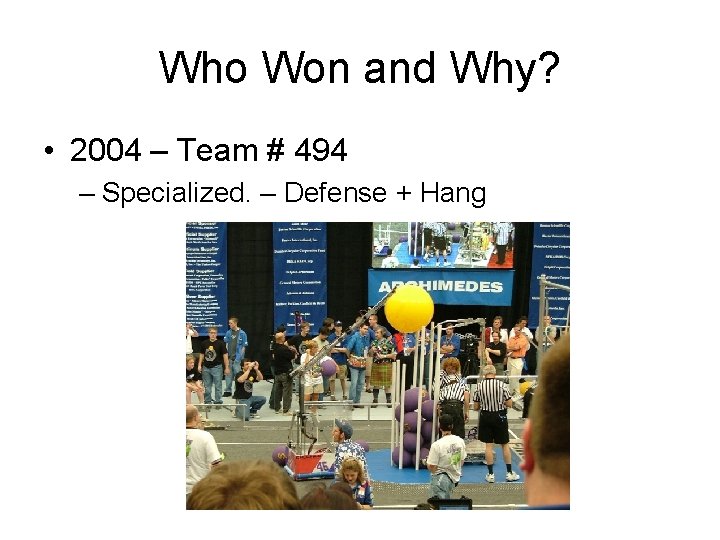
Who Won and Why? • 2004 – Team # 494 – Specialized. – Defense + Hang
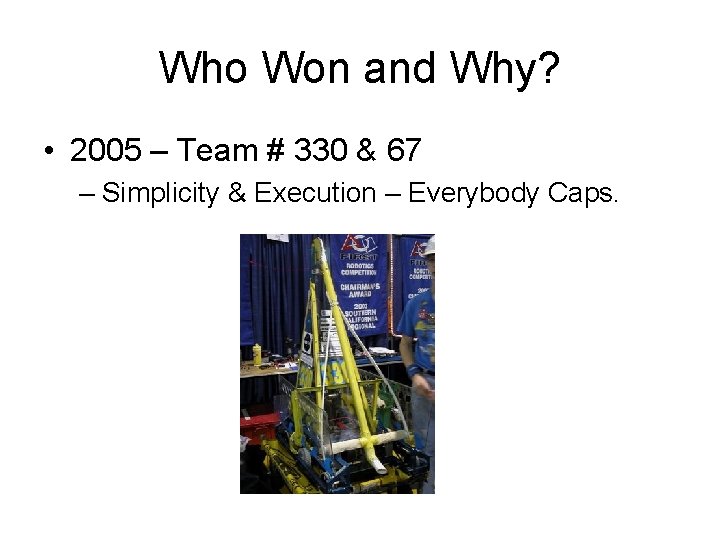
Who Won and Why? • 2005 – Team # 330 & 67 – Simplicity & Execution – Everybody Caps.
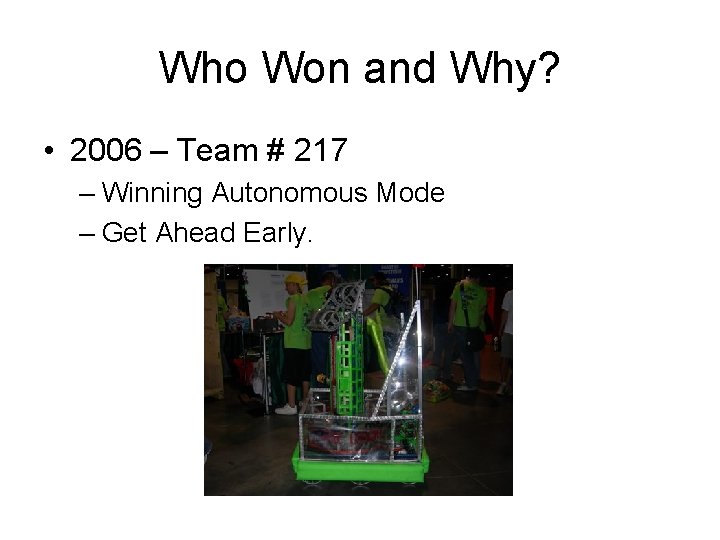
Who Won and Why? • 2006 – Team # 217 – Winning Autonomous Mode – Get Ahead Early.
Choosing a Strategy • Choosing a Game Strategy: – Learn the Game – Try to distill the essence of the game • Sometimes this is easy, sometimes it is harder. – 2005/2006 vs. 2004 – Think about “what” not “how”. • “How” will come later. Keep it in the back of your mind. • This all may seem intuitive; these decisions are easier when you think about them in terms of these basic elements.
Basic Strategy Types • Offensive Robot – Score LOTS of points. – Do 1 Thing vs. Do All Robot • Specialize? • Beware: Jack of All Trades, Master of None – QB Robot vs. Support Robot – “Win” Robot vs. “Play” Robot • Do we go for the “lock”? • Let our drivers win the matches? • Offensive “Power Moves. ”
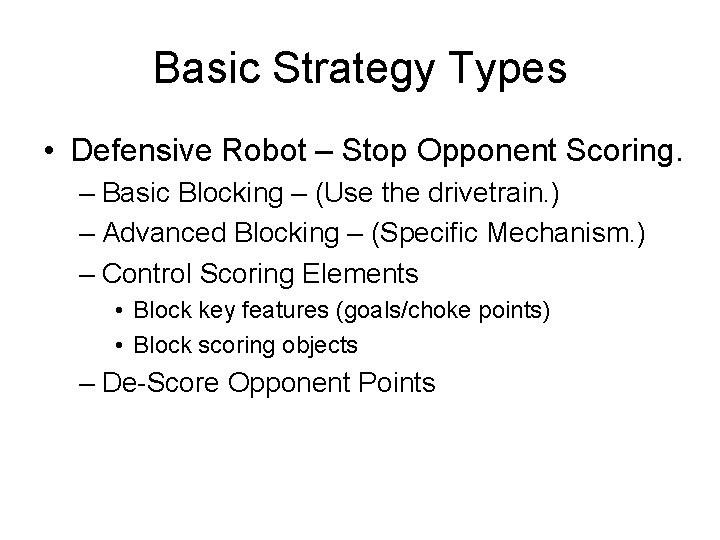
Basic Strategy Types • Defensive Robot – Stop Opponent Scoring. – Basic Blocking – (Use the drivetrain. ) – Advanced Blocking – (Specific Mechanism. ) – Control Scoring Elements • Block key features (goals/choke points) • Block scoring objects – De-Score Opponent Points
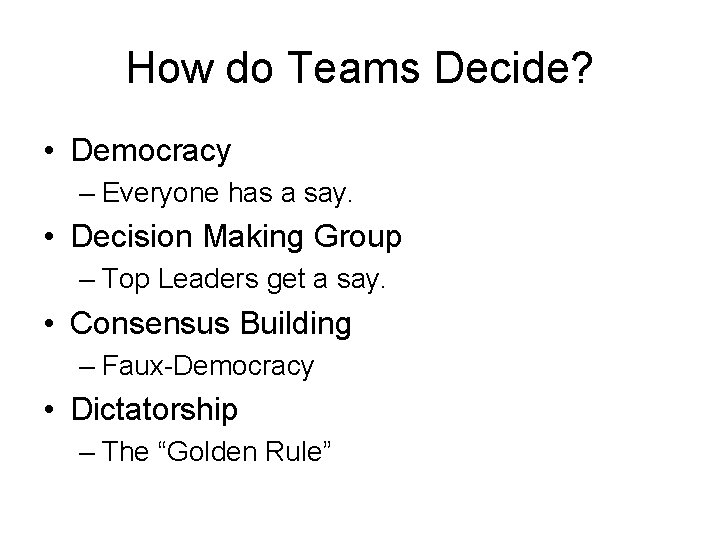
How do Teams Decide? • Democracy – Everyone has a say. • Decision Making Group – Top Leaders get a say. • Consensus Building – Faux-Democracy • Dictatorship – The “Golden Rule”
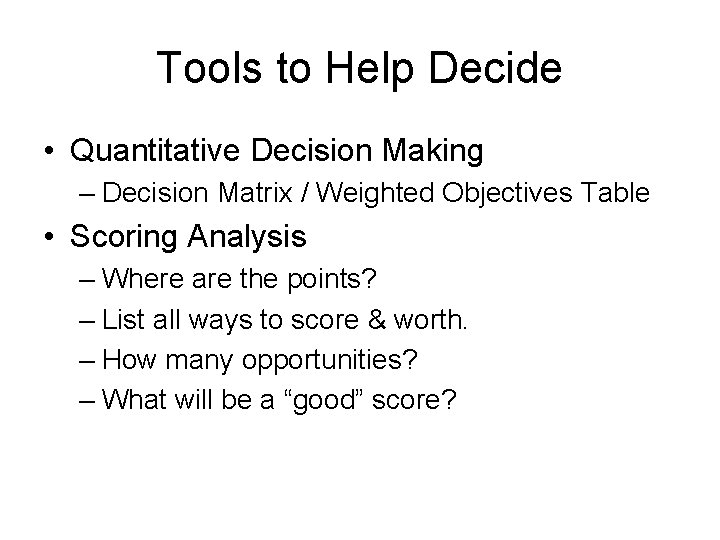
Tools to Help Decide • Quantitative Decision Making – Decision Matrix / Weighted Objectives Table • Scoring Analysis – Where are the points? – List all ways to score & worth. – How many opportunities? – What will be a “good” score?
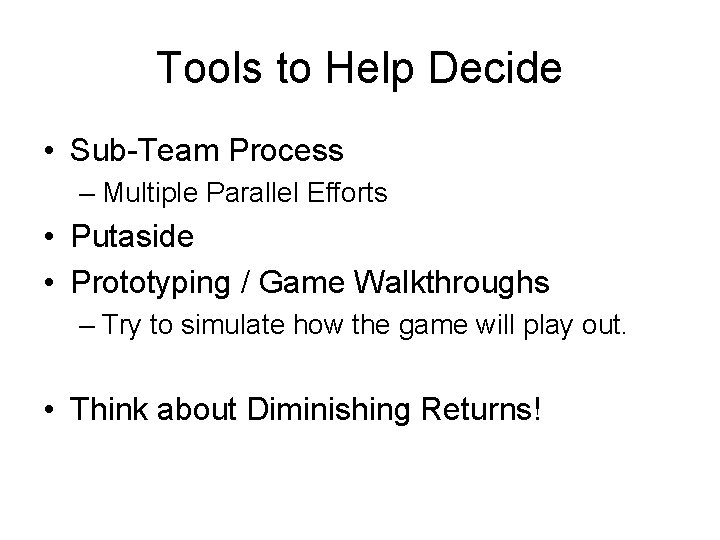
Tools to Help Decide • Sub-Team Process – Multiple Parallel Efforts • Putaside • Prototyping / Game Walkthroughs – Try to simulate how the game will play out. • Think about Diminishing Returns!
Strategy Execution – Robot Design • What are three most important parts of a FIRST Robot?
Strategy Execution – Robot Design • What are three most important parts of a FIRST Robot? – Drivetrain! • If you can’t move, you can’t score. • If you can’t move, you can’t defend.
Strategy Execution – Robot Design • Manipulate the Scoring Object: – Fast, FAST! – Prototype, Test, & Tweak – Smooth like buttered silk. – Hold securely. • Think about Motor Allocation Early!
Design Principles • PROTOTYPE IT! (Can’t over-stress this. ) • Design for Fabrication/Assembly/Repair • Design for Use! – Must be easily controlled. • Seek Inspiration • Celebrate Mistakes
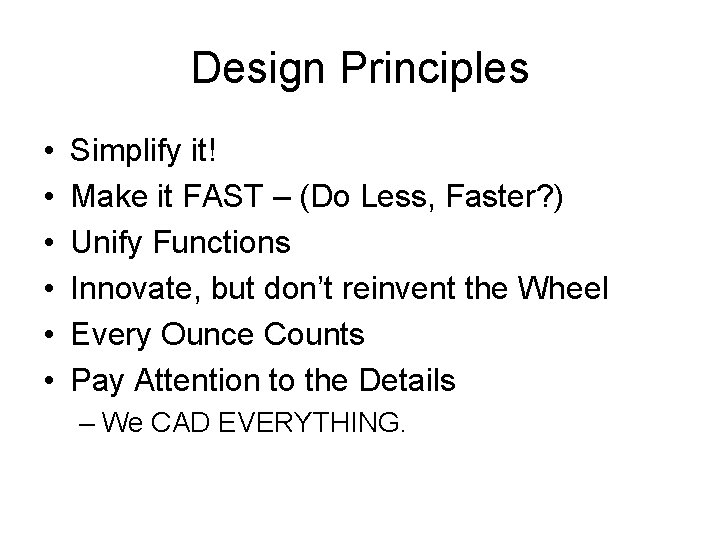
Design Principles • • • Simplify it! Make it FAST – (Do Less, Faster? ) Unify Functions Innovate, but don’t reinvent the Wheel Every Ounce Counts Pay Attention to the Details – We CAD EVERYTHING.
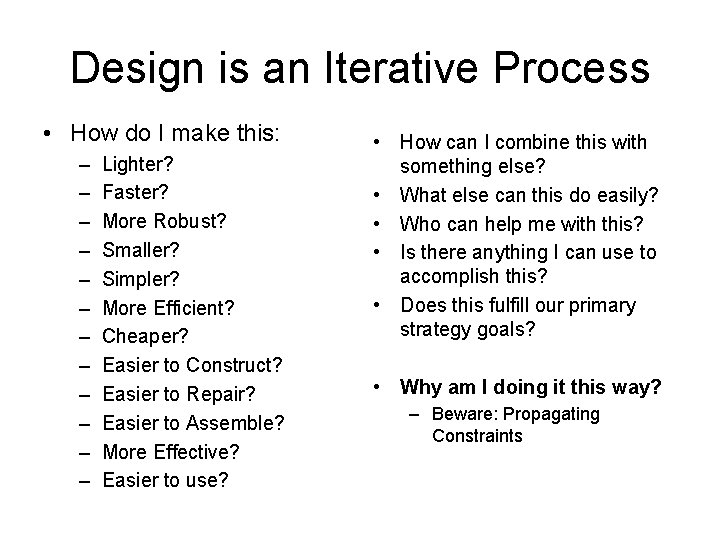
Design is an Iterative Process • How do I make this: – – – Lighter? Faster? More Robust? Smaller? Simpler? More Efficient? Cheaper? Easier to Construct? Easier to Repair? Easier to Assemble? More Effective? Easier to use? • How can I combine this with something else? • What else can this do easily? • Who can help me with this? • Is there anything I can use to accomplish this? • Does this fulfill our primary strategy goals? • Why am I doing it this way? – Beware: Propagating Constraints
Incremental Advantage • Continually ask yourself… “What can I do to get even a slight edge over our competition? ” • Get enough of these slight advantages, and your winning chances increase greatly
Prepare for Competition • Leave time for Software & Debug – Autonomous is more and more important. • Driver Selection – Choose dedicated students. – Robot ability isn’t most important factor? – Leadership Role. • Coach Prep – Critical Role, needs to be prepared. • Think Dungy & Manning…
Driver Practice • Practice Makes Perfect. – Robot Familiarity – “Wax On, Wax Off” training. – “Play your game. ” • Tailor your game to different partners. – Situational Adaptability – Dealing with Defense – Playing Successful Defense
Pre-Event Scouting • • • What are other robots doing? How does the game play out? What works? How should we adapt our game? Game Evolution • Early Regionals vs. Late Regionals
At-Event Scouting Preparations • Determine most important factors • What a Robot Does? – Hang? Cap? Plow? • How well it does it? – Try to be Quantitative • “Averages 10. 6 balls per match” • Capped 6, 5, 2, 5, 7 Tets in the last 5 matches.
Pit Planning & Organization • Get this stuff done early!: – Robot Maintenance Checklist – Pre-Match Checklist – Fabricating / Purchasing Spare Parts – Team “at the event” organization
At the Competition • Robot Adaptability – Making smart changes is risky, but can yield good results. • Strategy Adaptability – Fulfill your robot/team’s potential! – Based on “at the event” observations and “pre -event” scouting.
At the Competition • Be Organized as a Team – Come to the event each day with a plan. – If there is a major Robot overhaul to be done, outline each step in the process! • Team Support is Critical – Scouting – Pit Crew – Field Runners
Networking for Success • Identify and talk to the main decision makers on other teams. – Not limited to Coach/Driveteam. – Make Friends. – Give Robot Updates • “We had some trouble with the blah, but it’s all fixed now. ” • Be Honest! – Seal the Deal • Make them feel good about working with you.
Team Image • • • Professional. Organized. Experienced. Reliable. SMART. “Not-A-Jerk” – Don’t get black-listed. It happens.
Performing Under Pressure • Drive-team, Pit Crew, Support Team • Food, Water, & Rest
Manage Your Alliances • • Well Oiled Machine Everyone needs to know their role. Ensure Communication during the match. Be Creative with Strategy to win tough victories.
Be Prepared for the Draft • Make a List, no matter what! – Full Draft Length (24 teams) – Typically started on Thursday – Detailed on Friday Night – Finalized Saturday Morning • Go over the list with your student rep. – Give them a copy, make sure they are one of the people to help create the list.
Most Important Factor • Bring your Lucky Rabbit’s Foot (or two). • Winning has a LOT of luck involved. – Get the planets as aligned as possible through hard work. Then cross your fingers. – Preparation brings Confidence, Confidence brings Success. • Play at a high enough level for long enough, and eventually you will win it all.
Thank you! • Any Questions? http: //www. andymark. biz http: //www. ifirobotics. com