
How to use the resources This Power Point

- Slides: 38
How to use the resources • This Power. Point is very similar to ones we use in lessons with additional teaching points to help you. • Work through the information on the slides (making notes if students would like) and complete the activities in the order it states on the Power. Point. The resources are numbered and highlighted in orange on the Power. Point) • Look out for all the useful video clips
Who would win in a rematch? Wilder v Fury
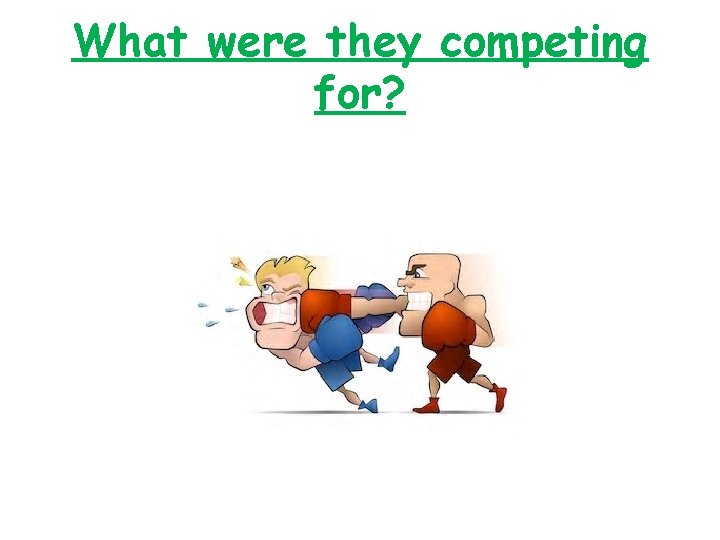
What were they competing for?
Lesson Objectives • State factors that plants and animals compete for • Describe the effects of competition • Explain how environment can also influence competition
Today’s Lesson: We will focus on: Independent enquirers Reflective Learners 22 November 2020
What is competition? When two or more individuals share any resource (e. g light, food, space) that is insufficient to satisfy all of their requirements fully, then competition results.
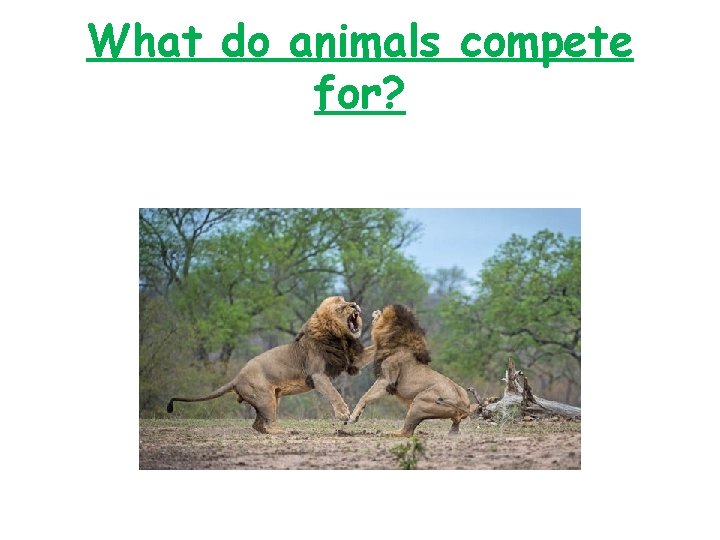
What do animals compete for?
What do animals compete for? • Food • Water • Territory • A mate
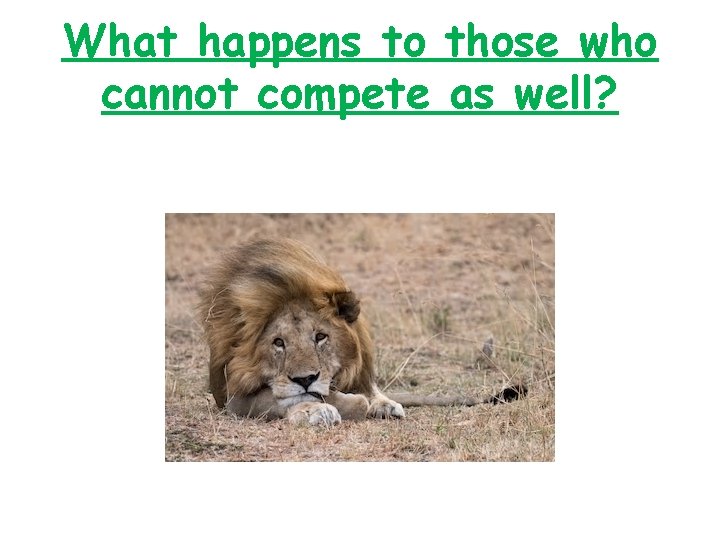
What happens to those who cannot compete as well?
What happens to those who cannot compete as well? • Move to another area • Adopt new survival strategies • Die out in that area/become extinct
So what makes a successful competitor?
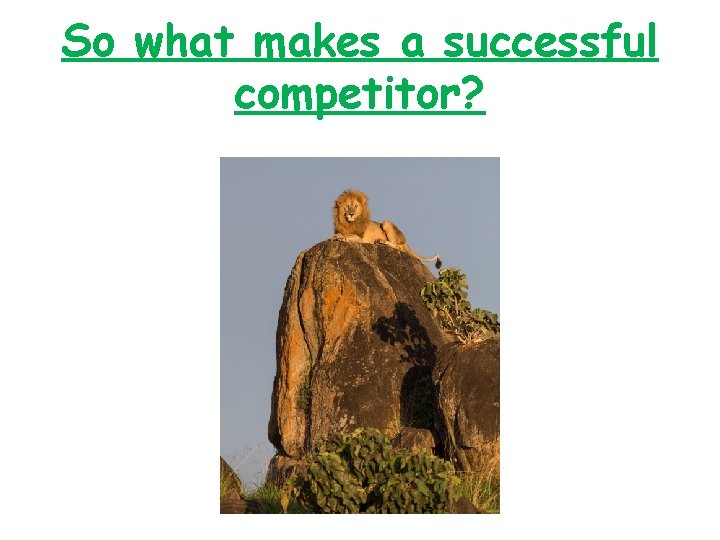
So what makes a successful competitor? • One that is adapted better to that environment • Better at finding a mate • Avoid competition with other species. E. g. eat a food that no other animal in that area eats.
The Panda • https: //www. youtube. com/watch? v=YXR ha 4 U 7 gb 0 • Do you think they will become extinct? • Do you think they need to adapt?
Territory • https: //www. youtube. com/watch? v=k 1 z 9 p. J 2 Wnvc • Why do animals fight over territory?
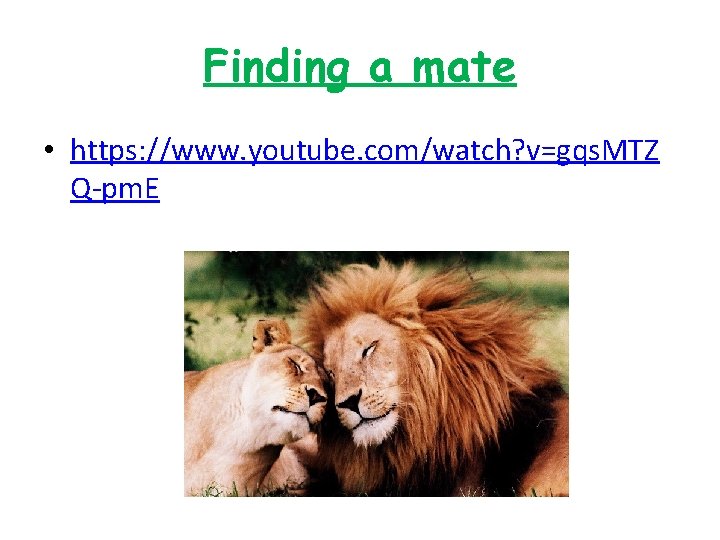
Finding a mate • https: //www. youtube. com/watch? v=gqs. MTZ Q-pm. E
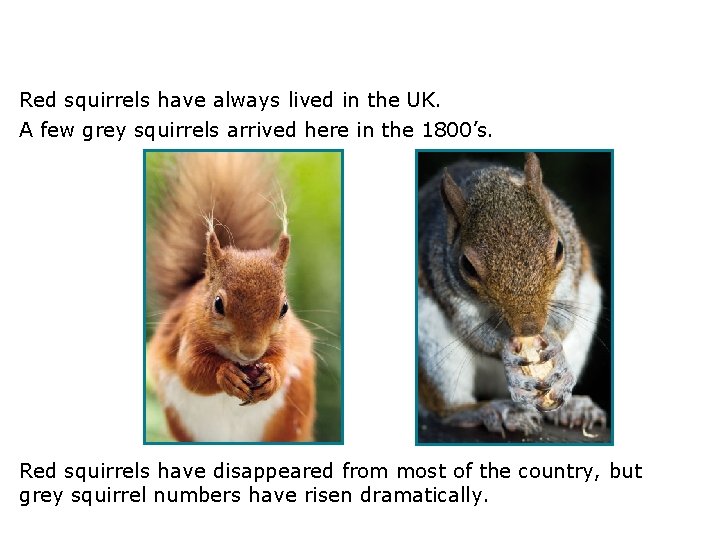
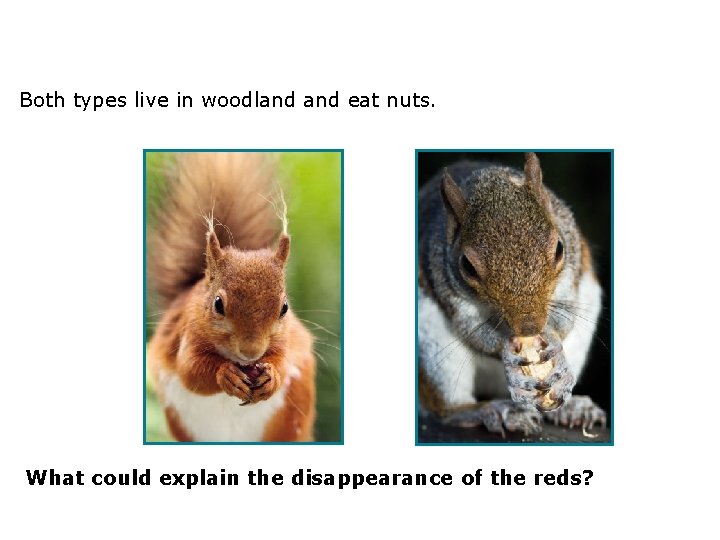
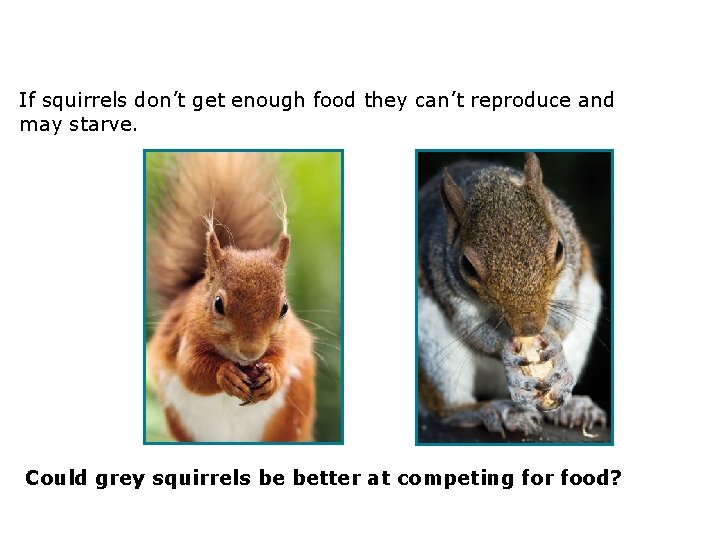
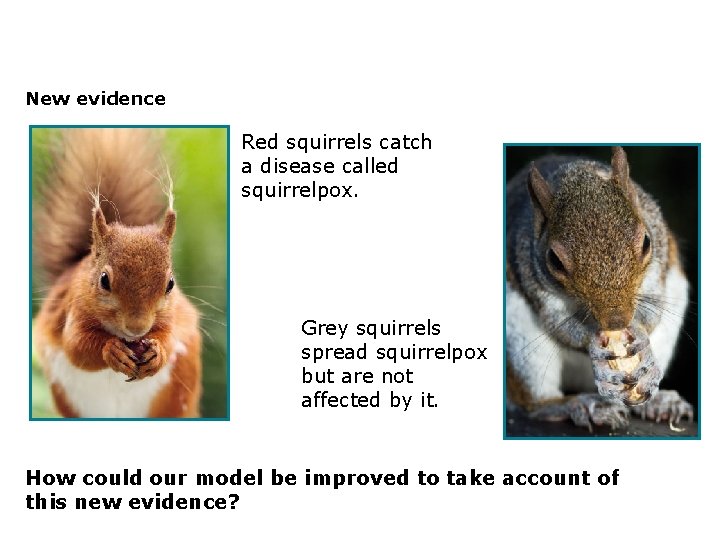
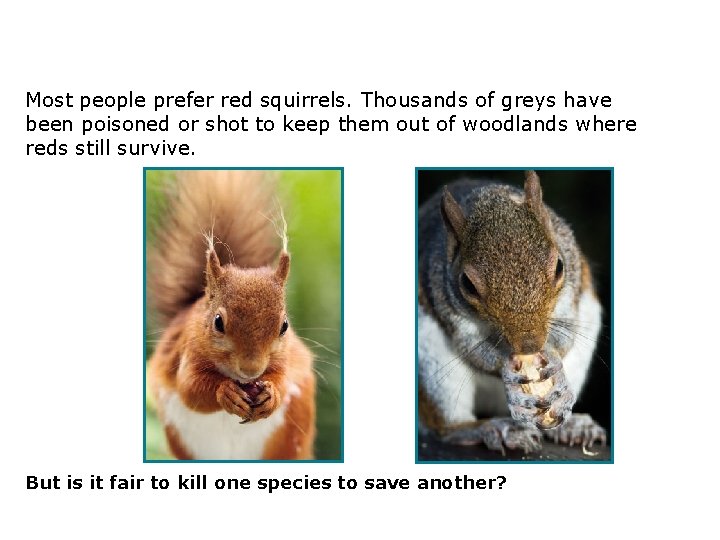
3. 2 Compete or die! Red squirrels have always lived in the UK. A few grey squirrels arrived here in the 1800’s. Red squirrels have disappeared from most of the country, but grey squirrel numbers have risen dramatically.
3. 2 Compete or die! Both types live in woodland eat nuts. What could explain the disappearance of the reds?
3. 2 Compete or die! If squirrels don’t get enough food they can’t reproduce and may starve. Could grey squirrels be better at competing for food?
3. 2 Compete or die! New evidence Red squirrels catch a disease called squirrelpox. Grey squirrels spread squirrelpox but are not affected by it. How could our model be improved to take account of this new evidence?
3. 2 Compete or die! Most people prefer red squirrels. Thousands of greys have been poisoned or shot to keep them out of woodlands where reds still survive. But is it fair to kill one species to save another?
Explain your story of competition Include: q Two organisms q Describe the habitat they live in q What they compete for q Which organism is the better competitor q Why is that organism a better competitor q A change of environment q How does the change in environment effect the competition q What will the ending be? ? ? STORIES TO BE READ AND SHARED AT THE END OF THE LESSON
3. 2 Will we survive? Let’s play. . .
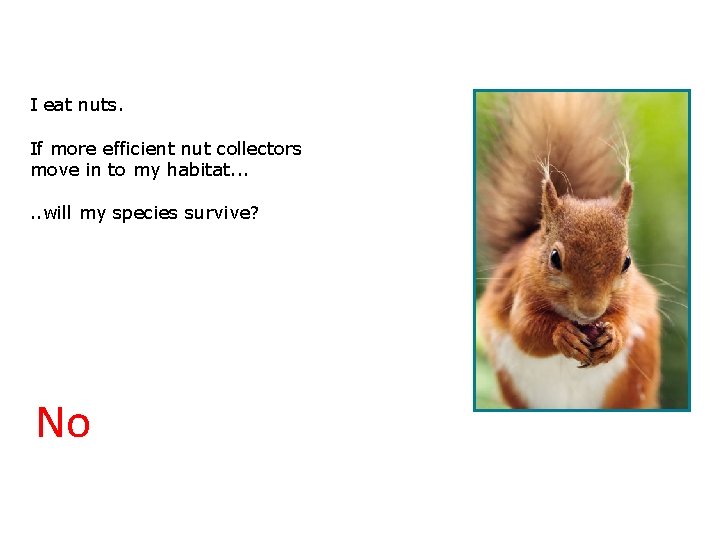
3. 2 Will we survive? I eat nuts. If more efficient nut collectors move in to my habitat. . . will my species survive? No
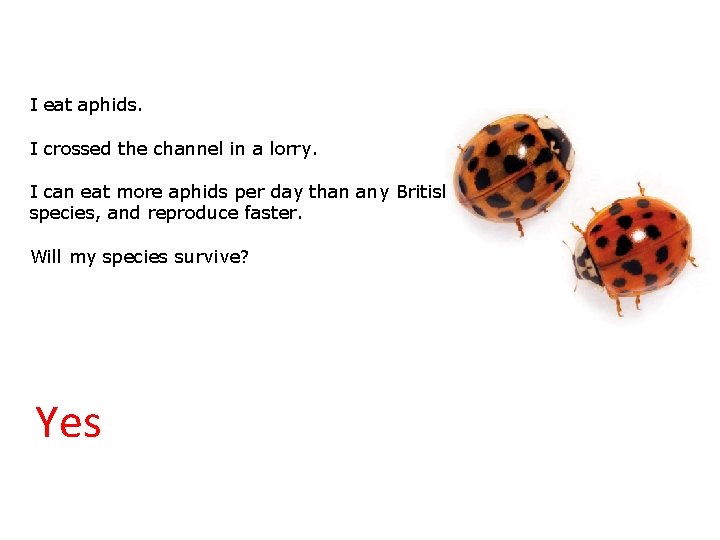
3. 2 Will we survive? I eat aphids. I crossed the channel in a lorry. I can eat more aphids per day than any British species, and reproduce faster. Will my species survive? Yes
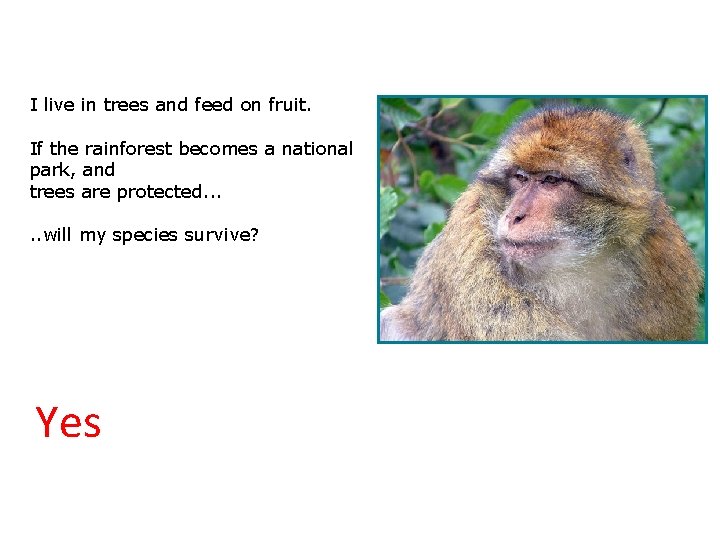
3. 2 Will we survive? I live in trees and feed on fruit. If the rainforest becomes a national park, and trees are protected. . . will my species survive? Yes
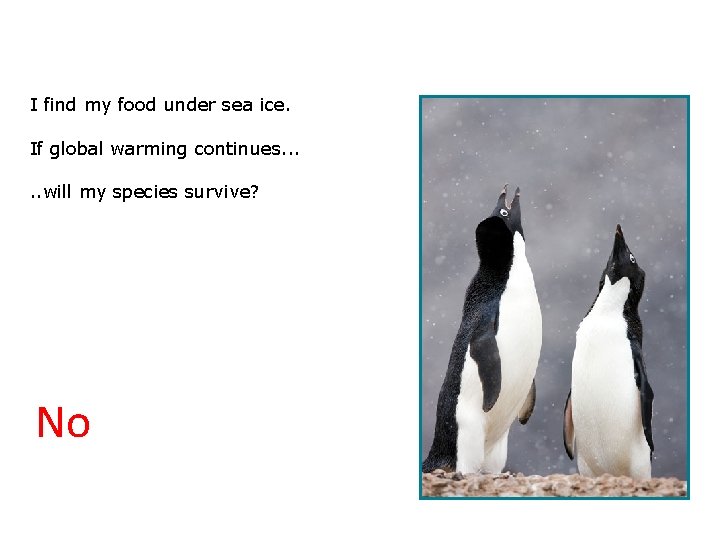
3. 2 Will we survive? I find my food under sea ice. If global warming continues. . . will my species survive? No
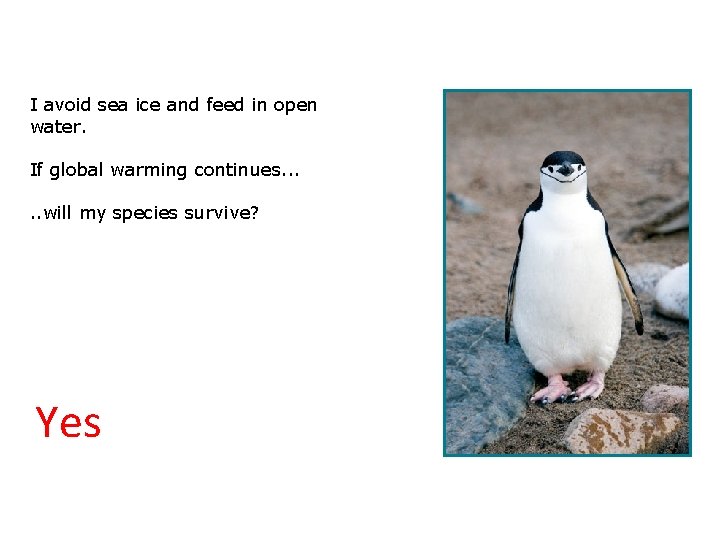
3. 2 Will we survive? I avoid sea ice and feed in open water. If global warming continues. . . will my species survive? Yes
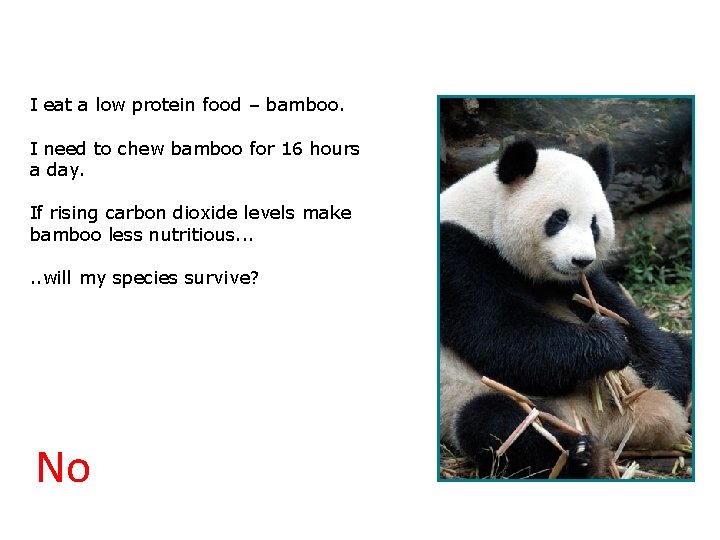
3. 2 Will we survive? I eat a low protein food – bamboo. I need to chew bamboo for 16 hours a day. If rising carbon dioxide levels make bamboo less nutritious. . . will my species survive? No
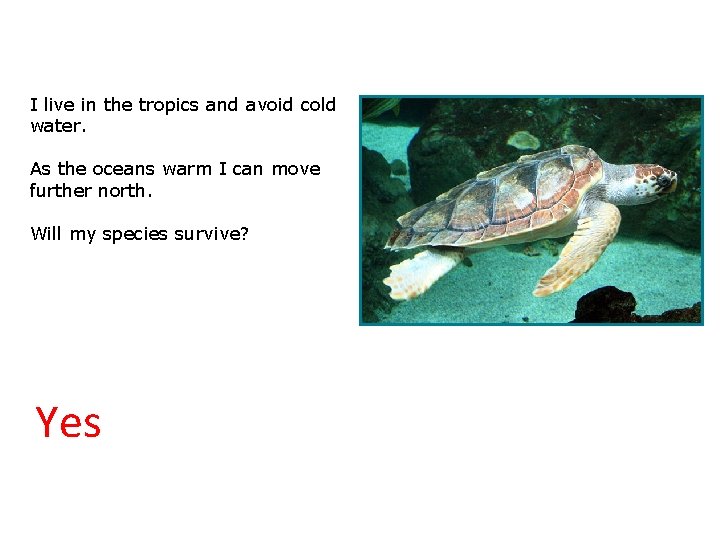
3. 2 Will we survive? I live in the tropics and avoid cold water. As the oceans warm I can move further north. Will my species survive? Yes
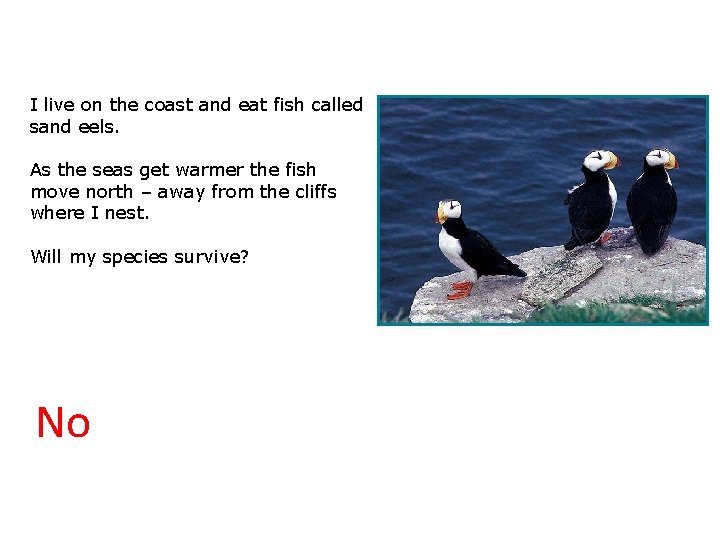
3. 2 Will we survive? I live on the coast and eat fish called sand eels. As the seas get warmer the fish move north – away from the cliffs where I nest. Will my species survive? No
What do plants compete for? • Light • Water • Nutrients • Space
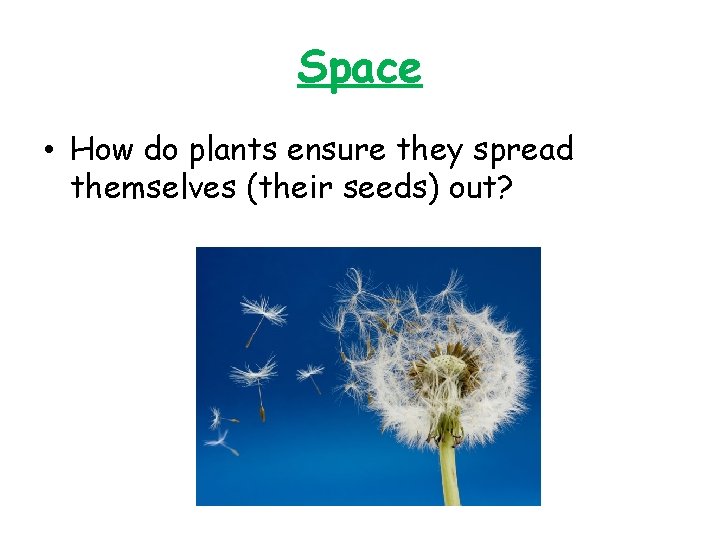
Space • How do plants ensure they spread themselves (their seeds) out?
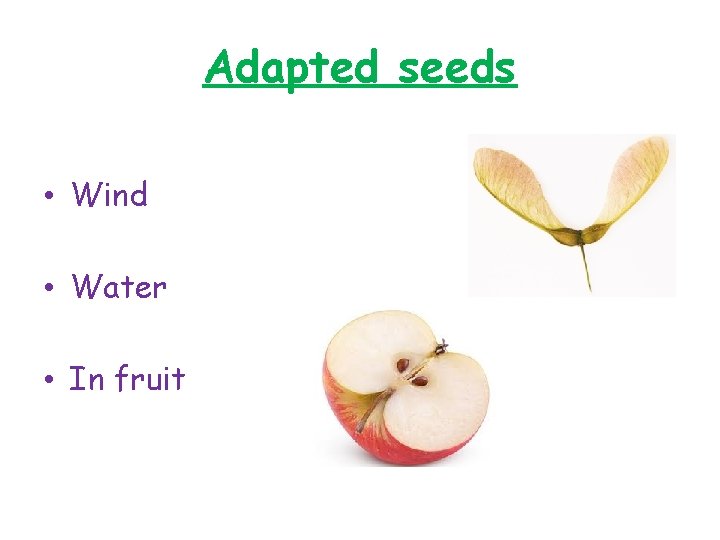
Adapted seeds • Wind • Water • In fruit
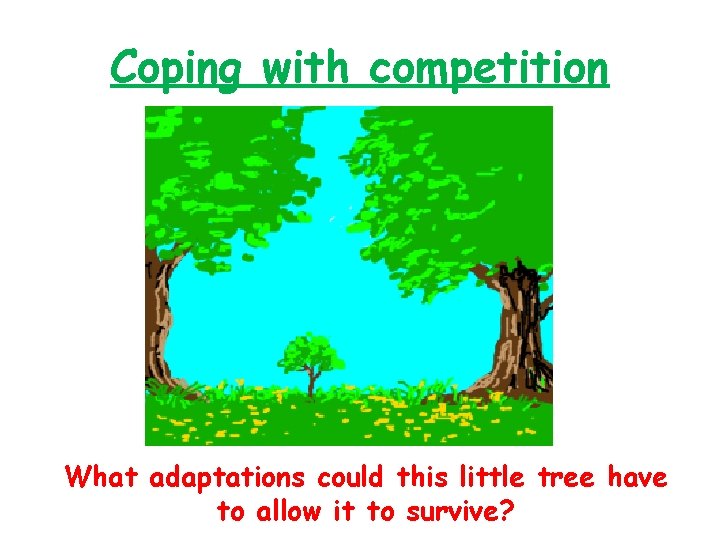
Coping with competition What adaptations could this little tree have to allow it to survive?
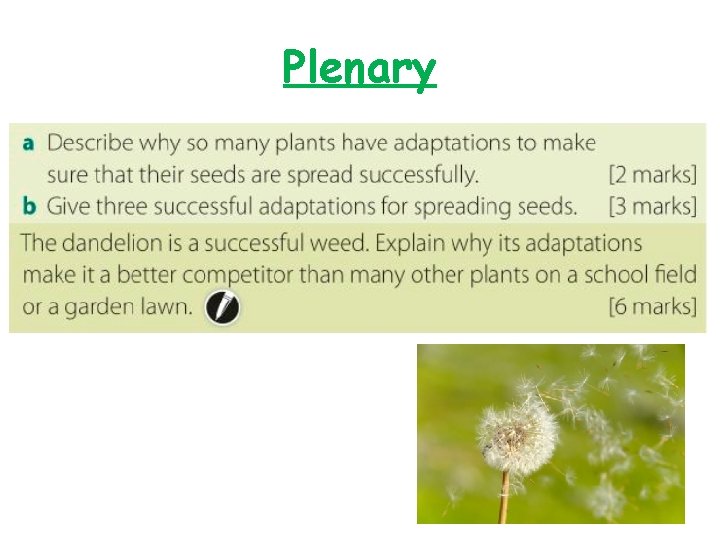
Plenary
What have we learnt ? Did we achieve our focus: Independent enquirers Reflective Learners How did we achieve our focus?
Parents/carers: how did they get on? • Please let me know how students got on with that lesson and if they need any further help with the work. • Please let me know if anything was unclear about the layout of the lesson so I can change and make it clearer for their next lesson. • Please, if you can, send me students work via email for me to mark and so I can provide feedback. • Mr Walker’s email: jwalker@corley. coventry. sch. uk