
How to use PPE in Educational Settings Date
- Slides: 11
How to use PPE in Educational Settings Date June 2020 Each slide has audio, please click on the audio button (The audio quality is not to professionals standards) Information in the presentation is in accordance with guidelines 19/06/20 please always check for current advice on Department of Education Website.
In all education settings, preventing the spread of coronavirus involves: Hand Washing/PPE and Social Distancing Avoid: • Direct transmission, for instance, when in close contact with symptoms (sneezing and coughing) • Indirect transmission, for instance, touching contaminated surfaces.
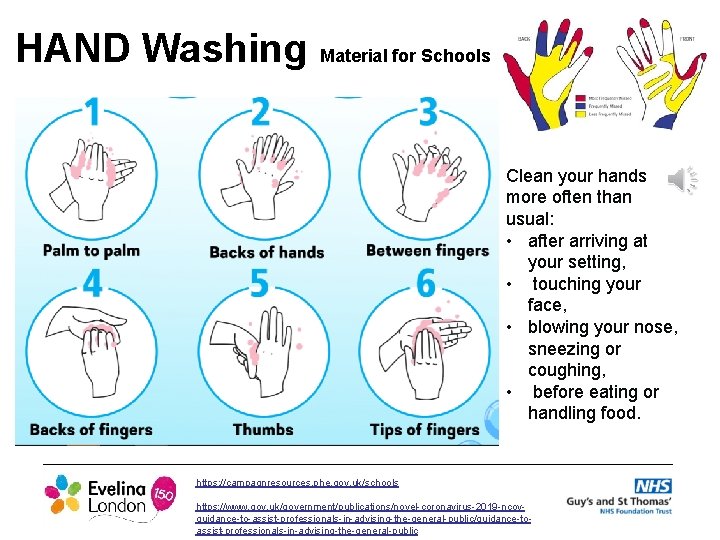
HAND Washing Material for Schools Clean your hands more often than usual: • after arriving at your setting, • touching your face, • blowing your nose, sneezing or coughing, • before eating or handling food. https: //campagnresources. phe. gov. uk/schools https: //www. gov. uk/government/publications/novel-coronavirus-2019 -ncovguidance-to-assist-professionals-in-advising-the-general-public/guidance-toassist-professionals-in-advising-the-general-public
Quick overview • Wearing a face covering or face mask in schools or other education settings is not recommended. • Face coverings may be beneficial in a few situations, for example on public transport or in some shops. This does not apply to schools or other education settings. • Schools and other education or childcare settings should therefore not require staff, children and learners to wear face coverings • PPE is only needed in a very small number of situations (see later) • https: //www. gov. uk/government/publications/coronavirus-covid-19 implementing-protective-measures-in-education-and-childcaresettings/coronavirus-covid-19 -implementing-protective-measures-ineducation-and-childcare-settings#personal-protective-equipmentppe-including-face-coverings-and-face-masks
Face coverings whilst travelling to school Facemasks or face coverings are not recommended in childcare settings, schools or other education settings. A face covering is not the same as the surgical masks or respirators used by healthcare and other workers as part of personal protective equipment (PPE). Government guidance advises that you wear a face covering on public transport if you can. This does not protect you, but may protect others if you are infected but have not yet developed symptoms. If you choose to wear one, it is important to use it properly (see next slide) 5
Using face coverings correctly • A cloth face covering should cover your mouth and nose while allowing you to breathe comfortably. It can be as simple as a scarf or bandana that ties behind the head. • Wash your hands or use hand sanitiser before putting it on and after taking it off and after use. Avoid touching your eyes, nose, or mouth at all times and store used face coverings in a plastic bag until you have an opportunity to wash them. • Do not touch the front of the face covering, or the part of the face covering that has been in contact with your mouth and nose. Once removed, make sure you clean any surfaces the face covering has touched. • You should wash a face covering regularly. It can go in with other laundry, using your normal detergent. • https: //www. gov. uk/government/publications/how-to-wear-and-make-acloth-face-covering/how-to-wear-and-make-a-cloth-face-covering
Personal protective equipment (PPE) The majority of staff in education settings will not require PPE beyond what they would normally need for their work, even if they are not always able to maintain a distance of 2 metres from others. PPE is only needed in a very small number of cases including: • Children, young people and students whose care routinely already involves the use of PPE due to their intimate care needs should continue to receive their care in the same way • If a child or young person becomes unwell with symptoms of coronavirus while in their setting and needs direct personal care until they can return home, the supervising adult should use PPE if they cannot maintain 2 metres distance for any reason. See guidance for details of what PPE is needed. https: //www. gov. uk/government/publications/coronavirus-covid-19 implementing-protective-measures-in-education-and-childcaresettings/coronavirus-covid-19 -implementing-protective-measures-ineducation-and-childcare-settings#personal-protective-equipment-ppeincluding-face-coverings-and-face-masks 7
USE OF PPE DOES NOT remove the need for thorough and frequent hand hygiene or social distancing. https: //www. youtube. com/watch? v=z. Tsllv. DYw. Ms#action=sha re
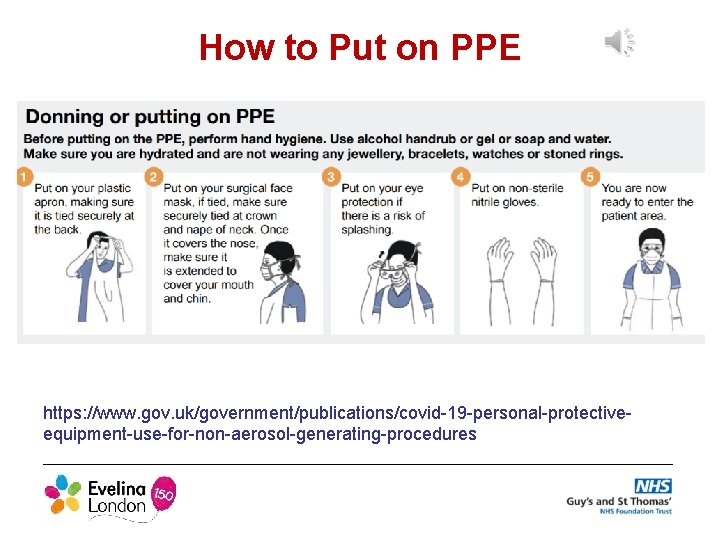
How to Put on PPE https: //www. gov. uk/government/publications/covid-19 -personal-protectiveequipment-use-for-non-aerosol-generating-procedures
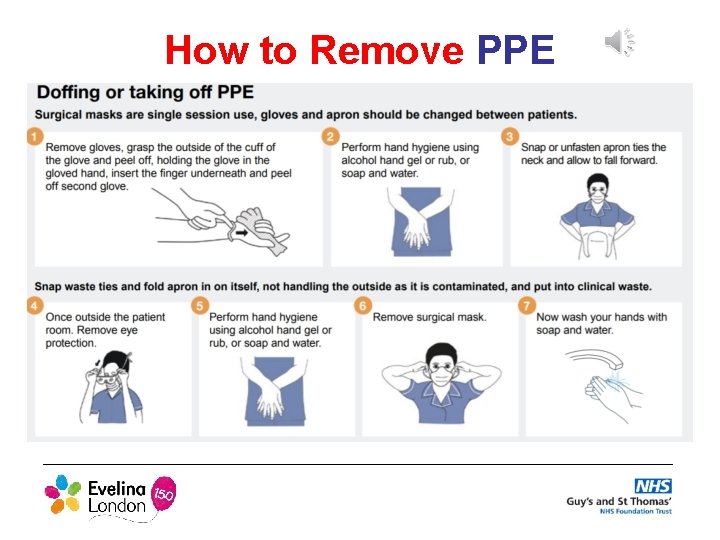
How to Remove PPE
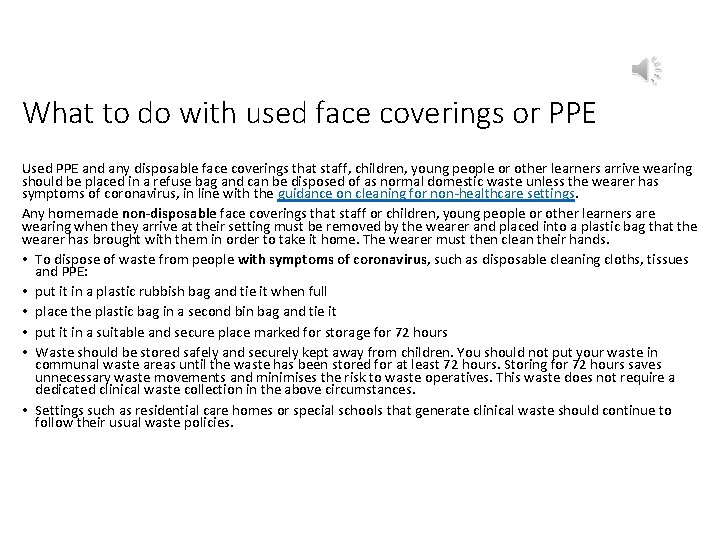
What to do with used face coverings or PPE Used PPE and any disposable face coverings that staff, children, young people or other learners arrive wearing should be placed in a refuse bag and can be disposed of as normal domestic waste unless the wearer has symptoms of coronavirus, in line with the guidance on cleaning for non-healthcare settings. Any homemade non-disposable face coverings that staff or children, young people or other learners are wearing when they arrive at their setting must be removed by the wearer and placed into a plastic bag that the wearer has brought with them in order to take it home. The wearer must then clean their hands. • To dispose of waste from people with symptoms of coronavirus, such as disposable cleaning cloths, tissues and PPE: • put it in a plastic rubbish bag and tie it when full • place the plastic bag in a second bin bag and tie it • put it in a suitable and secure place marked for storage for 72 hours • Waste should be stored safely and securely kept away from children. You should not put your waste in communal waste areas until the waste has been stored for at least 72 hours. Storing for 72 hours saves unnecessary waste movements and minimises the risk to waste operatives. This waste does not require a dedicated clinical waste collection in the above circumstances. • Settings such as residential care homes or special schools that generate clinical waste should continue to follow their usual waste policies.