
How to treat hyperthyroidism when GO is present








- Slides: 45
How to treat hyperthyroidism when GO is present A challenging dilemma H. Delshad M. D Endocrinologist Research Institute for Endocrine Sciences Shahid Beheshti University of Medical Sciences
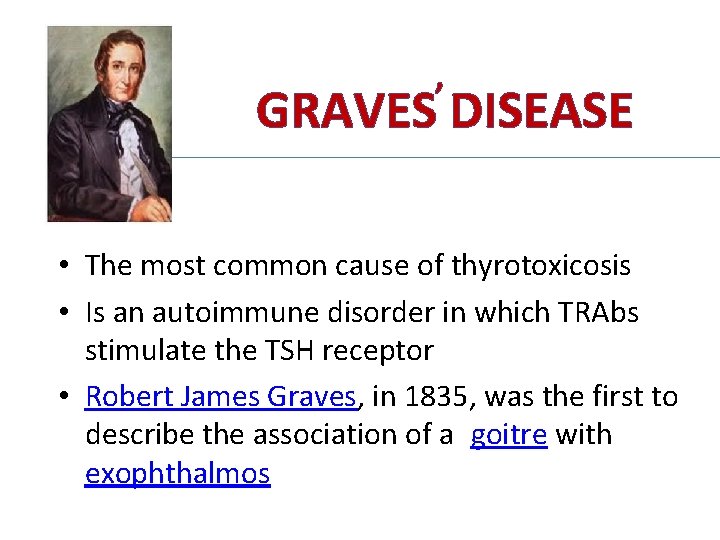
, GRAVES DISEASE • The most common cause of thyrotoxicosis • Is an autoimmune disorder in which TRAbs stimulate the TSH receptor • Robert James Graves, in 1835, was the first to describe the association of a goitre with exophthalmos
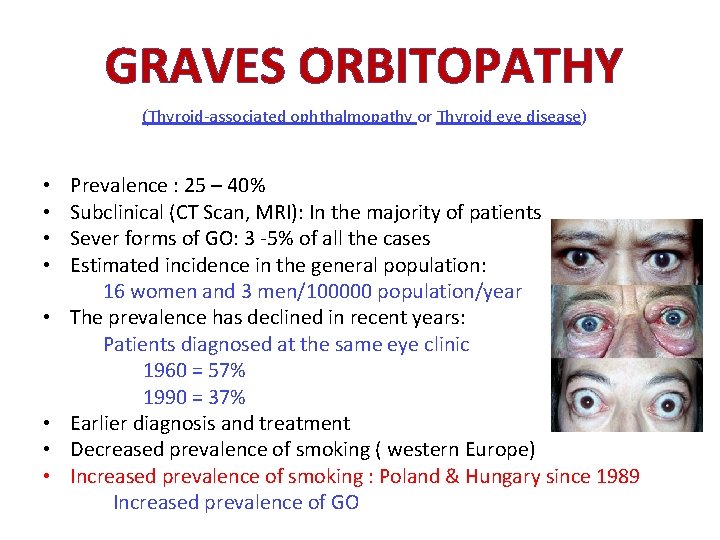
GRAVES ORBITOPATHY (Thyroid-associated ophthalmopathy or Thyroid eye disease) • • Prevalence : 25 – 40% Subclinical (CT Scan, MRI): In the majority of patients Sever forms of GO: 3 -5% of all the cases Estimated incidence in the general population: 16 women and 3 men/100000 population/year The prevalence has declined in recent years: Patients diagnosed at the same eye clinic 1960 = 57% 1990 = 37% Earlier diagnosis and treatment Decreased prevalence of smoking ( western Europe) Increased prevalence of smoking : Poland & Hungary since 1989 Increased prevalence of GO
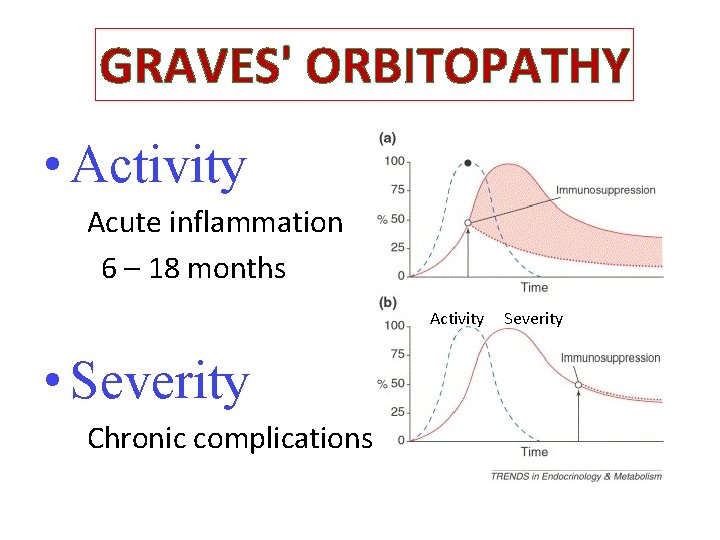
GRAVES' ORBITOPATHY • Activity Acute inflammation 6 – 18 months Activity • Severity Chronic complications Severity
Activity CAS> 3/7
Swollen Caruncle
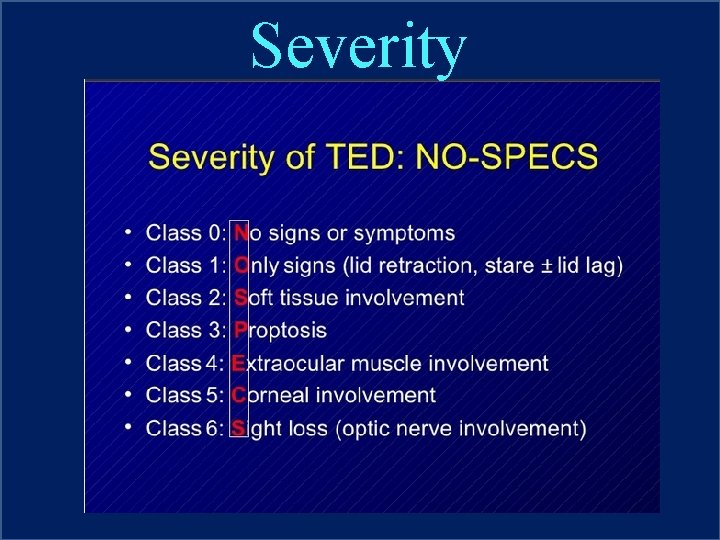
Severity
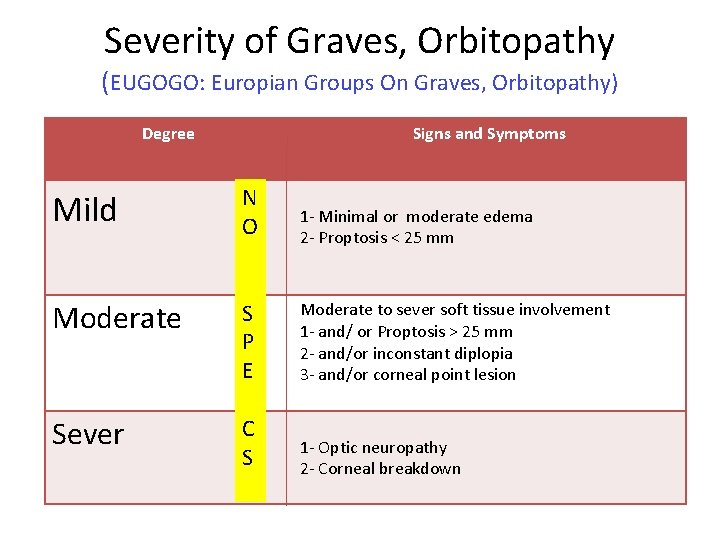
Severity of Graves, Orbitopathy (EUGOGO: Europian Groups On Graves, Orbitopathy) Degree Signs and Symptoms Mild N O 1 - Minimal or moderate edema 2 - Proptosis < 25 mm Moderate S P E Moderate to sever soft tissue involvement 1 - and/ or Proptosis > 25 mm 2 - and/or inconstant diplopia 3 - and/or corneal point lesion Sever C S 1 - Optic neuropathy 2 - Corneal breakdown
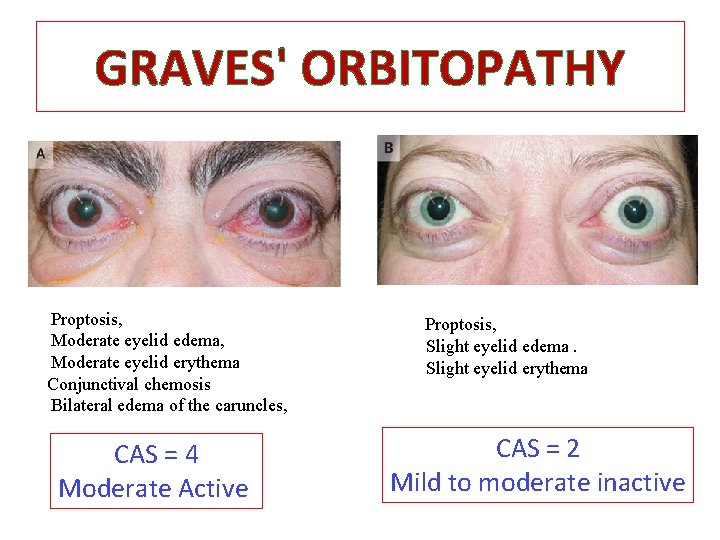
GRAVES' ORBITOPATHY Proptosis, Moderate eyelid edema, Moderate eyelid erythema Conjunctival chemosis Bilateral edema of the caruncles, CAS = 4 Moderate Active Proptosis, Slight eyelid edema. Slight eyelid erythema CAS = 2 Mild to moderate inactive
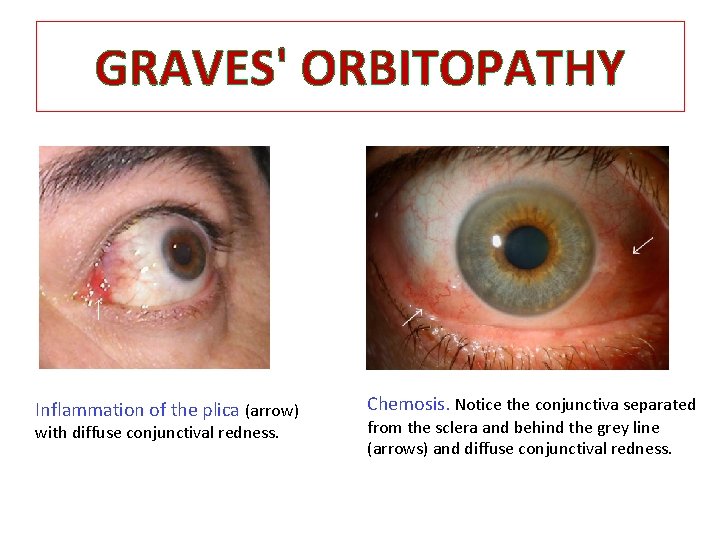
GRAVES' ORBITOPATHY Inflammation of the plica (arrow) with diffuse conjunctival redness. Chemosis. Notice the conjunctiva separated from the sclera and behind the grey line (arrows) and diffuse conjunctival redness.
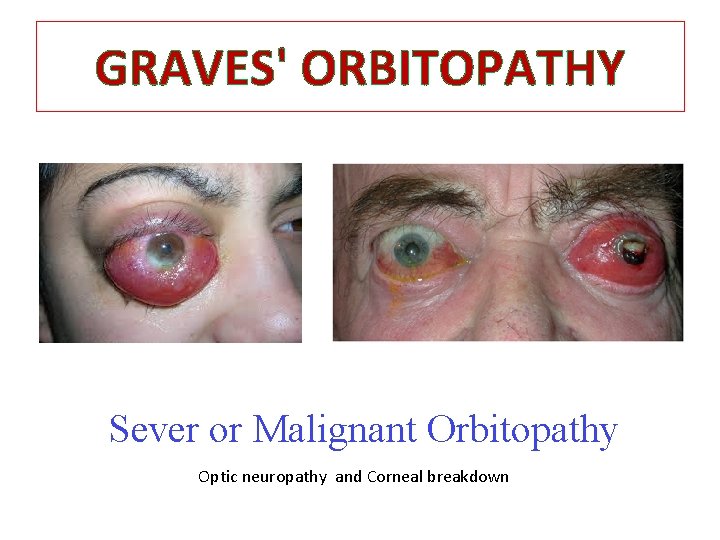
GRAVES' ORBITOPATHY Sever or Malignant Orbitopathy Optic neuropathy and Corneal breakdown
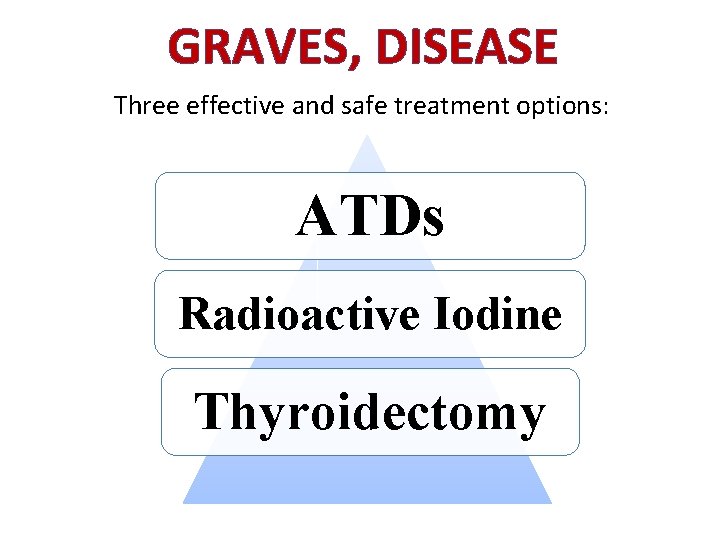
GRAVES, DISEASE Three effective and safe treatment options: ATDs Radioactive Iodine Thyroidectomy
New Guideline 2016 American Thyroid Association Guidelines for Diagnosis and Management of Hyperthyroidism and Other Causes of Thyrotoxicosis Douglas S. Ross, Henry B. Burch, David S. Coope , M. Carol Greenlee, Peter Laurberg, Ana Luiza Maia, Scott A. Rivkees, Mary Samuels, Julie Ann Sosa, Marius N. Stan, and Martin A. Walter THYROID Volume 26, Number 10, 2016
GRAVES, DISEASE Thyroid Treatment • Dose it matter for the eyes how the patient is rendered euthyroid? 1 2 • Are there any specific criteria to prefer one of the treatment modalities for hyperthyroidism in Graves, orbitopathy ? • Is there any risk factor which may predict appearance or worsening of graves, orbitopathy after I 131? 3
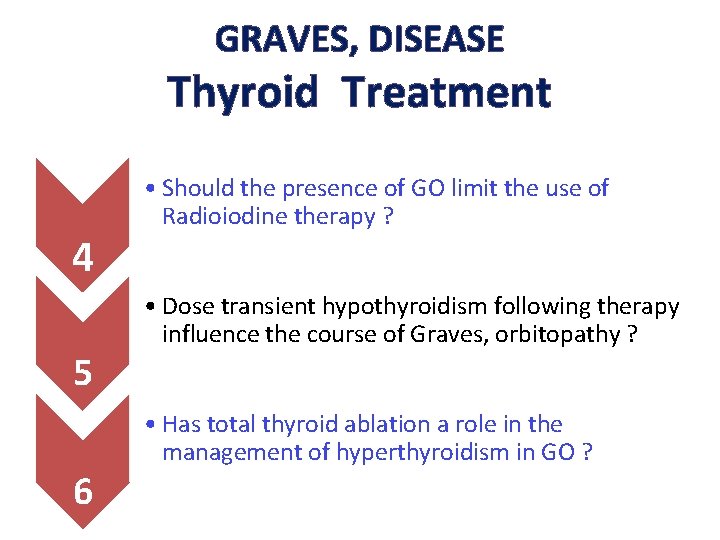
GRAVES, DISEASE Thyroid Treatment 4 5 6 • Should the presence of GO limit the use of Radioiodine therapy ? • Dose transient hypothyroidism following therapy influence the course of Graves, orbitopathy ? • Has total thyroid ablation a role in the management of hyperthyroidism in GO ?
GRAVES, DISEASE Thyroid Treatment 1 • Dose it matter for the eyes how the patient is rendered euthyroid?
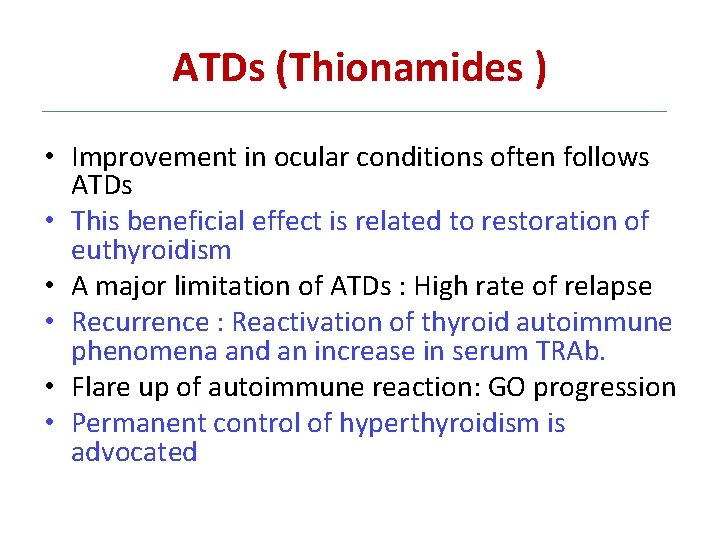
ATDs (Thionamides ) • Improvement in ocular conditions often follows ATDs • This beneficial effect is related to restoration of euthyroidism • A major limitation of ATDs : High rate of relapse • Recurrence : Reactivation of thyroid autoimmune phenomena and an increase in serum TRAb. • Flare up of autoimmune reaction: GO progression • Permanent control of hyperthyroidism is advocated
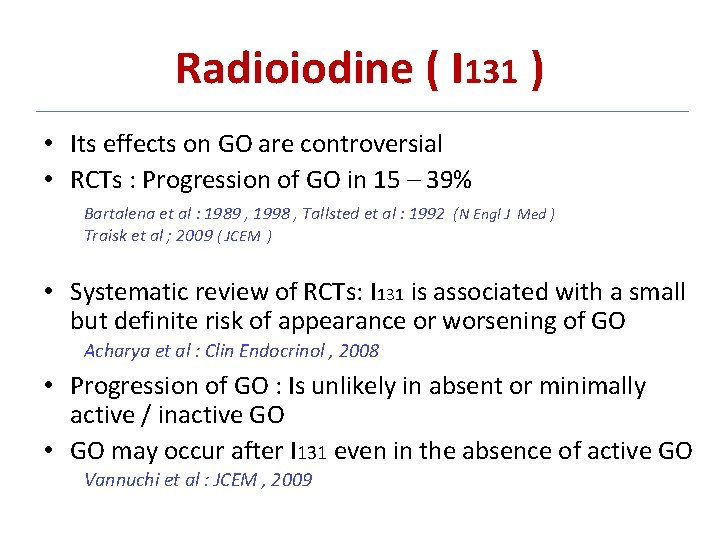
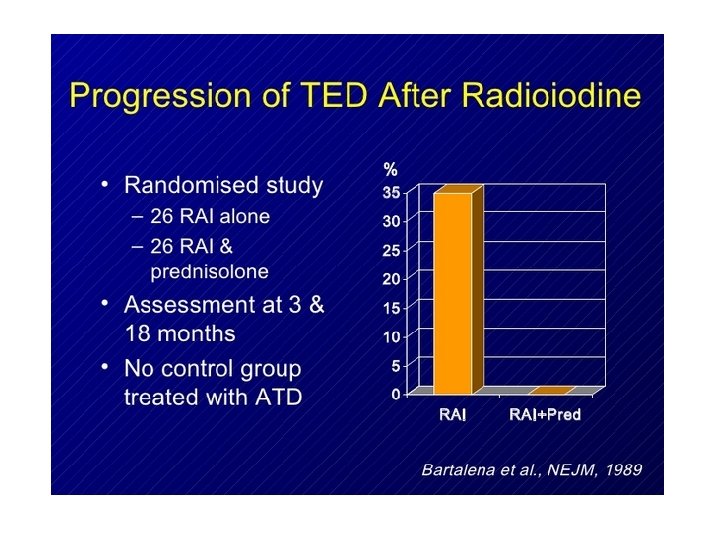
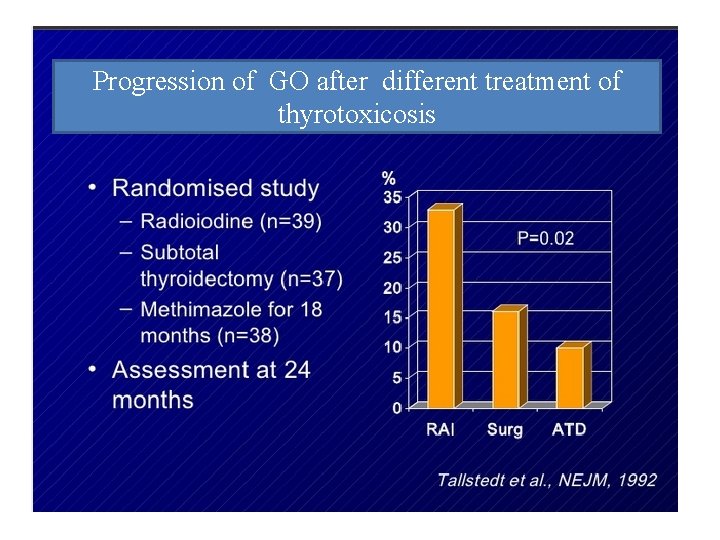
Radioiodine ( I 131 ) • Its effects on GO are controversial • RCTs : Progression of GO in 15 – 39% Bartalena et al : 1989 , 1998 , Tallsted et al : 1992 (N Engl J Med ) Traisk et al ; 2009 ( JCEM ) • Systematic review of RCTs: I 131 is associated with a small but definite risk of appearance or worsening of GO Acharya et al : Clin Endocrinol , 2008 • Progression of GO : Is unlikely in absent or minimally active / inactive GO • GO may occur after I 131 even in the absence of active GO Vannuchi et al : JCEM , 2009
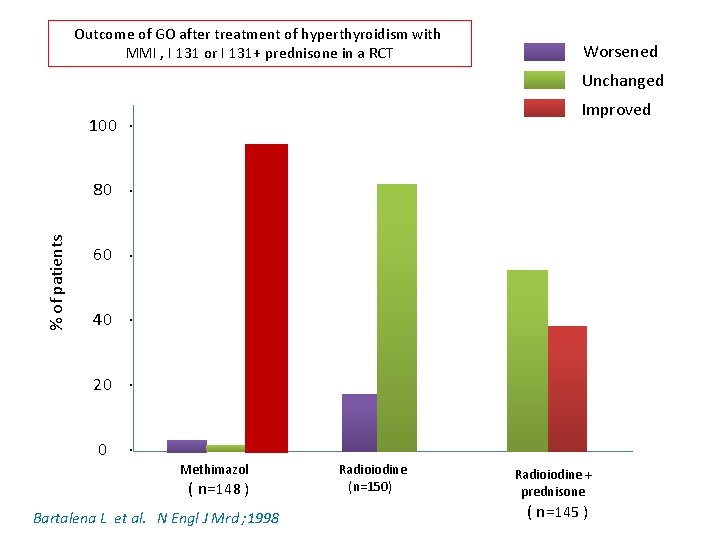
Outcome of GO after treatment of hyperthyroidism with MMI , I 131 or I 131+ prednisone in a RCT Worsened Unchanged Improved 100. % of patients 80. 60. 40. 20. 0 . Methimazol ( n=148 ) Bartalena L et al. N Engl J Mrd ; 1998 Radioiodine (n=150) Radioiodine + prednisone ( n=145 )
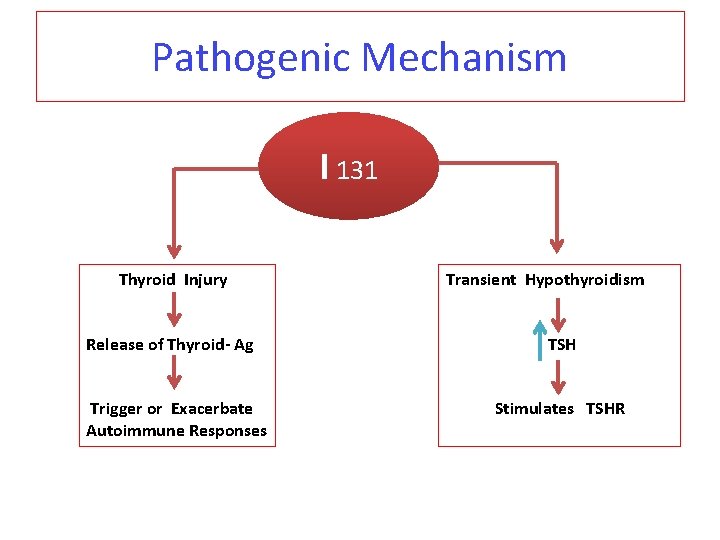
Pathogenic Mechanism I 131 Thyroid Injury Release of Thyroid- Ag Trigger or Exacerbate Autoimmune Responses Transient Hypothyroidism TSH Stimulates TSHR
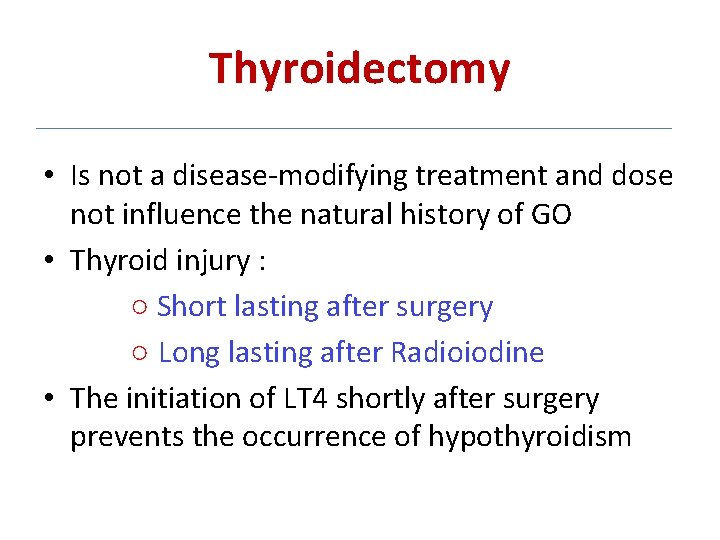
Thyroidectomy • Is not a disease-modifying treatment and dose not influence the natural history of GO • Thyroid injury : ○ Short lasting after surgery ○ Long lasting after Radioiodine • The initiation of LT 4 shortly after surgery prevents the occurrence of hypothyroidism
Progression of GO after different treatment of thyrotoxicosis
GRAVES, DISEASE Thyroid Treatment 2 • Are there any specific criteria to prefer one of the treatment modalities for hyperthyroidism in Graves, orbitopathy ?
• Any hyperthyroid patient, independent of GO needs ATD. • Choice of subsequent treatment : ○ Mild GO : ─ Continue ATD ─ I 131 or surgery after GO is burnt-out ○ Moderate-to- sever GO : ─ Definitive therapy of hyperthyroidism ─ Concomitant treatment for GO, as appropriate • No controlled studies are available to establish whether either approach is better
GRAVES, DISEASE Thyroid Treatment 3 • Is there any risk factor which may predict appearance or worsening of graves, orbitopathy after I 131?
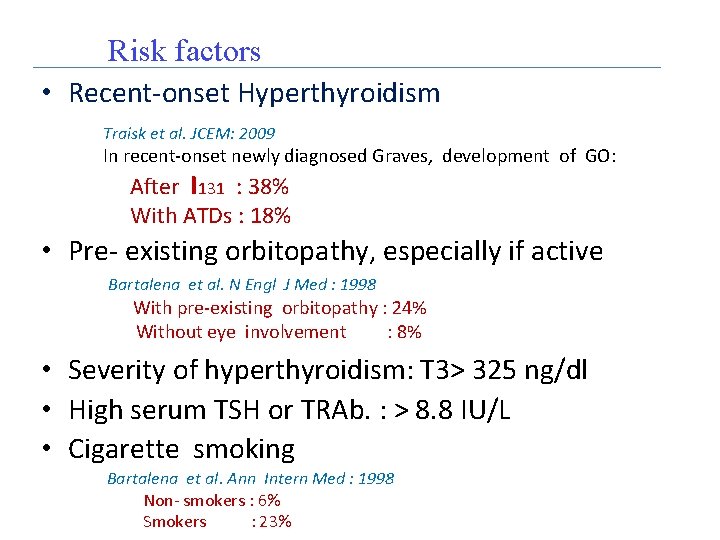
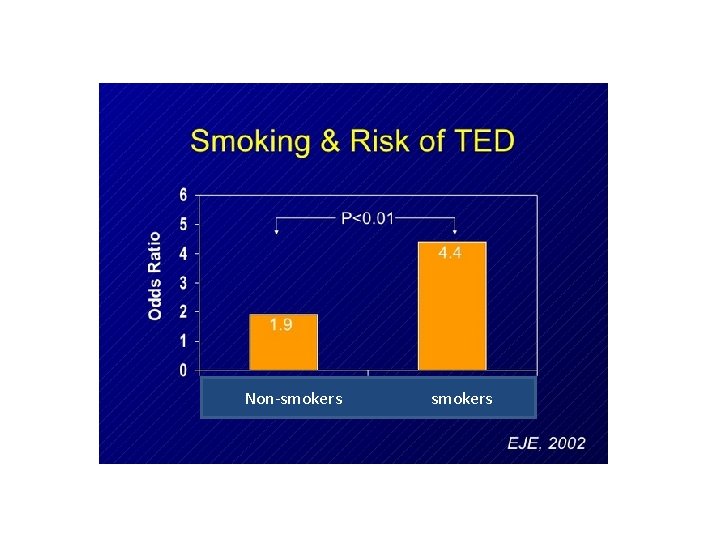
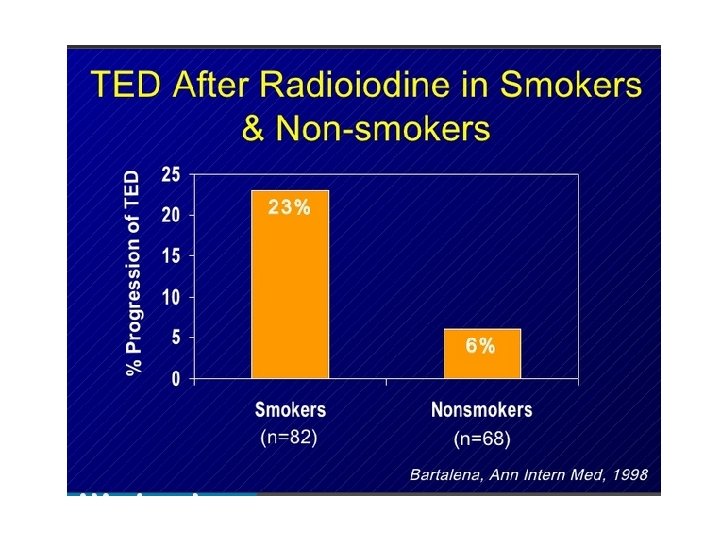
Risk factors • Recent-onset Hyperthyroidism Traisk et al. JCEM: 2009 In recent-onset newly diagnosed Graves, development of GO: After I 131 : 38% With ATDs : 18% • Pre- existing orbitopathy, especially if active Bartalena et al. N Engl J Med : 1998 With pre-existing orbitopathy : 24% Without eye involvement : 8% • Severity of hyperthyroidism: T 3> 325 ng/dl • High serum TSH or TRAb. : > 8. 8 IU/L • Cigarette smoking Bartalena et al. Ann Intern Med : 1998 Non- smokers : 6% Smokers : 23%
Non-smokers
GRAVES, DISEASE Thyroid Treatment 4 • Should the presence of GO limit the use of Radioiodine therapy ?
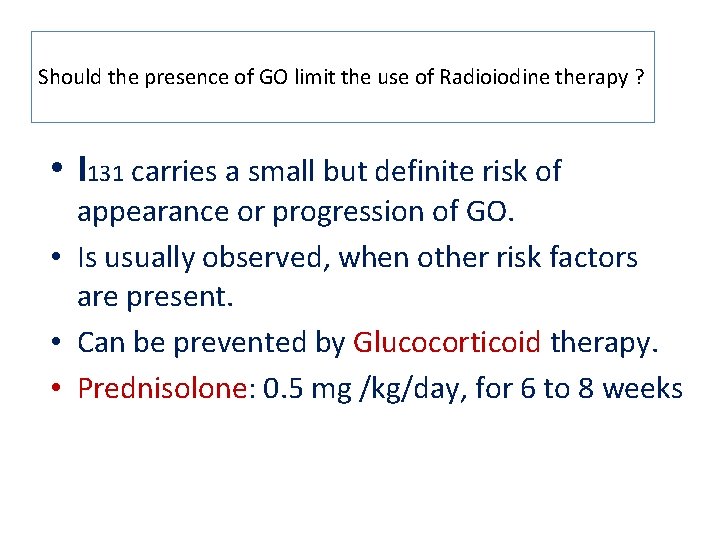
Should the presence of GO limit the use of Radioiodine therapy ? • I 131 carries a small but definite risk of appearance or progression of GO. • Is usually observed, when other risk factors are present. • Can be prevented by Glucocorticoid therapy. • Prednisolone: 0. 5 mg /kg/day, for 6 to 8 weeks
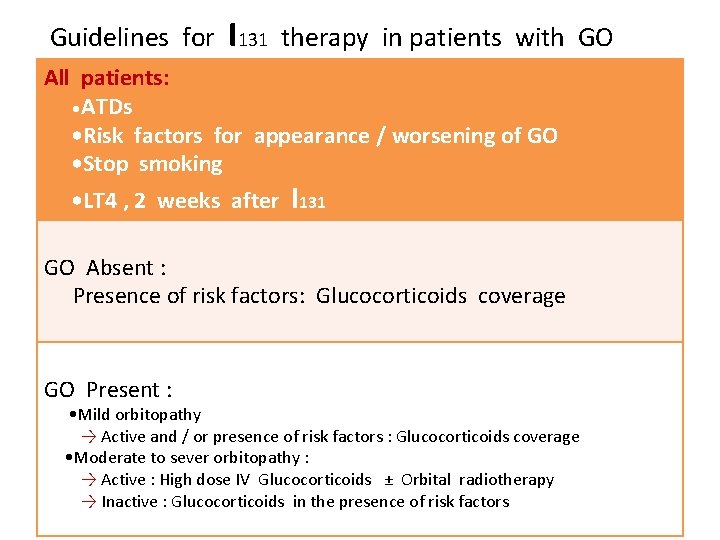
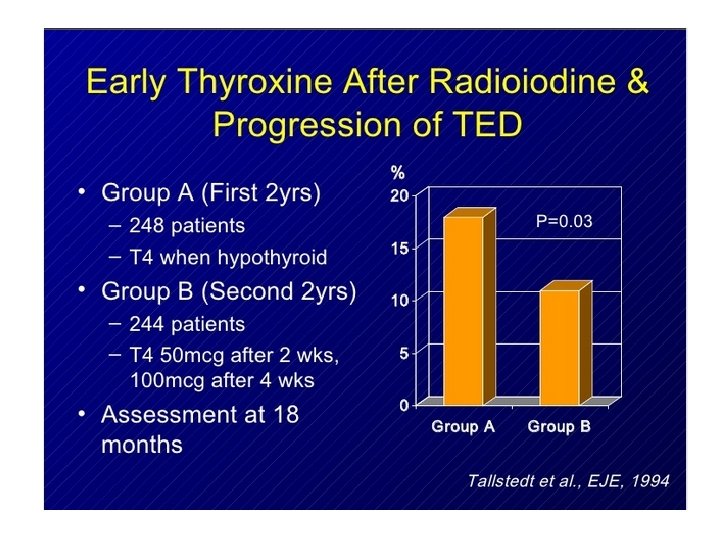
Guidelines for I 131 therapy in patients with GO All patients: • ATDs • Risk factors for appearance / worsening of GO • Stop smoking • LT 4 , 2 weeks after I 131 GO Absent : Presence of risk factors: Glucocorticoids coverage GO Present : • Mild orbitopathy → Active and / or presence of risk factors : Glucocorticoids coverage • Moderate to sever orbitopathy : → Active : High dose IV Glucocorticoids ± Orbital radiotherapy → Inactive : Glucocorticoids in the presence of risk factors
GRAVES, DISEASE Thyroid Treatment 5 • Dose transient hypothyroidism following therapy influence the course of Graves, orbitopathy ?
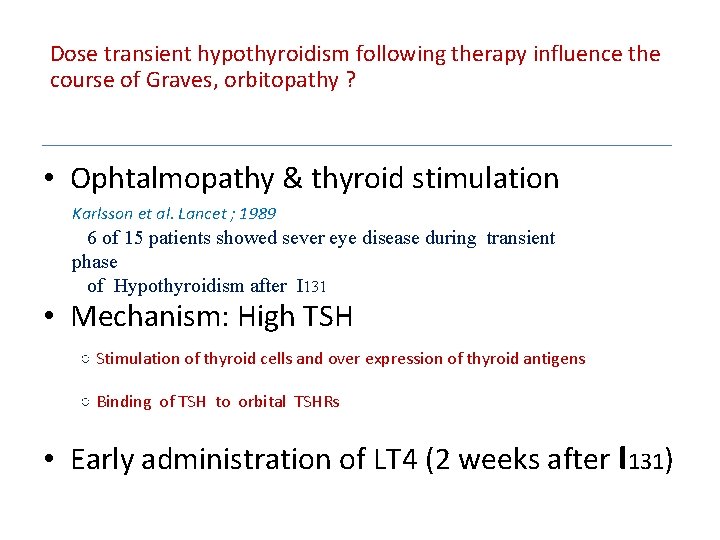
Dose transient hypothyroidism following therapy influence the course of Graves, orbitopathy ? • Ophtalmopathy & thyroid stimulation Karlsson et al. Lancet ; 1989 6 of 15 patients showed sever eye disease during transient phase of Hypothyroidism after I 131 • Mechanism: High TSH ○ Stimulation of thyroid cells and over expression of thyroid antigens ○ Binding of TSH to orbital TSHRs • Early administration of LT 4 (2 weeks after I 131)
GRAVES, DISEASE Thyroid Treatment 6 • Has total thyroid ablation a role in the management of hyperthyroidism in GO ?
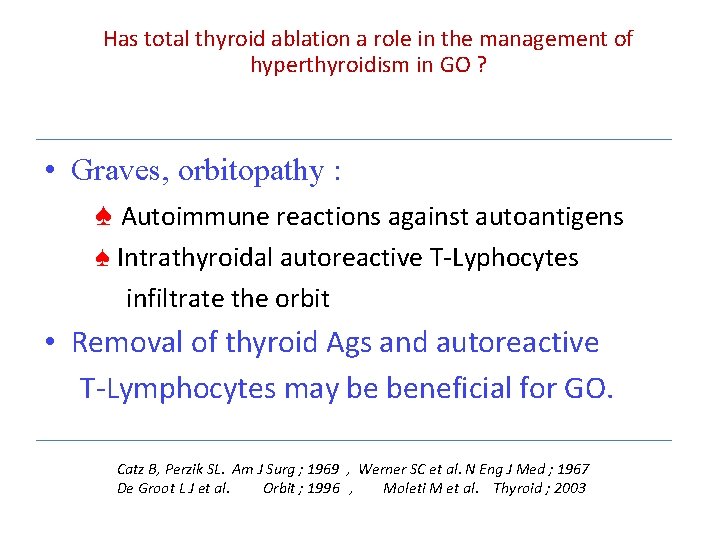
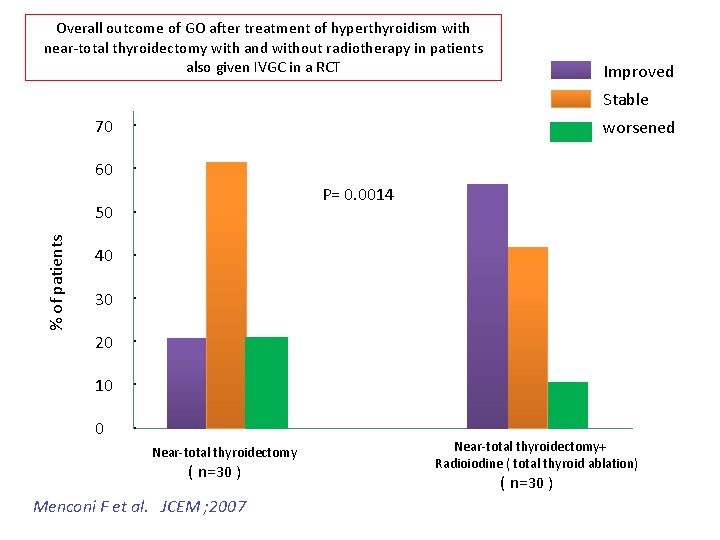
Has total thyroid ablation a role in the management of hyperthyroidism in GO ? • Graves, orbitopathy : ♠ Autoimmune reactions against autoantigens ♠ Intrathyroidal autoreactive T-Lyphocytes infiltrate the orbit • Removal of thyroid Ags and autoreactive T-Lymphocytes may be beneficial for GO. Catz B, Perzik SL. Am J Surg ; 1969 , Werner SC et al. N Eng J Med ; 1967 De Groot L J et al. Orbit ; 1996 , Moleti M et al. Thyroid ; 2003
% of patients Overall outcome of GO after treatment of hyperthyroidism with near-total thyroidectomy with and without radiotherapy in patients also given IVGC in a RCT 70 . 60 . 50 . 40 . 30 . 20 . 10 . Improved Stable worsened P= 0. 0014 Near-total thyroidectomy ( n=30 ) Menconi F et al. JCEM ; 2007 Near-total thyroidectomy+ Radioiodine ( total thyroid ablation) ( n=30 )
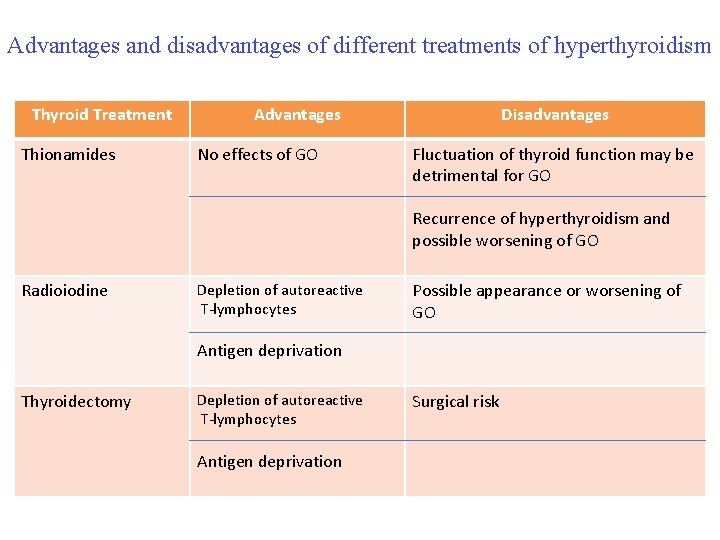
Advantages and disadvantages of different treatments of hyperthyroidism Thyroid Treatment Thionamides Advantages No effects of GO Disadvantages Fluctuation of thyroid function may be detrimental for GO Recurrence of hyperthyroidism and possible worsening of GO Radioiodine Depletion of autoreactive T-lymphocytes Possible appearance or worsening of GO Antigen deprivation Thyroidectomy Depletion of autoreactive T-lymphocytes Antigen deprivation Surgical risk
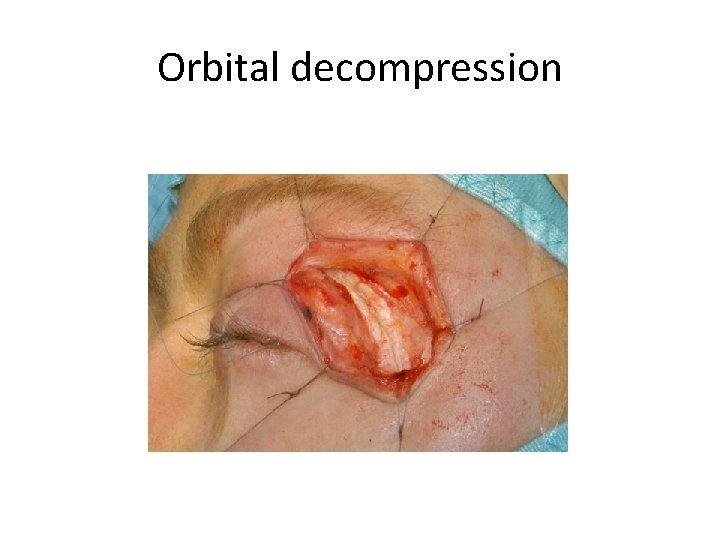
Orbital decompression