
HOW TO TREAT FIRST LINE FAILURE Dr Delphine

- Slides: 17
HOW TO TREAT FIRST LINE FAILURE? Dr Delphine Rea Pôle Hématologie, Oncologie, Radiothérapie Hôpital Saint-Louis Paris, France CML Horizons Münich, May 12, 2012 DR
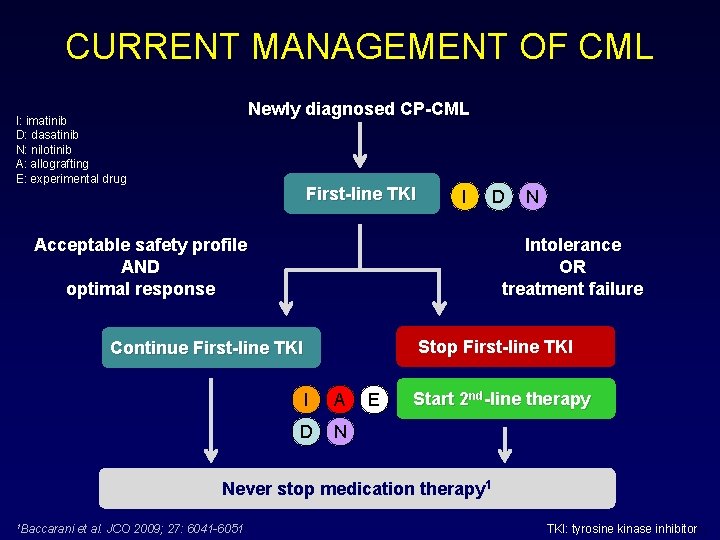
CURRENT MANAGEMENT OF CML Newly diagnosed CP-CML I: imatinib D: dasatinib N: nilotinib A: allografting E: experimental drug First-line TKI I Acceptable safety profile AND optimal response D N Intolerance OR treatment failure Stop First-line TKI Continue First-line TKI I A D N E Start 2 nd-line therapy Never stop medication therapy 1 1 Baccarani et al. JCO 2009; 27: 6041 -6051 TKI: tyrosine kinase inhibitor. DR
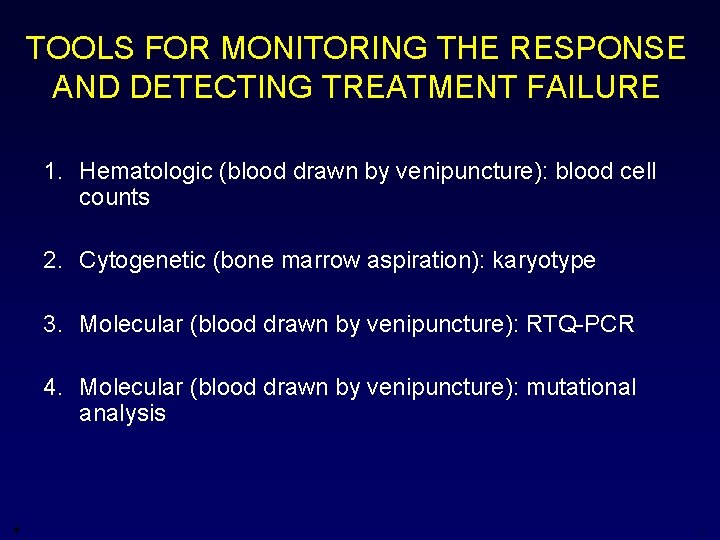
TOOLS FOR MONITORING THE RESPONSE AND DETECTING TREATMENT FAILURE 1. Hematologic (blood drawn by venipuncture): blood cell counts 2. Cytogenetic (bone marrow aspiration): karyotype 3. Molecular (blood drawn by venipuncture): RTQ-PCR 4. Molecular (blood drawn by venipuncture): mutational analysis DR
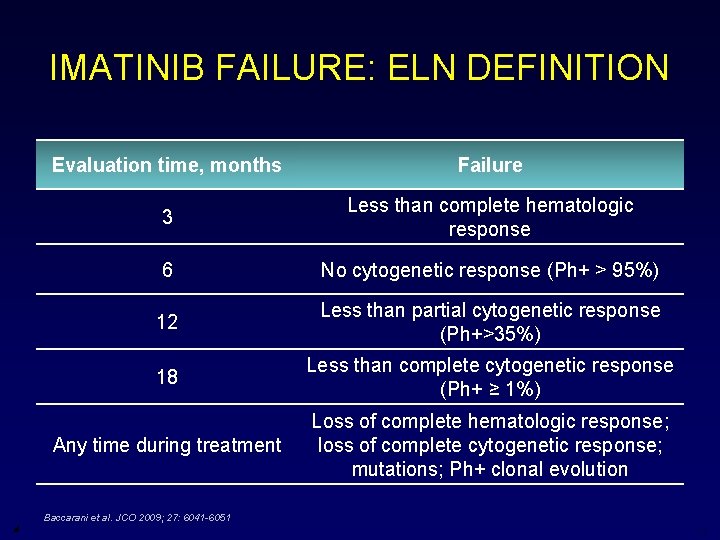
IMATINIB FAILURE: ELN DEFINITION Evaluation time, months Failure 3 Less than complete hematologic response 6 No cytogenetic response (Ph+ > 95%) 12 Less than partial cytogenetic response (Ph+>35%) 18 Less than complete cytogenetic response (Ph+ ≥ 1%) Any time during treatment Loss of complete hematologic response; loss of complete cytogenetic response; mutations; Ph+ clonal evolution Baccarani et al. JCO 2009; 27: 6041 -6051 DR
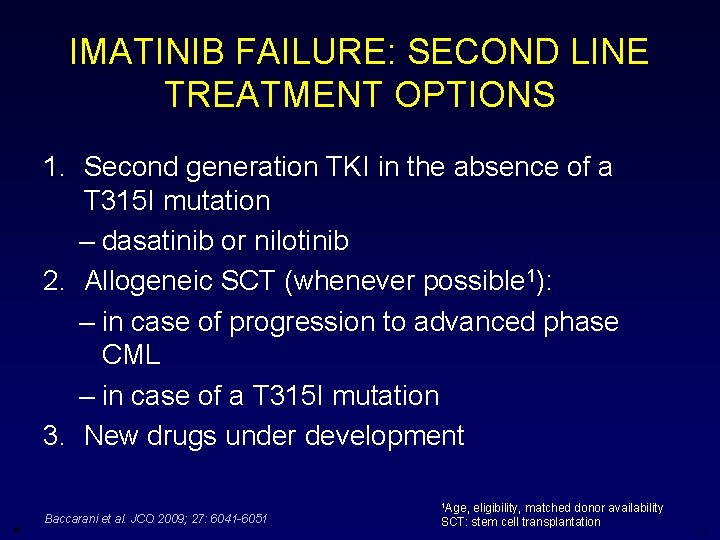
IMATINIB FAILURE: SECOND LINE TREATMENT OPTIONS 1. Second generation TKI in the absence of a T 315 I mutation – dasatinib or nilotinib 2. Allogeneic SCT (whenever possible 1): – in case of progression to advanced phase CML – in case of a T 315 I mutation 3. New drugs under development Baccarani et al. JCO 2009; 27: 6041 -6051 1 Age, eligibility, matched donor availability SCT: stem cell transplantation DR
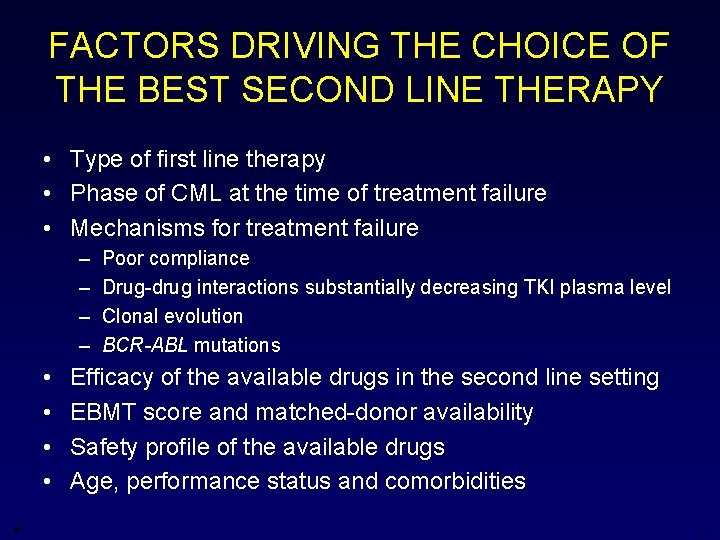
FACTORS DRIVING THE CHOICE OF THE BEST SECOND LINE THERAPY • Type of first line therapy • Phase of CML at the time of treatment failure • Mechanisms for treatment failure – – • • Poor compliance Drug-drug interactions substantially decreasing TKI plasma level Clonal evolution BCR-ABL mutations Efficacy of the available drugs in the second line setting EBMT score and matched-donor availability Safety profile of the available drugs Age, performance status and comorbidities DR
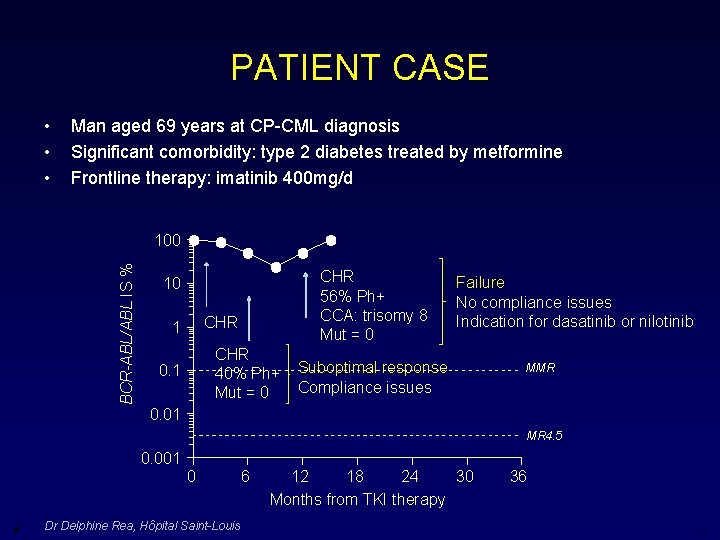
PATIENT CASE • • • Man aged 69 years at CP-CML diagnosis Significant comorbidity: type 2 diabetes treated by metformine Frontline therapy: imatinib 400 mg/d BCR-ABL/ABL IS % 100 CHR 56% Ph+ CCA: trisomy 8 Mut = 0 10 CHR 1 CHR 40% Ph+ Mut = 0 0. 1 Failure No compliance issues Indication for dasatinib or nilotinib Suboptimal response Compliance issues MMR 0. 01 MR 4. 5 0. 001 0 Dr Delphine Rea, Hôpital Saint-Louis 6 12 18 24 30 Months from TKI therapy 36 DR
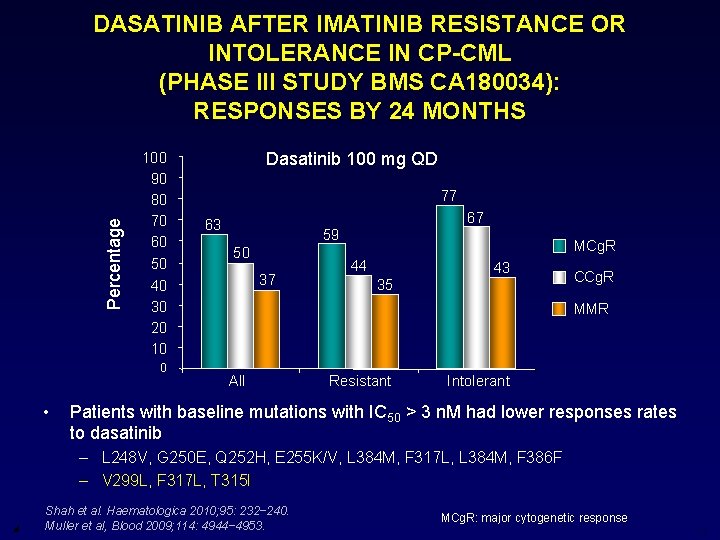
Percentage DASATINIB AFTER IMATINIB RESISTANCE OR INTOLERANCE IN CP-CML (PHASE III STUDY BMS CA 180034): RESPONSES BY 24 MONTHS 100 90 80 70 60 50 40 30 20 10 0 • Dasatinib 100 mg QD 77 67 63 59 50 37 MCg. R 44 43 35 CCg. R MMR All Resistant Intolerant Patients with baseline mutations with IC 50 > 3 n. M had lower responses rates to dasatinib – L 248 V, G 250 E, Q 252 H, E 255 K/V, L 384 M, F 317 L, L 384 M, F 386 F – V 299 L, F 317 L, T 315 I Shah et al. Haematologica 2010; 95: 232− 240. Muller et al, Blood 2009; 114: 4944− 4953. MCg. R: major cytogenetic response DR
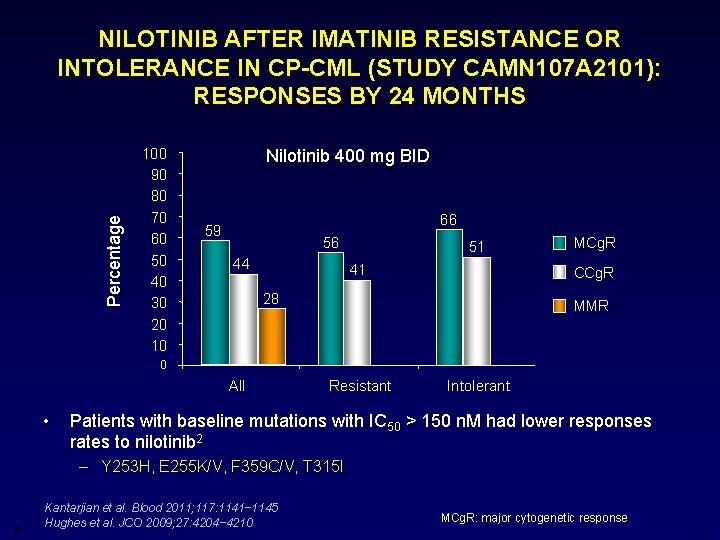
Percentage NILOTINIB AFTER IMATINIB RESISTANCE OR INTOLERANCE IN CP-CML (STUDY CAMN 107 A 2101): RESPONSES BY 24 MONTHS 100 90 80 70 60 50 40 30 20 10 Nilotinib 400 mg BID 66 59 56 44 51 41 MCg. R CCg. R 28 MMR 0 All • Resistant Intolerant Patients with baseline mutations with IC 50 > 150 n. M had lower responses rates to nilotinib 2 – Y 253 H, E 255 K/V, F 359 C/V, T 315 I Kantarjian et al. Blood 2011; 117: 1141− 1145 Hughes et al. JCO 2009; 27: 4204− 4210 MCg. R: major cytogenetic response DR
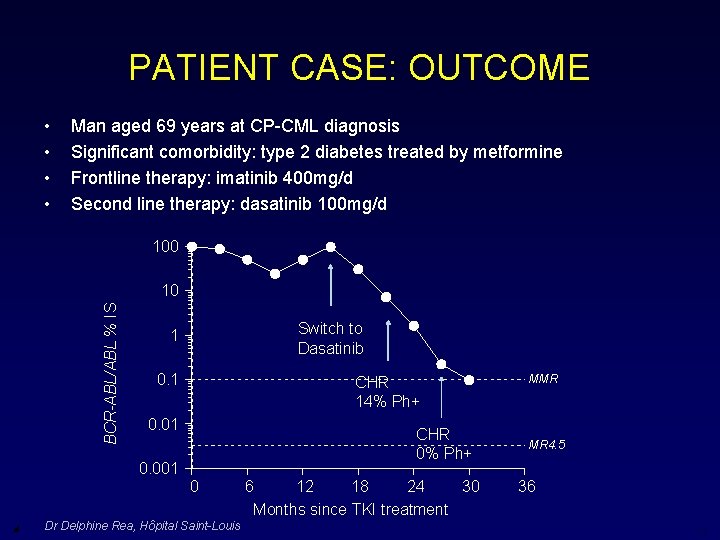
PATIENT CASE: OUTCOME • • Man aged 69 years at CP-CML diagnosis Significant comorbidity: type 2 diabetes treated by metformine Frontline therapy: imatinib 400 mg/d Second line therapy: dasatinib 100 mg/d 100 BCR-ABL/ABL % IS 10 Switch to Dasatinib 1 0. 1 CHR 14% Ph+ 0. 01 CHR 0% Ph+ 0. 001 0 Dr Delphine Rea, Hôpital Saint-Louis 6 12 18 24 30 Months since TKI treatment MMR MR 4. 5 36 DR
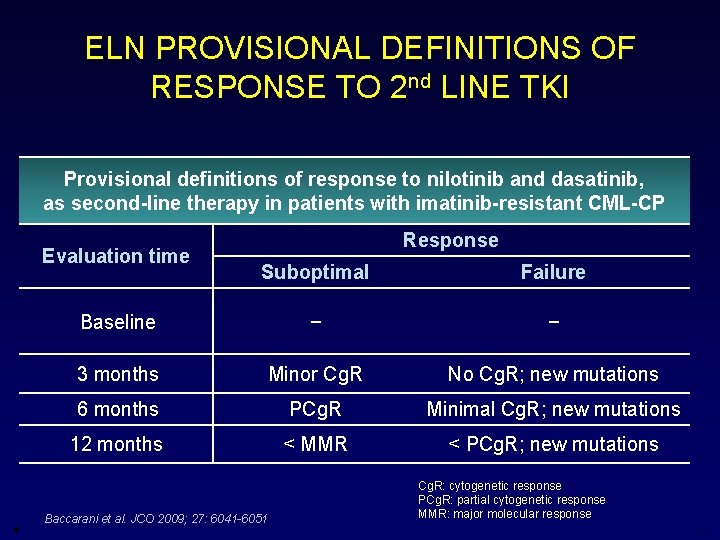
ELN PROVISIONAL DEFINITIONS OF RESPONSE TO 2 nd LINE TKI Provisional definitions of response to nilotinib and dasatinib, as second-line therapy in patients with imatinib-resistant CML-CP Evaluation time Response Suboptimal Failure Baseline − − 3 months Minor Cg. R No Cg. R; new mutations 6 months PCg. R Minimal Cg. R; new mutations 12 months < MMR < PCg. R; new mutations Baccarani et al. JCO 2009; 27: 6041 -6051 Cg. R: cytogenetic response PCg. R: partial cytogenetic response MMR: major molecular response DR
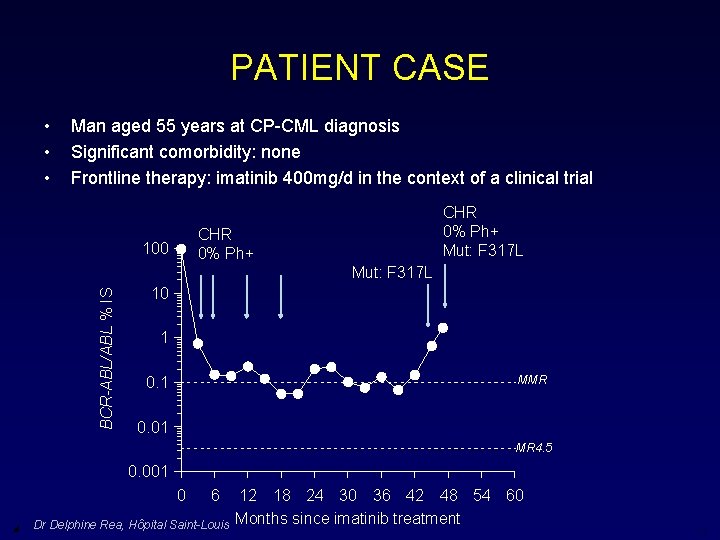
PATIENT CASE • • • Man aged 55 years at CP-CML diagnosis Significant comorbidity: none Frontline therapy: imatinib 400 mg/d in the context of a clinical trial CHR 0% Ph+ Mut: F 317 L CHR 0% Ph+ 100 BCR-ABL/ABL % IS Mut: F 317 L 10 1 MMR 0. 1 0. 01 MR 4. 5 0. 001 0 6 Dr Delphine Rea, Hôpital Saint-Louis 12 18 24 30 36 42 48 54 60 Months since imatinib treatment DR
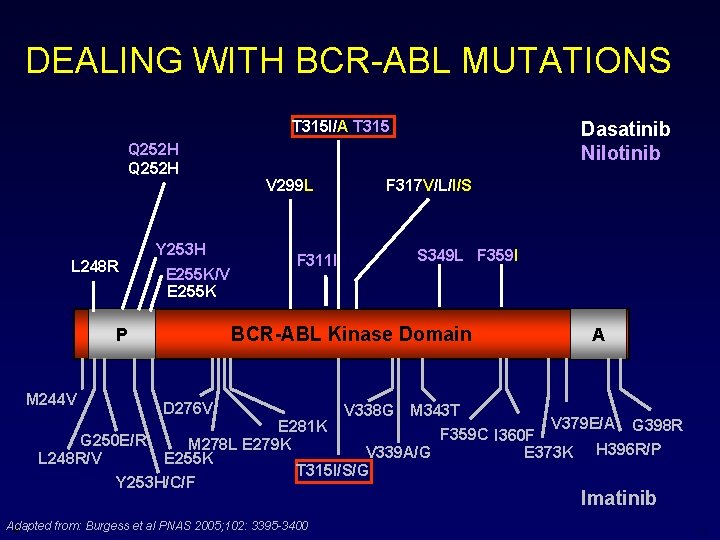
DEALING WITH BCR-ABL MUTATIONS T 315 I/A T 315 I Q 252 H L 248 R Y 253 H E 255 K/V E 255 K F 317 V/L/I/S S 349 L F 359 I F 311 I BCR-ABL Kinase Domain P M 244 V V 299 L Dasatinib Nilotinib D 276 V V 338 G A M 343 T V 379 E/A G 398 R E 281 K F 359 C I 360 F G 250 E/R M 278 L E 279 K V 339 A/G E 373 K H 396 R/P L 248 R/V E 255 K T 315 I/S/G Y 253 H/C/F Imatinib Adapted from: Burgess et al PNAS 2005; 102: 3395 -3400 DR
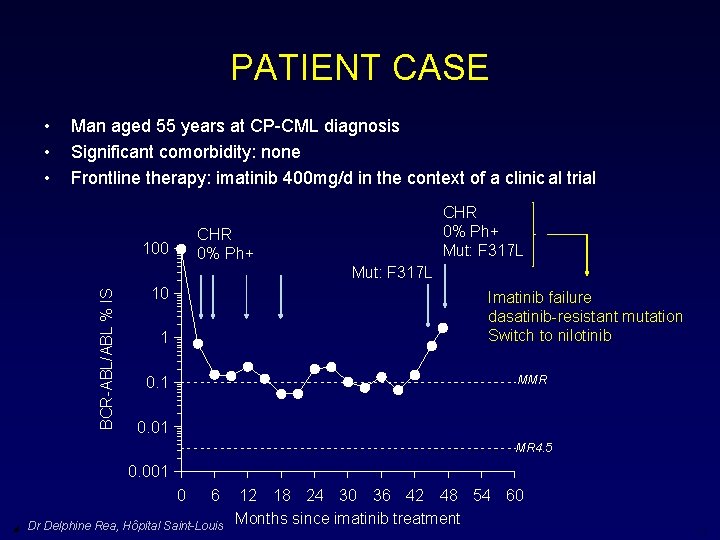
PATIENT CASE • • • Man aged 55 years at CP-CML diagnosis Significant comorbidity: none Frontline therapy: imatinib 400 mg/d in the context of a clinic al trial CHR 0% Ph+ Mut: F 317 L CHR 0% Ph+ 100 BCR-ABL/ABL % IS Mut: F 317 L 10 Imatinib failure dasatinib-resistant mutation Switch to nilotinib 1 MMR 0. 1 0. 01 MR 4. 5 0. 001 0 6 Dr Delphine Rea, Hôpital Saint-Louis 12 18 24 30 36 42 48 54 60 Months since imatinib treatment DR
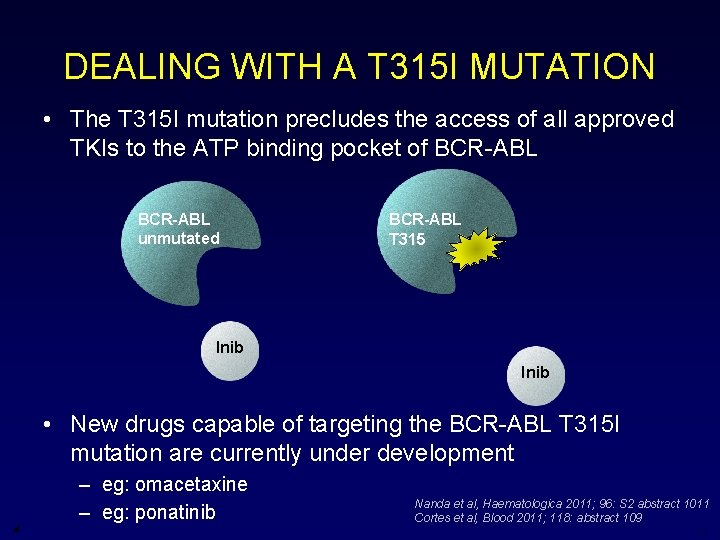
DEALING WITH A T 315 I MUTATION • The T 315 I mutation precludes the access of all approved TKIs to the ATP binding pocket of BCR-ABL unmutated BCR-ABL T 315 Inib • New drugs capable of targeting the BCR-ABL T 315 I mutation are currently under development – eg: omacetaxine – eg: ponatinib Nanda et al, Haematologica 2011; 96: S 2 abstract 1011 Cortes et al, Blood 2011; 118: abstract 109 DR
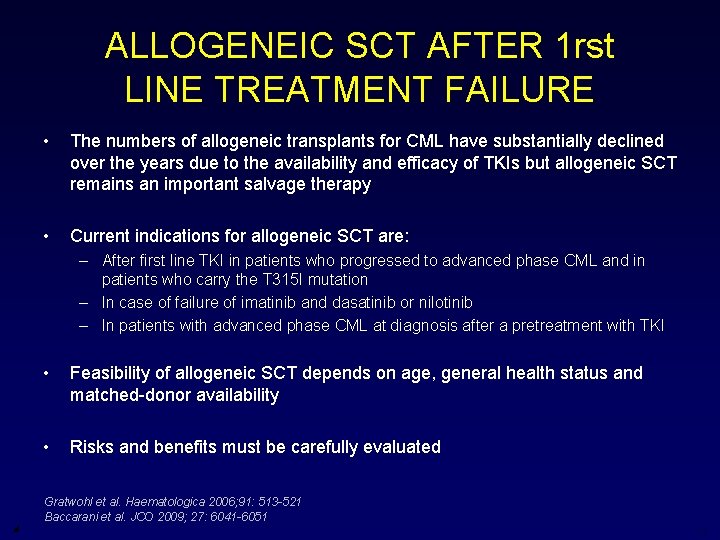
ALLOGENEIC SCT AFTER 1 rst LINE TREATMENT FAILURE • The numbers of allogeneic transplants for CML have substantially declined over the years due to the availability and efficacy of TKIs but allogeneic SCT remains an important salvage therapy • Current indications for allogeneic SCT are: – After first line TKI in patients who progressed to advanced phase CML and in patients who carry the T 315 I mutation – In case of failure of imatinib and dasatinib or nilotinib – In patients with advanced phase CML at diagnosis after a pretreatment with TKI • Feasibility of allogeneic SCT depends on age, general health status and matched-donor availability • Risks and benefits must be carefully evaluated Gratwohl et al. Haematologica 2006; 91: 513 -521 Baccarani et al. JCO 2009; 27: 6041 -6051 DR
CONCLUSIONS • Failure to first line therapy requires a treatment change, with the goal to restore an optimal response • Best second line treatment choice is guided on disease characteristics at the time of treatment failure, patients medical background, safety and efficacy profile of available drugs • New drugs in development like ponatinib may further improve outcomes of patients who fail currently approved TKIs especially those who develop a T 315 I mutation and in whom allogeneic stem cell transplantation is not possible • Allogeneic stem cell transplantation is an option in case of progression to advanced phase disease, emergence of a T 315 I mutation or in case of failure of at least 2 TKIs DR