
How to Succeed in Graduate Studies at UMBC
How to Succeed in Graduate Studies at UMBC CSEE Tim Finin Computer Science and Electrical Engineering University of Maryland, Baltimore County Adapted from presentations by Professor Marie des. Jardins and others August 2017 http: //ebiq. org/r/372
What we’ll cover • • Graduate lifecycles UMBC resources Academic integrity An illustrated guide to a graduate degree
Lifecycle of an MS Student • Take courses – Talk to your advisor (there for a purpose!) and ask other students as well – Take 2 -3 courses/semester if supported – Can transfer some graduate credits, but … • Internship: apply Nov-May for summer • Thesis or project research – – Thesis: six credits, typically over two semesters Project: three credits in one semester (+ more course) Thesis vs. project considerations Write and publish research paper • Apply to Ph. D. program or interview and get job
Lifecycle of a Ph. D. student • • • Take courses and find an advisor Read papers, start thinking of a problem Do 699/898 for early research experience Complete portfolios Take more courses to support your research area Develop a dissertation topic, do preliminary research to establish feasibility, recruit a committee One or more research oriented Internships Write & defend dissertation proposal (prem. exam) Work more, sleep less, coffee, dine at vending machine, write papers, present papers, write dissertation Defend dissertation Interview and get job
Research Advisors • You have a temporary advisor • S/he probably won’t be your research advisor and is under no obligation to take you on as an advisee • You’re responsible for finding an advisor who will guide your M. S. or Ph. D. research • Ideally, do this early on in your second semester, but positively by the end of your first year – Renewal of support depends on it! – Don’t leave it to the last minute! – Submit the change-of-advisor form even if your temporary advisor == research advisor!
How to Find a Research Advisor • Decide areas of interest; all areas is not a valid answer! • Take classes in those areas; very important, even more important than taking core classes • Talk to students in those areas; what do they do? What are their advisor’s interests? , inside scoop on lab? • Attend talks and thesis/dissertation defenses • Read a lot on the topics you’re interested in • Downselect to a few candidates, arm yourself with knowledge of their projects and how you might fit in…
Contacting Potential Advisors • Knock on door or set up appointment by email • Have icebreaker questions at the ready: – I’m interested in areas X, Y and Z. Can you tell me more about your research in those areas? – Do you have any ongoing projects that I might be able to learn more about or contribute to? – May I sit in on your lab meetings? • Be persistent… – Stay in touch with your potential advisor(s) • …but not annoying – Faculty are usually busy and have limited time
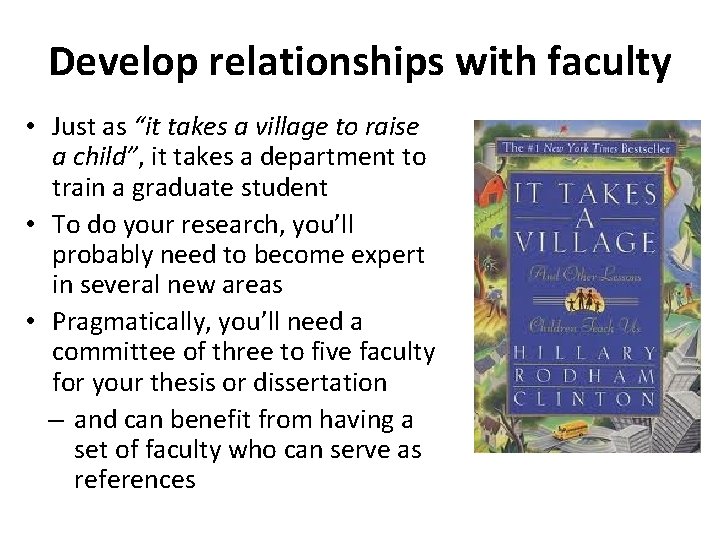
Develop relationships with faculty • Just as “it takes a village to raise a child”, it takes a department to train a graduate student • To do your research, you’ll probably need to become expert in several new areas • Pragmatically, you’ll need a committee of three to five faculty for your thesis or dissertation – and can benefit from having a set of faculty who can serve as references
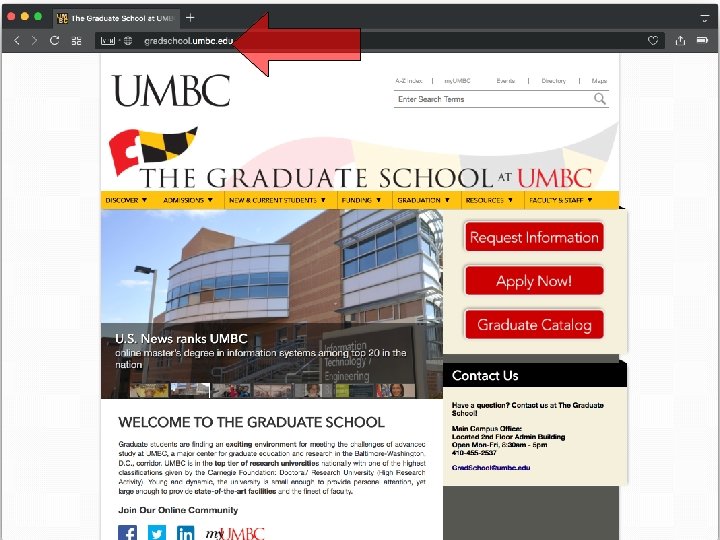
Campus Resources and Activities
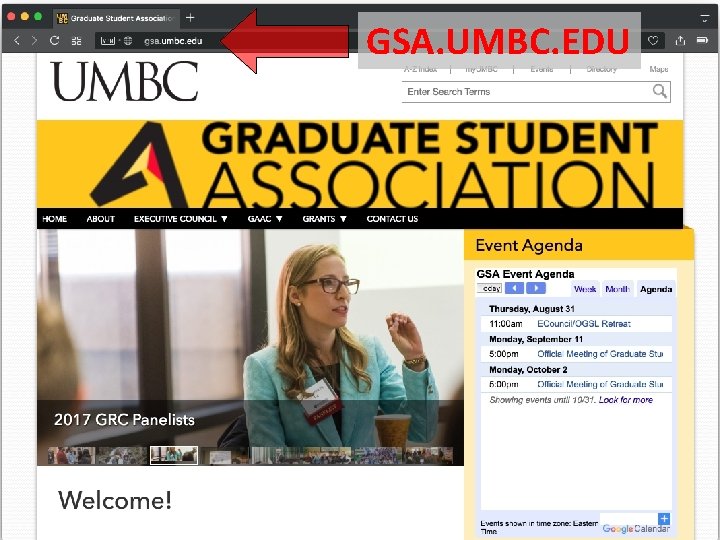
GSA. UMBC. EDU
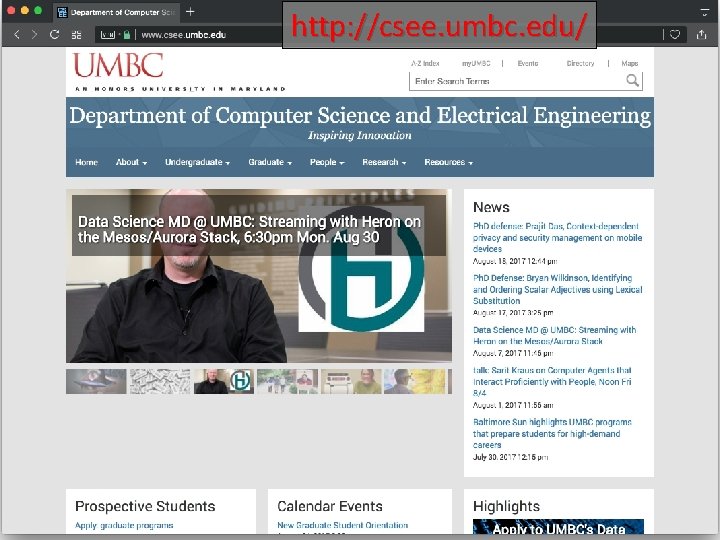
http: //csee. umbc. edu/
http: //facebook. com/UMBCCSEE
follow @UMBCCSEE on Twitter
Academic and Professional Integrity
Professionalism • Graduate school is your transition from student to professional • Profession: “a calling requiring specialized knowledge and often long and intensive academic preparation” (Merriam-Webster online) • Successful professionals exhibit appropriate standards and integrity • The following comments on academic standards also apply to our professions
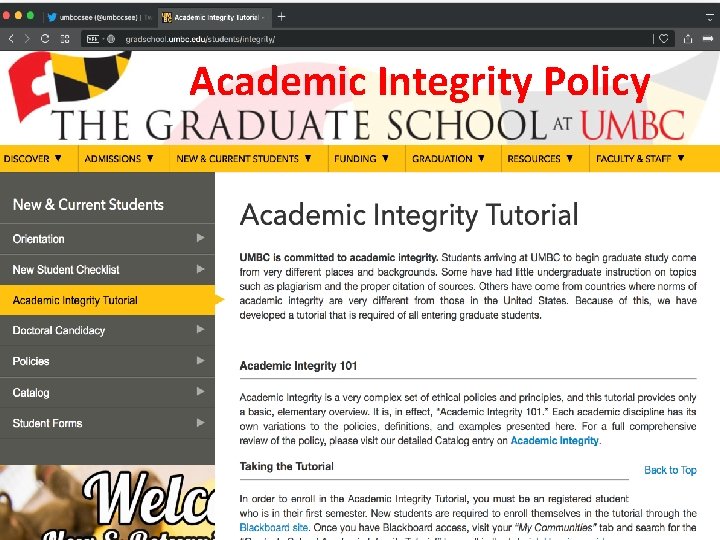
Academic Integrity Policy
To What Does It Apply? • Class work: Homework, exams, projects • Research: proposals, reports, data, code …even if not published, if it is represented as your work it must be your work • Publications: in journals, conferences, workshops, symposia, self published • If you have to ask if it applies, the answer is almost certainly YES • When in doubt, ask your professor/advisor!
Academic Integrity Violations • Cheating: – Obtaining exam questions illegally or copying answers from others or any outside source • Fabrication: – Falsification of data or results; misrepresenting your qualifications • Plagiarism: – Representing another’s words as your own • Abetting: – Helping others to cheat, falsify or plagiarize generally results in the same penalty
Penalties • Each professor sets his or her own policies. • Typical penalties depend on the severity, and whether it is a first offense. • They may include: – Receiving a zero on an assignment – Being required to redo the assignment, without credit, in order to pass the class – Receiving a full grade reduction in the class – Suspension or expulsion from the university
The illustrated guide to a Ph. D. • Professor Matt Might, CS, University of Utah has a good way of explaining what it means to do a Ph. D. – It is also applicable to doing MS research – and probably your life after graduation • The presentation is licensed under the Creative Commons Attribution Non. Commercial 2. 5 License
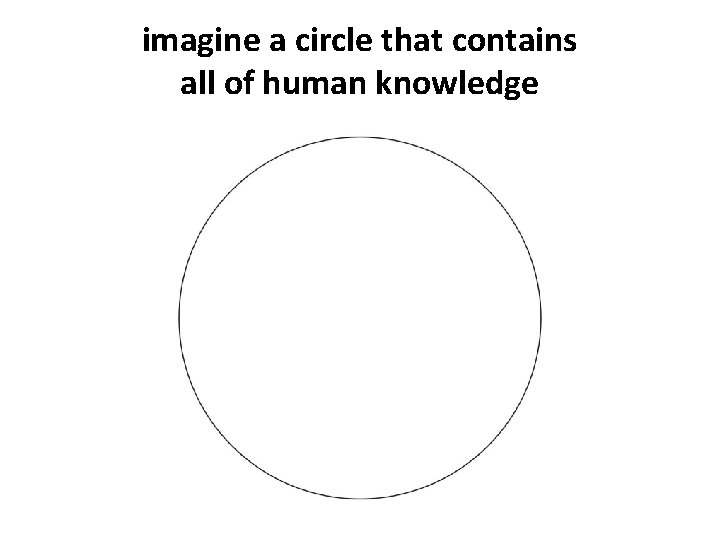
imagine a circle that contains all of human knowledge
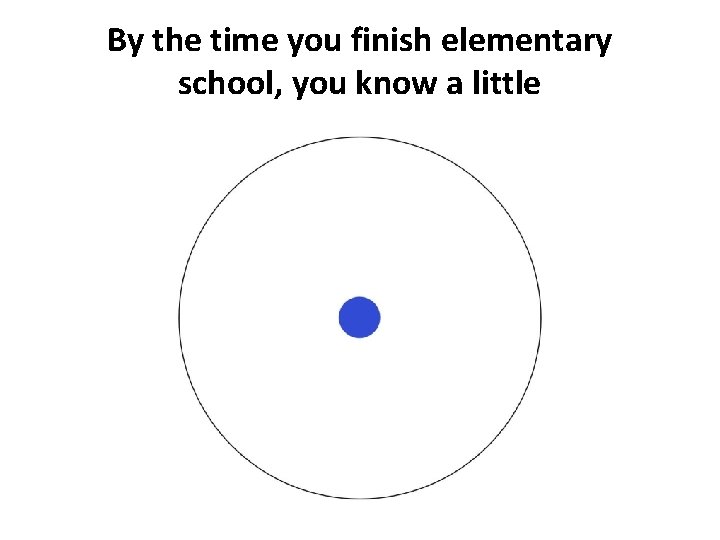
By the time you finish elementary school, you know a little
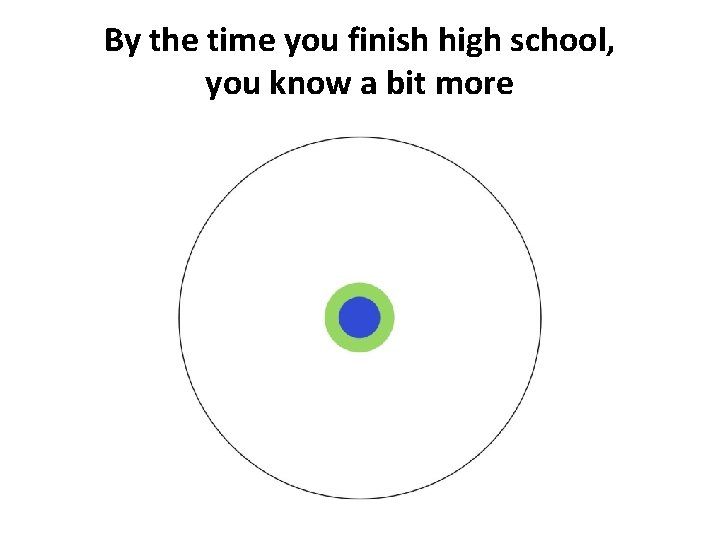
By the time you finish high school, you know a bit more
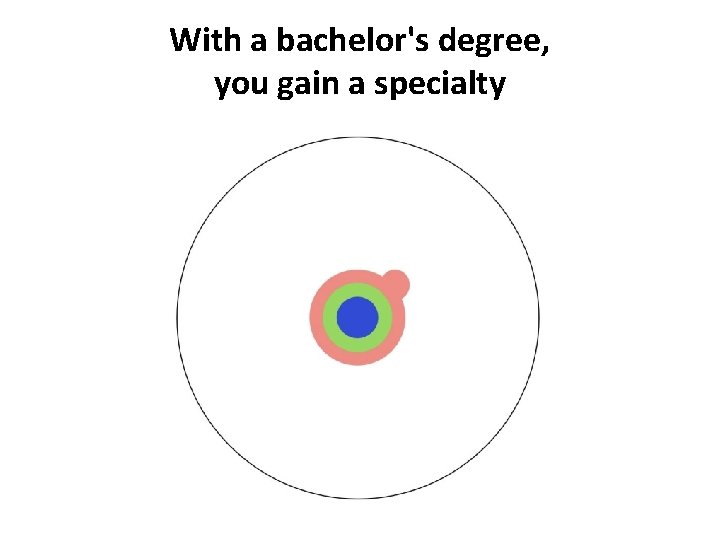
With a bachelor's degree, you gain a specialty
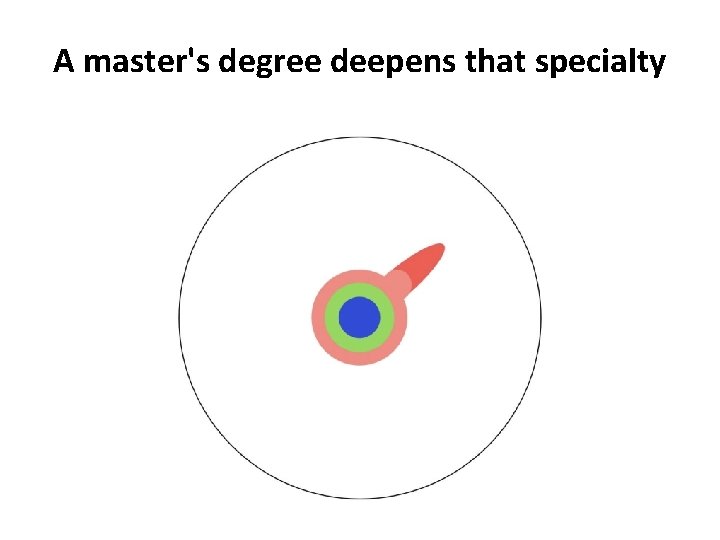
A master's degree deepens that specialty
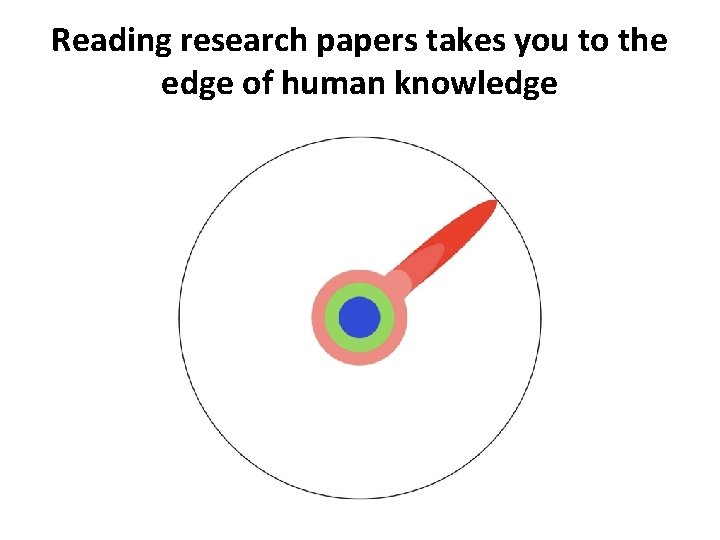
Reading research papers takes you to the edge of human knowledge
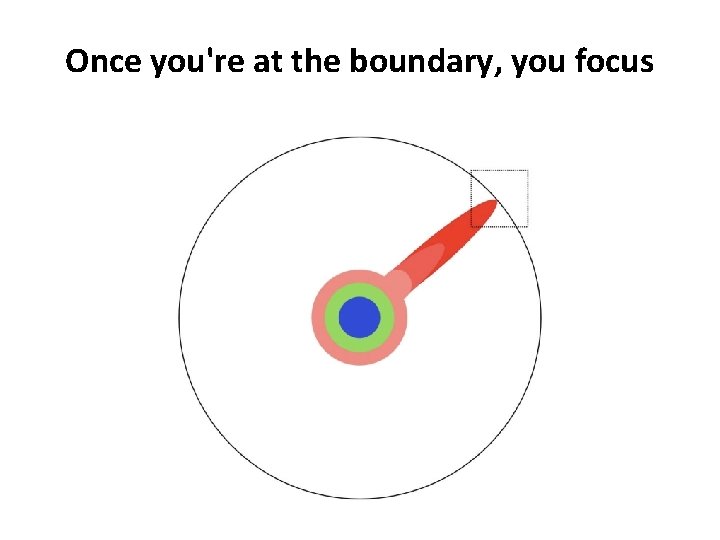
Once you're at the boundary, you focus
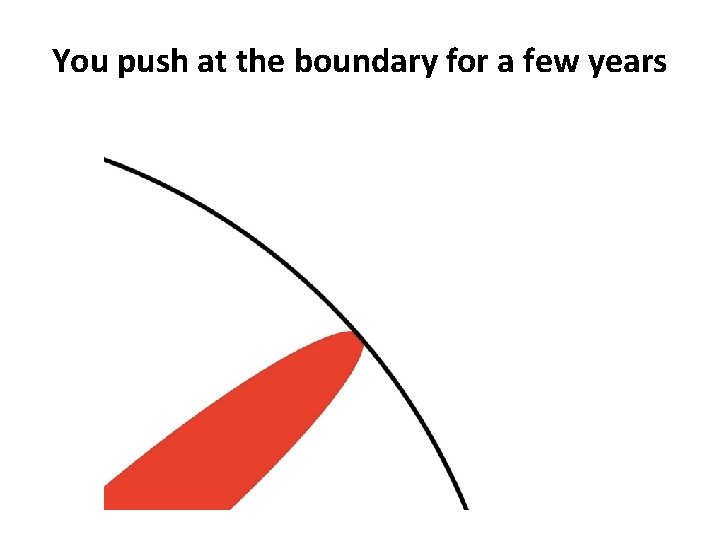
You push at the boundary for a few years
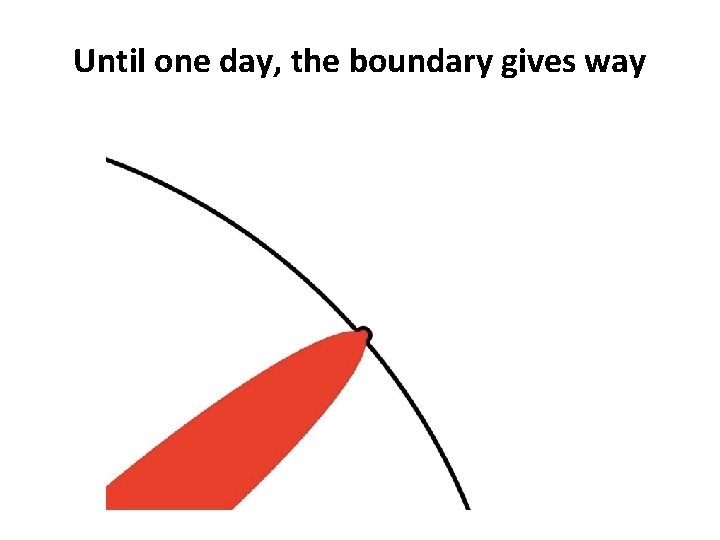
Until one day, the boundary gives way
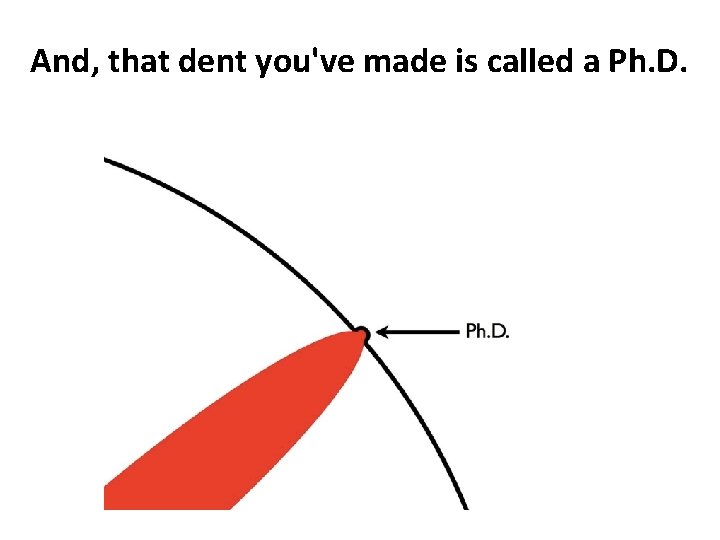
And, that dent you've made is called a Ph. D.
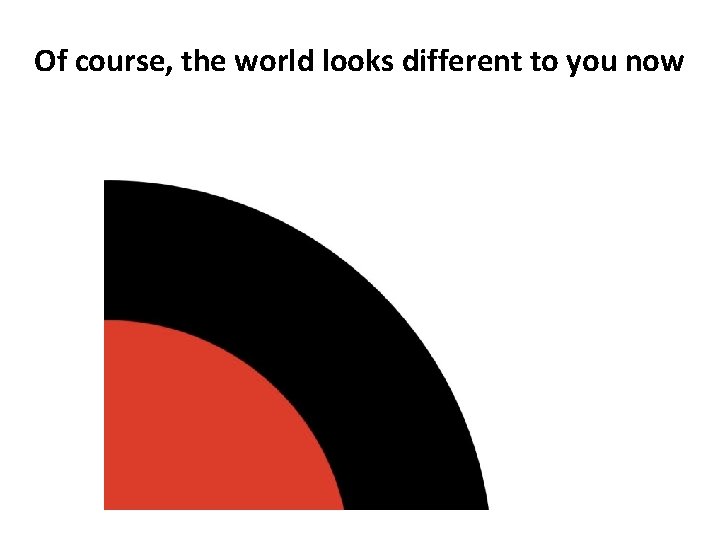
Of course, the world looks different to you now

So, don't forget the bigger picture
Keep pushing
- Slides: 34