
How To Structure And Plan A Presentation Giulia


- Slides: 30
How To Structure And Plan A Presentation Giulia Welch, MPA Dominican University
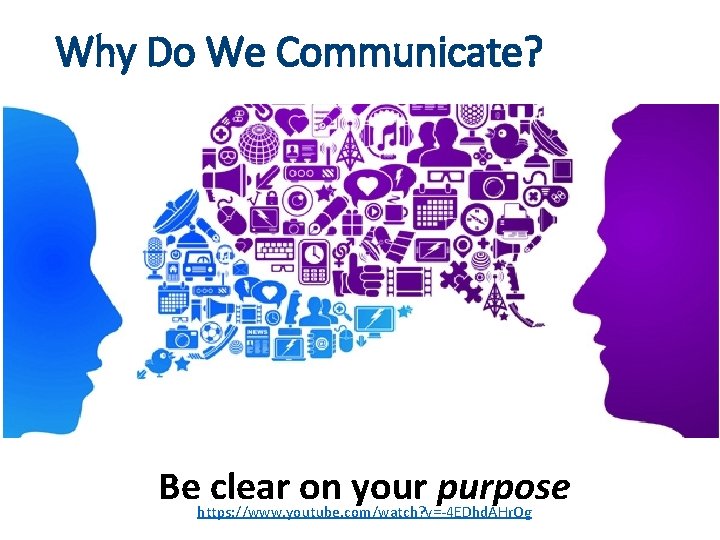
Why Do We Communicate? Be clear on your purpose https: //www. youtube. com/watch? v=-4 EDhd. AHr. Og
Today We Will Cover… • How we communicate • How Presentations Are Different • How to structure effective presentation • How to deliver an effective presentation
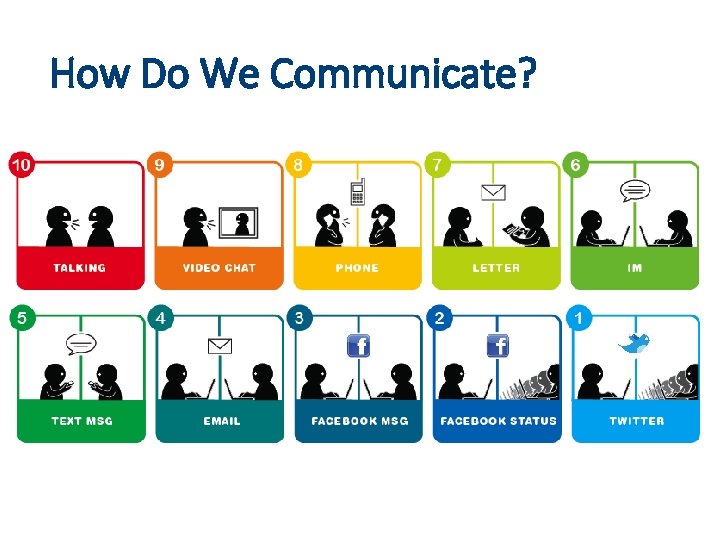
How Do We Communicate?
How Are Presentations Different?
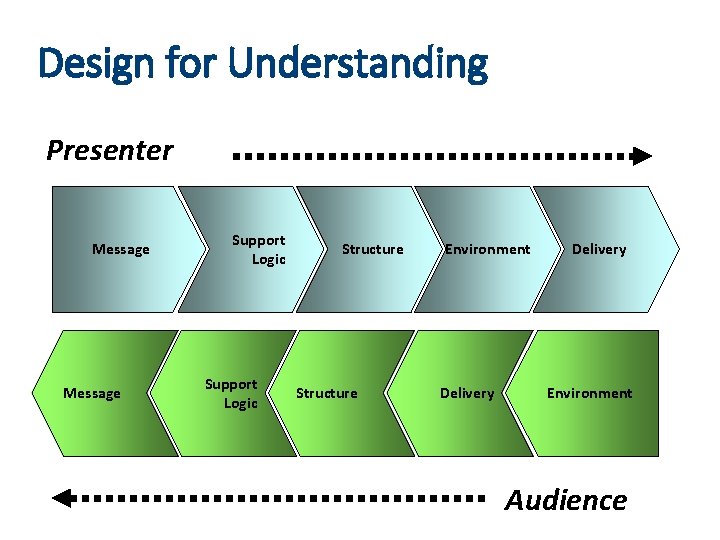
Design for Understanding Presenter Message Support Logic Structure Environment Delivery Environment Audience
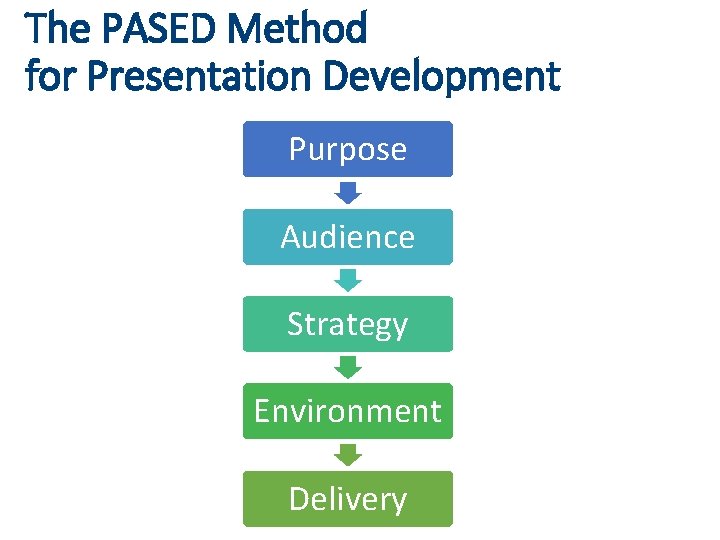
The PASED Method for Presentation Development Purpose Audience Strategy Environment Delivery
Define The Presenter's Purpose • Clearly define your purpose • Have one major goal • If you can not say it in one sentence, it is not clear enough
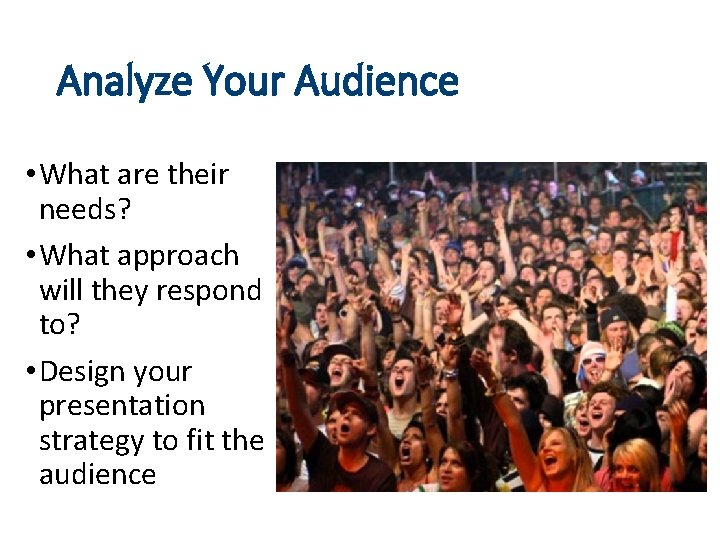
Analyze Your Audience • What are their needs? • What approach will they respond to? • Design your presentation strategy to fit the audience
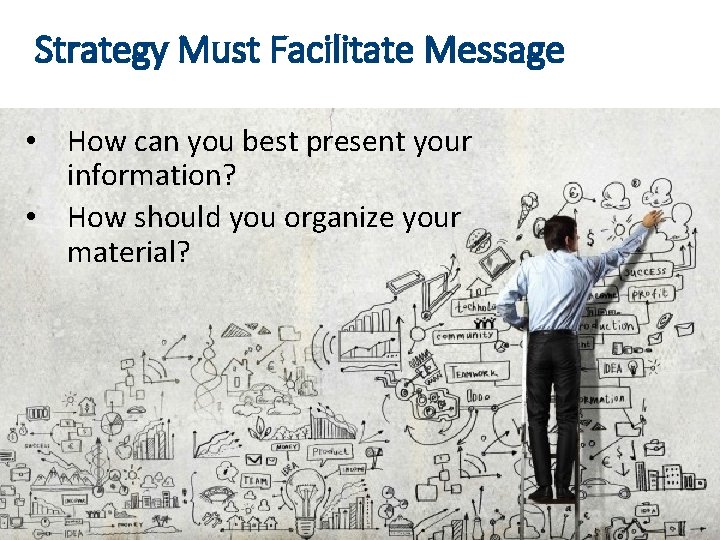
Strategy Must Facilitate Message • How can you best present your information? • How should you organize your material?
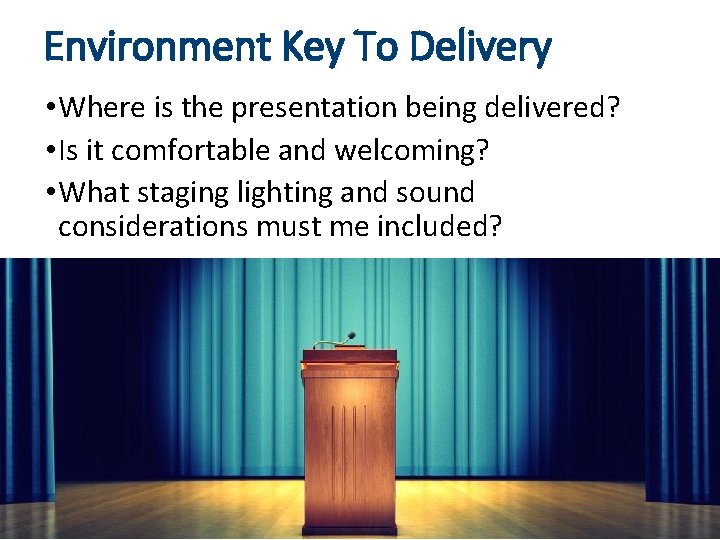
Environment Key To Delivery • Where is the presentation being delivered? • Is it comfortable and welcoming? • What staging lighting and sound considerations must me included?
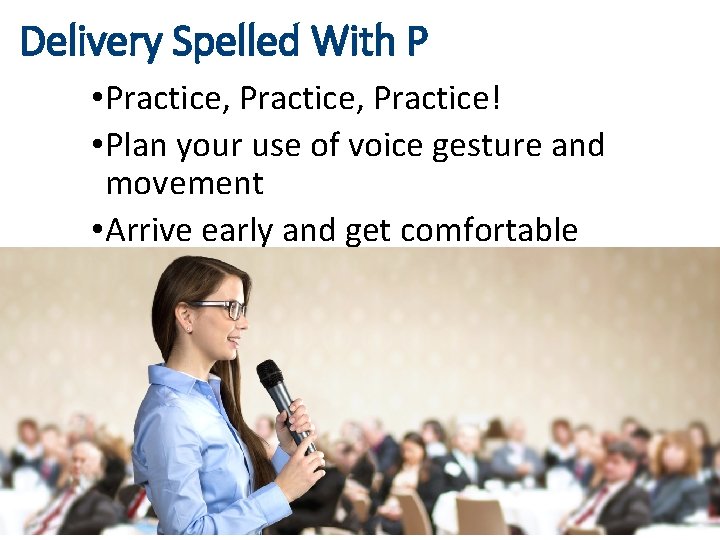
Delivery Spelled With P • Practice, Practice! • Plan your use of voice gesture and movement • Arrive early and get comfortable
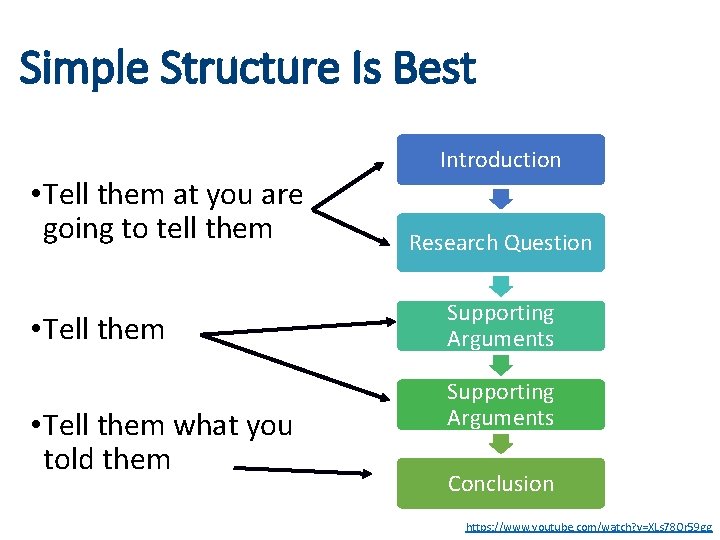
Simple Structure Is Best Introduction • Tell them at you are going to tell them • Tell them what you told them Research Question Supporting Arguments Conclusion https: //www. youtube. com/watch? v=XLs 78 Or 59 gg
Open With A Hook • Attention getting message • Share an anecdote • Make an analogy • Offer a startling fact or statistic • Cite a quotation • Unusual detail • Begin a dialog http: //www. youtube. com/watch? v=EHWRku. Dl. NOE&feature=gv#
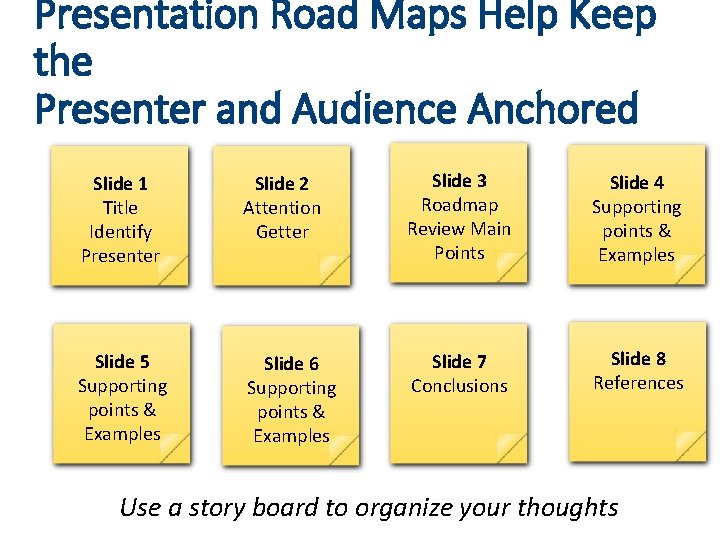
Presentation Road Maps Help Keep the Presenter and Audience Anchored Slide 1 Title Identify Presenter Slide 2 Attention Getter Slide 3 Roadmap Review Main Points Slide 4 Supporting points & Examples Slide 5 Supporting points & Examples Slide 6 Supporting points & Examples Slide 7 Conclusions Slide 8 References Use a story board to organize your thoughts
Conclusion Is The Most Important • Do not say: Ok that’s it – any questions? • What do you want the audience to walk away with? • Plan your final point ahead of time. • Conclude with a strong point, pause, thank the audience, and then solicit questions.
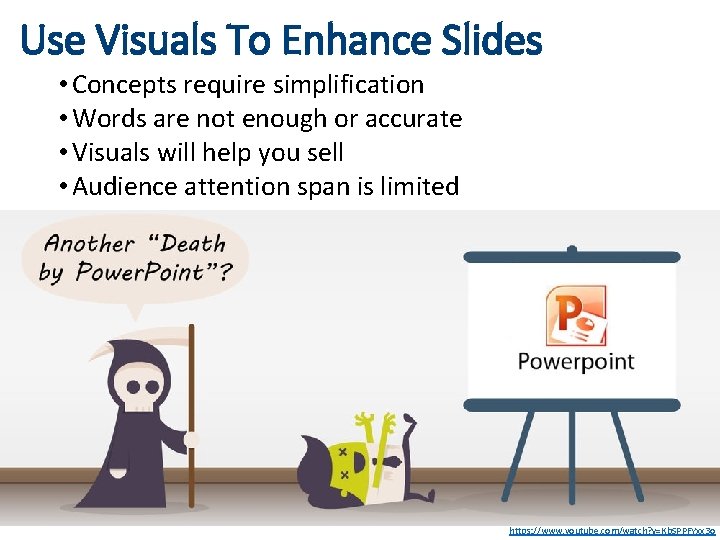
Use Visuals To Enhance Slides • Concepts require simplification • Words are not enough or accurate • Visuals will help you sell • Audience attention span is limited https: //www. youtube. com/watch? v=Kb. SPPFYxx 3 o
Design Gives First Impression • Fonts • Must be used in a consistent and cautions fashion • Backgrounds • Serve no purpose other than to affect visual appeal • Whitespace • Color • Creates visual appeal and variation but can wash out on Projection • Audio ♪ ♫ ♫ ♪ ♪ • Tool or just noise?
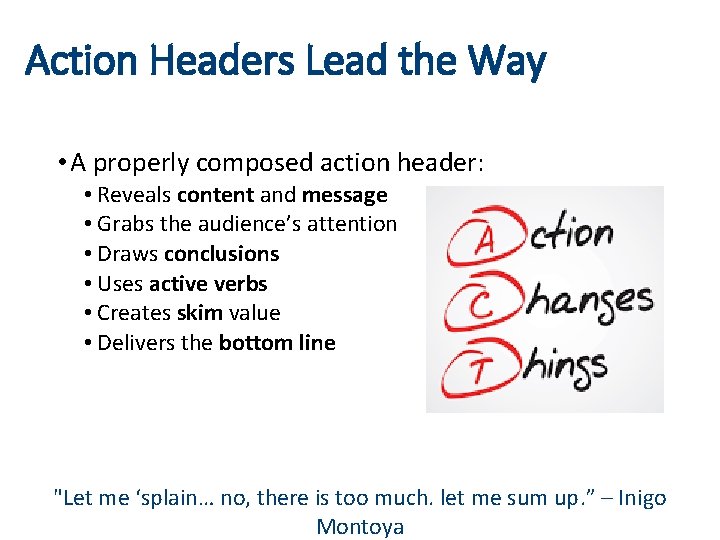
Action Headers Lead the Way • A properly composed action header: • Reveals content and message • Grabs the audience’s attention • Draws conclusions • Uses active verbs • Creates skim value • Delivers the bottom line "Let me ‘splain… no, there is too much. let me sum up. ” – Inigo Montoya
There's A Reason We know These… "We try harder” "Every kiss begins with Kay” "Think different" "Got milk? " "Imagination at work" "When it absolutely positively has to be there overnight“ “Maybe she’s born with it …” “I’m loving it“ “Good to the last drop" “What happens here, stays here…” "Breakfast of champions" "Just do it“ “You’re in good hands”
3 Ps: Practice, Practice The More You Sweat In Practice, The Less You Bleed In Battle
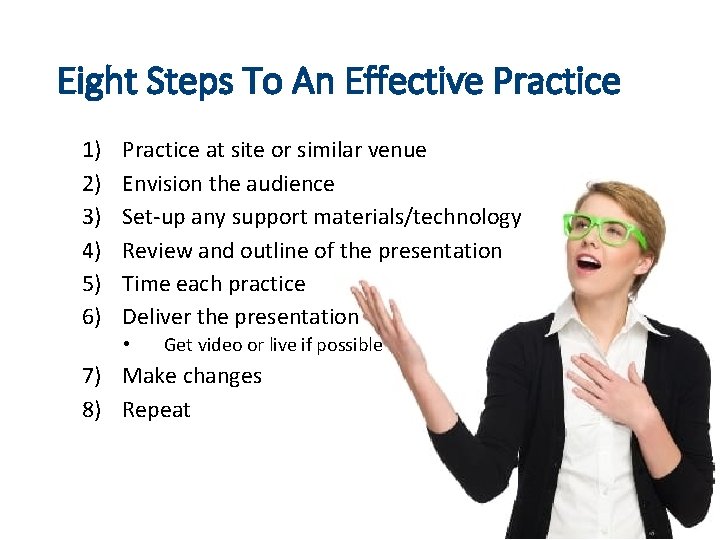
Eight Steps To An Effective Practice 1) 2) 3) 4) 5) 6) Practice at site or similar venue Envision the audience Set-up any support materials/technology Review and outline of the presentation Time each practice Deliver the presentation • Get video or live if possible 7) Make changes 8) Repeat
What Does Nervousness Look Like?
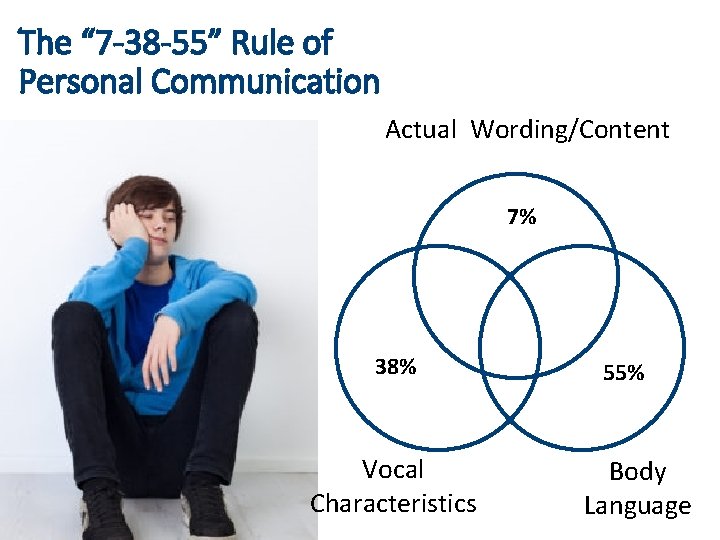
The “ 7 -38 -55” Rule of Personal Communication Actual Wording/Content 7% 38% Vocal Characteristics 55% Body Language
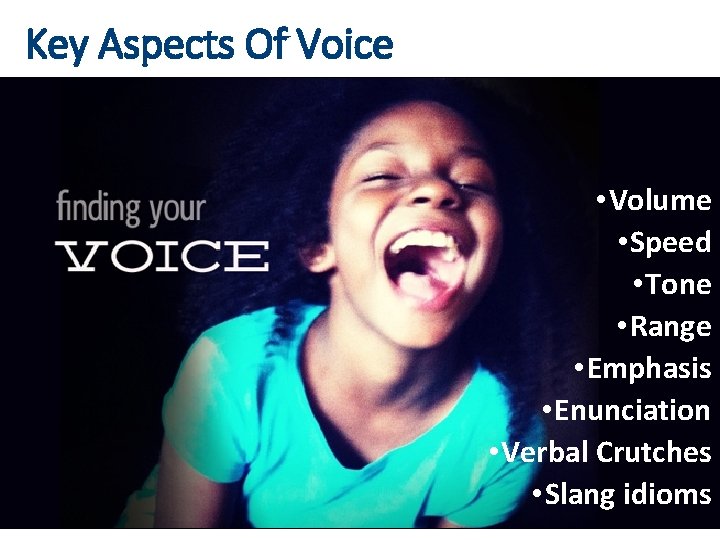
Key Aspects Of Voice • Volume • Speed • Tone • Range • Emphasis • Enunciation • Verbal Crutches • Slang idioms
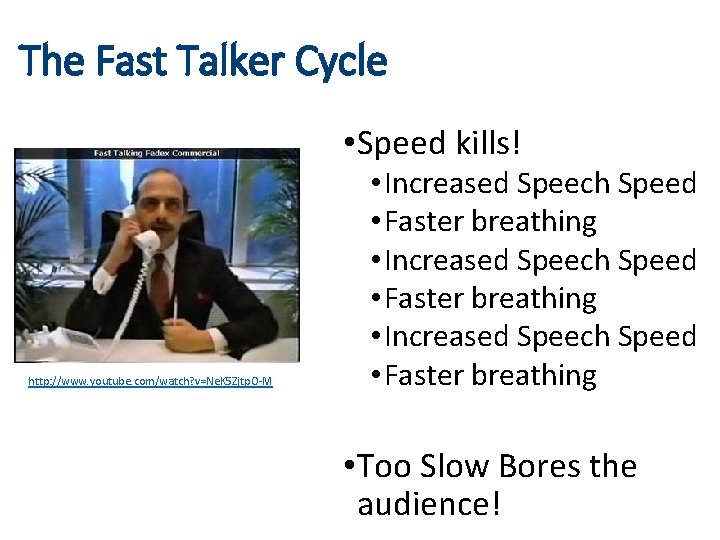
The Fast Talker Cycle • Speed kills! http: //www. youtube. com/watch? v=Ne. K 5 Zjtp. O-M • Increased Speech Speed • Faster breathing • Too Slow Bores the audience!
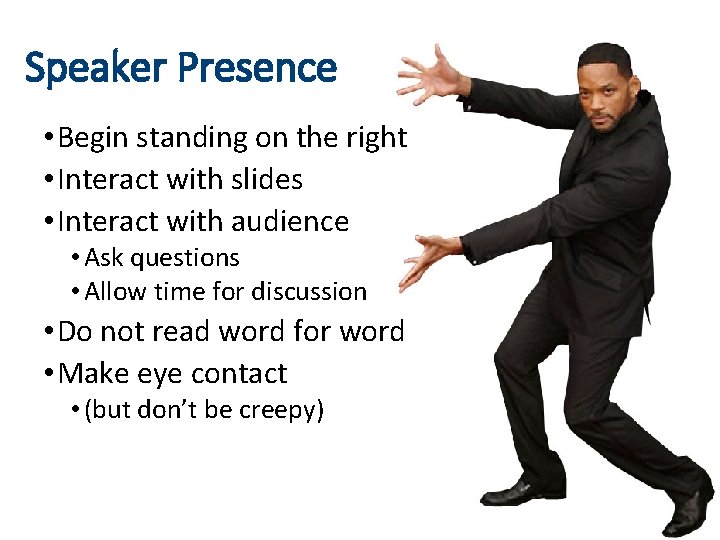
Speaker Presence • Begin standing on the right • Interact with slides • Interact with audience • Ask questions • Allow time for discussion • Do not read word for word • Make eye contact • (but don’t be creepy)
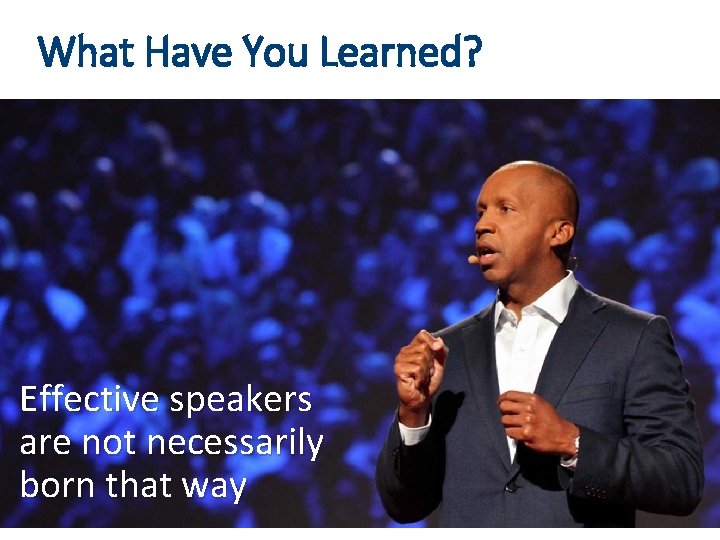
What Have You Learned? Effective speakers are not necessarily born that way
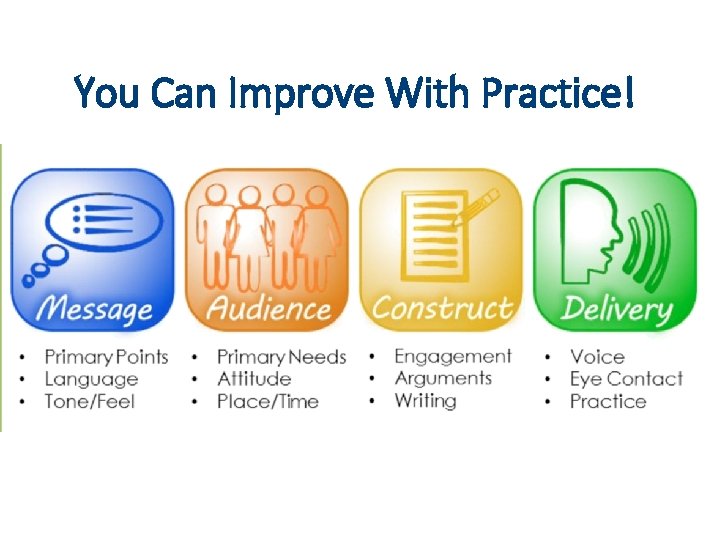
You Can Improve With Practice!
Sources Young, Dona J. (2006). Foundations of Business Communications, An Interactive Approach. New York, NY: Mc. Graw Hill - Irwin. Adler, Ronald B. & Elmhorst, Jeanne Marquardt (2008). Communicating at Work, Principles and Practices for Business and the Professions (9 th ed. ). New York, NY: Mc. Graw Hill Irwin. Rose, K. (2007). Power Language: Effective Communication for Executive Development. Ann Arbor: Xan. Edu Original Works. Leeds, C. (2008). Effective Communication through Presentations. Ann Arbor: Xan. Edu Original Works.