
How to Structure an Argument Classical Oration note
- Slides: 4
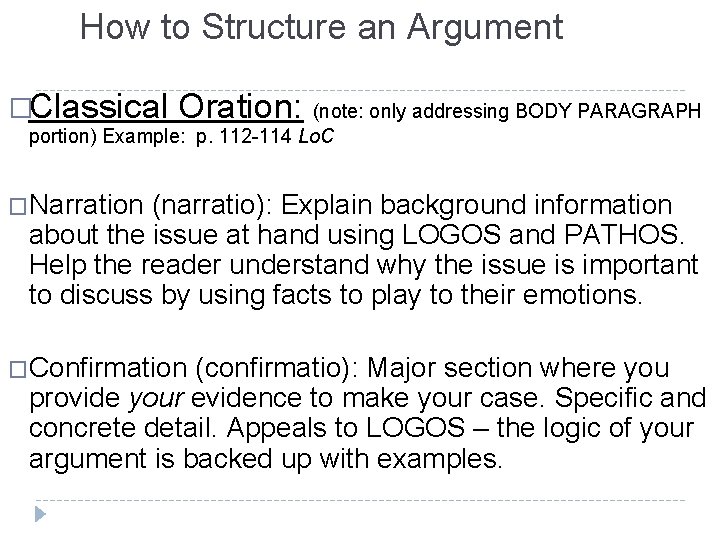
How to Structure an Argument �Classical Oration: (note: only addressing BODY PARAGRAPH portion) Example: p. 112 -114 Lo. C �Narration (narratio): Explain background information about the issue at hand using LOGOS and PATHOS. Help the reader understand why the issue is important to discuss by using facts to play to their emotions. �Confirmation (confirmatio): Major section where you provide your evidence to make your case. Specific and concrete detail. Appeals to LOGOS – the logic of your argument is backed up with examples.
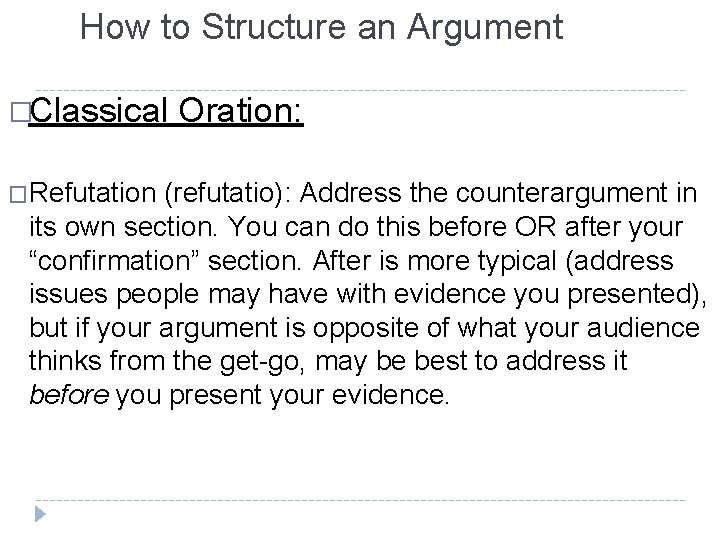
How to Structure an Argument �Classical �Refutation Oration: (refutatio): Address the counterargument in its own section. You can do this before OR after your “confirmation” section. After is more typical (address issues people may have with evidence you presented), but if your argument is opposite of what your audience thinks from the get-go, may be best to address it before you present your evidence.
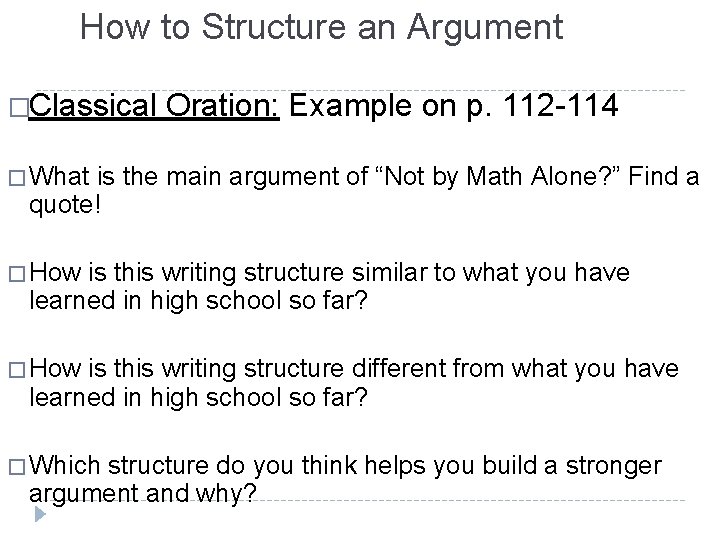
How to Structure an Argument �Classical Oration: Example on p. 112 -114 � What is the main argument of “Not by Math Alone? ” Find a quote! � How is this writing structure similar to what you have learned in high school so far? � How is this writing structure different from what you have learned in high school so far? � Which structure do you think helps you build a stronger argument and why?
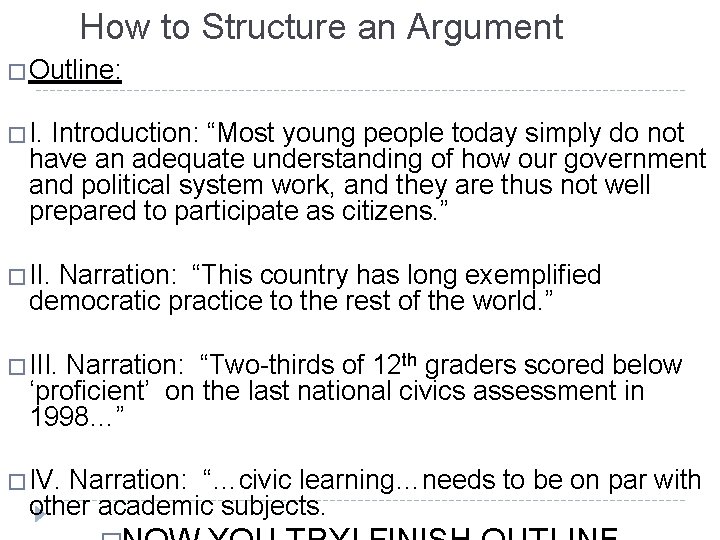
How to Structure an Argument �Outline: �I. Introduction: “Most young people today simply do not have an adequate understanding of how our government and political system work, and they are thus not well prepared to participate as citizens. ” �II. Narration: “This country has long exemplified democratic practice to the rest of the world. ” �III. Narration: “Two-thirds of 12 th graders scored below ‘proficient’ on the last national civics assessment in 1998…” �IV. Narration: “…civic learning…needs to be on par with other academic subjects.