
How to Stop Guessing and Start Knowing An
- Slides: 19
How to Stop Guessing and Start Knowing: An Introduction to System Performance Measurement National Conference on Ending Homelessness July 27, 2016
About Focus Strategies • California-based consulting firm • Founded to help communities improve use of local data to reduce and end homelessness • Presenting today: Katharine Gale, Principal Associate Focus. Strategies. net
First, let’s unpack… “How to Stop Guessing and Start Knowing: An Introduction to System Performance Measurement”
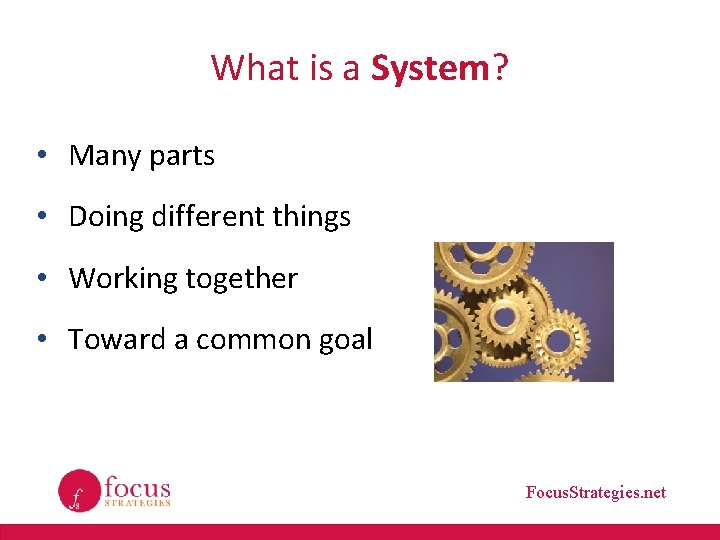
What is a System? • Many parts • Doing different things • Working together • Toward a common goal Focus. Strategies. net
Opening Doors: Federal Strategic Plan “Transform homeless services to crisis response systems that prevent homelessness and rapidly return people who experience homelessness to stable housing. ” Focus. Strategies. net
What is performance measurement? "A process that systematically evaluates whether your program (or system) is making an impact on the clients you serve and helps to guide efforts to improve results. " • From "What Gets Measured Gets Done" Abt Associates and NAEH Focus. Strategies. net
System Performance Measurement • Goals and Measures for the System as a whole • HUD has told us what the measures are • Goals should be set for improvement against current performance Example: Increase permanent housing exits system wide to at least 70% for whole system • Also Goals and Measures for the parts of the system and how they contribute to the whole Example: RRH expectation = 85% of exits to Permanent Housing Shelter expectation = 50% of exits to Permanent Housing 7 Focus. Strategies. net
Who needs to stop guessing? • Everyone! • Everyone needs to have and use the data • Providers need to know how they are performing • Funders need to know what outcomes they are buying • Leadership needs to know what is and isn’t working and how to make improvements 8 Focus. Strategies. net
Don’t put your data into solitary Focus. Strategies. net
“Knowing” is a Continuous Process • Not just the job of a subcommittee • Not once a year • Not just for Co. C Funds Becoming data-driven in an ongoing process 10 Focus. Strategies. net
Data-DRIVEN means • Look at data every time you meet (whether you’re a funder, a program, or a system leader) – Every time means every time • Look at data between when you meet and if something’s up, call a meeting! • All system change decisions are data informed • Data can be questioned but never ignored Focus. Strategies. net
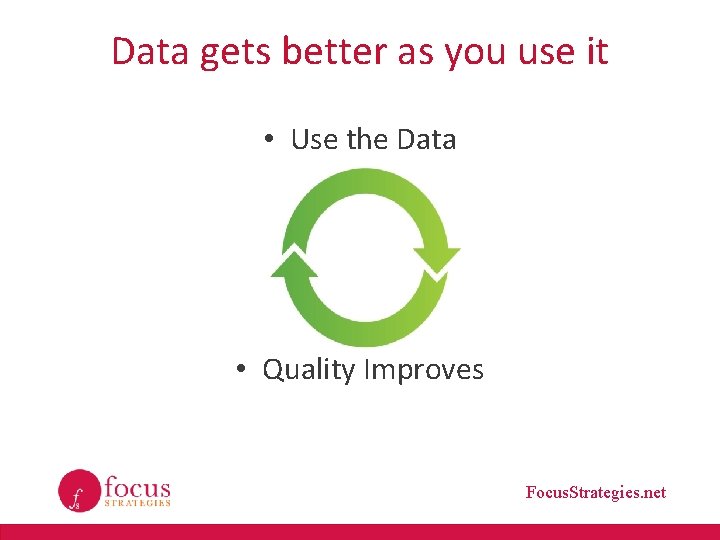
Data gets better as you use it • Use the Data • Quality Improves Focus. Strategies. net
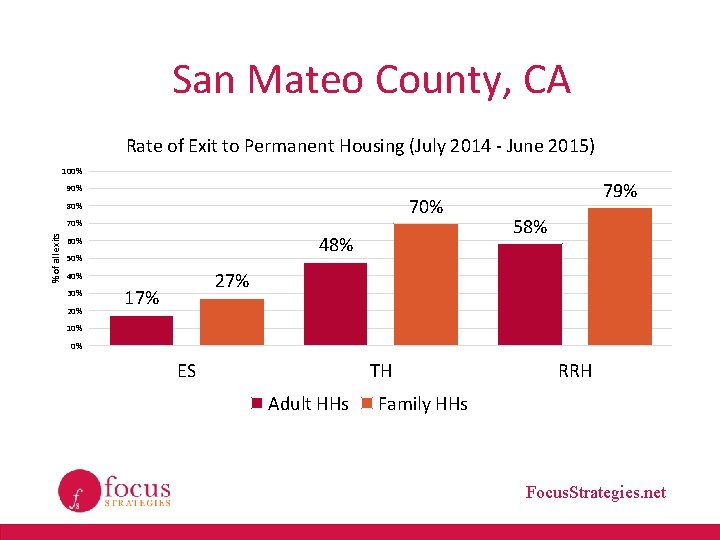
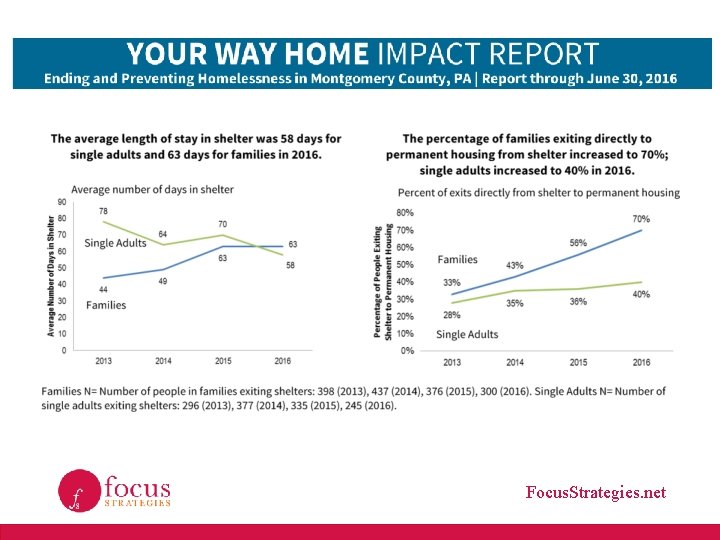
Where can you start Look at the HUD System Report Pull the key elements and track over time – You can also run reports for different time periods and for different programs (APRs, Outcome Reports) Put it in a format that all can read and understand easily (like a line graph or bar chart) - Talk about what it means e. g. rates of exits to permanent housing –are they going up or down, what could improve them? Focus. Strategies. net
San Mateo County, CA Rate of Exit to Permanent Housing (July 2014 - June 2015) 100% 79% 90% 70% 80% % of all exits 70% 48% 60% 50% 27% 40% 30% 20% 58% 17% 10% 0% ES TH Adult HHs RRH Family HHs Focus. Strategies. net
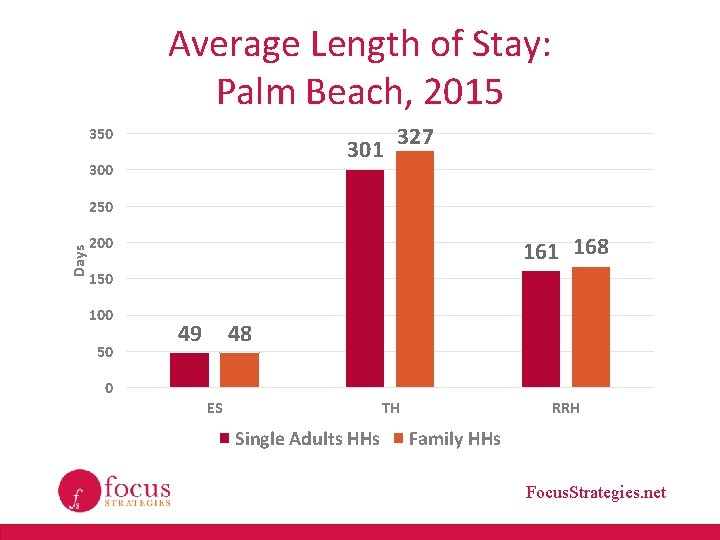
Average Length of Stay: Palm Beach, 2015 350 301 300 327 Days 250 161 168 200 150 100 50 49 48 0 ES TH Single Adults HHs RRH Family HHs Focus. Strategies. net
Focus. Strategies. net
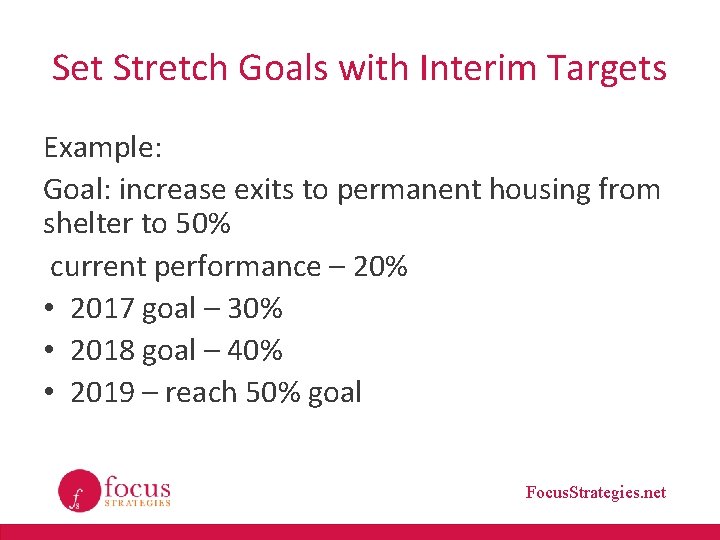
Set Stretch Goals with Interim Targets Example: Goal: increase exits to permanent housing from shelter to 50% current performance – 20% • 2017 goal – 30% • 2018 goal – 40% • 2019 – reach 50% goal Focus. Strategies. net
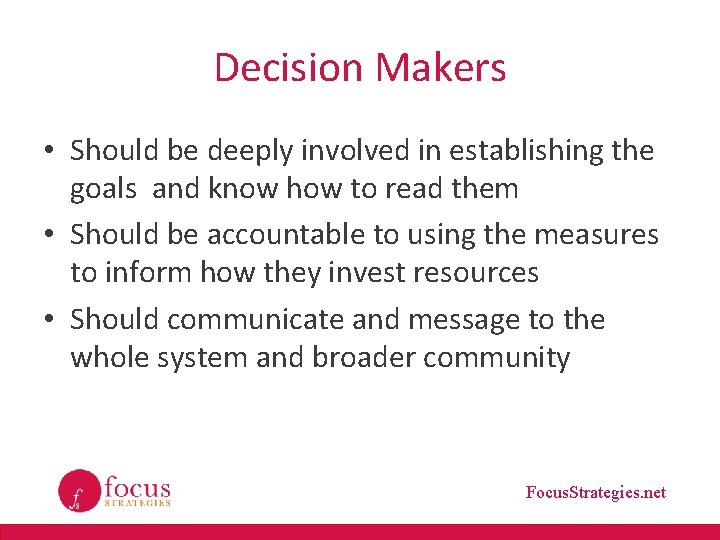
Decision Makers • Should be deeply involved in establishing the goals and know how to read them • Should be accountable to using the measures to inform how they invest resources • Should communicate and message to the whole system and broader community Focus. Strategies. net
For more information Katharine@Focusstrategies. net www. focusstrategies. net