
How to simplify biology to interpret effects of
How to simplify biology to interpret effects of stressors Tjalling Jager Dept. Theoretical Biology
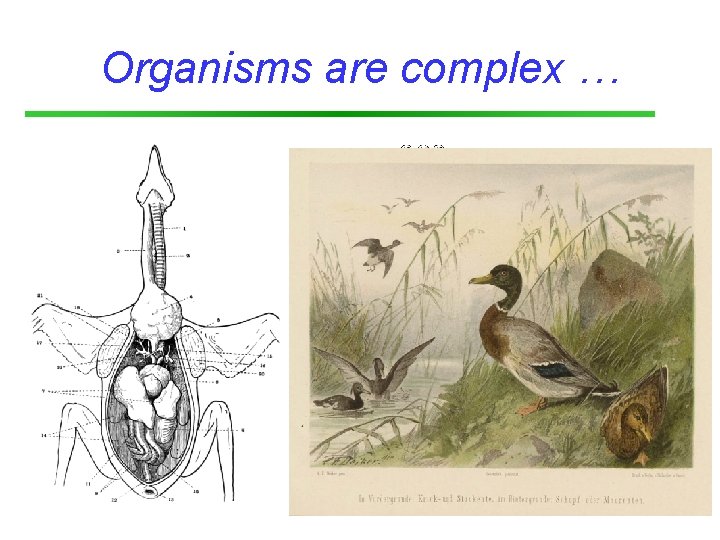
Organisms are complex …

Stressing organisms … … only adds to the complexity Ø Response to a toxic (and other) stress depends on – – – organism endpoint type of stressor or toxicant exposure scenario environmental conditions Ø Eco(toxico)logical literature is full of descriptions: “The effect of stressor A on endpoint B of species C (under influence of environmental factor D)”
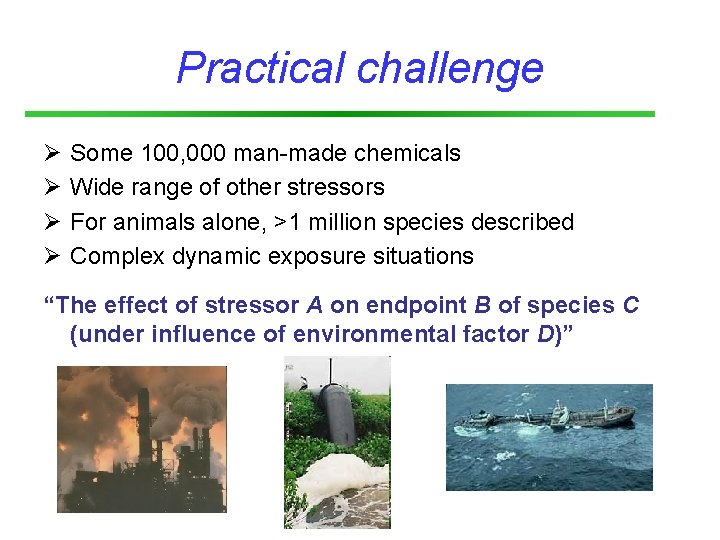
Practical challenge Ø Ø Some 100, 000 man-made chemicals Wide range of other stressors For animals alone, >1 million species described Complex dynamic exposure situations “The effect of stressor A on endpoint B of species C (under influence of environmental factor D)”

Complexity Environmental chemistry …

Idealisation Ø Treat each compartment as homogeneous …
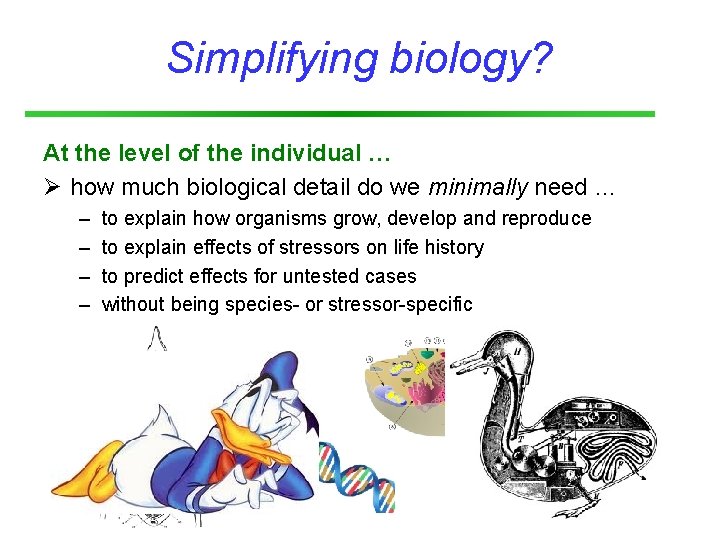
Simplifying biology? At the level of the individual … Ø how much biological detail do we minimally need … – – to explain how organisms grow, develop and reproduce to explain effects of stressors on life history to predict effects for untested cases without being species- or stressor-specific
Simplifying biology? At the level of the individual … Ø how much biological detail do we minimally need … – – to explain how organisms grow, develop and reproduce to explain effects of stressors on life history to predict effects for untested cases without being species- or stressor-specific One of the few hard laws in biology … Ø all organisms obey conservation of mass and energy
Effect on reproduction

Effect on reproduction
Effect on reproduction
Effect on reproduction
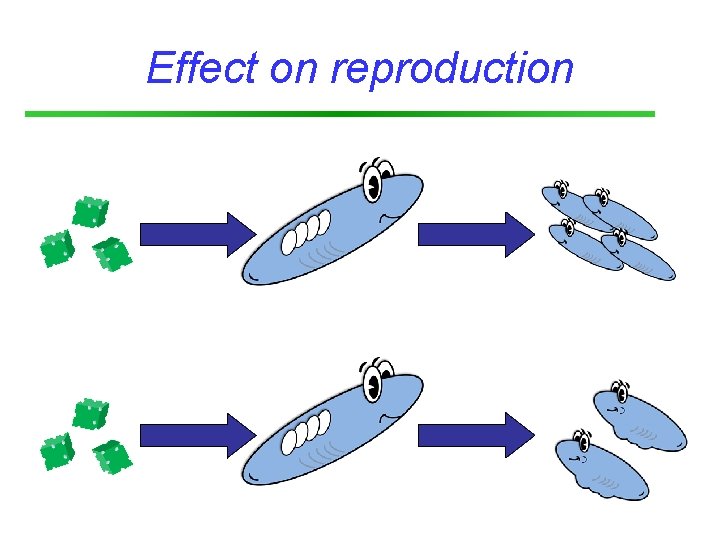
Effect on reproduction
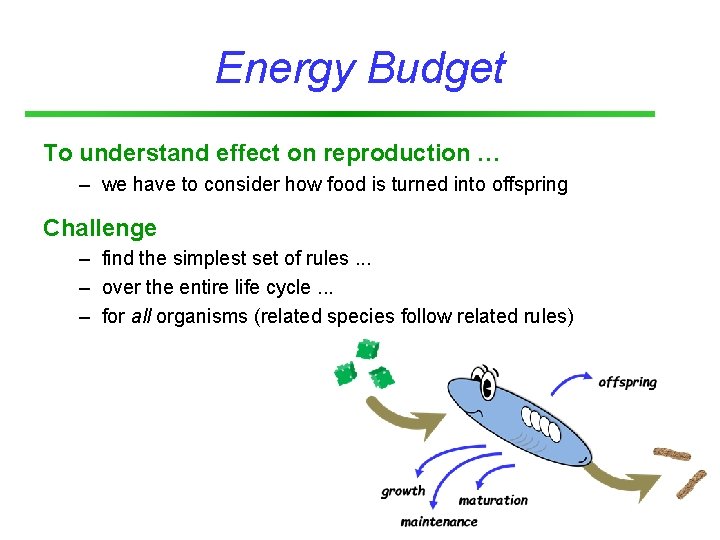
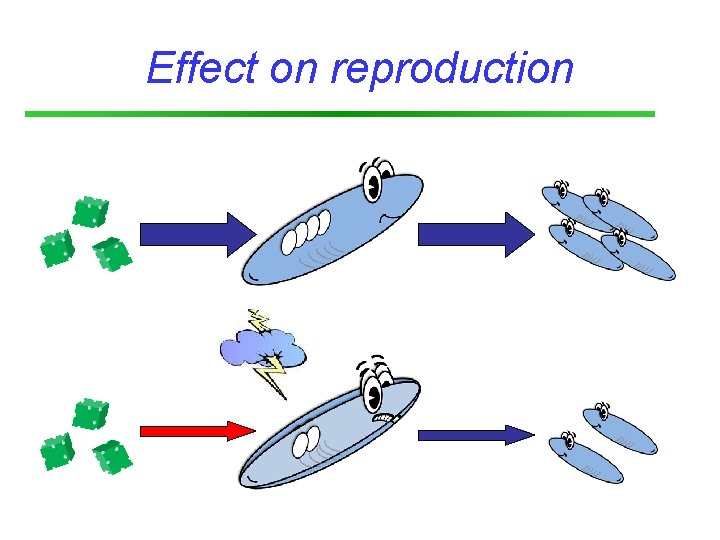
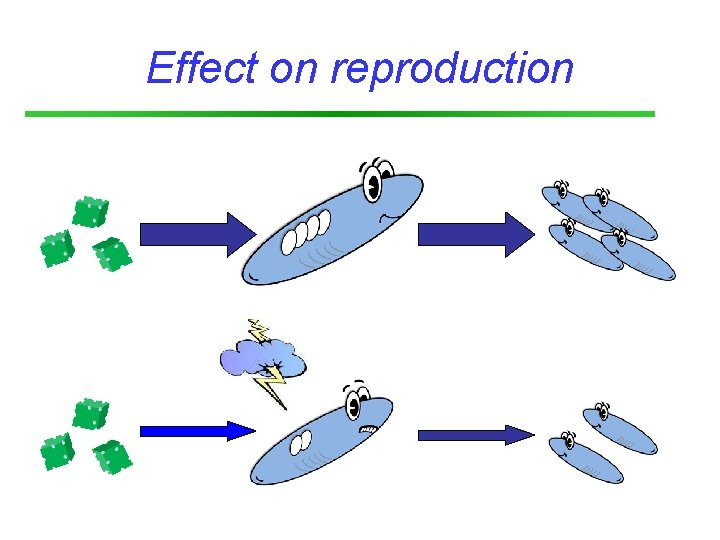
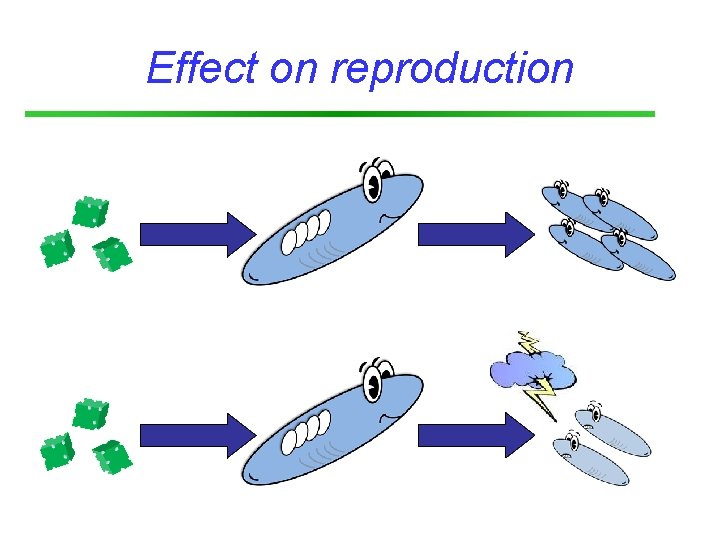
Energy Budget To understand effect on reproduction … – we have to consider how food is turned into offspring Challenge – find the simplest set of rules. . . – over the entire life cycle. . . – for all organisms (related species follow related rules)

DEB theory Quantitative theory for metabolic organisation from ‘first principles’ – time, energy and mass balance – consistent with thermodynamics Life-cycle of the individual – links levels of organisation: molecule ecosystems Fundamental; many practical applications – (bio)production, (eco)toxicity, climate change, evolution … Kooijman (2000) Kooijman (2010)
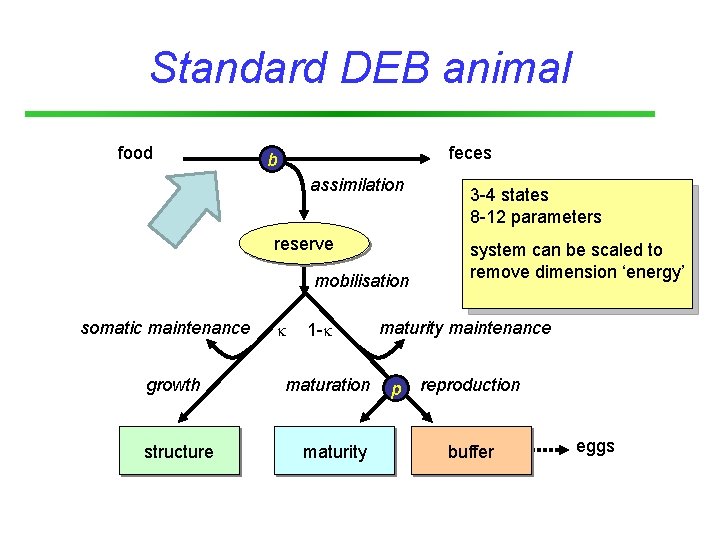
Standard DEB animal food feces b assimilation reserve mobilisation somatic maintenance growth structure 1 - maturation maturity 3 -4 states 8 -12 parameters system can be scaled to remove dimension ‘energy’ maturity maintenance p reproduction buffer eggs
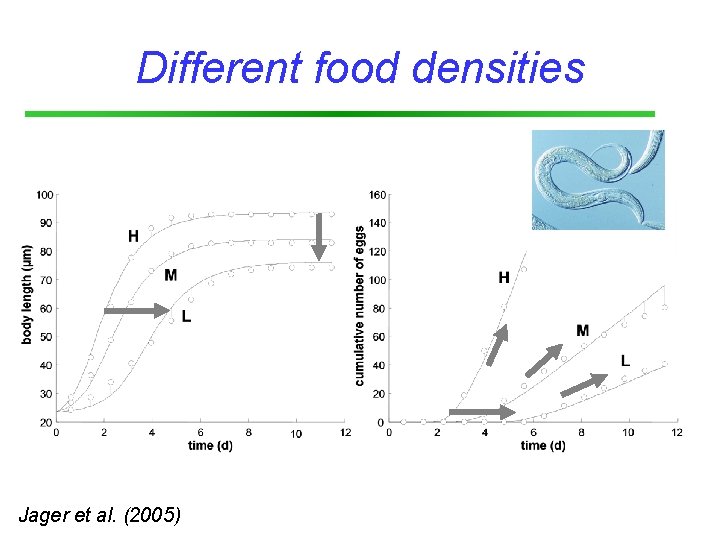
Different food densities Jager et al. (2005)
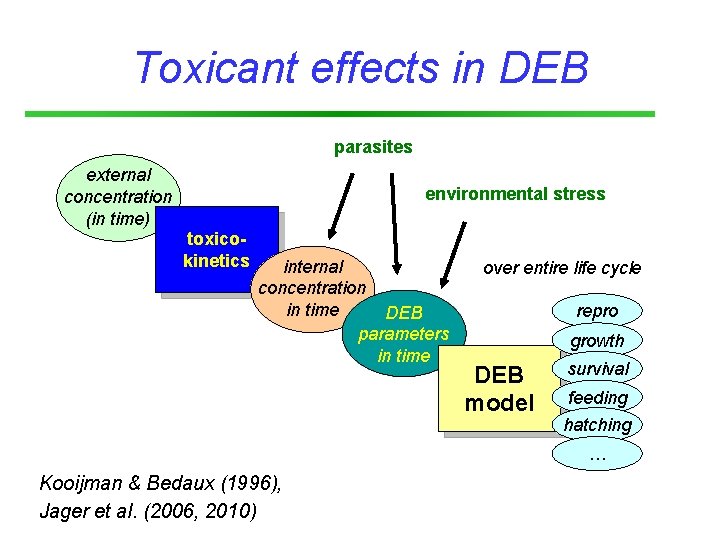
Toxicant effects in DEB parasites external concentration (in time) environmental stress toxicokinetics internal concentration in time DEB parameters in time over entire life cycle repro growth DEB model survival feeding hatching … Kooijman & Bedaux (1996), Jager et al. (2006, 2010)
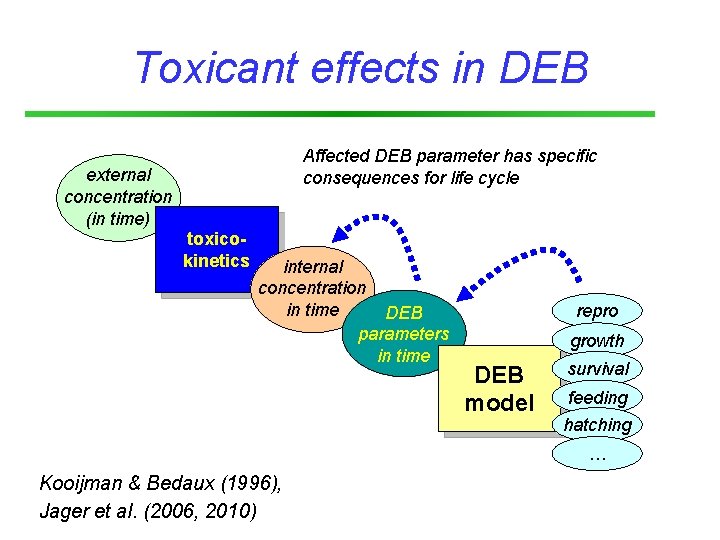
Toxicant effects in DEB Affected DEB parameter has specific consequences for life cycle external concentration (in time) toxicokinetics internal concentration in time DEB parameters in time repro growth DEB model survival feeding hatching … Kooijman & Bedaux (1996), Jager et al. (2006, 2010)
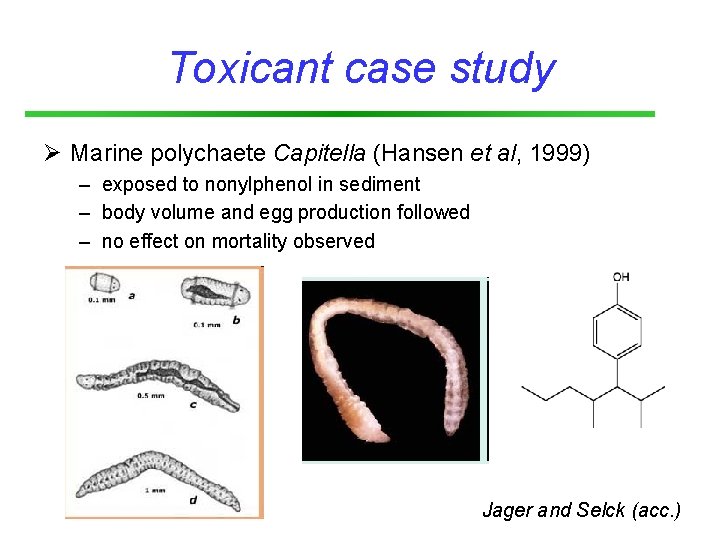
Toxicant case study Ø Marine polychaete Capitella (Hansen et al, 1999) – exposed to nonylphenol in sediment – body volume and egg production followed – no effect on mortality observed Jager and Selck (acc. )
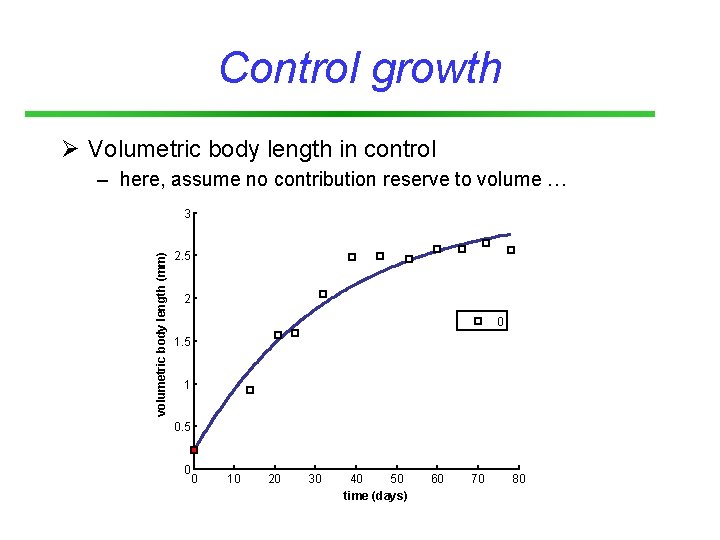
Control growth Ø Volumetric body length in control – here, assume no contribution reserve to volume … volumetric body length (mm) 3 2. 5 2 0 1. 5 1 0. 5 0 0 10 20 30 40 50 time (days) 60 70 80
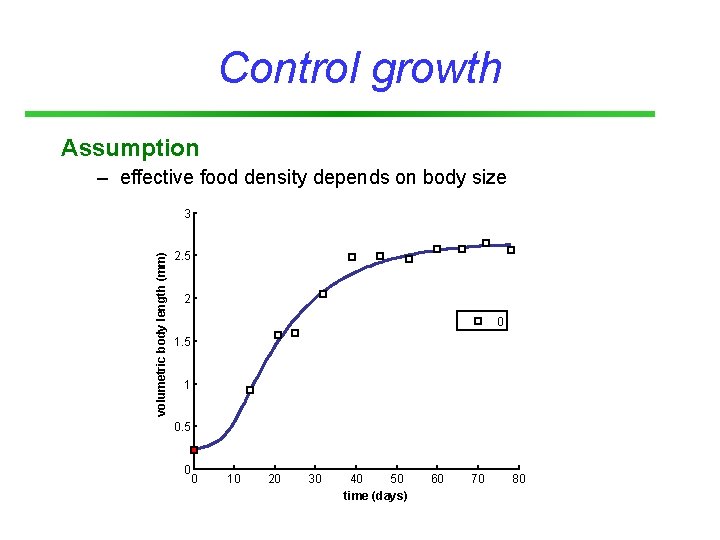
Control growth Assumption – effective food density depends on body size volumetric body length (mm) 3 2. 5 2 0 1. 5 1 0. 5 0 0 10 20 30 40 50 time (days) 60 70 80
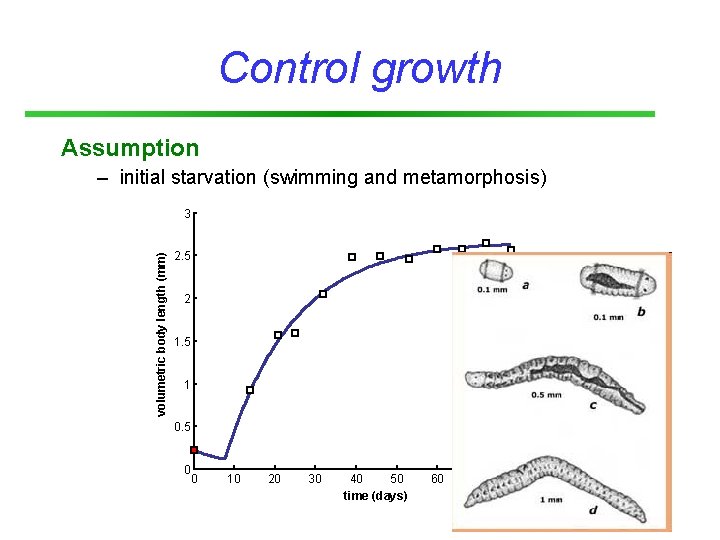
Control growth Assumption – initial starvation (swimming and metamorphosis) volumetric body length (mm) 3 2. 5 2 0 1. 5 1 0. 5 0 0 10 20 30 40 50 time (days) 60 70 80
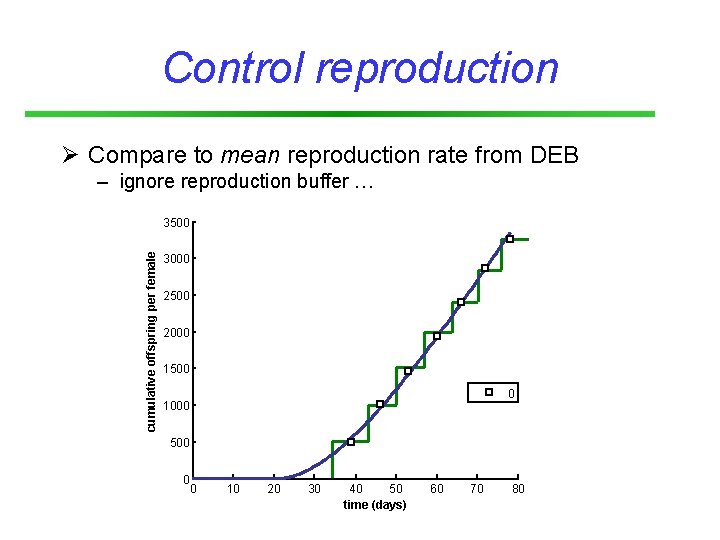
Control reproduction Ø Compare to mean reproduction rate from DEB – ignore reproduction buffer … cumulative offspring per female 3500 3000 2500 2000 1500 0 1000 500 0 0 10 20 30 40 50 time (days) 60 70 80
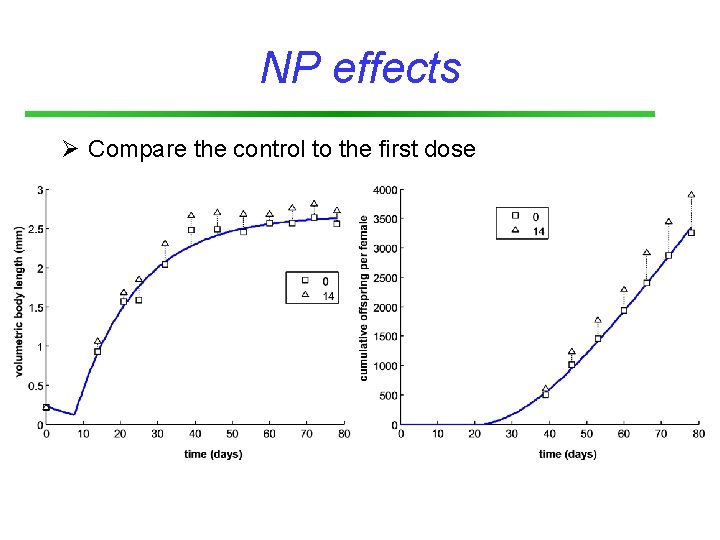
NP effects Ø Compare the control to the first dose
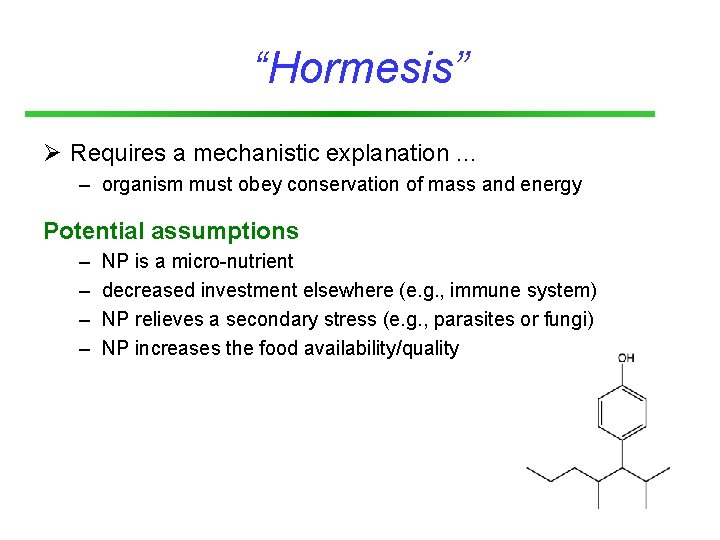
“Hormesis” Ø Requires a mechanistic explanation … – organism must obey conservation of mass and energy Potential assumptions – – NP is a micro-nutrient decreased investment elsewhere (e. g. , immune system) NP relieves a secondary stress (e. g. , parasites or fungi) NP increases the food availability/quality
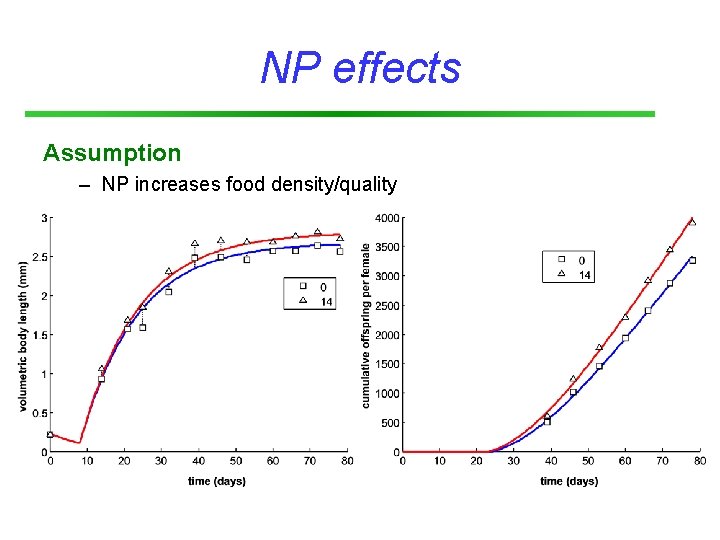
NP effects Assumption – NP increases food density/quality
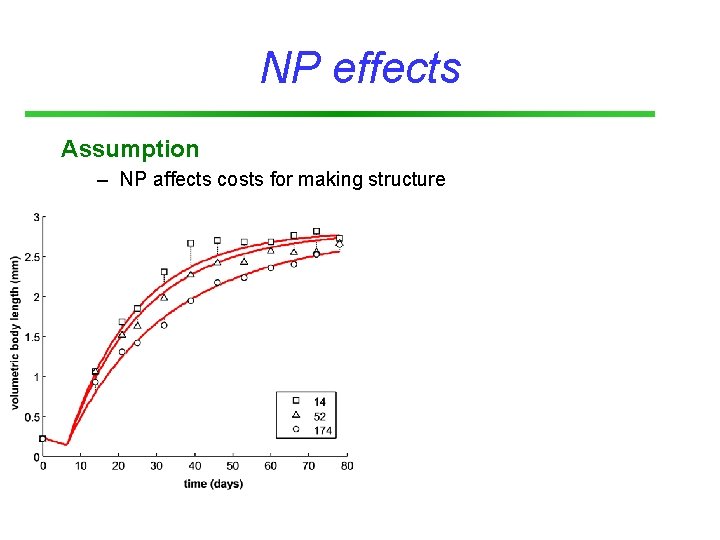
NP effects Assumption – NP affects costs for making structure
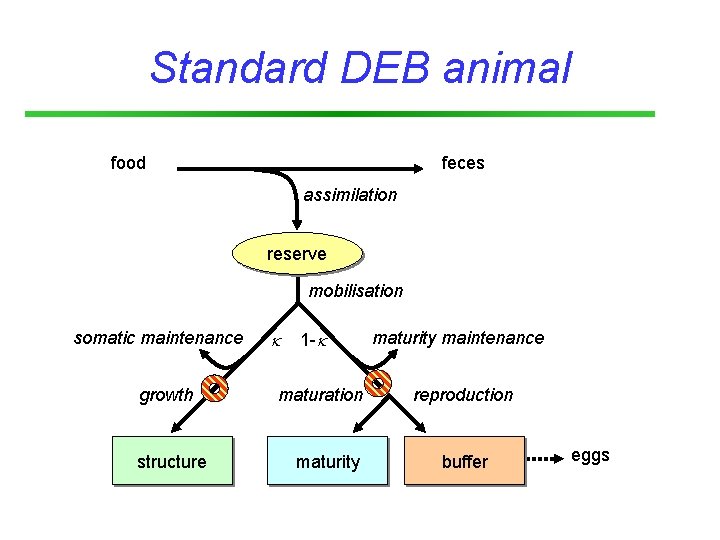
Standard DEB animal food feces assimilation reserve mobilisation somatic maintenance growth structure 1 - maturation maturity maintenance reproduction buffer eggs
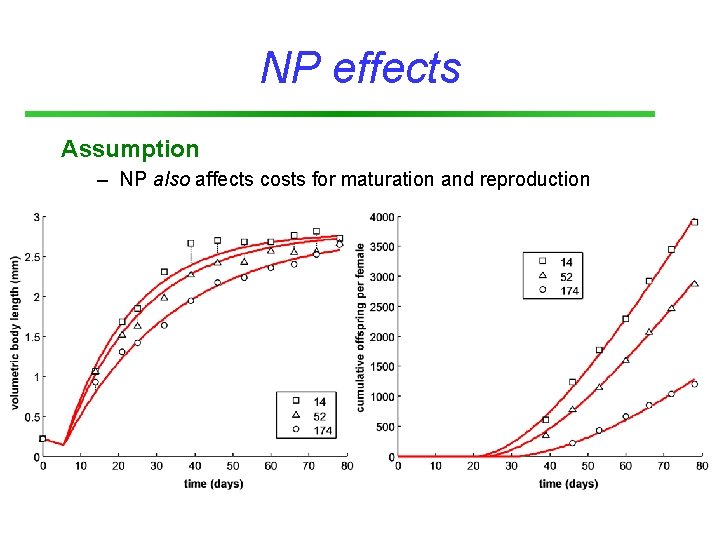
NP effects Assumption – NP also affects costs for maturation and reproduction
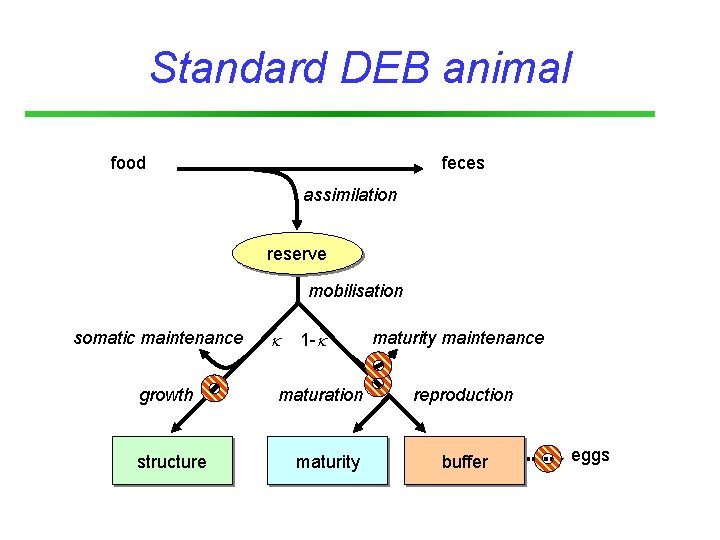
Standard DEB animal food feces assimilation reserve mobilisation somatic maintenance growth structure 1 - maturation maturity maintenance reproduction buffer eggs
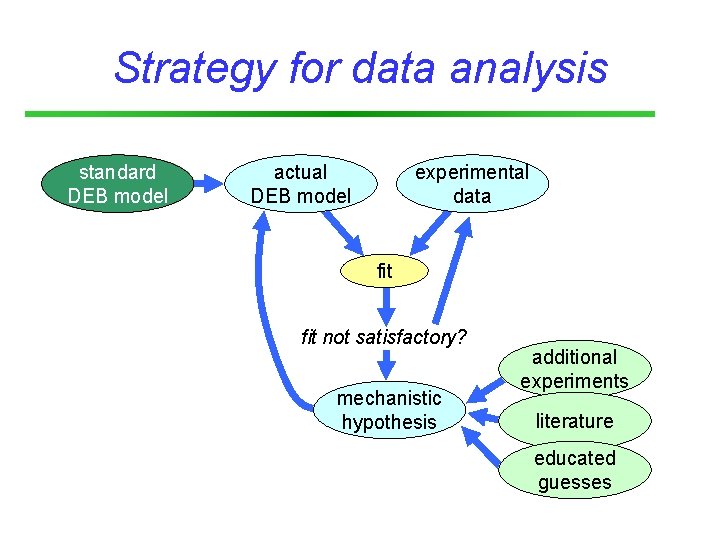
Strategy for data analysis standard DEB model actual DEB model experimental data fit not satisfactory? mechanistic hypothesis additional experiments literature educated guesses
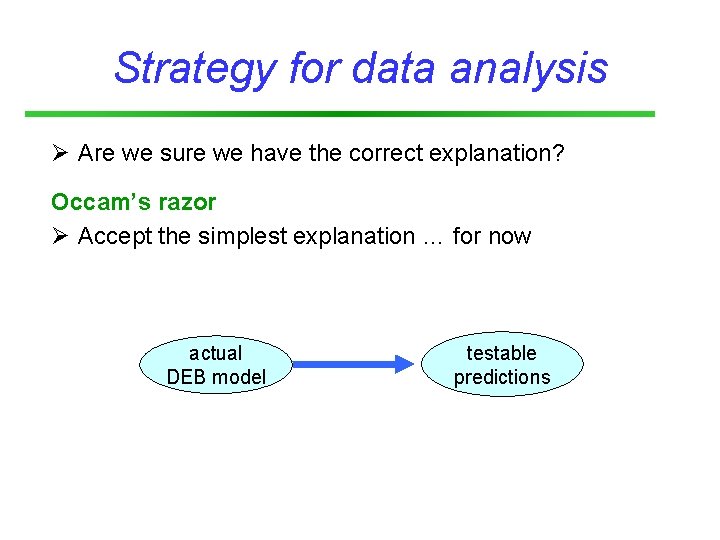
Strategy for data analysis Ø Are we sure we have the correct explanation? Occam’s razor Ø Accept the simplest explanation … for now actual DEB model testable predictions
Concluding remarks Ø Understanding stressor effects in eco(toxico)logy is served by idealisation of biology Ø Stressor effects can be treated quantitatively, ensuring: – mass and energy balance – consistent changes in all life-history traits (trade-offs) Ø Increase understanding of stressors, but also of metabolic organisation Ø DEB theory offers a platform – simple, not species- or stressor-specific – well tested in many applications

More information on DEB: http: //www. bio. vu. nl/thb on DEBtox: http: //www. debtox. info Courses – International DEB Tele Course 2013 Symposia – 2 nd International DEB Symposium 2013 on Texel (NL)
- Slides: 35