
How to set up your notebook Left side
How to set up your notebook Left side • For examples and think/pair/write Right Side • Notes – you will be writing the notes today GOAL: To see how comparing anatomy can support theory of evolution by natural selection.
Homologous Structures RIGHT • DEFINITION: Parts of organisms that are similar in origin and structure are called homologous structures. • INFORMATION: – Are the result of evolution – Can indicate how closely two or more species share common ancestors – Not all structures are homologous.

6. 2 Biological Evidence Homologous Structures Examples The bones in the upper limbs of these animals are homologous structures. LEFT Think, Pair, Write: What do you notice?

Homologous Structures Examples LEFT Think, Pair, Write: What do you notice?
Quick questions • What is a homologous structure? • What is an example of a homologous structure?
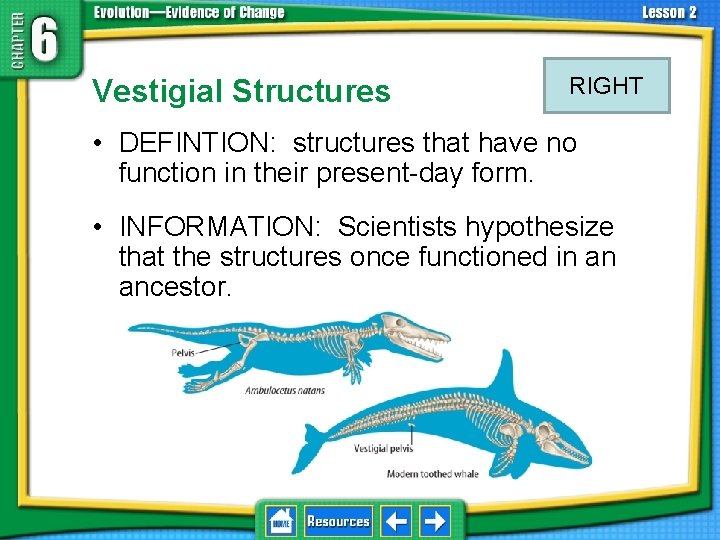
6. 2 Biological Evidence Vestigial Structures RIGHT • DEFINTION: structures that have no function in their present-day form. • INFORMATION: Scientists hypothesize that the structures once functioned in an ancestor.
Vestigial Structures • EXAMPLES: – Pelvic bones in whales – Pelvic spurs in boas and pythons – Eyes in cavefish – Tail bones in humans – Who knows of any other? LEFT
Quick questions • What is a vestigial structure? • What is an example of a vestigial structure?
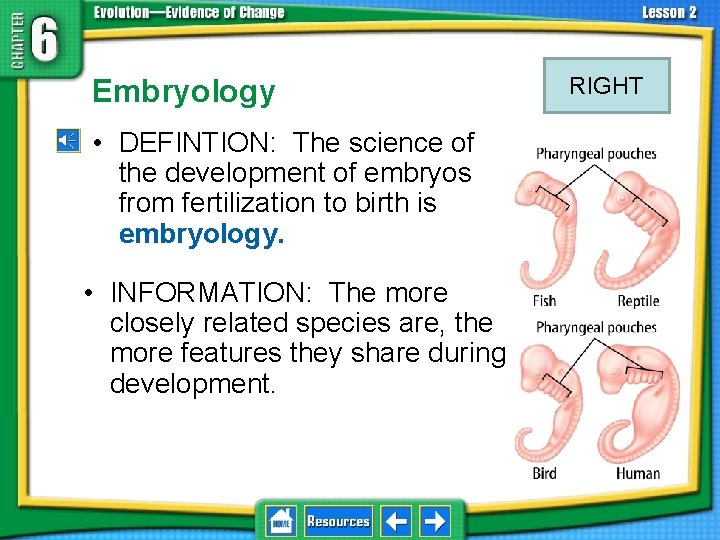
6. 2 Biological Evidence Embryology • DEFINTION: The science of the development of embryos from fertilization to birth is embryology. • INFORMATION: The more closely related species are, the more features they share during development. RIGHT
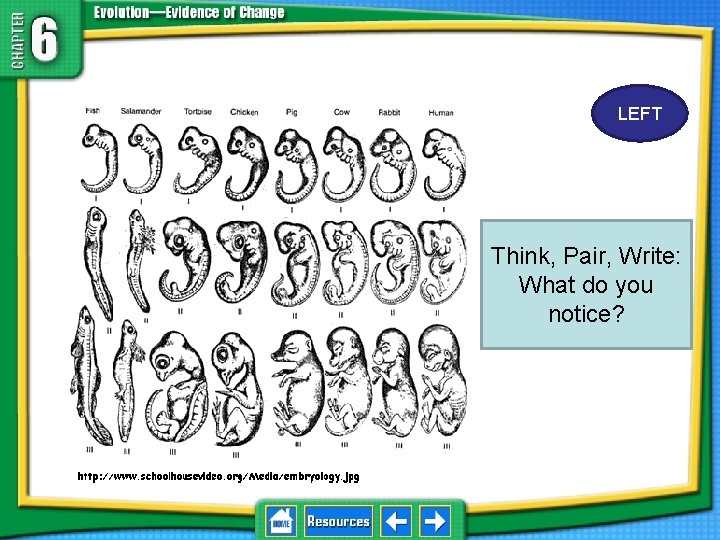
LEFT Think, Pair, Write: What do you notice?
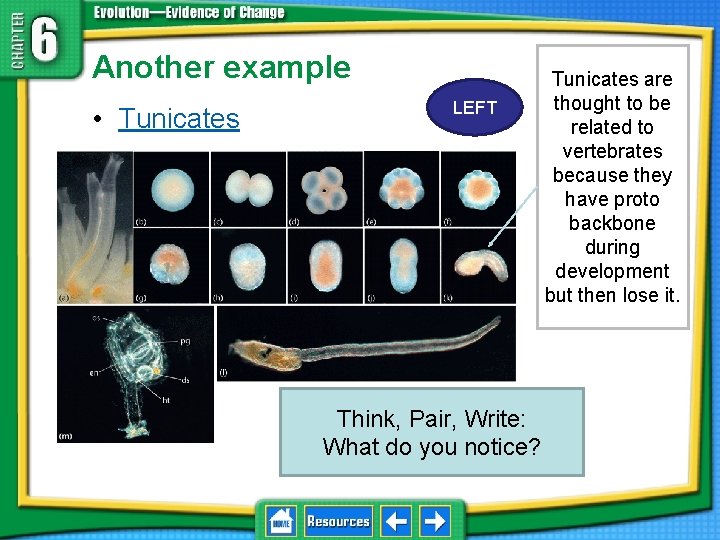
Another example • Tunicates LEFT Think, Pair, Write: What do you notice? Tunicates are thought to be related to vertebrates because they have proto backbone during development but then lose it.
Quick questions • What is a is embryology? • What is does embryology help us understand? • What was the main goal for today?
- Slides: 12