
How to Secure Routing Header for Segment Routing






- Slides: 21
How to Secure Routing Header for Segment Routing? Eric Vyncke, Distinguished Engineer evyncke@cisco. com Eric. vyncke@ipv 6 council. be @evyncke Eric Vyncke, May 12 th 2015
Agenda • Special use case • Security of Routing Header & RFC 5095 • Segment Routing Security • Packets with Extension Headers are lost? Eric Vyncke, May 12 th 2015 2
Special Use Case 3
“Extreme Traffic Engineering” from CPE/Set-up Box? § What about mobile node away from SP network? I’m a dumb stateless router but not stupid!!!!Let’s check authorization PE 3 PE 1 A -> B Via. . SR-IPv 6 core I’m a dumb stateless router A -> B Via. . . . (SDN) controller Image source wikimedia PE 2 Eric Vyncke, May 12 th 2015 PE 4
Huh? ? ? Source Routing Security? What about RFC 5095? 5
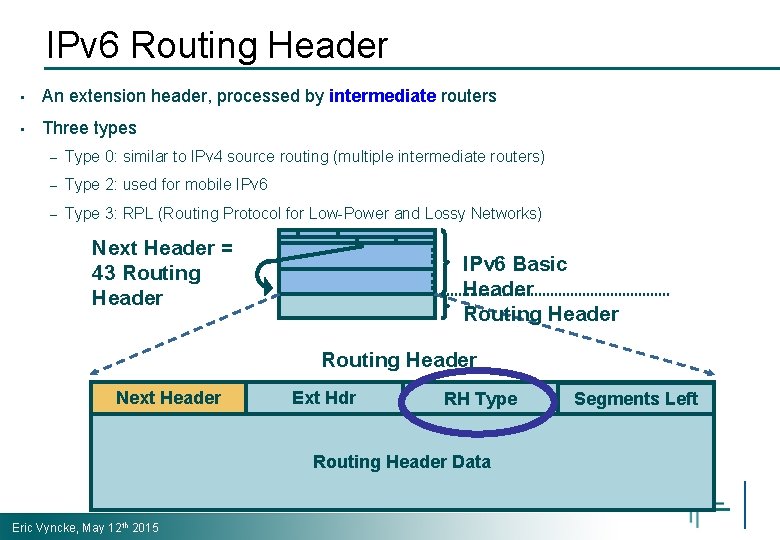
IPv 6 Routing Header • An extension header, processed by intermediate routers • Three types – Type 0: similar to IPv 4 source routing (multiple intermediate routers) – Type 2: used for mobile IPv 6 – Type 3: RPL (Routing Protocol for Low-Power and Lossy Networks) Next Header = 43 Routing Header IPv 6 Basic Header Routing Header Next Header Ext Hdr Length Routing Type RH Type Routing Header Data Eric Vyncke, May 12 th 2015 Segments Left
RH 0: Amplification Attack • What if attacker sends a packet with RH containing – A -> B -> A. . • Packet will loop multiple time on the link A-B • An amplification attack! A Eric Vyncke, May 12 th 2015 B
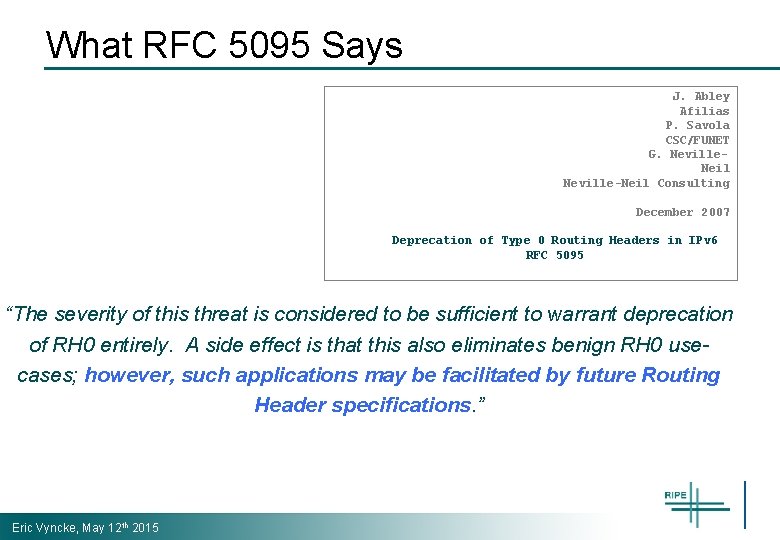
What RFC 5095 Says J. Abley Afilias P. Savola CSC/FUNET G. Neville. Neil Neville-Neil Consulting December 2007 Deprecation of Type 0 Routing Headers in IPv 6 RFC 5095 “The severity of this threat is considered to be sufficient to warrant deprecation of RH 0 entirely. A side effect is that this also eliminates benign RH 0 usecases; however, such applications may be facilitated by future Routing Header specifications. ” Eric Vyncke, May 12 th 2015
Type 1: NIMROD • A 1994 project funded by DARPA – Mobility – Hierarchy • of routing (kind of LISP) Type 1 was deprecated in 2009 – not because of security – but project was defunct and AFAIK not a single NIMROD packet was sent over IPv 6. . . Source: Clipartpanda. com Eric Vyncke, May 12 th 2015
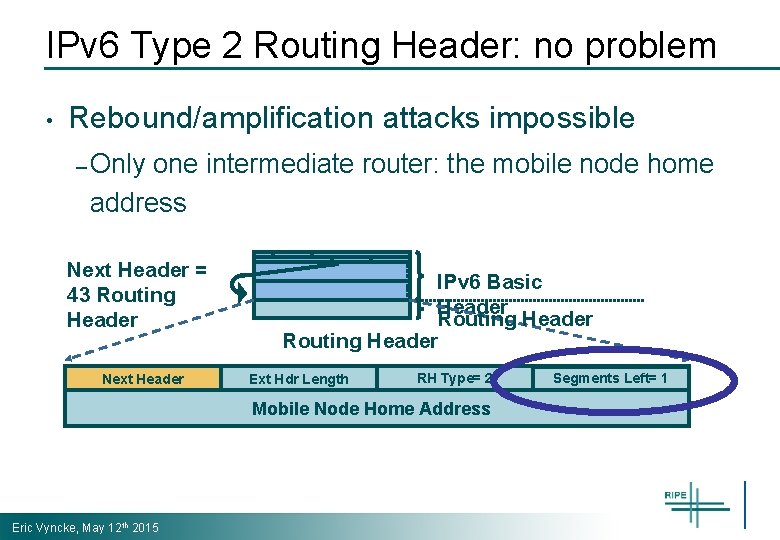
IPv 6 Type 2 Routing Header: no problem • Rebound/amplification attacks impossible – Only one intermediate router: the mobile node home address Next Header = 43 Routing Header Next Header Eric Vyncke, May 12 th 2015 IPv 6 Basic Header Routing Header RH Type= 2 Routing Type Mobile Node Home Address Ext Hdr Length Segments Left= 1
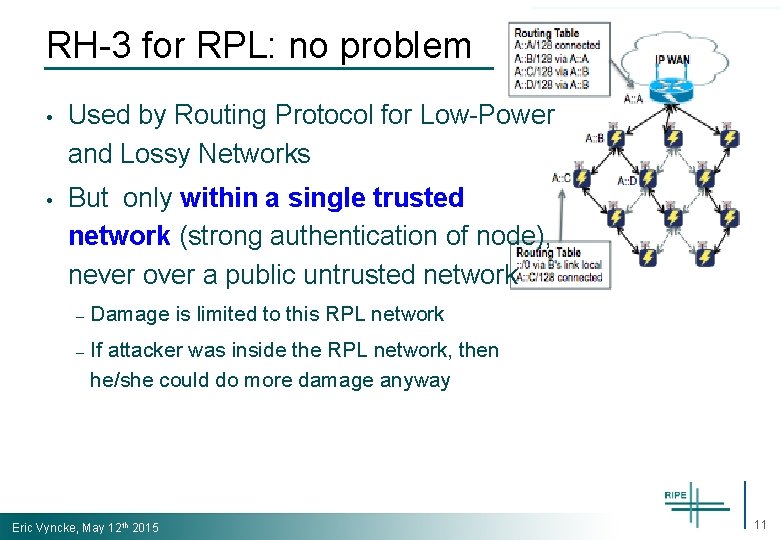
RH-3 for RPL: no problem • Used by Routing Protocol for Low-Power and Lossy Networks • But only within a single trusted network (strong authentication of node), never over a public untrusted network – Damage is limited to this RPL network – If attacker was inside the RPL network, then he/she could do more damage anyway Eric Vyncke, May 12 th 2015 11
Segment Routing Security draft-vyncke-6 man-segment-routing-security 12
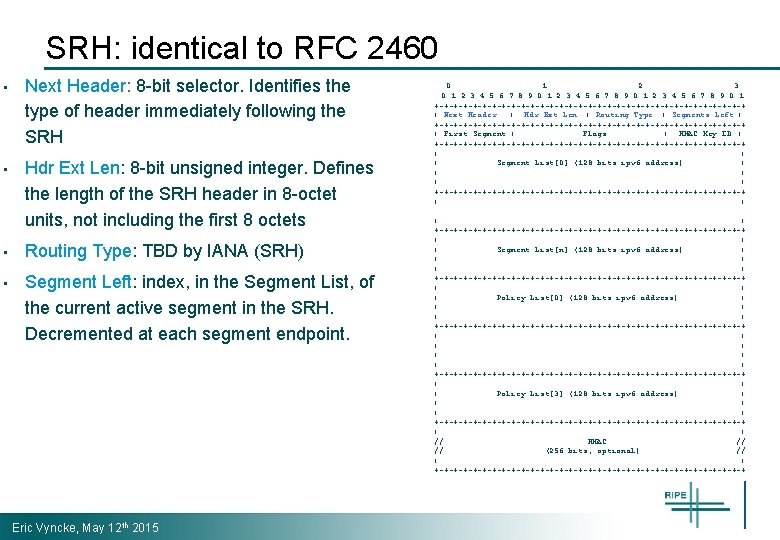
SRH: identical to RFC 2460 • Next Header: 8 -bit selector. Identifies the type of header immediately following the SRH • Hdr Ext Len: 8 -bit unsigned integer. Defines the length of the SRH header in 8 -octet units, not including the first 8 octets • Routing Type: TBD by IANA (SRH) • Segment Left: index, in the Segment List, of the current active segment in the SRH. Decremented at each segment endpoint. Eric Vyncke, May 12 th 2015 0 1 2 3 4 5 6 7 8 9 0 1 +-+-+-+-+-+-+-+-+-+-+-+-+-+-+-+-+ | Next Header | Hdr Ext Len | Routing Type | Segments Left | +-+-+-+-+-+-+-+-+-+-+-+-+-+-+-+-+ | First Segment | Flags | HMAC Key ID | +-+-+-+-+-+-+-+-+-+-+-+-+-+-+-+-+ | | | Segment List[0] (128 bits ipv 6 address) | | | +-+-+-+-+-+-+-+-+-+-+-+-+-+-+-+-+ | |. . . | | +-+-+-+-+-+-+-+-+-+-+-+-+-+-+-+-+ | | | Segment List[n] (128 bits ipv 6 address) | | | +-+-+-+-+-+-+-+-+-+-+-+-+-+-+-+-+ | | | Policy List[0] (128 bits ipv 6 address) | | | +-+-+-+-+-+-+-+-+-+-+-+-+-+-+-+-+ | | |. . . | | | +-+-+-+-+-+-+-+-+-+-+-+-+-+-+-+-+ | | | Policy List[3] (128 bits ipv 6 address) | | | +-+-+-+-+-+-+-+-+-+-+-+-+-+-+-+-+ | | // HMAC // // (256 bits, optional) // | | +-+-+-+-+-+-+-+-+-+-+-+-+-+-+-+-+
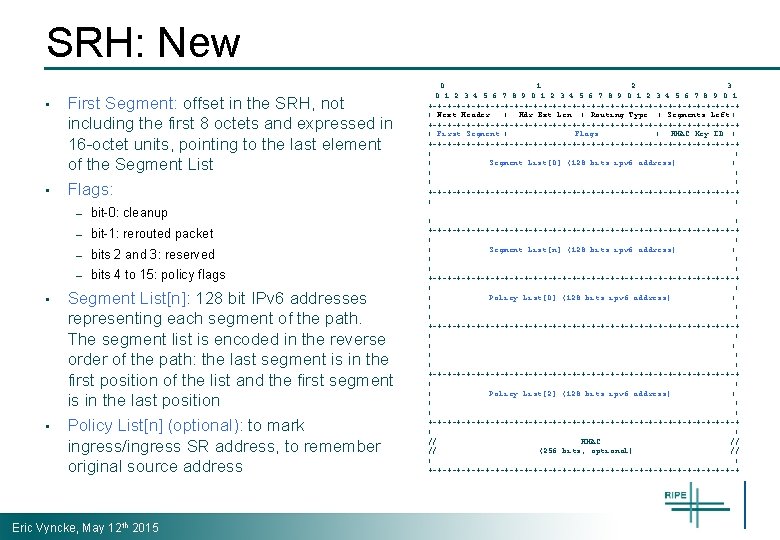
SRH: New • First Segment: offset in the SRH, not including the first 8 octets and expressed in 16 -octet units, pointing to the last element of the Segment List • Flags: – bit-0: cleanup – bit-1: rerouted packet – bits 2 and 3: reserved – bits 4 to 15: policy flags • Segment List[n]: 128 bit IPv 6 addresses representing each segment of the path. The segment list is encoded in the reverse order of the path: the last segment is in the first position of the list and the first segment is in the last position • Policy List[n] (optional): to mark ingress/ingress SR address, to remember original source address Eric Vyncke, May 12 th 2015 0 1 2 3 4 5 6 7 8 9 0 1 +-+-+-+-+-+-+-+-+-+-+-+-+-+-+-+-+ | Next Header | Hdr Ext Len | Routing Type | Segments Left | +-+-+-+-+-+-+-+-+-+-+-+-+-+-+-+-+ | First Segment | Flags | HMAC Key ID | +-+-+-+-+-+-+-+-+-+-+-+-+-+-+-+-+ | | | Segment List[0] (128 bits ipv 6 address) | | | +-+-+-+-+-+-+-+-+-+-+-+-+-+-+-+-+ | |. . . | | +-+-+-+-+-+-+-+-+-+-+-+-+-+-+-+-+ | | | Segment List[n] (128 bits ipv 6 address) | | | +-+-+-+-+-+-+-+-+-+-+-+-+-+-+-+-+ | | | Policy List[0] (128 bits ipv 6 address) | | | +-+-+-+-+-+-+-+-+-+-+-+-+-+-+-+-+ | | |. . . | | | +-+-+-+-+-+-+-+-+-+-+-+-+-+-+-+-+ | | | Policy List[2] (128 bits ipv 6 address) | | | +-+-+-+-+-+-+-+-+-+-+-+-+-+-+-+-+ | | // HMAC // // (256 bits, optional) // | | +-+-+-+-+-+-+-+-+-+-+-+-+-+-+-+-+
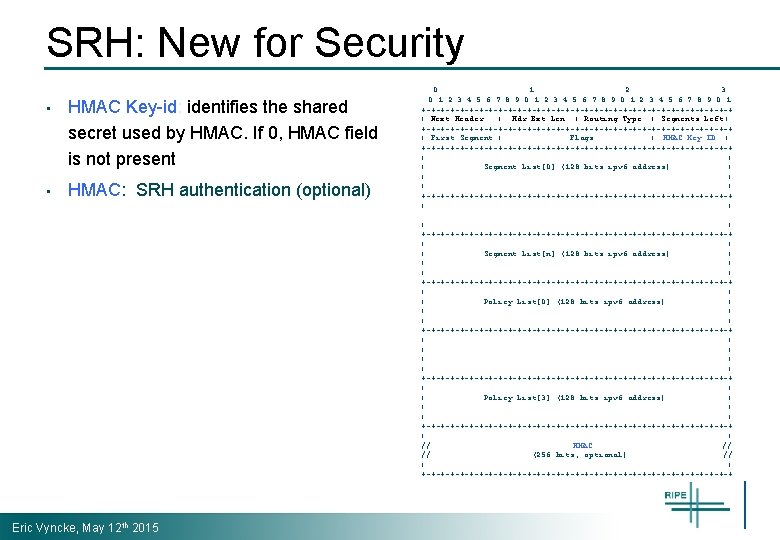
SRH: New for Security • HMAC Key-id: identifies the shared secret used by HMAC. If 0, HMAC field is not present • HMAC: SRH authentication (optional) Eric Vyncke, May 12 th 2015 0 1 2 3 4 5 6 7 8 9 0 1 +-+-+-+-+-+-+-+-+-+-+-+-+-+-+-+-+ | Next Header | Hdr Ext Len | Routing Type | Segments Left | +-+-+-+-+-+-+-+-+-+-+-+-+-+-+-+-+ | First Segment | Flags | HMAC Key ID | +-+-+-+-+-+-+-+-+-+-+-+-+-+-+-+-+ | | | Segment List[0] (128 bits ipv 6 address) | | | +-+-+-+-+-+-+-+-+-+-+-+-+-+-+-+-+ | |. . . | | +-+-+-+-+-+-+-+-+-+-+-+-+-+-+-+-+ | | | Segment List[n] (128 bits ipv 6 address) | | | +-+-+-+-+-+-+-+-+-+-+-+-+-+-+-+-+ | | | Policy List[0] (128 bits ipv 6 address) | | | +-+-+-+-+-+-+-+-+-+-+-+-+-+-+-+-+ | | |. . . | | | +-+-+-+-+-+-+-+-+-+-+-+-+-+-+-+-+ | | | Policy List[3] (128 bits ipv 6 address) | | | +-+-+-+-+-+-+-+-+-+-+-+-+-+-+-+-+ | | // HMAC // // (256 bits, optional) // | | +-+-+-+-+-+-+-+-+-+-+-+-+-+-+-+-+
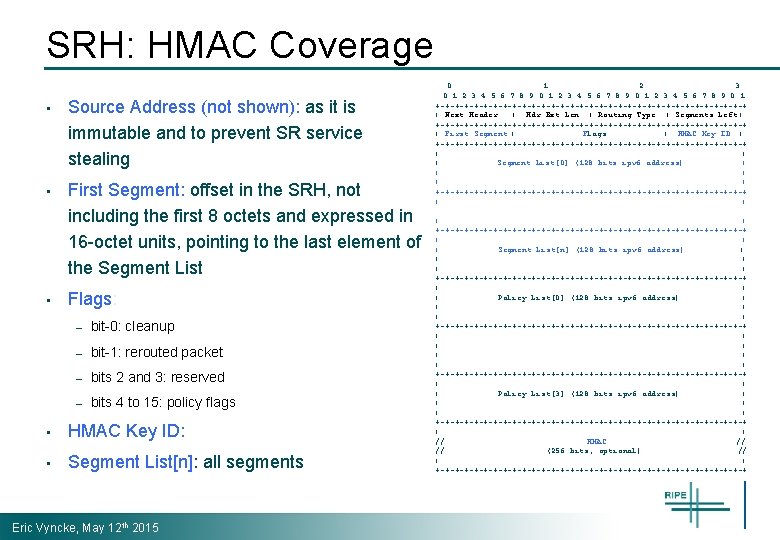
SRH: HMAC Coverage • Source Address (not shown): as it is immutable and to prevent SR service stealing • First Segment: offset in the SRH, not including the first 8 octets and expressed in 16 -octet units, pointing to the last element of the Segment List • Flags: – bit-0: cleanup – bit-1: rerouted packet – bits 2 and 3: reserved – bits 4 to 15: policy flags • HMAC Key ID: • Segment List[n]: all segments Eric Vyncke, May 12 th 2015 0 1 2 3 4 5 6 7 8 9 0 1 +-+-+-+-+-+-+-+-+-+-+-+-+-+-+-+-+ | Next Header | Hdr Ext Len | Routing Type | Segments Left | +-+-+-+-+-+-+-+-+-+-+-+-+-+-+-+-+ | First Segment | Flags | HMAC Key ID | +-+-+-+-+-+-+-+-+-+-+-+-+-+-+-+-+ | | | Segment List[0] (128 bits ipv 6 address) | | | +-+-+-+-+-+-+-+-+-+-+-+-+-+-+-+-+ | |. . . | | +-+-+-+-+-+-+-+-+-+-+-+-+-+-+-+-+ | | | Segment List[n] (128 bits ipv 6 address) | | | +-+-+-+-+-+-+-+-+-+-+-+-+-+-+-+-+ | | | Policy List[0] (128 bits ipv 6 address) | | | +-+-+-+-+-+-+-+-+-+-+-+-+-+-+-+-+ | | |. . | | | +-+-+-+-+-+-+-+-+-+-+-+-+-+-+-+-+ | | | Policy List[3] (128 bits ipv 6 address) | | | +-+-+-+-+-+-+-+-+-+-+-+-+-+-+-+-+ | | // HMAC // // (256 bits, optional) // | | +-+-+-+-+-+-+-+-+-+-+-+-+-+-+-+-+
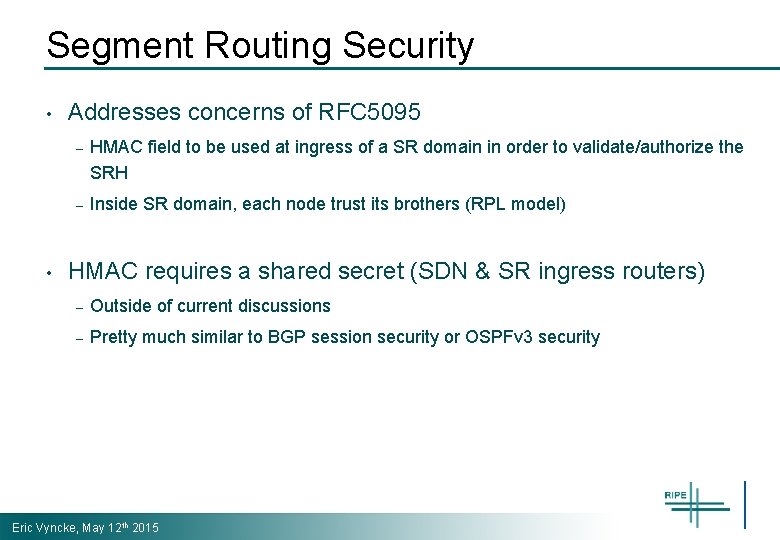
Segment Routing Security • • Addresses concerns of RFC 5095 – HMAC field to be used at ingress of a SR domain in order to validate/authorize the SRH – Inside SR domain, each node trust its brothers (RPL model) HMAC requires a shared secret (SDN & SR ingress routers) – Outside of current discussions – Pretty much similar to BGP session security or OSPFv 3 security Eric Vyncke, May 12 th 2015
Lost of Packets with Extension Headers 18
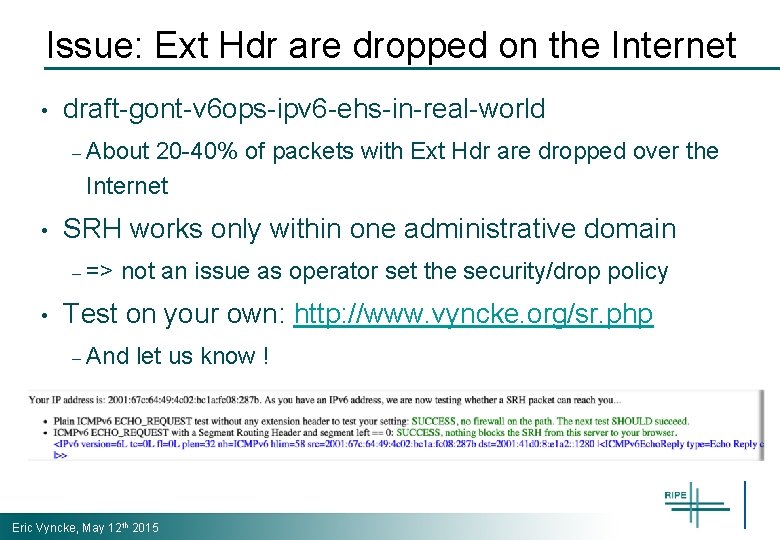
Issue: Ext Hdr are dropped on the Internet • draft-gont-v 6 ops-ipv 6 -ehs-in-real-world – • SRH works only within one administrative domain – • About 20 -40% of packets with Ext Hdr are dropped over the Internet => not an issue as operator set the security/drop policy Test on your own: http: //www. vyncke. org/sr. php – And let us know ! Eric Vyncke, May 12 th 2015
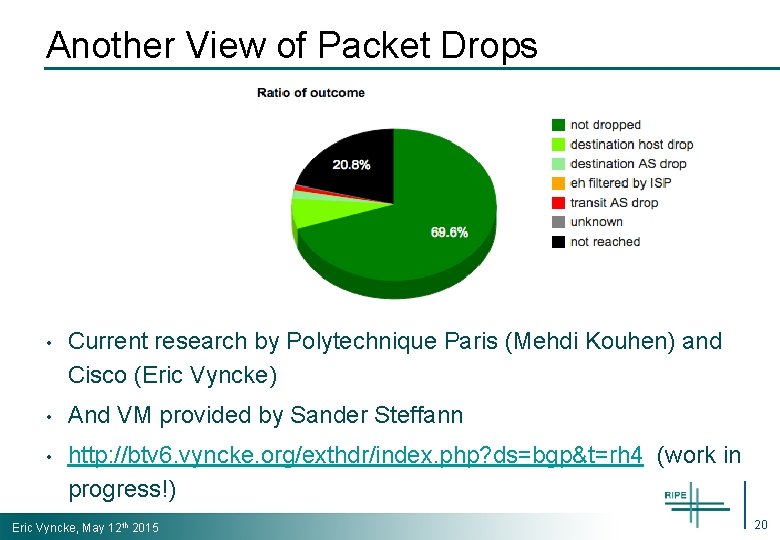
Another View of Packet Drops • Current research by Polytechnique Paris (Mehdi Kouhen) and Cisco (Eric Vyncke) • And VM provided by Sander Steffann • http: //btv 6. vyncke. org/exthdr/index. php? ds=bgp&t=rh 4 (work in progress!) Eric Vyncke, May 12 th 2015 20
Questions?