
How to Sample Forages for Nutrient Analysis BalesBagsBunkersStanding
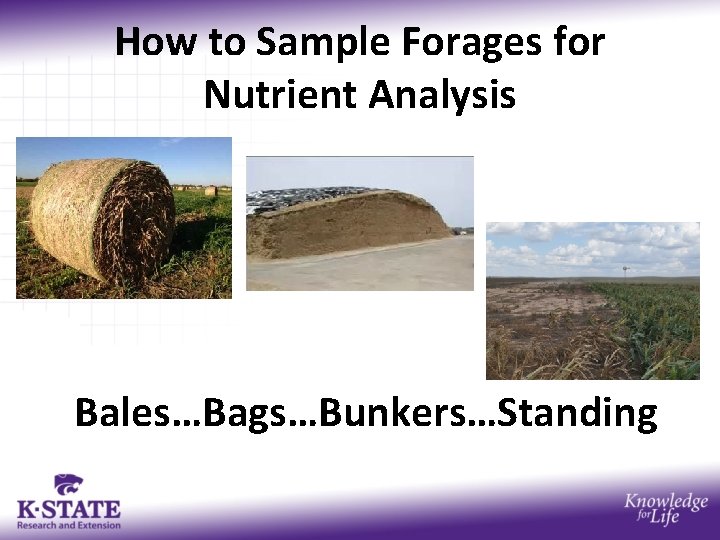
How to Sample Forages for Nutrient Analysis Bales…Bags…Bunkers…Standing
Collect a Representative Sample of the Forage being Tested Ø Objective – Representative sample of the forage or feed – Tons to lbs. , lbs. to grams, (grams) to ppm Ø Sampling error – Taking the sample – Handling the sample prior to analysis
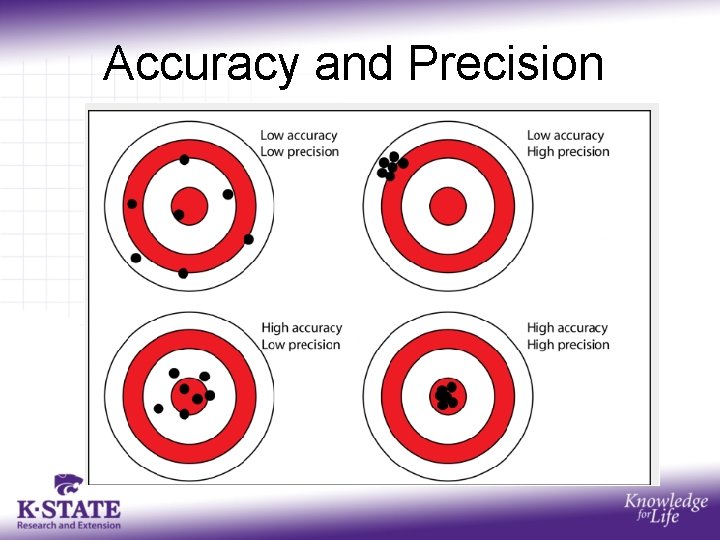
Accuracy and Precision

What is a forage lot ? Ø A forage lot consists of forage harvested from one field: – at the same cutting and maturity within a 48 hour period – Usually contains fewer than 100 tons of hay. – A forage lot should be similar forage type, field (soil type), cutting date, maturity, variety, weed infestation, type of harvest equipment, weather during growth and harvest and storage conditions.
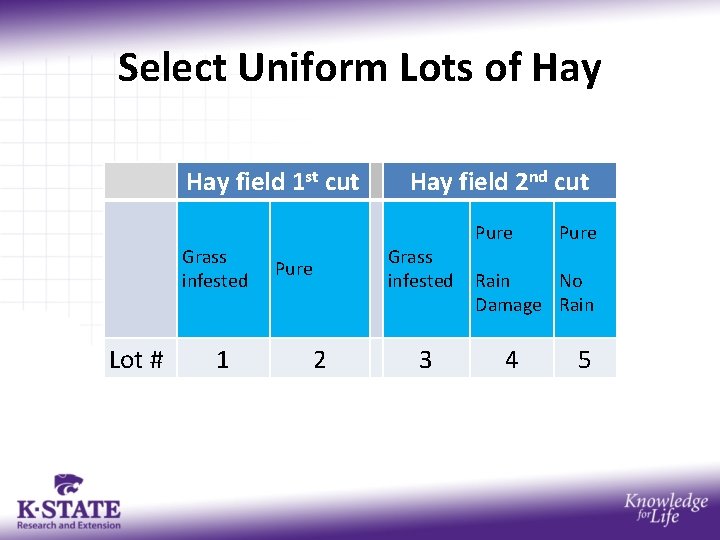
Select Uniform Lots of Hay field 1 st cut Grass infested Lot # 1 Pure 2 Hay field 2 nd cut Grass infested 3 Pure Rain No Damage Rain 4 5
Sampling Bales Ø Group bales – Field, source, forage type, Quality – Risk management (nitrates) Ø Sort and store bales such that group/lots of hay can be identified and maintained during feeding
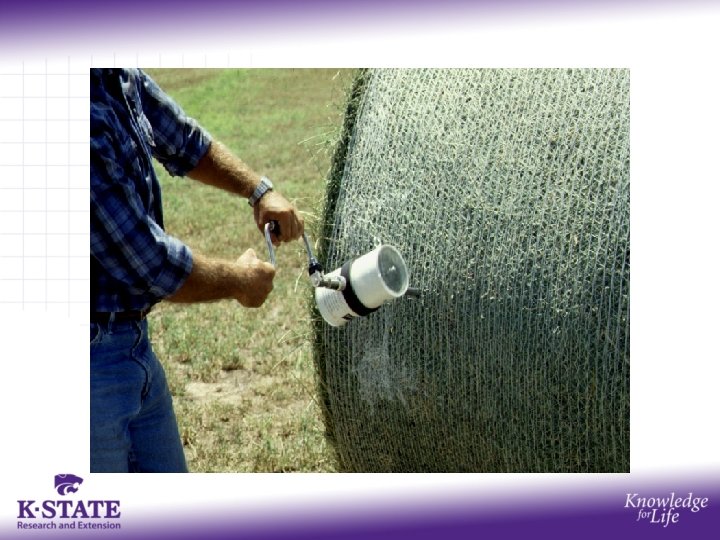
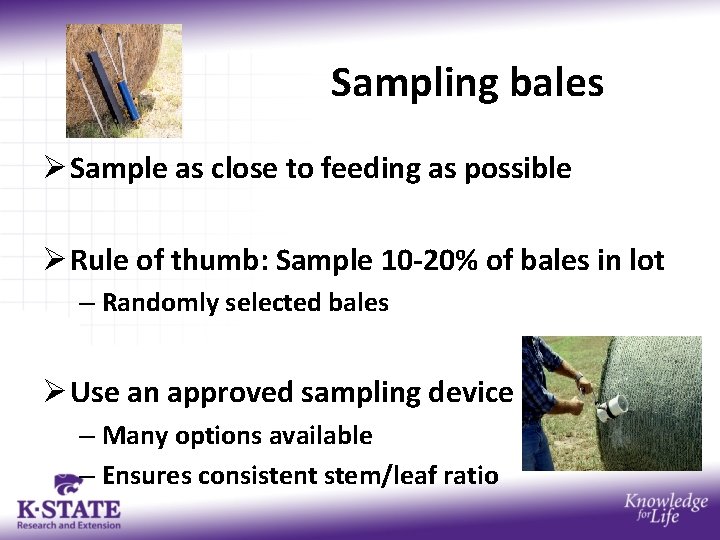
Sampling bales Ø Sample as close to feeding as possible Ø Rule of thumb: Sample 10 -20% of bales in lot – Randomly selected bales Ø Use an approved sampling device – Many options available – Ensures consistent stem/leaf ratio
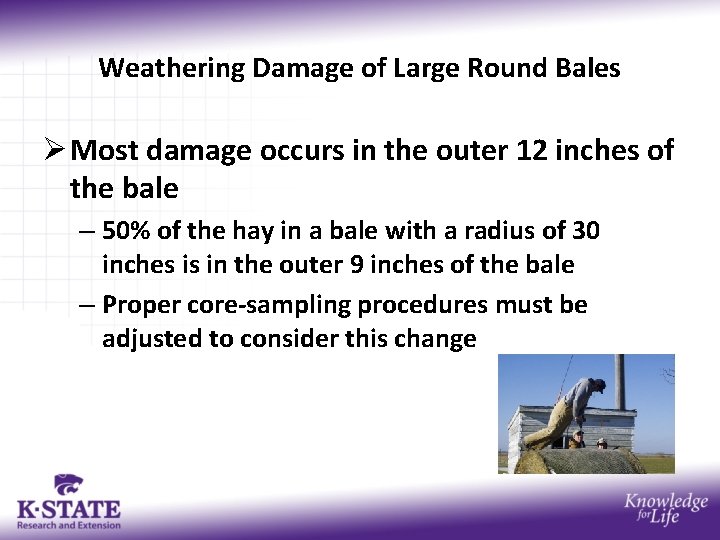
Weathering Damage of Large Round Bales Ø Most damage occurs in the outer 12 inches of the bale – 50% of the hay in a bale with a radius of 30 inches is in the outer 9 inches of the bale – Proper core-sampling procedures must be adjusted to consider this change
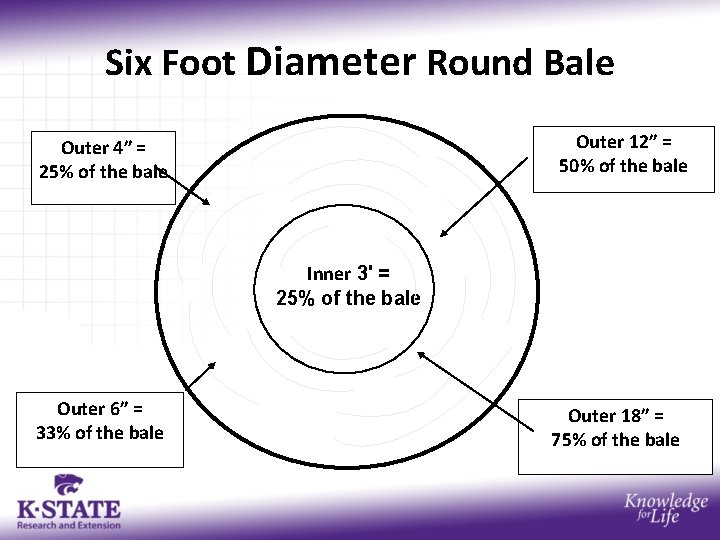
Six Foot Diameter Round Bale Outer 12″ = 50% of the bale Outer 4″ = 25% of the bale Inner 3' = 25% of the bale Outer 6″ = 33% of the bale Outer 18″ = 75% of the bale
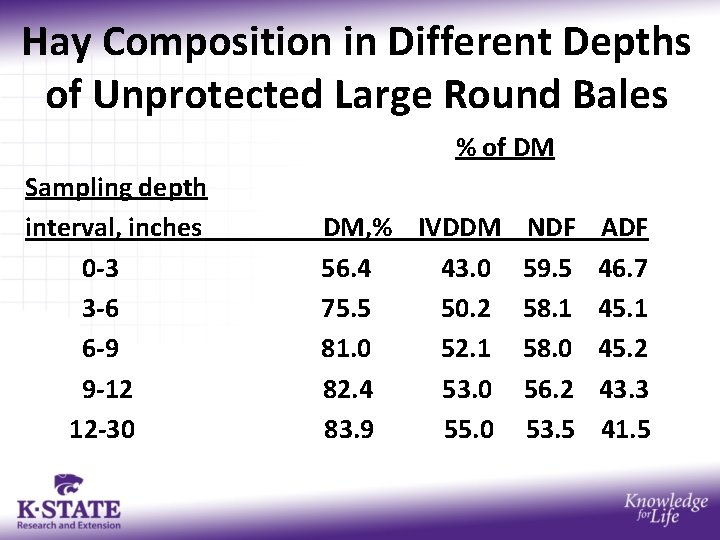
Hay Composition in Different Depths of Unprotected Large Round Bales % of DM Sampling depth interval, inches 0 -3 3 -6 6 -9 9 -12 12 -30 DM, % IVDDM NDF ADF 56. 4 43. 0 59. 5 46. 7 75. 5 50. 2 58. 1 45. 1 81. 0 52. 1 58. 0 45. 2 82. 4 53. 0 56. 2 43. 3 83. 9 55. 0 53. 5 41. 5
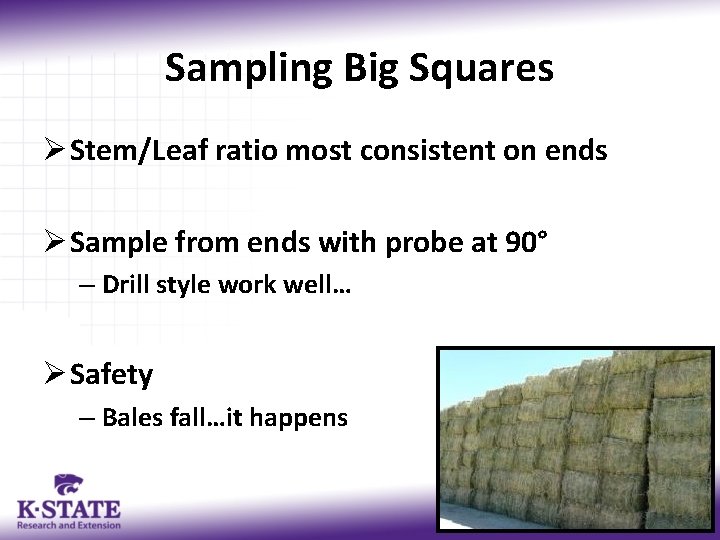
Sampling Big Squares Ø Stem/Leaf ratio most consistent on ends Ø Sample from ends with probe at 90° – Drill style work well… Ø Safety – Bales fall…it happens
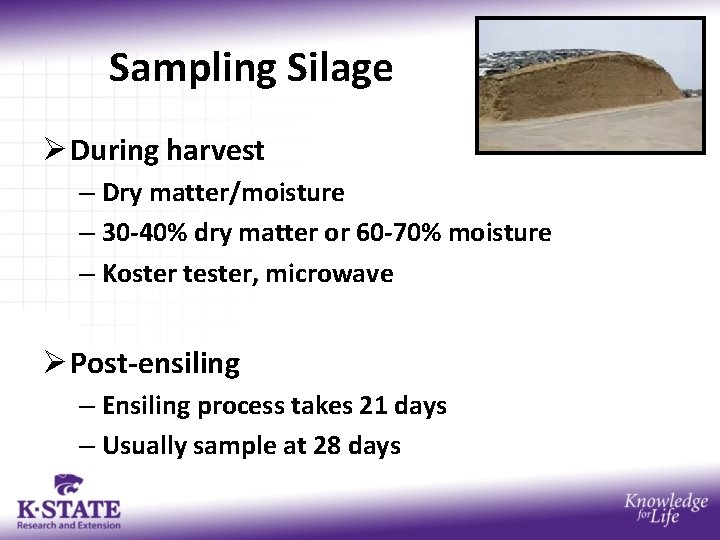
Sampling Silage Ø During harvest – Dry matter/moisture – 30 -40% dry matter or 60 -70% moisture – Koster tester, microwave Ø Post-ensiling – Ensiling process takes 21 days – Usually sample at 28 days
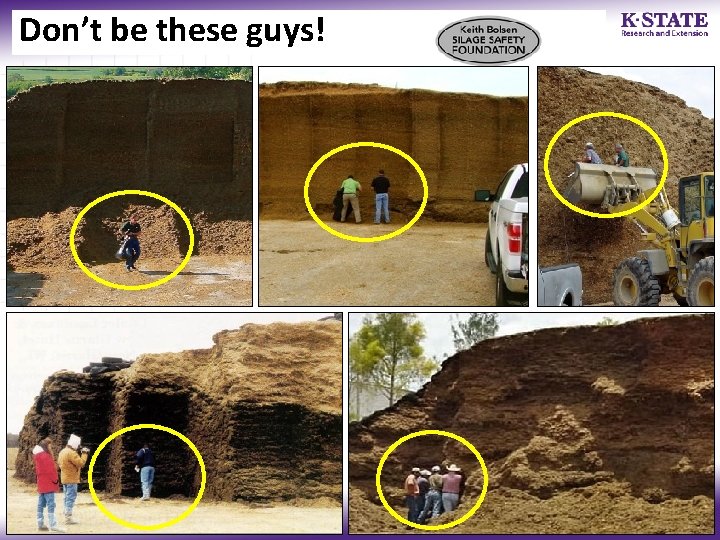
Don’t be these guys!
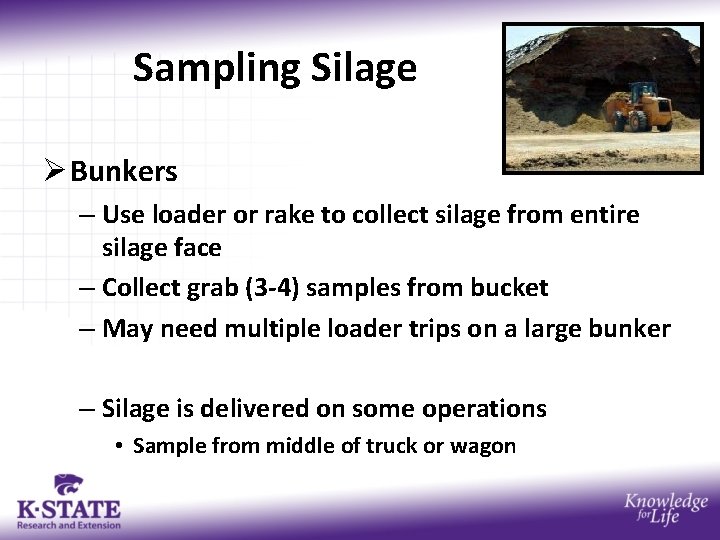
Sampling Silage Ø Bunkers – Use loader or rake to collect silage from entire silage face – Collect grab (3 -4) samples from bucket – May need multiple loader trips on a large bunker – Silage is delivered on some operations • Sample from middle of truck or wagon
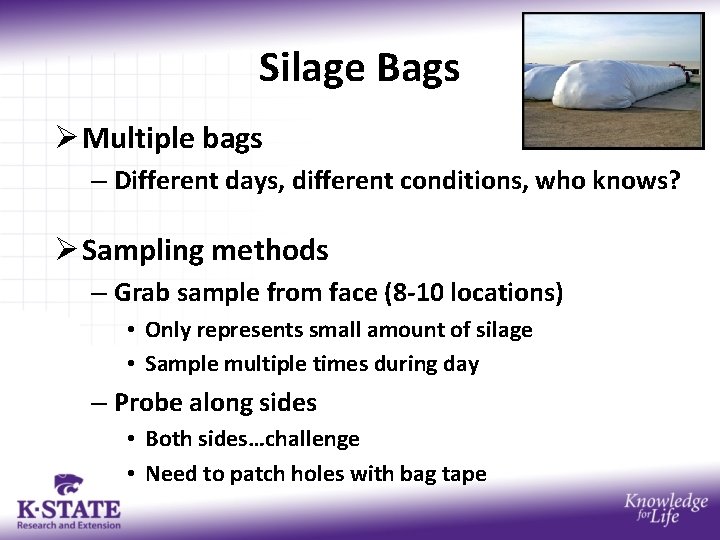
Silage Bags Ø Multiple bags – Different days, different conditions, who knows? Ø Sampling methods – Grab sample from face (8 -10 locations) • Only represents small amount of silage • Sample multiple times during day – Probe along sides • Both sides…challenge • Need to patch holes with bag tape
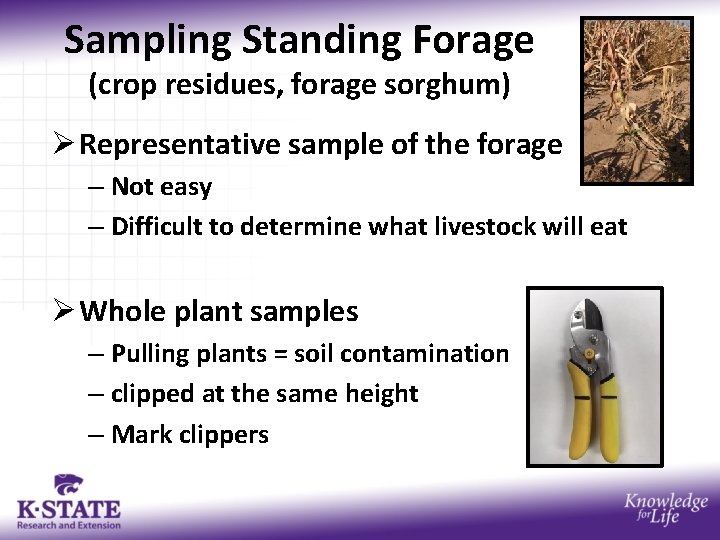
Sampling Standing Forage (crop residues, forage sorghum) Ø Representative sample of the forage – Not easy – Difficult to determine what livestock will eat Ø Whole plant samples – Pulling plants = soil contamination – clipped at the same height – Mark clippers
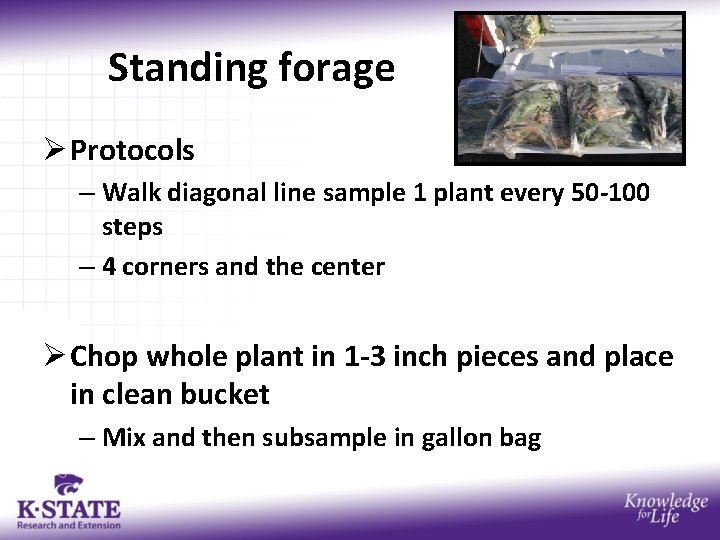
Standing forage Ø Protocols – Walk diagonal line sample 1 plant every 50 -100 steps – 4 corners and the center Ø Chop whole plant in 1 -3 inch pieces and place in clean bucket – Mix and then subsample in gallon bag
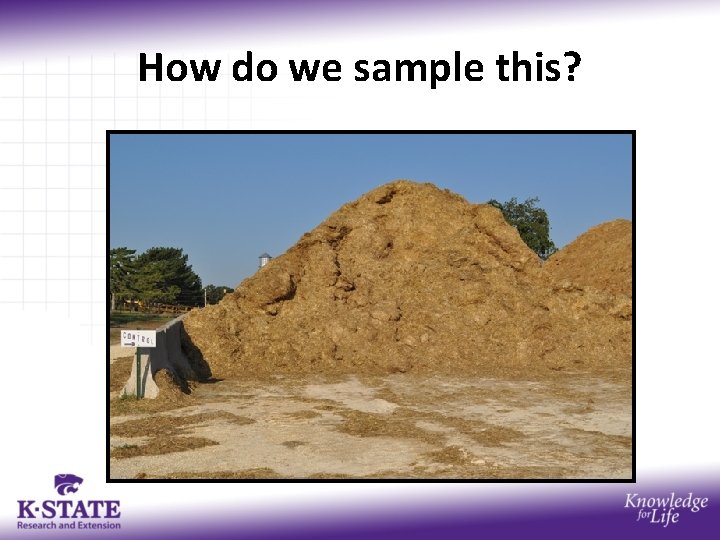
How do we sample this?
Composite sampling Ø Take similar weight/or volume of sample on different days/times Ø Place in refrigerator (3 -5 days) Ø Place an equal amount (weight or volume) of each sample in a clean container Ø Mix slightly Ø Then fill a 1 gallon zipper bag for analysis
Final Thoughts Ø Forage analysis is often overlooked as a management tool Ø Feedstuffs variation can be potentially be huge Ø Poor sampling technique or protocols create more problems than producers think
- Slides: 21