
How to Recap Maths Welcome Please put a








- Slides: 23
How to Recap Maths Welcome! Please put a message in the chat to tell us: - Your name and your course - What you’re hoping to get from this workshop
This session • Part 1: What do you have to learn? • Part 2: How can you organise it? • Part 3: How to Revise a topic. • Part 4: How to monitor your progress and set goals.
Part 1: What do you have to learn? • Picture of not-so-scary shark
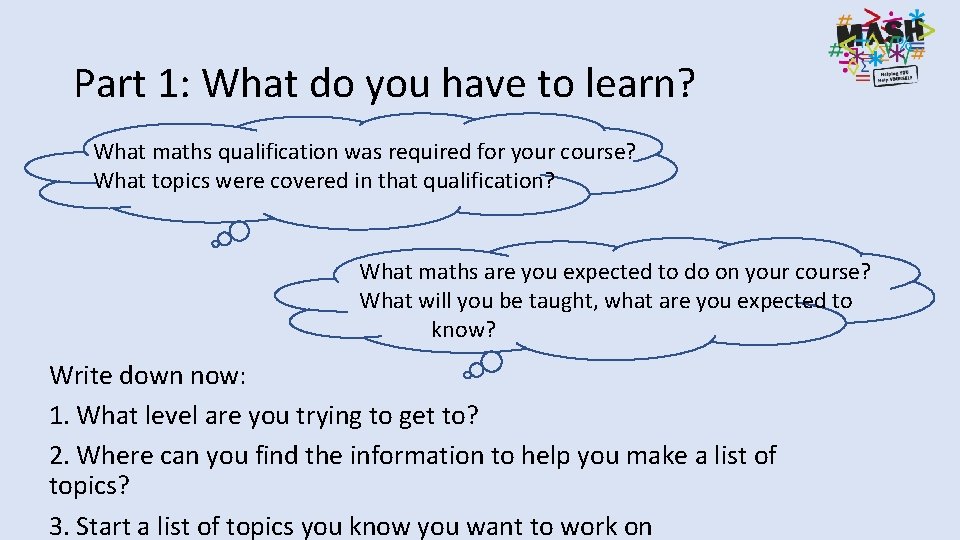
Part 1: What do you have to learn? What maths qualification was required for your course? What topics were covered in that qualification? What maths are you expected to do on your course? What will you be taught, what are you expected to know? Write down now: 1. What level are you trying to get to? 2. Where can you find the information to help you make a list of topics? 3. Start a list of topics you know you want to work on
Part 1: What do you have to learn? Example: GCSE maths try corbettmaths. com See spreadsheets.
Part 2: How to Organise your list and your work • What topics rely on other topics? • What is needed first on your course? • When is it needed?
Part 2: How to Organise your list and your work • How much time do you have to spend on maths per week? • Think through next week now, when can you devote some time to maths.
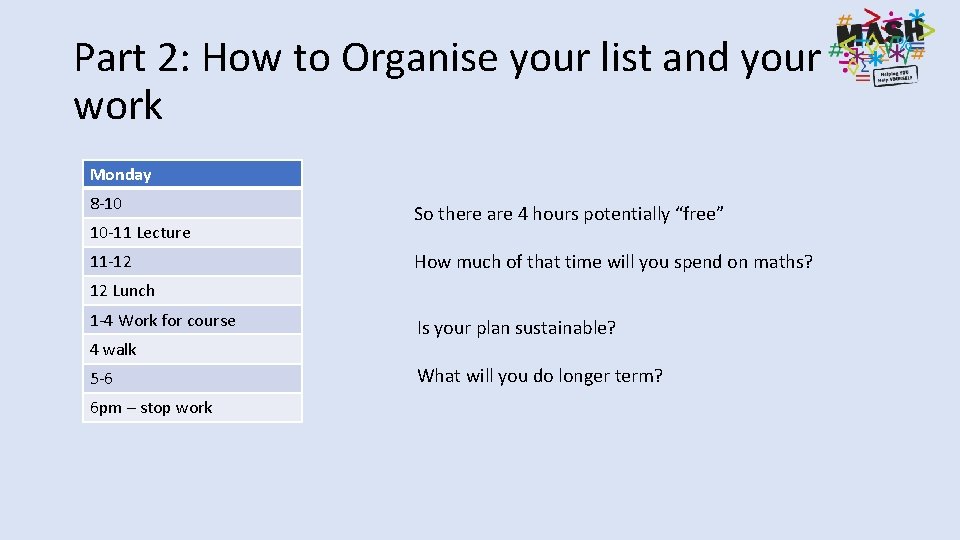
Part 2: How to Organise your list and your work Monday 8 -10 10 -11 Lecture 11 -12 So there are 4 hours potentially “free” How much of that time will you spend on maths? 12 Lunch 1 -4 Work for course 4 walk 5 -6 6 pm – stop work Is your plan sustainable? What will you do longer term?
Part 2: How to Organise your list and your work Fred has done the exercise above and decided to spend 3 hours a week on maths. He thinks he has 50 topics he wants to learn and thinks they will take between 30 and 90 minutes each. Fred has a maths test in the last week of April. What is your advice to Fred?
Part 2: How to Organise your list and your work Penelope has 28 topics to learn, she thinks they’ll take about 45 minutes each. She wants to learn the topics in 5 weeks. She decides to spend 5 hours a week on maths. After 3 weeks, she has covered 10 topics. How would you advise Penelope?
Part 2: How to Organise your list and your work You are a tutor. You set a piece of assessed work which involves maths. It is due in in three weeks. Herbert sends you an email explaining he is struggling with maths, a subject he found hard at school. He sends you a copy of his maths revision plan and says he has been working on reviewing his maths for 2 weeks and is making progress. Janice sends you an email saying she can’t do maths so she doesn’t think she’s going to do very well in the assessment. Michael does not get in touch with you. All three students get the same mark in the assessment. What do you think about these students?
Part 2: How to Organise your list and your work - summary • Be realistic • Be prepared to change the schedule • How does this sync with your course? Do you need to talk to your tutor/lecturer?
Part 3: How to learn a Topic You have 90 minutes to revise how to solve equations. Write down what you would do right now.
Part 3: How to learn a Topic https: //www. sheffield. ac. uk/mash/resources/transitions
Part 3: How to learn a Topic Don’t panic if you learn something and forget it again – this will happen, it is normal! Ideally leave a gap of a few days and test yourself again. Practically – keep records and have a review each month.
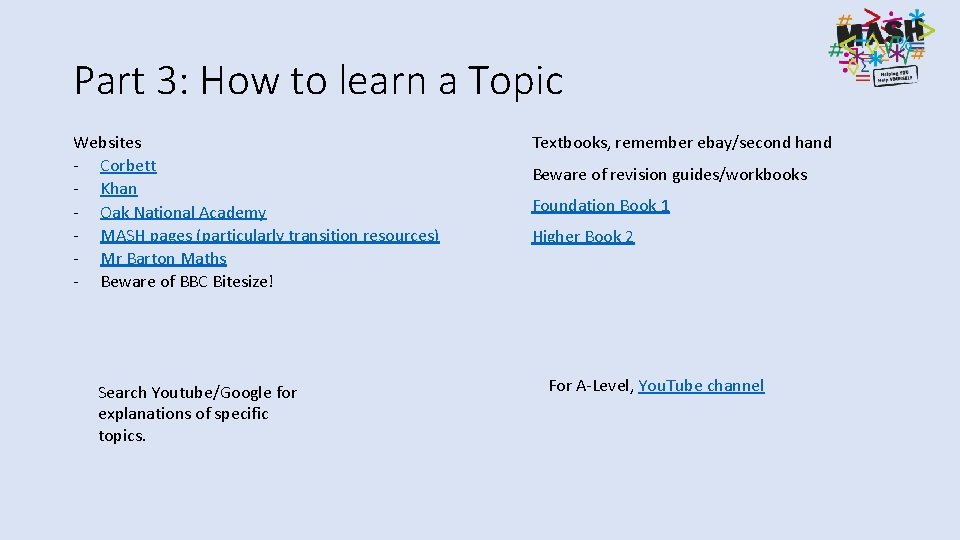
Part 3: How to learn a Topic Websites - Corbett - Khan - Oak National Academy - MASH pages (particularly transition resources) - Mr Barton Maths - Beware of BBC Bitesize! Search Youtube/Google for explanations of specific topics. Textbooks, remember ebay/second hand Beware of revision guides/workbooks Foundation Book 1 Higher Book 2 For A-Level, You. Tube channel
Part 3: How to learn a Topic Any comments/tips/other good resources for learning maths?
Part 4: Setting Goals I will win the race I will train for 2 hours, 3 times a week What is the difference between these two statements?
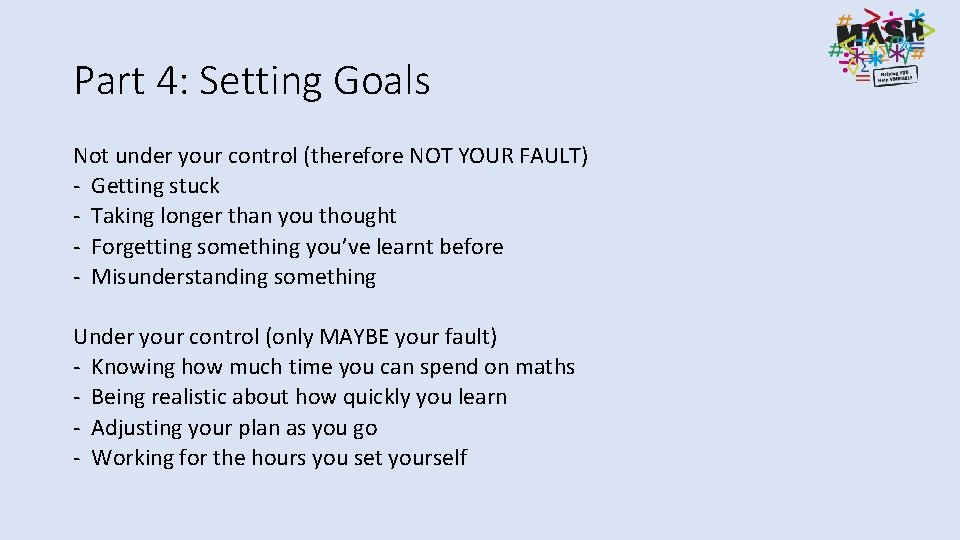
Part 4: Setting Goals Not under your control (therefore NOT YOUR FAULT) - Getting stuck - Taking longer than you thought - Forgetting something you’ve learnt before - Misunderstanding something Under your control (only MAYBE your fault) - Knowing how much time you can spend on maths - Being realistic about how quickly you learn - Adjusting your plan as you go - Working for the hours you set yourself
Part 4: Setting Goals • Set in Advance • Write it down • Tell Someone
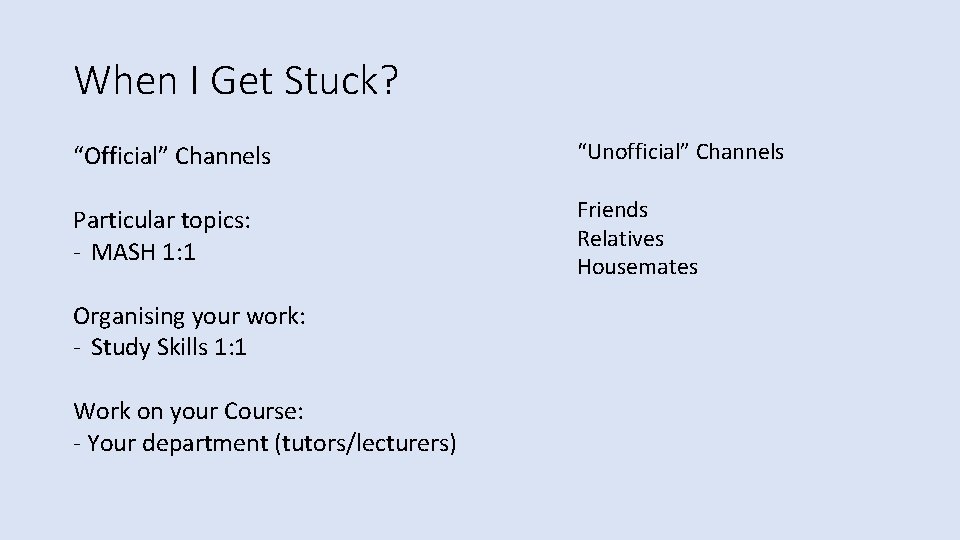
When I Get Stuck? “Official” Channels “Unofficial” Channels Particular topics: - MASH 1: 1 Friends Relatives Housemates Organising your work: - Study Skills 1: 1 Work on your Course: - Your department (tutors/lecturers)
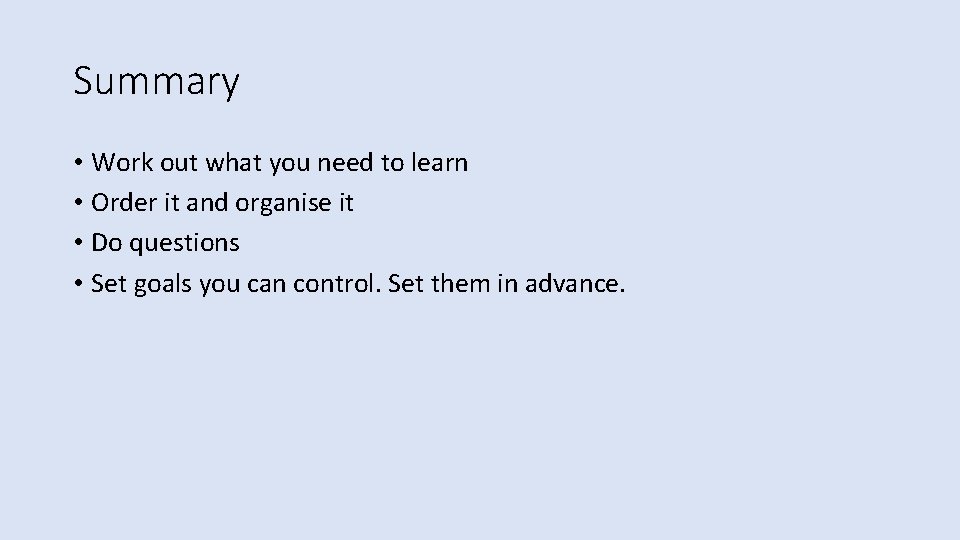
Summary • Work out what you need to learn • Order it and organise it • Do questions • Set goals you can control. Set them in advance.
www. sheffield. ac. uk/mash To book a one-to-one help session: www. sheffield. ac. uk/mash/bookings For more online help: www. sheffield. ac. uk/mash/resources Thanks for coming!