
How to Read the Textbook Your textbook is

How to Read the Textbook

Your textbook is written like. . .

. . . an essay!!!
Note-taking is like reverse essay writing Step 1: Find the author’s thesis for the chapter. Write it down. Step 2: Read the rest of the chapter looking for supporting evidence.
Follow a PLAN 1. Browsing 2. Skim-and-Scan 3. Careful Reading with Note-taking 4. Reminding
1. BROWSING Look through the chapter. Read the headings, sections, and sub-sections. Read and look at all of the maps, drawings, painting, graphs, and charts. Just “look around” at what you will be reading. (15 -20 minutes)
2. SKIM-and-SCAN Read the opening remarks of the chapter. Read the first paragraphs of each section. Find thesis for the chapter and sections. (30 -45 minutes)
3. CAREFUL READING with NOTE-TAKING With pen in hand, carefully read the chapter from start to finish. Take outline notes with headings matching those in the chapter. Don’t rewrite the book. Take quick notes of things you will need to remember. You may also wish to start notecards. (2 -4 hours)
4. REMINDING Let the notes remind you what is in the text, referring to the text only when you need to. Reread the introduction and conclusion to the chapter. This is a final check before the exam. (30 -45 minutes)

Note-taking Tips
Do you read a sentence, write down a note, read a sentence, write down a note?
STOP writing down EVERYTHING! You will need to determine what parts are the main ideas and their supporting evidence.


Eliminate distractions! CELL PHONE, internet, other people, music (unless classical)
Note-taking Formats
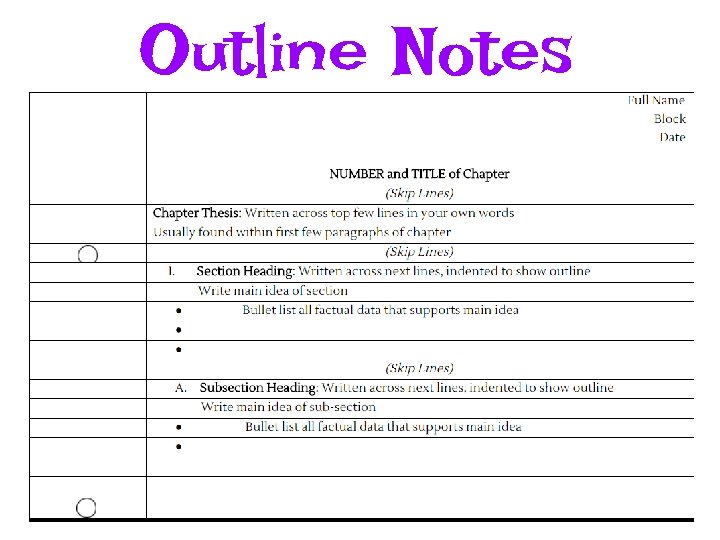
Outline Notes
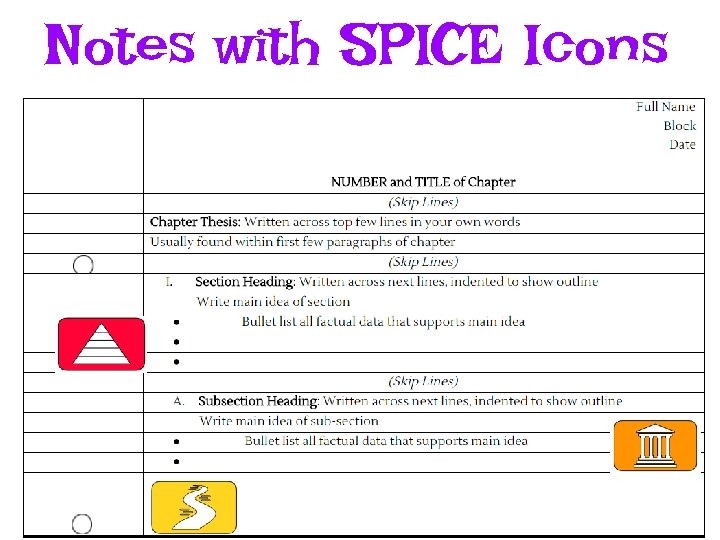
Notes with SPICE Icons
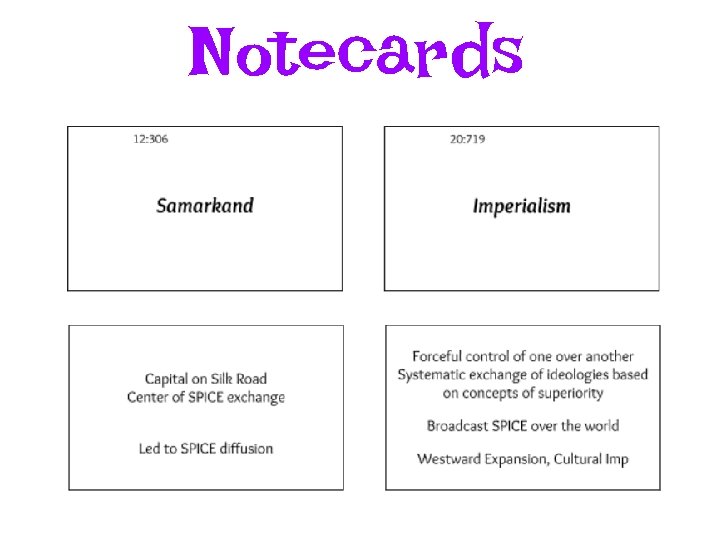
Notecards
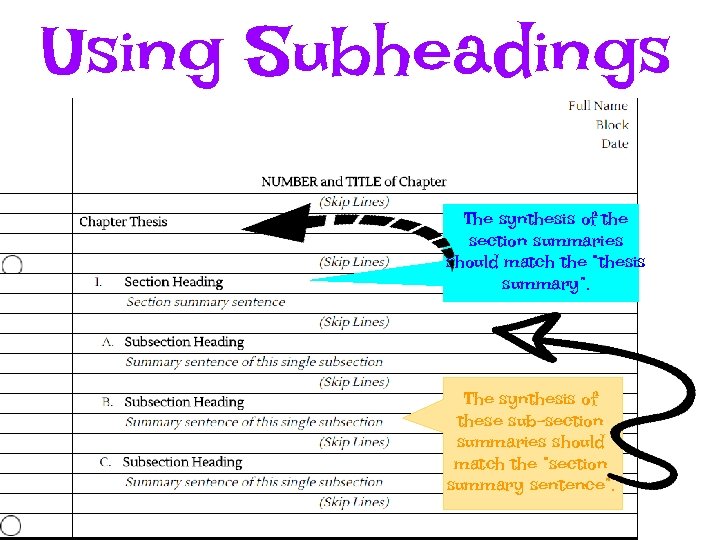
Using Subheadings The synthesis of the section summaries should match the “thesis summary”. The synthesis of these sub-section summaries should match the “section summary sentence”.
- Slides: 21