
How to Read Shakespeare 1 Its Verse Do


- Slides: 12
How to Read Shakespeare
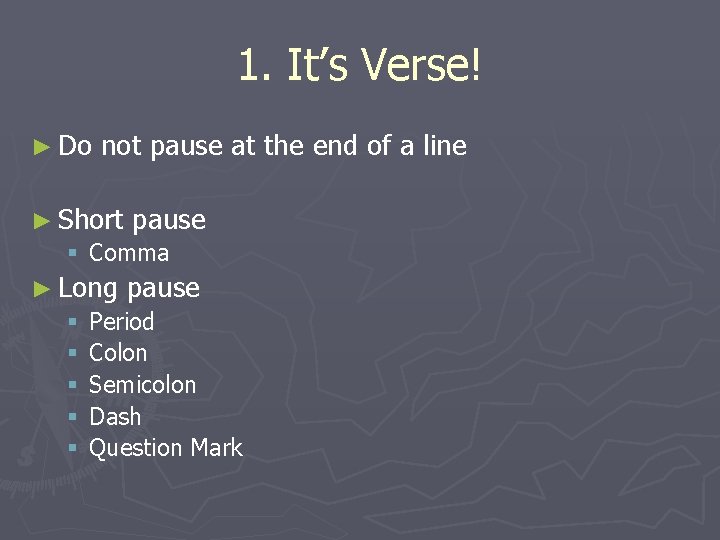
1. It’s Verse! ► Do not pause at the end of a line ► Short pause § Comma ► Long pause § Period § Colon § Semicolon § Dash § Question Mark
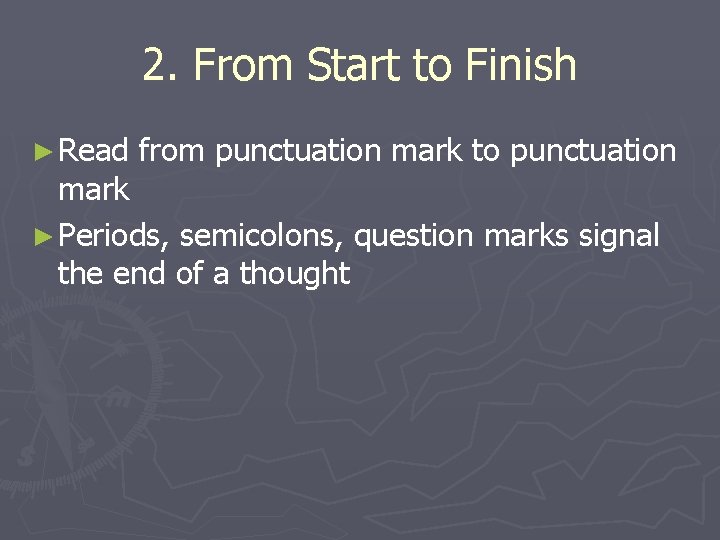
2. From Start to Finish ► Read from punctuation mark to punctuation mark ► Periods, semicolons, question marks signal the end of a thought
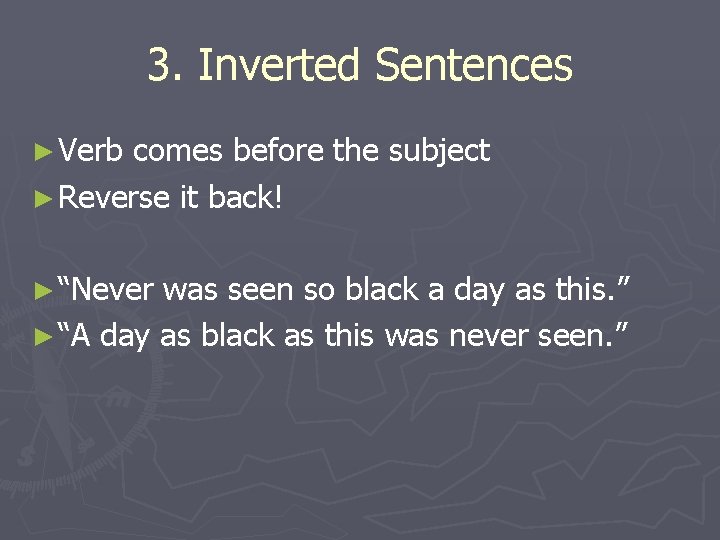
3. Inverted Sentences ► Verb comes before the subject ► Reverse it back! ► “Never was seen so black a day as this. ” ► “A day as black as this was never seen. ”
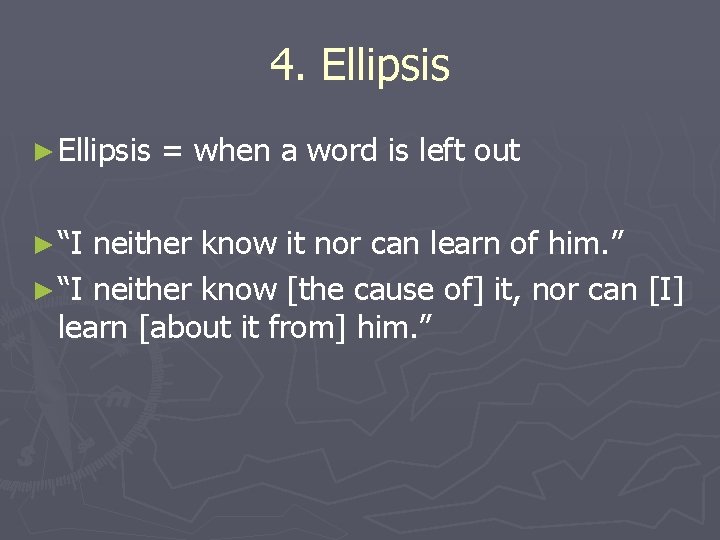
4. Ellipsis ► “I = when a word is left out neither know it nor can learn of him. ” ► “I neither know [the cause of] it, nor can [I] learn [about it from] him. ”
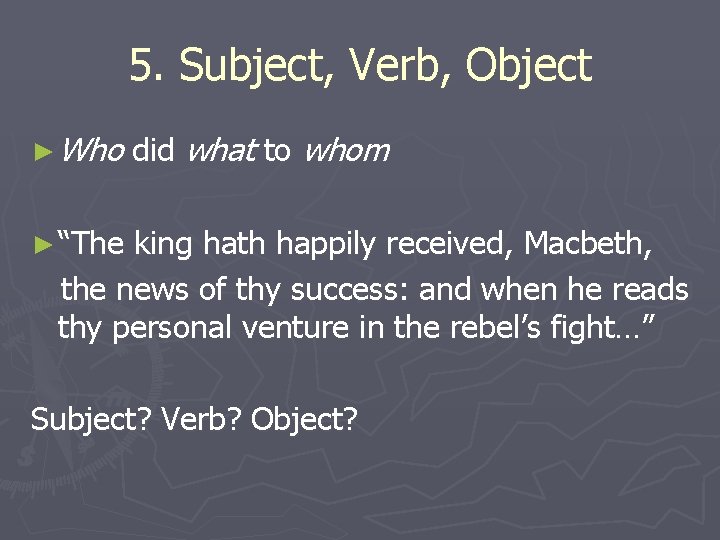
5. Subject, Verb, Object ► Who did what to whom ► “The king hath happily received, Macbeth, the news of thy success: and when he reads thy personal venture in the rebel’s fight…” Subject? Verb? Object?
5. Continued… ► Keep track of pronouns § He, she, it, they ► Paraphrase ► Read main ideas it out loud!
6. Literary Terms ► Metaphor § “I have begun to plant thee, and will labour To make thee full of growing. ” ► Allusion § Reference to person, place, or artistic work
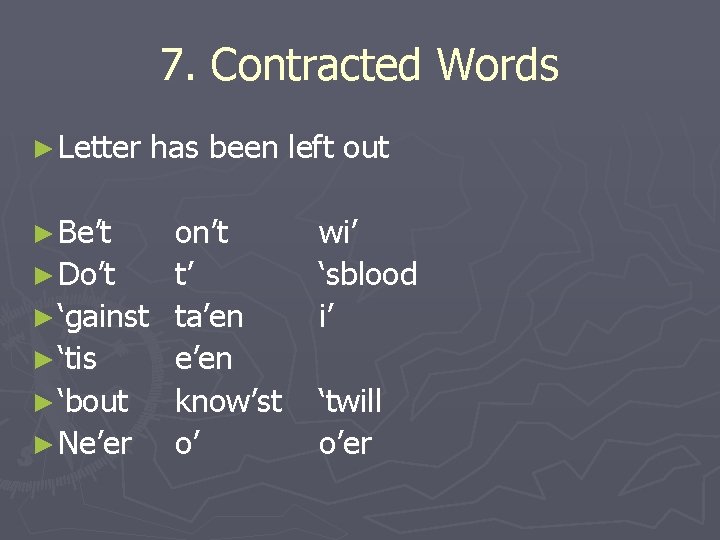
7. Contracted Words ► Letter ► Be’t has been left out on’t ► Do’t t’ ► ‘gainst ta’en ► ‘tis e’en ► ‘bout know’st ► Ne’er o’ wi’ ‘sblood i’ ‘twill o’er
8. Archaic Words ► Thee ► Thou ► Thy ► Thine ► Art ► Anon ► Look at the side notes!
9. Wordplay ► Pun § Humor § Two meanings suggested by same word or two similar-sounding words ► Malapropism § Character mistakenly uses a word for another word
10. Final Thoughts ► Written for the stage ► Shakespeare loved to play with language ► Shakespeare puts all kinds of people on stage ► Read it out loud!