
How to Read a Short Story For enjoyment
- Slides: 18
How to Read a Short Story For enjoyment and analysis
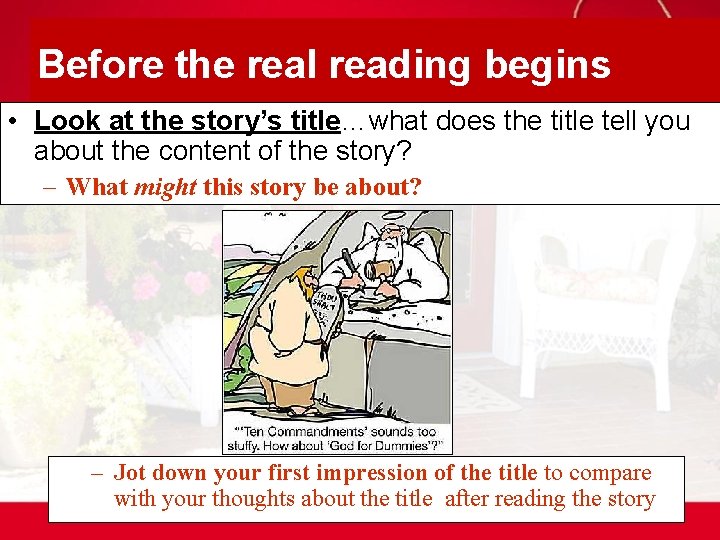
Before the real reading begins • Look at the story’s title…what does the title tell you about the content of the story? – What might this story be about? – Jot down your first impression of the title to compare with your thoughts about the title after reading the story
Before the real reading begins • Take inventory of any prior knowledge you have about the author, genre, setting etc… – Spend a few minutes reflecting and thinking about what you already know and bring to the text.
Before the real reading begins • Establish a quest: – Read the first few paragraphs and come up with a question that you will seek to answer as you read
Before the real reading begins • Orient yourself: – Flip through the story to determine its length. – Scan the opening sentences of different paragraphs to gain a sense of where the story is set, how difficult the language is, and how long you should need to read the story.
As you read… • Identify the main characters – try to determine their needs, wants, motives, strengths & weaknesses
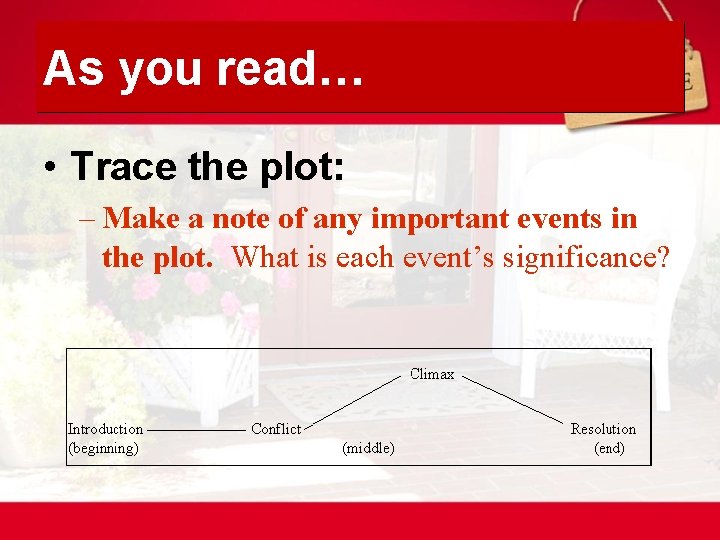
As you read… • Trace the plot: – Make a note of any important events in the plot. What is each event’s significance?
As you read… • Keep track of how much time passes in the story: – Some stories cover only a few moments while others cover decades of time.
As you read… • Note any important changes in characters or setting – These changes have been included deliberately and are undoubtedly crucial to the meaning of the story.
As you read… • Pay attention to the setting: – Note how the setting evokes emotional reaction (dislike, enjoyment, fear, comfort, etc…)
As you read… • Consider the story’s point of view: – Who is telling you the story? – Is the narrator reliable and accurate? – Do you have to read “between the lines” to determine what’s happening objectively?
Once finished… • Apply the steps of critical thinking to the story: –Summary –Analysis –Synthesis –Evaluation
Once finished…Summarize • Summarize the story: – Review what happened by making a mental or written list of the important events – Be sure you understand the progression of events – Tell someone about the story by summarizing what happened
Once finished…Analyze • Analyze the text: – Where are the important ideas in the text? – Select a few passages that seem important and determine what they contribute to the story.
Once finished…Synthesize • Synthesize with other stories you’ve read: – How does the story compare with other stories? – What elements are similar? different?
Once finished…Synthesize • Synthesize with other genres & ideas: – How is the story similar to films, plays, poems, ad campaigns, TV shows etc…? – Where else have you seen the story’s theme or similar characters?
Once finished…Evaluate • Evaluate the story by applying specific criteria – Choose one element of the story (character development, plot, point of view, setting, theme, symbol etc…) and evaluate it
Be an active reader… • Read to enjoy, but read actively. – Question as you read – Look for motives and patterns – Think about the author’s intentions – Imagine how other readers might respond to the text