
How To Read a Food Label By Julie
How To Read a Food Label By: Julie Coulter Image Source: www. marksdailyapple. com
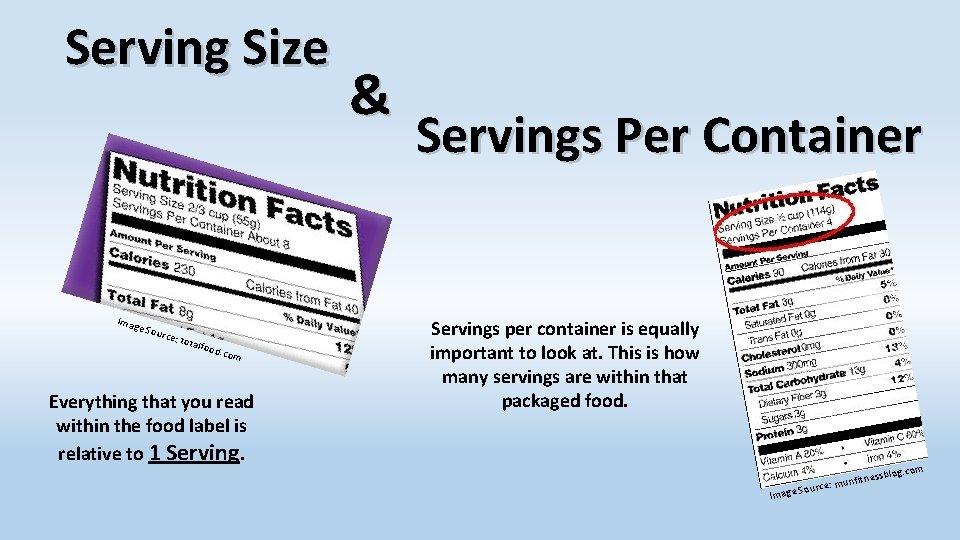
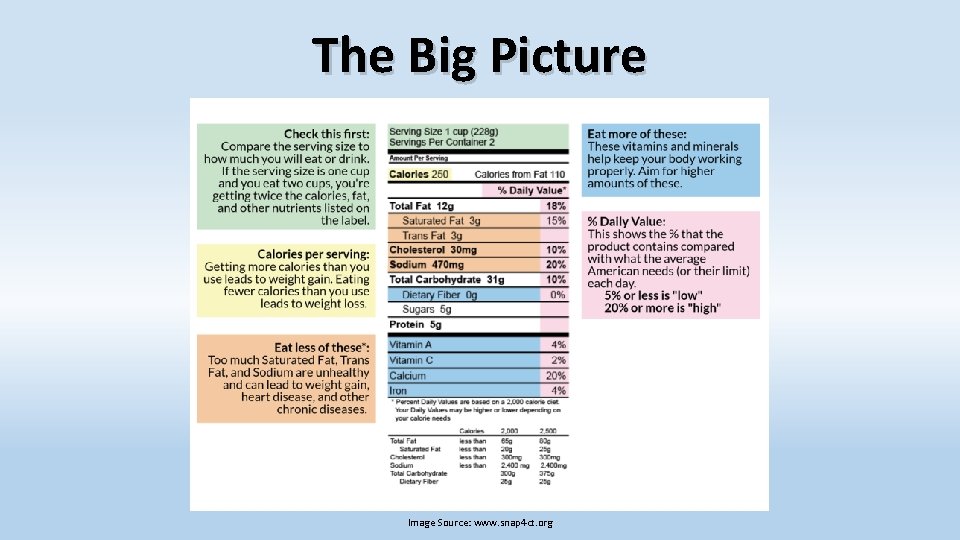
Serving Size Imag e Sou rce: total food . com Everything that you read within the food label is relative to 1 Serving. & Servings Per Container Servings per container is equally important to look at. This is how many servings are within that packaged food. o Image S om . c essblog unfitn urce: m
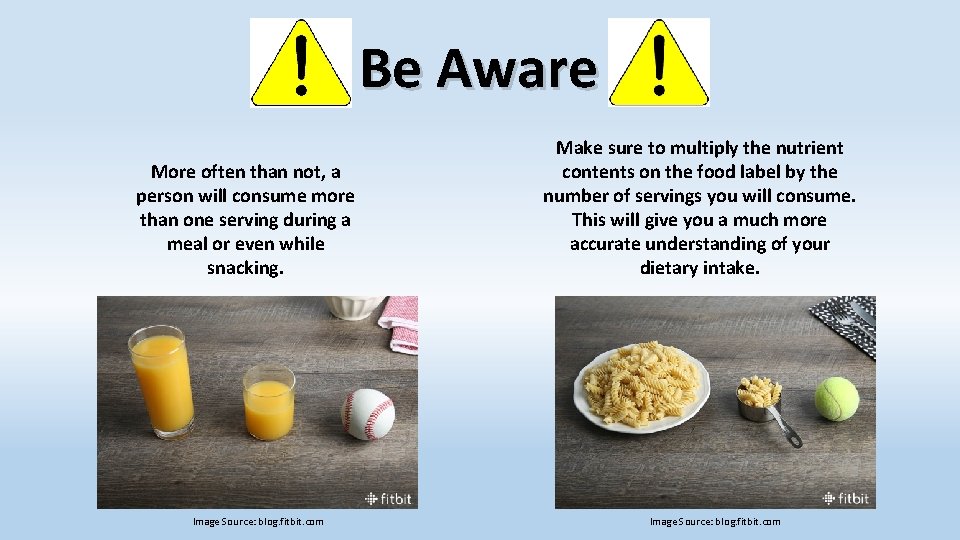
Be Aware More often than not, a person will consume more than one serving during a meal or even while snacking. Image Source: blog. fitbit. com Make sure to multiply the nutrient contents on the food label by the number of servings you will consume. This will give you a much more accurate understanding of your dietary intake. Image Source: blog. fitbit. com

Percent Daily Value %DV indicates the amount of that nutrient in one serving. Image Sourc e: the adven tureso fzand k. wor dpres s . com DV’s are based on a 2, 000 calorie diet. Don’t forget about your vitamins! Look at the %DV for these as well! s. com e Sou Imag s . fitne ww rce: w s ightlo e w r o sf

Quick Tip: Use the 5 -20 Rule 5%DV or less is considered “LOW” 20%DV or more is considered “HIGH” Nutrients you want to get less of: Nutrients you want more of: • • Saturated Fats Trans Fats Cholesterol Sodium • • Fiber Vitamins A & C Calcium Iron
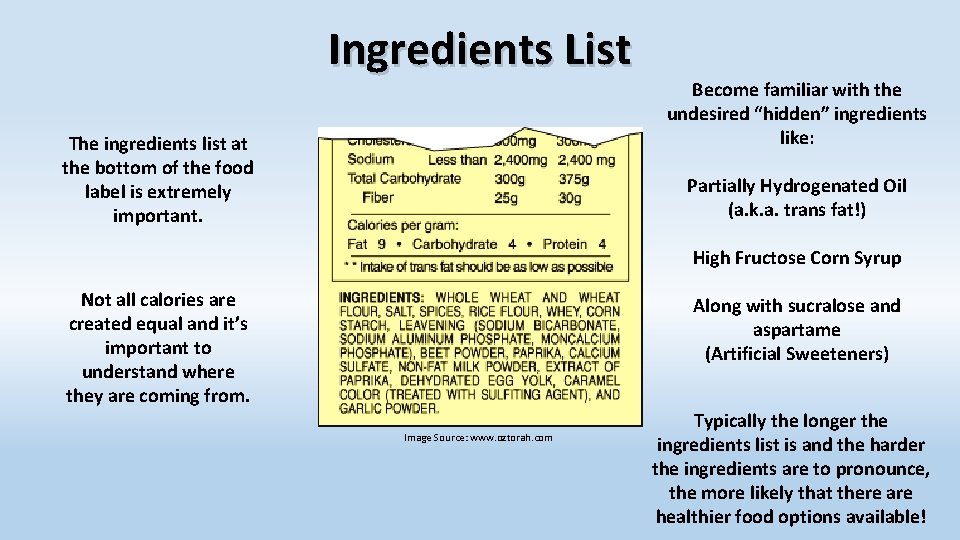
Ingredients List The ingredients list at the bottom of the food label is extremely important. Become familiar with the undesired “hidden” ingredients like: Partially Hydrogenated Oil (a. k. a. trans fat!) High Fructose Corn Syrup Not all calories are created equal and it’s important to understand where they are coming from. Along with sucralose and aspartame (Artificial Sweeteners) Image Source: www. oztorah. com Typically the longer the ingredients list is and the harder the ingredients are to pronounce, the more likely that there are healthier food options available!
The Big Picture Image Source: www. snap 4 ct. org
- Slides: 7