
How to Read a Drug LabelInsert Why are
How to Read a Drug Label/Insert
Why are drug labels and inserts provided? Labels and inserts are important markers that describe and explain who, what, where, when, why and how of the drug. How the drug is prescribed for, What is the drug, Where is the drug administered, When to administer the drug, Why is the drug used, How to administer the drug
What is provided with a prescription medication? All prescription drugs must have a Prescription Label on them. This is a tag/sticker to give drug information. Some drugs come with a Patient Package Insert (PPI) that is made by the drug manufacturer to be provided, with the drug, to the patient. Some drugs have a Medication Guide which is an information sheet that must be made by the drug manufacturer for their drugs that have risks. The FDA has decided that extra information is necessary about the risks of these drugs. Lastly, there are Warning Labels on the prescription to caution the user of the risks associated with taking the
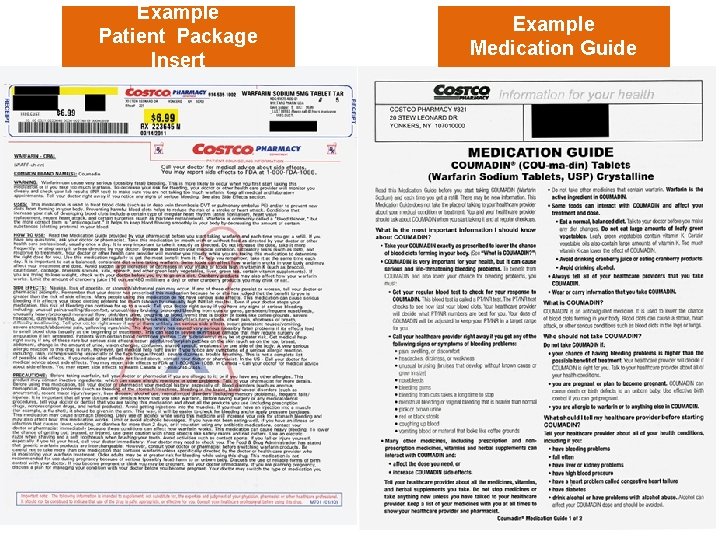
Example Patient Package Insert Example Medication Guide
What should you do with this information? When a prescription drug is used the label and any provided information documents should be read completely and should be referred to if any problems occur. The information given should be followed exactly and the medication should not be used in any way other than what is stated on the label and in the Medication Guide or Patient Information Sheet. For over the counter drugs, the label should be read completely and followed. Just like prescription drugs, they should only be used exactly how the label tells you to. Remember, if anything is confusing or problems occur such as side effects, you should call your doctor!
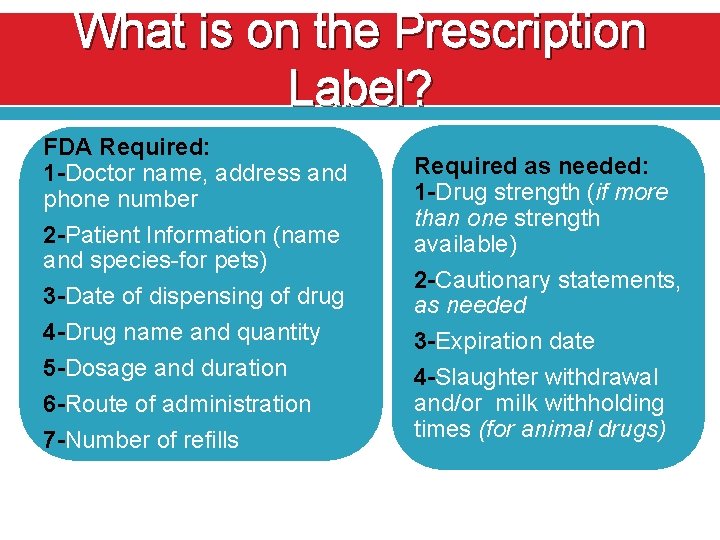
What is on the Prescription Label? FDA Required: 1 -Doctor name, address and phone number 2 -Patient Information (name and species-for pets) 3 -Date of dispensing of drug 4 -Drug name and quantity 5 -Dosage and duration 6 -Route of administration 7 -Number of refills Required as needed: 1 -Drug strength (if more than one strength available) 2 -Cautionary statements, as needed 3 -Expiration date 4 -Slaughter withdrawal and/or milk withholding times (for animal drugs)
Prescription Warning Labels (PWLs) These labels are cautionary statements to warn people of the risks and side effects. They may state where to store the drug, how to take or use it, how not to take it, what not to do while taking the drug, what some common side effects are, what some serious side effects are, etc. These are helpful, but can be hard for people to interpret or understand properly. People should always discuss with the doctor or pharmacist about the drug and thoroughly reading any Medication Guides or Patient Information Sheets provided.
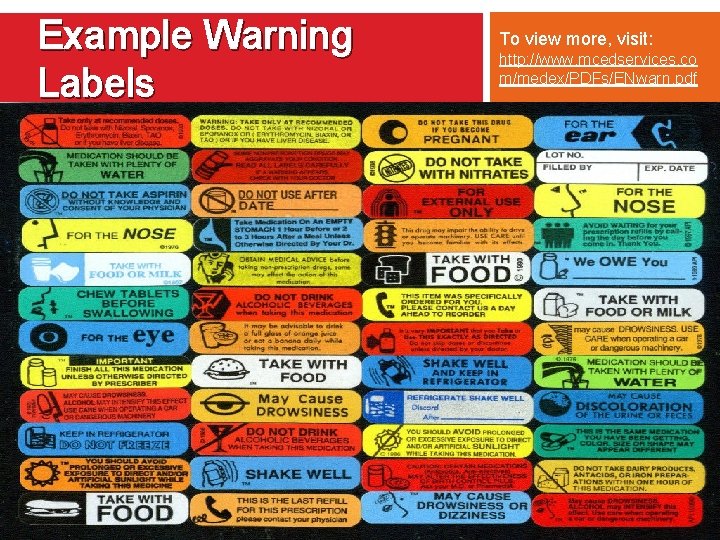
Example Warning Labels To view more, visit: http: //www. mcedservices. co m/medex/PDFs/ENwarn. pdf
What is on a Patient Information Sheet/Medication guide? Most prescription drugs from a pharmacy are given with a Patient Information Sheet. These are accurate sources of information and should be read thoroughly before using a prescription drug. They are very specific on what should be done if various adverse effects are experienced, if doses are missed, etc. , and should be referred to in these situations. Listed are 10 important sections of information on the Information sheet/Medication Guide:
10 important sections of information on the Information sheet/Medication Guide 1. Warnings or Cautions: This tells you about the main risks that you need to be aware of and things you may need to discuss with a doctor before taking the drug. 2. Uses: This tells you the problem that the drug treats and how it works. 3. How to Use: How to take the drug, how often to use it, and other instructions such as taken with or without food, a specific time of day, etc.
10 important sections of information on the Information sheet/Medication Guide 4. Side Effects: This includes the most common side effects, when to tell your doctor or stop the drug, and any rare but serious side effects. 5. Precautions/Before Using this Medicine: This includes things you need to discuss with your doctor before taking this drug such as other drugs you take, other health conditions, and any drug allergies that may relate to this drug.
10 important sections of information on the Information sheet/Medication Guide 6. Drug interactions: This lists any drugs that may interact with this one which can cause new side effects, increase the chances of side effects, and decrease effectiveness of the drug. 7. In the case of an overdose: This lists who to call if you have taken too much of the drug. 8. Notes/Additional Information: This lists other information you may need to know about taking this drug.
10 important sections of information on the Information sheet/Medication Guide 9. Missed Dose: This tells you what to do if you miss a dose and is very important for a lot of drugs. 10. Storage: This tells you how you should store the drug and how to dispose of any that you have left over once you have stopped taking the drug.
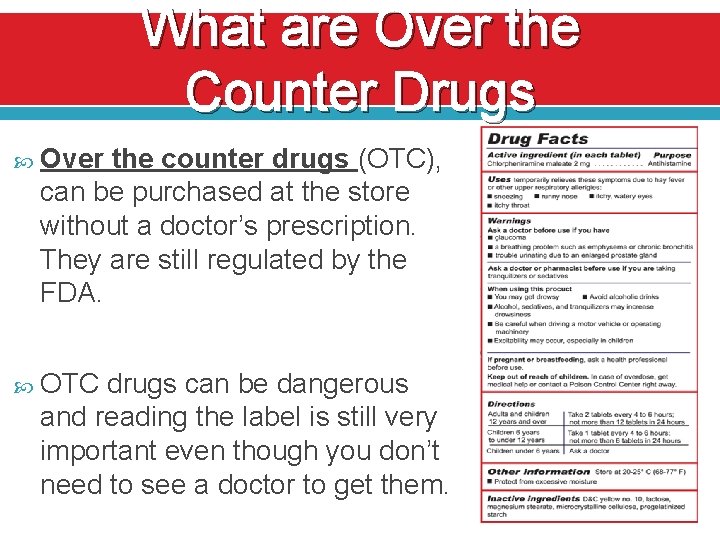
What are Over the Counter Drugs Over the counter drugs (OTC), can be purchased at the store without a doctor’s prescription. They are still regulated by the FDA. OTC drugs can be dangerous and reading the label is still very important even though you don’t need to see a doctor to get them.
What is on the OTC drug label? v Active ingredient: The name of the actual ingredient(s) that make up the drug. v Inactive ingredients: This is ingredients other than the actual drug such as binding agents, flavors, colors, etc. v Uses: This lists what the drug should be used for and symptoms that it may relieve. v Directions: How the drug should be used such as how much, how often, and for how long. v Warnings: precautions and warnings for taking the drug. v Other information: this includes how the drug
What should you do with this information? When a prescription drug is used the label and any provided information documents should be read completely and should be referred to if any problems occur. The information given should be followed exactly and the medication should not be used in any way other than what is stated on the label and in the Medication Guide or Patient Information Sheet. For over the counter drugs, the label should be read completely and followed. Just like prescription drugs, they should only be used exactly how the label tells you to. Remember, if anything is confusing or problems occur
- Slides: 16