
How to Pull Something Heavy fork Lift tow
- Slides: 8
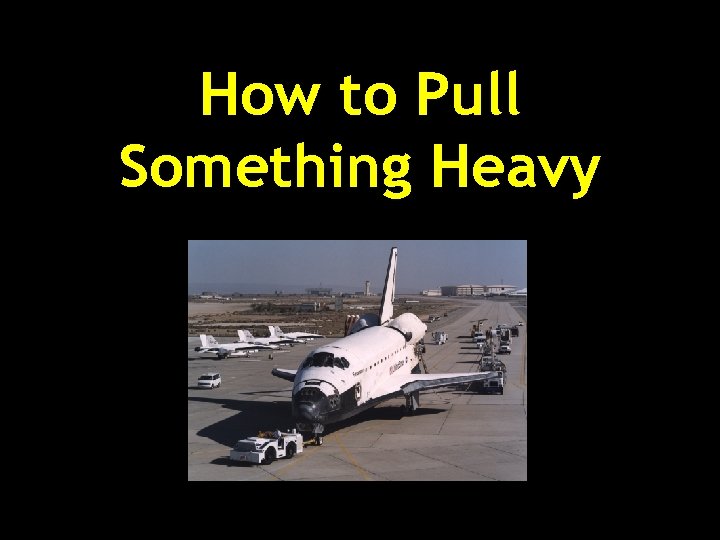
How to Pull Something Heavy
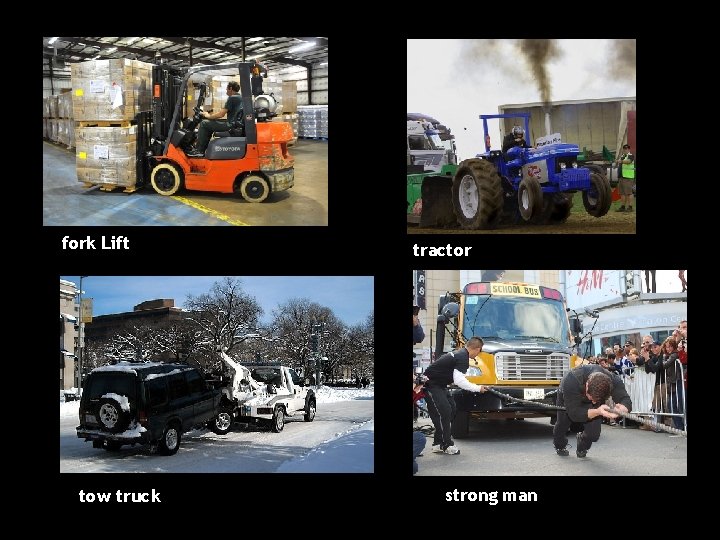
fork Lift tow truck tractor strong man
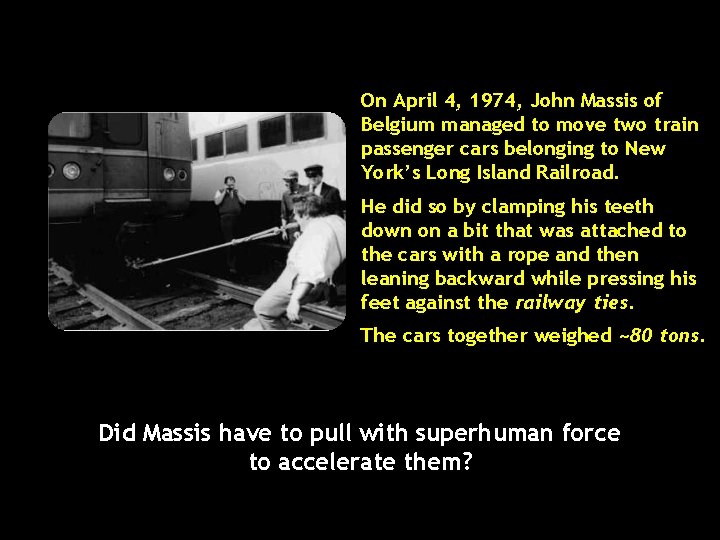
On April 4, 1974, John Massis of Belgium managed to move two train passenger cars belonging to New York’s Long Island Railroad. He did so by clamping his teeth down on a bit that was attached to the cars with a rope and then leaning backward while pressing his feet against the railway ties. The cars together weighed ~80 tons. Did Massis have to pull with superhuman force to accelerate them?
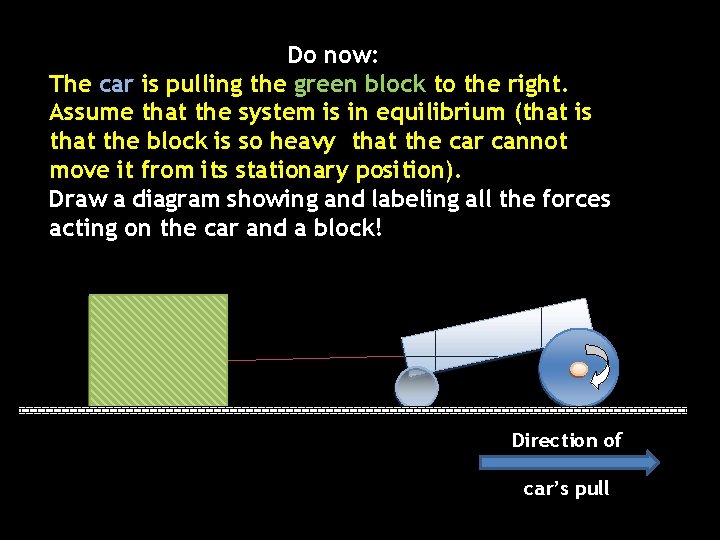
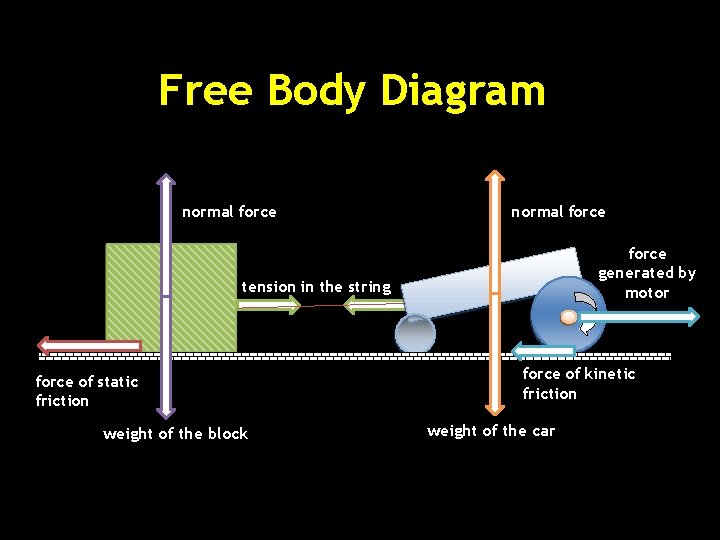
Do now: The car is pulling the green block to the right. Assume that the system is in equilibrium (that is that the block is so heavy that the car cannot move it from its stationary position). Draw a diagram showing and labeling all the forces acting on the car and a block! Direction of car’s pull
Free Body Diagram normal force generated by motor tension in the string force of static friction weight of the block force of kinetic friction weight of the car
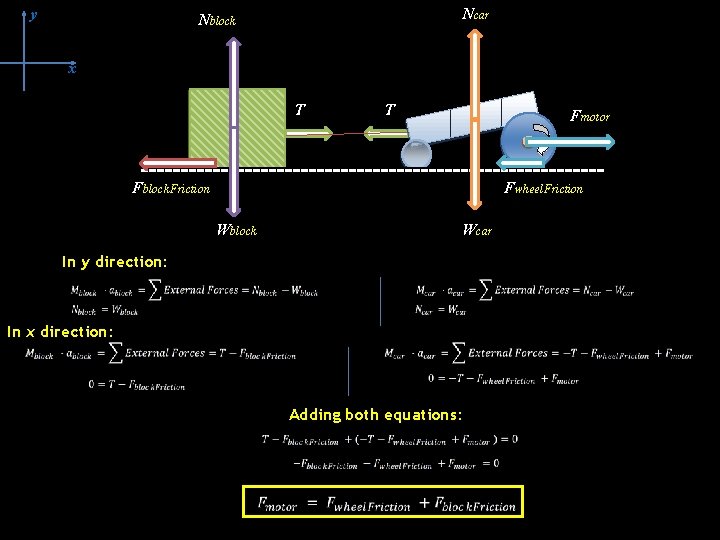
y Ncar Nblock x T T Fmotor Fblock. Friction Fwheel. Friction Wblock Wcar In y direction: In x direction: Adding both equations:
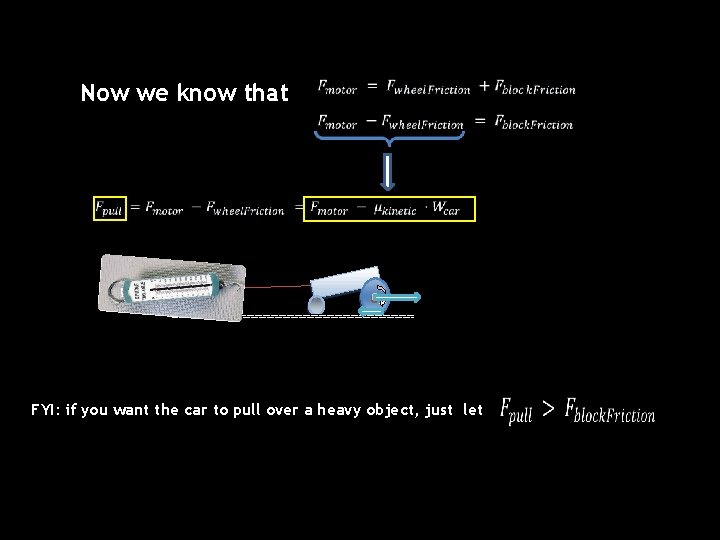
Now we know that FYI: if you want the car to pull over a heavy object, just let
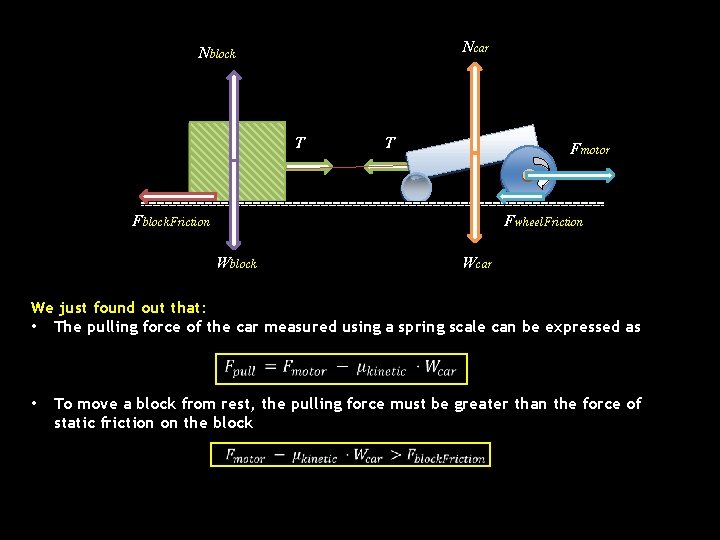
Ncar Nblock T T Fmotor Fblock. Friction Fwheel. Friction Wblock Wcar We just found out that: • The pulling force of the car measured using a spring scale can be expressed as • To move a block from rest, the pulling force must be greater than the force of static friction on the block