
How to Overcome Barriers Utilizing Core Correctional Practices
How to Overcome Barriers Utilizing Core Correctional Practices with Offenders Camille Croft & Valerie Keim Oriana House Inc.
OBJECTIVES: v. Recognizing Barriers in Relationship and Rapport v. Repairing a Broken Relationship v. Effective Use of Reinforcement v. Effective Use of Disapproval

RESEARCH The Importance of Staff Practice in Delivering Effective Correctional Treatment: A Meta. Analytic Review of Core Correctional Practice Focused on characteristics of the staff-or techniques used 270 studies Male Offender Female Offenders Juvenile Offenders Adult Offenders Community Based Institutions/Residential

IMPACT OF BRIDGING SKILLS
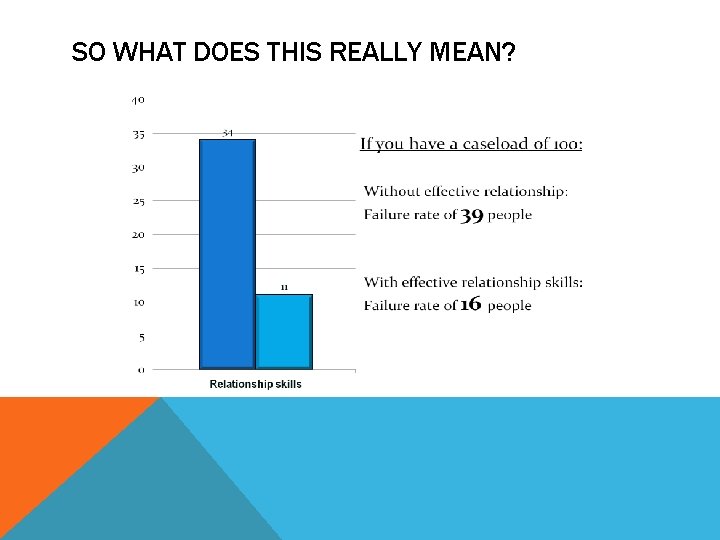
SO WHAT DOES THIS REALLY MEAN?
RELATIONSHIP SKILLS You must “create the space for the conversation before you attempt to have it. ” Ken Mc. Master v A connection, association, or involvement with another person” v Professional and work related v Friendly but not friends
EFFECTIVE RELATIONSHIP AND RAPPORT Think of a mentor/teacher/coach that you knew when you were a child or young adult. What were the characteristics of that person?
TIPS TO BUILDING AND MAINTAINING A RELATIONSHIP 1. Rapport starts at the beginning 2. Give appreciation and importance to others 3. The skill of Asking Questions 4. Active Listening 5. Keep your ego under control 6. Friendliness
WAYS TO HARM RELATIONSHIP • Ordering or directing • Warning/threatenin g • Giving advice/providing solutions • Persuading with arguing or lecturing • Moralizing/preachin g • Judging, criticizing, or blaming • Agreeing, approving, or praising • Shaming, ridiculing, and name-calling • Interpreting and analyzing • Sympathizing/ reasoning • Questioning/probin g “Why” • Withdrawing, distracting, humoring, or changing the subject
HOW TO RE-ESTABLISH RAPPORT v Develop Discrepancy v Avoid Argumentation v Support Self-Efficacy v Roll with Resistance v Model Pro-social Behavior v Assists Clients in Developing New Skills
… T X W H T A E O D TO F F E E F C F T E IV C T NE E IV U E S E U S O E F O R F E IN D F IS O A R P C P E R M O E V N A L T
OBSERVABLE BEHAVIOR VS. UNDERLYING SKILL The key is to ask yourself: “If a client did this particular behavior outside of the facility would they get into trouble or would it keep them out of trouble? ” **If the observable behavior is not going to keep them from getting back into trouble you want to identify the underlying skill as well.

EXAMPLES OF UNDERLYING SKILLS Time Management Ability to Learn Organization Responding to Failure Thinking of Consequences Keeping out of Fight Accountability Respecting Authority Recognizing Risk Attentive Following the Rules Acceptance Initiative Communication Assertiveness Self-Motivation Self-Control Empathy Cooperation Consideration Problem Solving Decision Making Anger Management Avoiding Negative Situations Accepting Feedback Patience Self-Talk Fear of Embarrassment Expressing Self Setting Goals Handling Stress Expressing Feelings Thinking of Others Active Listening Succumbing to Peer Pressure Discipline Interpersonal Skills Confidence Coping Skills Following Directions Dealing with Frustration Thinking Ahead
REINFORCEMENT • The systematic use of reinforcement is the most powerful tool in strengthening or teaching new behavior. • The effective use of reinforcement involves selecting and administering appropriate reinforcers.
GUIDELINES FOR ADMINISTERING REINFORCEMENT • The reinforcer must be administered during or immediately • • following the behavior. Reinforcement must be contingent on performing the desired behavior. In other words, the person must be required to engage in the desired behavior in order to receive reinforcement. The client should be aware that the reinforcer is a consequence of performing the target behavior Continuous reinforcement is useful when first strengthening a behavior, but then switch to an intermittent schedule of reinforcement in order to maintain the behavior (i. e. , make it resistant to extinction). Reinforcers must be kept potent.
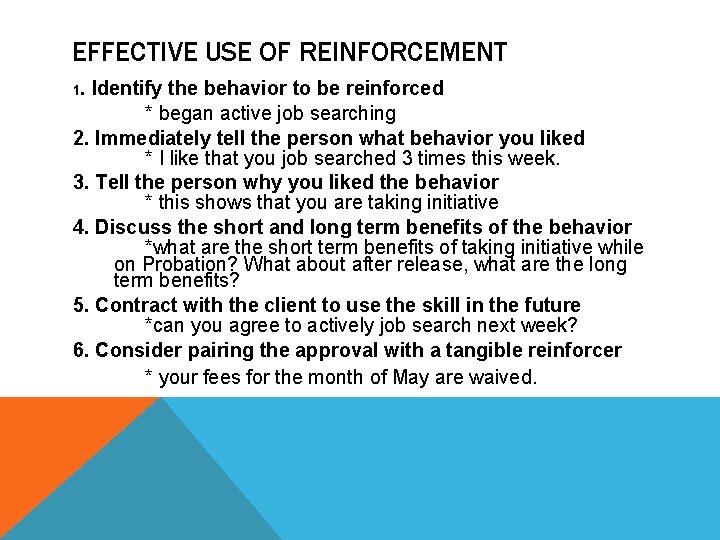
EFFECTIVE USE OF REINFORCEMENT 1. Identify the behavior to be reinforced * began active job searching 2. Immediately tell the person what behavior you liked * I like that you job searched 3 times this week. 3. Tell the person why you liked the behavior * this shows that you are taking initiative 4. Discuss the short and long term benefits of the behavior *what are the short term benefits of taking initiative while on Probation? What about after release, what are the long term benefits? 5. Contract with the client to use the skill in the future *can you agree to actively job search next week? 6. Consider pairing the approval with a tangible reinforcer * your fees for the month of May are waived.
PRACTICE REINFORCEMENT Get into groups of 2 One person play the role of the caseworker One person play the role of the offender Once the first staff receives feedback from the offender, rotate roles so both participants have the opportunity to be the staff member.
DISAPPROVAL Should occur immediately after the Behavior Must take responsibility for his actions and be willing to discuss the behavior Be made aware of the target behavior Goal is to get offender to recognize the affect of their behavior and how to better handle in the future If punishment is used alone than another maladaptive behavior will occur
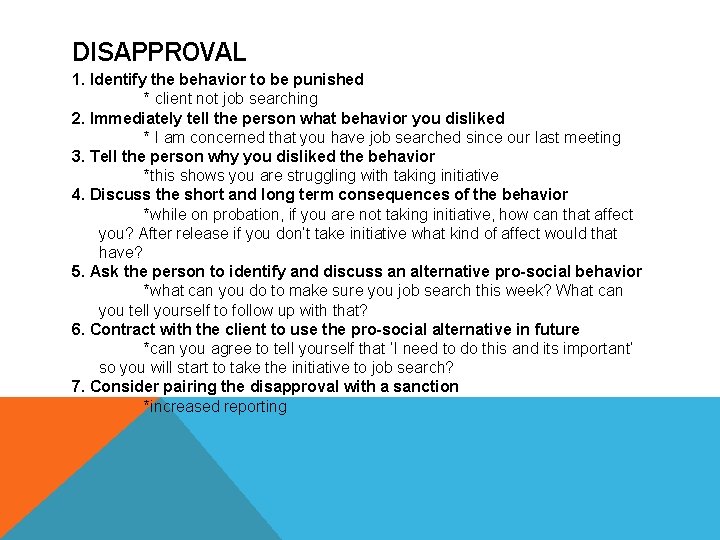
DISAPPROVAL 1. Identify the behavior to be punished * client not job searching 2. Immediately tell the person what behavior you disliked * I am concerned that you have job searched since our last meeting 3. Tell the person why you disliked the behavior *this shows you are struggling with taking initiative 4. Discuss the short and long term consequences of the behavior *while on probation, if you are not taking initiative, how can that affect you? After release if you don’t take initiative what kind of affect would that have? 5. Ask the person to identify and discuss an alternative pro-social behavior *what can you do to make sure you job search this week? What can you tell yourself to follow up with that? 6. Contract with the client to use the pro-social alternative in future *can you agree to tell yourself that ‘I need to do this and its important’ so you will start to take the initiative to job search? 7. Consider pairing the disapproval with a sanction *increased reporting
PRACTICE DISAPPROVAL Get into groups of 2 One person play the role of the caseworker One person play the role of the offender Once the first staff receives feedback from the offender, rotate roles so both participants have the opportunity to be the staff member.
SUMMARY v. Having Relationship and Rapport is a essential aspect of working with Offenders v. There are ways to repair a broken relationship to work through and avoid barriers. v. Reinforcement and Disapproval are ways to continue to build a relationship and can help with reducing barriers and recidivism.

- Slides: 22