
How to Navigate the IRB Process Todd Rice
How to Navigate the IRB Process Todd Rice, M. D. , M. Sc. Vanderbilt Institutional Review Board Chair, Health Sciences Committee #2
Outline • Overview of the IRB • Type of Research / Reviews – Behavioral vs. Health Sciences – Non-human subject and non-research – Exempt vs. Expedited vs. Full-Committee Reviews • Vulnerable Populations • The journey of a research proposal
Institutional Review Boards • In response to many research and ethical controversies, Congress passed the National Research Act of 1974 – Established the modern IRBs – Established the federal regulations and policies for IRB oversight of human subjects research (45 CFR 46) – Established the “National Commission for Protection of Human Subjects of Biomedical and Behavioral Research” (OHRP)
Institutional Review Boards • Overseen by Office of Human Research Protection (OHRP) which is a division of the Health and Human Services (DHHS) • OHRP is separate from the Food and Drug Administration (FDA) • Mission of the IRB: Ensure the protection and welfare of human subjects • Each Committee composed of: – Physicians – Non-physician Scientists – Community Members
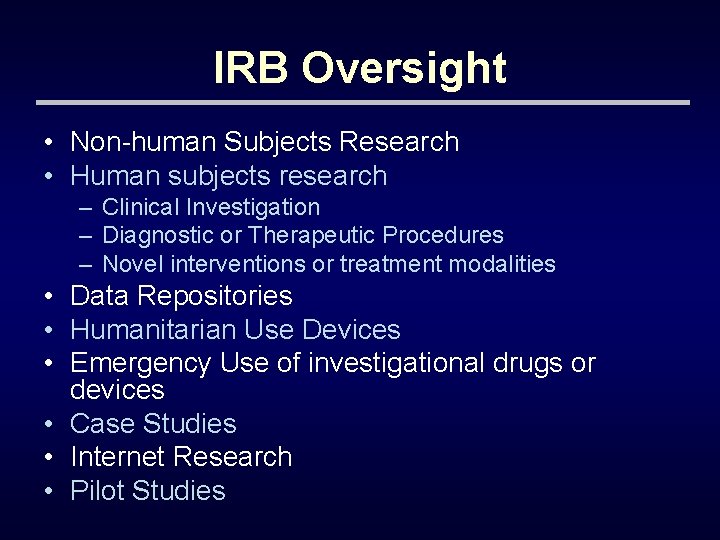
IRB Oversight • Non-human Subjects Research • Human subjects research – Clinical Investigation – Diagnostic or Therapeutic Procedures – Novel interventions or treatment modalities • Data Repositories • Humanitarian Use Devices • Emergency Use of investigational drugs or devices • Case Studies • Internet Research • Pilot Studies
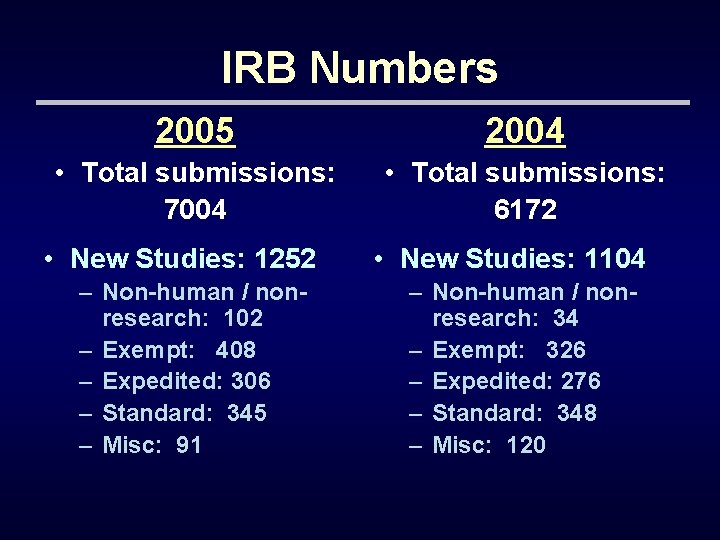
IRB Numbers 2005 2004 • Total submissions: 7004 • Total submissions: 6172 • New Studies: 1252 – Non-human / nonresearch: 102 – Exempt: 408 – Expedited: 306 – Standard: 345 – Misc: 91 • New Studies: 1104 – Non-human / nonresearch: 34 – Exempt: 326 – Expedited: 276 – Standard: 348 – Misc: 120
(615) 322 -2918
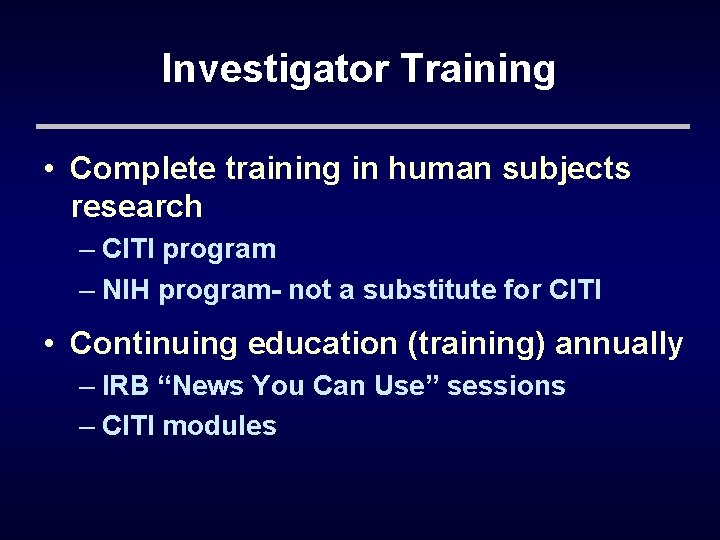
Investigator Training • Complete training in human subjects research – CITI program – NIH program- not a substitute for CITI • Continuing education (training) annually – IRB “News You Can Use” sessions – CITI modules

“I’m Just a Research Proposal…” The long journey to becoming an “IRB Approved Study” With apologies to Schoolhouse Rock
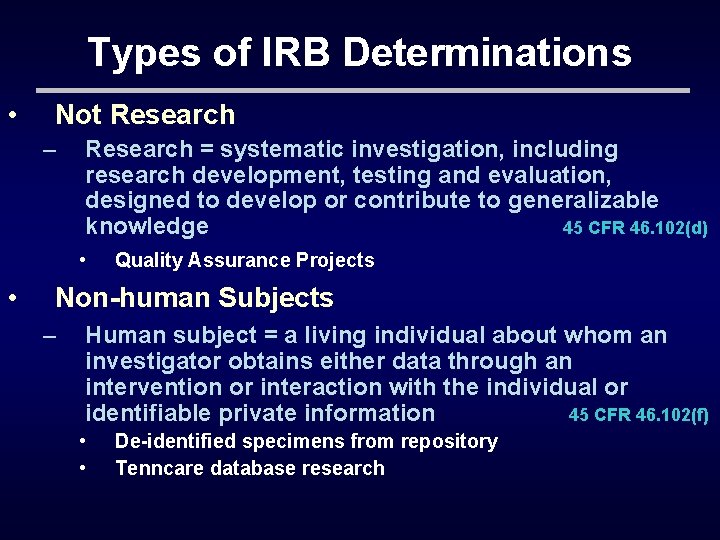
Types of IRB Determinations • Not Research – Research = systematic investigation, including research development, testing and evaluation, designed to develop or contribute to generalizable knowledge 45 CFR 46. 102(d) • • Quality Assurance Projects Non-human Subjects – Human subject = a living individual about whom an investigator obtains either data through an intervention or interaction with the individual or identifiable private information 45 CFR 46. 102(f) • • De-identified specimens from repository Tenncare database research
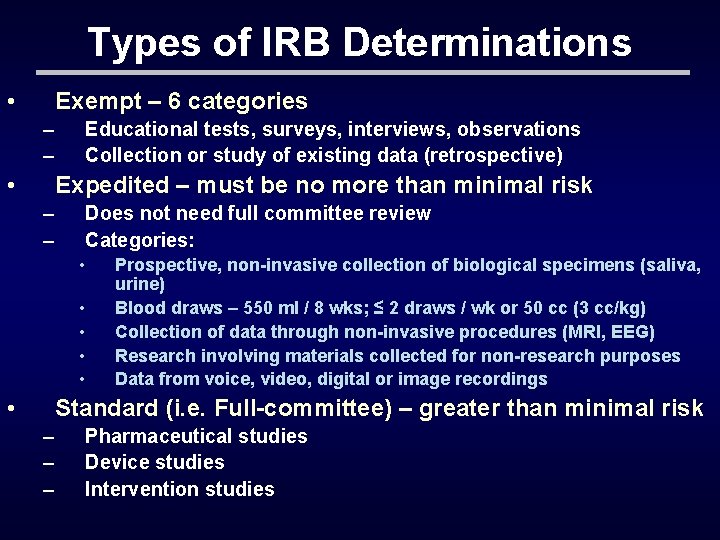
Types of IRB Determinations • Exempt – 6 categories – – • Educational tests, surveys, interviews, observations Collection or study of existing data (retrospective) Expedited – must be no more than minimal risk – – Does not need full committee review Categories: • • • Prospective, non-invasive collection of biological specimens (saliva, urine) Blood draws – 550 ml / 8 wks; ≤ 2 draws / wk or 50 cc (3 cc/kg) Collection of data through non-invasive procedures (MRI, EEG) Research involving materials collected for non-research purposes Data from voice, video, digital or image recordings Standard (i. e. Full-committee) – greater than minimal risk – – – Pharmaceutical studies Device studies Intervention studies

Components of Research Proposal • • Protocol IRB Application Informed Consent Form(s) Vulnerable Population Form(s) HIPAA Authorization Form ± HSRC Form ± Conflict of Interest Declaration Form ± Investigator’s Brochure
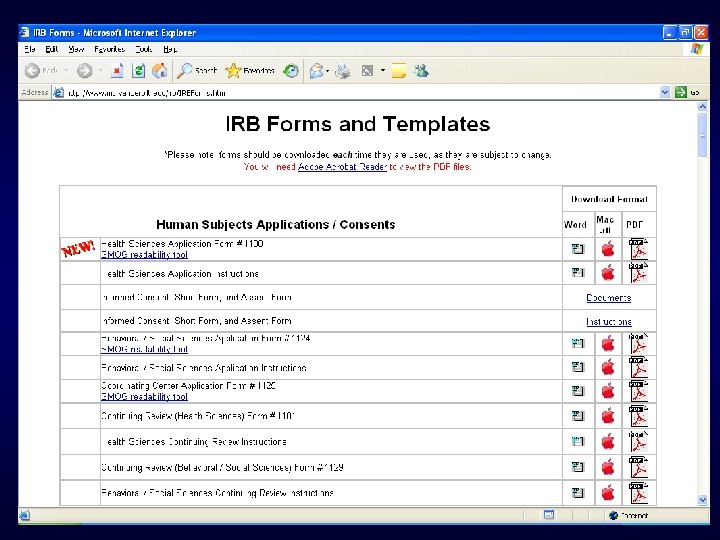
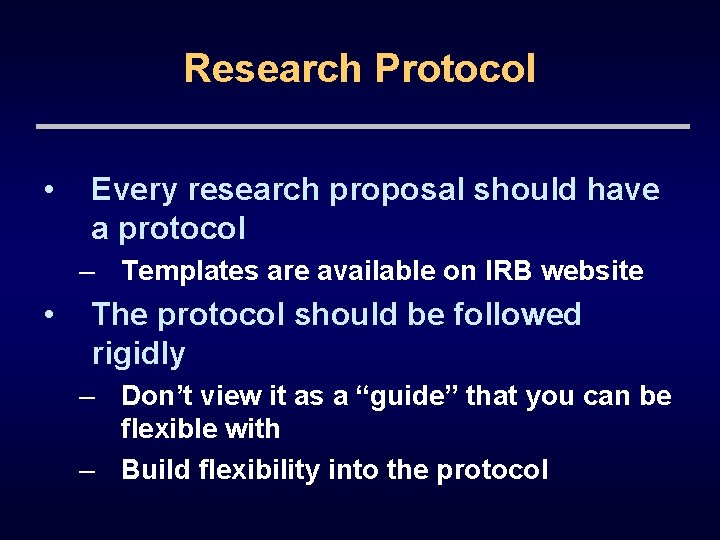
Research Protocol • Every research proposal should have a protocol – Templates are available on IRB website • The protocol should be followed rigidly – Don’t view it as a “guide” that you can be flexible with – Build flexibility into the protocol
IRB Application • The form should be typewritten (not handwritten) • Use the available online instructions • Don’t forget to fill in the header • Students, Residents, and Fellows can be PI of the study, but must have a faculty advisor
IRB Application: Pitfalls • If it meets an expedited criteria, request expedited review (#5) • If the study is associated with another study, list the associated study (#5) • Are you functioning as a coordinating center for the study? (#6)
IRB Application: Pitfalls • Additional VU Committee Approvals (#7) – HSRC – if any radiation for research – GCRC – if using GCRC facilities – SRC – any study involving cancer patients – Biosafety Committee – if study involves gene transfer or uses live virus • These can be pending when the original application is submitted
IRB Application: Pitfalls • Purpose and Background – put in lay terms for committee (#9, 10) • Number to be consented vs. number to participate beyond screening (#11) • Don’t target gender, race, etc. unless justification (principle of justice) (#12) • If population is high risk for incarceration, consider applying for prisoner approval
IRB Application: Pitfalls • Does person obtaining consent have relationship with participants? (#19 c) – Therapeutic misconception – Consider another person obtain consent • Put all research procedures and who will pay for them in table for q 23. • Every study needs Data and Safety Monitoring Plan – No such thing as “no risk” study – Monitoring may be as simple as PI will monitor the study for AEs and submit to IRB
Writing an ICD – General Tips 1. Avoid exculpatory language • “You must…” or “You have to…” or language indicating they “waive” any rights 2. Avoid the phrase “Free of Charge” • Instead, use “at no cost to you” 3. Don’t forget to fill out the header 4. Keep length to as short as possible • 1 Grossman Longer consents = less comprehension 1 -3 SA, et al. J Clin Oncol. 1994; 12: 2221 -5. 3 Joseph RR. Cancer. 1994: 74(suppl): 2692 -3. 2 Sharp SM. Am J Clin Onc. 2004; 27: 570 -5.
Informed Consent Documents • Use the VU IRB template – Covers all the required elements • Write the ICD in the second person – “You are being asked to…”, “side effects you may feel…”, “your child…” • Identify procedures that are investigational vs. standard of care
Informed Consent Documents • Don’t re-invent the wheel – use IRB approved template language if possible – Adverse Event language – Allergic reaction language – Conscious Sedation language – MRI language – Genetic rider – Pregnancy language – Chemotherapy language – High risk disease language – Lidocaine language http: //www. mc. vanderbilt. edu/irb/IRBForms. htm
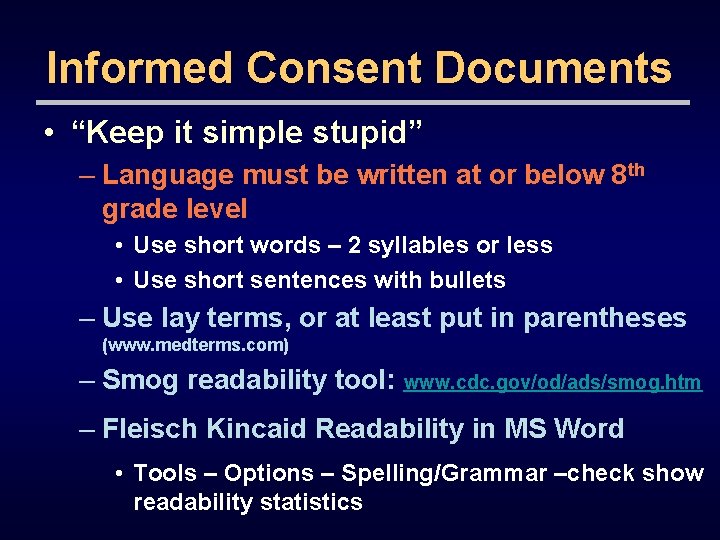
Informed Consent Documents • “Keep it simple stupid” – Language must be written at or below 8 th grade level • Use short words – 2 syllables or less • Use short sentences with bullets – Use lay terms, or at least put in parentheses (www. medterms. com) – Smog readability tool: www. cdc. gov/od/ads/smog. htm – Fleisch Kincaid Readability in MS Word • Tools – Options – Spelling/Grammar –check show readability statistics
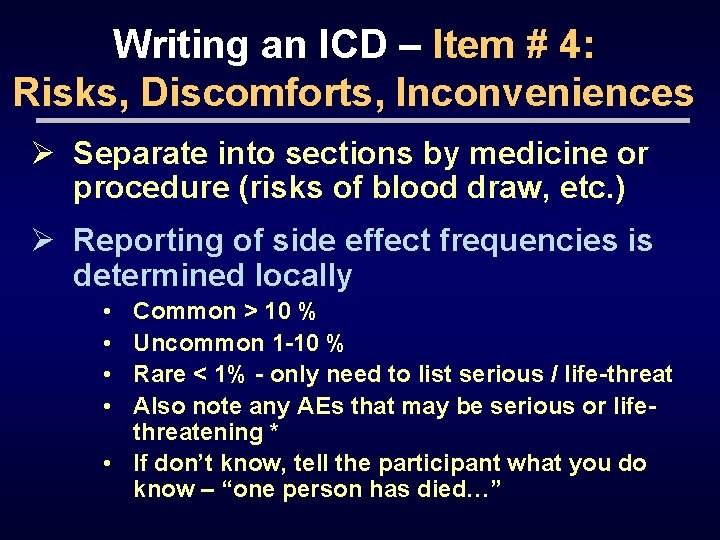
Writing an ICD – Item # 4: Risks, Discomforts, Inconveniences Ø Separate into sections by medicine or procedure (risks of blood draw, etc. ) Ø Reporting of side effect frequencies is determined locally • • Common > 10 % Uncommon 1 -10 % Rare < 1% - only need to list serious / life-threat Also note any AEs that may be serious or lifethreatening * • If don’t know, tell the participant what you do know – “one person has died…”
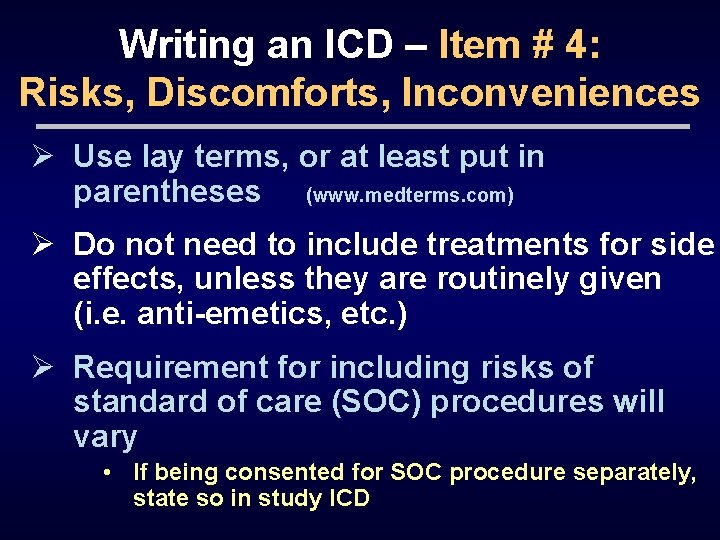
Writing an ICD – Item # 4: Risks, Discomforts, Inconveniences Ø Use lay terms, or at least put in parentheses (www. medterms. com) Ø Do not need to include treatments for side effects, unless they are routinely given (i. e. anti-emetics, etc. ) Ø Requirement for including risks of standard of care (SOC) procedures will vary • If being consented for SOC procedure separately, state so in study ICD
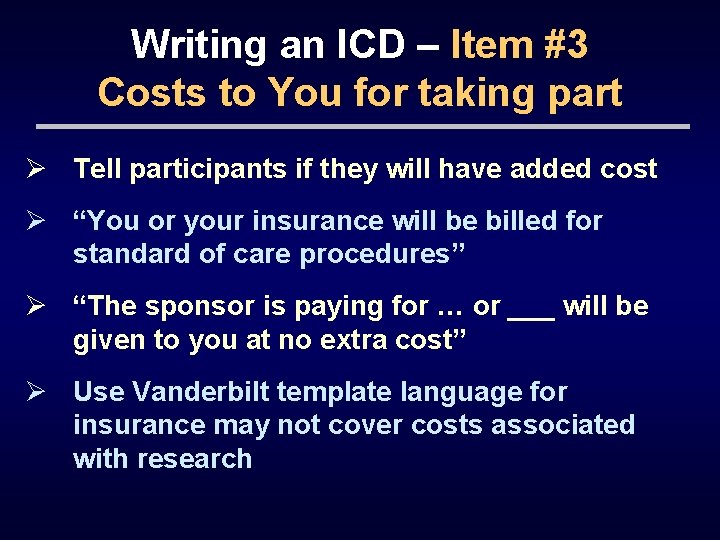
Writing an ICD – Item #3 Costs to You for taking part Ø Tell participants if they will have added cost Ø “You or your insurance will be billed for standard of care procedures” Ø “The sponsor is paying for … or ___ will be given to you at no extra cost” Ø Use Vanderbilt template language for insurance may not cover costs associated with research
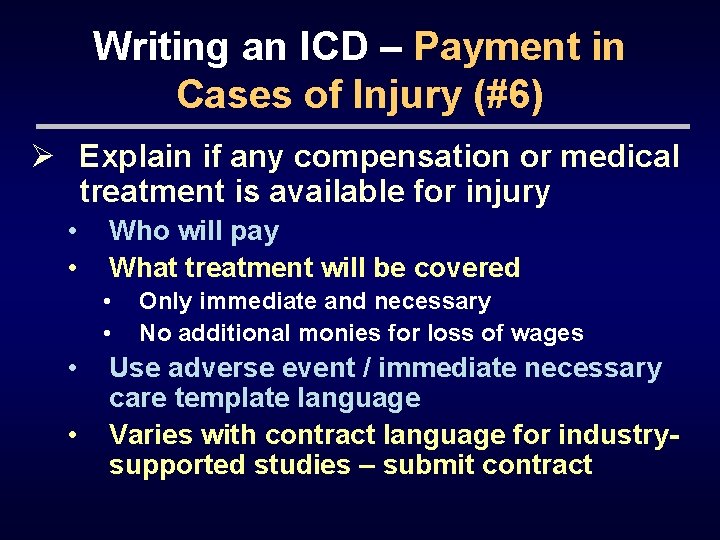
Writing an ICD – Payment in Cases of Injury (#6) Ø Explain if any compensation or medical treatment is available for injury • • Who will pay What treatment will be covered • • Only immediate and necessary No additional monies for loss of wages Use adverse event / immediate necessary care template language Varies with contract language for industrysupported studies – submit contract
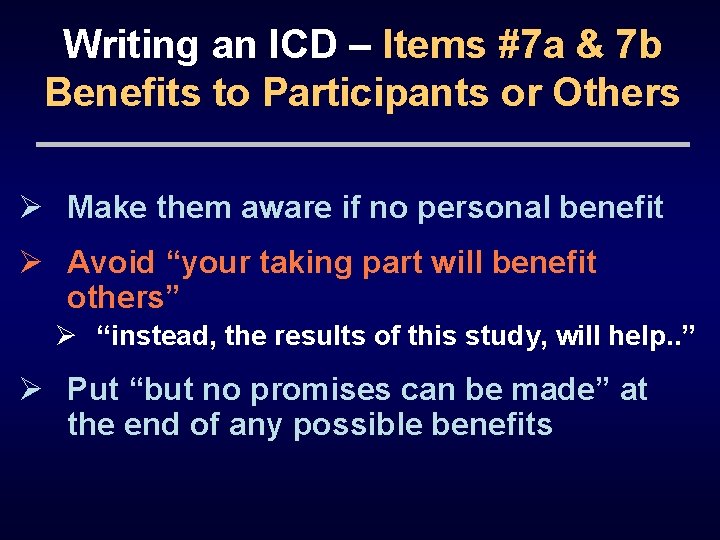
Writing an ICD – Items #7 a & 7 b Benefits to Participants or Others Ø Make them aware if no personal benefit Ø Avoid “your taking part will benefit others” Ø “instead, the results of this study, will help. . ” Ø Put “but no promises can be made” at the end of any possible benefits
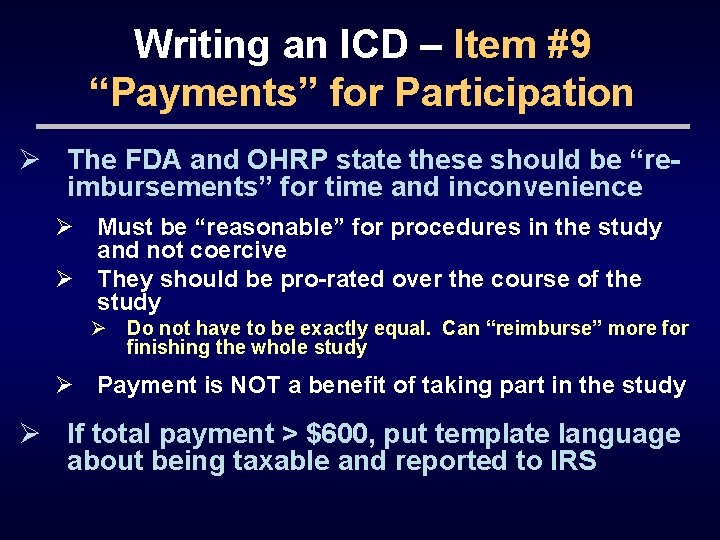
Writing an ICD – Item #9 “Payments” for Participation Ø The FDA and OHRP state these should be “reimbursements” for time and inconvenience Ø Must be “reasonable” for procedures in the study and not coercive Ø They should be pro-rated over the course of the study Ø Do not have to be exactly equal. Can “reimburse” more for finishing the whole study Ø Payment is NOT a benefit of taking part in the study Ø If total payment > $600, put template language about being taxable and reported to IRS
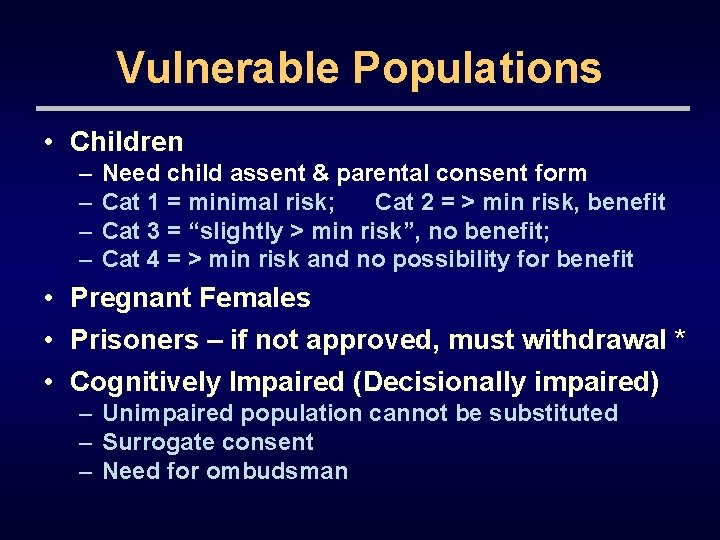
Vulnerable Populations • Children – – Need child assent & parental consent form Cat 1 = minimal risk; Cat 2 = > min risk, benefit Cat 3 = “slightly > min risk”, no benefit; Cat 4 = > min risk and no possibility for benefit • Pregnant Females • Prisoners – if not approved, must withdrawal * • Cognitively Impaired (Decisionally impaired) – Unimpaired population cannot be substituted – Surrogate consent – Need for ombudsman
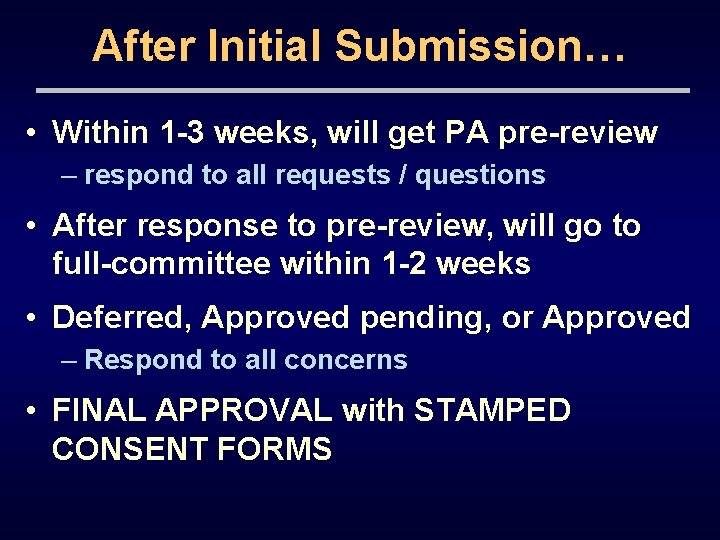
After Initial Submission… • Within 1 -3 weeks, will get PA pre-review – respond to all requests / questions • After response to pre-review, will go to full-committee within 1 -2 weeks • Deferred, Approved pending, or Approved – Respond to all concerns • FINAL APPROVAL with STAMPED CONSENT FORMS
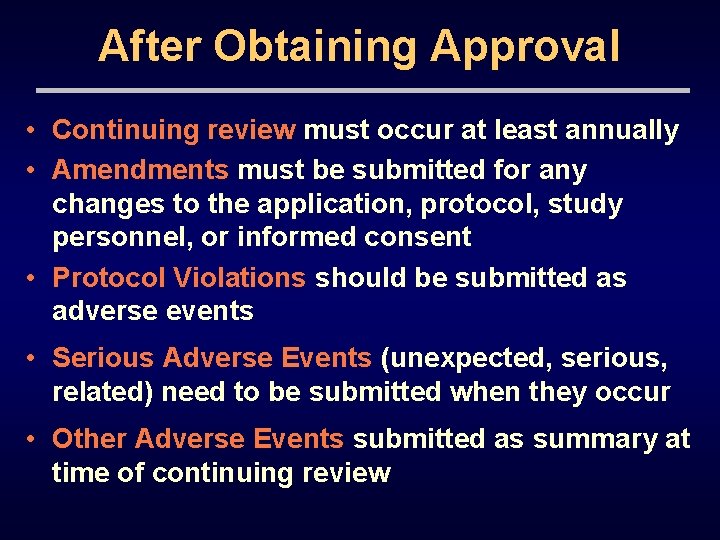
After Obtaining Approval • Continuing review must occur at least annually • Amendments must be submitted for any changes to the application, protocol, study personnel, or informed consent • Protocol Violations should be submitted as adverse events • Serious Adverse Events (unexpected, serious, related) need to be submitted when they occur • Other Adverse Events submitted as summary at time of continuing review
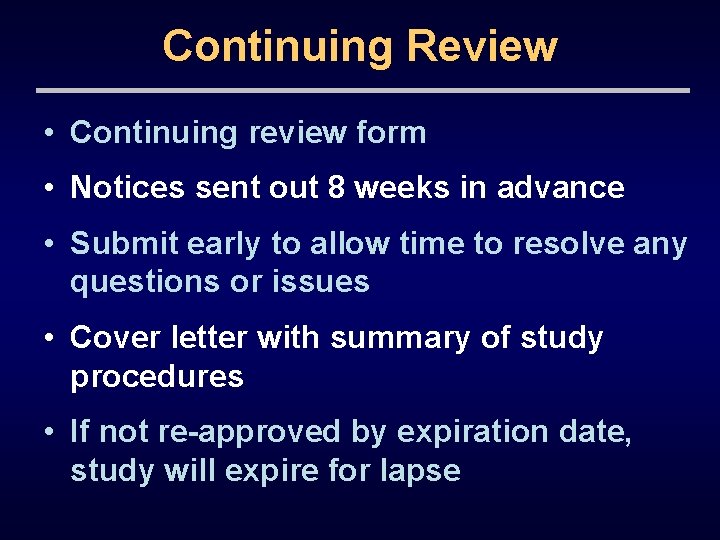
Continuing Review • Continuing review form • Notices sent out 8 weeks in advance • Submit early to allow time to resolve any questions or issues • Cover letter with summary of study procedures • If not re-approved by expiration date, study will expire for lapse
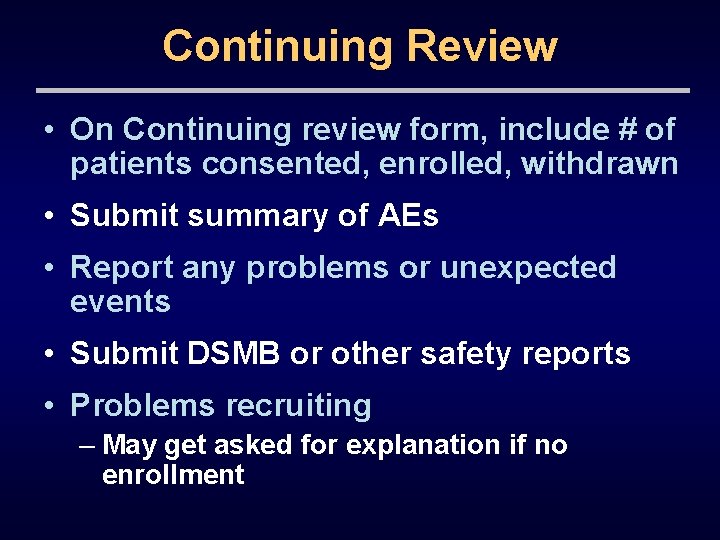
Continuing Review • On Continuing review form, include # of patients consented, enrolled, withdrawn • Submit summary of AEs • Report any problems or unexpected events • Submit DSMB or other safety reports • Problems recruiting – May get asked for explanation if no enrollment
Amendments • Amendment form • Submit whenever something changes • If minor, may be handled in expedited fashion if no change to ICF • Provide detailed summary of changes • Form also used for submission of reports – DSMB, Safety committees
Adverse Events • Adverse Event form • Submit serious, unexpected, and related AEs in “timely fashion” • If outside Vanderbilt, only need to submit in real time if changes required to consent form • Protocol violations submitted as AEs • If medwatch report submitted to FDA, attach report in lieu of answering questions 4 -10
Adverse Events • Must choose one of the following: – Currently described as risk in ICD – Not described as risk and no need for revision to ICD because … • Give reason for investigator belief that it doesn’t need to be in ICD (i. e. not related, etc. ) – Not described as risk but revision to ICD needed
Finishing Up an Approved Study • If no longer enrolling, won’t get stamped consent form (Unless new risks to communicate to pts) – Still receiving research interventions (i. e. study blood draws, study procedures) – Only long-term follow-up (i. e. all procedures std of care) – Only data analysis (no interaction with patients) • Close study – provide summary report
QUESTIONS? ? Useful Resources: IRB www. mc. vanderbilt. edu/irb Phone: 322 -2918 (ask for protocol analyst or the Process Improvement Team) Research Support Services http: //www. mc. vanderbilt. edu/root/vumc. php? site=support Phone: 322 -7343
- Slides: 39