
How to Mitigate the Long Term Effects of


- Slides: 39
How to Mitigate the Long. Term Effects of Treatment Steven D. Passik, Ph. D. Director, Symptom Management and Pharmacotherapy Lab Memorial Sloan Kettering Cancer Center Department of Psychiatry and Behavioral Sciences New York, NY
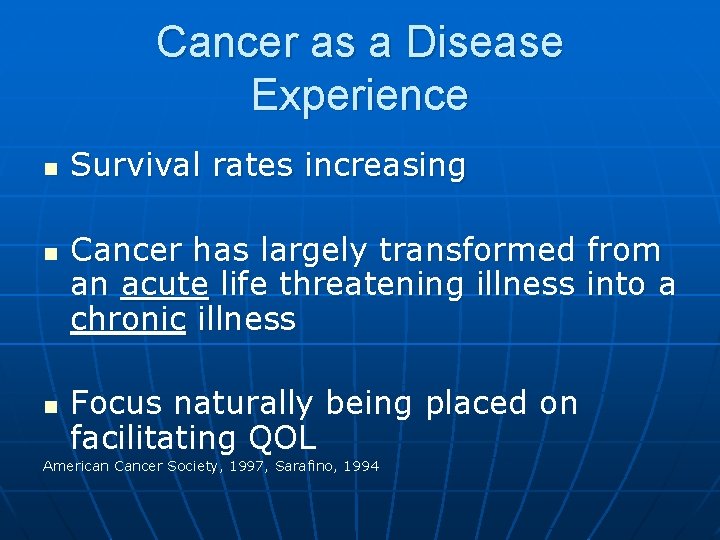
Cancer as a Disease Experience n n n Survival rates increasing Cancer has largely transformed from an acute life threatening illness into a chronic illness Focus naturally being placed on facilitating QOL American Cancer Society, 1997, Sarafino, 1994
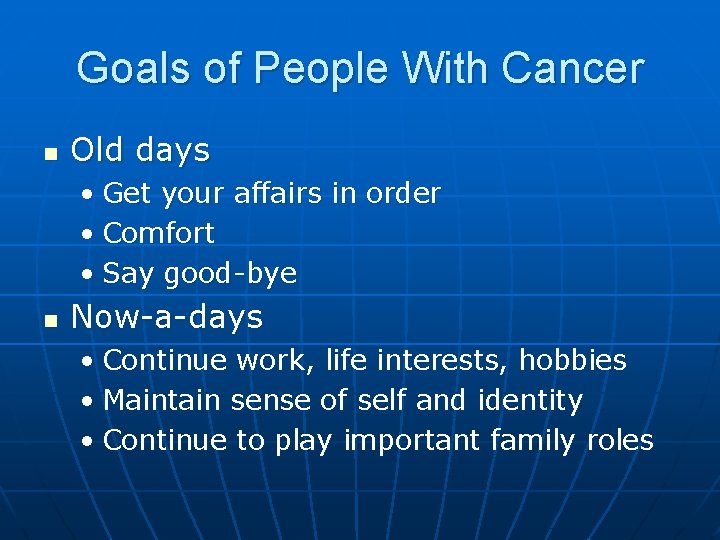
Goals of People With Cancer n Old days • Get your affairs in order • Comfort • Say good-bye n Now-a-days • Continue work, life interests, hobbies • Maintain sense of self and identity • Continue to play important family roles
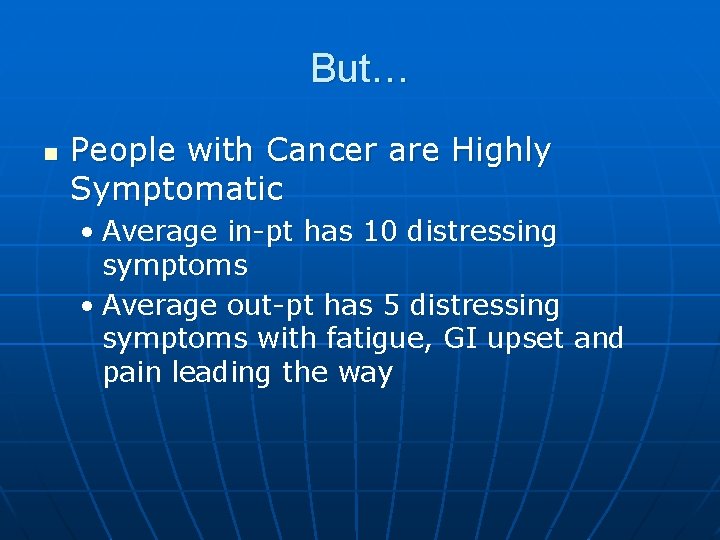
But… n People with Cancer are Highly Symptomatic • Average in-pt has 10 distressing symptoms • Average out-pt has 5 distressing symptoms with fatigue, GI upset and pain leading the way
The Relationship of Symptoms to Quality of Life n Chang and colleagues: • Direct linear relationship between the number of symptoms and patients’ reported quality of life n Symptom management is complex • How to get the most bang for the buck? Does 10 symptoms mean 10 medicines? n Use of non-medical interventions n Is an intervention to treat one symptom helping or hurting n
Women with MBCa Have Many Choices n n Medical interventions Psychological interventions Alternative therapies Exercise and physical therapeutic interventions
Pain
Pain Statistics n n n Cancer pain is common but not inevitable Fatigue, GI upset, and psychosocial problems are often more prevalent, but pain is the #1 feared aspect of cancer for most patients Rates of pain vary widely among disease sites: • • • 35% 56% 67% in in in lymphoma breast cancer head and neck cancer
Communicating About Pain n Communicate • Intensity • Location • What the pain feels like • What makes it worse • What helps
What Not to Fear n n n Addiction Tolerance (using meds too soon, i. e. , before “I really need them”) Side effects • Good treatments exist for nausea, sedation and a ground breaking treatment will soon be available for constipation
Future Developments in Pain n n Rapid onset opioids Oxymorphone “Smart” pills Alvimopan
Depression
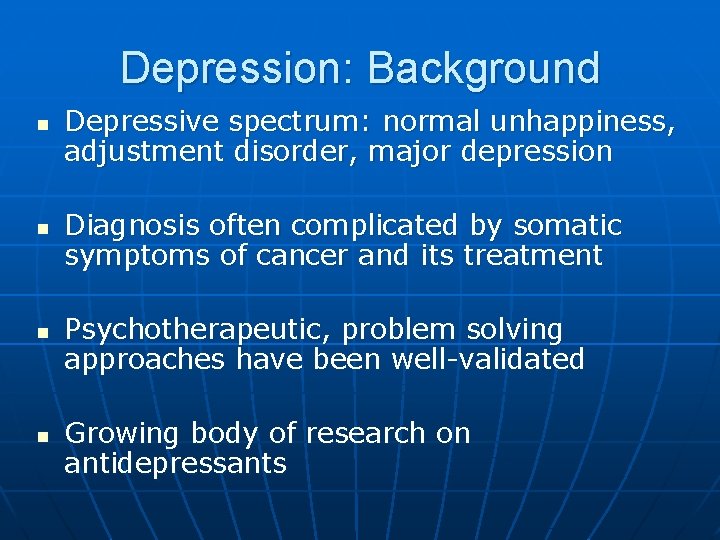
Depression: Background n n Depressive spectrum: normal unhappiness, adjustment disorder, major depression Diagnosis often complicated by somatic symptoms of cancer and its treatment Psychotherapeutic, problem solving approaches have been well-validated Growing body of research on antidepressants
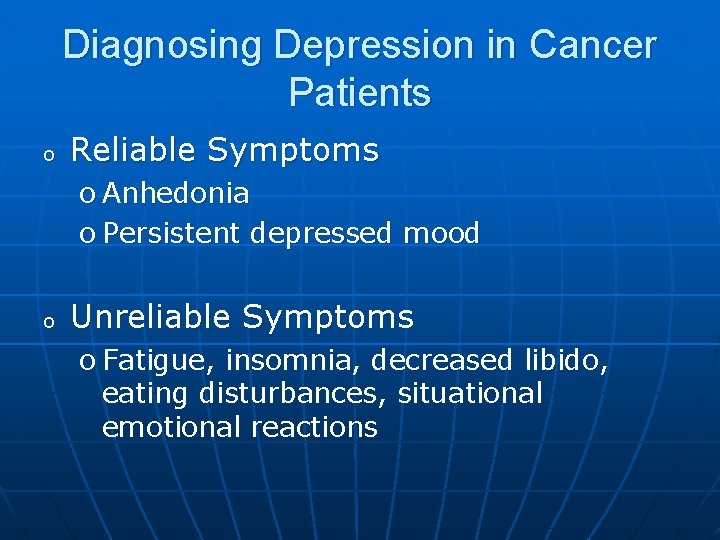
Diagnosing Depression in Cancer Patients o Reliable Symptoms o Anhedonia o Persistent depressed mood o Unreliable Symptoms o Fatigue, insomnia, decreased libido, eating disturbances, situational emotional reactions
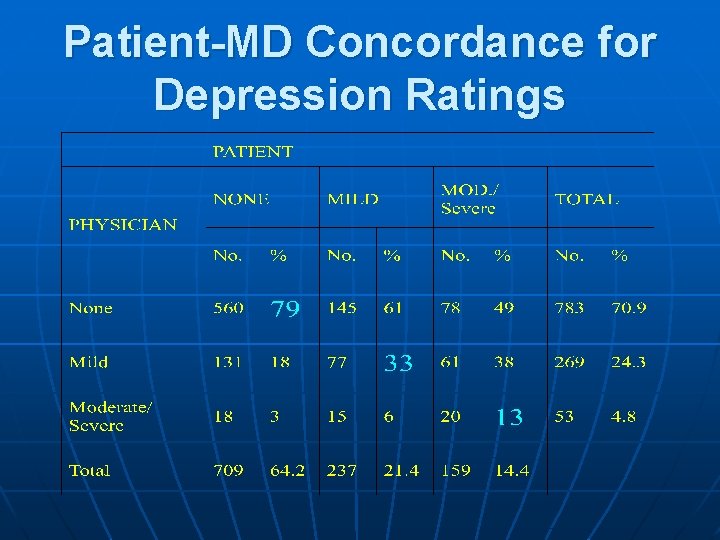
Patient-MD Concordance for Depression Ratings
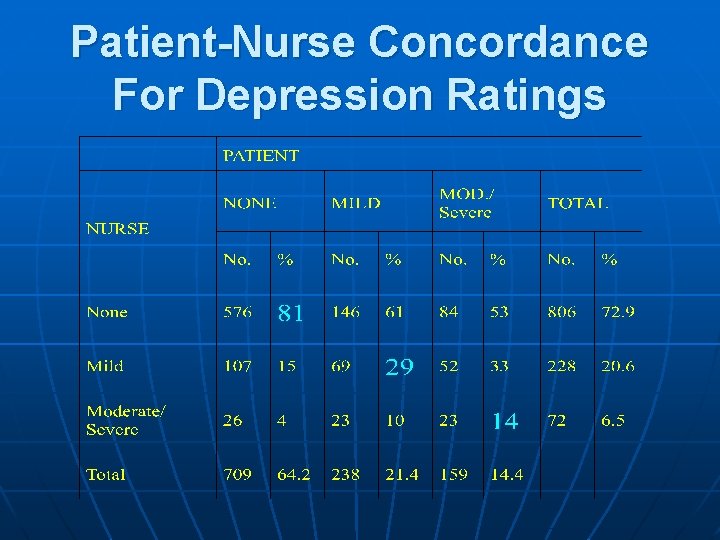
Patient-Nurse Concordance For Depression Ratings
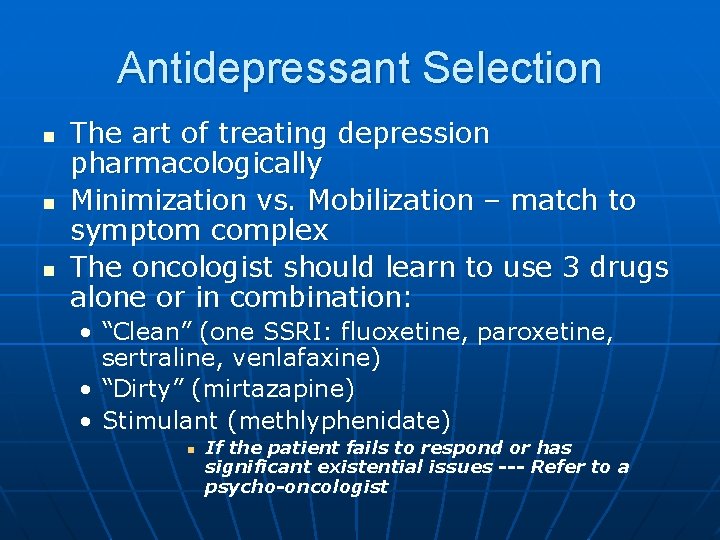
Antidepressant Selection n The art of treating depression pharmacologically Minimization vs. Mobilization – match to symptom complex The oncologist should learn to use 3 drugs alone or in combination: • “Clean” (one SSRI: fluoxetine, paroxetine, sertraline, venlafaxine) • “Dirty” (mirtazapine) • Stimulant (methlyphenidate) n If the patient fails to respond or has significant existential issues --- Refer to a psycho-oncologist
Alternative Treatments for Depression n Fish oil Exercise Yoga, meditation
Nausea and Vomiting
Etiologies of Nausea and Vomiting in Oncology Patients n Chemical (chemotherapy-induced: acute and delayed; opioids) n Vestibular n CNS (increased intracranial pressure) n Visceral (direct disease-related sources, abdominal irradiation)
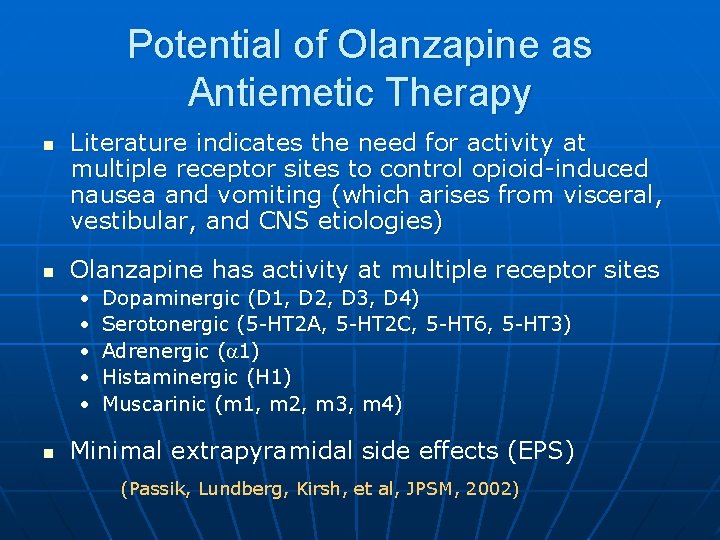
Potential of Olanzapine as Antiemetic Therapy n n Literature indicates the need for activity at multiple receptor sites to control opioid-induced nausea and vomiting (which arises from visceral, vestibular, and CNS etiologies) Olanzapine has activity at multiple receptor sites • • • n Dopaminergic (D 1, D 2, D 3, D 4) Serotonergic (5 -HT 2 A, 5 -HT 2 C, 5 -HT 6, 5 -HT 3) Adrenergic ( 1) Histaminergic (H 1) Muscarinic (m 1, m 2, m 3, m 4) Minimal extrapyramidal side effects (EPS) (Passik, Lundberg, Kirsh, et al, JPSM, 2002)
Alternative Treatments n n Relaxation The sacrificial lamb approach Wrist bands Acupuncture
Maintaining Weight and Muscle Mass
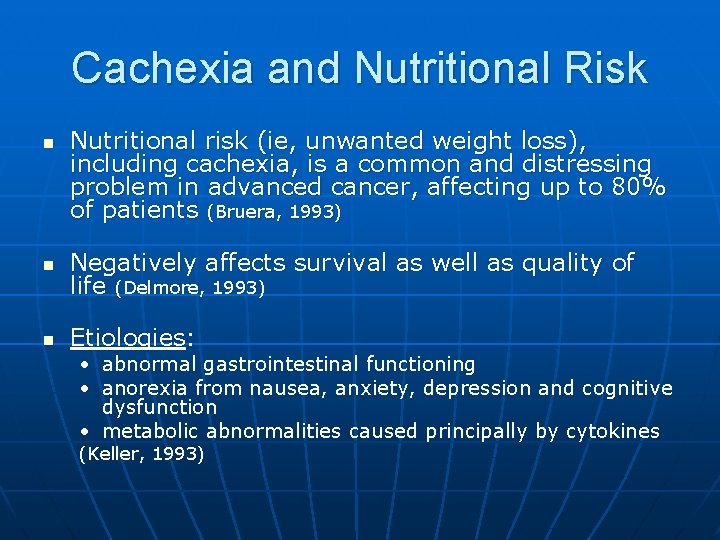
Cachexia and Nutritional Risk n Nutritional risk (ie, unwanted weight loss), including cachexia, is a common and distressing problem in advanced cancer, affecting up to 80% of patients (Bruera, 1993) n Negatively affects survival as well as quality of life (Delmore, 1993) n Etiologies: • abnormal gastrointestinal functioning • anorexia from nausea, anxiety, depression and cognitive dysfunction • metabolic abnormalities caused principally by cytokines (Keller, 1993)
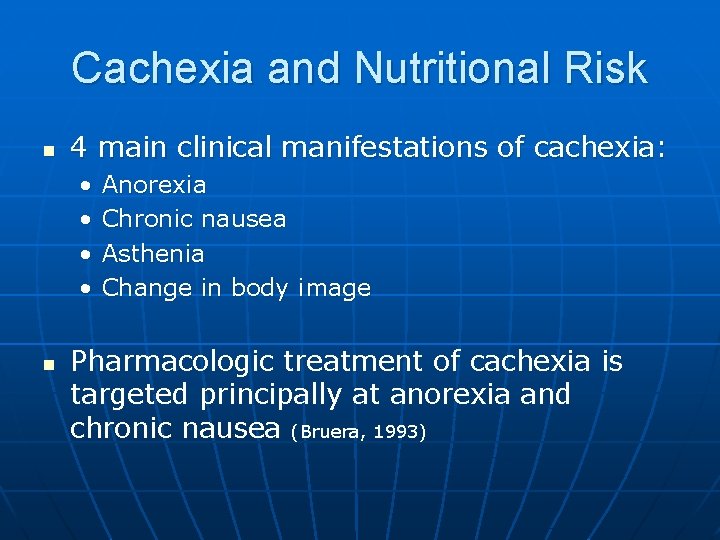
Cachexia and Nutritional Risk n 4 main clinical manifestations of cachexia: • • n Anorexia Chronic nausea Asthenia Change in body image Pharmacologic treatment of cachexia is targeted principally at anorexia and chronic nausea (Bruera, 1993)
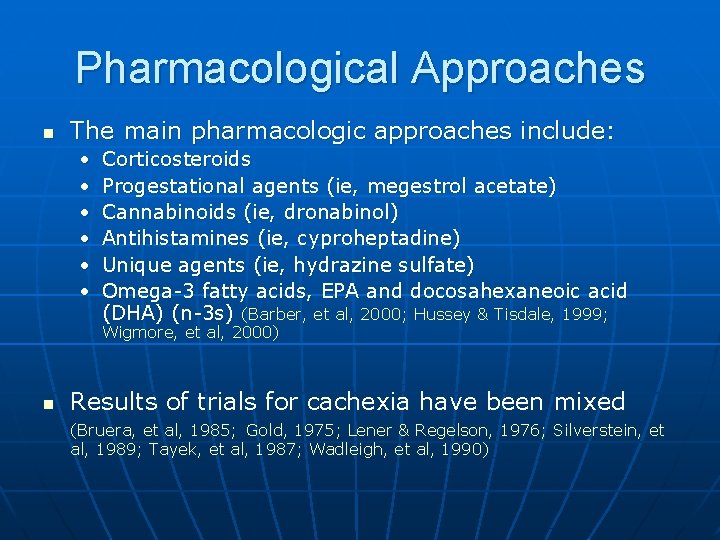
Pharmacological Approaches n The main pharmacologic approaches include: • • • Corticosteroids Progestational agents (ie, megestrol acetate) Cannabinoids (ie, dronabinol) Antihistamines (ie, cyproheptadine) Unique agents (ie, hydrazine sulfate) Omega-3 fatty acids, EPA and docosahexaneoic acid (DHA) (n-3 s) (Barber, et al, 2000; Hussey & Tisdale, 1999; Wigmore, et al, 2000) n Results of trials for cachexia have been mixed (Bruera, et al, 1985; Gold, 1975; Lener & Regelson, 1976; Silverstein, et al, 1989; Tayek, et al, 1987; Wadleigh, et al, 1990)
Ongoing and Future Work n n Anabolic steroids Protein shakes Weight lifting with creatine Olanzapine
Fatigue and Chemobrain
Fatigue n n n Highly prevalent – effecting 2/3 s of patients Very disabling Also makes the job of caregiving more stressful and exhausting for family
Fatigue – what works? n n n Exercise Modifications in diet Stimulant medications
Chemobrain n What really is chemobrain? • Subjective sense of slowed thinking, muddy thinking, lack of flexibility in cognitive processes • Poor concentration and secondarily, poor memory n What causes it? • Chemo? Hormones? Other meds?
Chemobrain – What works? n n Stimulants Meditation? Anti-depressants? Medications that increase red blood cell counts (ie epo)?
Insomnia and Hot Flashes
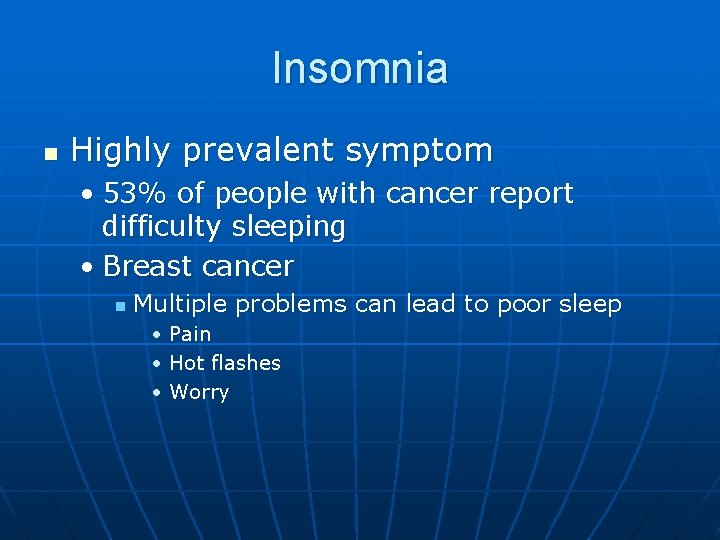
Insomnia n Highly prevalent symptom • 53% of people with cancer report difficulty sleeping • Breast cancer n Multiple problems can lead to poor sleep • Pain • Hot flashes • Worry
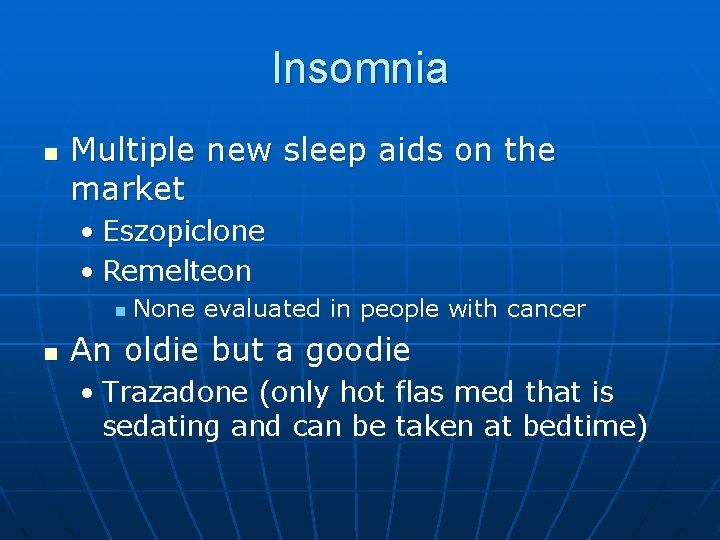
Insomnia n Multiple new sleep aids on the market • Eszopiclone • Remelteon n n None evaluated in people with cancer An oldie but a goodie • Trazadone (only hot flas med that is sedating and can be taken at bedtime)
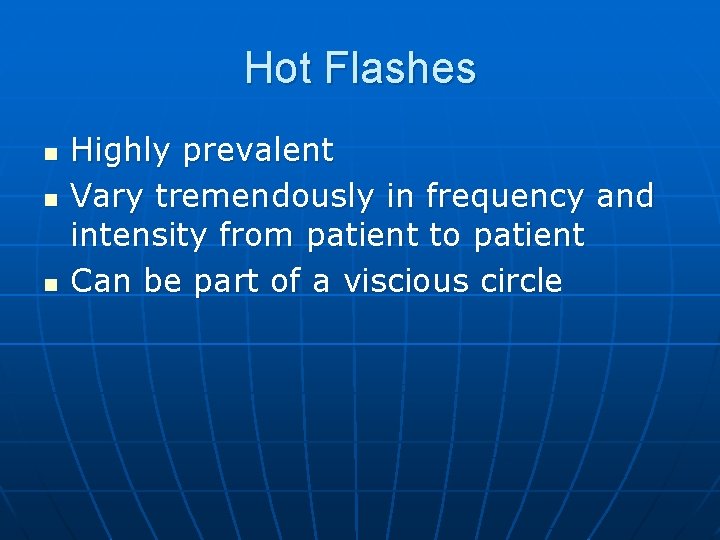
Hot Flashes n n n Highly prevalent Vary tremendously in frequency and intensity from patient to patient Can be part of a viscious circle
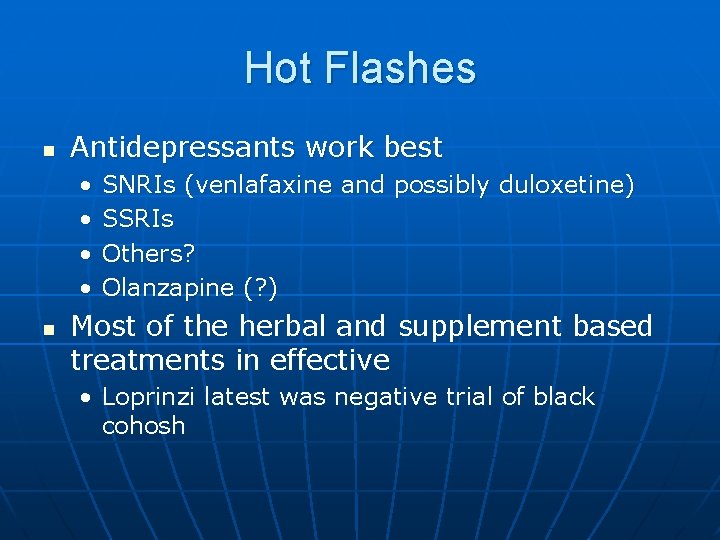
Hot Flashes n Antidepressants work best • • n SNRIs (venlafaxine and possibly duloxetine) SSRIs Others? Olanzapine (? ) Most of the herbal and supplement based treatments in effective • Loprinzi latest was negative trial of black cohosh
www. cancer. gov Follow links to PDQ Supportive Care
Conclusions n n n People with cancer are living longer The focus is on quality of life in addition to quantity People surviving cancer want to live normal lives People with cancer have multiple symptoms New treatments of various kinds are available and there is no need to suffer