
How to measure resilience in an organization Student
- Slides: 15
How to measure resilience in an organization? Student lecture Uv. A 30 November 2012
Introduction Resilience Engineering resilience: resistance to disturbance and speed of return to the equilibrium. Ecological resilience: the magnitude of disturbance that can be absorbed before the system changes it structure by changing the variables and processes that control behaviour. Holling, 1996
Today’s objective How to measure resilience in an organization?
Program Group members Maturity level models Define resilience maturity levels Define resilience criteria Define resilience components Wrap-up
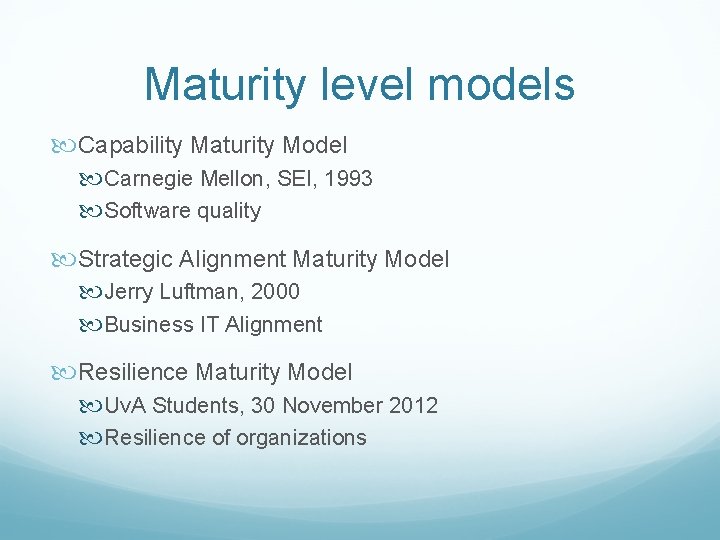
Maturity level models Capability Maturity Model Carnegie Mellon, SEI, 1993 Software quality Strategic Alignment Maturity Model Jerry Luftman, 2000 Business IT Alignment Resilience Maturity Model Uv. A Students, 30 November 2012 Resilience of organizations
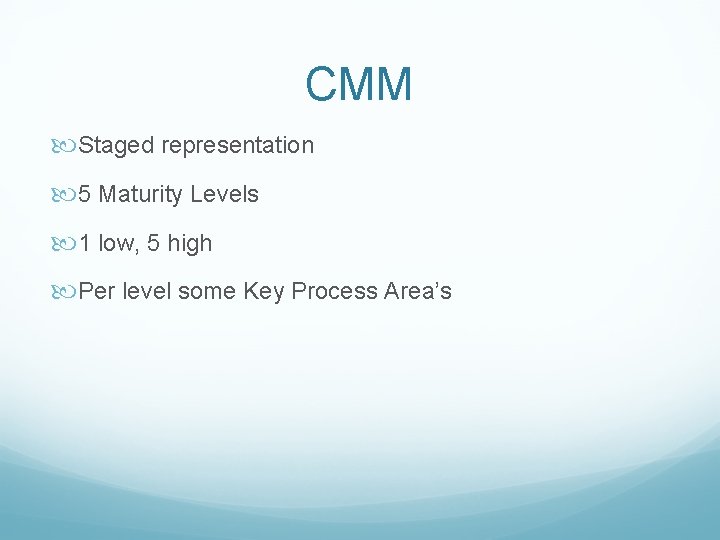
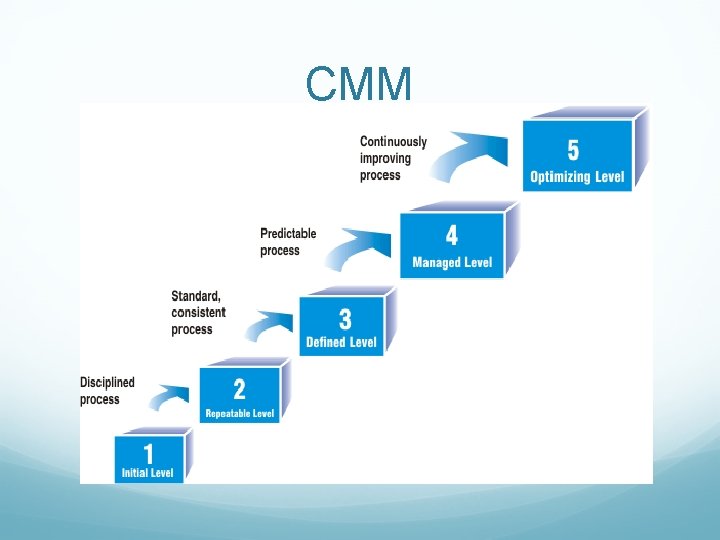
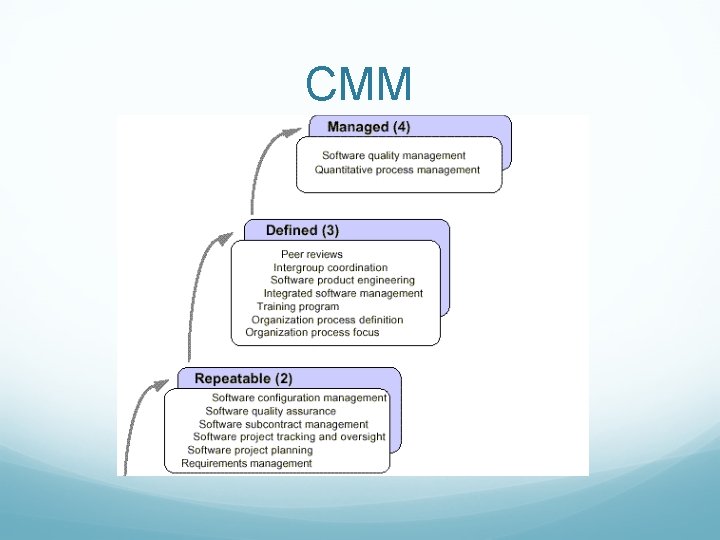
CMM Staged representation 5 Maturity Levels 1 low, 5 high Per level some Key Process Area’s
CMM
CMM
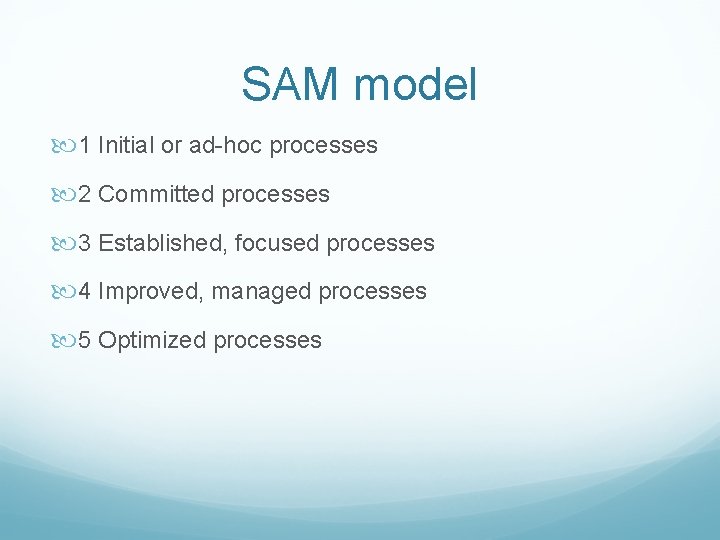
SAM model 1 Initial or ad-hoc processes 2 Committed processes 3 Established, focused processes 4 Improved, managed processes 5 Optimized processes
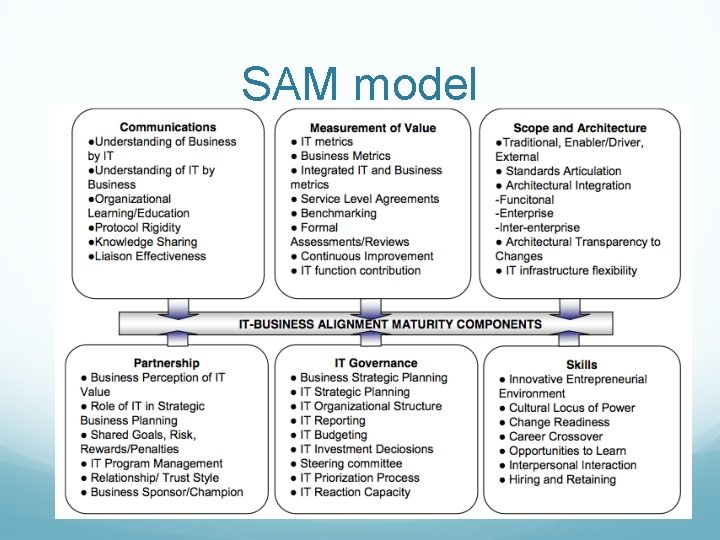
SAM model
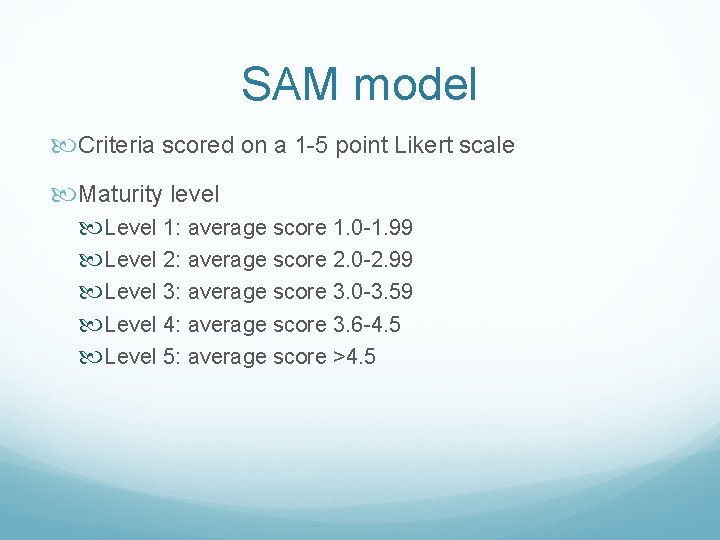
SAM model Criteria scored on a 1 -5 point Likert scale Maturity level Level 1: average score 1. 0 -1. 99 Level 2: average score 2. 0 -2. 99 Level 3: average score 3. 0 -3. 59 Level 4: average score 3. 6 -4. 5 Level 5: average score >4. 5
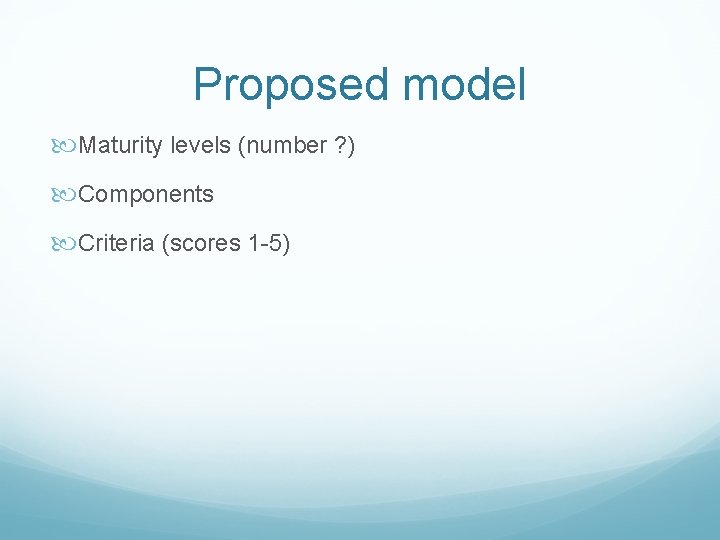
Proposed model Maturity levels (number ? ) Components Criteria (scores 1 -5)
Making the model …
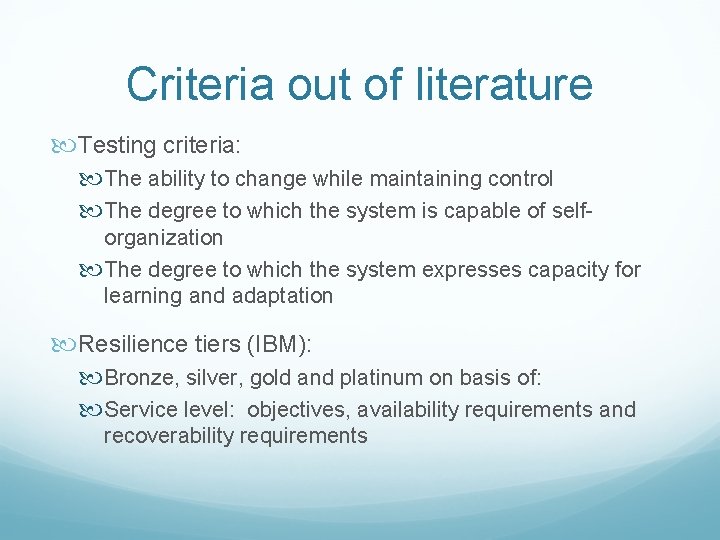
Criteria out of literature Testing criteria: The ability to change while maintaining control The degree to which the system is capable of selforganization The degree to which the system expresses capacity for learning and adaptation Resilience tiers (IBM): Bronze, silver, gold and platinum on basis of: Service level: objectives, availability requirements and recoverability requirements
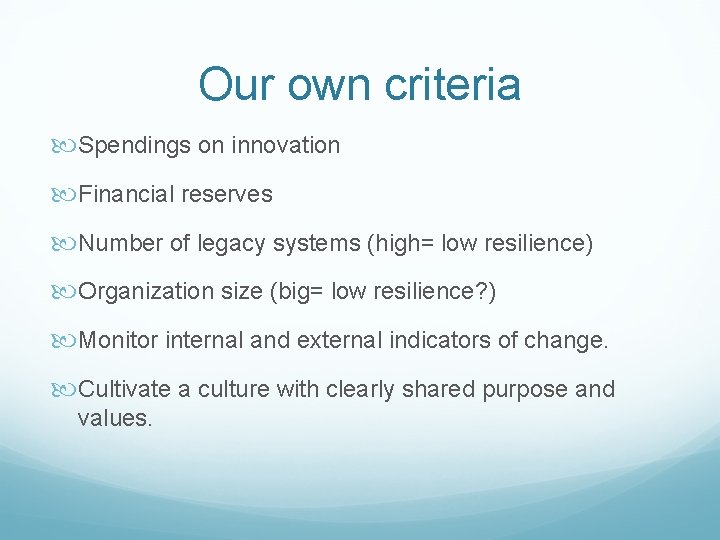
Our own criteria Spendings on innovation Financial reserves Number of legacy systems (high= low resilience) Organization size (big= low resilience? ) Monitor internal and external indicators of change. Cultivate a culture with clearly shared purpose and values.