
How to Measure Economic Performance Measures of Economic
- Slides: 31
How to Measure Economic Performance
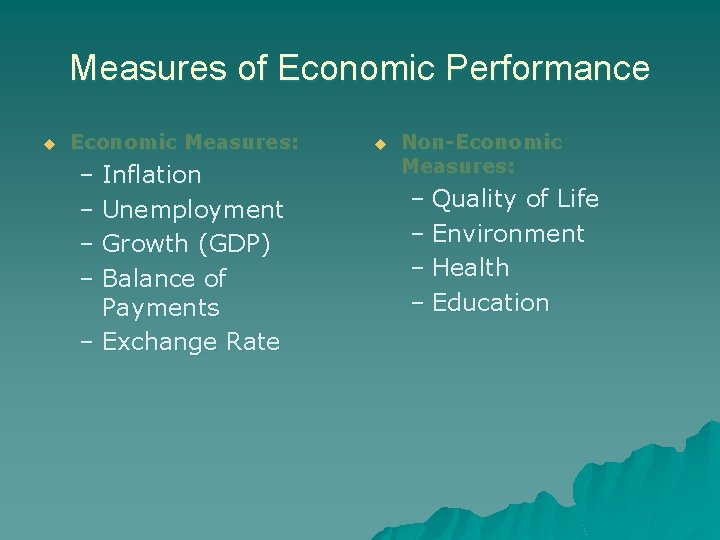
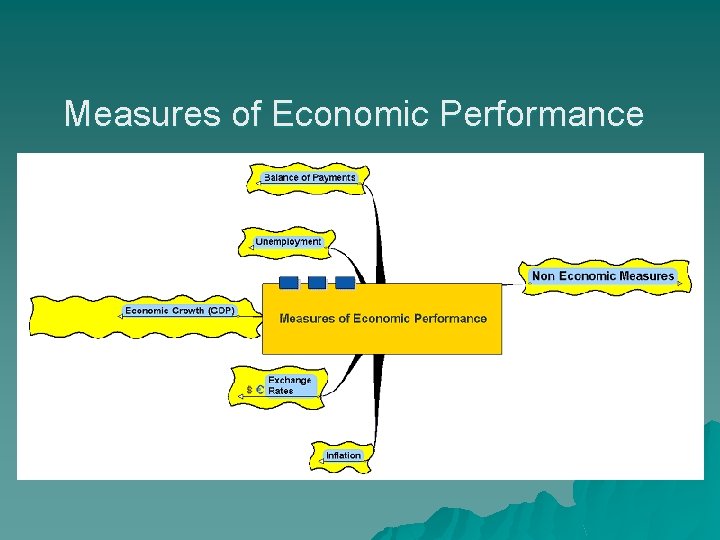
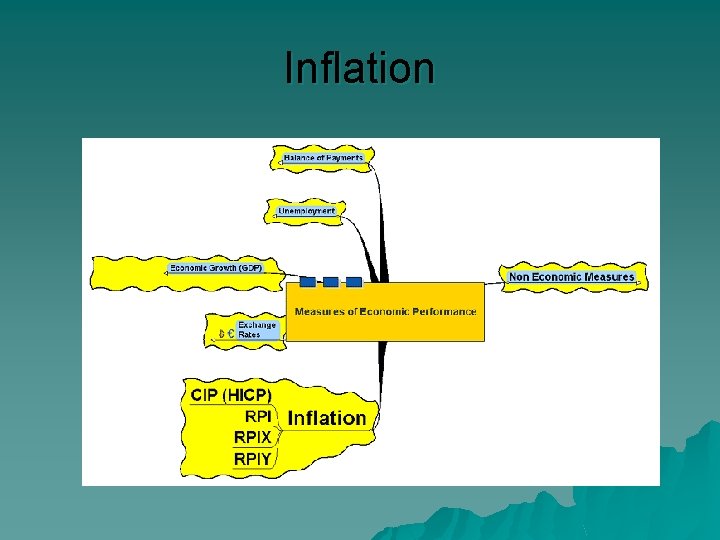
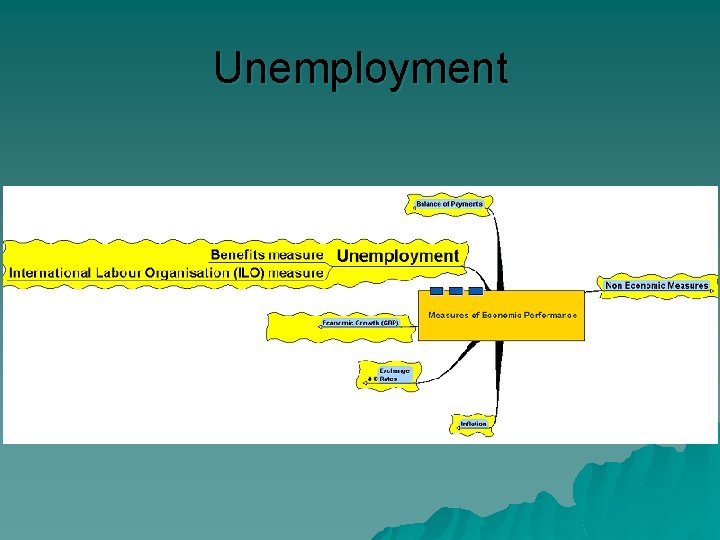
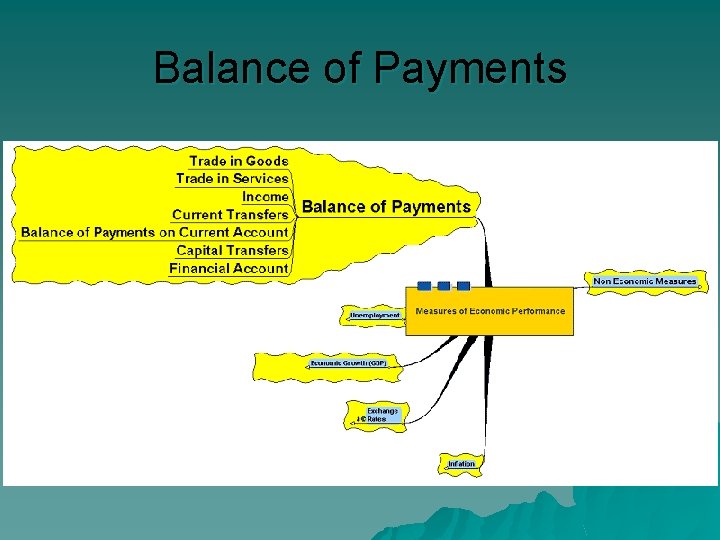
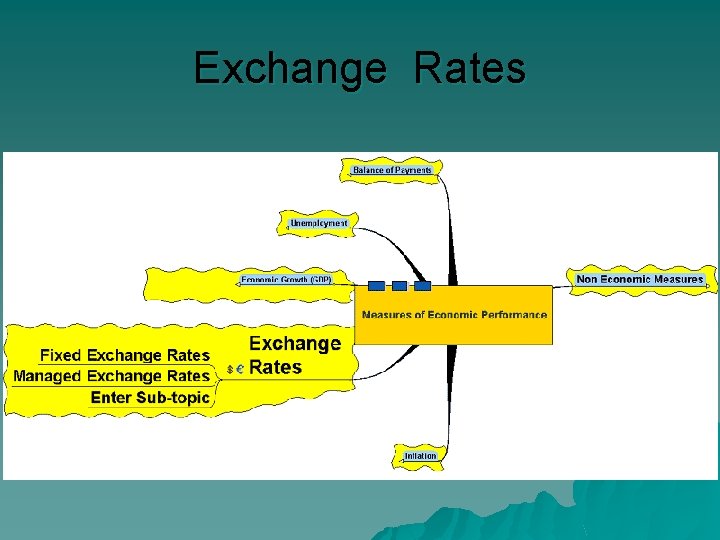
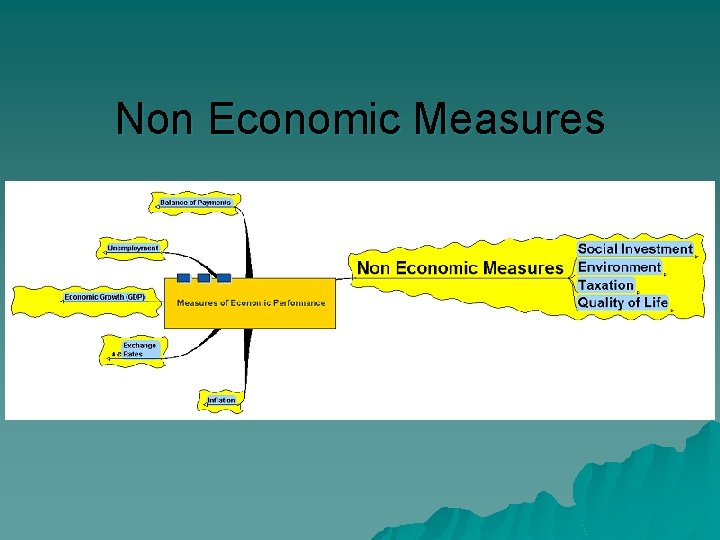
Measures of Economic Performance u Economic Measures: – Inflation – Unemployment – Growth (GDP) – Balance of Payments – Exchange Rate u Non-Economic Measures: – Quality of Life – Environment – Health – Education
Measures of Economic Performance
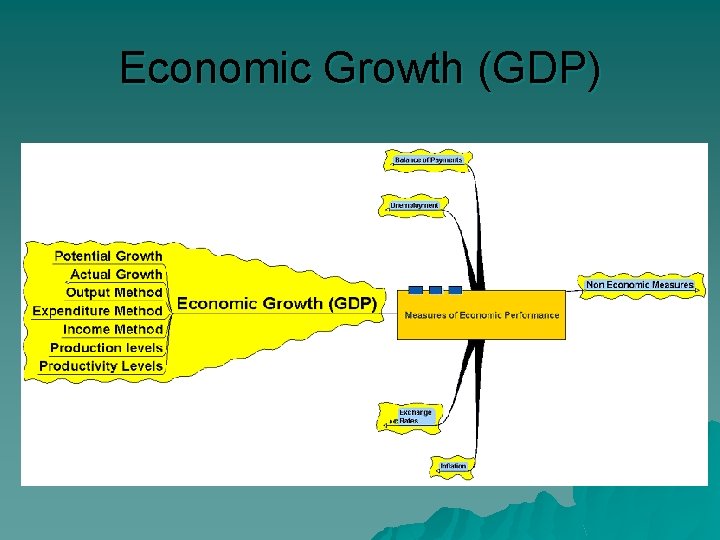
Economic Growth (GDP)
Economic Growth (GDP) u Gross Domestic Product: – The value of output of goods and services produced in the UK during one year – Primary, secondary and tertiary sectors – Real versus nominal output – Can be viewed as being national income, national output or aggregate demand (AD) – GDP per capita – GDP divided by the population (GDP per head)
Economic Growth (GDP) u Potential Growth – the overall capacity of the economy (i. e. what the economy could produce if it used all its resources) u Actual Growth – the annual percentage increase in output u Nominal Growth – the growth in output not including any adjustment for price changes expressed as ‘current prices’ (the price reigning at the time of the measurement) u Real Growth – growth in GDP adjusted to take account of changes in the price level – expressed as ‘constant prices’
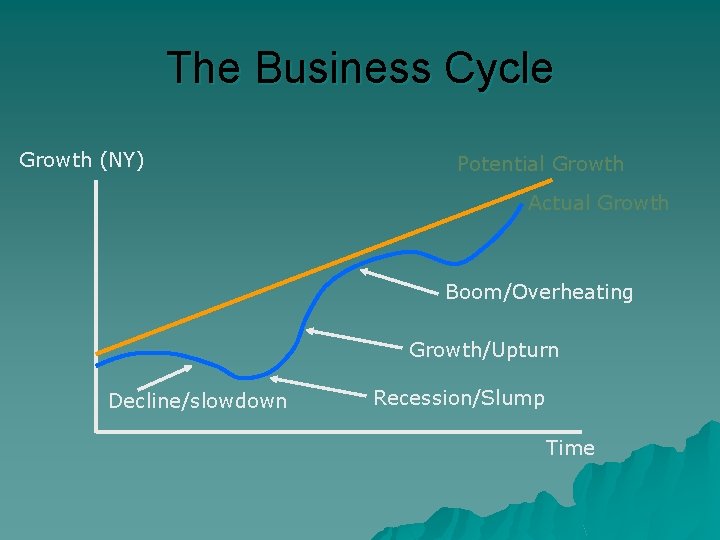
The Business Cycle Growth (NY) Potential Growth Actual Growth Boom/Overheating Growth/Upturn Decline/slowdown Recession/Slump Time
Inflation
Inflation A persistent rise in prices in an economy over a period of time u Now measured by the HICP (CPI) u Inflation does not fall – it slows down or speeds up! (If inflation in 2003 was 3% and in 2004 is 2% it still means prices have risen by an average of 2% over the last year!) u A fall in the price level is termed ‘deflation’ u
Inflation u Anticipated inflation: and Unanticipated – affects the outcome of economic decision making – if anticipated, changes in prices can be accommodated, if unanticipated can cause shocks and problems to arise
Inflation u Causes – – of Inflation: Demand-Pull – where aggregate demand (AD) rises at a faster rate than aggregate supply (AS) Cost-Push – increases in costs (labour, raw materials, imported costs, etc. ) that cause a leftward shift in AS
Inflation u u The effects of inflation: Seriousness of the effect depends on the extent to which the inflation is anticipated – Menu costs – the cost of having to change prices – vending machines, labels, etc. – Wealth costs – inflation affects those on fixed incomes and redirects wealth to those in strong bargaining positions or with physical assets – Planning costs – businesses uncertain about future price changes may be reluctant to invest – hits economic growth – Competitiveness – inflation at a higher rate in the UK than elsewhere hits domestic competitiveness and affects the balance of payments – Social stability - At very high rates, confidence in the currency is eroded and production and exchange can be stifled – can lead to food riots, looting and violence
Unemployment
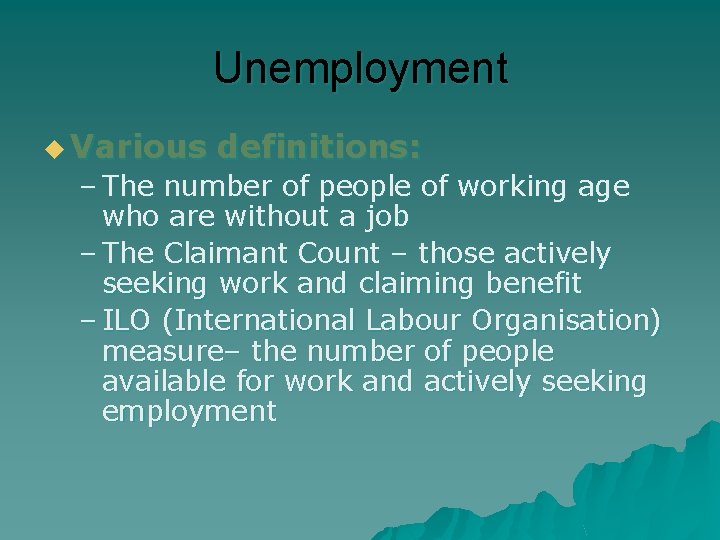
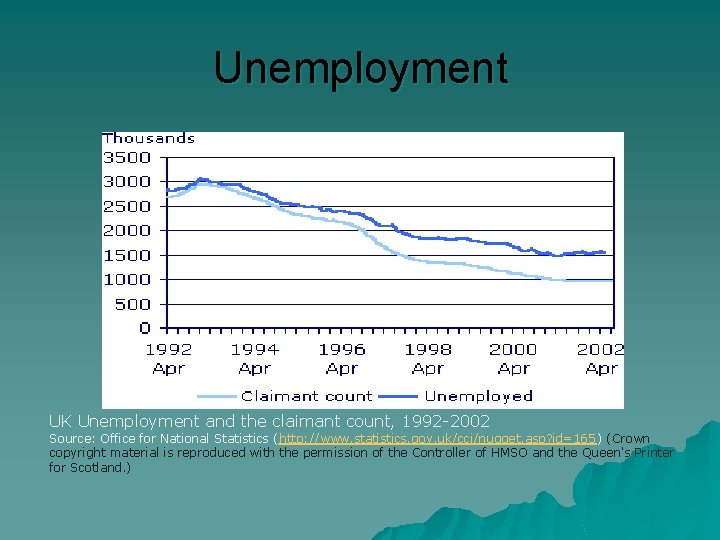
Unemployment u Various definitions: – The number of people of working age who are without a job – The Claimant Count – those actively seeking work and claiming benefit – ILO (International Labour Organisation) measure– the number of people available for work and actively seeking employment
Unemployment UK Unemployment and the claimant count, 1992 -2002 Source: Office for National Statistics (http: //www. statistics. gov. uk/cci/nugget. asp? id=165) (Crown copyright material is reproduced with the permission of the Controller of HMSO and the Queen's Printer for Scotland. )
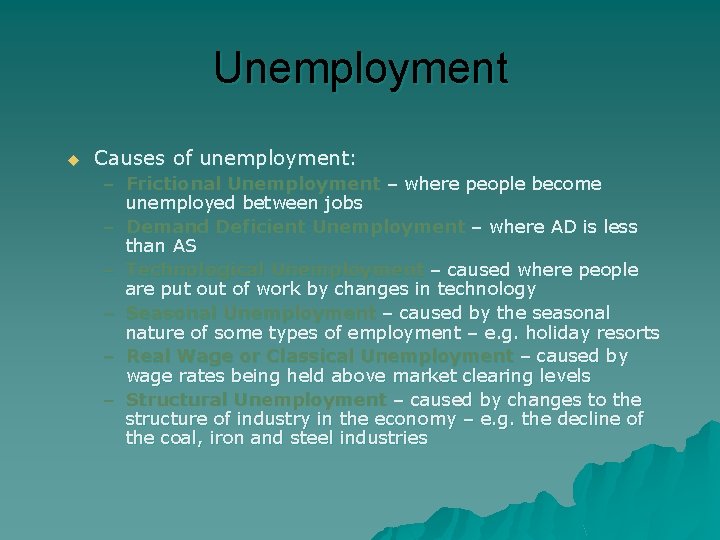
Unemployment u Causes of unemployment: – Frictional Unemployment – where people become unemployed between jobs – Demand Deficient Unemployment – where AD is less than AS – Technological Unemployment – caused where people are put of work by changes in technology – Seasonal Unemployment – caused by the seasonal nature of some types of employment – e. g. holiday resorts – Real Wage or Classical Unemployment – caused by wage rates being held above market clearing levels – Structural Unemployment – caused by changes to the structure of industry in the economy – e. g. the decline of the coal, iron and steel industries
Unemployment u Costs of unemployment to the economy: – Lower tax revenues – Higher benefit payments – Social costs: crime, vandalism, family breakdowns and social welfare support, regional decay – Opportunity cost of lost potential output
Unemployment u Costs of unemployment to the individual: – – – De-skilling Loss of self-esteem Lower income – reduced purchasing power and lower standard of living Effects on the family unit Increase in likelihood of stress related illnesses and mental breakdown
Balance of Payments
Balance of Payments u Measures economic transactions between UK residents and the rest of the world: – Trade in goods – Trade in services – Income flows from investments – Financial flows – shares, loans – Foreign aid
Balance of Payments u Current Account: – The trade in goods – The trade in services – Income flows – Current transfers u Capital Account: – Sale and purchase of capital assets and nonproduced or non-financial assets u Financial Account: – Trade in financial assets
Exchange Rates
Exchange Rates The price of one currency in terms of another – the amount of one currency that has to be given up to purchase another currency u Exchange rates determined by the demand supply of a currency on foreign exchange markets u Demand determined by the purchase of exports, supply by the purchase of imports u
Exchange Rates u Floating Exchange Rates: – Where the rate is determined by the interaction of supply and demand of the currency with no intervention by government or other agencies in the market u ‘Dirty’ or ‘Managed’ Floating: – Where the exchange rate is allowed to float freely but intervention by governments or other agencies is carried out to manipulate the rate within some desired band
Exchange Rates u Fixed Exchange Rates: – Where the rate is fixed or pegged to another currency or asset (such as gold – the ‘Gold Standard’) – intervention may be necessary to maintain the rate or economic policies to influence the strength of economic growth
Exchange Rates u Adjustable Peg System – A managed exchange rate – rate fixed in the short term but has the possibility of devaluation or revaluation if necessary
Non Economic Measures
Social Investment u u u Infrastructure – roads, communication networks, bridges, railways, airports, ports Education – schools, colleges and universities Hospitals/Health – primary and secondary care, health education, disease and accident prevention, number of doctors per head, access to health care Water/Sewerage Housing – affordable and accessible housing to meet the needs of those in search of homes and employment
Environment Pollution – land, air, sea and noise u Waste – waste disposal and waste management u Nature – areas of outstanding beauty, national parks, wildlife, ecology, sites of special scientific interest u Land Use – planning regulations, building regulations u
Taxation u Tax Burden – the amount of tax paid by the population – direct and indirect taxation u Incentives – aimed at encouraging enterprise, business development and creativity
Quality of Life Material Wealth – telephones, fridges, computers, cars, etc. u Mental State u Stress – caused by employment, unemployment, travel, etc. u Crime – crime prevention, crime reduction, monitoring of crime and perceptions of crime u