
How to make green plastics greener Ignacy Jakubowicz
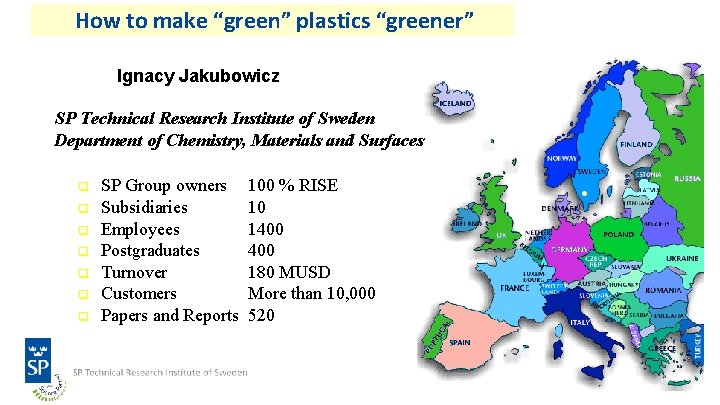
How to make “green” plastics “greener” Ignacy Jakubowicz SP Technical Research Institute of Sweden Department of Chemistry, Materials and Surfaces q q q q SP Group owners Subsidiaries Employees Postgraduates Turnover Customers Papers and Reports 100 % RISE 10 1400 180 MUSD More than 10, 000 520 ·
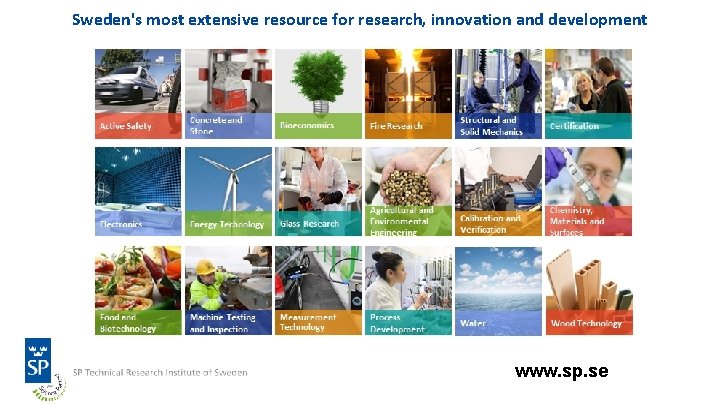
Sweden's most extensive resource for research, innovation and development www. sp. se
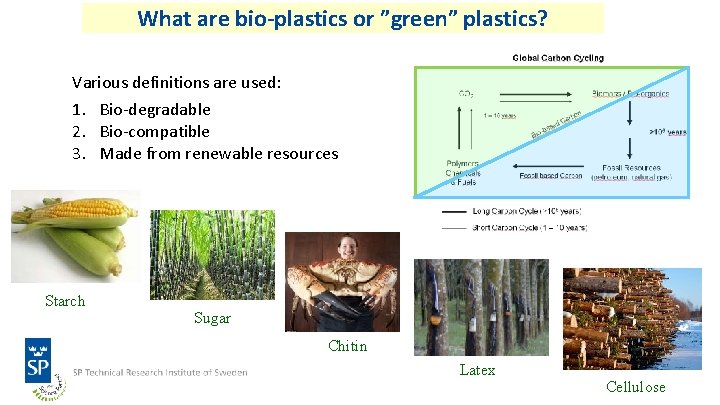
What are bio-plastics or ”green” plastics? Various definitions are used: 1. Bio-degradable 2. Bio-compatible 3. Made from renewable resources Starch Sugar Chitin Latex Cellulose
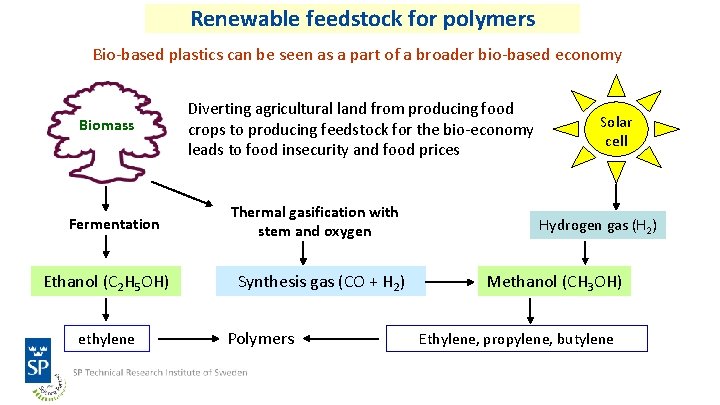
Renewable feedstock for polymers Bio-based plastics can be seen as a part of a broader bio-based economy Biomass Fermentation Ethanol (C 2 H 5 OH) ethylene Diverting agricultural land from producing food crops to producing feedstock for the bio-economy leads to food insecurity and food prices Thermal gasification with stem and oxygen Synthesis gas (CO + H 2) Polymers Solar cell Hydrogen gas (H 2) Methanol (CH 3 OH) Ethylene, propylene, butylene
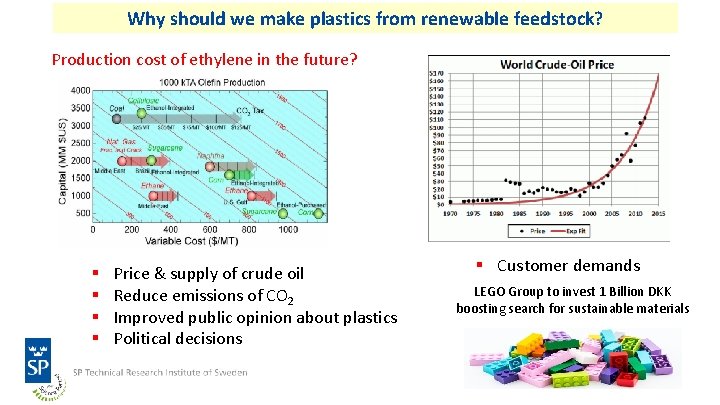
Why should we make plastics from renewable feedstock? Production cost of ethylene in the future? § § Price & supply of crude oil Reduce emissions of CO 2 Improved public opinion about plastics Political decisions § Customer demands LEGO Group to invest 1 Billion DKK boosting search for sustainable materials
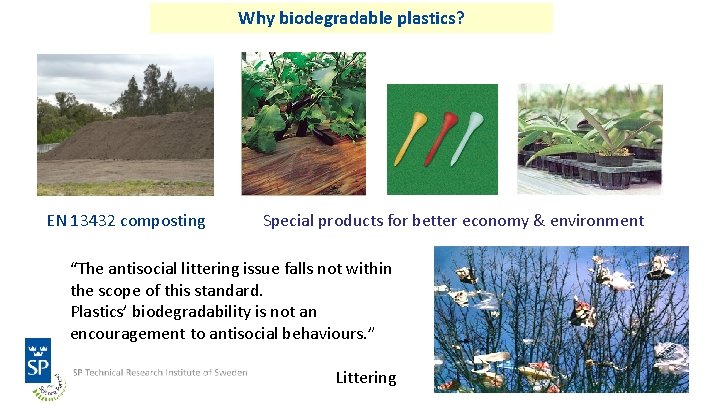
Why biodegradable plastics? EN 13432 composting Special products for better economy & environment “The antisocial littering issue falls not within the scope of this standard. Plastics’ biodegradability is not an encouragement to antisocial behaviours. ” Littering
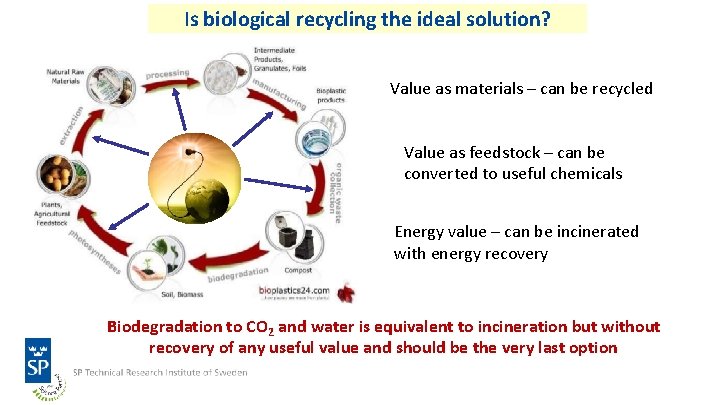
Is biological recycling the ideal solution? Value as materials – can be recycled Value as feedstock – can be converted to useful chemicals Energy value – can be incinerated with energy recovery Biodegradation to CO 2 and water is equivalent to incineration but without recovery of any useful value and should be the very last option
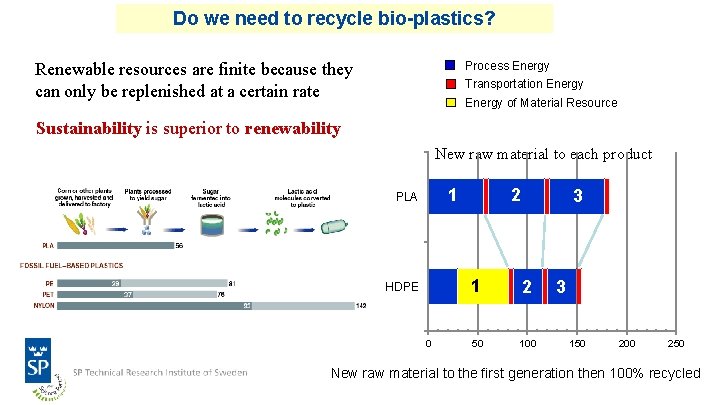
Do we need to recycle bio-plastics? Process Energy Renewable resources are finite because they can only be replenished at a certain rate Transportation Energy of Material Resource Sustainability is superior to renewability New raw material to each product 1 PLA HDPE 0 2 3 1 2 50 100 3 150 200 250 New raw material to the first generation then 100% recycled
Why should we recycle bio-based plastics? Waste Policy and Legislation in European Union End of Life Vehicles Directive (2000/53/EC): § min. 95 % recovery, 85 % recycling by 2015 Waste Electrical and Electronic Equipment Directive, 2012/19/EU, § min. 85 % recycling by 2016 EU Waste Framework Directive 2008/98/EC, the Landfill Directive 1999//31/EC and the Packaging and Packaging Waste Directive 94/62/EC targets by weight : § 50 % for household and 70 % for construction and demolition waste by 2020 § packaging waste 80 % by 2030 § plastics 60 % by 2025
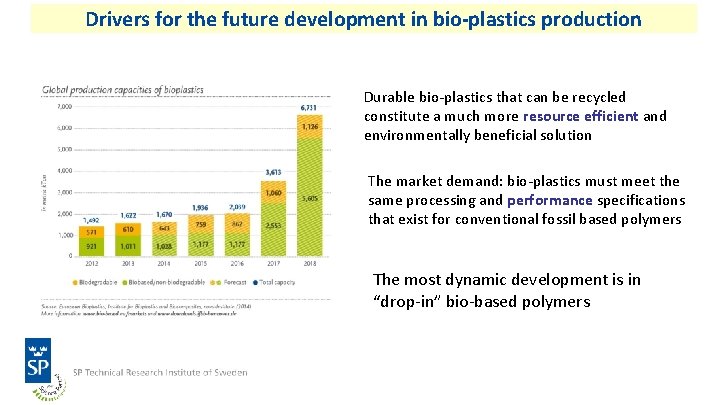
Drivers for the future development in bio-plastics production Durable bio-plastics that can be recycled constitute a much more resource efficient and environmentally beneficial solution The market demand: bio-plastics must meet the same processing and performance specifications that exist for conventional fossil based polymers The most dynamic development is in “drop-in” bio-based polymers
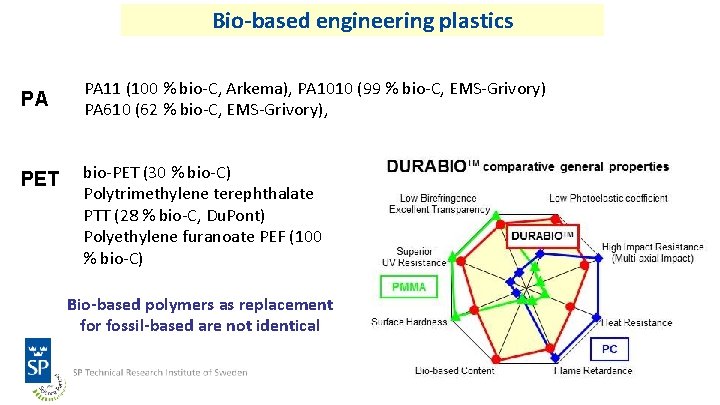
Bio-based engineering plastics PA PET PA 11 (100 % bio-C, Arkema), PA 1010 (99 % bio-C, EMS-Grivory) PA 610 (62 % bio-C, EMS-Grivory), bio-PET (30 % bio-C) Polytrimethylene terephthalate PTT (28 % bio-C, Du. Pont) Polyethylene furanoate PEF (100 % bio-C) Bio-based polymers as replacement for fossil-based are not identical
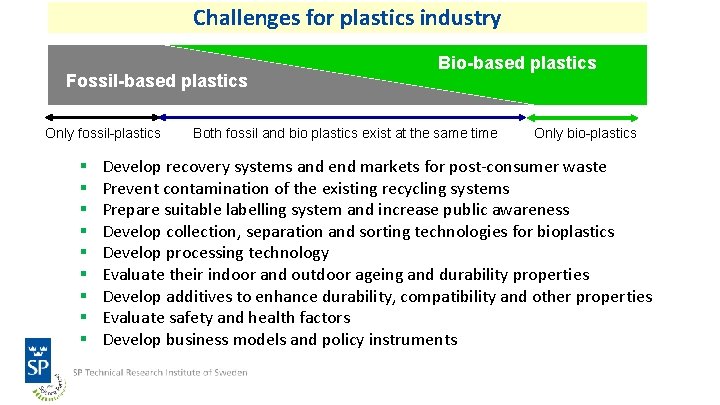
Challenges for plastics industry Fossil-based plastics Only fossil-plastics § § § § § Bio-based plastics Both fossil and bio plastics exist at the same time Only bio-plastics Develop recovery systems and end markets for post-consumer waste Prevent contamination of the existing recycling systems Prepare suitable labelling system and increase public awareness Develop collection, separation and sorting technologies for bioplastics Develop processing technology Evaluate their indoor and outdoor ageing and durability properties Develop additives to enhance durability, compatibility and other properties Evaluate safety and health factors Develop business models and policy instruments
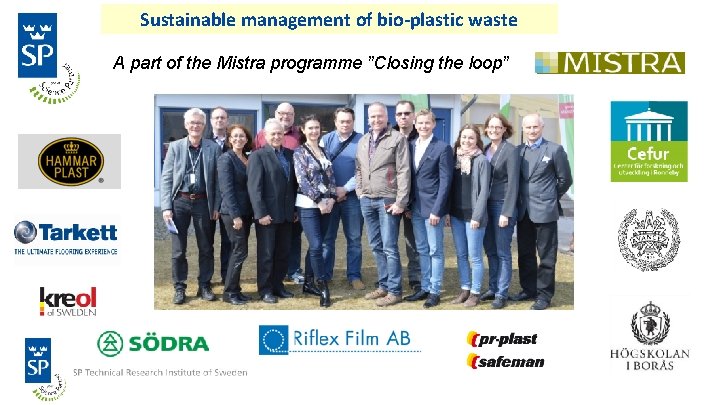
Sustainable management of bio-plastic waste A part of the Mistra programme ”Closing the loop”
Acknowledgm ents Organizing committee for the kind invitation MISTRA for the financial support My co-workers for the fruitful collaboration Thank you for your kind attention !
- Slides: 14