
HOW TO MAKE CLADOGRAMS TAXONOMY The taxonometric way

- Slides: 16
HOW TO MAKE CLADOGRAMS
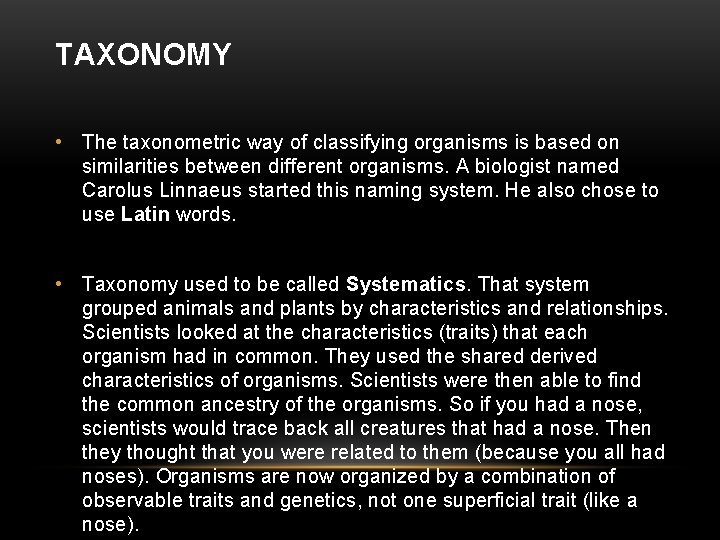
TAXONOMY • The taxonometric way of classifying organisms is based on similarities between different organisms. A biologist named Carolus Linnaeus started this naming system. He also chose to use Latin words. • Taxonomy used to be called Systematics. That system grouped animals and plants by characteristics and relationships. Scientists looked at the characteristics (traits) that each organism had in common. They used the shared derived characteristics of organisms. Scientists were then able to find the common ancestry of the organisms. So if you had a nose, scientists would trace back all creatures that had a nose. Then they thought that you were related to them (because you all had noses). Organisms are now organized by a combination of observable traits and genetics, not one superficial trait (like a nose).
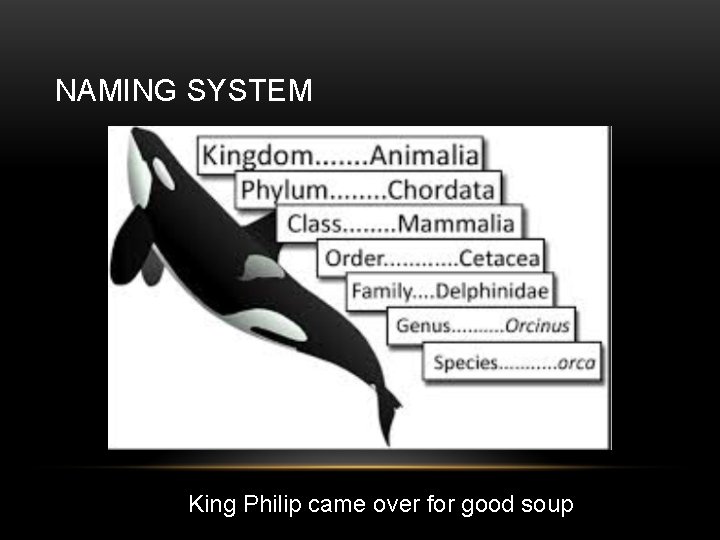
NAMING SYSTEM King Philip came over for good soup
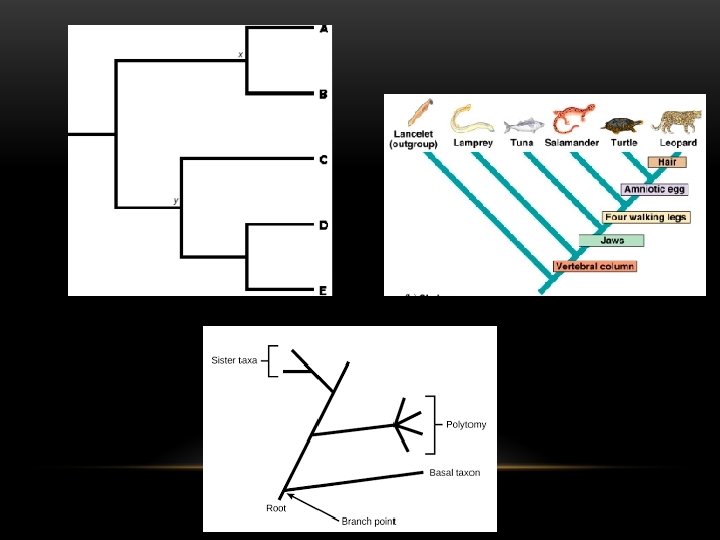
CLADOGRAMS: • Cladograms are diagrams which depict the relationships between different groups of taxa called “clades”. By depicting these relationships, cladograms reconstruct the evolutionary history (phylogeny) of the taxa. Cladograms can also be called “phylogenies” or “trees”. • Cladograms are constructed by grouping organisms together based on their shared derived characteristics.
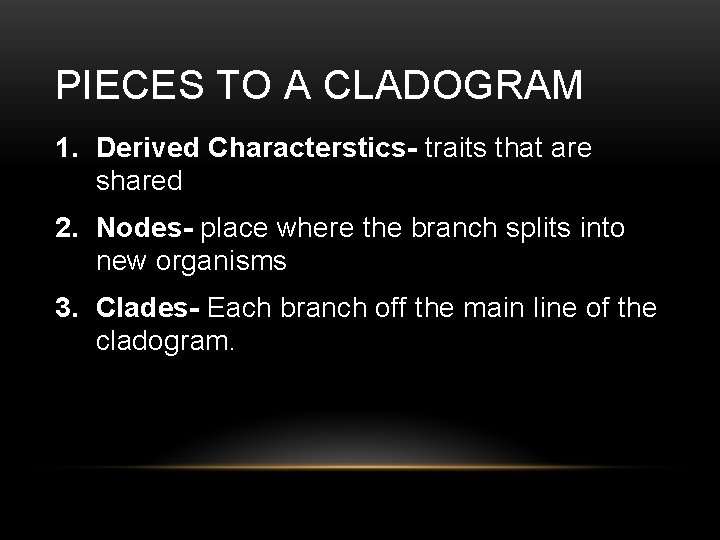
PIECES TO A CLADOGRAM 1. Derived Characterstics- traits that are shared 2. Nodes- place where the branch splits into new organisms 3. Clades- Each branch off the main line of the cladogram.
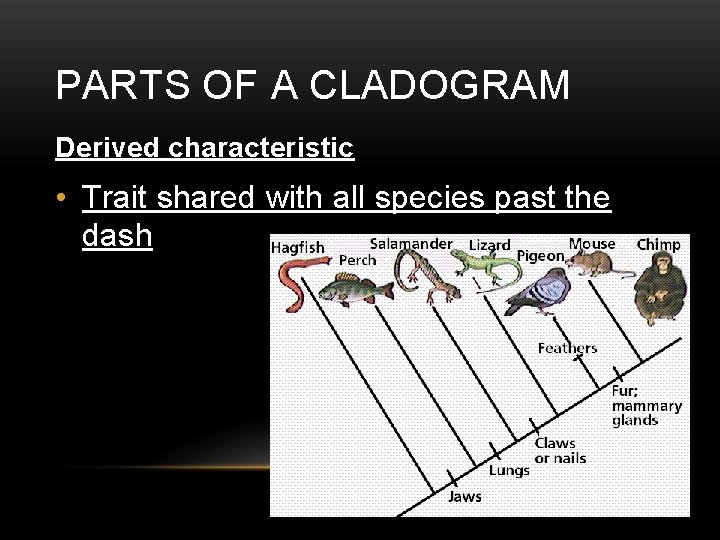
PARTS OF A CLADOGRAM Derived characteristic • Trait shared with all species past the dash
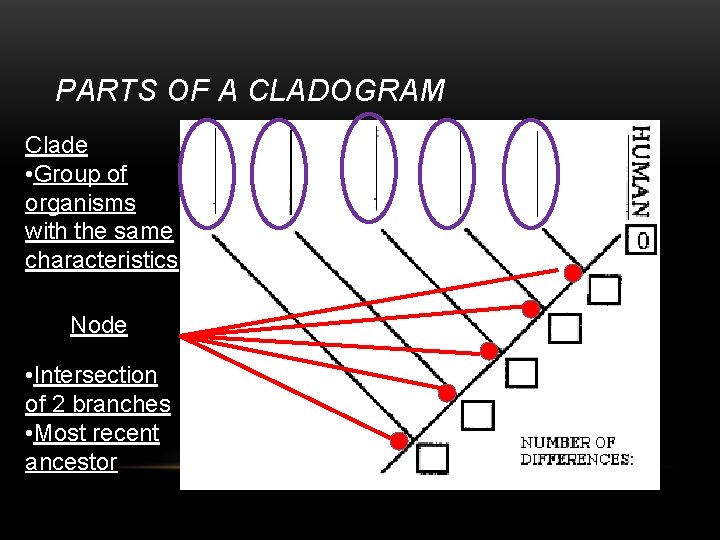
PARTS OF A CLADOGRAM Clade • Group of organisms with the same characteristics Node • Intersection of 2 branches • Most recent ancestor
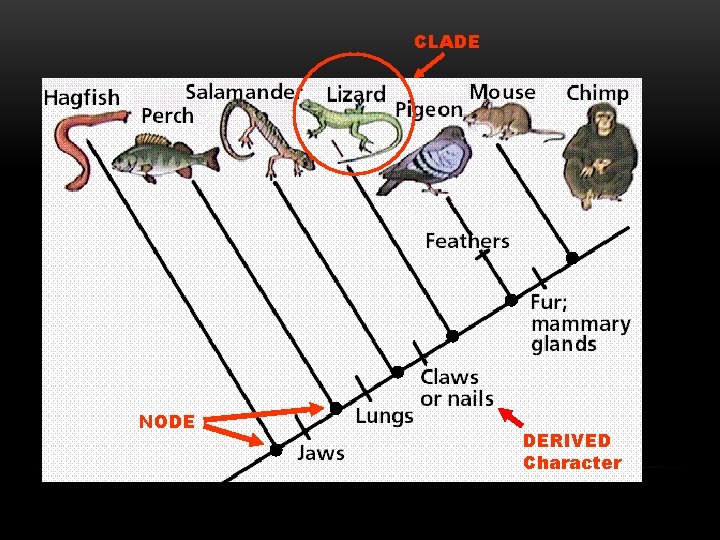
CLADE NODE DERIVED Character
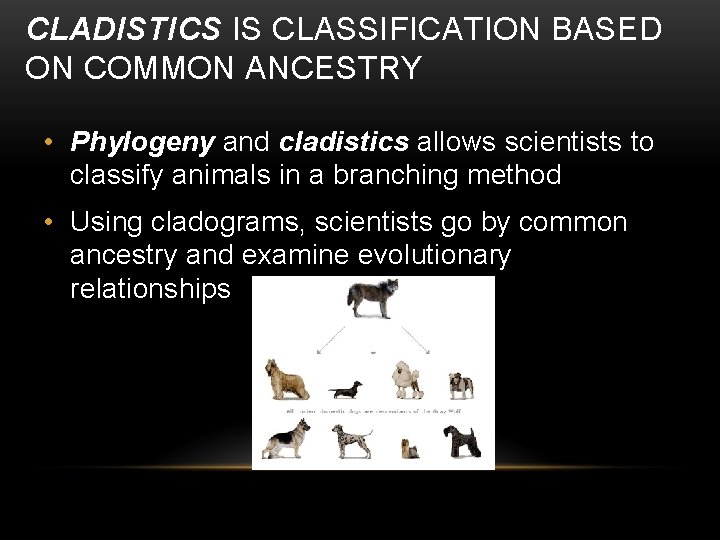
CLADISTICS IS CLASSIFICATION BASED ON COMMON ANCESTRY • Phylogeny and cladistics allows scientists to classify animals in a branching method • Using cladograms, scientists go by common ancestry and examine evolutionary relationships
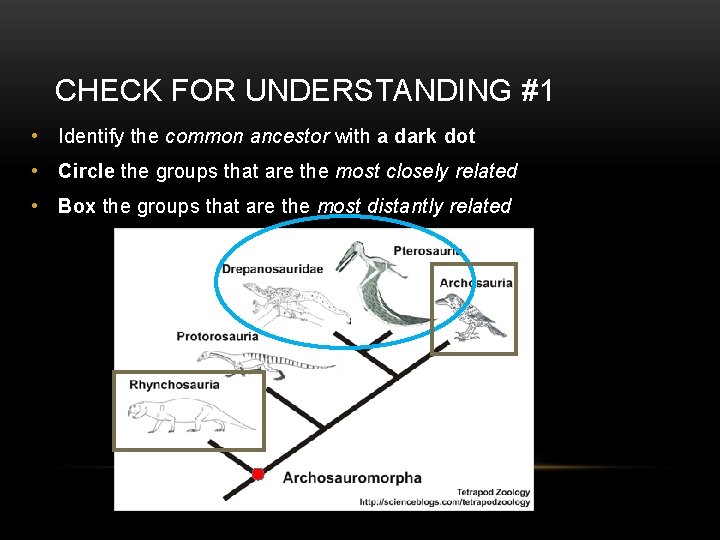
CHECK FOR UNDERSTANDING #1 • Identify the common ancestor with a dark dot • Circle the groups that are the most closely related • Box the groups that are the most distantly related
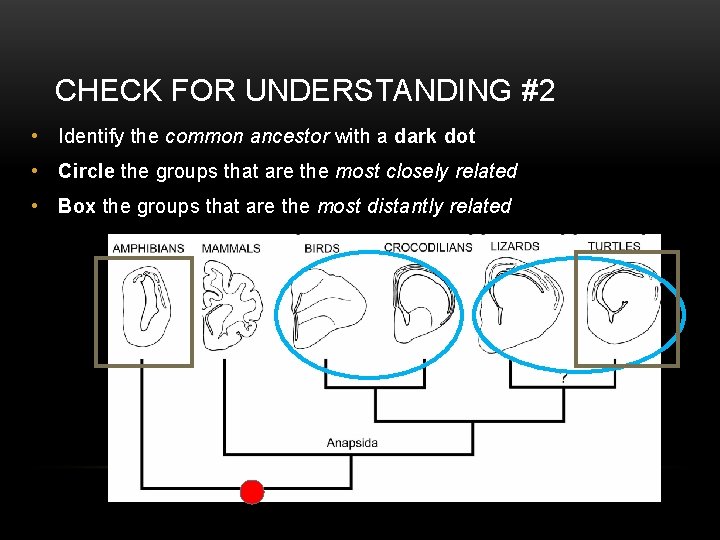
CHECK FOR UNDERSTANDING #2 • Identify the common ancestor with a dark dot • Circle the groups that are the most closely related • Box the groups that are the most distantly related
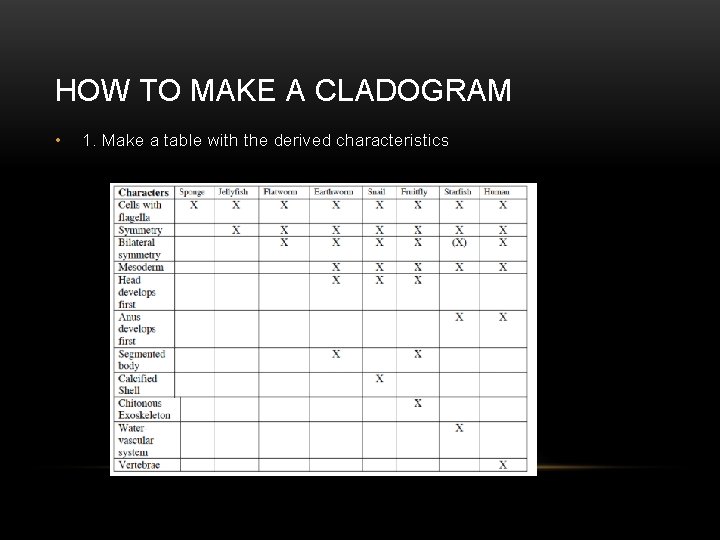
HOW TO MAKE A CLADOGRAM • 1. Make a table with the derived characteristics
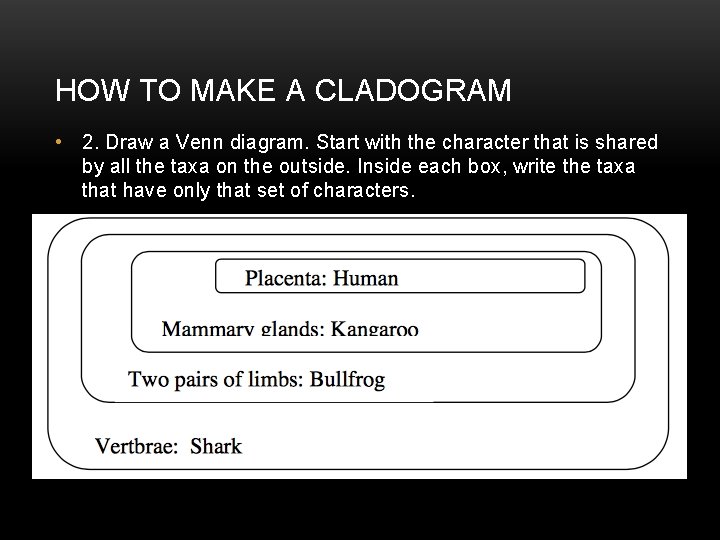
HOW TO MAKE A CLADOGRAM • 2. Draw a Venn diagram. Start with the character that is shared by all the taxa on the outside. Inside each box, write the taxa that have only that set of characters.
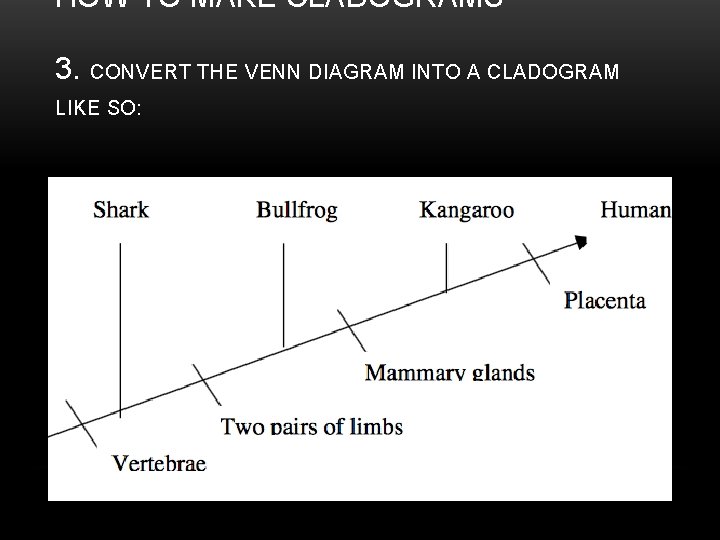
HOW TO MAKE CLADOGRAMS 3. CONVERT THE VENN DIAGRAM INTO A CLADOGRAM LIKE SO:
HW: ACTIVITIES TO COMPLETE BEFORE YOU LEAVE TODAY • In your summary section answer the following questions: 1. What does cladistics do to help scientists study organisms? 2. Define node, clade, and derived character. 3. Define cladistics. • Once complete, get out a piece of paper.