
How to make a frog pond Car Tyre


- Slides: 21
How to make a frog pond
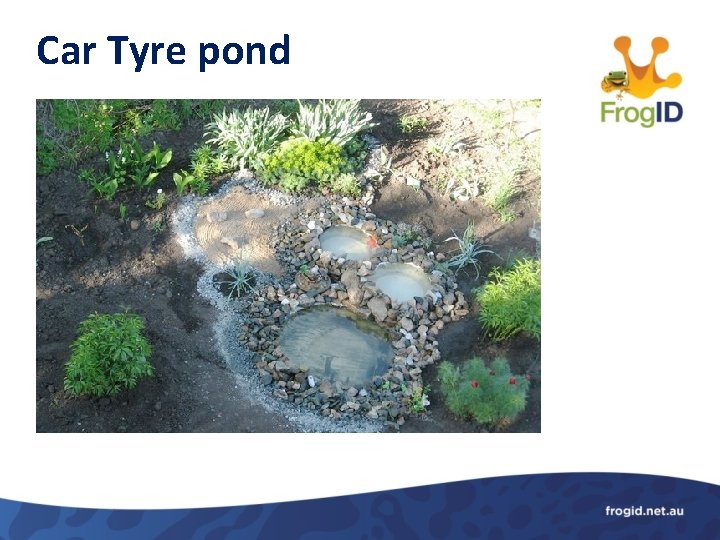
Car Tyre pond
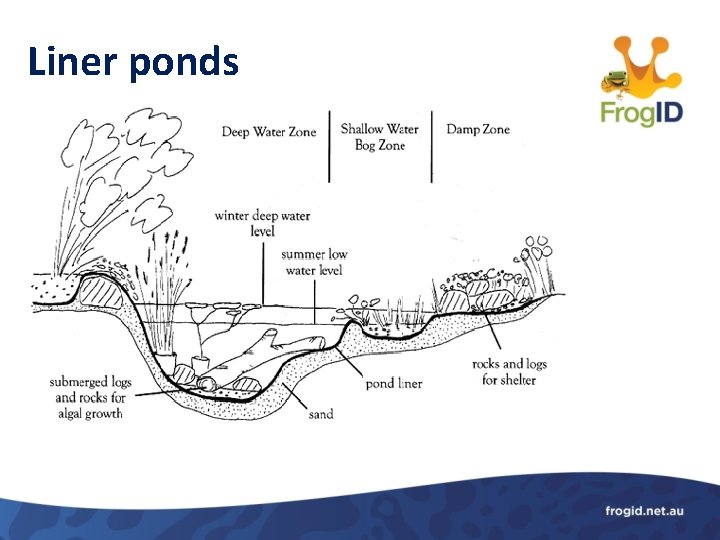
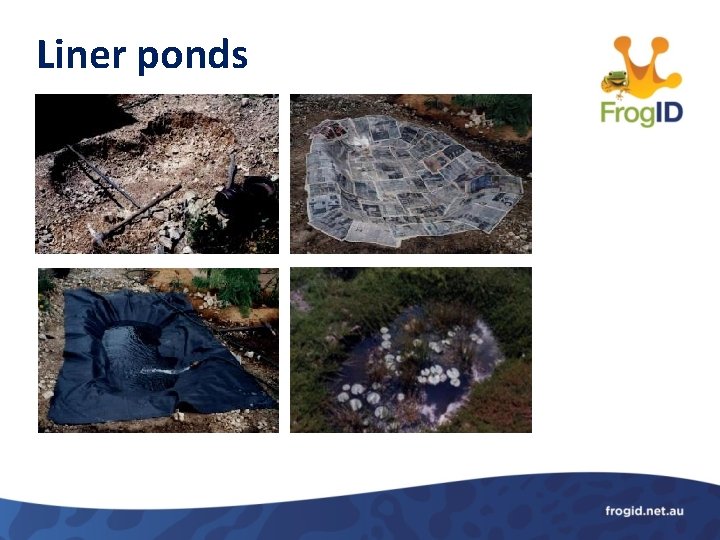
Liner ponds
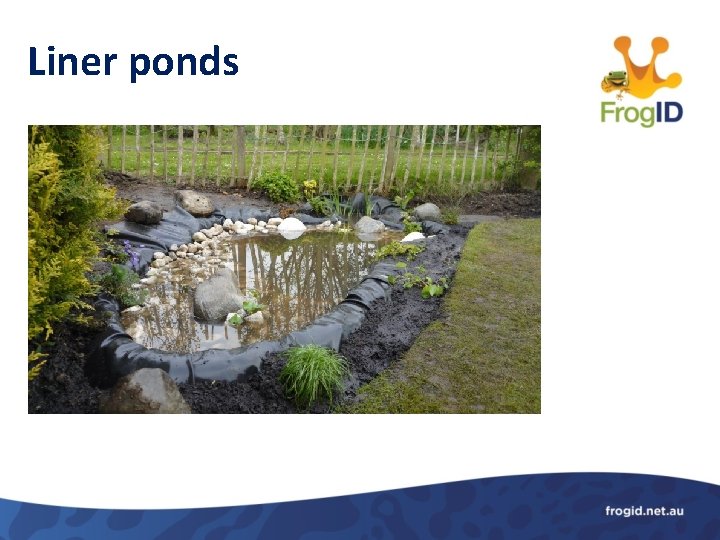
Liner ponds
Liner ponds
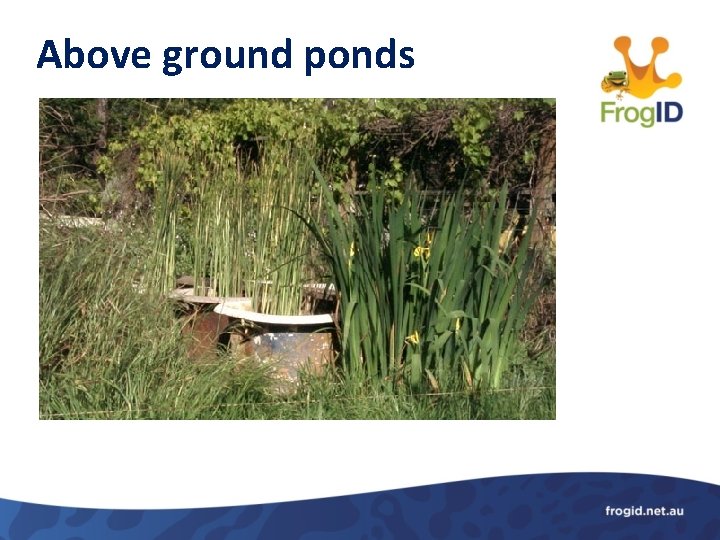
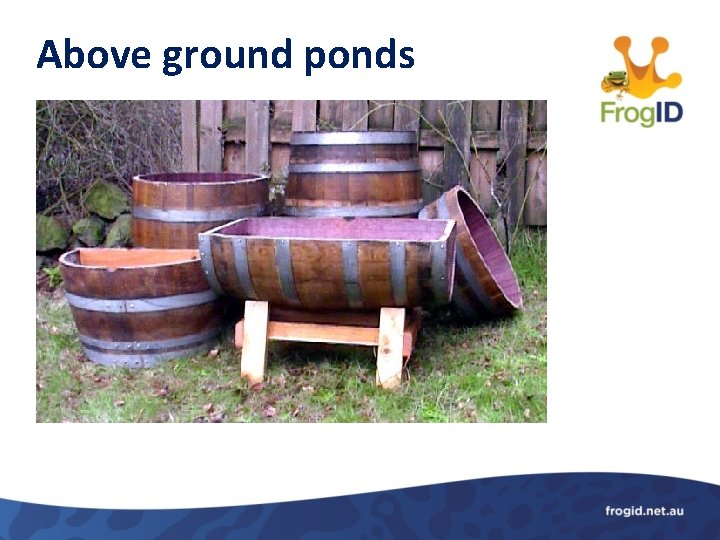
Above ground ponds
Above ground ponds
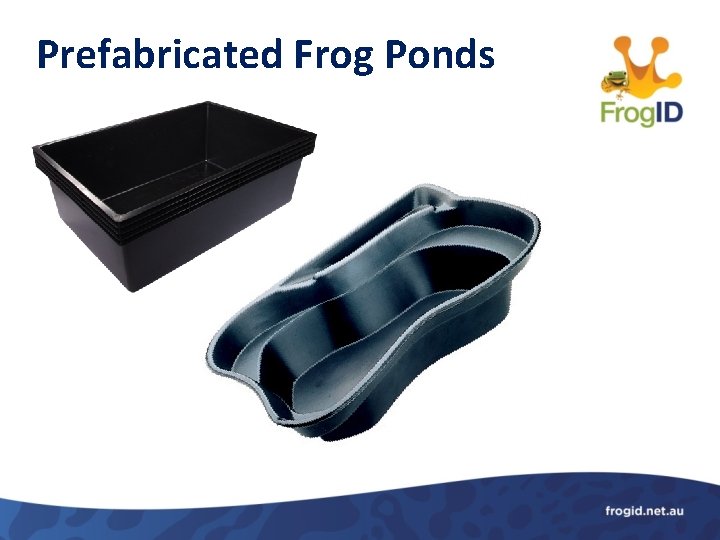
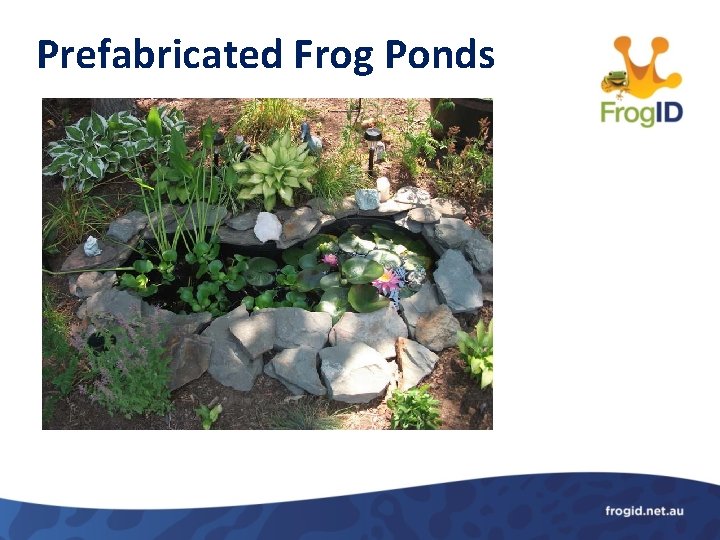
Prefabricated Frog Ponds
Prefabricated Frog Ponds
Types of frogs that you will find in your Sydney frog pond • Several species of frogs have benefited from urban life and our liking of 'water features' in the garden. • They all perform a valuable service of eating many of the insect pests around our gardens and homes. • Frequently these night visitors are heard rather than seen. • The males call from suitable breeding sites at night, particularly some of the tree frogs which call from hollow structures like drainpipes which amplify their calls.
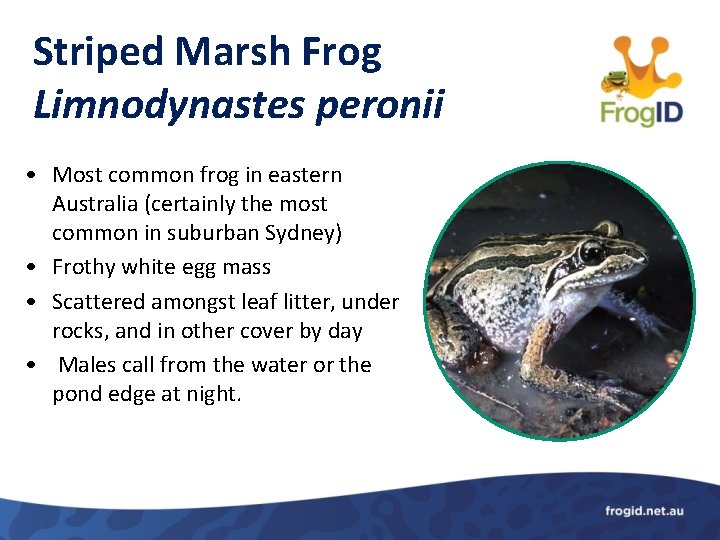
Striped Marsh Frog Limnodynastes peronii • Most common frog in eastern Australia (certainly the most common in suburban Sydney) • Frothy white egg mass • Scattered amongst leaf litter, under rocks, and in other cover by day • Males call from the water or the pond edge at night.
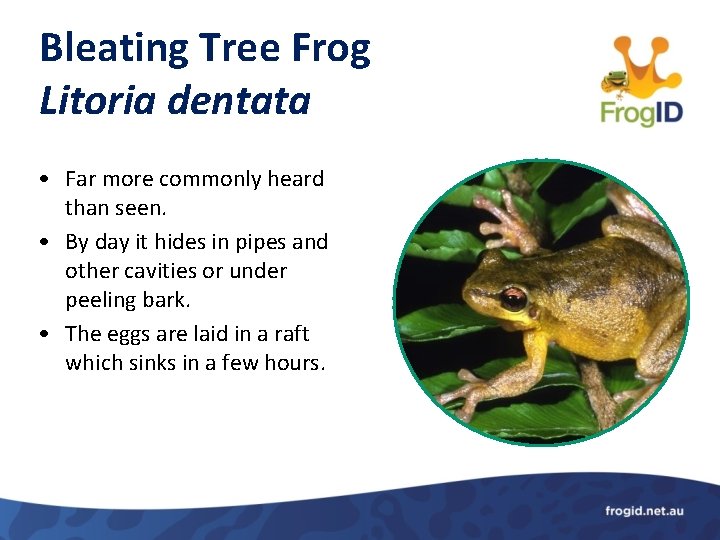
Bleating Tree Frog Litoria dentata • Far more commonly heard than seen. • By day it hides in pipes and other cavities or under peeling bark. • The eggs are laid in a raft which sinks in a few hours.
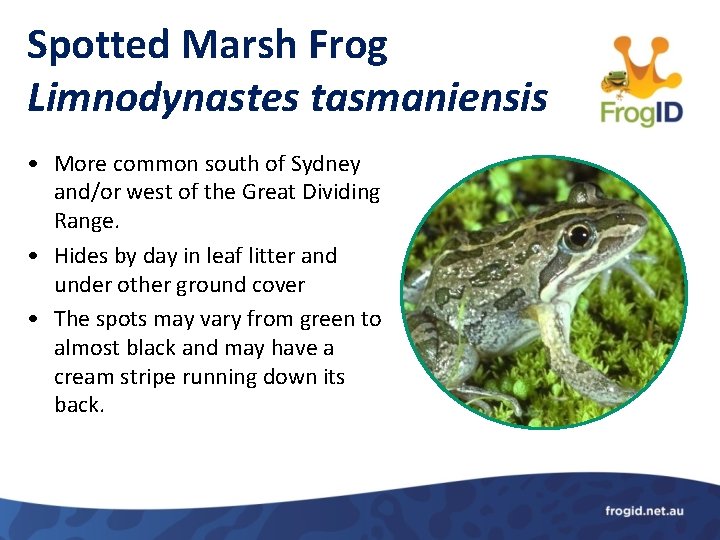
Spotted Marsh Frog Limnodynastes tasmaniensis • More common south of Sydney and/or west of the Great Dividing Range. • Hides by day in leaf litter and under other ground cover • The spots may vary from green to almost black and may have a cream stripe running down its back.
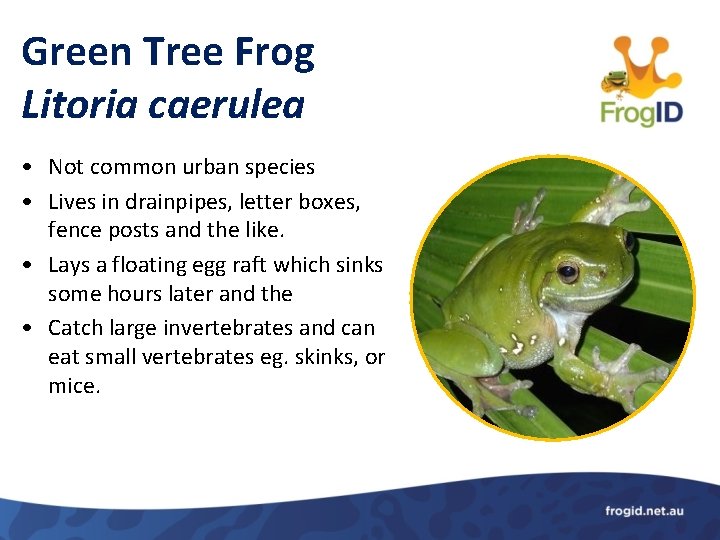
Green Tree Frog Litoria caerulea • Not common urban species • Lives in drainpipes, letter boxes, fence posts and the like. • Lays a floating egg raft which sinks some hours later and the • Catch large invertebrates and can eat small vertebrates eg. skinks, or mice.
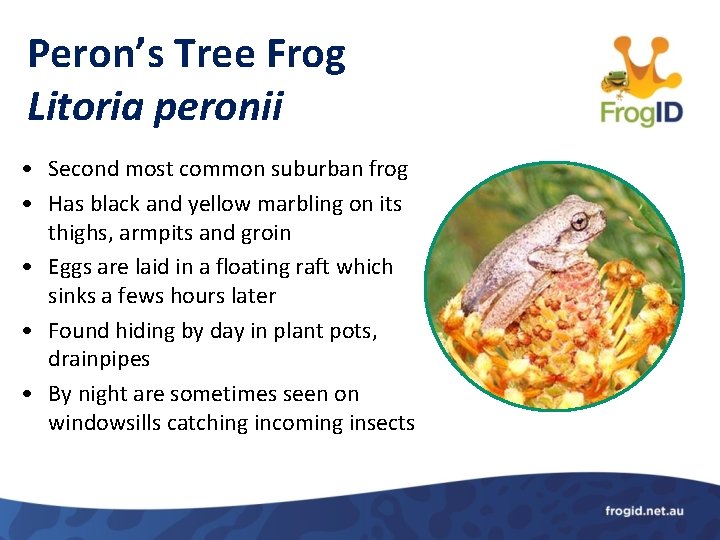
Peron’s Tree Frog Litoria peronii • Second most common suburban frog • Has black and yellow marbling on its thighs, armpits and groin • Eggs are laid in a floating raft which sinks a fews hours later • Found hiding by day in plant pots, drainpipes • By night are sometimes seen on windowsills catching incoming insects
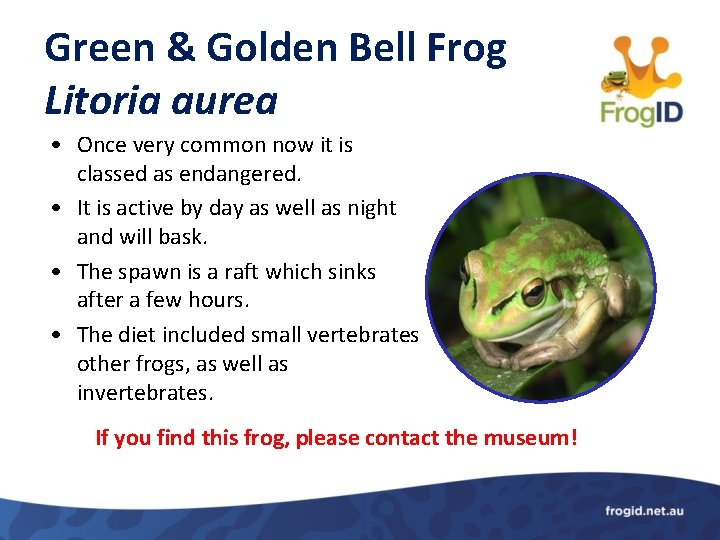
Green & Golden Bell Frog Litoria aurea • Once very common now it is classed as endangered. • It is active by day as well as night and will bask. • The spawn is a raft which sinks after a few hours. • The diet included small vertebrates other frogs, as well as invertebrates. If you find this frog, please contact the museum!
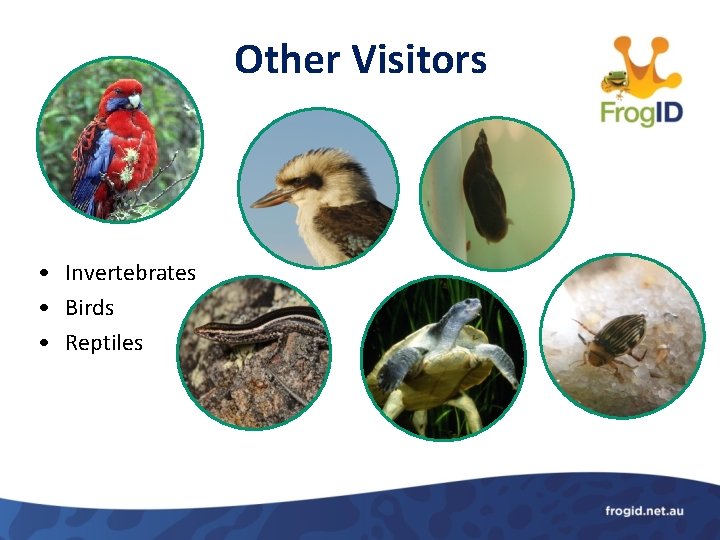
Other Visitors • Invertebrates • Birds • Reptiles
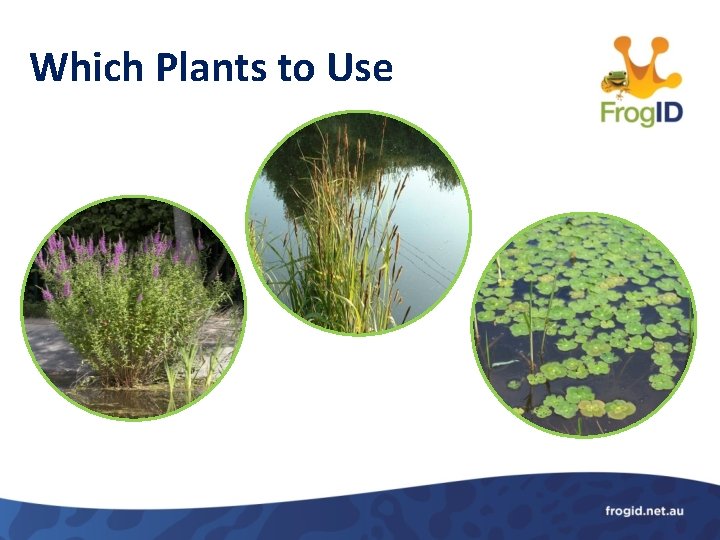
Which Plants to Use
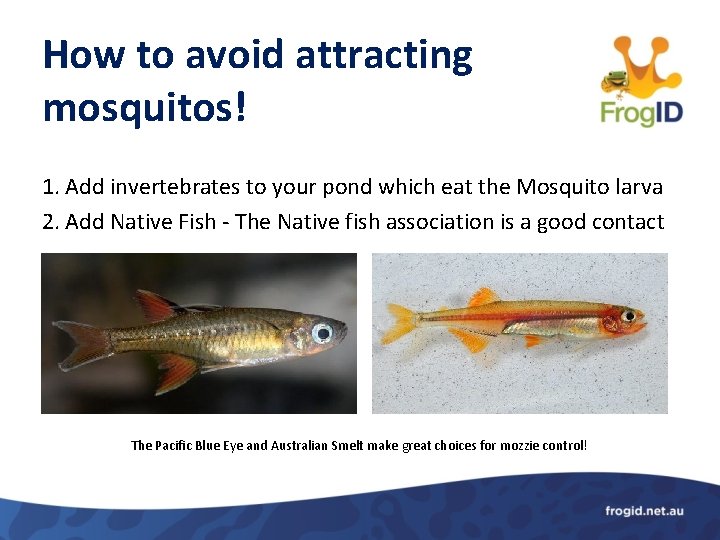
How to avoid attracting mosquitos! 1. Add invertebrates to your pond which eat the Mosquito larva 2. Add Native Fish - The Native fish association is a good contact The Pacific Blue Eye and Australian Smelt make great choices for mozzie control!
Helpful websites • • • www. Frog. ID. net. au frogs. org. au/frogwatch/bitg. html www. arcadia-lily-ponds. com/ frogs. org. au/frogs/of/New_South_Wales/ frogsaustralia. net. au/