
How to make a copy of DNA DNA
- Slides: 14
How to make a copy of DNA
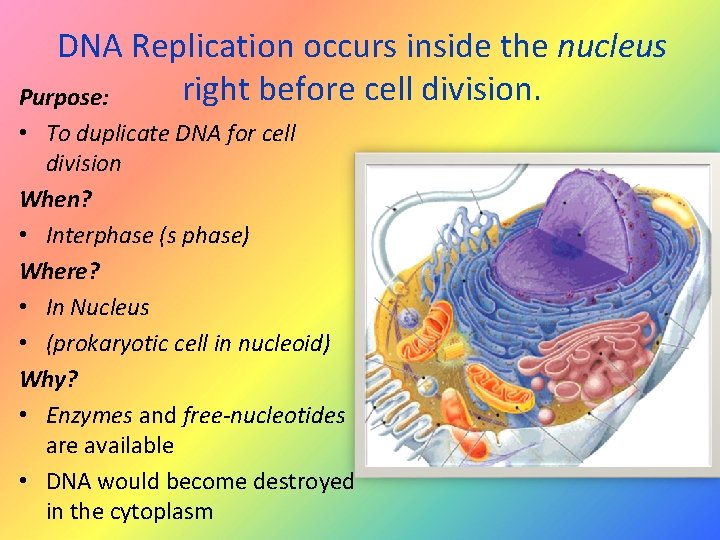
DNA Replication occurs inside the nucleus right before cell division. Purpose: • To duplicate DNA for cell division When? • Interphase (s phase) Where? • In Nucleus • (prokaryotic cell in nucleoid) Why? • Enzymes and free-nucleotides are available • DNA would become destroyed in the cytoplasm
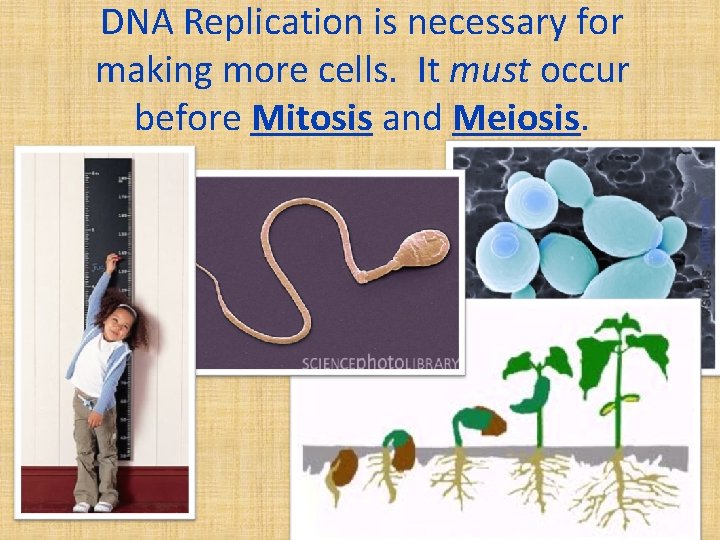
DNA Replication is necessary for making more cells. It must occur before Mitosis and Meiosis.
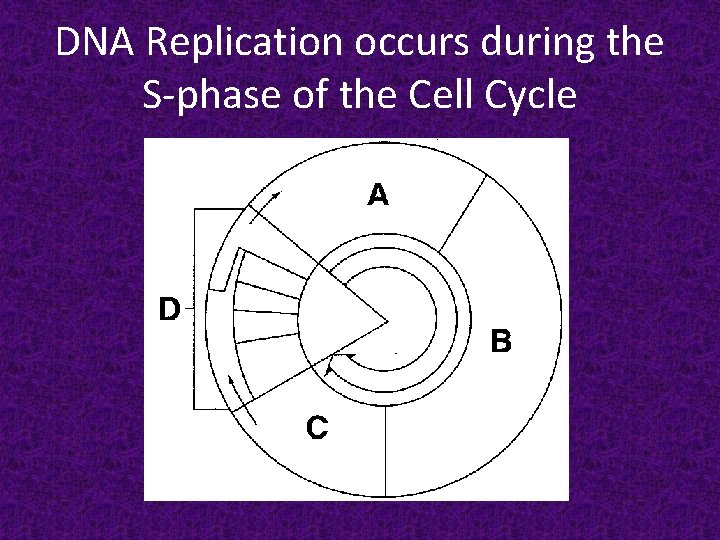
DNA Replication occurs during the S-phase of the Cell Cycle
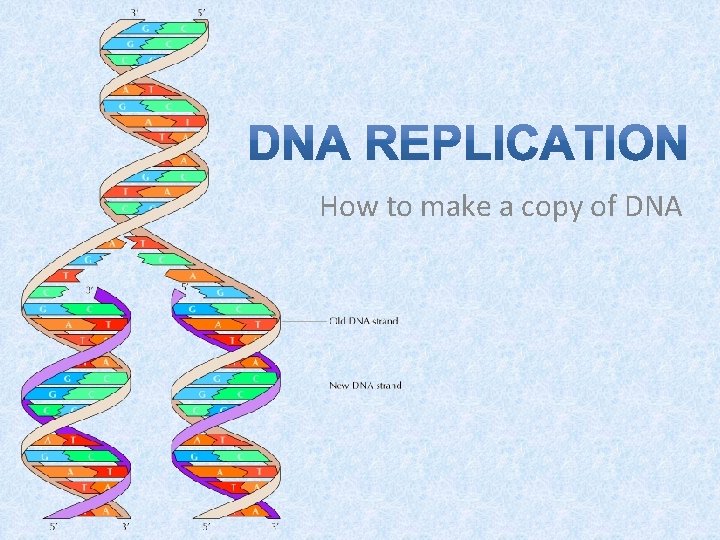
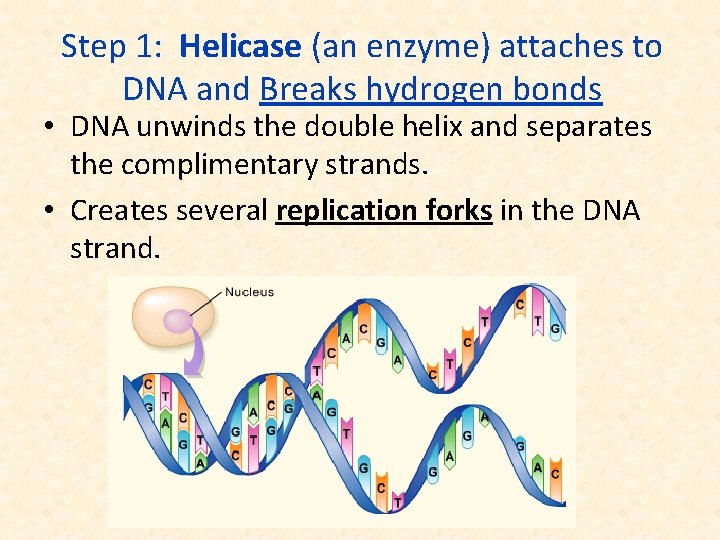
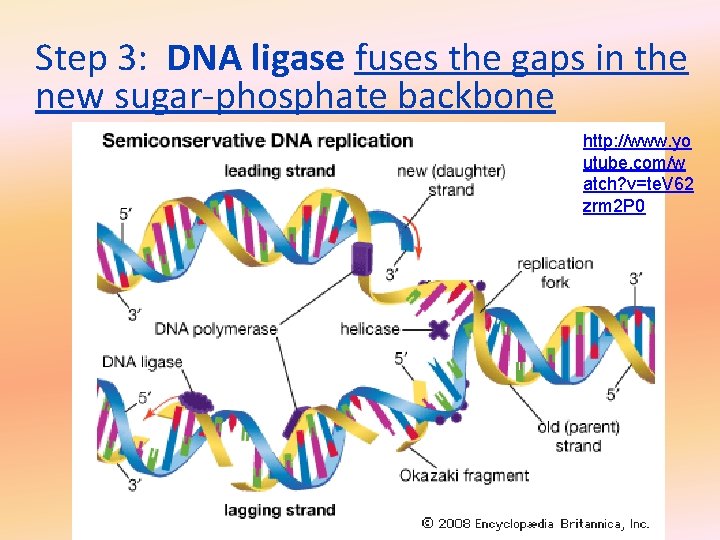
Step 1: Helicase (an enzyme) attaches to DNA and Breaks hydrogen bonds • DNA unwinds the double helix and separates the complimentary strands. • Creates several replication forks in the DNA strand.
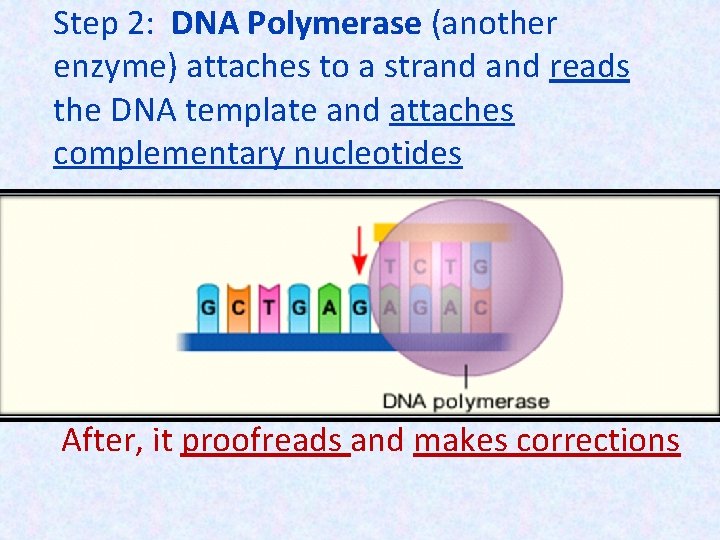
Step 2: DNA Polymerase (another enzyme) attaches to a strand reads the DNA template and attaches complementary nucleotides After, it proofreads and makes corrections
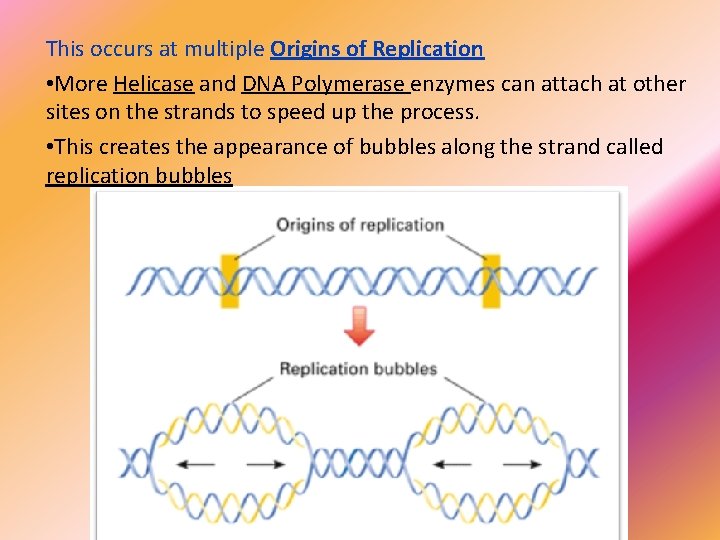
This occurs at multiple Origins of Replication • More Helicase and DNA Polymerase enzymes can attach at other sites on the strands to speed up the process. • This creates the appearance of bubbles along the strand called replication bubbles
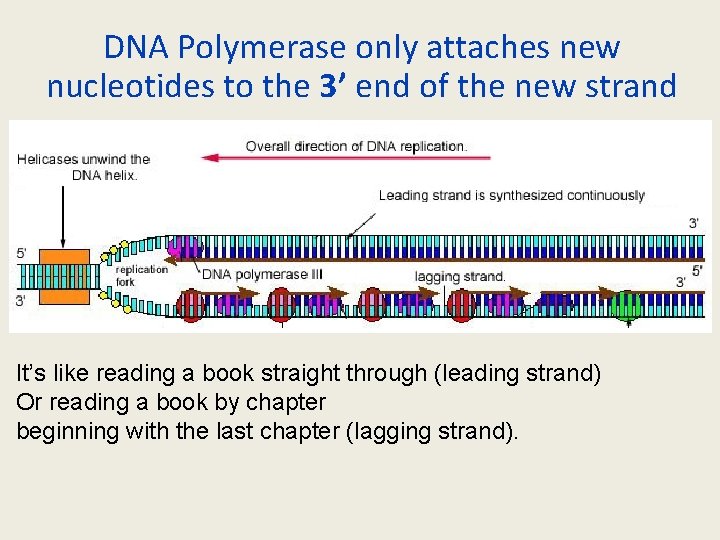
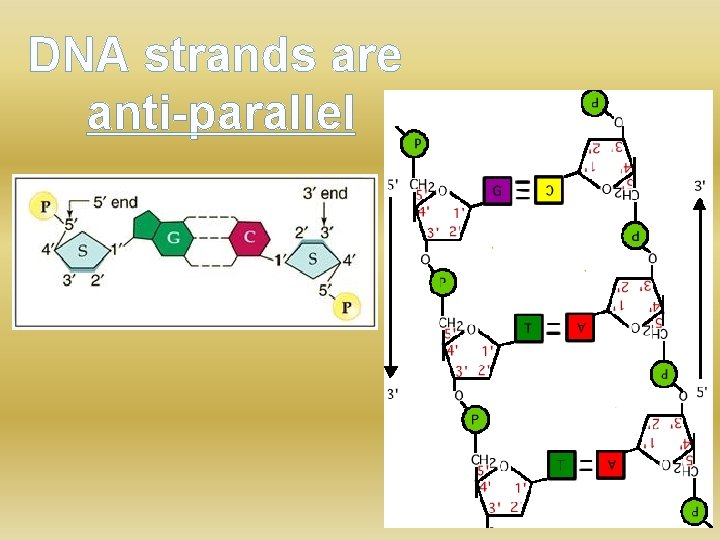
DNA Polymerase only attaches new nucleotides to the 3’ end of the new strand It’s like reading a book straight through (leading strand) Or reading a book by chapter beginning with the last chapter (lagging strand).
DNA strands are anti-parallel
Step 3: DNA ligase fuses the gaps in the new sugar-phosphate backbone http: //www. yo utube. com/w atch? v=te. V 62 zrm 2 P 0
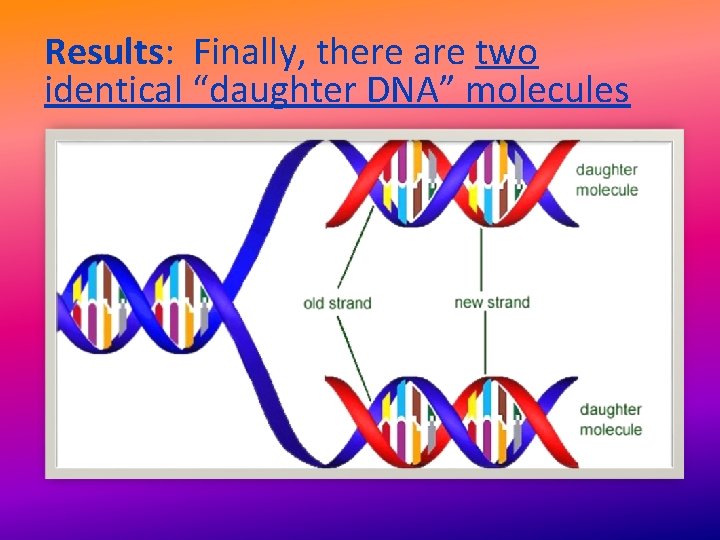
Results: Finally, there are two identical “daughter DNA” molecules
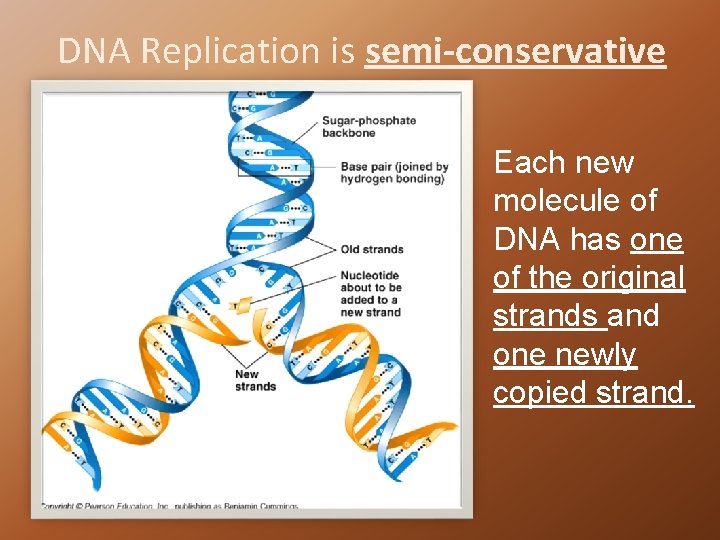
DNA Replication is semi-conservative Each new molecule of DNA has one of the original strands and one newly copied strand.
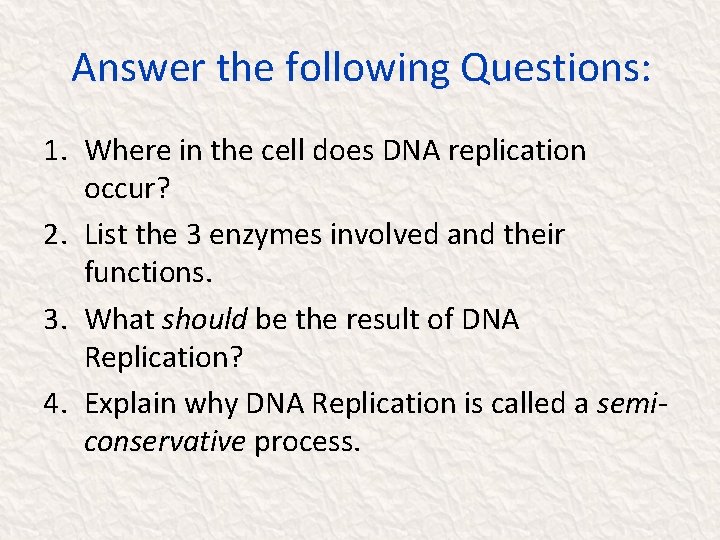
Answer the following Questions: 1. Where in the cell does DNA replication occur? 2. List the 3 enzymes involved and their functions. 3. What should be the result of DNA Replication? 4. Explain why DNA Replication is called a semiconservative process.
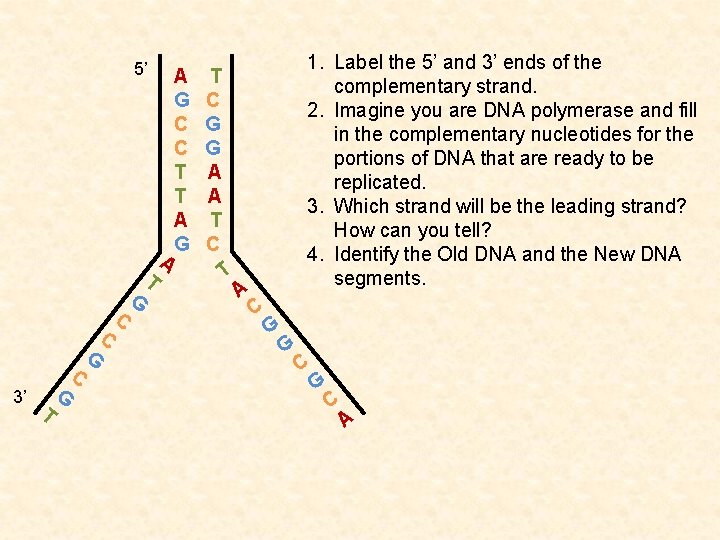
5’ 3’ T G C C G T A A G C C T T A G 1. Label the 5’ and 3’ ends of the complementary strand. 2. Imagine you are DNA polymerase and fill in the complementary nucleotides for the portions of DNA that are ready to be replicated. 3. Which strand will be the leading strand? How can you tell? 4. Identify the Old DNA and the New DNA segments. T C G G A A T C T A C G G C A