
How to Keep Worms Out of Sweet Corn

- Slides: 37
How to Keep Worms Out of Sweet Corn Ears Celeste Welty Extension Entomologist Ohio State University November 2001
Topics • Relationship between life cycle & management • How to monitor pests • Insecticide use – Emphasis on best timing – During silking vs before silking – Main/late season corn vs early season corn – Conventional vs organic options
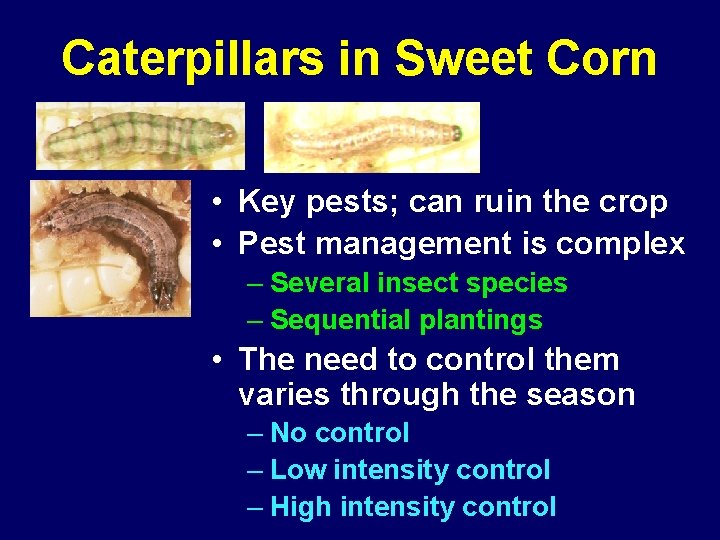
Caterpillars in Sweet Corn • Key pests; can ruin the crop • Pest management is complex – Several insect species – Sequential plantings • The need to control them varies through the season – No control – Low intensity control – High intensity control
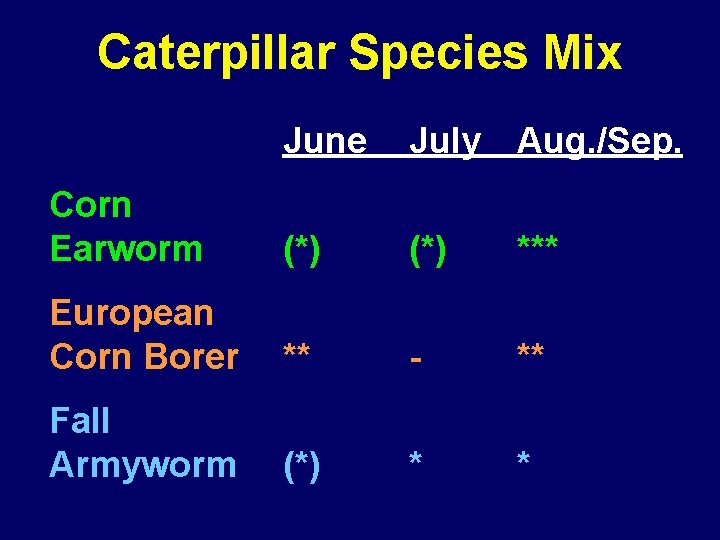
Caterpillar Species Mix June July Aug. /Sep. Corn Earworm (*) *** European Corn Borer ** - ** Fall Armyworm (*) * *
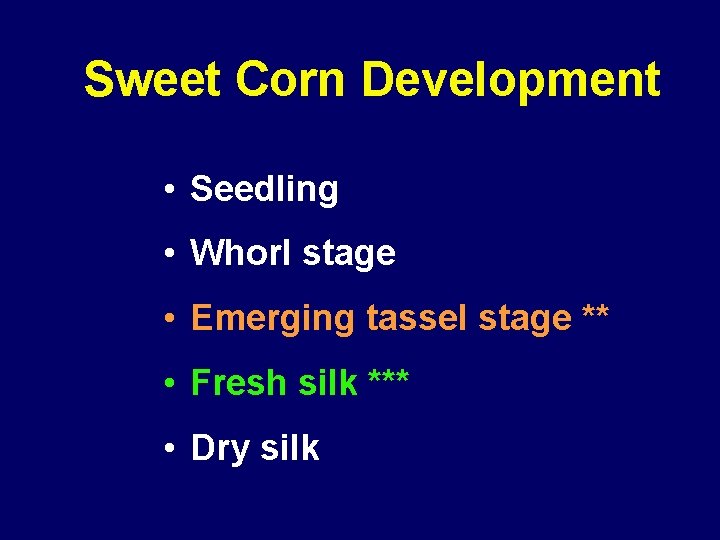
Sweet Corn Development • Seedling • Whorl stage • Emerging tassel stage ** • Fresh silk *** • Dry silk
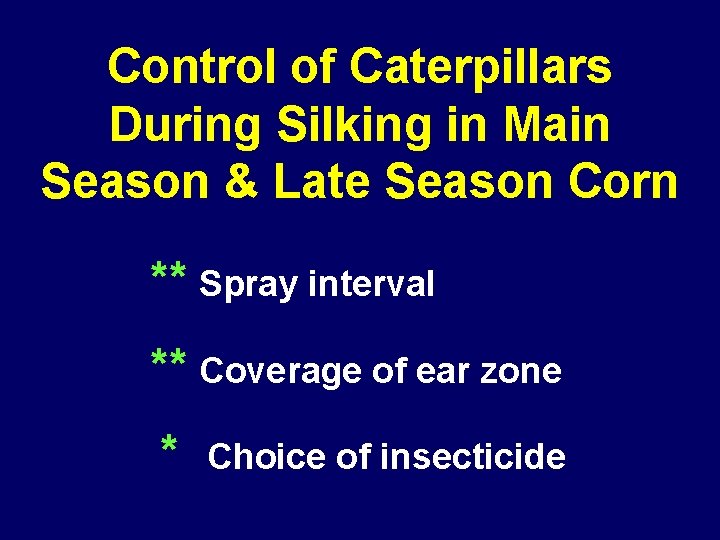
Control of Caterpillars During Silking in Main Season & Late Season Corn ** Spray interval ** Coverage of ear zone * Choice of insecticide
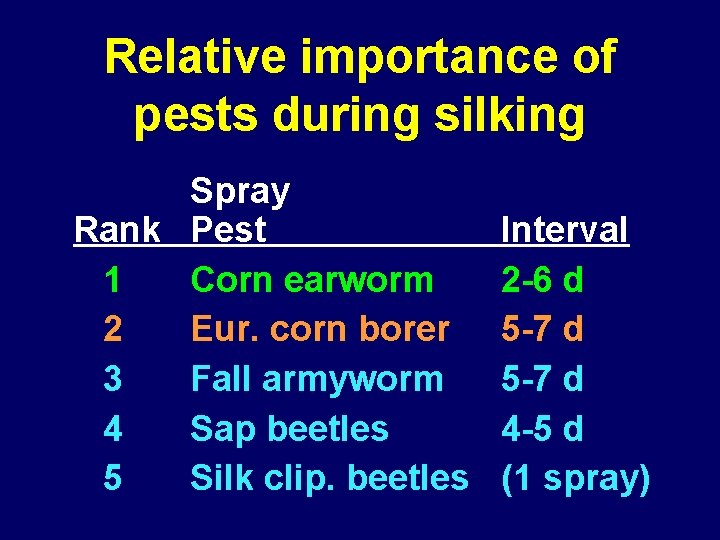
Relative importance of pests during silking Spray Rank Pest 1 Corn earworm 2 Eur. corn borer 3 Fall armyworm 4 Sap beetles 5 Silk clip. beetles Interval 2 -6 d 5 -7 d 4 -5 d (1 spray)
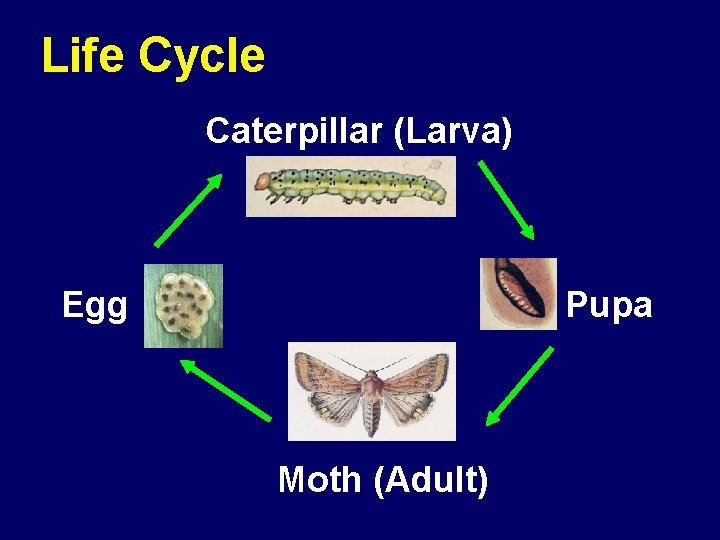
Life Cycle Caterpillar (Larva) Egg Pupa Moth (Adult)
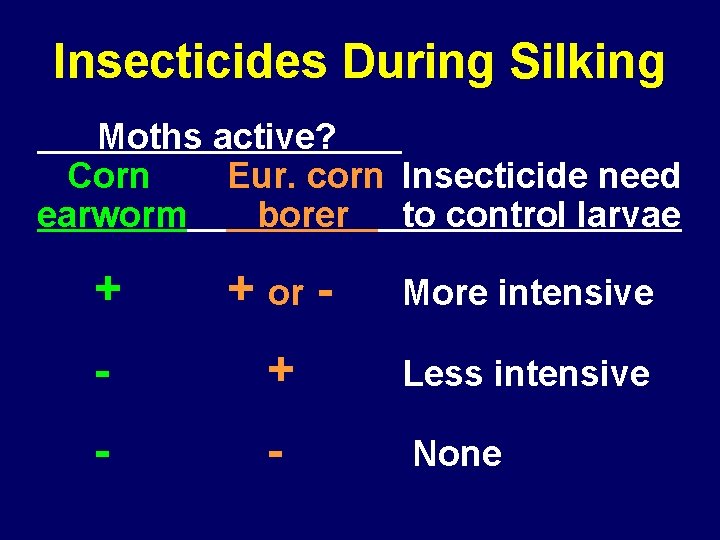
Insecticides During Silking Moths active? Corn Eur. corn Insecticide need earworm borer to control larvae + + or - More intensive - + Less intensive - - None
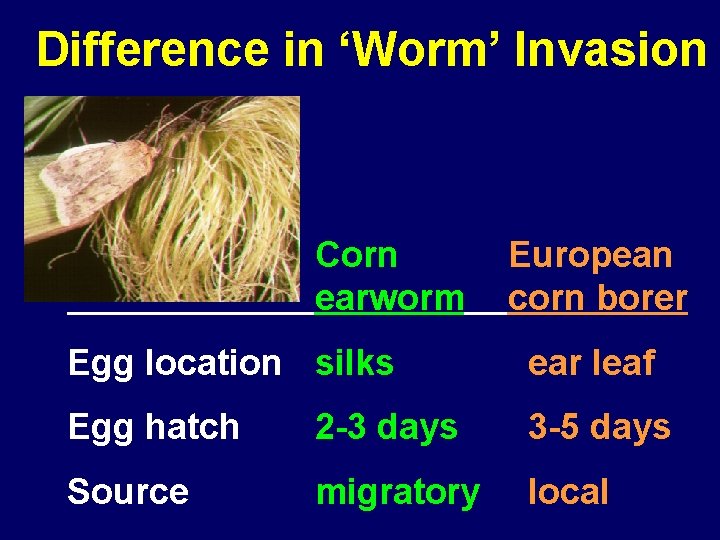
Difference in ‘Worm’ Invasion Corn earworm European corn borer Egg location silks ear leaf Egg hatch 2 -3 days 3 -5 days Source migratory local
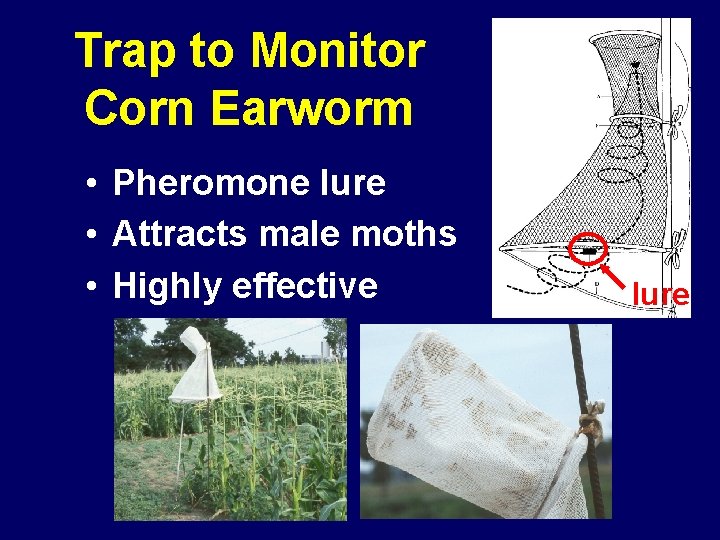
Trap to Monitor Corn Earworm • Pheromone lure • Attracts male moths • Highly effective lure
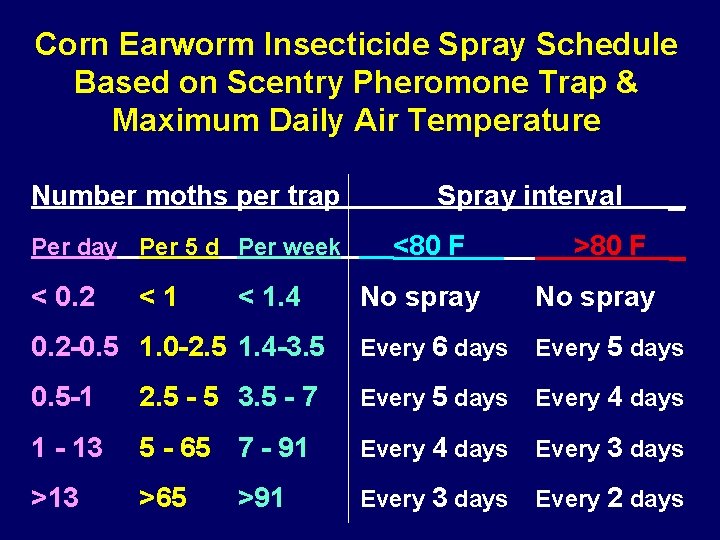
Corn Earworm Insecticide Spray Schedule Based on Scentry Pheromone Trap & Maximum Daily Air Temperature Number moths per trap Per day Per 5 d Per week < 0. 2 <1 < 1. 4 Spray interval <80 F _ >80 F _ No spray 0. 2 -0. 5 1. 0 -2. 5 1. 4 -3. 5 Every 6 days Every 5 days 0. 5 -1 2. 5 - 5 3. 5 - 7 Every 5 days Every 4 days 1 - 13 5 - 65 7 - 91 Every 4 days Every 3 days >13 >65 Every 3 days Every 2 days >91
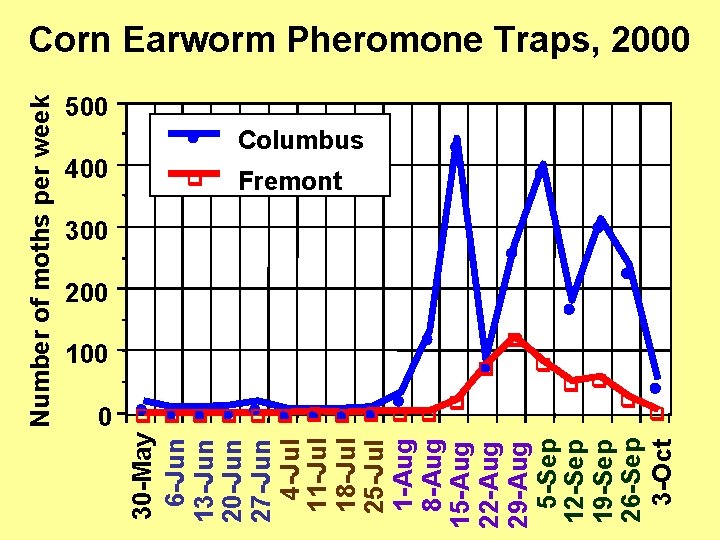
400 100 0 30 -May 6 -Jun 13 -Jun 20 -Jun 27 -Jun 4 -Jul 11 -Jul 18 -Jul 25 -Jul 1 -Aug 8 -Aug 15 -Aug 22 -Aug 29 -Aug 5 -Sep 12 -Sep 19 -Sep 26 -Sep 3 -Oct Number of moths per week Corn Earworm Pheromone Traps, 2000 500 l Columbus q Fremont l l 300 l l 200 l l q l l l q q q l q l q l q q q l q
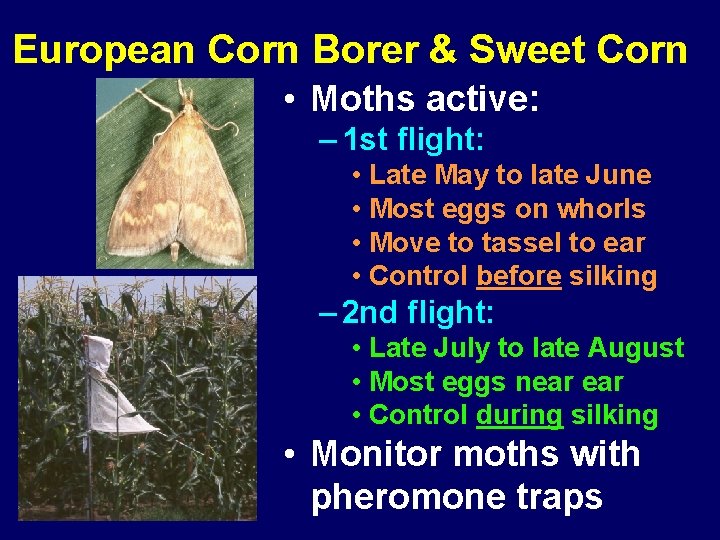
European Corn Borer & Sweet Corn • Moths active: – 1 st flight: • Late May to late June • Most eggs on whorls • Move to tassel to ear • Control before silking – 2 nd flight: • Late July to late August • Most eggs near • Control during silking • Monitor moths with pheromone traps
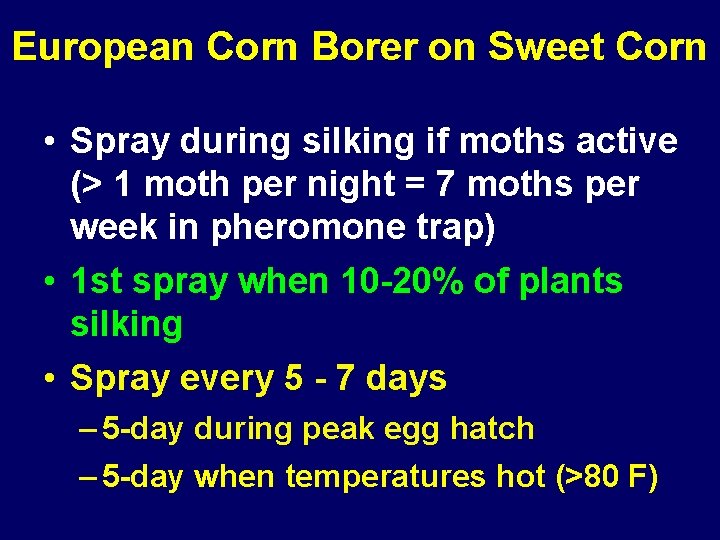
European Corn Borer on Sweet Corn • Spray during silking if moths active (> 1 moth per night = 7 moths per week in pheromone trap) • 1 st spray when 10 -20% of plants silking • Spray every 5 - 7 days – 5 -day during peak egg hatch – 5 -day when temperatures hot (>80 F)
European corn borer: generations per year • Blacklight trap for moths • Fremont, northwest Ohio • 12 year period, 1990 - 2001 – 7 years with 2 generations – 5 years with 3 generations • On sweet corn, 3 rd generation managed same as 2 nd generation
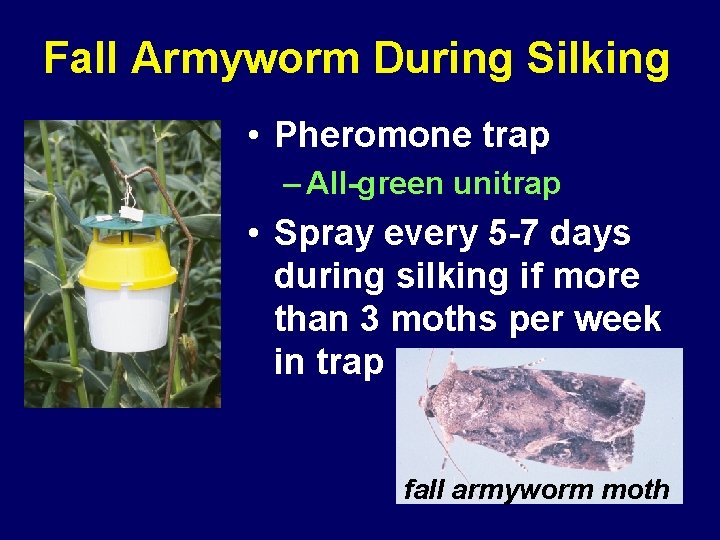
Fall Armyworm During Silking • Pheromone trap – All-green unitrap • Spray every 5 -7 days during silking if more than 3 moths per week in trap fall armyworm moth
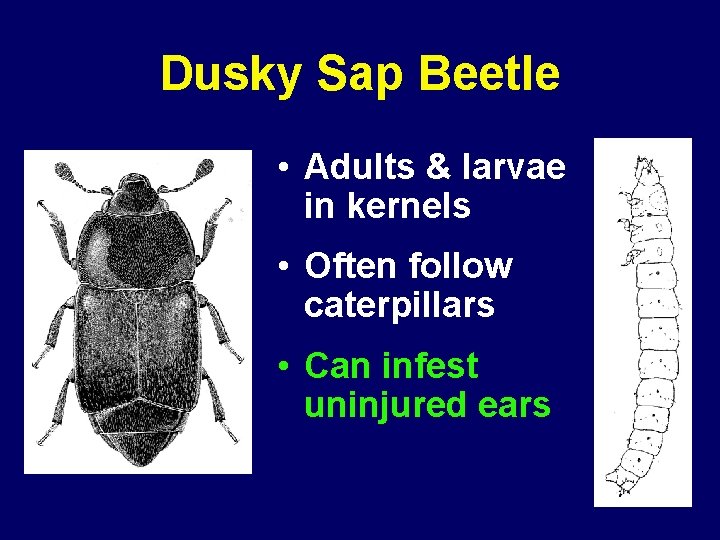
Dusky Sap Beetle • Adults & larvae in kernels • Often follow caterpillars • Can infest uninjured ears
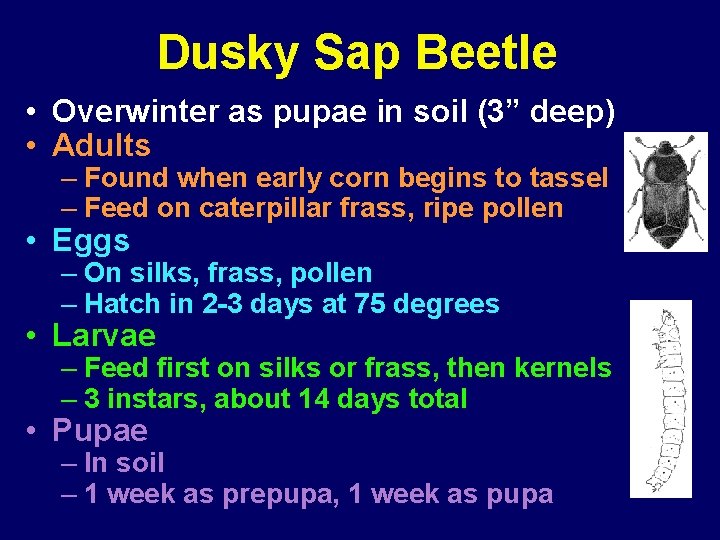
Dusky Sap Beetle • Overwinter as pupae in soil (3” deep) • Adults – Found when early corn begins to tassel – Feed on caterpillar frass, ripe pollen • Eggs – On silks, frass, pollen – Hatch in 2 -3 days at 75 degrees • Larvae – Feed first on silks or frass, then kernels – 3 instars, about 14 days total • Pupae – In soil – 1 week as prepupa, 1 week as pupa
Sap Beetle Management • Scout (examine ears) – 50 ears in small plantings (<2 A) – 100 ears in large plantings (>2 A) – Record # infested with adult or larval sap beetles • Action threshold – Treat every 4 -5 days during silking if sap beetles in >10% of ears
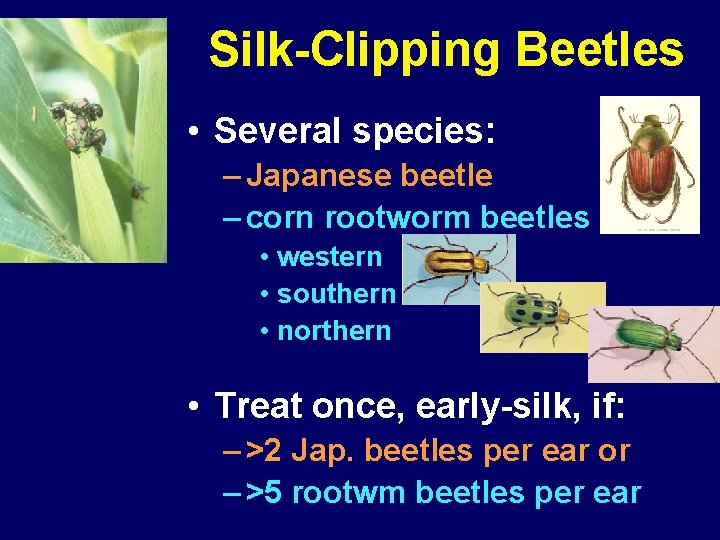
Silk-Clipping Beetles • Several species: – Japanese beetle – corn rootworm beetles • western • southern • northern • Treat once, early-silk, if: – >2 Jap. beetles per ear or – >5 rootwm beetles per ear
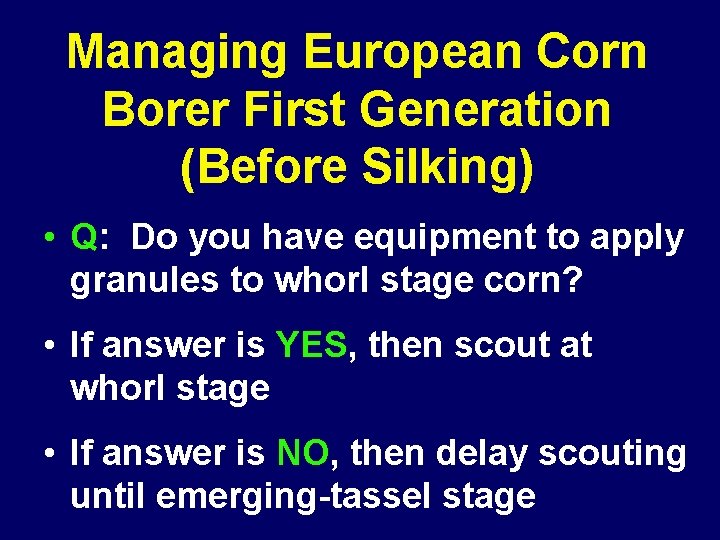
Managing European Corn Borer First Generation (Before Silking) • Q: Do you have equipment to apply granules to whorl stage corn? • If answer is YES, then scout at whorl stage • If answer is NO, then delay scouting until emerging-tassel stage
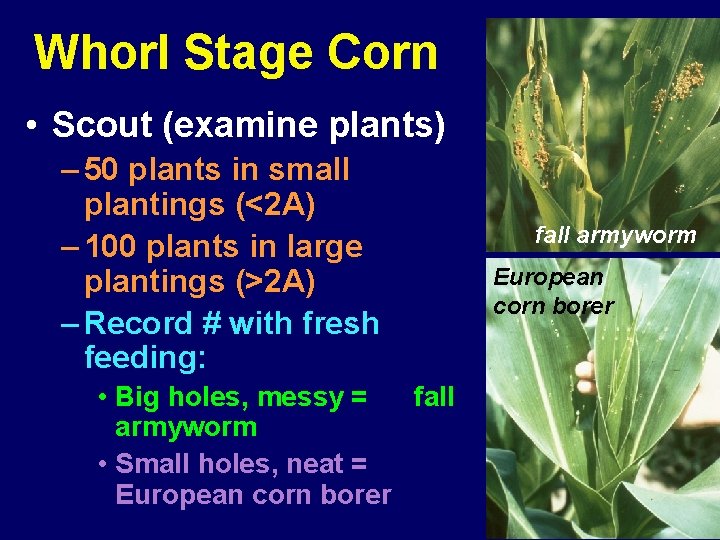
Whorl Stage Corn • Scout (examine plants) – 50 plants in small plantings (<2 A) – 100 plants in large plantings (>2 A) – Record # with fresh feeding: • Big holes, messy = fall armyworm • Small holes, neat = European corn borer fall armyworm European corn borer
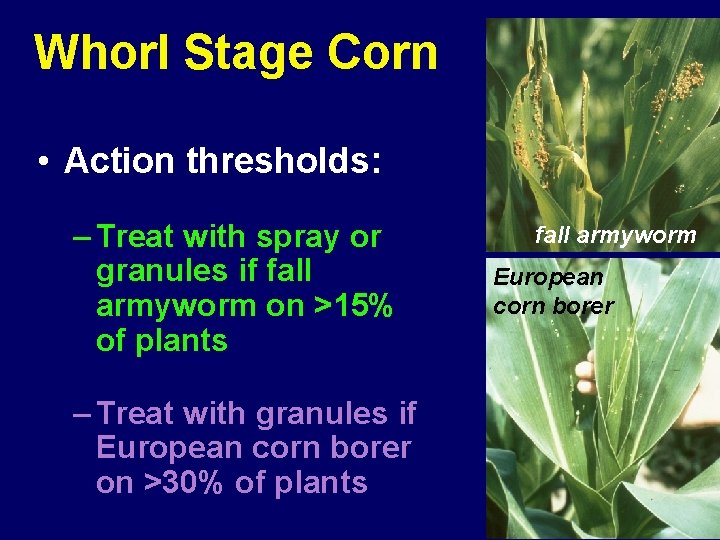
Whorl Stage Corn • Action thresholds: – Treat with spray or granules if fall armyworm on >15% of plants – Treat with granules if European corn borer on >30% of plants fall armyworm European corn borer
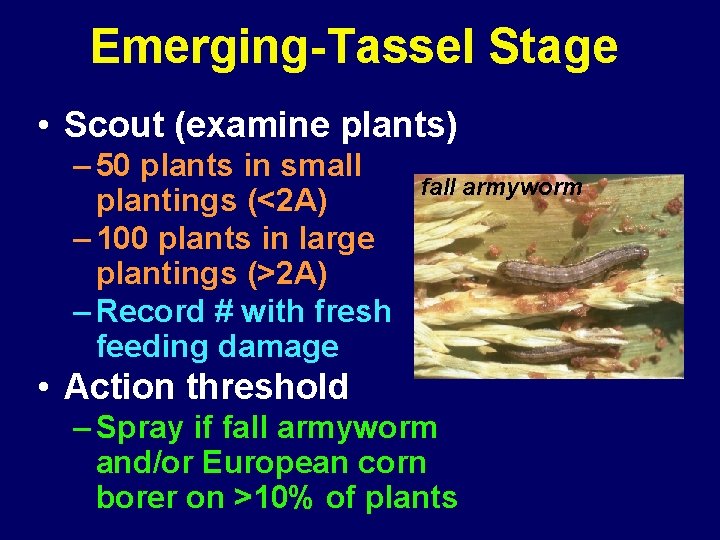
Emerging-Tassel Stage • Scout (examine plants) – 50 plants in small plantings (<2 A) – 100 plants in large plantings (>2 A) – Record # with fresh feeding damage fall armyworm • Action threshold – Spray if fall armyworm and/or European corn borer on >10% of plants
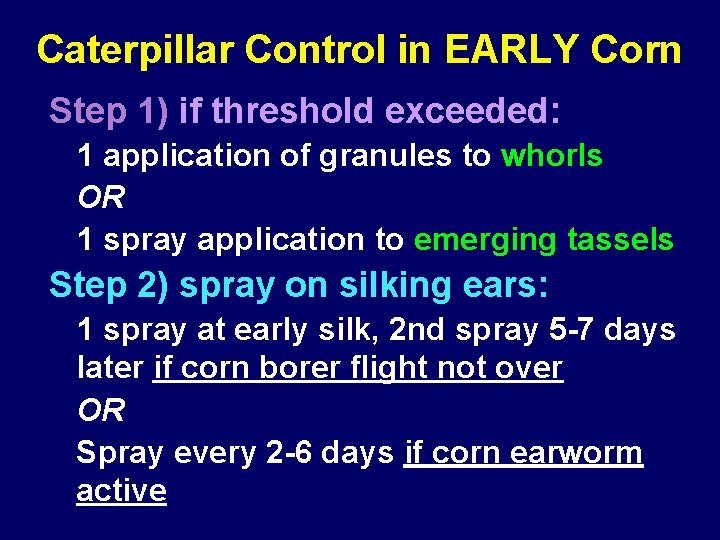
Caterpillar Control in EARLY Corn Step 1) if threshold exceeded: 1 application of granules to whorls OR 1 spray application to emerging tassels Step 2) spray on silking ears: 1 spray at early silk, 2 nd spray 5 -7 days later if corn borer flight not over OR Spray every 2 -6 days if corn earworm active
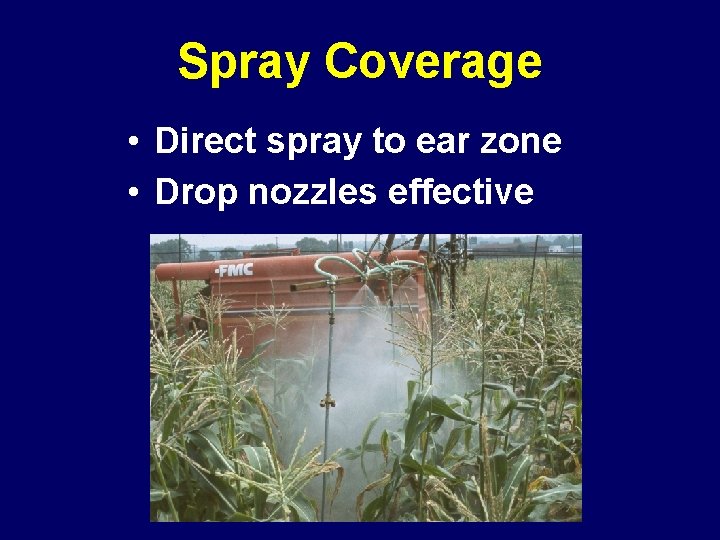
Spray Coverage • Direct spray to ear zone • Drop nozzles effective
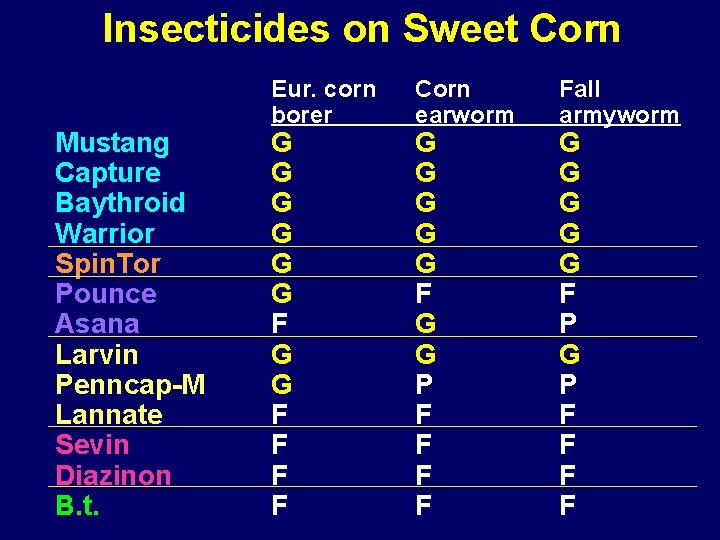
Insecticides on Sweet Corn Mustang Capture Baythroid Warrior Spin. Tor Pounce Asana Larvin Penncap-M Lannate Sevin Diazinon B. t. Eur. corn borer G G G F F Corn earworm G G G F G G P F F Fall armyworm G G G F P G P F F
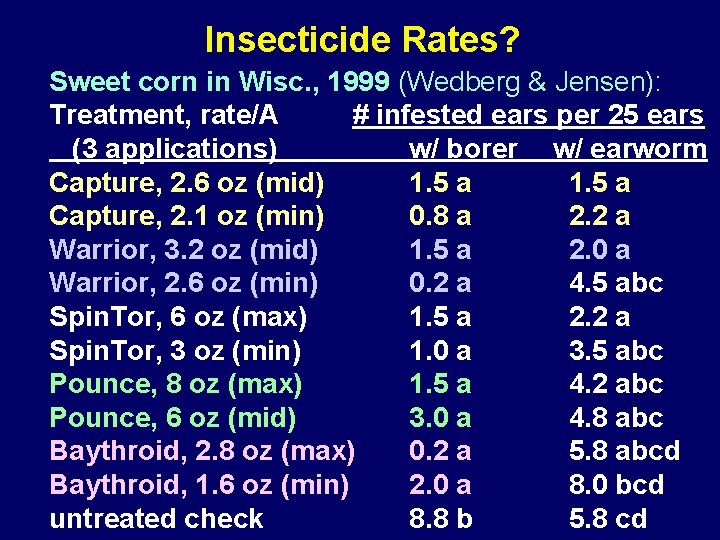
Insecticide Rates? Sweet corn in Wisc. , 1999 (Wedberg & Jensen): Treatment, rate/A # infested ears per 25 ears (3 applications) w/ borer w/ earworm Capture, 2. 6 oz (mid) 1. 5 a Capture, 2. 1 oz (min) 0. 8 a 2. 2 a Warrior, 3. 2 oz (mid) 1. 5 a 2. 0 a Warrior, 2. 6 oz (min) 0. 2 a 4. 5 abc Spin. Tor, 6 oz (max) 1. 5 a 2. 2 a Spin. Tor, 3 oz (min) 1. 0 a 3. 5 abc Pounce, 8 oz (max) 1. 5 a 4. 2 abc Pounce, 6 oz (mid) 3. 0 a 4. 8 abc Baythroid, 2. 8 oz (max) 0. 2 a 5. 8 abcd Baythroid, 1. 6 oz (min) 2. 0 a 8. 0 bcd untreated check 8. 8 b 5. 8 cd
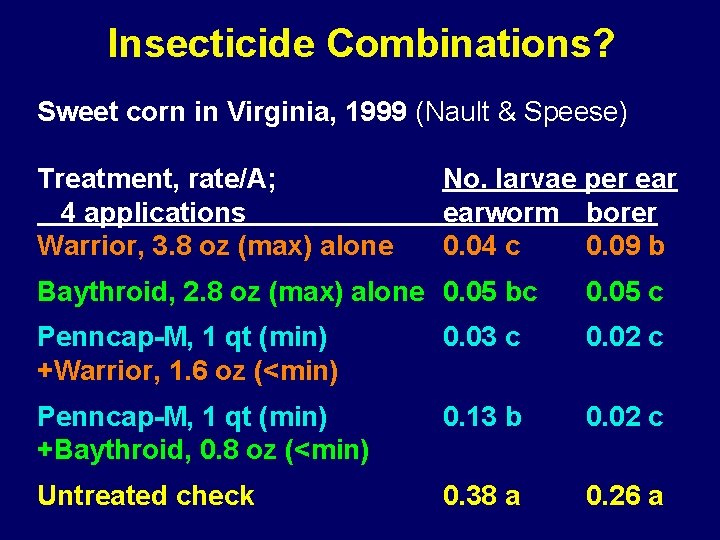
Insecticide Combinations? Sweet corn in Virginia, 1999 (Nault & Speese) Treatment, rate/A; 4 applications Warrior, 3. 8 oz (max) alone No. larvae per earworm borer 0. 04 c 0. 09 b Baythroid, 2. 8 oz (max) alone 0. 05 bc 0. 05 c Penncap-M, 1 qt (min) +Warrior, 1. 6 oz (<min) 0. 03 c 0. 02 c Penncap-M, 1 qt (min) +Baythroid, 0. 8 oz (<min) 0. 13 b 0. 02 c Untreated check 0. 38 a 0. 26 a
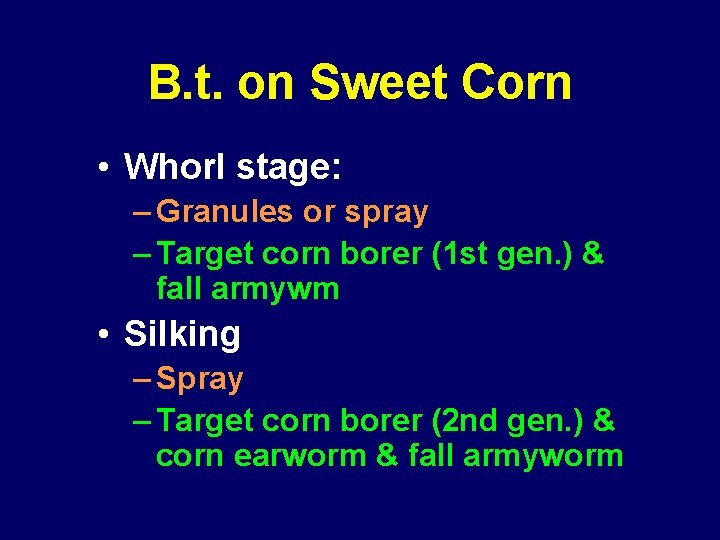
B. t. on Sweet Corn • Whorl stage: – Granules or spray – Target corn borer (1 st gen. ) & fall armywm • Silking – Spray – Target corn borer (2 nd gen. ) & corn earworm & fall armyworm
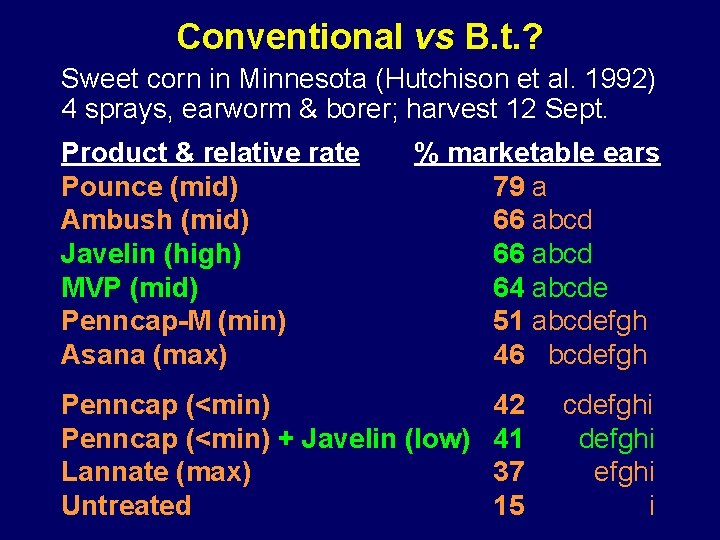
Conventional vs B. t. ? Sweet corn in Minnesota (Hutchison et al. 1992) 4 sprays, earworm & borer; harvest 12 Sept. Product & relative rate Pounce (mid) Ambush (mid) Javelin (high) MVP (mid) Penncap-M (min) Asana (max) % marketable ears 79 a 66 abcd 64 abcde 51 abcdefgh 46 bcdefgh Penncap (<min) + Javelin (low) Lannate (max) Untreated 42 41 37 15 cdefghi i
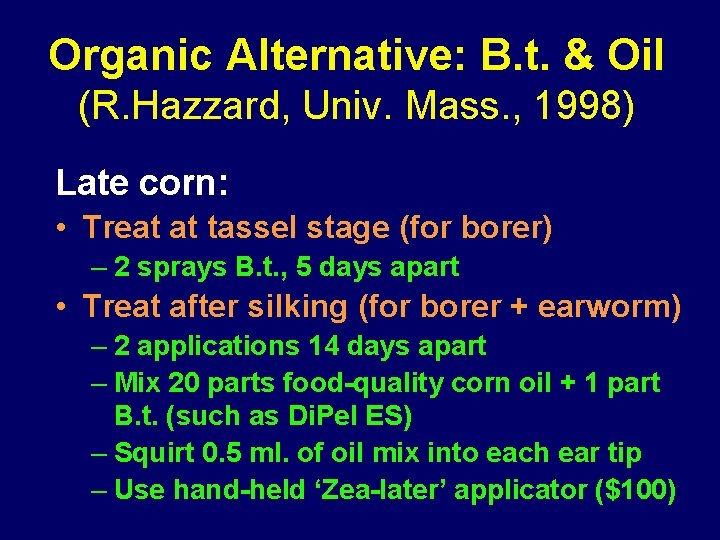
Organic Alternative: B. t. & Oil (R. Hazzard, Univ. Mass. , 1998) Late corn: • Treat at tassel stage (for borer) – 2 sprays B. t. , 5 days apart • Treat after silking (for borer + earworm) – 2 applications 14 days apart – Mix 20 parts food-quality corn oil + 1 part B. t. (such as Di. Pel ES) – Squirt 0. 5 ml. of oil mix into each ear tip – Use hand-held ‘Zea-later’ applicator ($100)
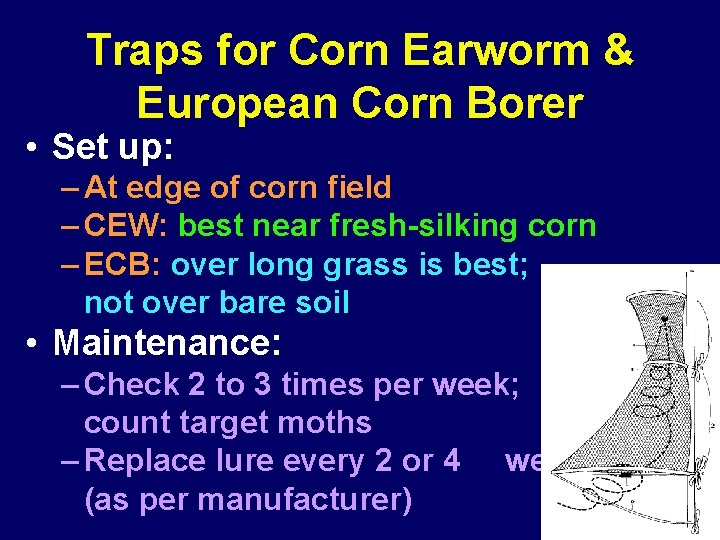
Traps for Corn Earworm & European Corn Borer • Set up: – At edge of corn field – CEW: best near fresh-silking corn – ECB: over long grass is best; not over bare soil • Maintenance: – Check 2 to 3 times per week; count target moths – Replace lure every 2 or 4 weeks (as per manufacturer)
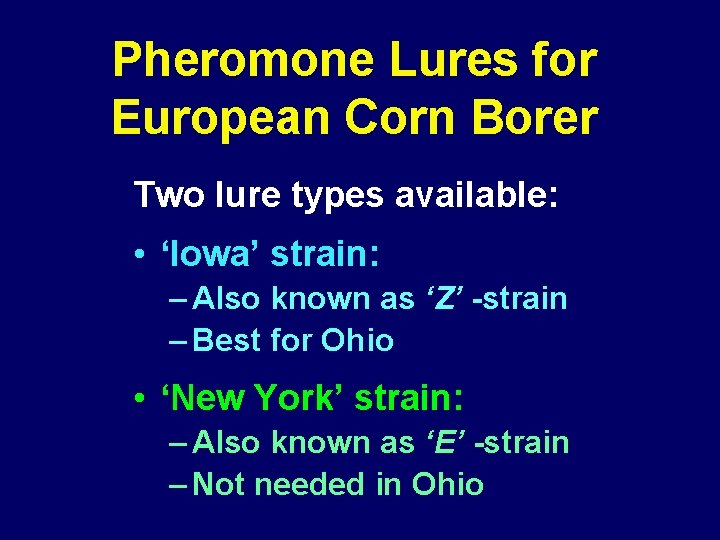
Pheromone Lures for European Corn Borer Two lure types available: • ‘Iowa’ strain: – Also known as ‘Z’ -strain – Best for Ohio • ‘New York’ strain: – Also known as ‘E’ -strain – Not needed in Ohio
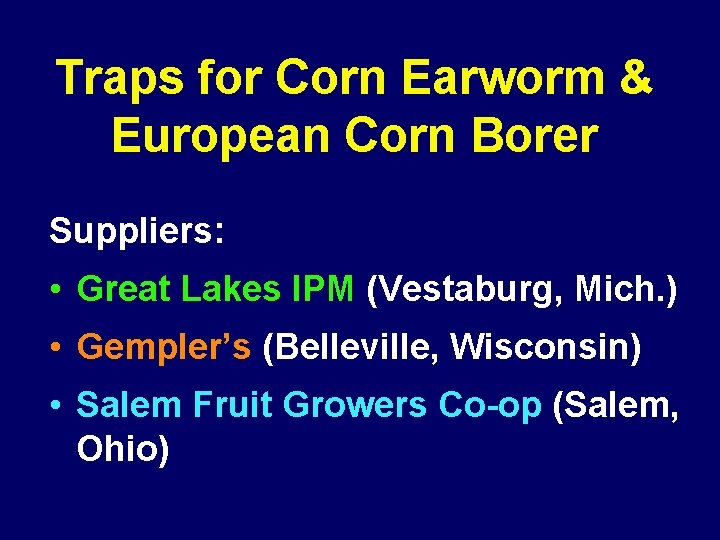
Traps for Corn Earworm & European Corn Borer Suppliers: • Great Lakes IPM (Vestaburg, Mich. ) • Gempler’s (Belleville, Wisconsin) • Salem Fruit Growers Co-op (Salem, Ohio)
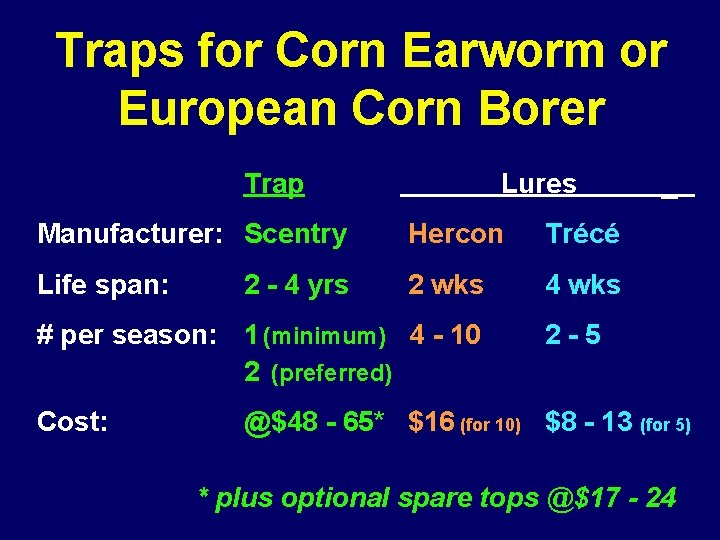
Traps for Corn Earworm or European Corn Borer Trap Lures Manufacturer: Scentry Hercon Trécé Life span: 2 wks 4 wks 2 - 4 yrs # per season: 1 (minimum) 4 - 10 2 (preferred) Cost: _ 2 -5 @$48 - 65* $16 (for 10) $8 - 13 (for 5) * plus optional spare tops @$17 - 24