
How to interpret the LIGO signal on the

- Slides: 25
How to interpret the LIGO signal on the back of an envelope Alexander Penin University of Alberta & TTP Karlsruhe NYU, New York October 6 th, 2016
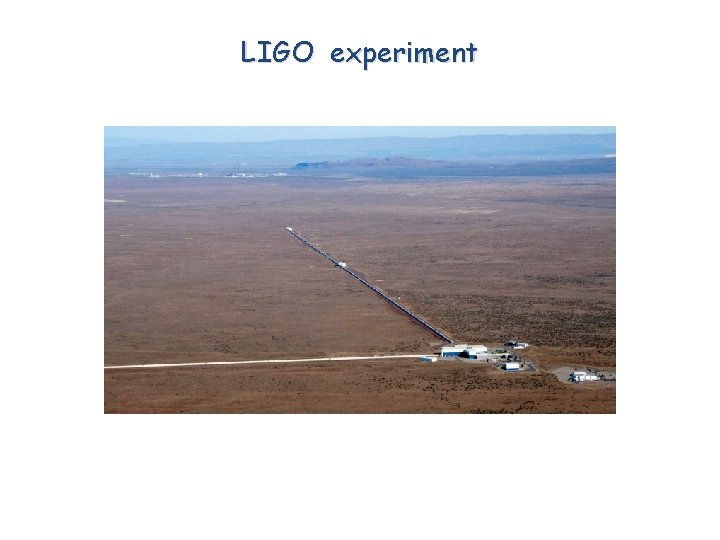
LIGO experiment
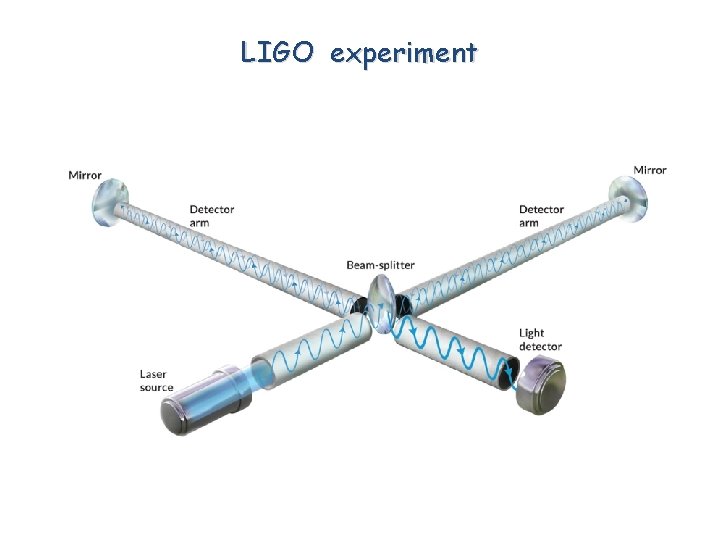
LIGO experiment
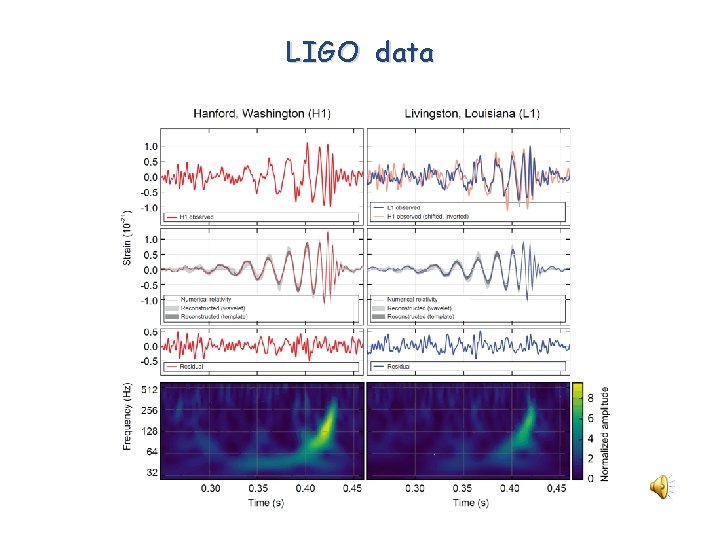
LIGO data
Can we hear the shape of a drum?
Can we hear the shape of a drum? Yes! for convex planar drums with analytic boundary Steve Zelditch (2000)
Can we hear the shape of a drum? Yes! for convex planar drums with analytic boundary Steve Zelditch (2000) LIGO event reconstruction: fitting with templates based on numerical gravity
Is it possible to identify the astrophysical origin of the LIGO event by hand rather than by a supercomputer?
Tools
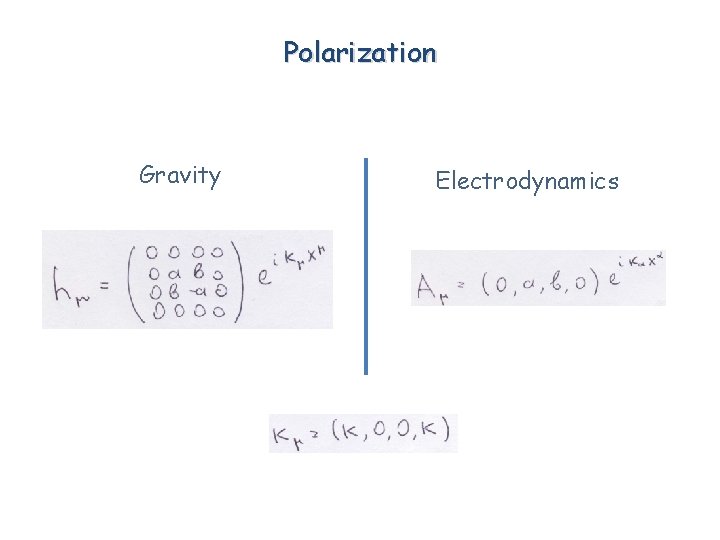
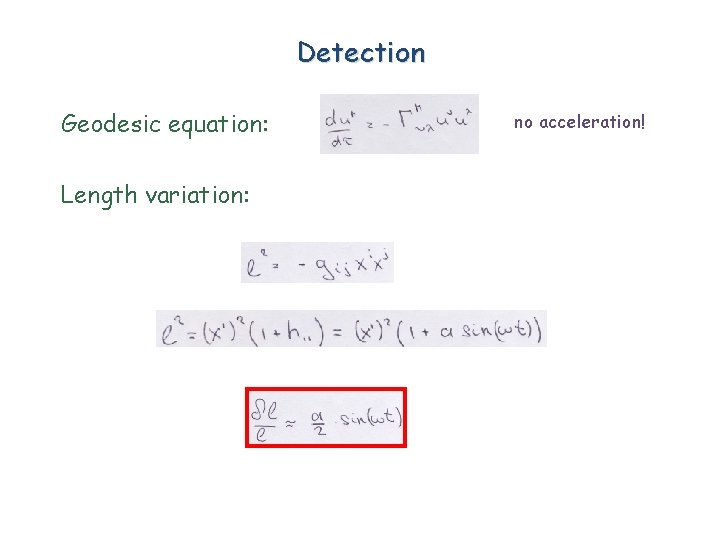
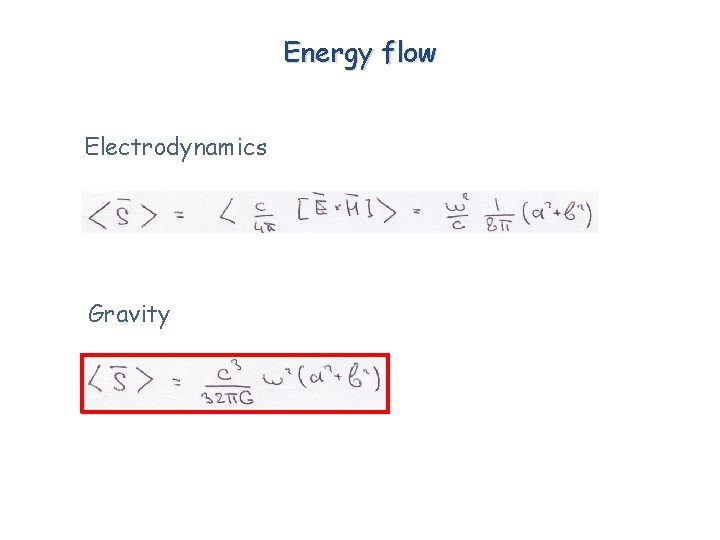
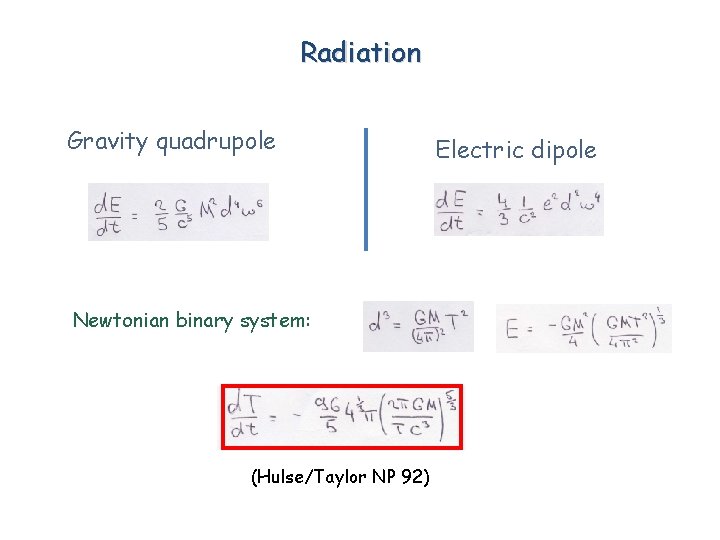
Plan • Gravitational waves in a nutshell polarization radiation energy flow detection • Data analysis Initial phase: linear regime, determination of the mass Final phase: nonlinear regime, determination of the distance
Gravitational waves
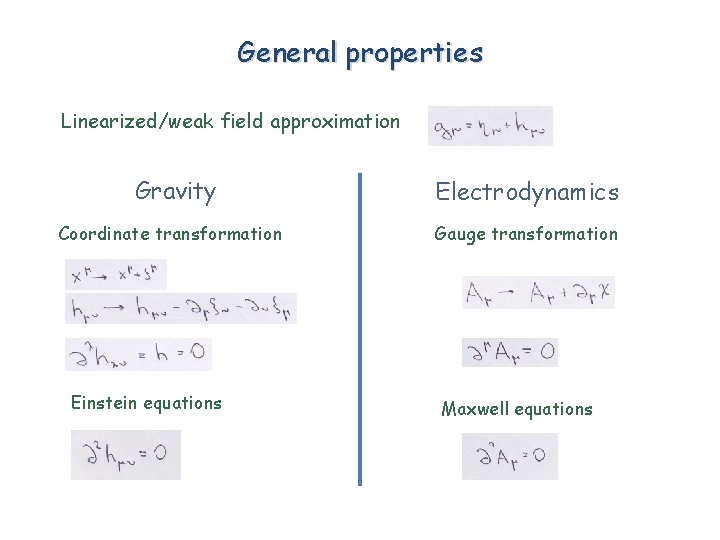
General properties Linearized/weak field approximation Gravity Coordinate transformation Einstein equations Electrodynamics Gauge transformation Maxwell equations
Polarization Gravity Electrodynamics
Detection Geodesic equation: Length variation: no acceleration!
Energy flow Electrodynamics Gravity
Radiation Gravity quadrupole Newtonian binary system: (Hulse/Taylor NP 92) Electric dipole
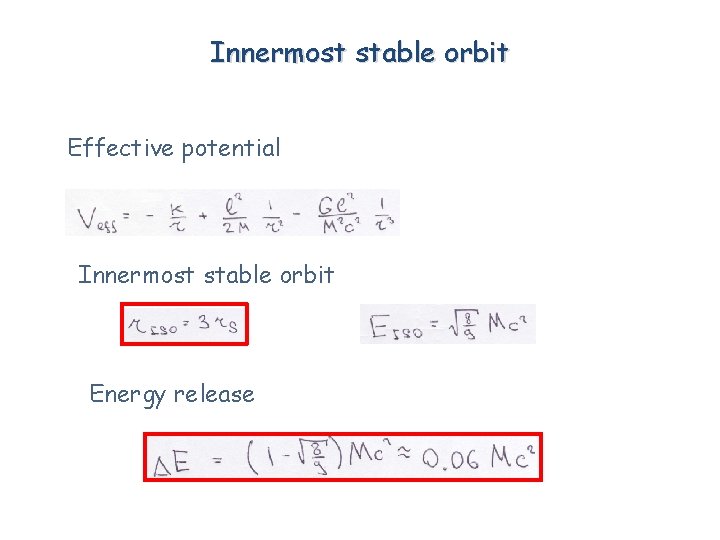
Innermost stable orbit Effective potential Innermost stable orbit Energy release
Data analysis
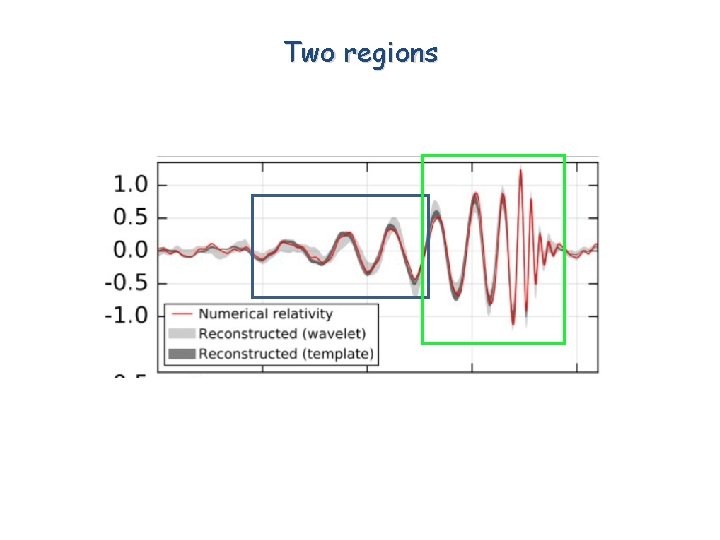
Two regions
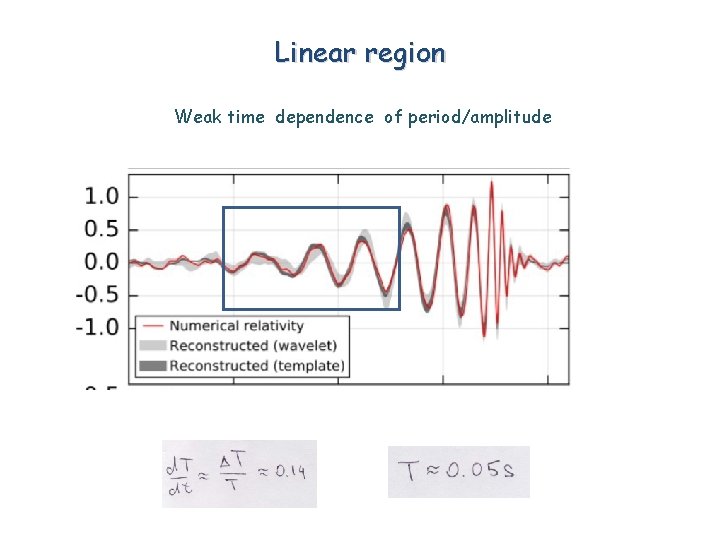
Linear region Weak time dependence of period/amplitude
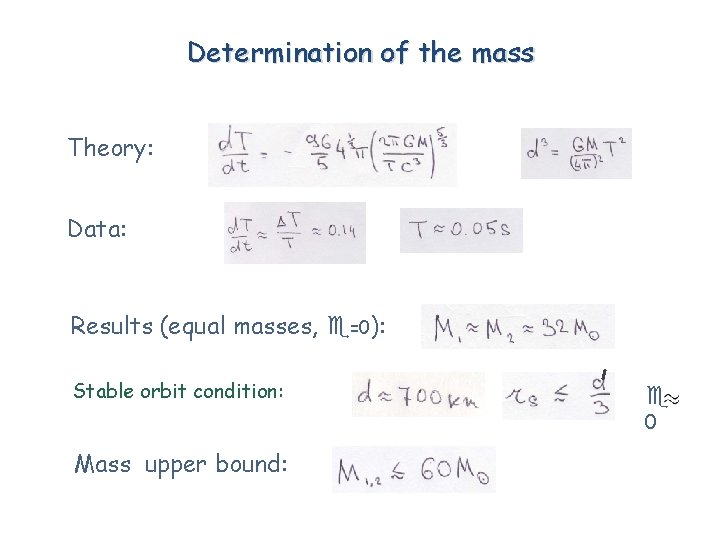
Determination of the mass Theory: Data: Results (equal masses, e=0): Stable orbit condition: e 0 Mass upper bound:
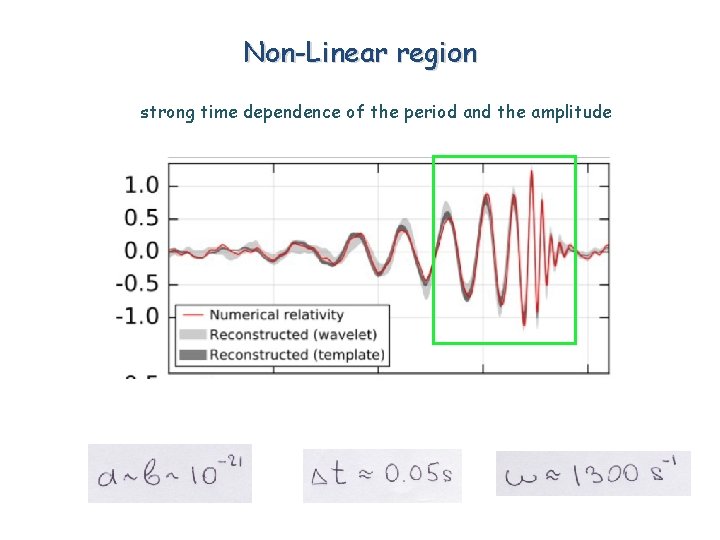
Non-Linear region strong time dependence of the period and the amplitude
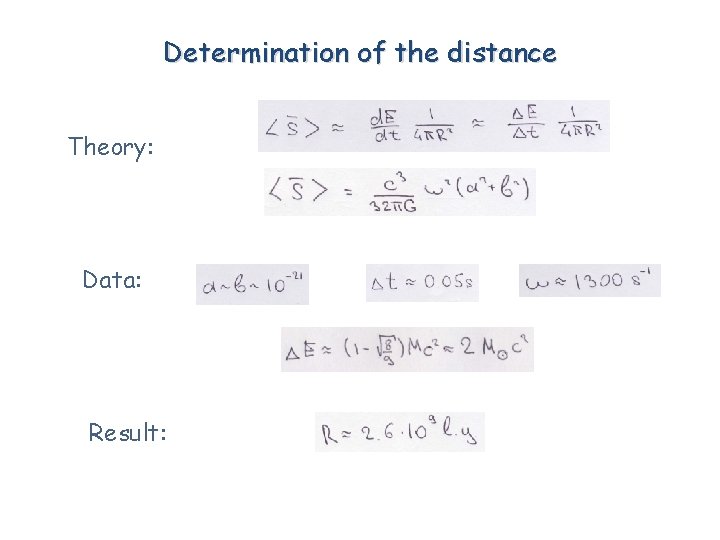
Determination of the distance Theory: Data: Result:
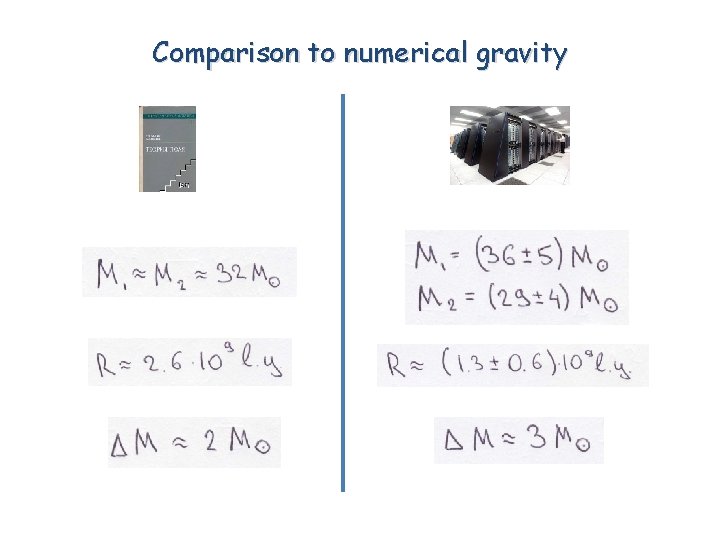
Comparison to numerical gravity
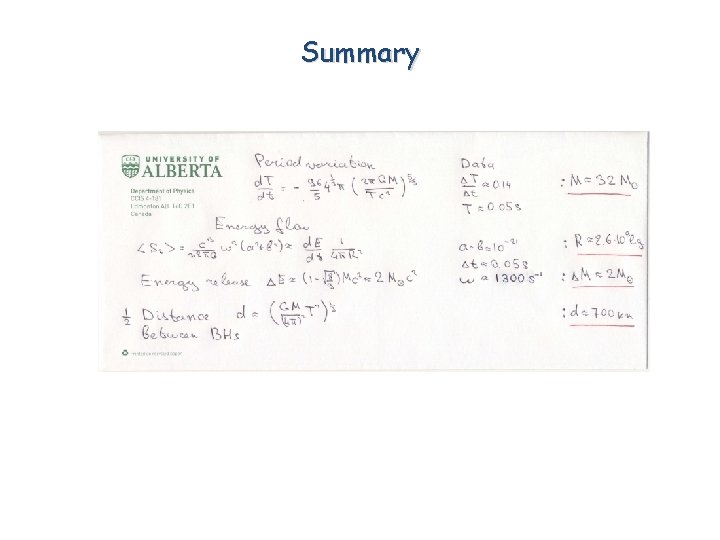
Summary