
How to interpret a graphical representation of solute


- Slides: 14
How to interpret a graphical representation of solute in solvent.
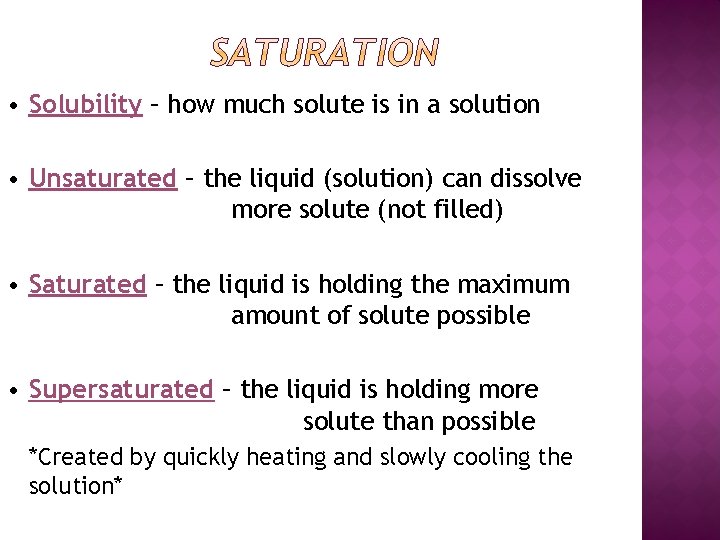
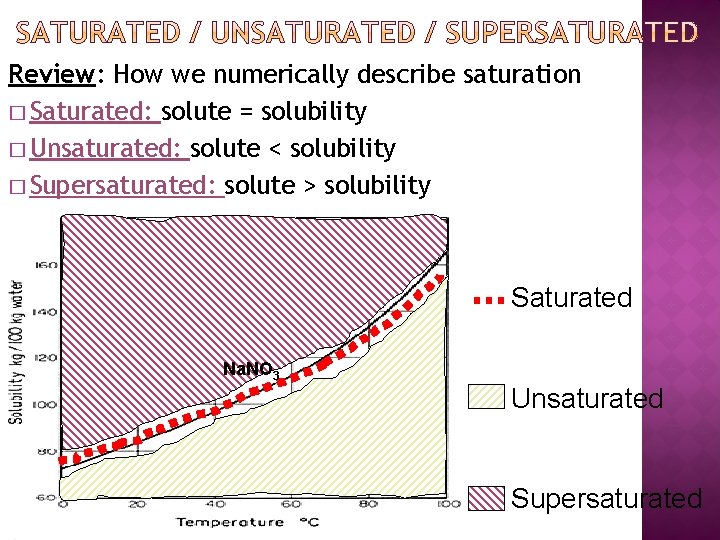
• Solubility – how much solute is in a solution • Unsaturated – the liquid (solution) can dissolve more solute (not filled) • Saturated – the liquid is holding the maximum amount of solute possible • Supersaturated – the liquid is holding more solute than possible *Created by quickly heating and slowly cooling the solution*
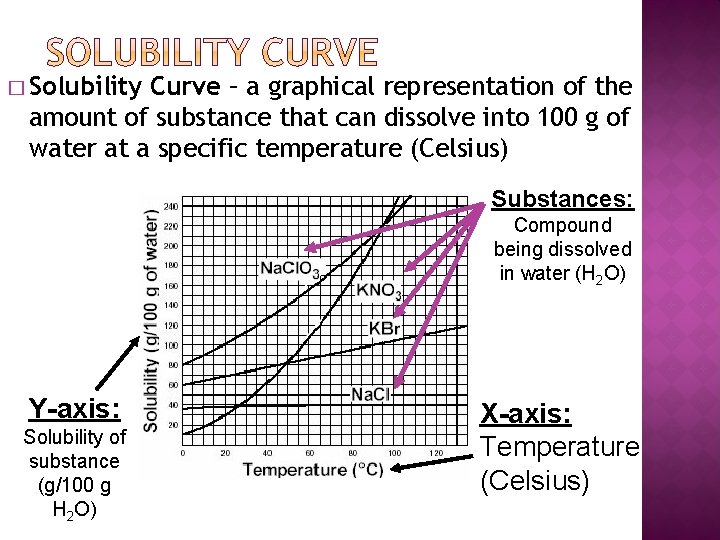
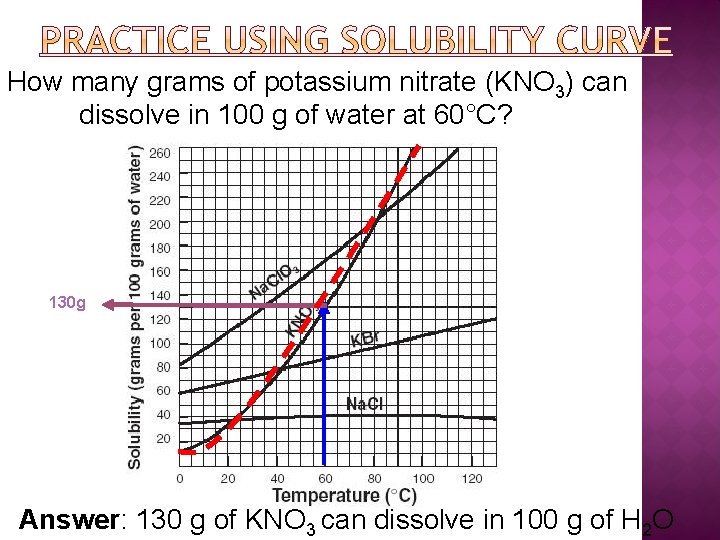
� Solubility Curve – a graphical representation of the amount of substance that can dissolve into 100 g of water at a specific temperature (Celsius) Substances: Compound being dissolved in water (H 2 O) Y-axis: Solubility of substance (g/100 g H 2 O) X-axis: Temperature (Celsius)
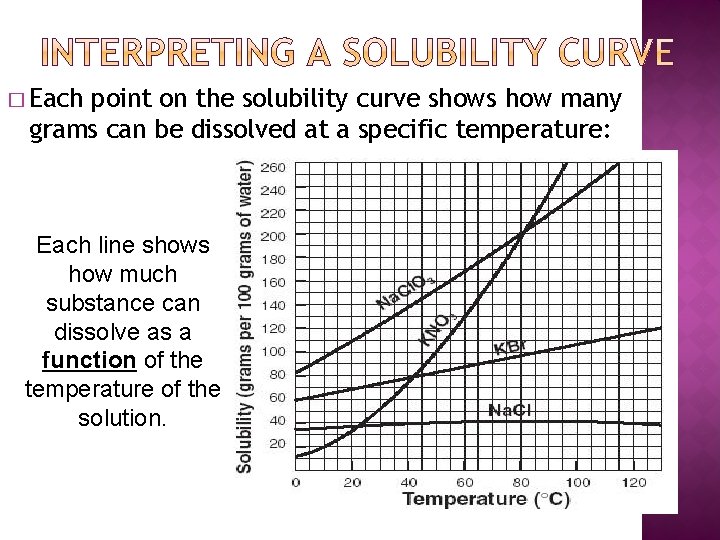
� Each point on the solubility curve shows how many grams can be dissolved at a specific temperature: Each line shows how much substance can dissolve as a function of the temperature of the solution.
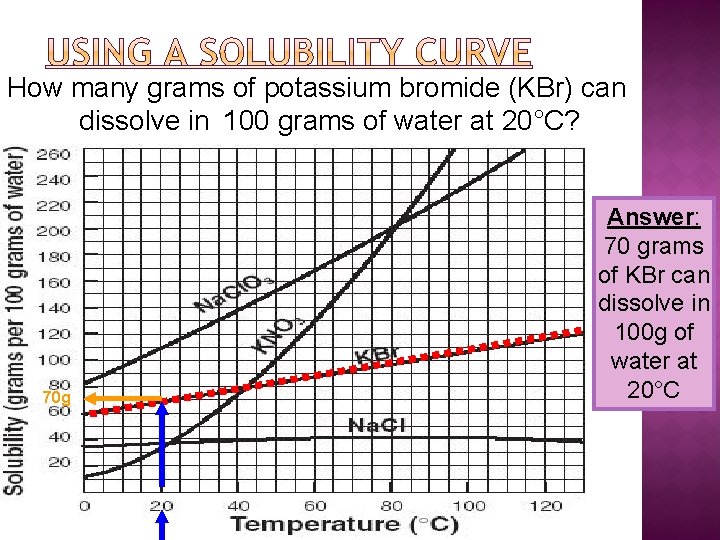
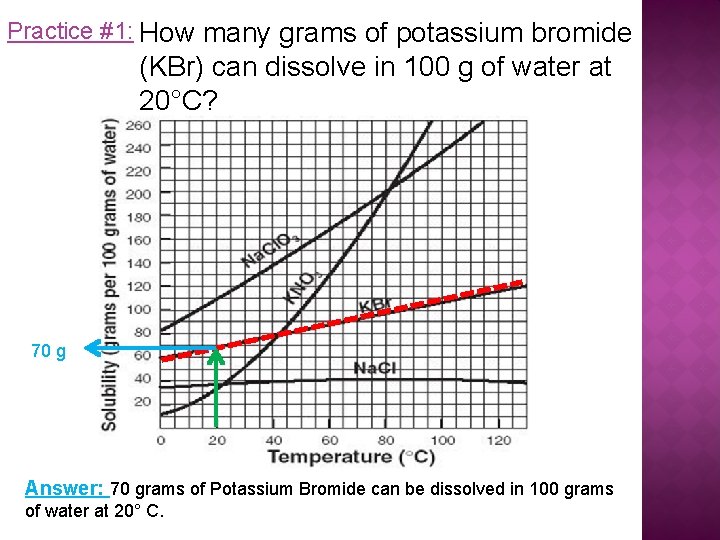
How many grams of potassium bromide (KBr) can dissolve in 100 grams of water at 20°C? 70 g Answer: 70 grams of KBr can dissolve in 100 g of water at 20°C
How many grams of potassium nitrate (KNO 3) can dissolve in 100 g of water at 60°C? 130 g Answer: 130 g of KNO 3 can dissolve in 100 g of H 2 O
Review: How we numerically describe saturation � Saturated: solute = solubility � Unsaturated: solute < solubility � Supersaturated: solute > solubility Saturated Na. NO 3 Unsaturated Supersaturated
Practice #1: How many grams of potassium bromide (KBr) can dissolve in 100 g of water at 20°C? 70 g Answer: 70 grams of Potassium Bromide can be dissolved in 100 grams of water at 20° C.
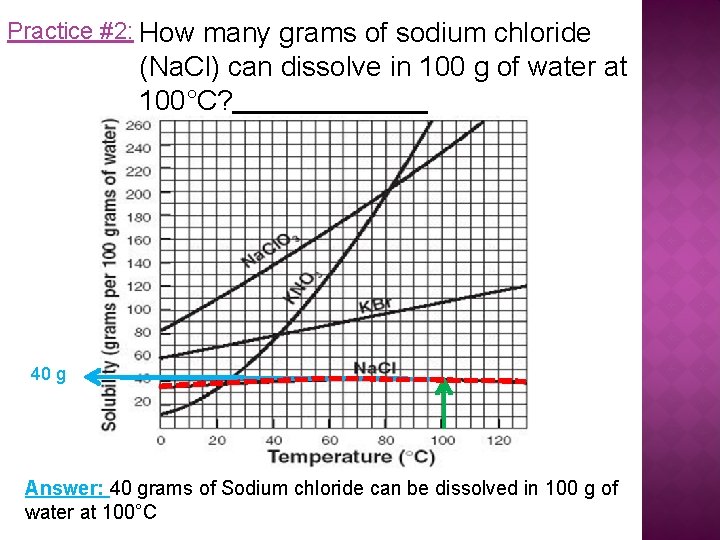
Practice #2: How many grams of sodium chloride (Na. Cl) can dissolve in 100 g of water at 100°C? 40 g Answer: 40 grams of Sodium chloride can be dissolved in 100 g of water at 100°C
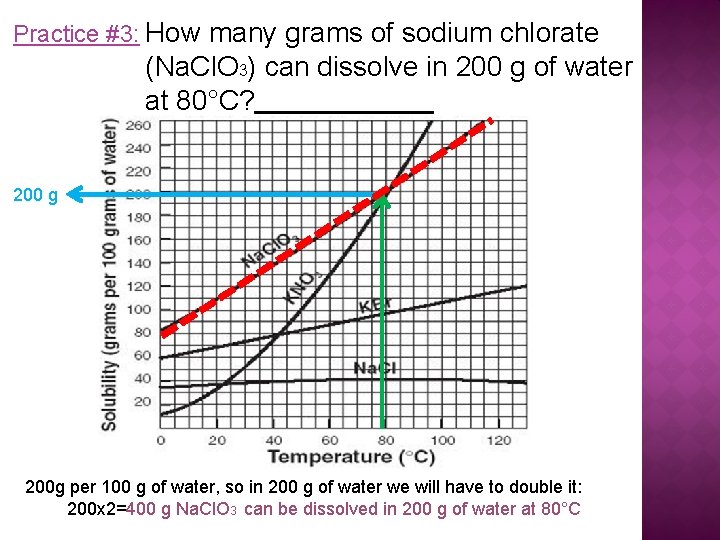
Practice #3: How many grams of sodium chlorate (Na. Cl. O 3) can dissolve in 200 g of water at 80°C? 200 g 200 g per 100 g of water, so in 200 g of water we will have to double it: 200 x 2=400 g Na. Cl. O 3 can be dissolved in 200 g of water at 80°C
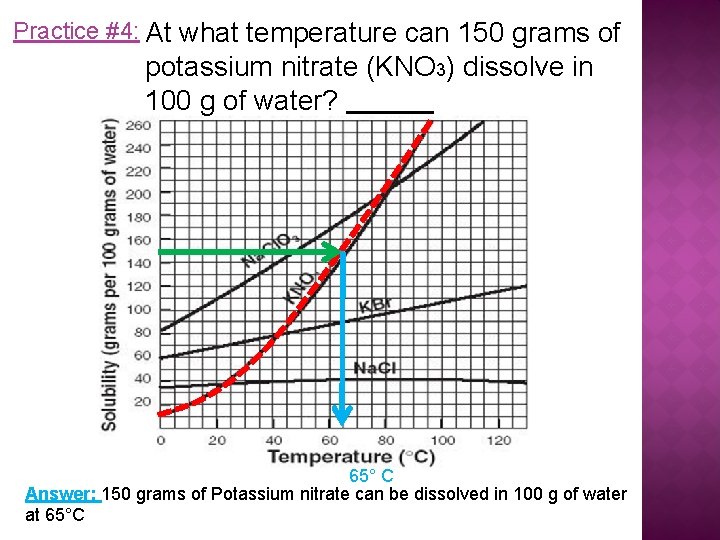
Practice #4: At what temperature can 150 grams of potassium nitrate (KNO 3) dissolve in 100 g of water? 65° C Answer: 150 grams of Potassium nitrate can be dissolved in 100 g of water at 65°C
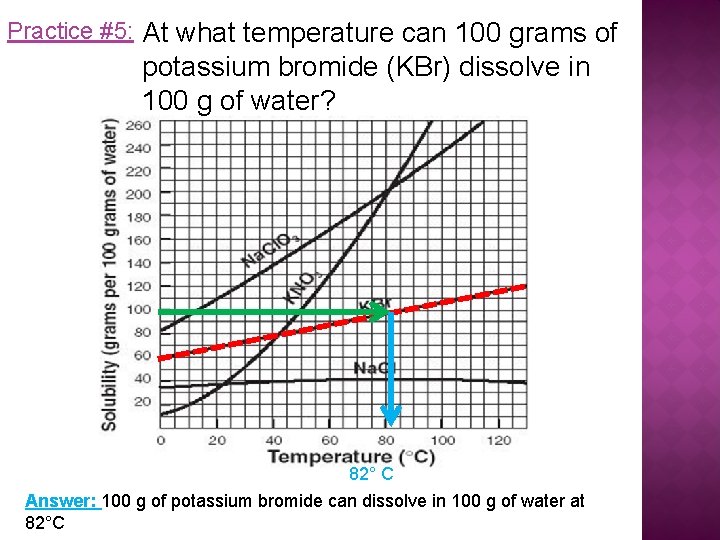
Practice #5: At what temperature can 100 grams of potassium bromide (KBr) dissolve in 100 g of water? 82° C Answer: 100 g of potassium bromide can dissolve in 100 g of water at 82°C
Homework Read section 8. 5 Complete: Page 395 #1 -3 Page 397 #1 -4, 6