
How to Implement a Peerassisted Learning Program in
- Slides: 43
How to Implement a Peer-assisted Learning Program in a Family Medicine Clerkship University of Louisville Department of Family and Geriatric Medicine Donna M. Roberts, MD Wanda Lowe, MD, Amelia Nordmann, MD Allison Gilberts, Sarah Mc. Gill, Ashley Mefford, Zachary Strickland
Disclosures None
Objectives • Define peer-assisted learning • Outline steps to develop peer-assisted learning (PAL) program for clinical rotations • Provide examples of resources for peer-assisted learning in family medicine • Discuss other effective programs
Introduction • We hypothesized that peer-assisted learning would be beneficial to us during the 3 rd year Family Medicine clerkship • Our course is modeled after peer-assisted learning programs already in place in Pediatrics and OB/GYN at the University of Louisville
Peer-assisted Learning/Near-Peer Teaching • Defined as “the development of knowledge and skill through active help and support among status equals or matched companions” • Involves reciprocity of learning wherein “people from similar social groupings who are not professional teachers help each other to learn and learn themselves by teaching”
Differentiation of PAL terminology • Near-peer teaching: more advanced students teach less advanced students • Peer-teaching: students teach fellow students within the same educational level and academic year
Background • As early as the late 1980’s PAL used in medical school anatomy classrooms • Published reports of PAL first appeared in the 1990 s • Recently a greater appreciation worldwide and across many specialties to recognize the need for helping medical students accrue the skills, attitudes, and practices of competent teachers • A 2010 survey showed 76% of polled medical schools used their students in some form of PAL during their medical education • The same survey showed 44% of those schools offered a formal medical students-as-teachers training program
Features Essential to Success of PAL • Cognitive congruence • Social congruence • Small group size • Informal, comfortable environment
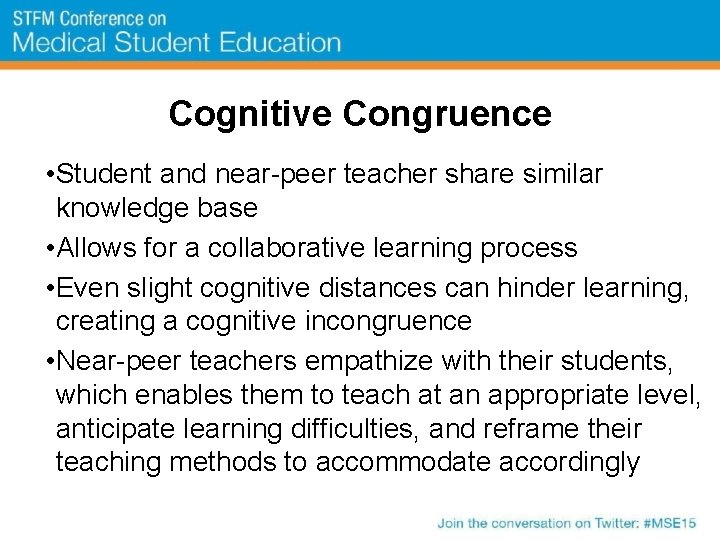
Cognitive Congruence • Student and near-peer teacher share similar knowledge base • Allows for a collaborative learning process • Even slight cognitive distances can hinder learning, creating a cognitive incongruence • Near-peer teachers empathize with their students, which enables them to teach at an appropriate level, anticipate learning difficulties, and reframe their teaching methods to accommodate accordingly
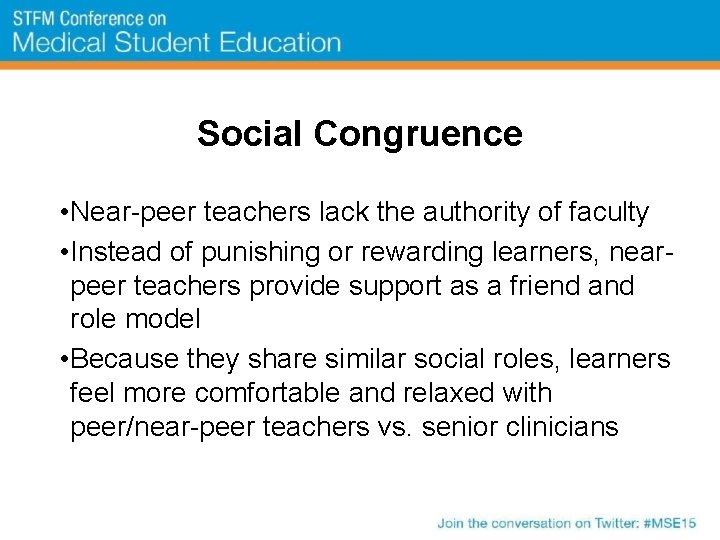
Social Congruence • Near-peer teachers lack the authority of faculty • Instead of punishing or rewarding learners, nearpeer teachers provide support as a friend and role model • Because they share similar social roles, learners feel more comfortable and relaxed with peer/near-peer teachers vs. senior clinicians
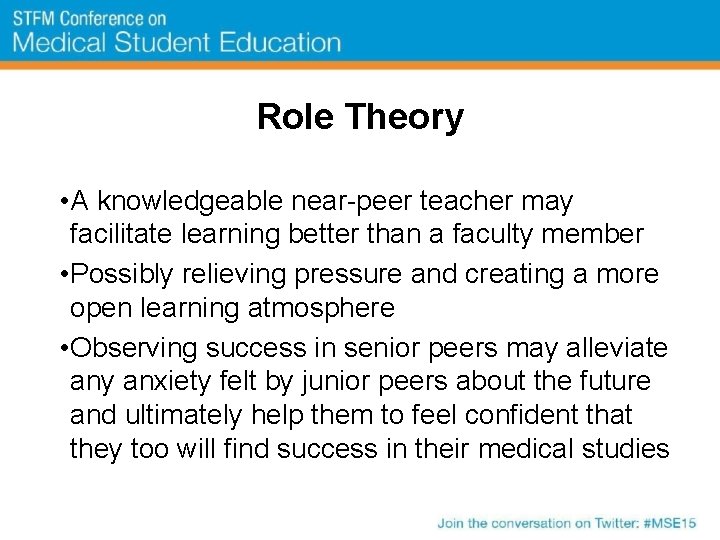
Role Theory • A knowledgeable near-peer teacher may facilitate learning better than a faculty member • Possibly relieving pressure and creating a more open learning atmosphere • Observing success in senior peers may alleviate any anxiety felt by junior peers about the future and ultimately help them to feel confident that they too will find success in their medical studies
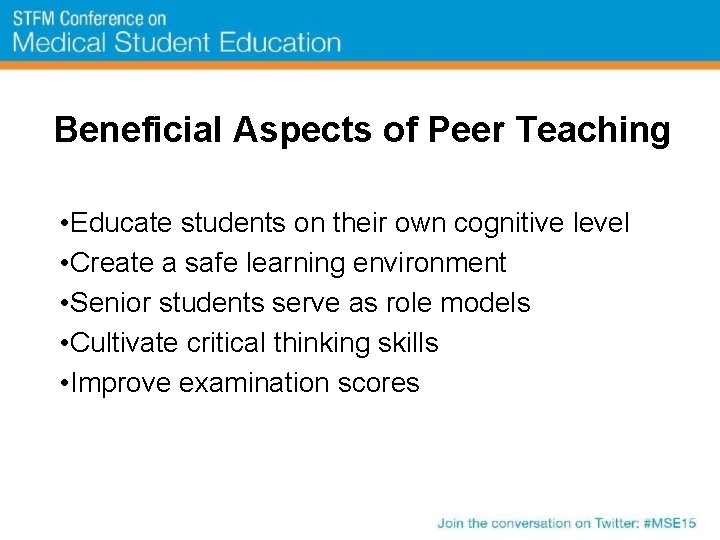
Beneficial Aspects of Peer Teaching • Educate students on their own cognitive level • Create a safe learning environment • Senior students serve as role models • Cultivate critical thinking skills • Improve examination scores
Beneficial Aspects of Peer Teaching • Reinforce and further expand knowledge base of near-peer teachers • Enhance intrinsic motivation in senior students • Prepare physicians for future role as educators • Develop leadership skills • Improve confidence levels • Decrease faculty teaching burden
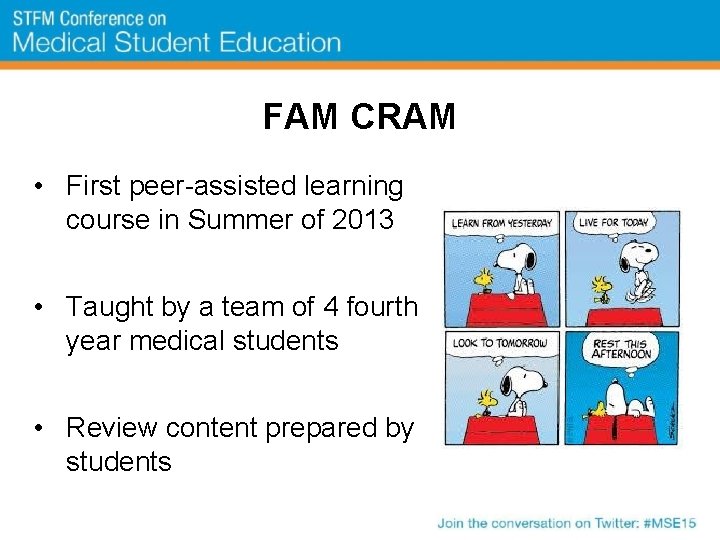
FAM CRAM • First peer-assisted learning course in Summer of 2013 • Taught by a team of 4 fourth year medical students • Review content prepared by students
Philosophy Peer-assisted Learning/Near Peer Teaching: • Cognitive congruence • Social congruence • Small groups • Low-stakes learning supplement
Proposed Benefits for Learners • Low-key environment to ask questions • Improved confidence • Improved test scores • Access to senior student mentors
Proposed Benefits for Peer Teachers • Improved understanding of material • Increased confidence • Teaching experience prior to residency • Enhanced communication skills
Preparation for sessions • Adult learning seminar • NBME Shelf percentile breakdown • Research Shelf exam study materials • Vignette-style, question-andanswer format followed by rapid review
Curriculum Development • Composed of 3 sessions: • 1 orientation • 2 content review sessions • Pocket guide of top 20 chief complaints • Student evaluation surveys
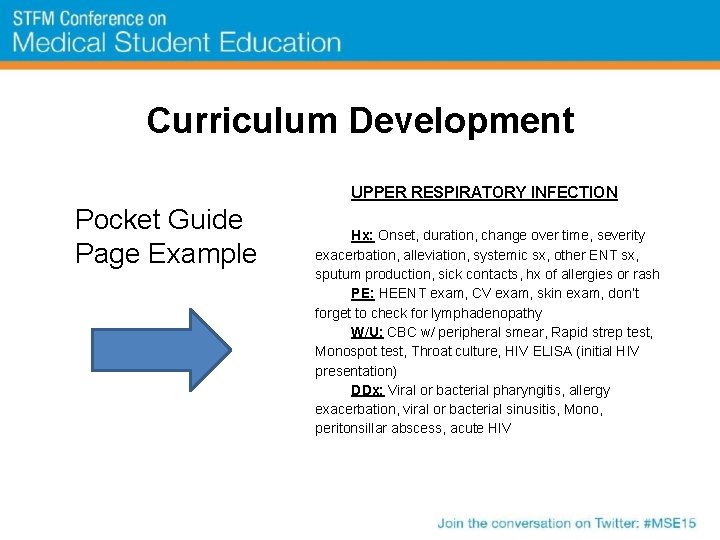
Curriculum Development UPPER RESPIRATORY INFECTION Pocket Guide Page Example Hx: Onset, duration, change over time, severity exacerbation, alleviation, systemic sx, other ENT sx, sputum production, sick contacts, hx of allergies or rash PE: HEENT exam, CV exam, skin exam, don’t forget to check for lymphadenopathy W/U: CBC w/ peripheral smear, Rapid strep test, Monospot test, Throat culture, HIV ELISA (initial HIV presentation) DDx: Viral or bacterial pharyngitis, allergy exacerbation, viral or bacterial sinusitis, Mono, peritonsillar abscess, acute HIV
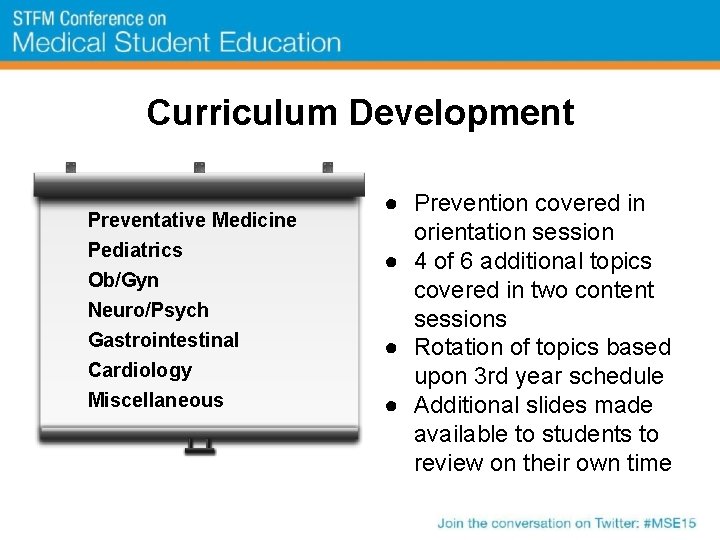
Curriculum Development Preventative Medicine Pediatrics Ob/Gyn Neuro/Psych Gastrointestinal Cardiology Miscellaneous ● Prevention covered in orientation session ● 4 of 6 additional topics covered in two content sessions ● Rotation of topics based upon 3 rd year schedule ● Additional slides made available to students to review on their own time
Review Session Example
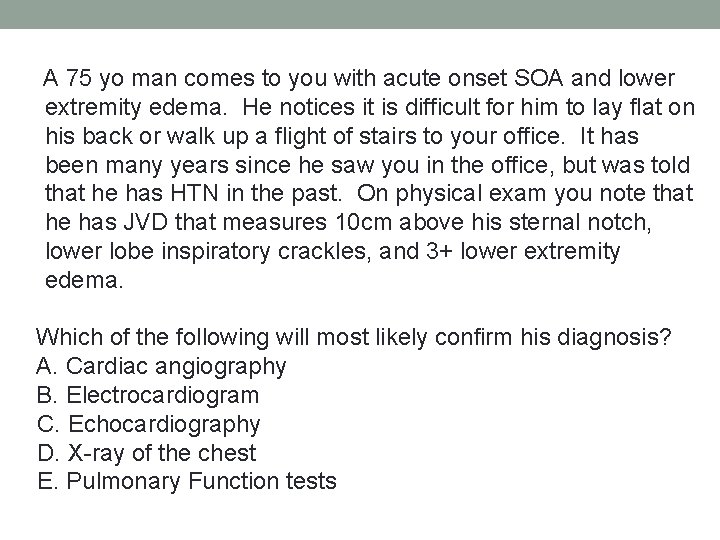
A 75 yo man comes to you with acute onset SOA and lower extremity edema. He notices it is difficult for him to lay flat on his back or walk up a flight of stairs to your office. It has been many years since he saw you in the office, but was told that he has HTN in the past. On physical exam you note that he has JVD that measures 10 cm above his sternal notch, lower lobe inspiratory crackles, and 3+ lower extremity edema. Which of the following will most likely confirm his diagnosis? A. Cardiac angiography B. Electrocardiogram C. Echocardiography D. X-ray of the chest E. Pulmonary Function tests
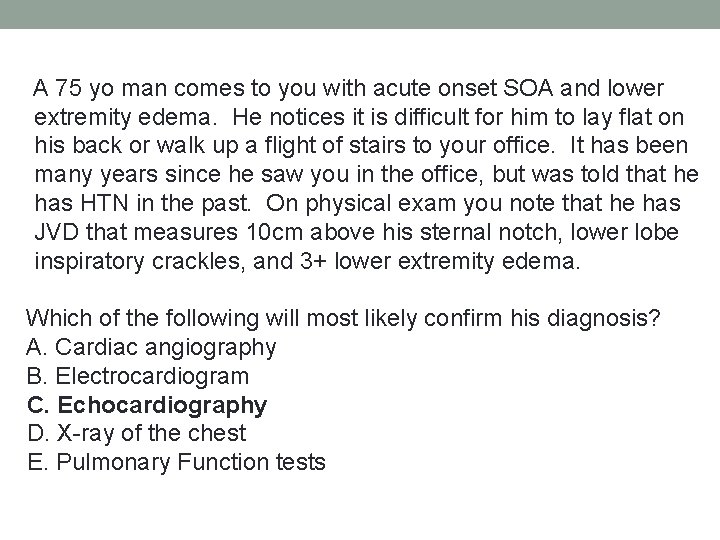
A 75 yo man comes to you with acute onset SOA and lower extremity edema. He notices it is difficult for him to lay flat on his back or walk up a flight of stairs to your office. It has been many years since he saw you in the office, but was told that he has HTN in the past. On physical exam you note that he has JVD that measures 10 cm above his sternal notch, lower lobe inspiratory crackles, and 3+ lower extremity edema. Which of the following will most likely confirm his diagnosis? A. Cardiac angiography B. Electrocardiogram C. Echocardiography D. X-ray of the chest E. Pulmonary Function tests
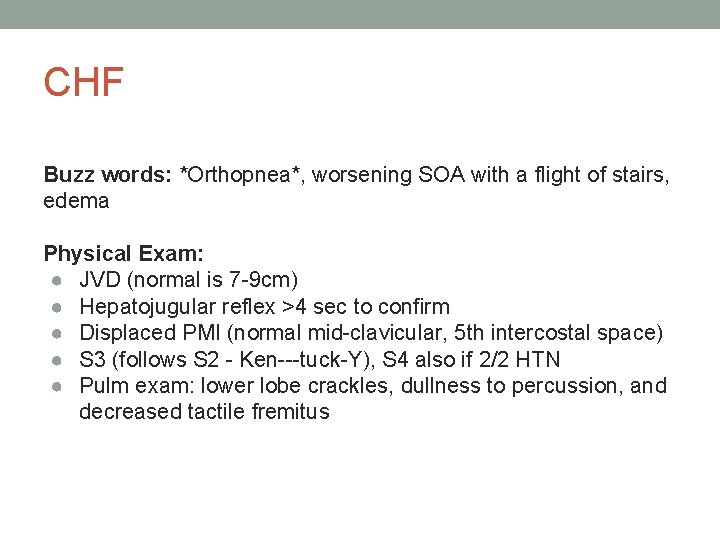
CHF Buzz words: *Orthopnea*, worsening SOA with a flight of stairs, edema Physical Exam: ● JVD (normal is 7 -9 cm) ● Hepatojugular reflex >4 sec to confirm ● Displaced PMI (normal mid-clavicular, 5 th intercostal space) ● S 3 (follows S 2 - Ken---tuck-Y), S 4 also if 2/2 HTN ● Pulm exam: lower lobe crackles, dullness to percussion, and decreased tactile fremitus
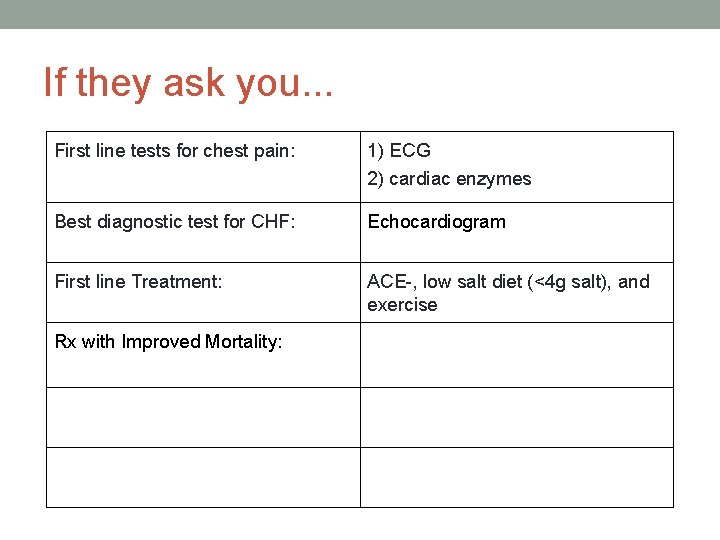
If they ask you. . . First line tests for chest pain:
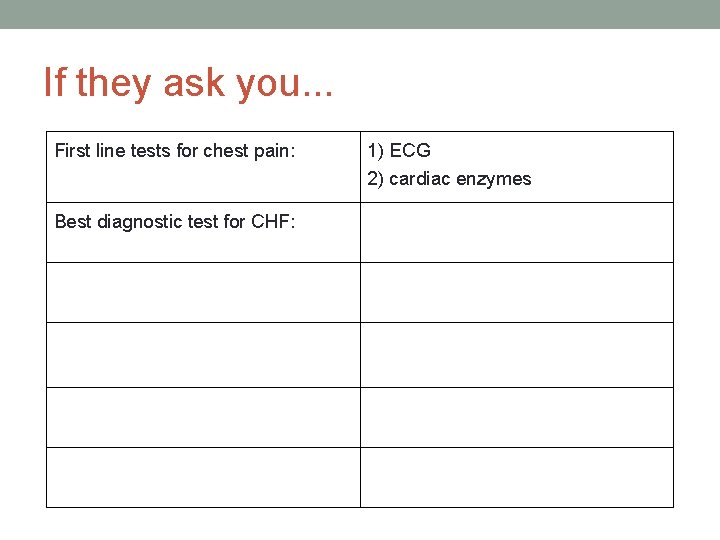
If they ask you. . . First line tests for chest pain: Best diagnostic test for CHF: 1) ECG 2) cardiac enzymes
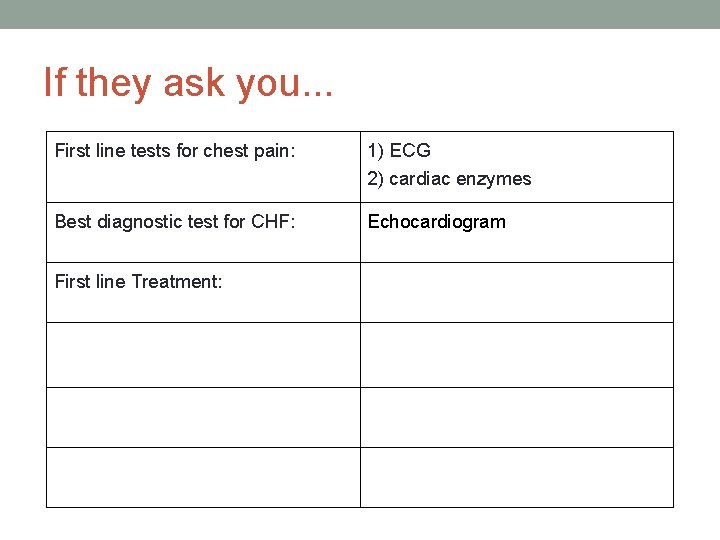
If they ask you. . . First line tests for chest pain: 1) ECG 2) cardiac enzymes Best diagnostic test for CHF: Echocardiogram First line Treatment:
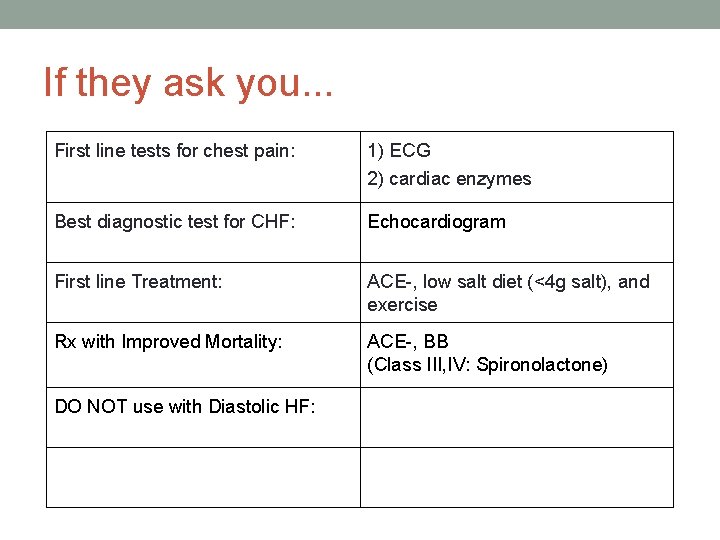
If they ask you. . . First line tests for chest pain: 1) ECG 2) cardiac enzymes Best diagnostic test for CHF: Echocardiogram First line Treatment: ACE-, low salt diet (<4 g salt), and exercise Rx with Improved Mortality:
If they ask you. . . First line tests for chest pain: 1) ECG 2) cardiac enzymes Best diagnostic test for CHF: Echocardiogram First line Treatment: ACE-, low salt diet (<4 g salt), and exercise Rx with Improved Mortality: ACE-, BB (Class III, IV: Spironolactone) DO NOT use with Diastolic HF:
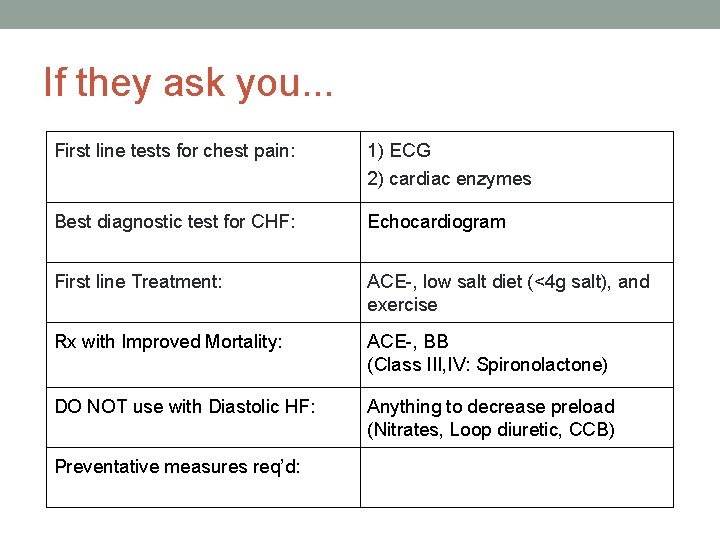
If they ask you. . . First line tests for chest pain: 1) ECG 2) cardiac enzymes Best diagnostic test for CHF: Echocardiogram First line Treatment: ACE-, low salt diet (<4 g salt), and exercise Rx with Improved Mortality: ACE-, BB (Class III, IV: Spironolactone) DO NOT use with Diastolic HF: Anything to decrease preload (Nitrates, Loop diuretic, CCB) Preventative measures req’d:
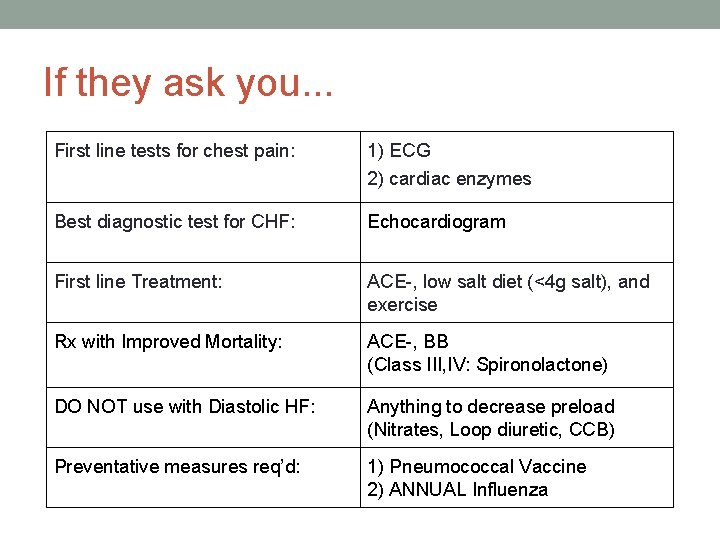
If they ask you. . . First line tests for chest pain: 1) ECG 2) cardiac enzymes Best diagnostic test for CHF: Echocardiogram First line Treatment: ACE-, low salt diet (<4 g salt), and exercise Rx with Improved Mortality: ACE-, BB (Class III, IV: Spironolactone) DO NOT use with Diastolic HF: Anything to decrease preload (Nitrates, Loop diuretic, CCB) Preventative measures req’d: 1) Pneumococcal Vaccine 2) ANNUAL Influenza
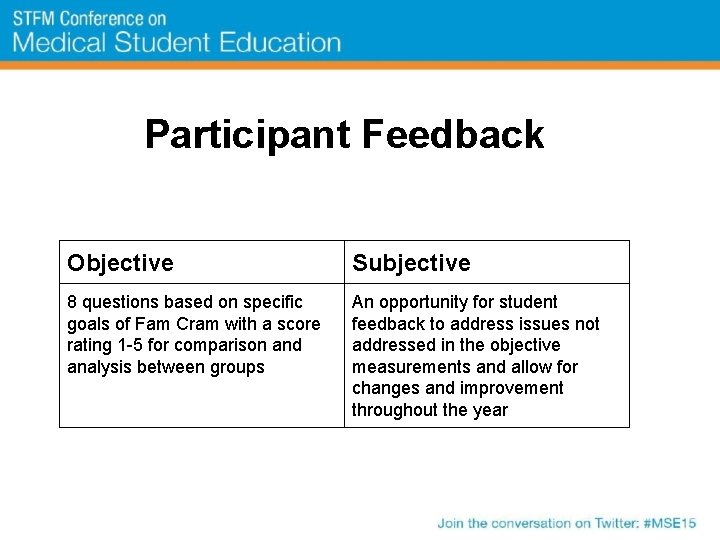
Participant Feedback Objective Subjective 8 questions based on specific goals of Fam Cram with a score rating 1 -5 for comparison and analysis between groups An opportunity for student feedback to address issues not addressed in the objective measurements and allow for changes and improvement throughout the year
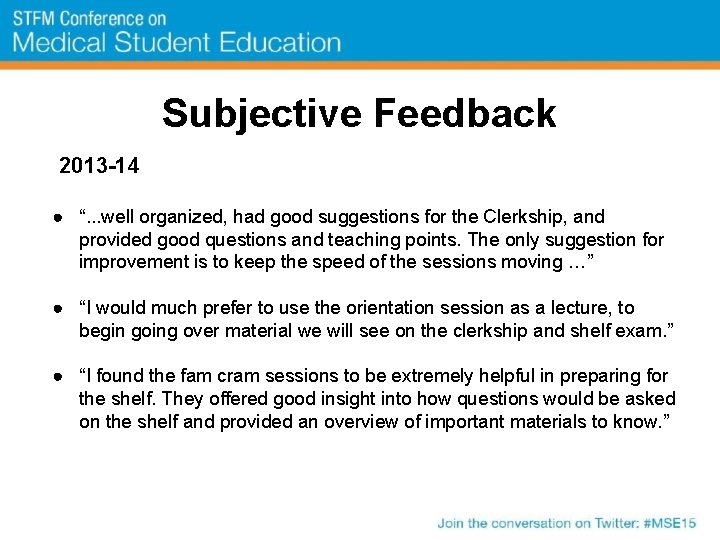
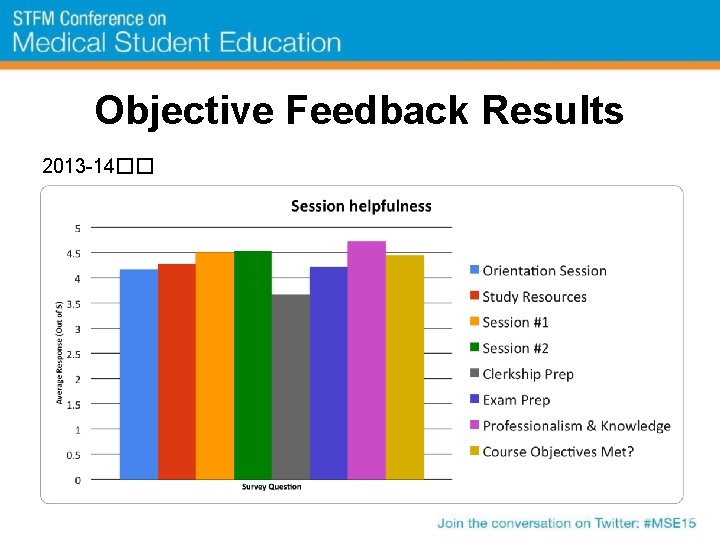
Subjective Feedback 2013 -14 ● “. . . well organized, had good suggestions for the Clerkship, and provided good questions and teaching points. The only suggestion for improvement is to keep the speed of the sessions moving …” ● “I would much prefer to use the orientation session as a lecture, to begin going over material we will see on the clerkship and shelf exam. ” ● “I found the fam cram sessions to be extremely helpful in preparing for the shelf. They offered good insight into how questions would be asked on the shelf and provided an overview of important materials to know. ”
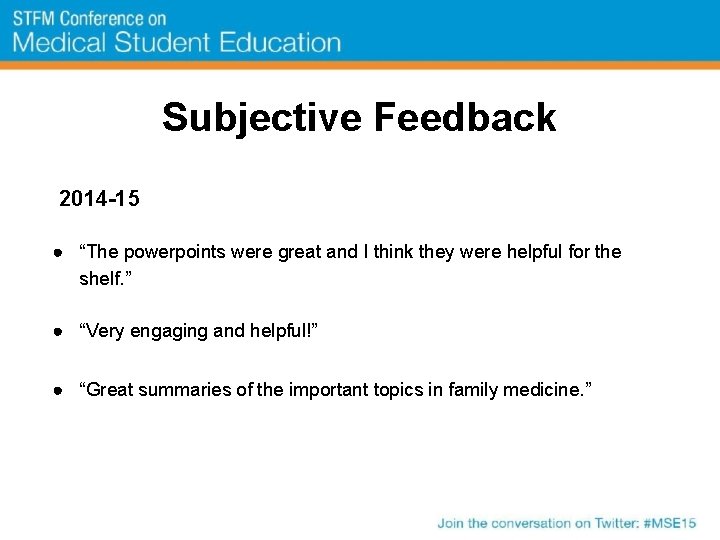
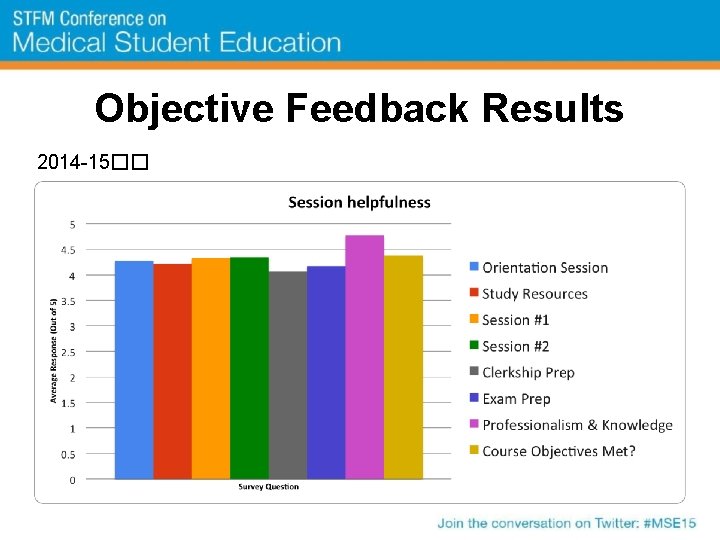
Subjective Feedback 2014 -15 ● “The powerpoints were great and I think they were helpful for the shelf. ” ● “Very engaging and helpful!” ● “Great summaries of the important topics in family medicine. ”
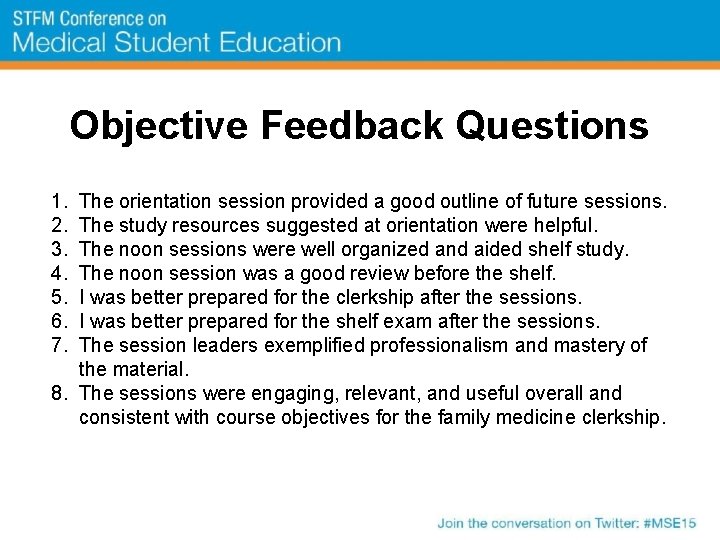
Objective Feedback Questions 1. 2. 3. 4. 5. 6. 7. The orientation session provided a good outline of future sessions. The study resources suggested at orientation were helpful. The noon sessions were well organized and aided shelf study. The noon session was a good review before the shelf. I was better prepared for the clerkship after the sessions. I was better prepared for the shelf exam after the sessions. The session leaders exemplified professionalism and mastery of the material. 8. The sessions were engaging, relevant, and useful overall and consistent with course objectives for the family medicine clerkship.
Objective Feedback Results 2013 -14��
Objective Feedback Results 2014 -15��
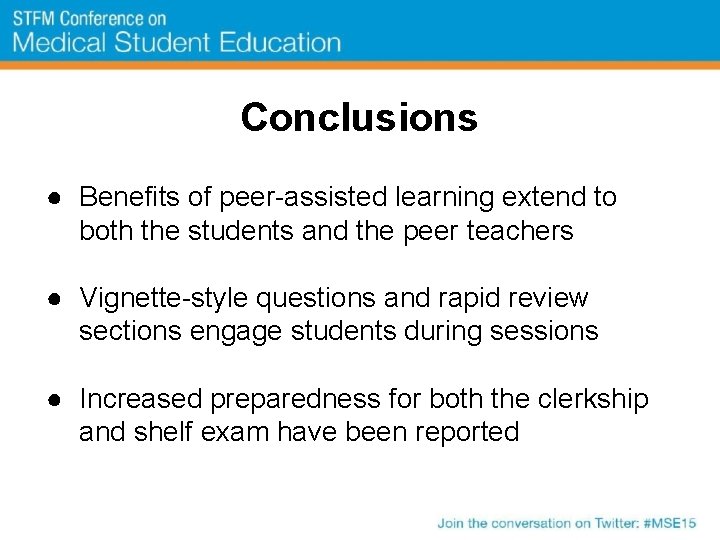
Conclusions ● Benefits of peer-assisted learning extend to both the students and the peer teachers ● Vignette-style questions and rapid review sections engage students during sessions ● Increased preparedness for both the clerkship and shelf exam have been reported
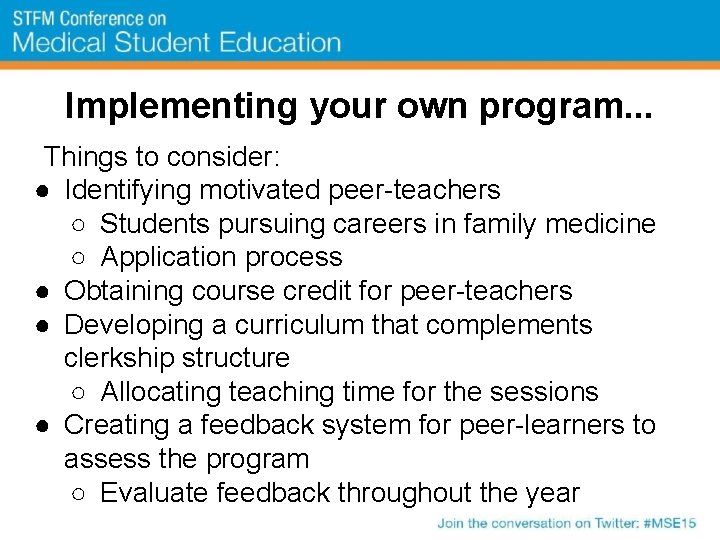
Implementing your own program. . . Things to consider: ● Identifying motivated peer-teachers ○ Students pursuing careers in family medicine ○ Application process ● Obtaining course credit for peer-teachers ● Developing a curriculum that complements clerkship structure ○ Allocating teaching time for the sessions ● Creating a feedback system for peer-learners to assess the program ○ Evaluate feedback throughout the year
Discussion
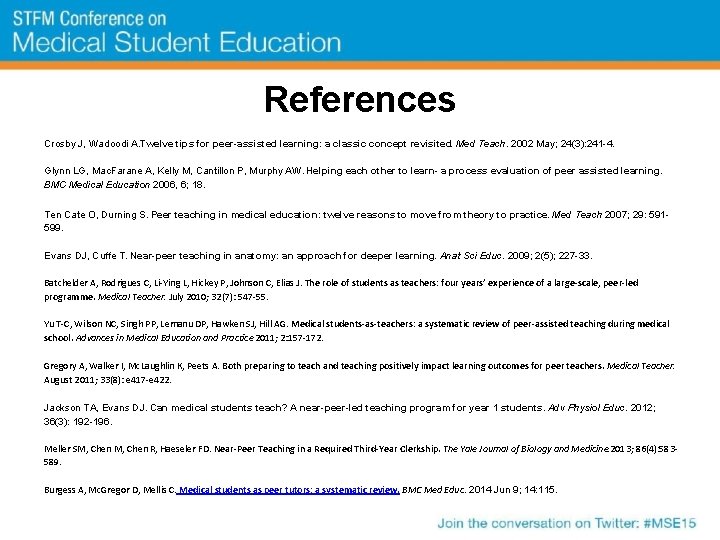
References Crosby J, Wadoodi A. Twelve tips for peer-assisted learning: a classic concept revisited. Med Teach. 2002 May; 24(3): 241 -4. Glynn LG, Mac. Farane A, Kelly M, Cantillon P, Murphy AW. Helping each other to learn- a process evaluation of peer assisted learning. BMC Medical Education 2006, 6; 18. Ten Cate O, Durning S. Peer teaching in medical education: twelve reasons to move from theory to practice. Med Teach 2007; 29: 591599. Evans DJ, Cuffe T. Near-peer teaching in anatomy: an approach for deeper learning. Anat Sci Educ. 2009; 2(5); 227 -33. Batchelder A, Rodrigues C, Li-Ying L, Hickey P, Johnson C, Elias J. The role of students as teachers: four years’ experience of a large-scale, peer-led programme. Medical Teacher. July 2010; 32(7): 547 -55. Yu T-C, Wilson NC, Singh PP, Lemanu DP, Hawken SJ, Hill AG. Medical students-as-teachers: a systematic review of peer-assisted teaching during medical school. Advances in Medical Education and Practice 2011; 2: 157 -172. Gregory A, Walker I, Mc. Laughlin K, Peets A. Both preparing to teach and teaching positively impact learning outcomes for peer teachers. Medical Teacher. August 2011; 33(8): e 417 -e 422. Jackson TA, Evans DJ. Can medical students teach? A near-peer-led teaching program for year 1 students. Adv Physiol Educ. 2012; 36(3): 192 -196. Meller SM, Chen R, Haeseler FD. Near-Peer Teaching in a Required Third-Year Clerkship. The Yale Journal of Biology and Medicine. 2013; 86(4): 583589. Burgess A, Mc. Gregor D, Mellis C. Medical students as peer tutors: a systematic review. BMC Med Educ. 2014 Jun 9; 14: 115.
Please evaluate this session at: stfm. org/sessionevaluation