
How to Identify a Mineral Mineral Identification We

- Slides: 33
How to Identify a Mineral
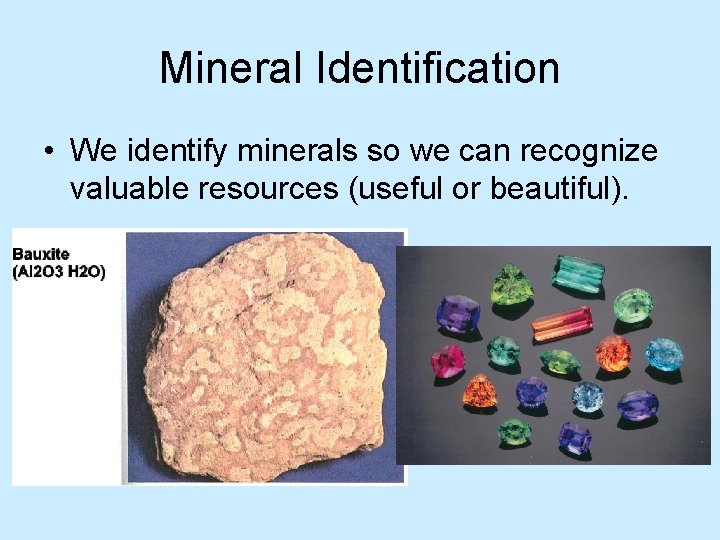
Mineral Identification • We identify minerals so we can recognize valuable resources (useful or beautiful).
Mineral Identification • There are 7 tests performed on minerals so they can be identified.
Test 1
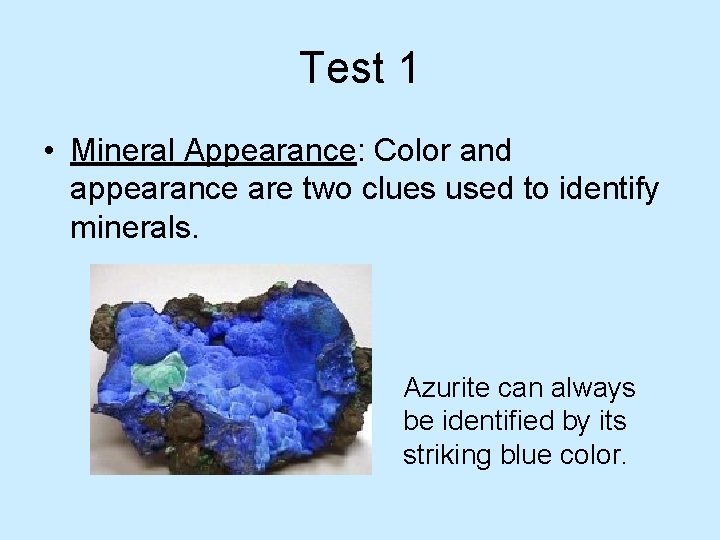
Test 1 • Mineral Appearance: Color and appearance are two clues used to identify minerals. Azurite can always be identified by its striking blue color.
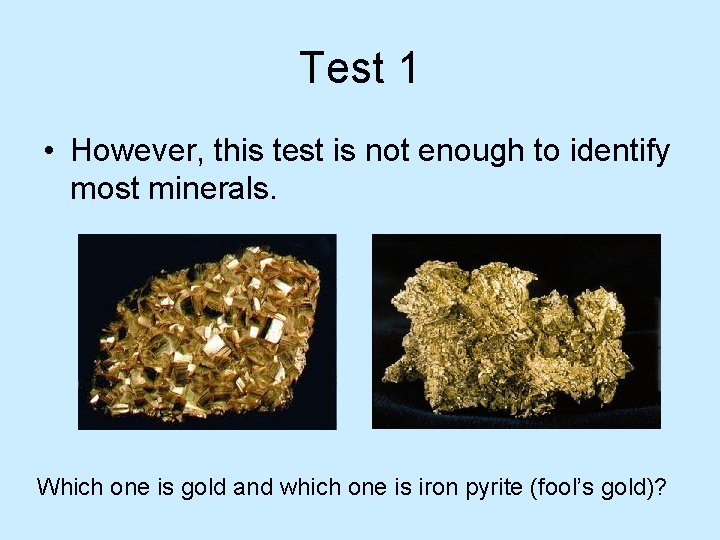
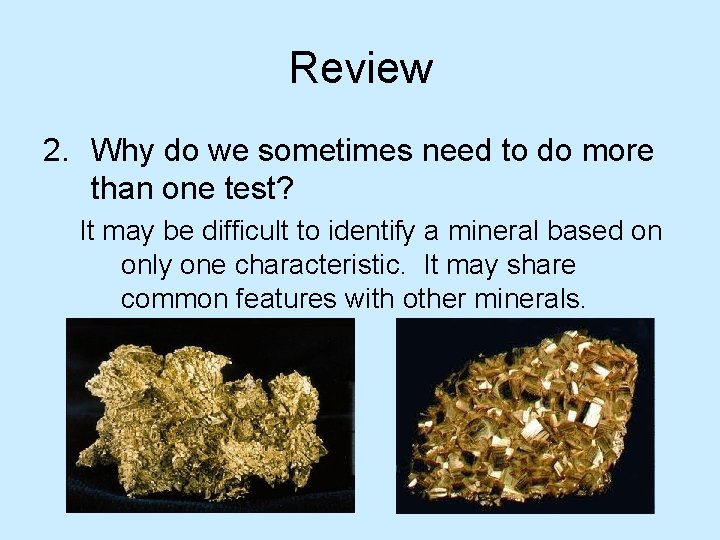
Test 1 • However, this test is not enough to identify most minerals. Which one is gold and which one is iron pyrite (fool’s gold)?
Test 2
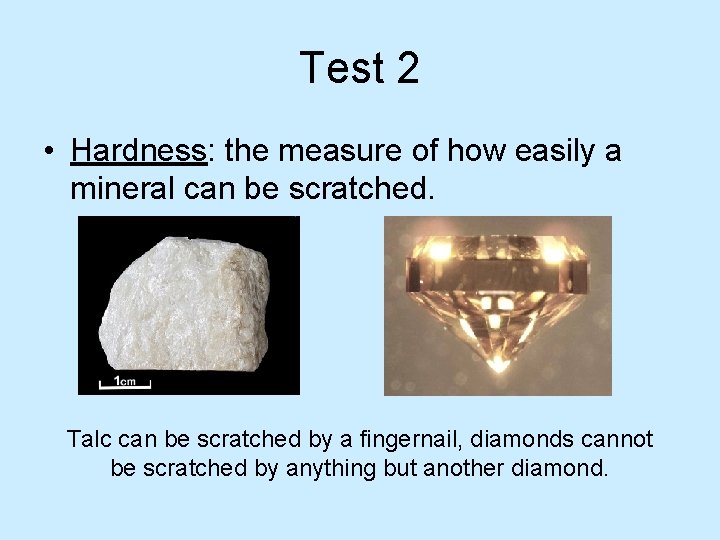
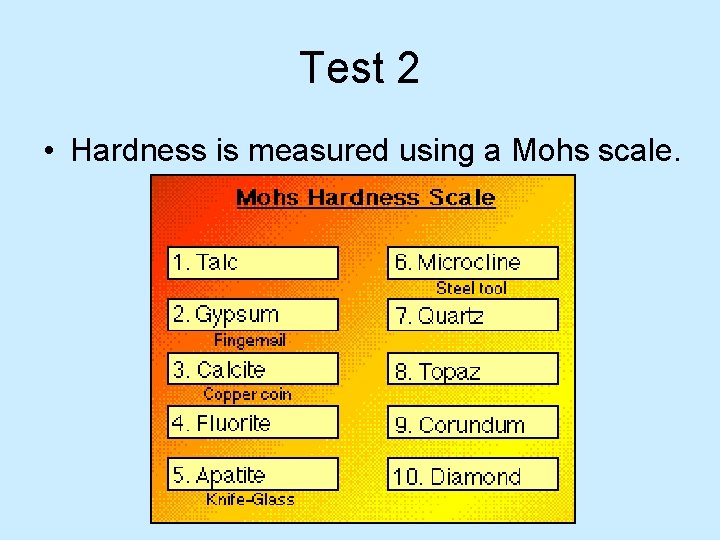
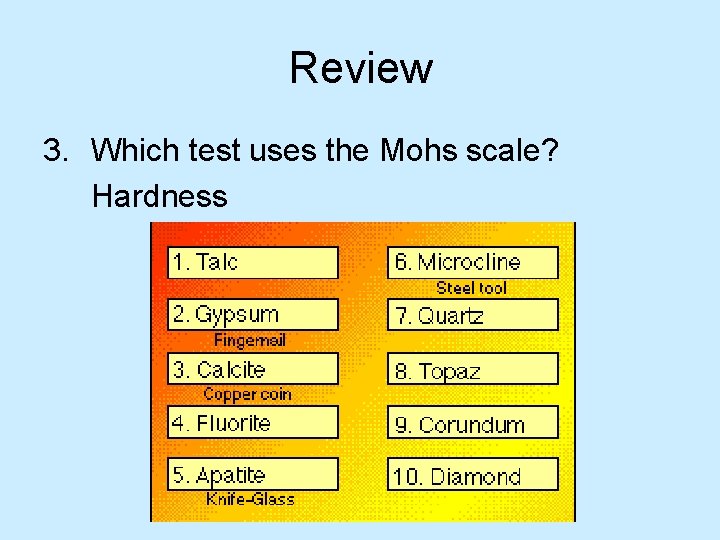
Test 2 • Hardness: the measure of how easily a mineral can be scratched. Talc can be scratched by a fingernail, diamonds cannot be scratched by anything but another diamond.
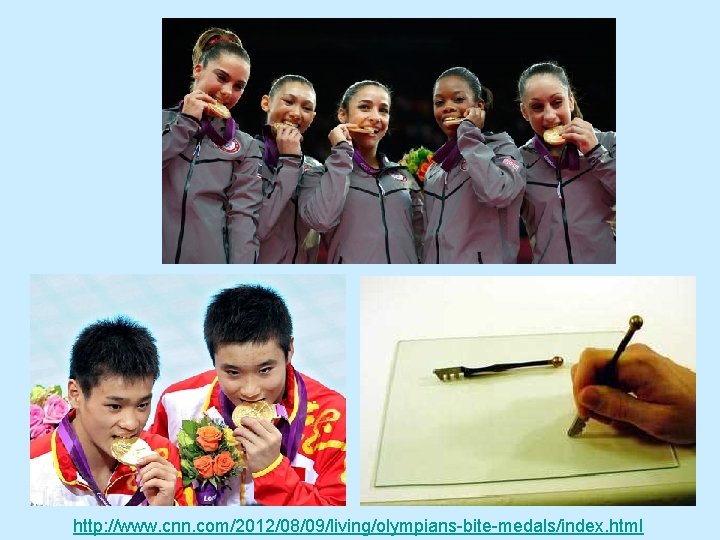
http: //www. cnn. com/2012/08/09/living/olympians-bite-medals/index. html
Test 2 • Hardness is measured using a Mohs scale.
Test 3
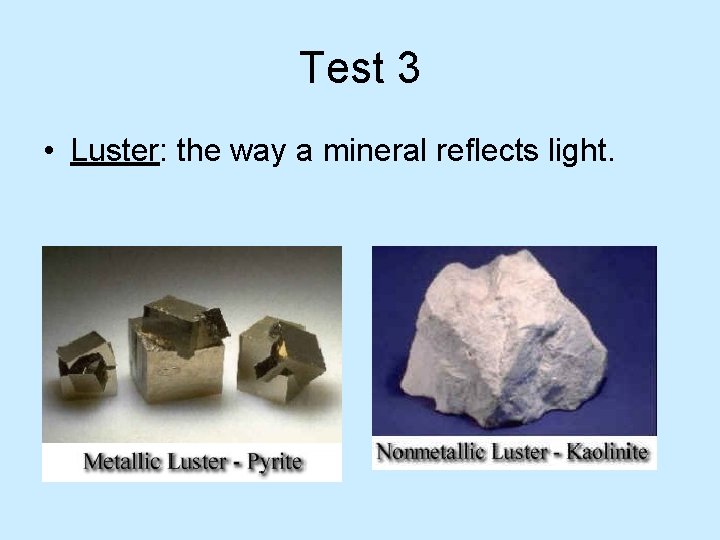
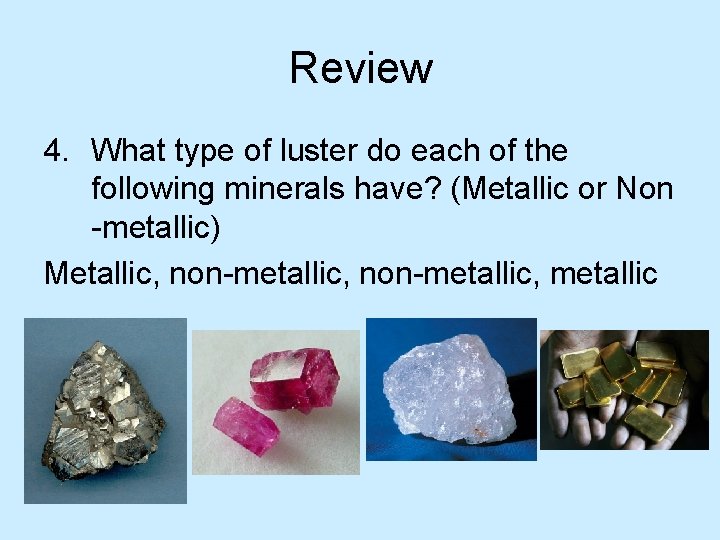
Test 3 • Luster: the way a mineral reflects light.
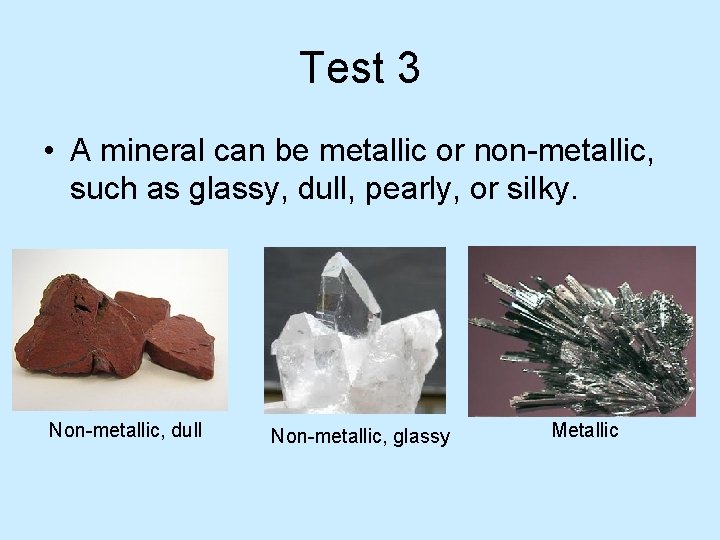
Test 3 • A mineral can be metallic or non-metallic, such as glassy, dull, pearly, or silky. Non-metallic, dull Non-metallic, glassy Metallic
Test 4
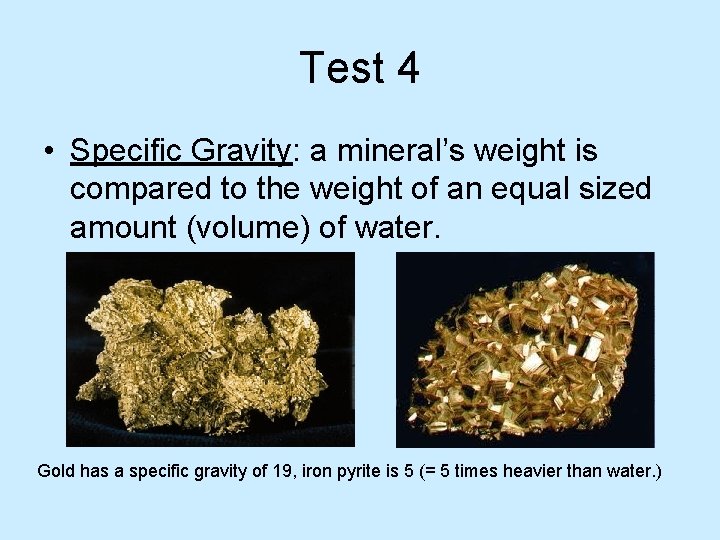
Test 4 • Specific Gravity: a mineral’s weight is compared to the weight of an equal sized amount (volume) of water. Gold has a specific gravity of 19, iron pyrite is 5 (= 5 times heavier than water. )
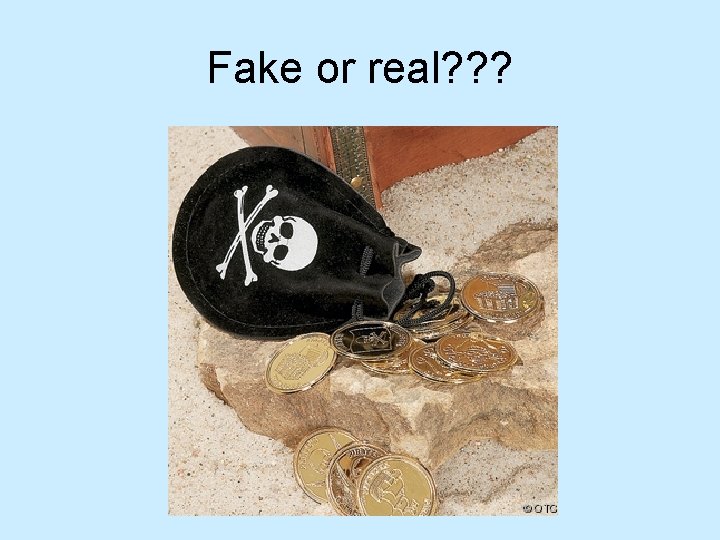
Fake or real? ? ?
Test 5
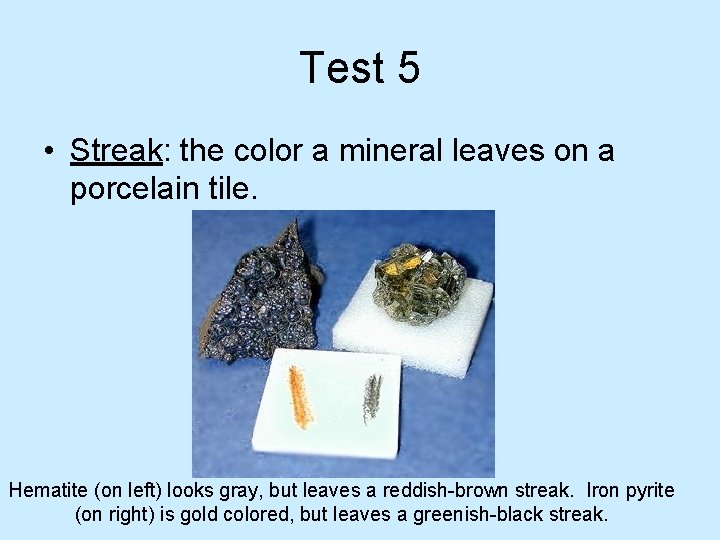
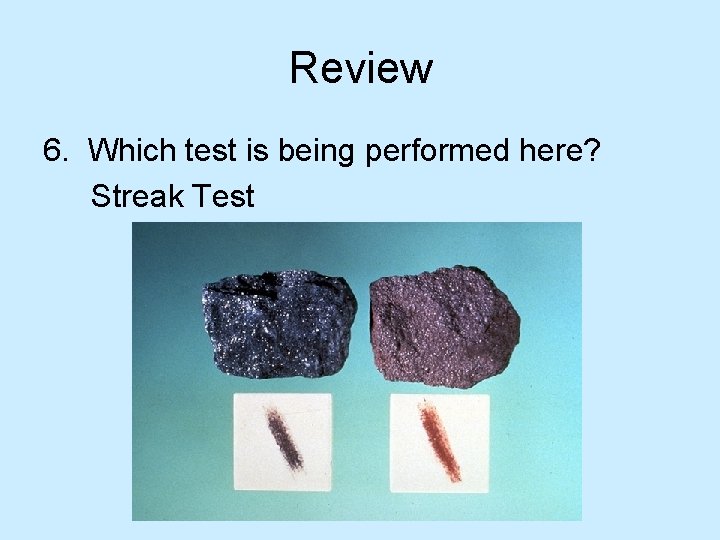
Test 5 • Streak: the color a mineral leaves on a porcelain tile. Hematite (on left) looks gray, but leaves a reddish-brown streak. Iron pyrite (on right) is gold colored, but leaves a greenish-black streak.
Test 6
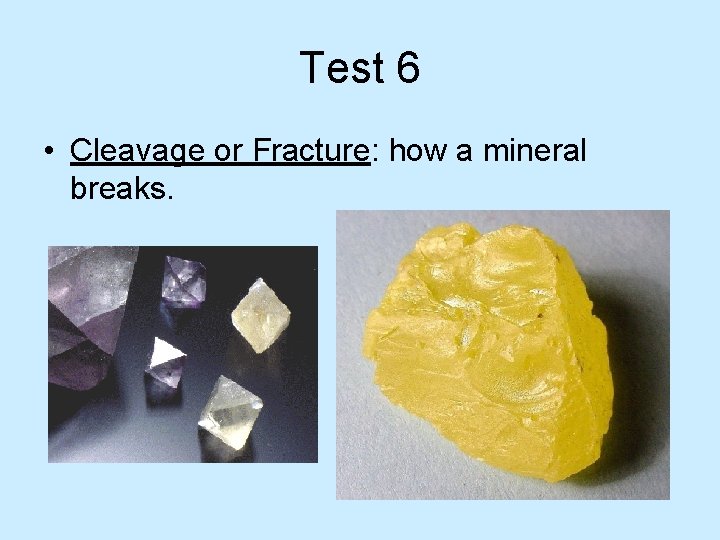
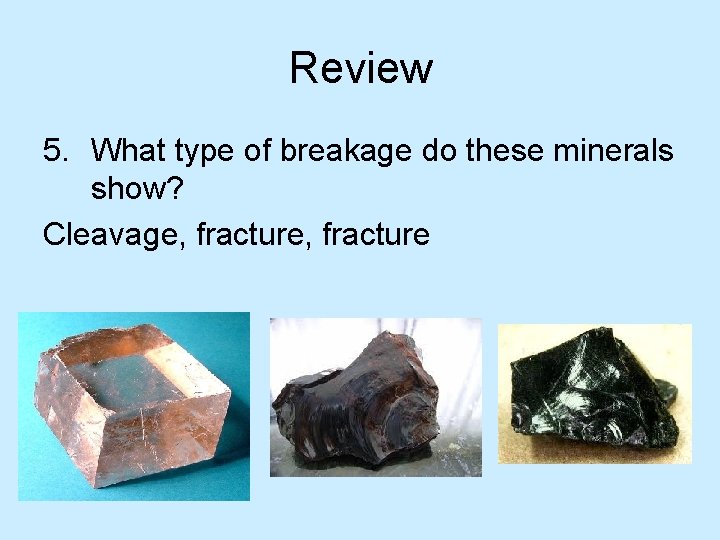
Test 6 • Cleavage or Fracture: how a mineral breaks.
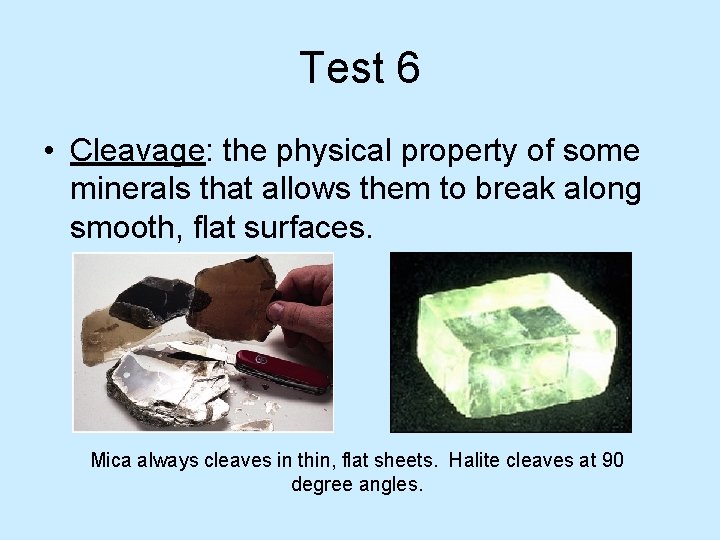
Test 6 • Cleavage: the physical property of some minerals that allows them to break along smooth, flat surfaces. Mica always cleaves in thin, flat sheets. Halite cleaves at 90 degree angles.
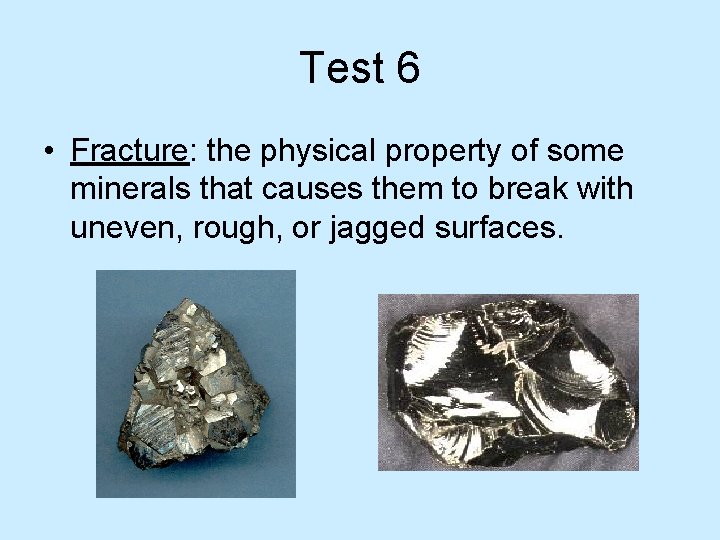
Test 6 • Fracture: the physical property of some minerals that causes them to break with uneven, rough, or jagged surfaces.
Test 7
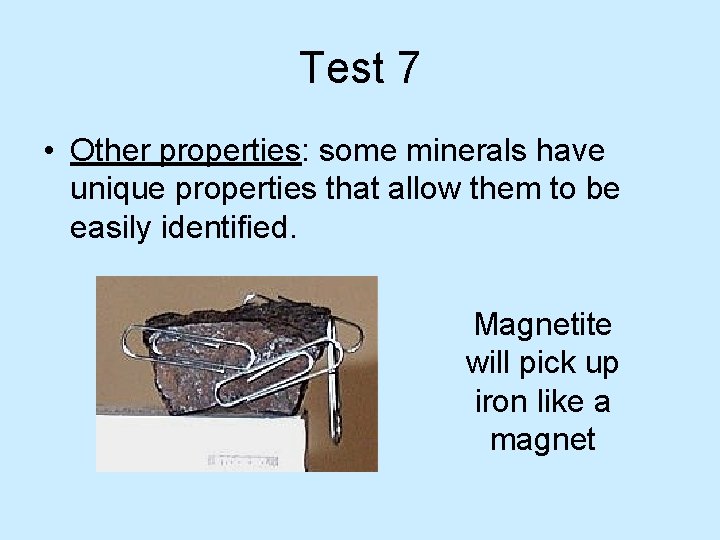
Test 7 • Other properties: some minerals have unique properties that allow them to be easily identified. Magnetite will pick up iron like a magnet
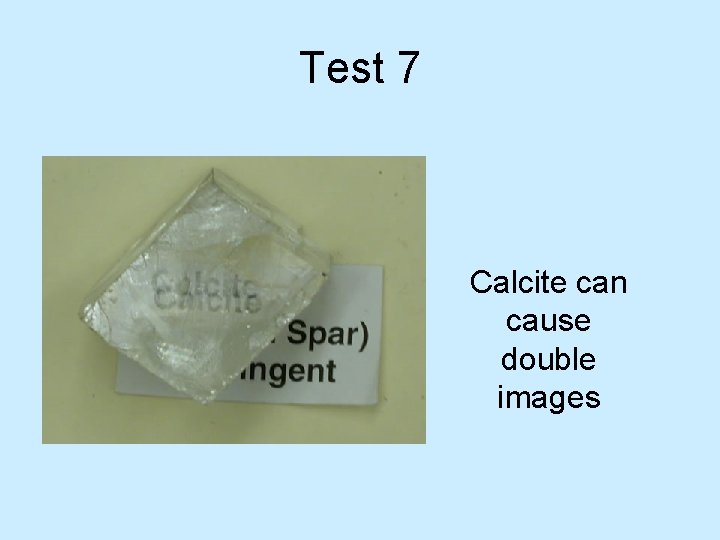
Test 7 Calcite can cause double images
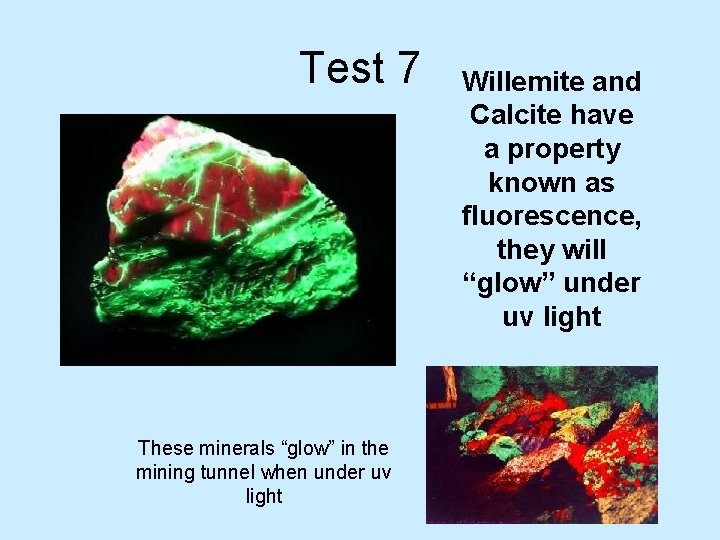
Test 7 These minerals “glow” in the mining tunnel when under uv light Willemite and Calcite have a property known as fluorescence, they will “glow” under uv light
Summary There are 7 tests to determine the identity of a mineral 1. Color and appearance 2. Hardness 3. Luster 4. Specific Gravity 5. Streak 6. Cleavage and Fracture 7. Other Properties http: //www. youtube. com/watch? v=c 7 w. JP_K_s. AQ&feature=related http: //abcnews. go. com/US/oklahoma-teenager-finds-385 -carat-canary-diamond/story? id=20633996
Review 1. What are the 7 tests? Color and appearance Hardness Luster Specific Gravity Streak Cleavage and Fracture Other Properties
Review 2. Why do we sometimes need to do more than one test? It may be difficult to identify a mineral based on only one characteristic. It may share common features with other minerals.
Review 3. Which test uses the Mohs scale? Hardness
Review 4. What type of luster do each of the following minerals have? (Metallic or Non -metallic) Metallic, non-metallic, metallic
Review 5. What type of breakage do these minerals show? Cleavage, fracture
Review 6. Which test is being performed here? Streak Test