
HOW TO HELP YOUR STUDENT SUCCEED ENGLISH MATH

- Slides: 26
HOW TO HELP YOUR STUDENT SUCCEED ENGLISH & MATH
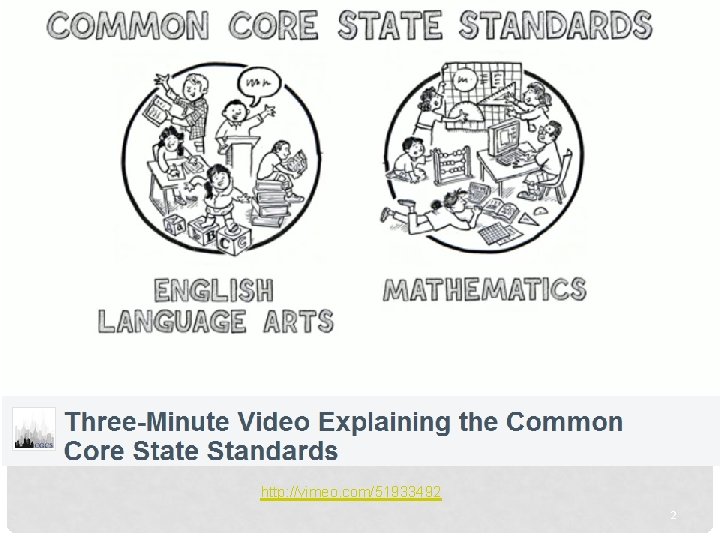
http: //vimeo. com/51933492 2
WHAT ARE THE COMMON CORE STATE STANDARDS? The Common Core State Standards set grade-bygrade learning expectations for students in grades K -12 for Mathematics and for English Language Arts and Literacy. While states have had standards for more than 15 years, this set of standards is more focused on preparing students for success in college and career. They set clear, consistent and high learning goals. 3
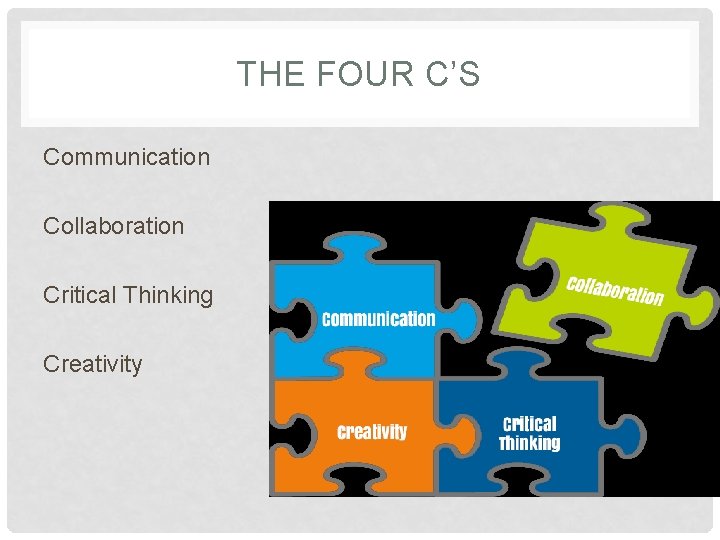
THE FOUR C’S Communication Collaboration Critical Thinking Creativity
STRATEGIES TO HELP WITH COMMON CORE • For Math
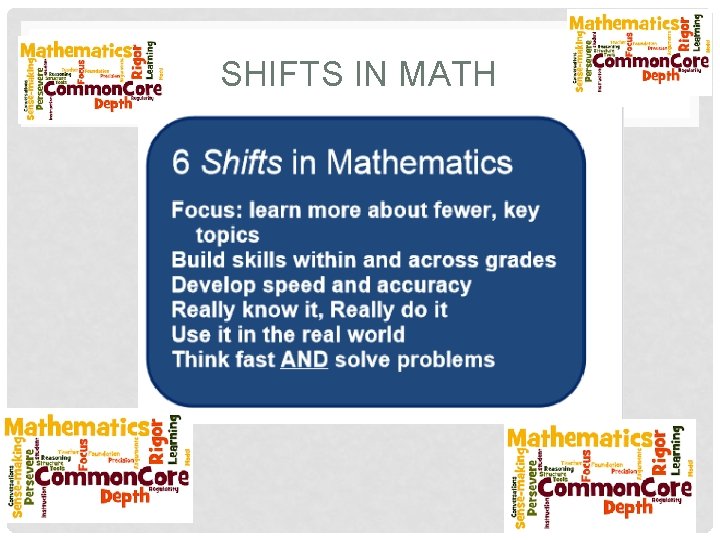
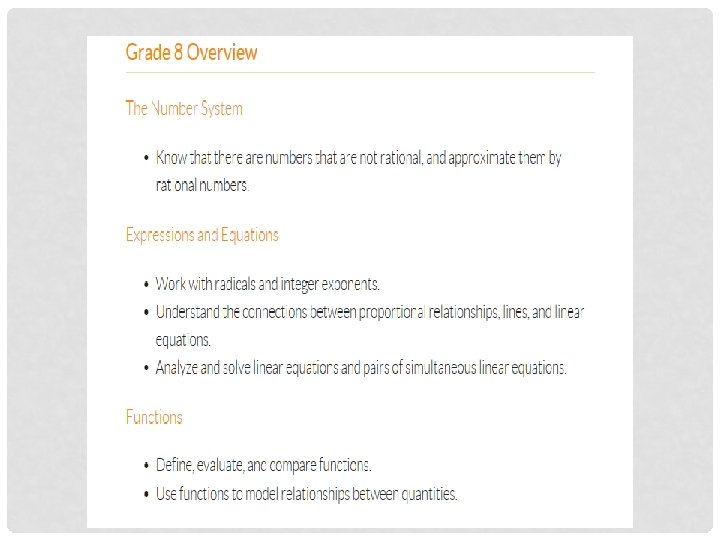
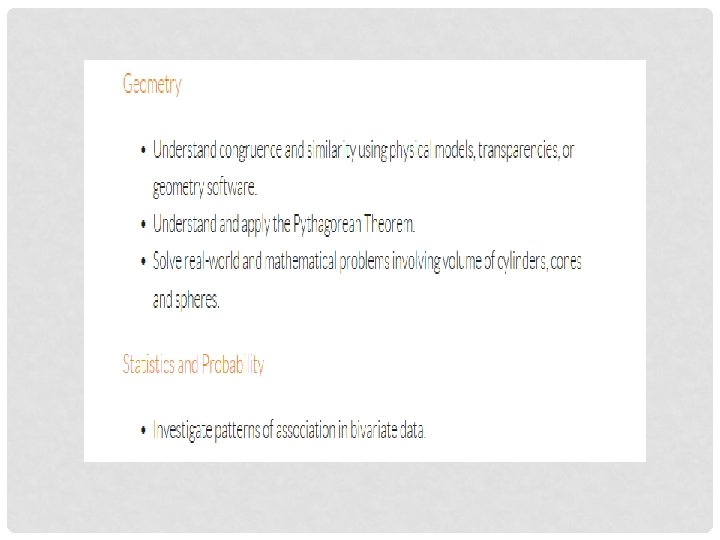
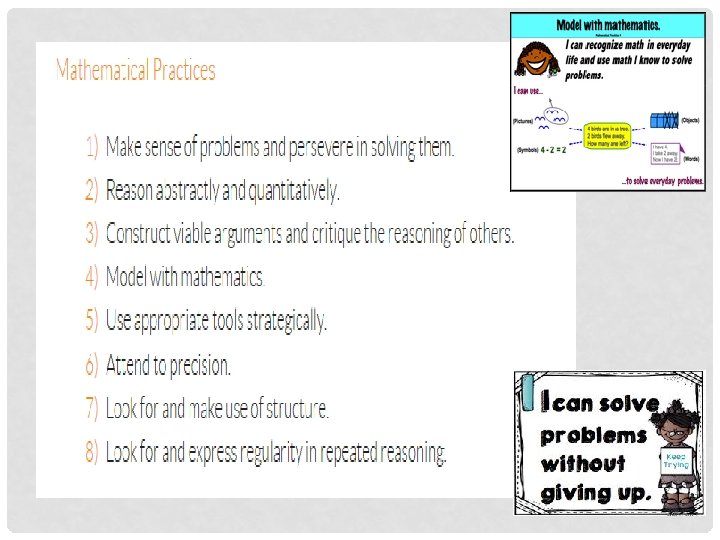
SHIFTS IN MATH
3 KEY IDEAS ABOUT COMMON CORE • Thinking deeply • Integrated learning • Showing how they know
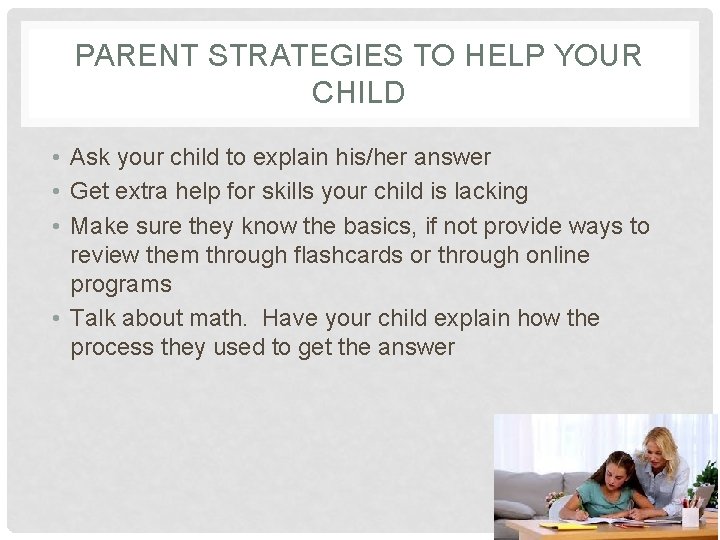
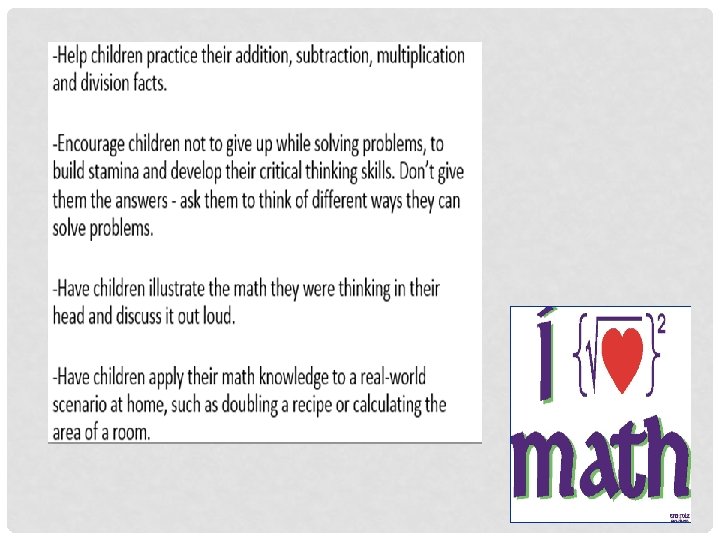
PARENT STRATEGIES TO HELP YOUR CHILD • Ask your child to explain his/her answer • Get extra help for skills your child is lacking • Make sure they know the basics, if not provide ways to review them through flashcards or through online programs • Talk about math. Have your child explain how the process they used to get the answer
REAL LIFE APPLICATIONS • Have your child compare value of products in a store • Calculate the tip at a restaurant • Follow a stock and record the up’s and downs of the stock price • Let them help you balance your check book
• Let them help out with a home improvement project. • Have them calculate the tax on a bill • Talk to them positively about math. Encourage them to embrace the challenge it brings. Say positive things about math
RESOURCES • IXL can be accessed through the Ramona web page. Provides review of skills through all grades • Bigideasmath. com Online skills review by topic, videos, test practice • Khan Academy • XP math online interactive quizzes by topic
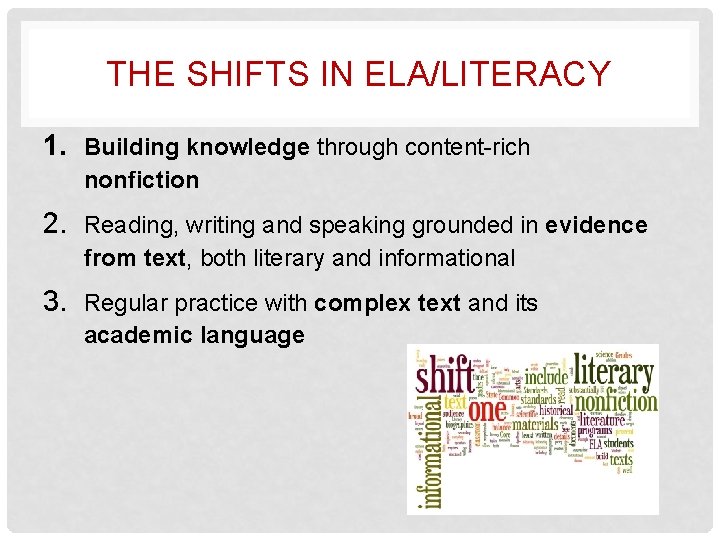
THE SHIFTS IN ELA/LITERACY 1. Building knowledge through content-rich nonfiction 2. Reading, writing and speaking grounded in evidence from text, both literary and informational 3. Regular practice with complex text and its academic language
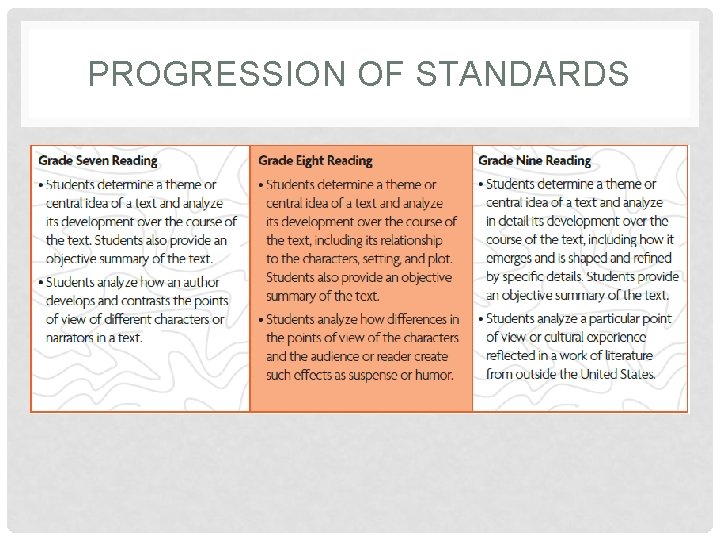
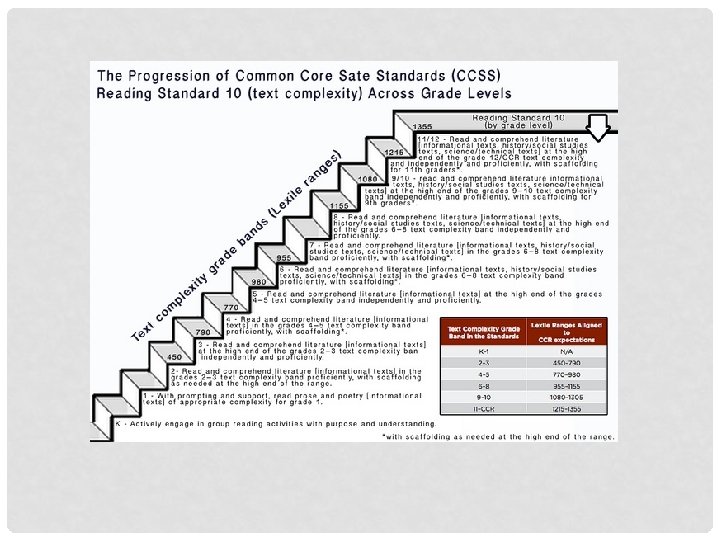
PROGRESSION OF STANDARDS
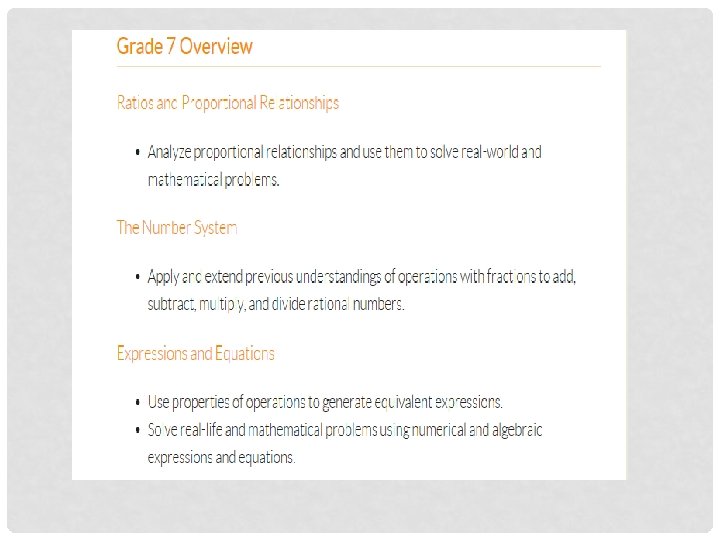
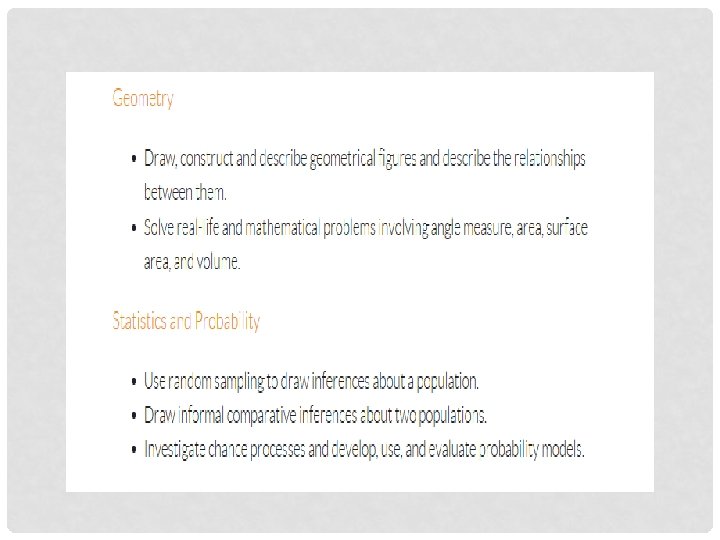
WHAT YOUR CHILD WILL BE LEARNING IN 7 TH GRADE ENGLISH LANGUAGE ARTS AND LITERACY • • Analyzing how the form or structure of a play or poem contributes to its meaning • • Analyzing how particular elements of a story or play interact (like how the setting shapes the characters or plot) • • Determining how an author develops and contrasts the points of view of different characters or narrators in a text • • Conducting short research projects, drawing on several sources and identifying related questions for further research and investigation • • Engaging in a range of classroom discussions on topics and texts, expressing ideas clearly and building on the ideas of others • • Identifying a speaker’s argument and specific claims and evaluating the reasoning and evidence behind these claims • • Using clues such as word roots or add-ons to a word to determine the meaning of a word • • Interpreting figures of speech or references to literature or mythology in a text • • Writing for a range of purposes and audiences
WHAT YOUR CHILD WILL BE LEARNING IN 8 TH GRADE ENGLISH LANGUAGE ARTS AND LITERACY • Identifying what a reading selection explicitly says and drawing inferences based on evidence from the text • • Analyzing the impact of specific word choices on meaning and tone, including analogies or allusions to other texts • • Evaluating the argument and specific claims in a text, assessing whether the reasoning is sound and the evidence is relevant and sufficient • • Connecting information and ideas efficiently and effectively in writing • • Analyzing the purpose of information presented in diverse media formats, such as video clips or interactive maps • • Participating in class discussions on various topics, texts, and issues by expressing ideas and building on the ideas of others • • Developing a large vocabulary of multi-use academic words and phrases • • Interpreting figures of speech in context
HOW CAN YOU HELP YOUR CHILD IN LITERACY? • 1. Ask your child what topics, events, or activities he or she likes. Then look for books, magazines, or other materials about those topics that would motivate your child to read. • 2. It is also helpful when your child sees other people reading at home. You could share what you have read. • 3. Make time for conversation at home. Discuss current events, shared interests, and future aspirations for education and career. • 4. Visit museums, zoos, theaters, historical sites, aquariums, and other educational places to help increase your child’s exposure to new knowledge and vocabulary. • 5. Use technology to help build your child’s interest in reading. There are several websites where students can read books or articles online.
SUGGESTIONS ON THINGS TO DO DAILY/WEEKLY • Check your child’s agenda • Provide time and space for your child to read independently. This time should be free from distractions such as television. • Check for completion of an assignment and its quality • Check grades online • Help your child get organized-binders, folders, cleaning up backpack • Provide incentives and give positive feedback
COMMUNICATE WITH TEACHERS • Don’t be afraid to reach out to your child’s teacher— you are an important part of your child’s education. Ask to see a sample of your child’s work or bring a sample with you. Ask the teacher questions like: • • Is my child’s work meeting grade-level expectations? • • What are my child’s strengths and weaknesses? • • What can I do at home to make sure that my child is successful?
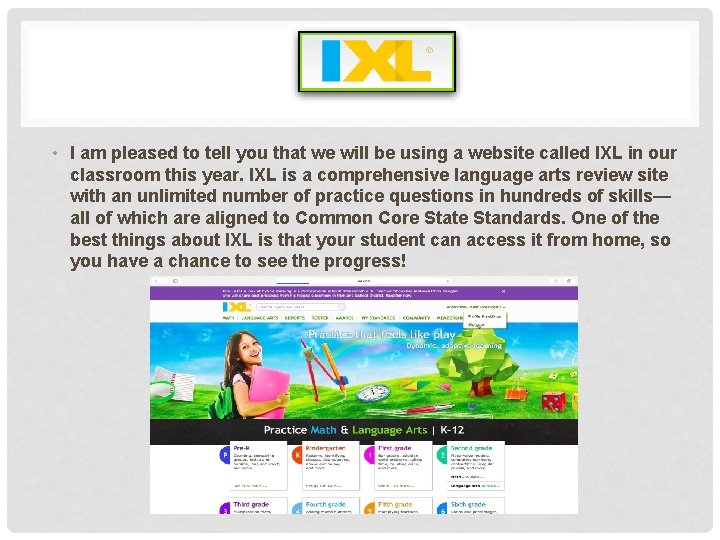
• I am pleased to tell you that we will be using a website called IXL in our classroom this year. IXL is a comprehensive language arts review site with an unlimited number of practice questions in hundreds of skills— all of which are aligned to Common Core State Standards. One of the best things about IXL is that your student can access it from home, so you have a chance to see the progress!