
How to Help your Child Online Safety Think



- Slides: 17
How to Help your Child Online Safety
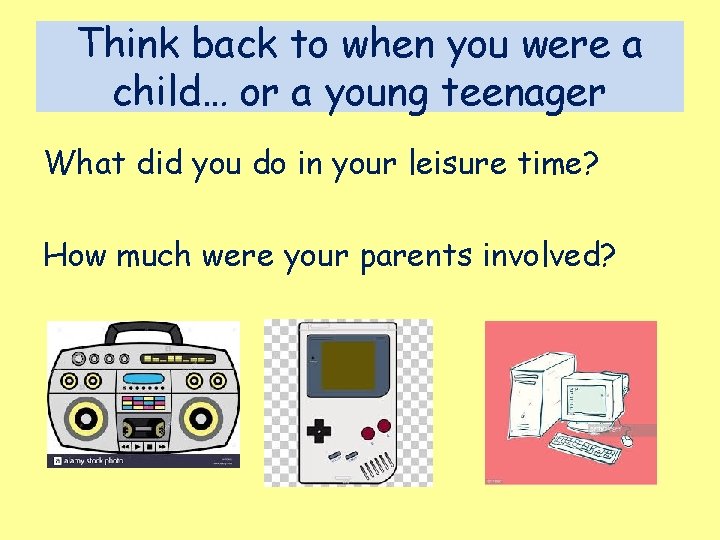
Think back to when you were a child… or a young teenager What did you do in your leisure time? How much were your parents involved?
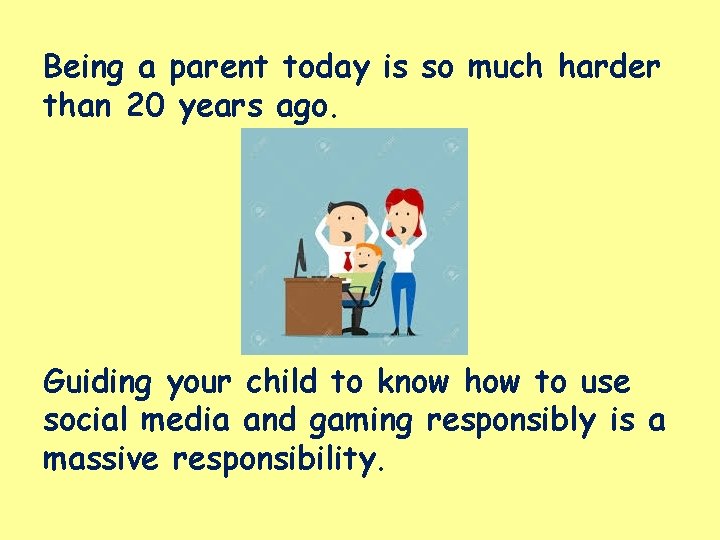
Being a parent today is so much harder than 20 years ago. Guiding your child to know how to use social media and gaming responsibly is a massive responsibility.
Some Worries about Online Activity… • Cases of bullying in Whatsapp groups – as young as Year 4. • The desire for instant gratification. • Normalisation of bad language, sexualised language and images. • Lack of sleep: phone, ipad, online gaming • Addiction to gaming
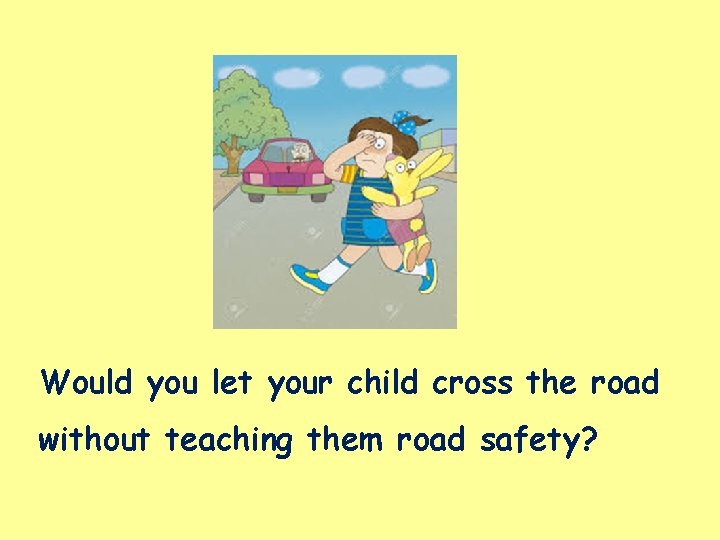
Would you let your child cross the road without teaching them road safety?
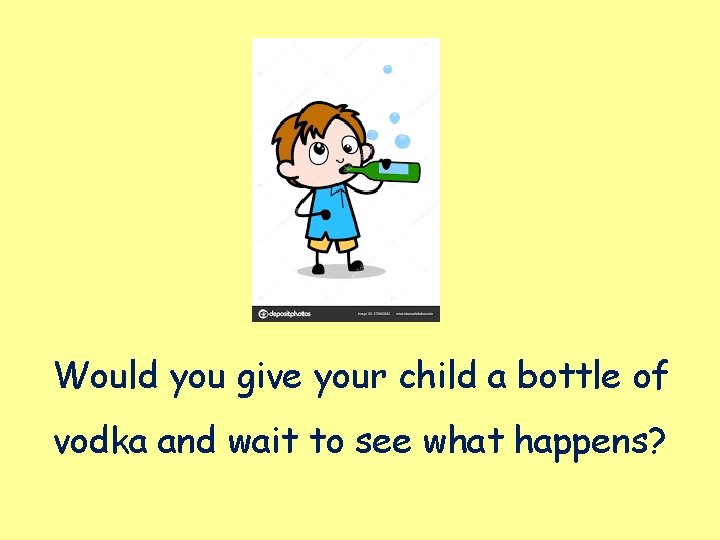
Would you give your child a bottle of vodka and wait to see what happens?
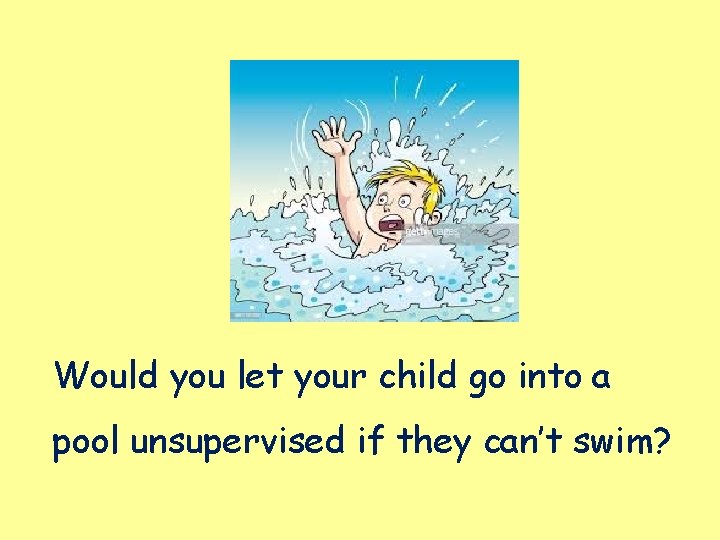
Would you let your child go into a pool unsupervised if they can’t swim?
The answer to all of these is… Of course you wouldn’t …so why do we allow our children to play games that we know nothing about? …or join in chats? …or use the ipad to search for whatever they choose? …unsupervised
State of Mind Survey: effects on self-esteem • Highest for self-esteem: You. Tube • Lowest for self-esteem: Snapchat and Instagram • Younger children mainly use online platforms for fun • Changes in Year 7 – over-dependency on validation and ‘likes’
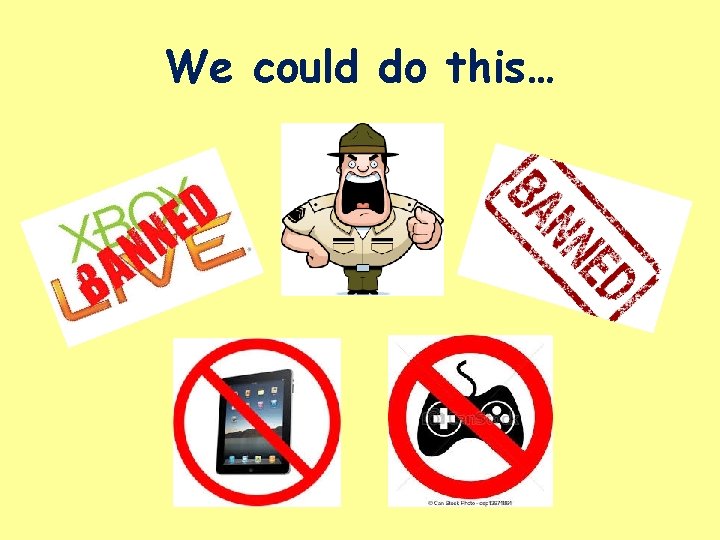
We could do this…
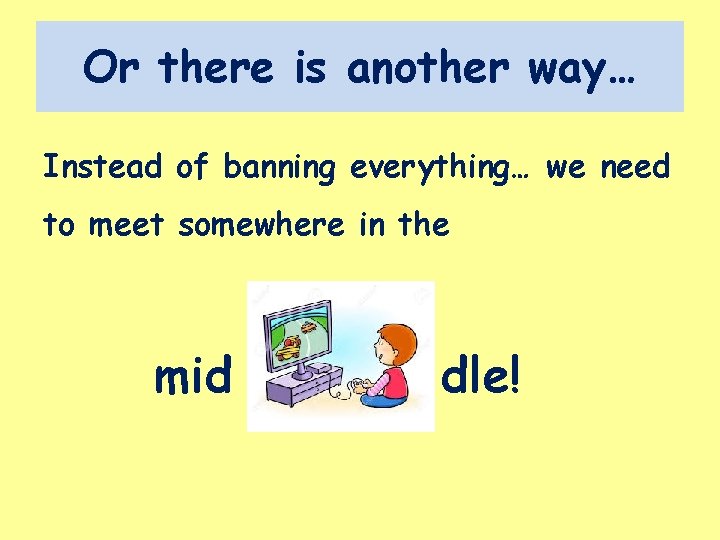
Or there is another way… Instead of banning everything… we need to meet somewhere in the mid dle!
…because it’s not all bad! Views from Young Minds young people’s workshop: • Meet people, make friends across the world • Everyone is equal • Unwinding after school – relaxing • No small talk • Learn new things
Top Tips What NOT to do: • Belittle their generation: ‘In my day…’ • Blame every misdemeanour on computer games and social media – they are bombarded with similar language and images on TV and songs • Snatch the ipad/controller – would we do this with a book? • Be intimidated by it just because it wasn’t around when you were young
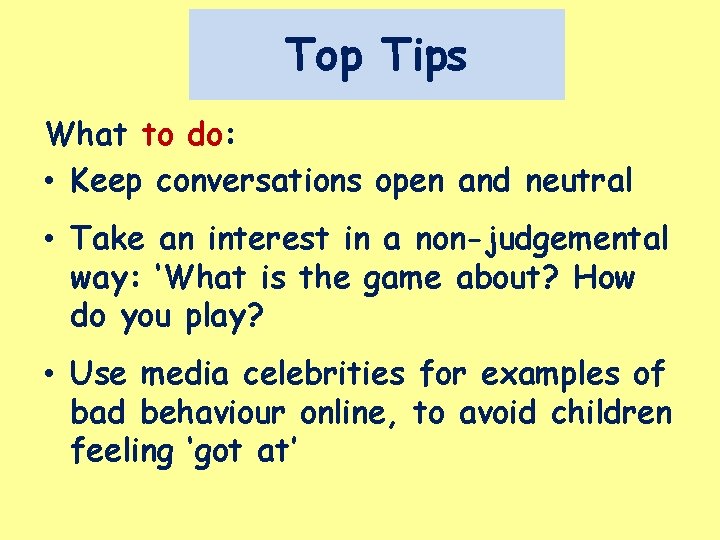
Top Tips What to do: • Keep conversations open and neutral • Take an interest in a non-judgemental way: ‘What is the game about? How do you play? • Use media celebrities for examples of bad behaviour online, to avoid children feeling ‘got at’
Top Tips What to do: • Digital detox – have a set time when all electronic devices are switched off – that includes adults • Compromise – not all or nothing
https: //www. internetmatters. org/resources/s ocial-media-advice-hub/
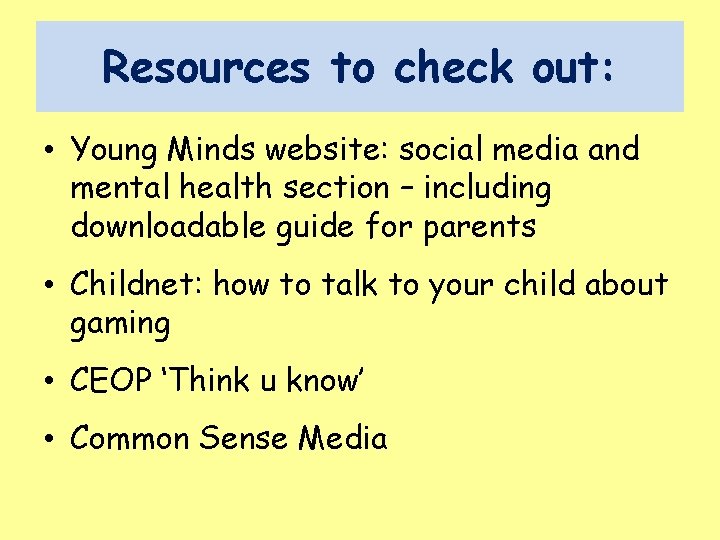
Resources to check out: • Young Minds website: social media and mental health section – including downloadable guide for parents • Childnet: how to talk to your child about gaming • CEOP ‘Think u know’ • Common Sense Media