
How to Get Through to your WFM Trainee
- Slides: 16
How to Get Through to your WFM Trainee: Training Your WFM Team Using Adult Learning Theory Sandra Mc. Fatridge, CVS Health
Sandra Mc. Fatridge, CWPP Sr. Manager, Resource Planning, CVS Health 28+ Years Management and Customer Service Experience 20+ Years Contact Center Experience • Hertz • Mobile. Comm • Capital One • Hilton Reservations Worldwide • Medco • Travelers • • • CVS HEALTH Fortune 500 Ranked #10 US and #35 Global 500 World’s Most Admired Companies #45 Forbes® Global 2000: Ranked 86 Number of Employees: 178 k worldwide 7800 CVS, Long and Navarro pharmacies 1100 Minute Clinic locations Caremark – PBM (Prescription Benefit Manager) and Mail Order Pharmacy
Objectives Understand why adults learn differently than children or teens. Understand the basics of analysis level learning. Understand how to apply adult learning principles to the training process in WFM.
Why are you here?
Is your WFM Staff doing training? • When do you find yourself needing to train? • What are you training when you do train? • Do you have any challenges? • Do you know how adults learn?
The Why Factor Children may absorb knowledge faster than adults, but adults can understand apply knowledge faster than children. What gets in the way of adult learning is the application barrier, needing to know how this knowledge applies before being ready to learn it. Removing the why up-front helps the adult to learn.
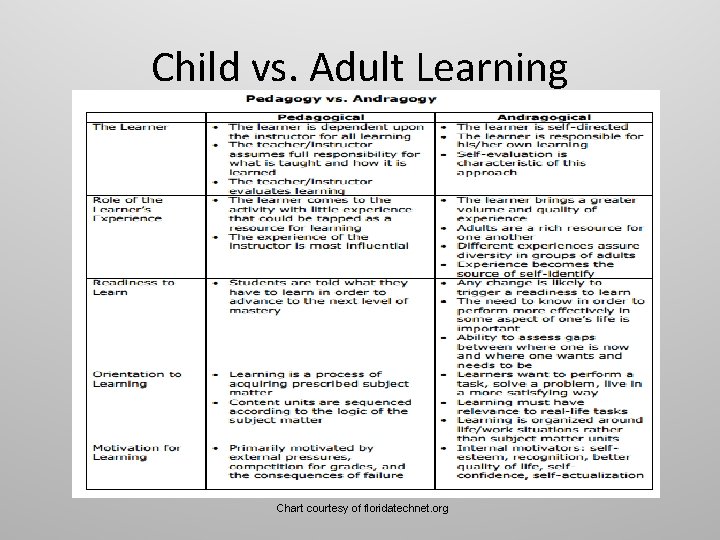
Child vs. Adult Learning Chart courtesy of floridatechnet. org
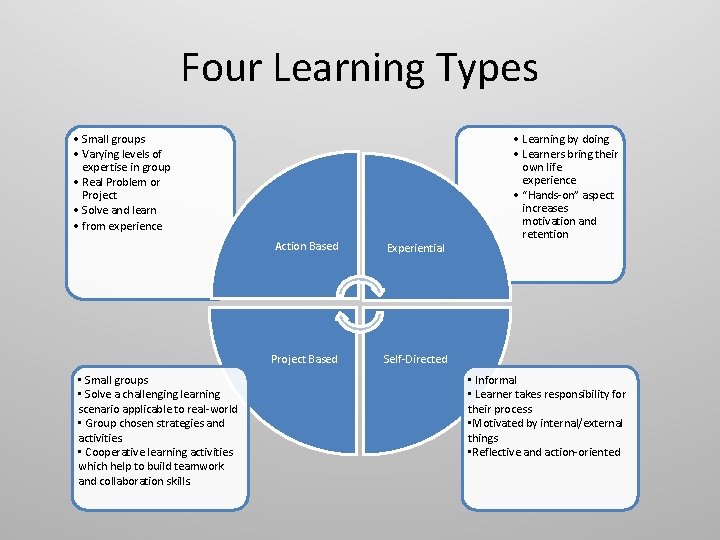
Four Learning Types • Small groups • Varying levels of expertise in group • Real Problem or Project • Solve and learn • from experience • Small groups • Solve a challenging learning scenario applicable to real-world • Group chosen strategies and activities. • Cooperative learning activities which help to build teamwork and collaboration skills. Action Based Experiential Project Based Self-Directed • Learning by doing • Learners bring their own life experience • “Hands-on” aspect increases motivation and retention • Informal • Learner takes responsibility for their process • Motivated by internal/external things • Reflective and action-oriented
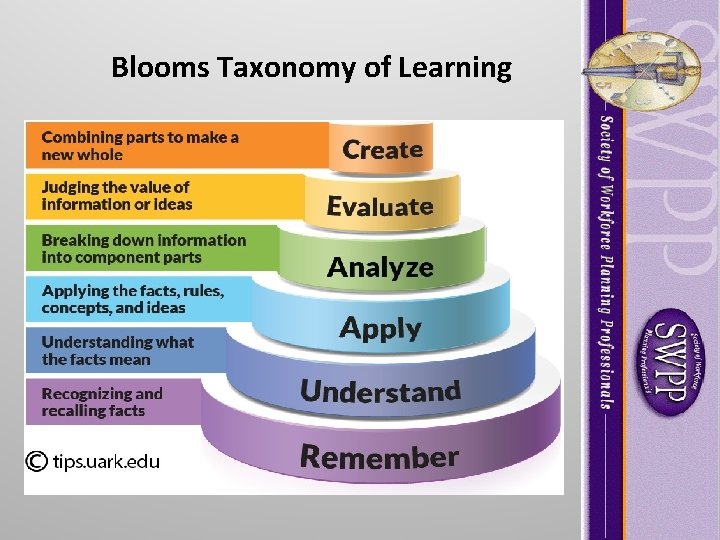
Blooms Taxonomy of Learning
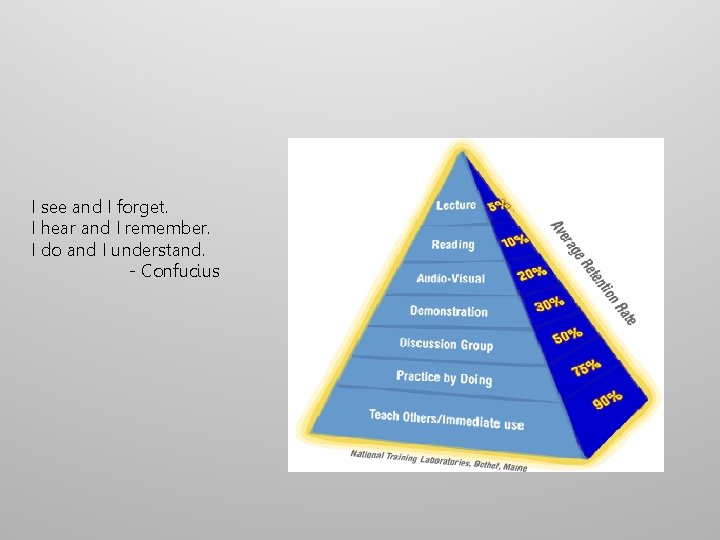
I see and I forget. I hear and I remember. I do and I understand. - Confucius
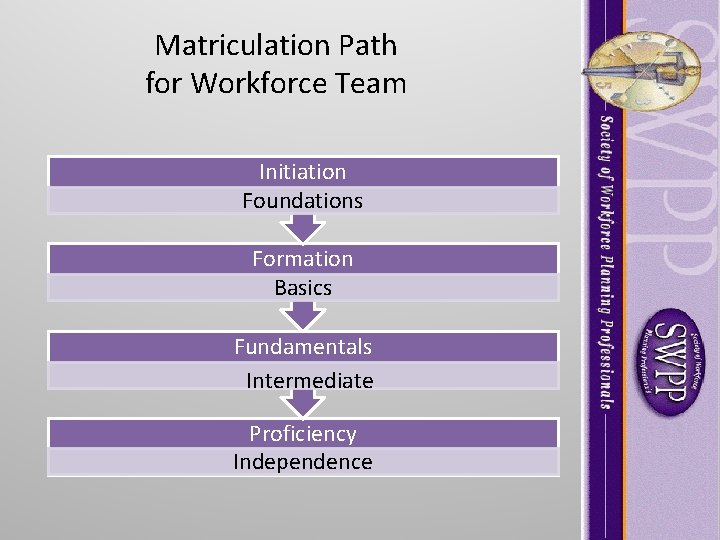
Matriculation Path for Workforce Team Initiation Foundations Formation Basics Fundamentals Intermediate Proficiency Independence
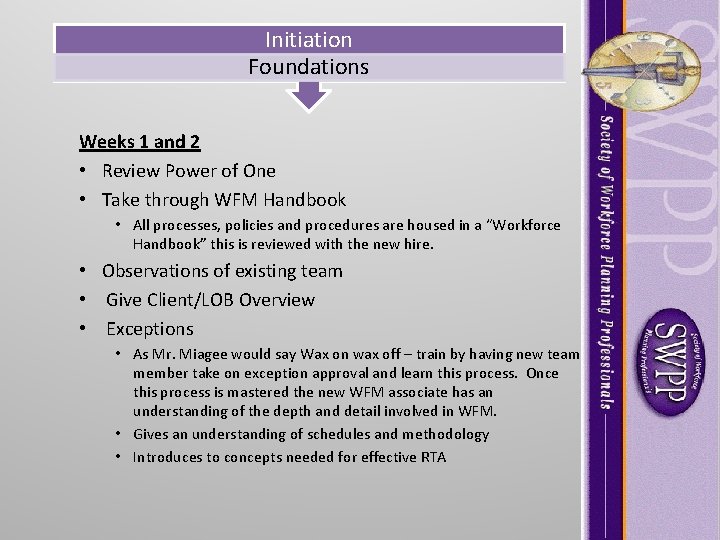
Initiation Foundations Weeks 1 and 2 • Review Power of One • Take through WFM Handbook • All processes, policies and procedures are housed in a “Workforce Handbook” this is reviewed with the new hire. • Observations of existing team • Give Client/LOB Overview • Exceptions • As Mr. Miagee would say Wax on wax off – train by having new team member take on exception approval and learn this process. Once this process is mastered the new WFM associate has an understanding of the depth and detail involved in WFM. • Gives an understanding of schedules and methodology • Introduces to concepts needed for effective RTA
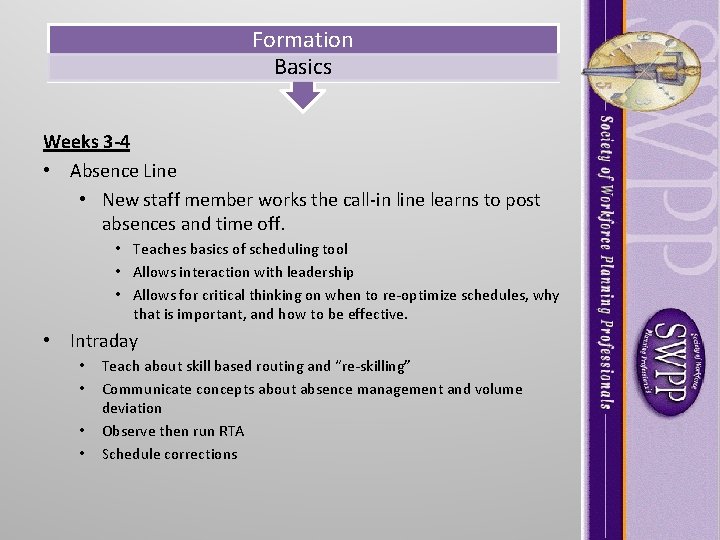
Formation Basics Weeks 3 -4 • Absence Line • New staff member works the call-in line learns to post absences and time off. • Teaches basics of scheduling tool • Allows interaction with leadership • Allows for critical thinking on when to re-optimize schedules, why that is important, and how to be effective. • Intraday • • Teach about skill based routing and “re-skilling” Communicate concepts about absence management and volume deviation Observe then run RTA Schedule corrections
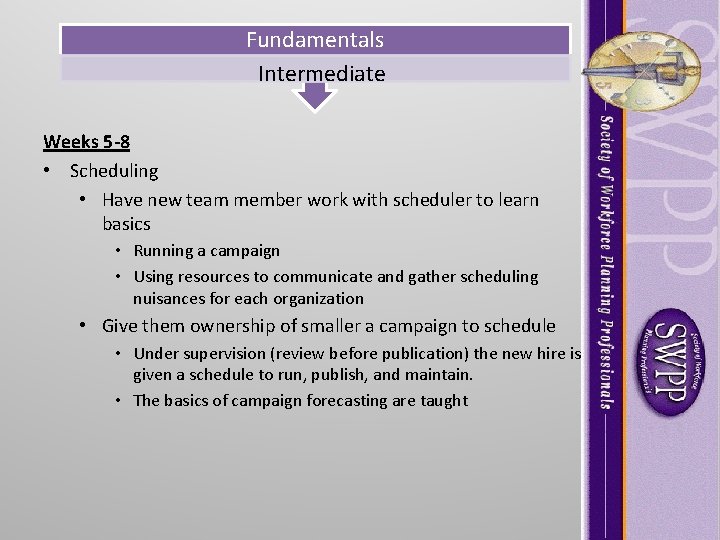
Fundamentals Intermediate Weeks 5 -8 • Scheduling • Have new team member work with scheduler to learn basics • Running a campaign • Using resources to communicate and gather scheduling nuisances for each organization • Give them ownership of smaller a campaign to schedule • Under supervision (review before publication) the new hire is given a schedule to run, publish, and maintain. • The basics of campaign forecasting are taught
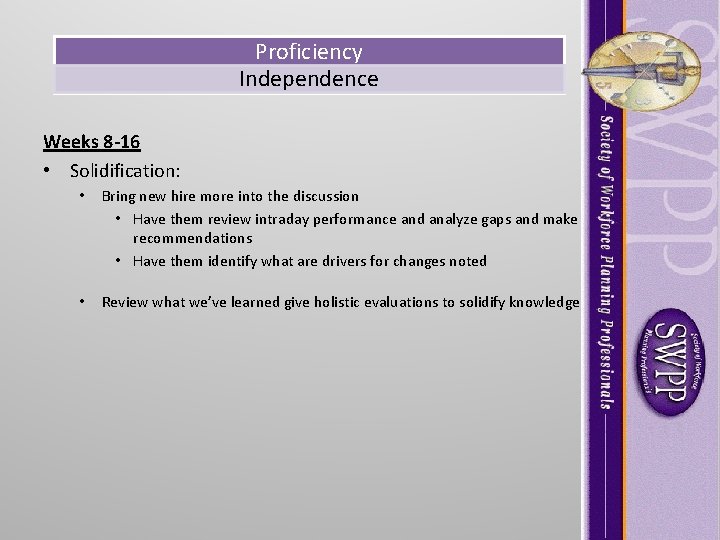
Proficiency Independence Weeks 8 -16 • Solidification: • Bring new hire more into the discussion • Have them review intraday performance and analyze gaps and make recommendations • Have them identify what are drivers for changes noted • Review what we’ve learned give holistic evaluations to solidify knowledge.
Questions?