
How to get published A quick guide to
How to get published – A quick guide to help you publish successfully Marcin Kwiatkowski Regional Sales Manager – Israel, C&E Europe marcin. kwiatkowski@sagepub. co. uk Los Angeles | London | New Delhi | Singapore | Washington DC
Agenda • SAGE Story • Why publish? • The process: • Choosing your journal • Finding specific guidelines • Writing your paper • • • When it goes wrong (and right!) Your role, and ours Where to find help Research resources SAGE Research Methods SAGE Open Access Los Angeles | London | New Delhi | Singapore | Washington DC
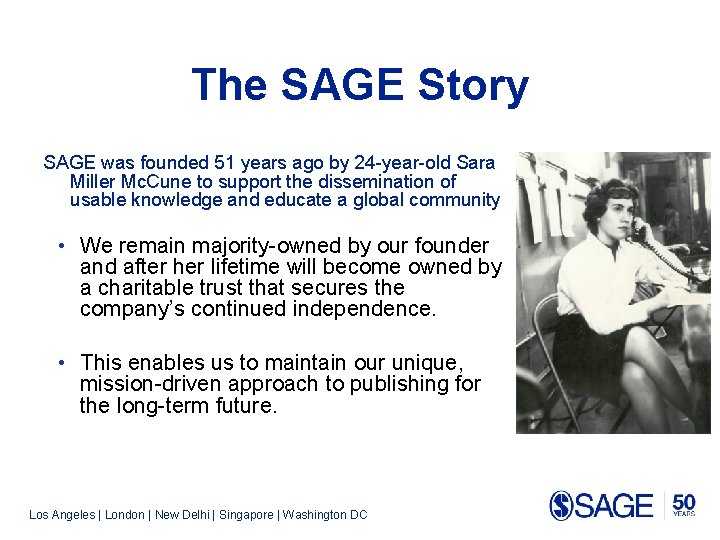
The SAGE Story SAGE was founded 51 years ago by 24 -year-old Sara Miller Mc. Cune to support the dissemination of usable knowledge and educate a global community • We remain majority-owned by our founder and after her lifetime will become owned by a charitable trust that secures the company’s continued independence. • This enables us to maintain our unique, mission-driven approach to publishing for the long-term future. Los Angeles | London | New Delhi | Singapore | Washington DC
SAGE & Ben Gurion University Los Angeles | London | New Delhi | Singapore | Washington DC
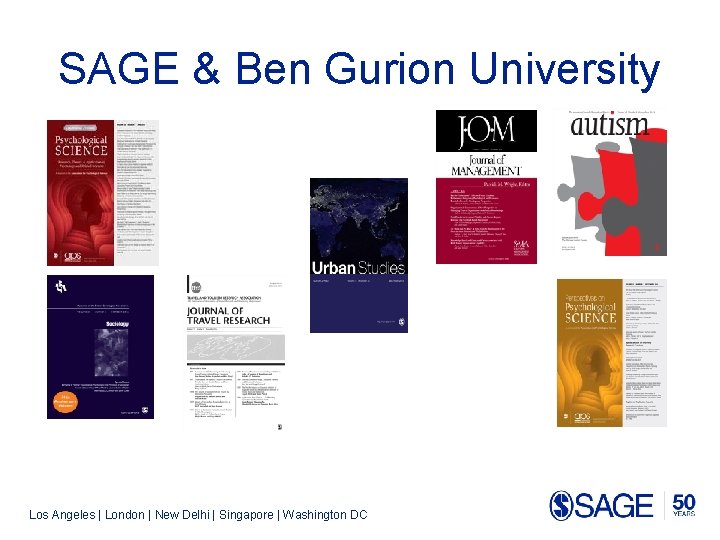
SAGE & Ben Gurion University Los Angeles | London | New Delhi | Singapore | Washington DC
SAGE & Ben Gurion University Publishing with SAGE - Arts and Humanities Business Management Communication & Media Studies Education Engineering and Material Sciences Health Sciences Politics & International Relations Psychology Sociology Los Angeles | London | New Delhi | Singapore | Washington DC
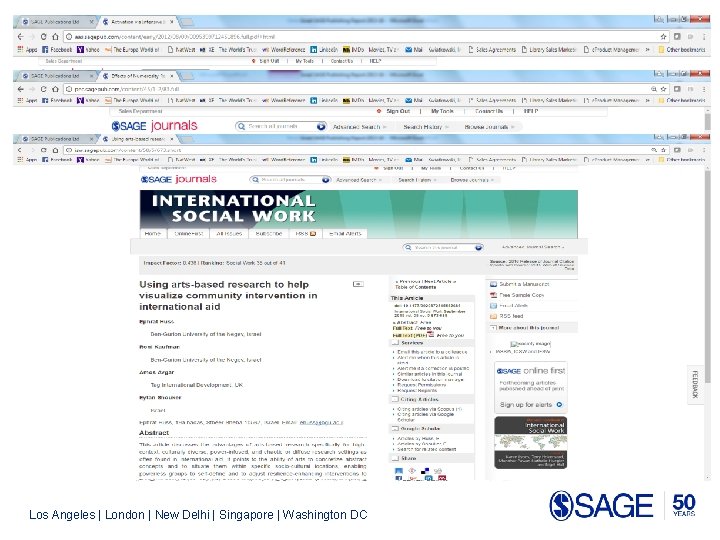
Los Angeles | London | New Delhi | Singapore | Washington DC
Why publish? • Are you sure you have something to say? • Where is the best place to say it? • Journal article? Book? Blog? • A genuine contribution to knowledge – is it original? Is it concise? • • Disseminate your research findings to the community Make a contribution to your field of study Influence policy Advance your career Los Angeles | London | New Delhi | Singapore | Washington DC
Some general guidelines… • Make sure you have something worthwhile to say • Find the right journal to say it in • Find their specific submission guidelines and follow them completely • Read articles from your chosen journal to get a sense for what they publish • Submit to only one journal at a time • Ask a friend, colleague or peer to proofread your work before submission • Take any feedback constructively – not personally Los Angeles | London | New Delhi | Singapore | Washington DC
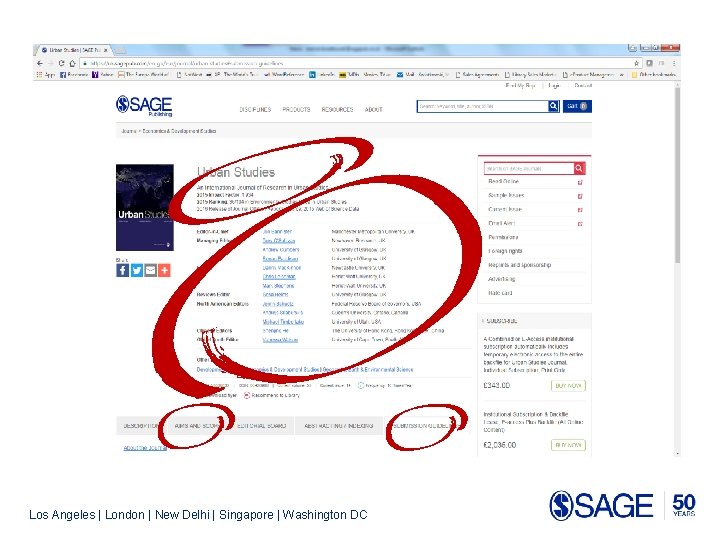
How to choose the right journal Choosing the right journal is key to acceptance. Consider: • • Which journals do you read and cite regularly? Which journals focus most closely on your field of research? What is the publisher’s reputation? Who is the editor? Who is on the editorial board? How international is the journal’s scope? Do you know someone who has published in the journal? Los Angeles | London | New Delhi | Singapore | Washington DC
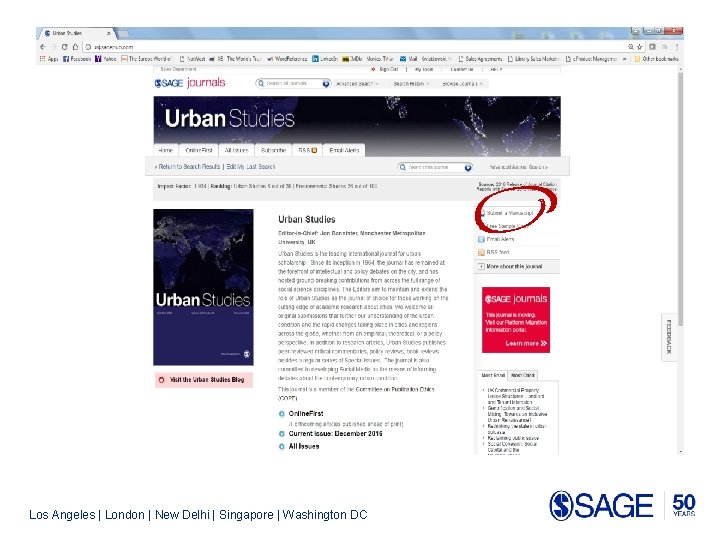
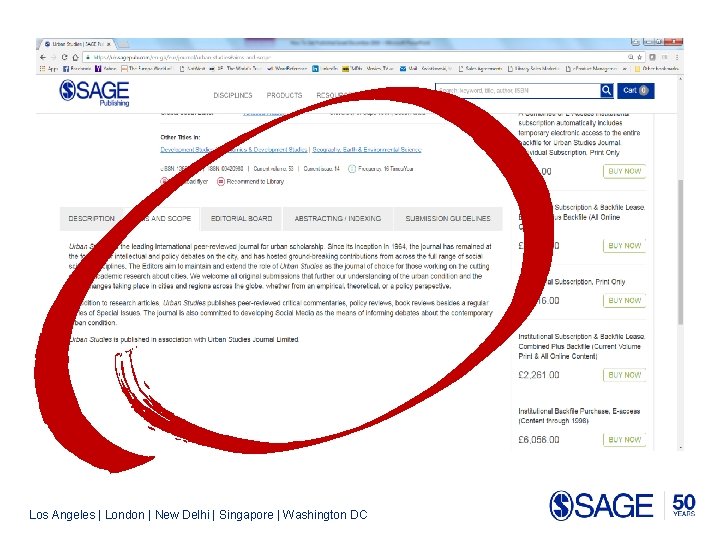
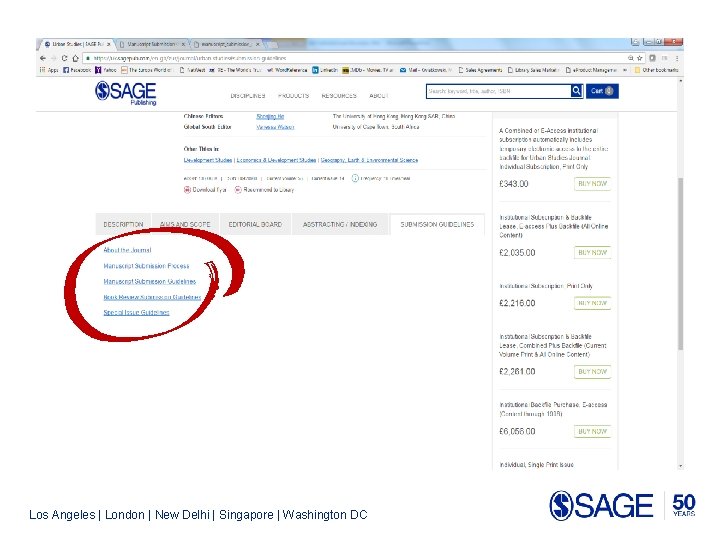
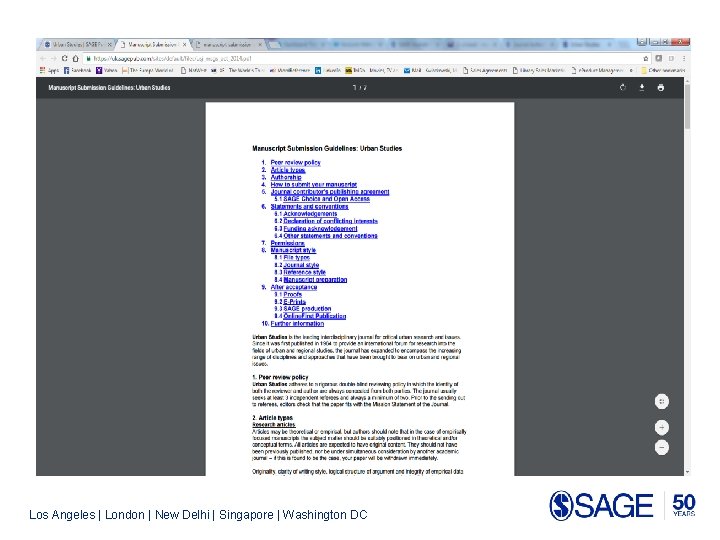
How to choose the right journal Once you have created your shortlist… • • • What are their aims, scope and subject area? Are they are a member of COPE? What is their impact factor? How well-ranked are they? What is their open-access policy How long would the process take? Review previous issues of each suitable journal… • • Do they publish your kind of work? Do you like their style? Do you think they would accept your work? What are their individual submission guidelines? Can you meet them? Los Angeles | London | New Delhi | Singapore | Washington DC
Los Angeles | London | New Delhi | Singapore | Washington DC
Los Angeles | London | New Delhi | Singapore | Washington DC
Los Angeles | London | New Delhi | Singapore | Washington DC
Los Angeles | London | New Delhi | Singapore | Washington DC
Los Angeles | London | New Delhi | Singapore | Washington DC
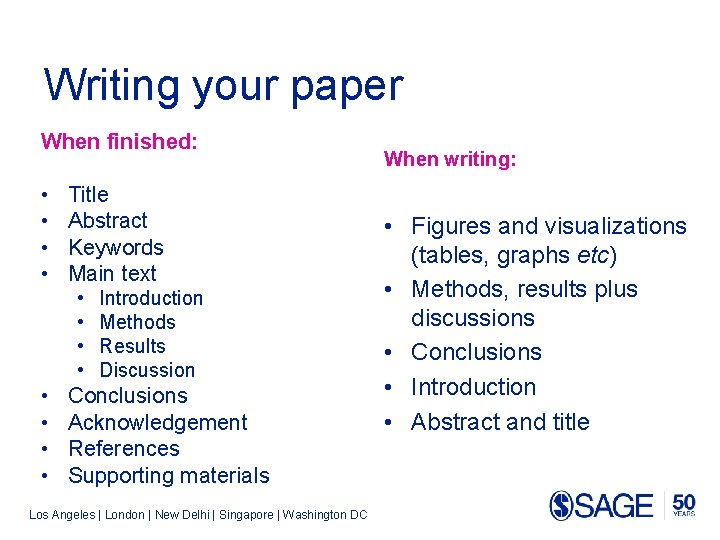
Writing your paper When finished: • • Title Abstract Keywords Main text • • Introduction Methods Results Discussion Conclusions Acknowledgement References Supporting materials Los Angeles | London | New Delhi | Singapore | Washington DC When writing: • Figures and visualizations (tables, graphs etc) • Methods, results plus discussions • Conclusions • Introduction • Abstract and title
Writing a good title and abstract • The better your title and abstract, the more your work will be: • Discovered • Read • Cited • Consider what your audience would be searching for (keywords) • Choose these words carefully - test them with your own internet searches: are you finding what you would expect? • Include your keywords in: • The title • In your abstract (3 to 4 different keywords) • Throughout your paper • All without losing the natural flow of language! Los Angeles | London | New Delhi | Singapore | Washington DC
Preparing your manuscript: copyright and publication ethics • • • Obtain permission for all copyrighted material Authorship Acknowledgement Funding statement Conflict of interest Research ethics COPE - http: //publicationethics. org/ Los Angeles | London | New Delhi | Singapore | Washington DC
Submit! • Check the guidelines one more time • Check your formatting and additional submissions • Have it proof-read • Submit to one journal at a time • Submission is usually via an online manuscript submission system, e. g. Scholar. One Manuscripts • And now wait…. … but for how long? Los Angeles | London | New Delhi | Singapore | Washington DC
The publication process • Initial decision • Desk reject: immediate decision Or • Peer review decision • • Reject Accept with major revisions Accept with minor revisions Accept and publish Los Angeles | London | New Delhi | Singapore | Washington DC The peer review process Paper is sent out to two or three referees by an Associate Editor Referees write a report and make recommendation to the journal Editor
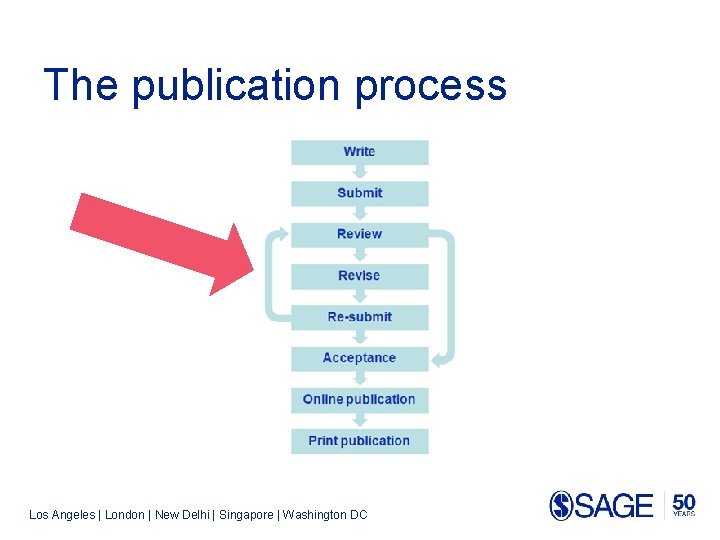
The publication process Los Angeles | London | New Delhi | Singapore | Washington DC
Handling revisions • • Read the reports and Editor’s letter carefully Follow the timeframes requested Clearly demonstrate what you have changed Address each referee point in a covering note • If you can’t meet all criticisms, explain why • Be positive and polite • Process can take 2 to 3 iterations – be patient Los Angeles | London | New Delhi | Singapore | Washington DC
Why do papers get rejected? • Referees are not convinced of the contribution to the knowledge base • Methods are not robust enough for the journal • e. g. too few observations on quantitative papers • e. g. transparency of qualitative methods • Specific sections are weak • Conclusion • Discussion • Bad grammar and writing Los Angeles | London | New Delhi | Singapore | Washington DC
What to do if it goes wrong • Stay calm • Read the referees’ report and the Editor’s letter • Try and re-work the paper according to their recommendations • Consider submitting to an alternative journal • Write another paper! Los Angeles | London | New Delhi | Singapore | Washington DC
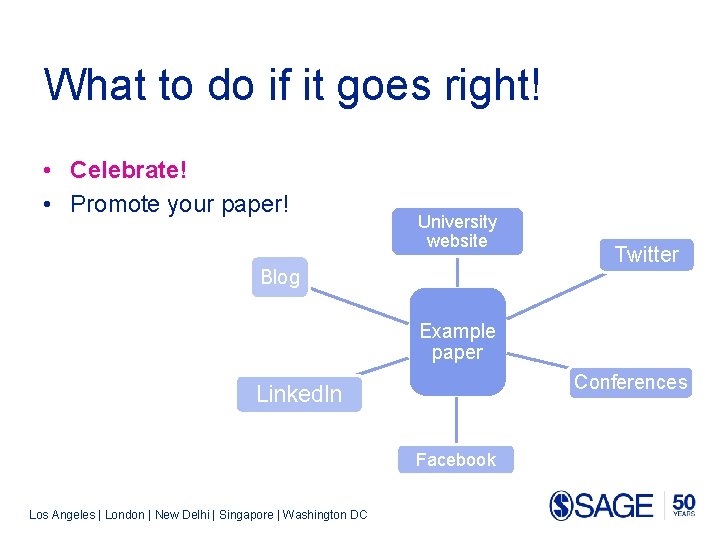
What to do if it goes right! • Celebrate! • Promote your paper! University website Blog Twitter Example paper Conferences Linked. In Facebook Los Angeles | London | New Delhi | Singapore | Washington DC
Your role, and ours Los Angeles | London | New Delhi | Singapore | Washington DC
The responsibilities of the author • Professional ethics as a researcher searching the truth (no fraud or distortion) • Accurate and professional account of research and relevance to others (clear concise communication) • A commitment to the public good and public values (despite intense competitive pressure in research) • Respect to peers and to the public served (issues such as privacy) Los Angeles | London | New Delhi | Singapore | Washington DC
The responsibilities of the publisher • • Sustainability of journals Quality of editor and editorial boards Relevance of the journal as a field develops (managing the aims and scope) • Dissemination of content • Uphold ethical values of the publication Los Angeles | London | New Delhi | Singapore | Washington DC
Author rights in the digital age • Copyright situation can be much more complex • Funders may require authors to make their papers available in repositories • Responsibilities sometimes at odds with publisher requirements • It may be up to you to ensure the paper is posted in the right place • Publisher policies vary Stay informed and if unsure, ask! Los Angeles | London | New Delhi | Singapore | Washington DC
Where to find help Think. Check. Submit • A campaign designed to help researchers follow best-practice during the submission process Sense About Science • Offers free resources to help scientists ensure their work is academically rigorous and reaches the widest possible audience SAGE is dedicated to helping researchers be the best they can be • SAGE Journal Author Gateway provides plenty of tips on improving your chances of publication • SAGE Research Methods helps researchers refine and improve their research skills Los Angeles | London | New Delhi | Singapore | Washington DC
Los Angeles | London | New Delhi | Singapore | Washington DC
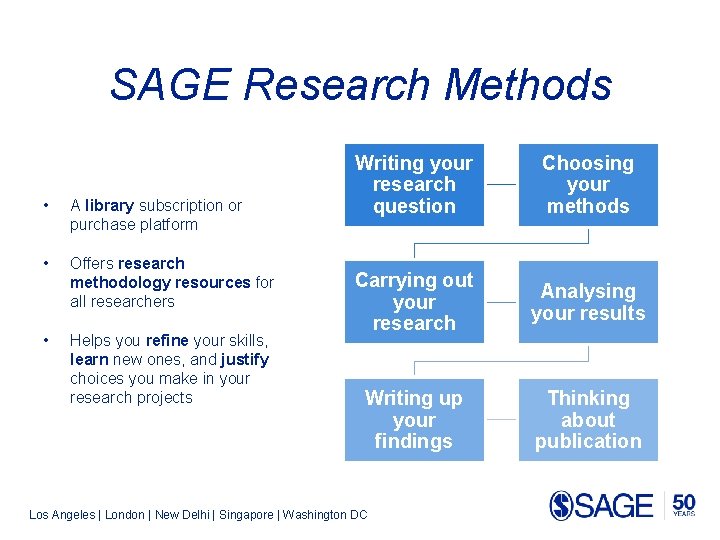
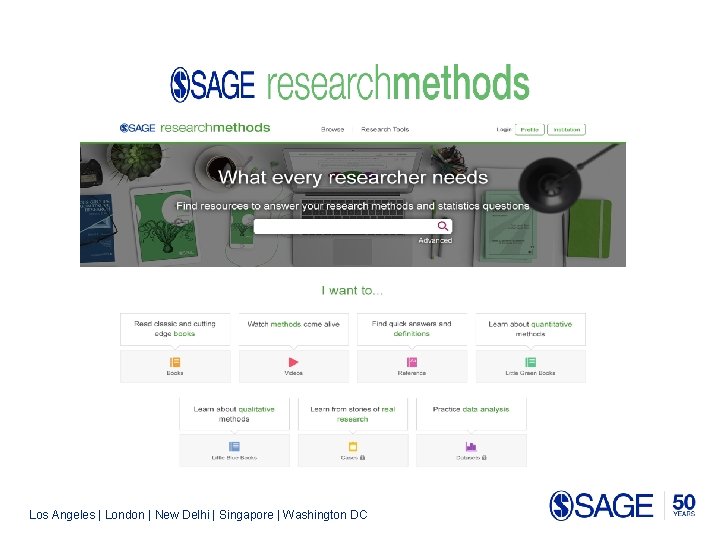
SAGE Research Methods • A library subscription or purchase platform • Offers research methodology resources for all researchers • Helps you refine your skills, learn new ones, and justify choices you make in your research projects Writing your research question Choosing your methods Carrying out your research Analysing your results Writing up your findings Thinking about publication Los Angeles | London | New Delhi | Singapore | Washington DC
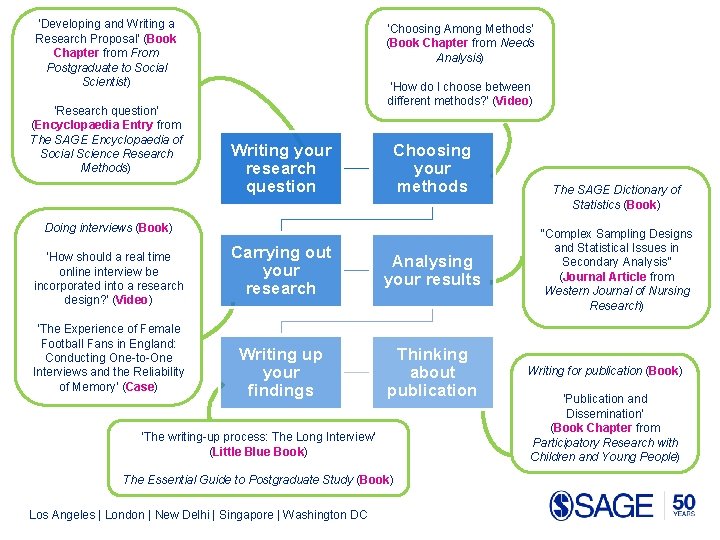
‘Developing and Writing a Research Proposal’ (Book Chapter from From Postgraduate to Social Scientist) ‘Research question’ (Encyclopaedia Entry from The SAGE Encyclopaedia of Social Science Research Methods) ‘Choosing Among Methods’ (Book Chapter from Needs Analysis) ‘How do I choose between different methods? ’ (Video) Writing your research question Choosing your methods Doing interviews (Book) ‘How should a real time online interview be incorporated into a research design? ’ (Video) ‘The Experience of Female Football Fans in England: Conducting One-to-One Interviews and the Reliability of Memory’ (Case) Carrying out your research Analysing your results Writing up your findings Thinking about publication ‘The writing-up process: The Long Interview’ (Little Blue Book) The Essential Guide to Postgraduate Study (Book) Los Angeles | London | New Delhi | Singapore | Washington DC The SAGE Dictionary of Statistics (Book) “Complex Sampling Designs and Statistical Issues in Secondary Analysis” (Journal Article from Western Journal of Nursing Research) Writing for publication (Book) ‘Publication and Dissemination’ (Book Chapter from Participatory Research with Children and Young People)
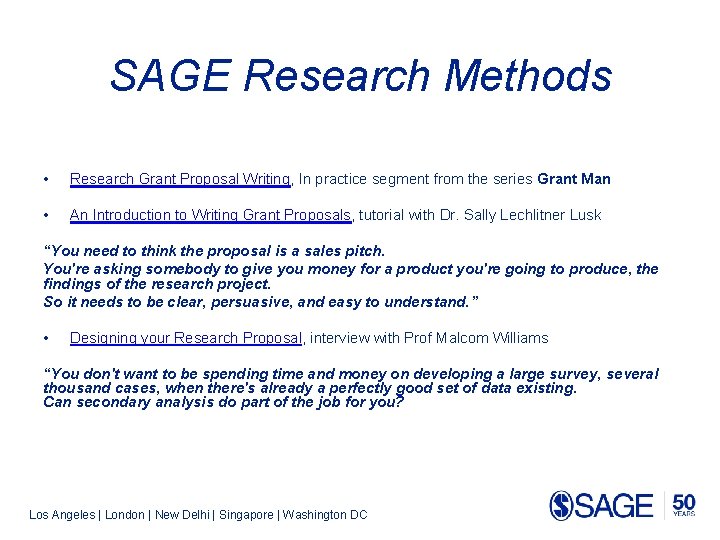
SAGE Research Methods • Research Grant Proposal Writing, In practice segment from the series Grant Man • An Introduction to Writing Grant Proposals, tutorial with Dr. Sally Lechlitner Lusk “You need to think the proposal is a sales pitch. You're asking somebody to give you money for a product you're going to produce, the findings of the research project. So it needs to be clear, persuasive, and easy to understand. ” • Designing your Research Proposal, interview with Prof Malcom Williams “You don't want to be spending time and money on developing a large survey, several thousand cases, when there's already a perfectly good set of data existing. Can secondary analysis do part of the job for you? Los Angeles | London | New Delhi | Singapore | Washington DC
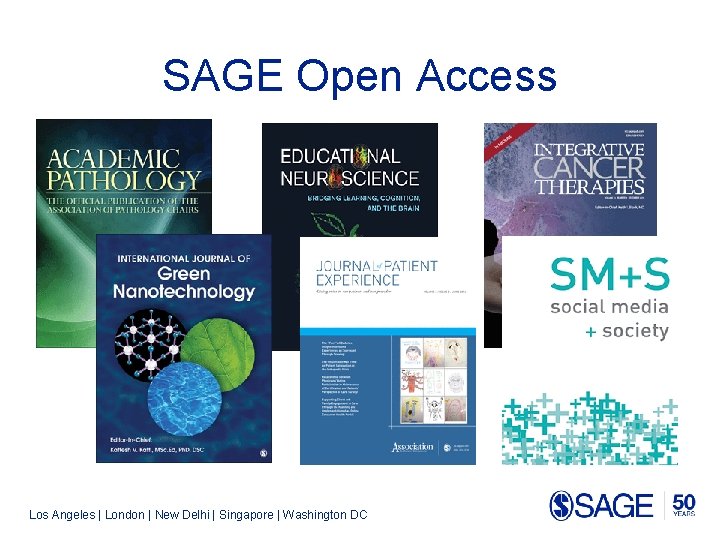
SAGE Open Access Los Angeles | London | New Delhi | Singapore | Washington DC
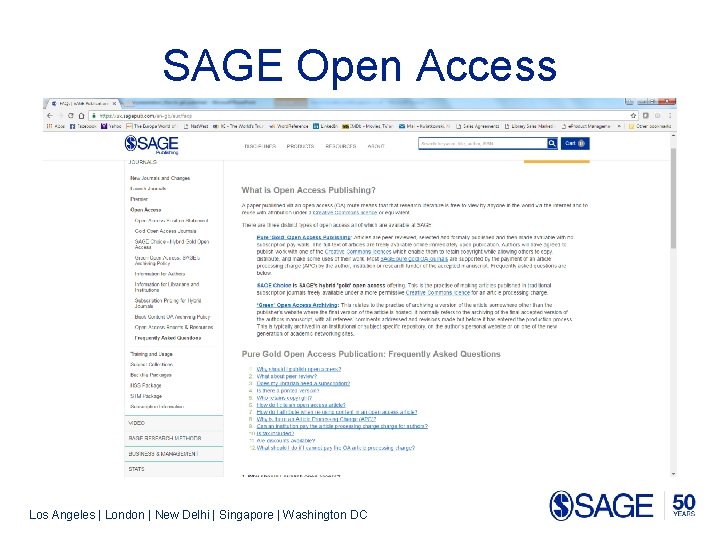
SAGE Open Access Los Angeles | London | New Delhi | Singapore | Washington DC
Frequently asked questions • How much does it cost to publish my article with SAGE? • How long does the process take? • I have presented my research at a conference; can I publish it with SAGE? • Can I use something I have seen in a SAGE journal in my own work? • Will you publish my article? Los Angeles | London | New Delhi | Singapore | Washington DC
Thanks for listening! Los Angeles | London | New Delhi | Singapore | Washington DC
- Slides: 39