
How to Find and Access Data in Europe
- Slides: 67
How to Find and Access Data in Europe A practical introduction Irena Vipavc Brvar (ADP - Slovenian Social Science Data Archives) Jennifer Buckley (UKDS – United Kingdom Data Service) GSERM – Global School Empirical Research Methods, Summer School Ljubljana, 21 and 28 August, 2019
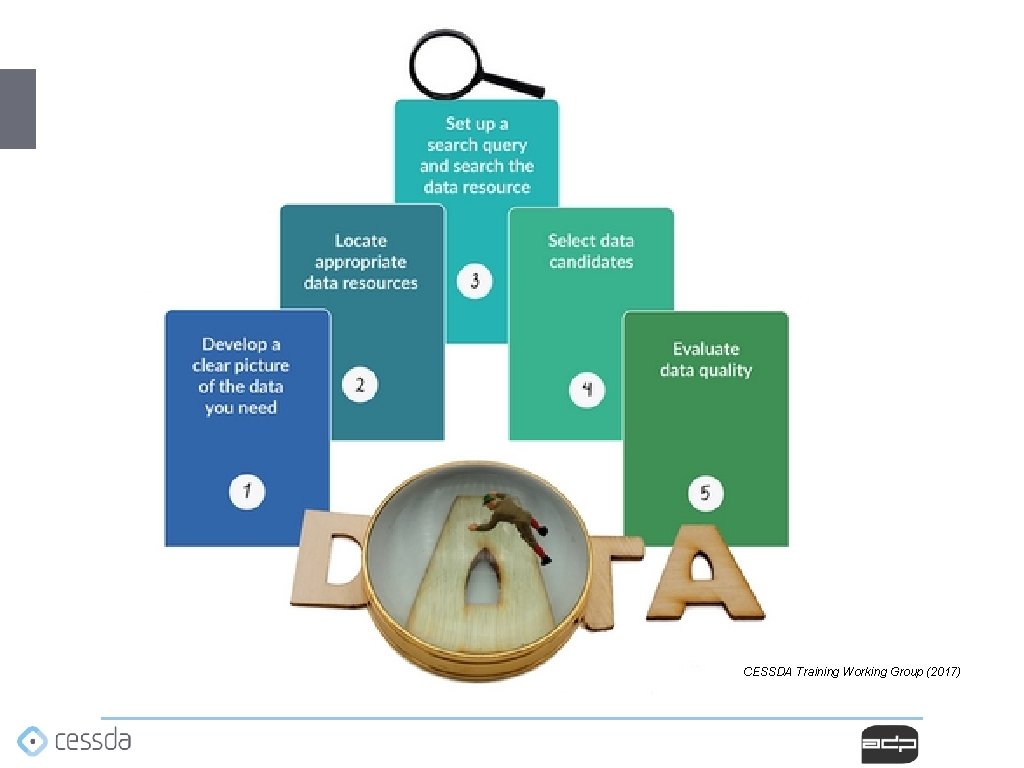
Overview Data types and sources Identify what you need Searching data archives Evaluating data: quality and usefulness Accessing data CESSDA Training Working Group (2017)
Data types and sources
Activity 1 Your knowledge and experience of the data landscape Introduce yourself Tell us about your research work (current, future, past) Did you use or you intend to use available data for your work? Tell us about it.
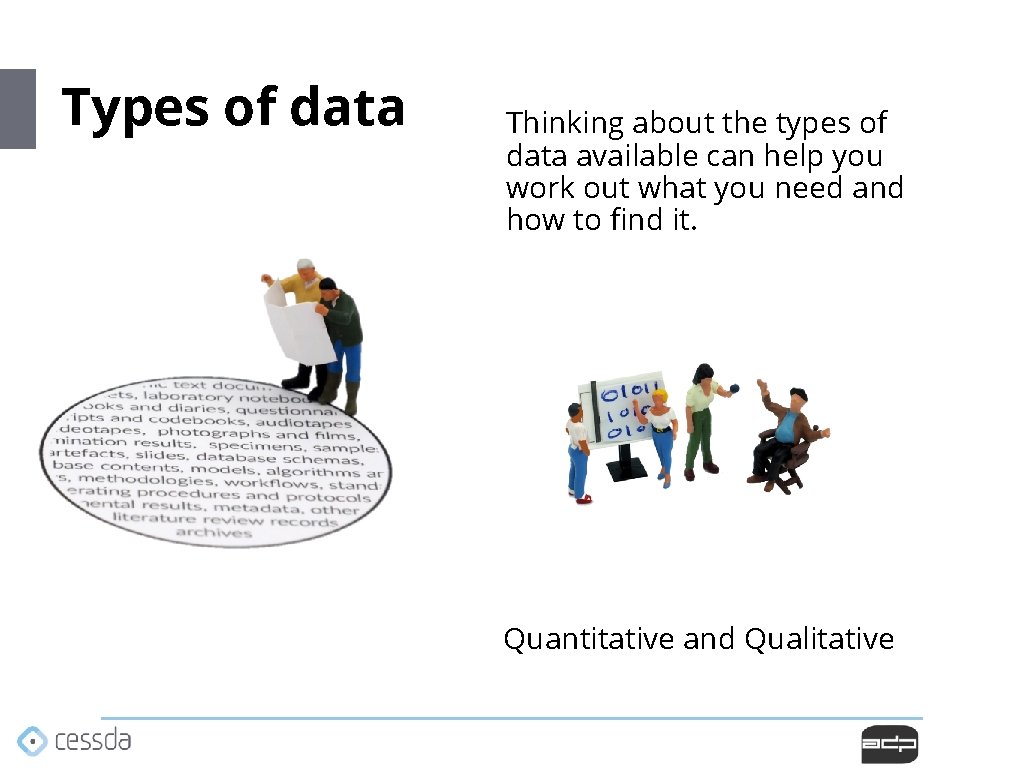
Types of data Thinking about the types of data available can help you work out what you need and how to find it. Quantitative and Qualitative
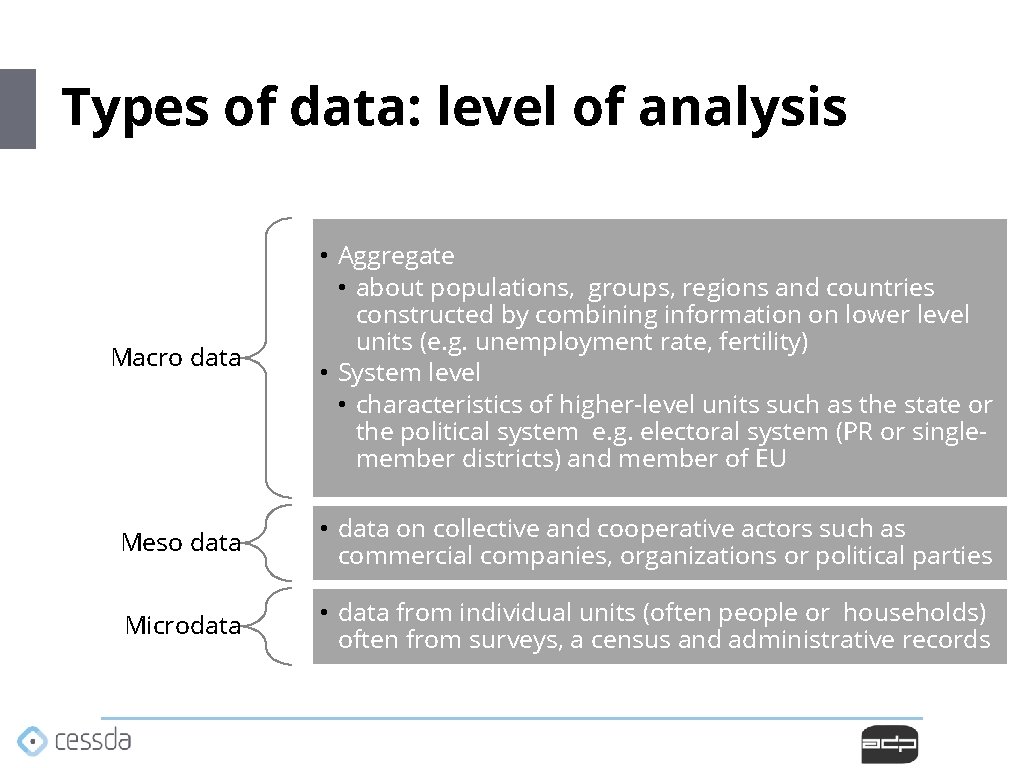
Types of data: level of analysis Macro data • Aggregate • about populations, groups, regions and countries constructed by combining information on lower level units (e. g. unemployment rate, fertility) • System level • characteristics of higher-level units such as the state or the political system e. g. electoral system (PR or singlemember districts) and member of EU Meso data • data on collective and cooperative actors such as commercial companies, organizations or political parties Microdata • data from individual units (often people or households) often from surveys, a census and administrative records
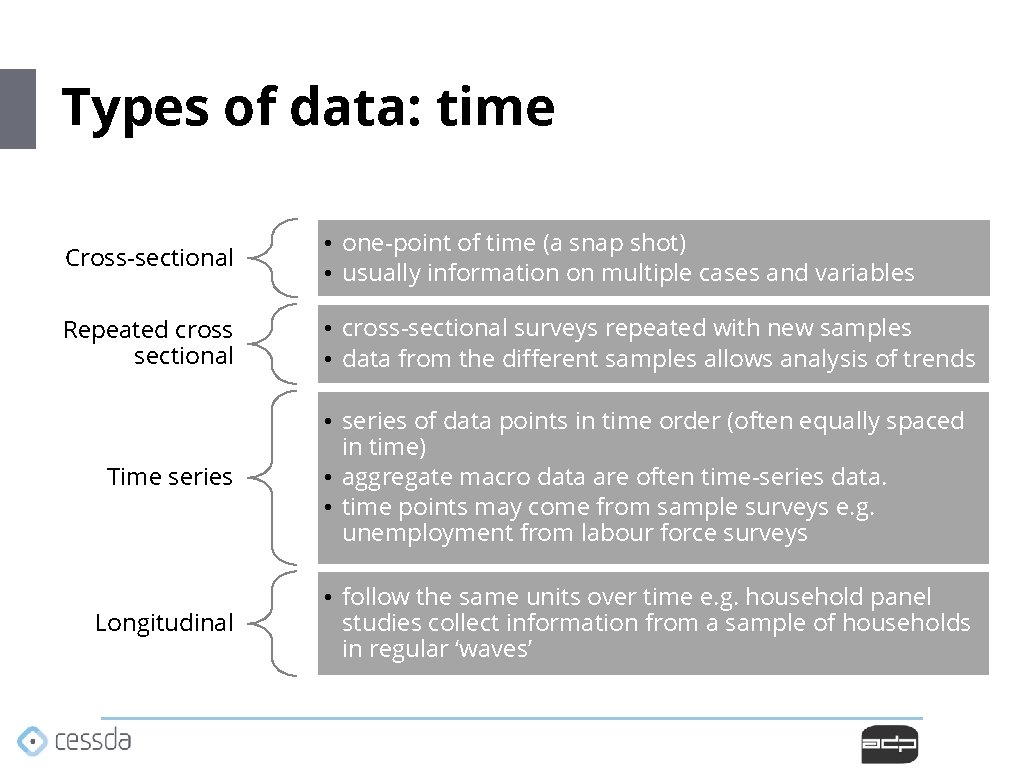
Types of data: time Cross-sectional • one-point of time (a snap shot) • usually information on multiple cases and variables Repeated cross sectional • cross-sectional surveys repeated with new samples • data from the different samples allows analysis of trends Time series • series of data points in time order (often equally spaced in time) • aggregate macro data are often time-series data. • time points may come from sample surveys e. g. unemployment from labour force surveys Longitudinal • follow the same units over time e. g. household panel studies collect information from a sample of households in regular ‘waves’
Sources of data There are many sources of data. CESSDA Training Working Group (2017)
European social science data archives Data collections include: variation between archives quantitative data - major source of individual level data qualitative outputs of major academic projects government/policy small research teams individual researchers recent and less recent data different languages 9
Consortium of European Social Science Data Archives ” enabling the research community to conduct highquality research in the social science” Key tasks: Developing standards and best practices around the management and archiving of social science data. Facilitating access to important data resources Work done by developing tools, training and coordinating network. CESSDA data catalogue.
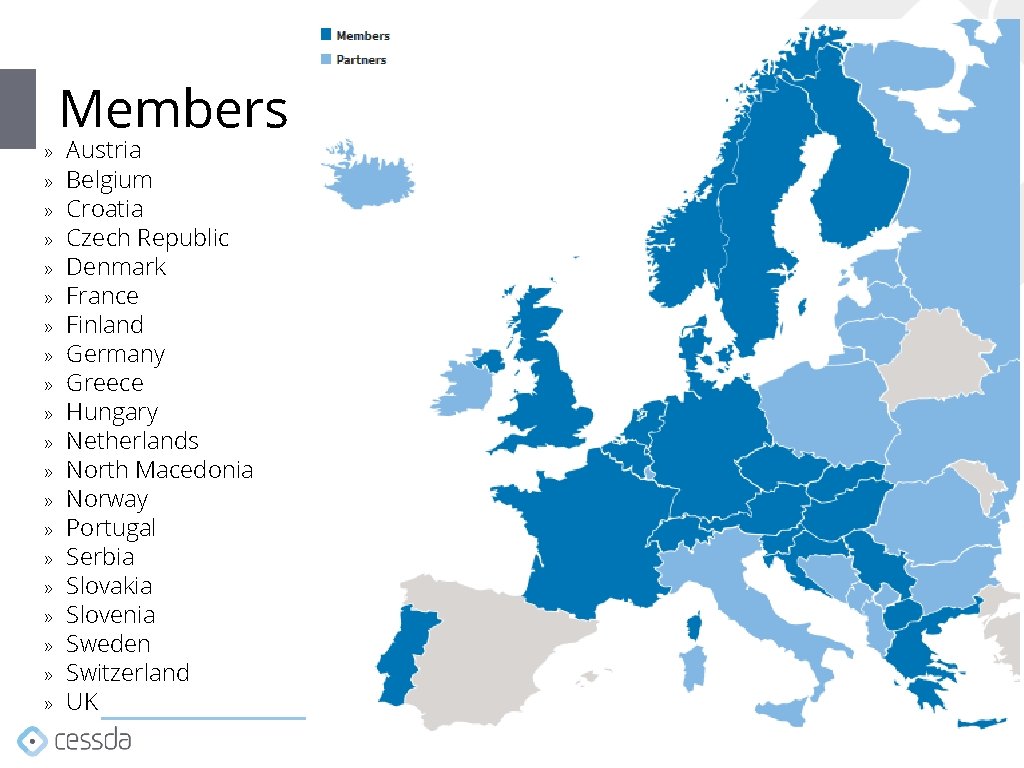
» » » » » Members Austria Belgium Croatia Czech Republic Denmark France Finland Germany Greece Hungary Netherlands North Macedonia Norway Portugal Serbia Slovakia Slovenia Sweden Switzerland UK 11
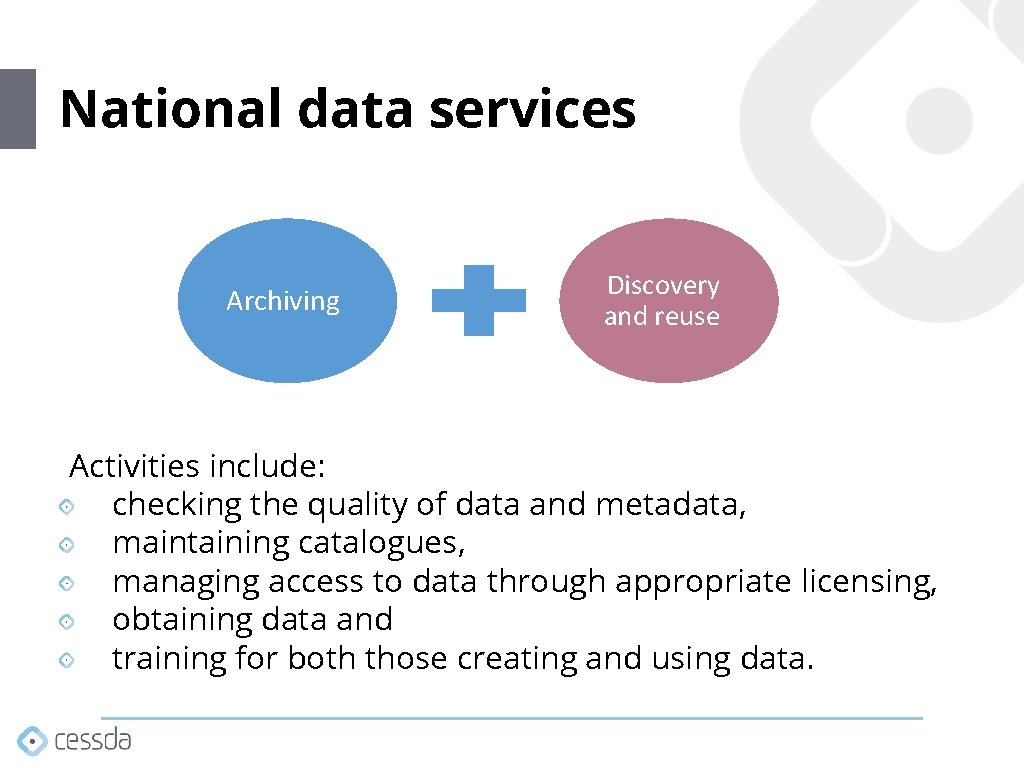
National data services Archiving Discovery and reuse Activities include: checking the quality of data and metadata, maintaining catalogues, managing access to data through appropriate licensing, obtaining data and training for both those creating and using data.
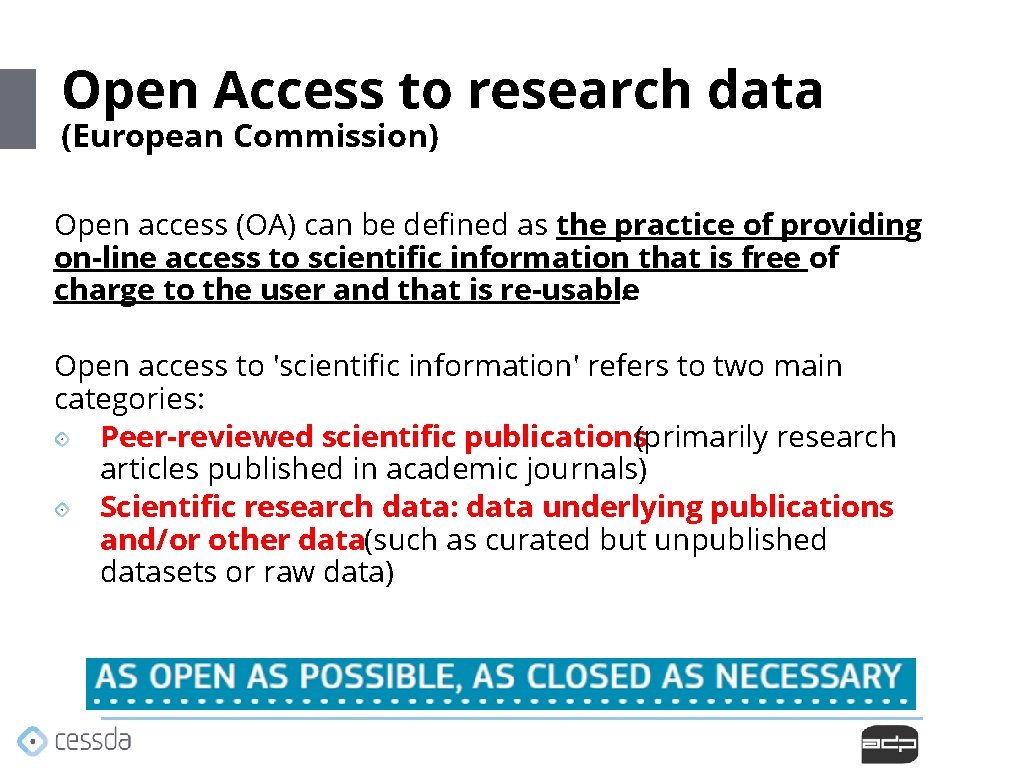
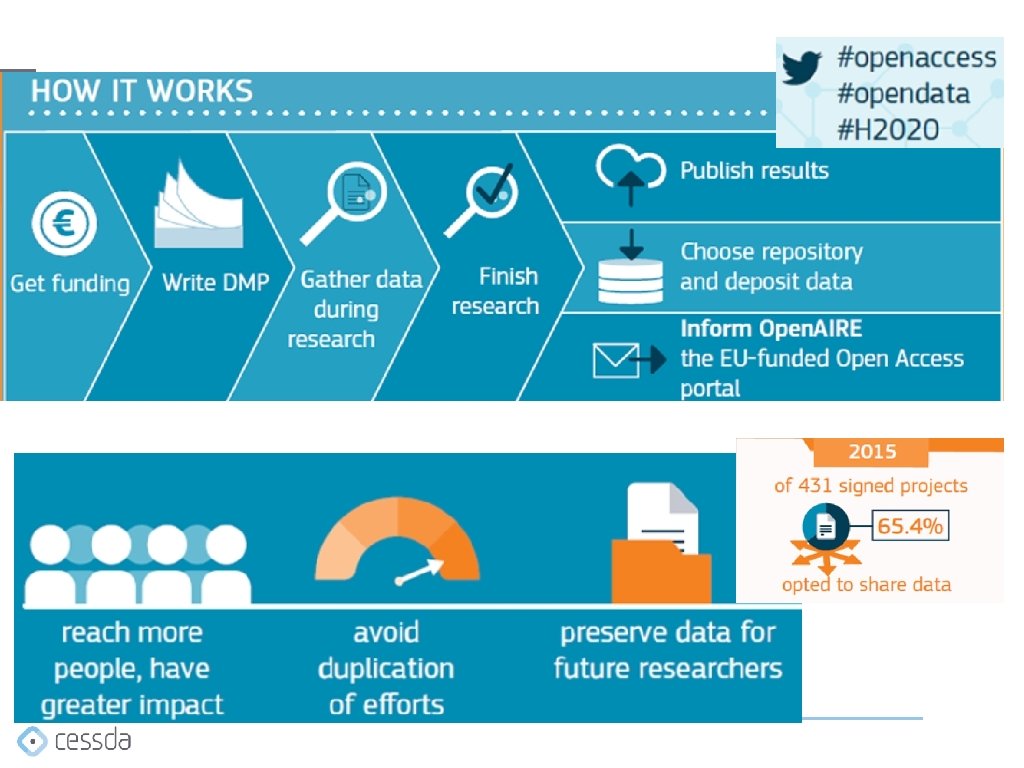
Open Access to research data (European Commission) Open access (OA) can be defined as the practice of providing on-line access to scientific information that is free of charge to the user and that is re-usable. Open access to 'scientific information' refers to two main categories: Peer-reviewed scientific publications(primarily research articles published in academic journals) Scientific research data: data underlying publications and/or other data(such as curated but unpublished datasets or raw data)
So urc e: EC
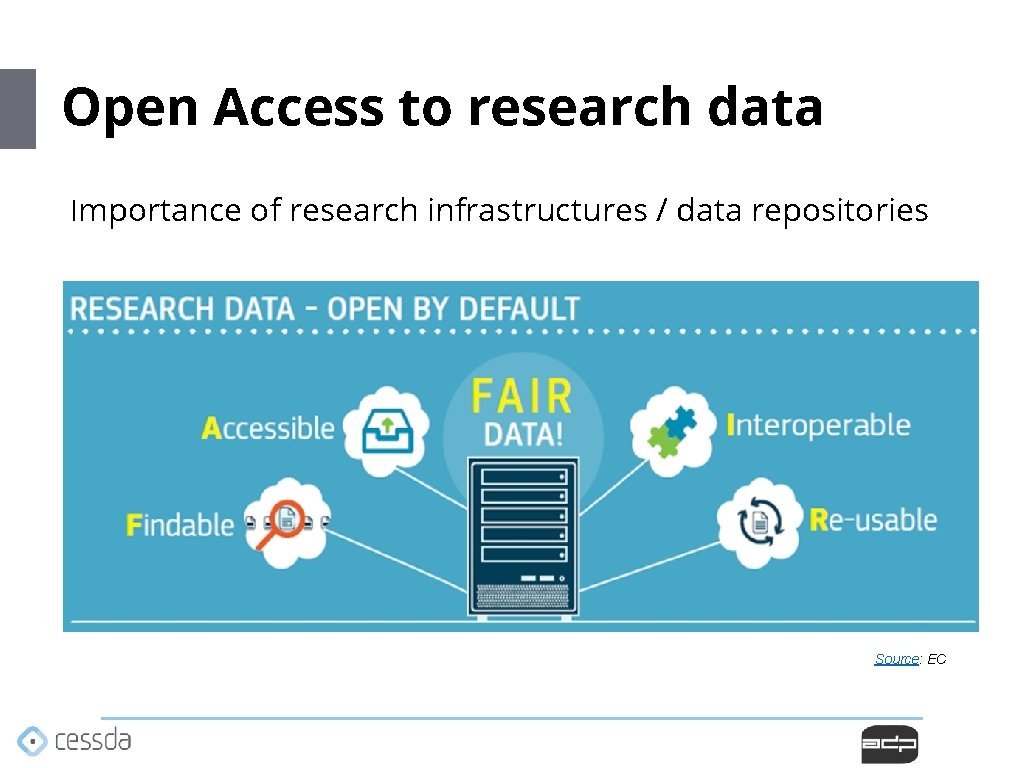
Open Access to research data Importance of research infrastructures / data repositories Source: EC
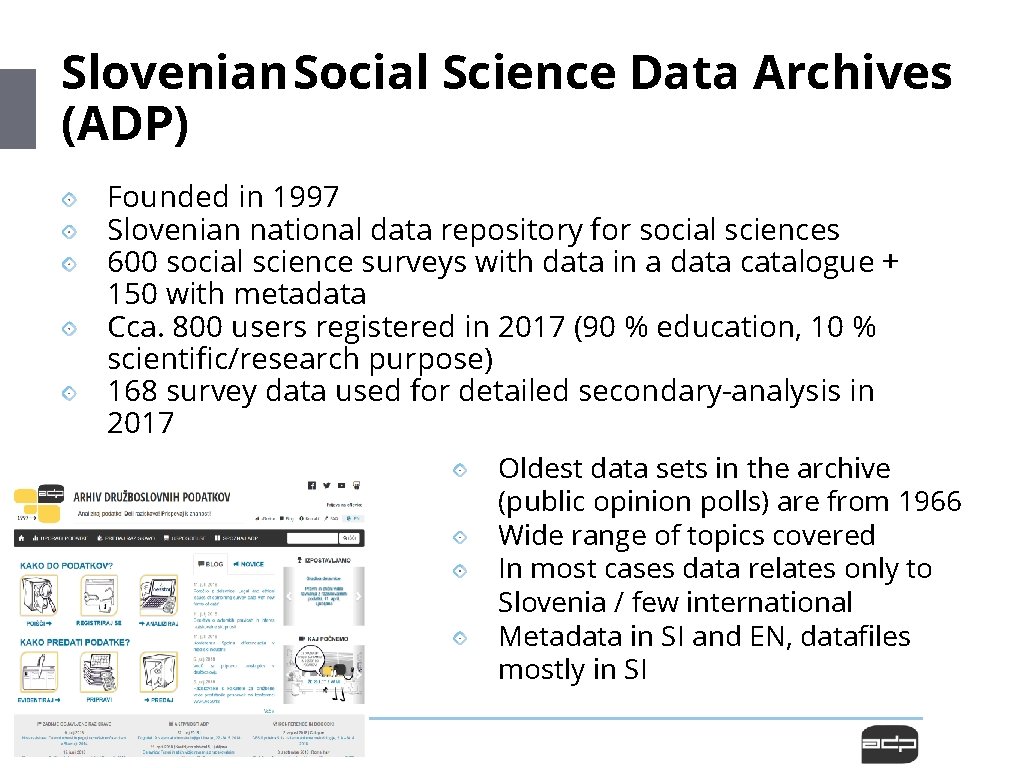
Slovenian Social Science Data Archives (ADP) Founded in 1997 Slovenian national data repository for social sciences 600 social science surveys with data in a data catalogue + 150 with metadata Cca. 800 users registered in 2017 (90 % education, 10 % scientific/research purpose) 168 survey data used for detailed secondary-analysis in 2017 Oldest data sets in the archive (public opinion polls) are from 1966 Wide range of topics covered In most cases data relates only to Slovenia / few international Metadata in SI and EN, datafiles mostly in SI
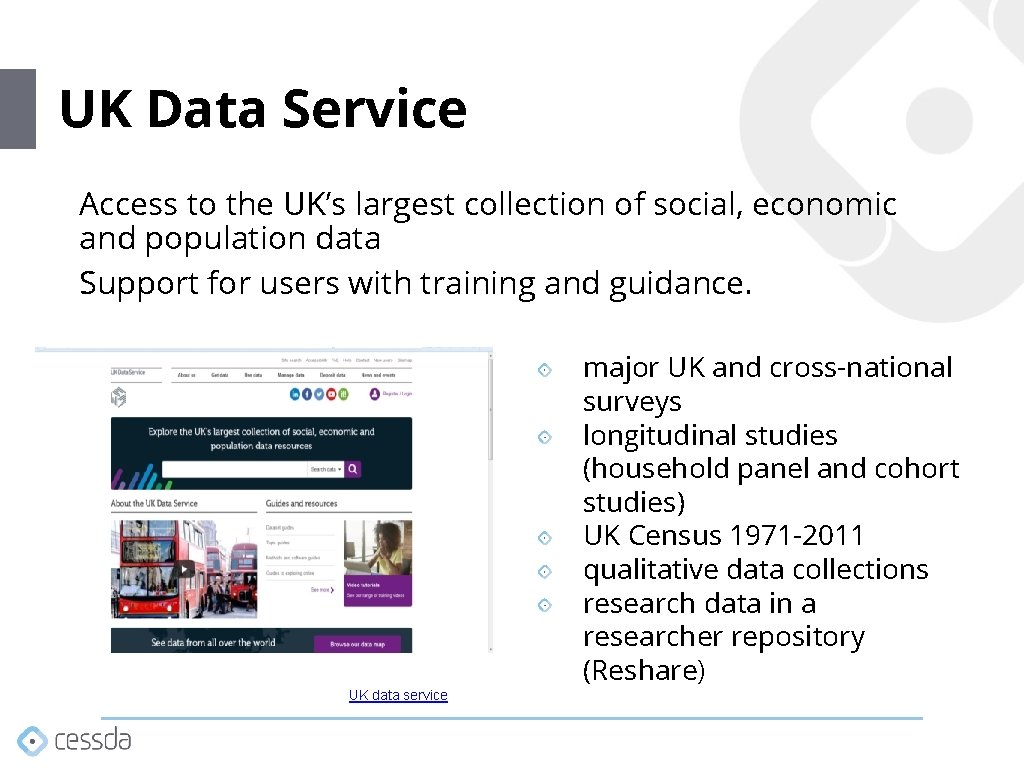
UK Data Service Access to the UK’s largest collection of social, economic and population data Support for users with training and guidance. UK data service major UK and cross-national surveys longitudinal studies (household panel and cohort studies) UK Census 1971 -2011 qualitative data collections research data in a researcher repository (Reshare)
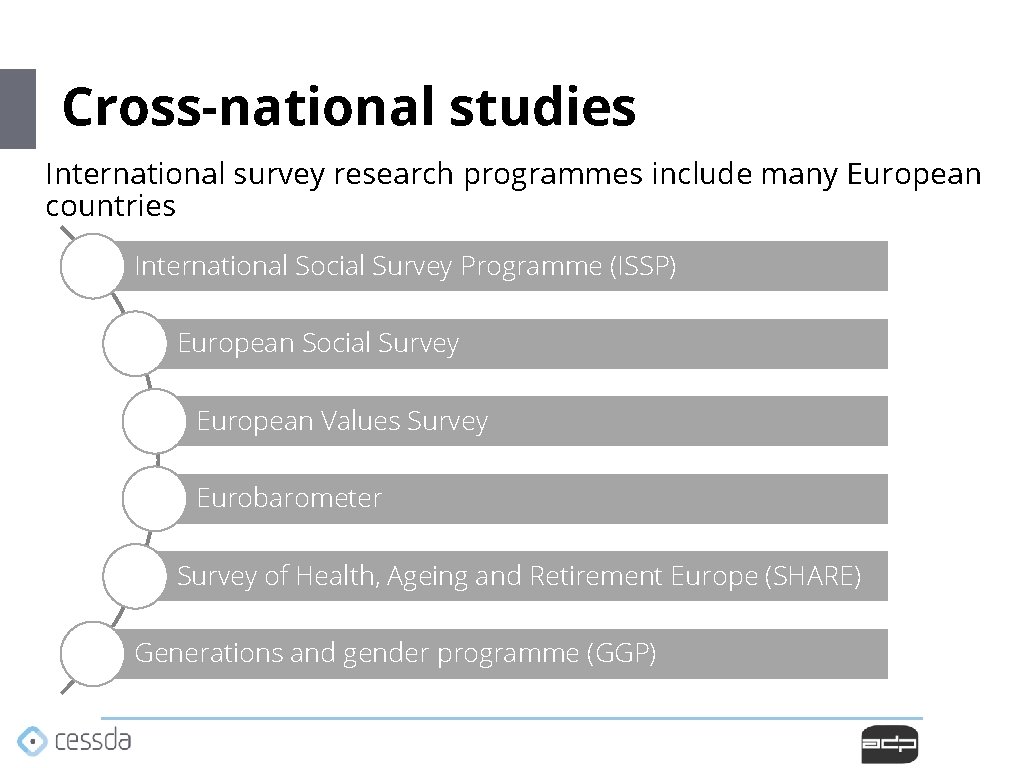
Cross-national studies International survey research programmes include many European countries International Social Survey Programme (ISSP) European Social Survey European Values Survey Eurobarometer Survey of Health, Ageing and Retirement Europe (SHARE) Generations and gender programme (GGP)
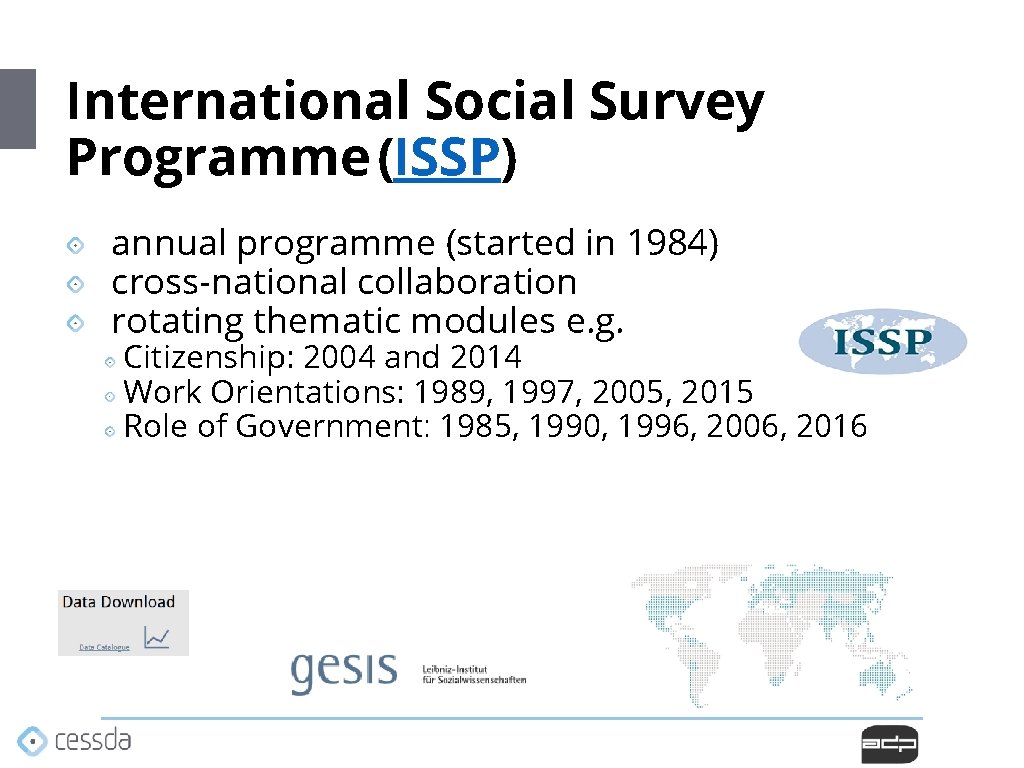
International Social Survey Programme (ISSP) annual programme (started in 1984) cross-national collaboration rotating thematic modules e. g. Citizenship: 2004 and 2014 Work Orientations: 1989, 1997, 2005, 2015 Role of Government: 1985, 1990, 1996, 2006, 2016
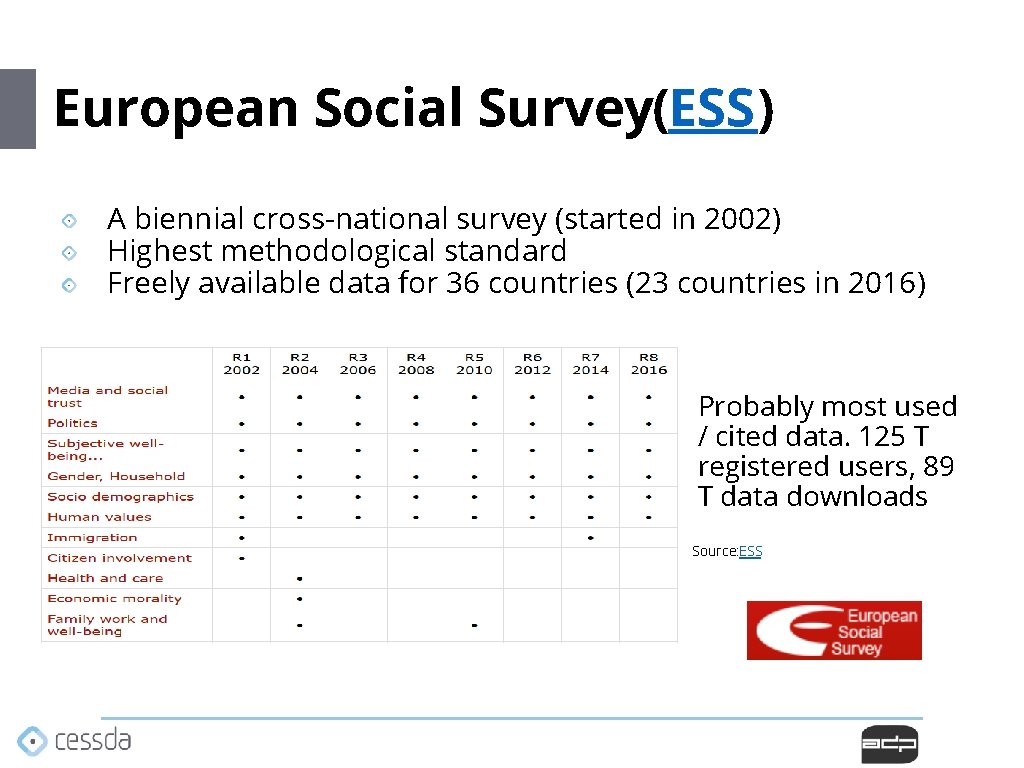
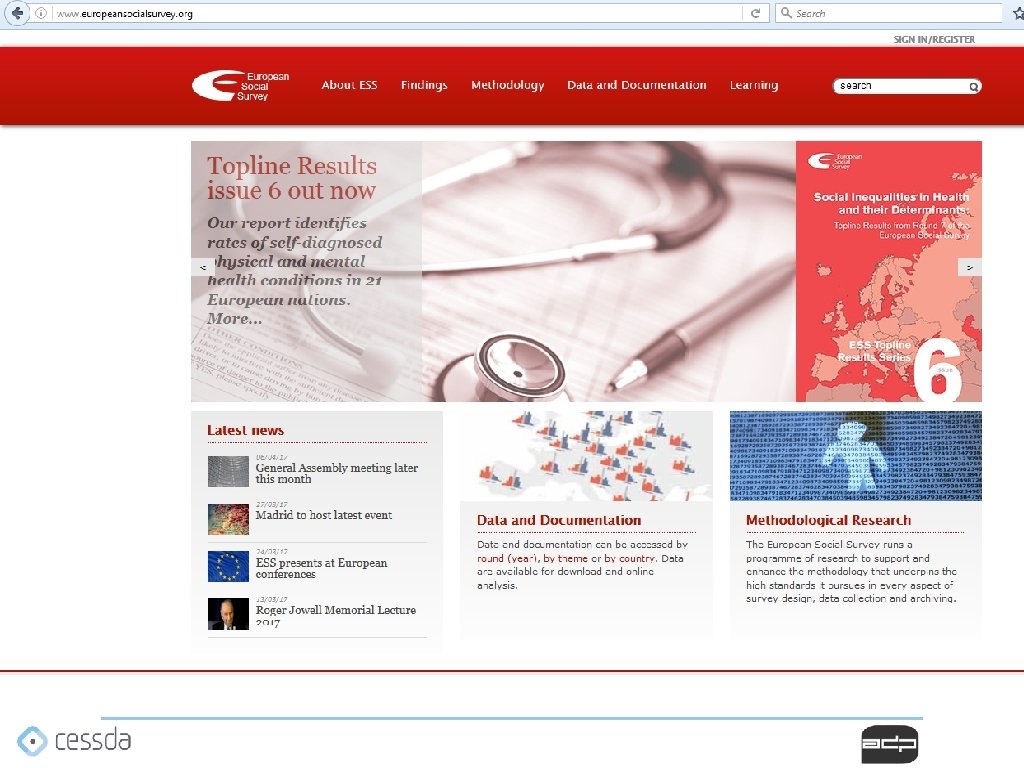
European Social Survey(ESS) A biennial cross-national survey (started in 2002) Highest methodological standard Freely available data for 36 countries (23 countries in 2016) Probably most used / cited data. 125 T registered users, 89 T data downloads Source: ESS
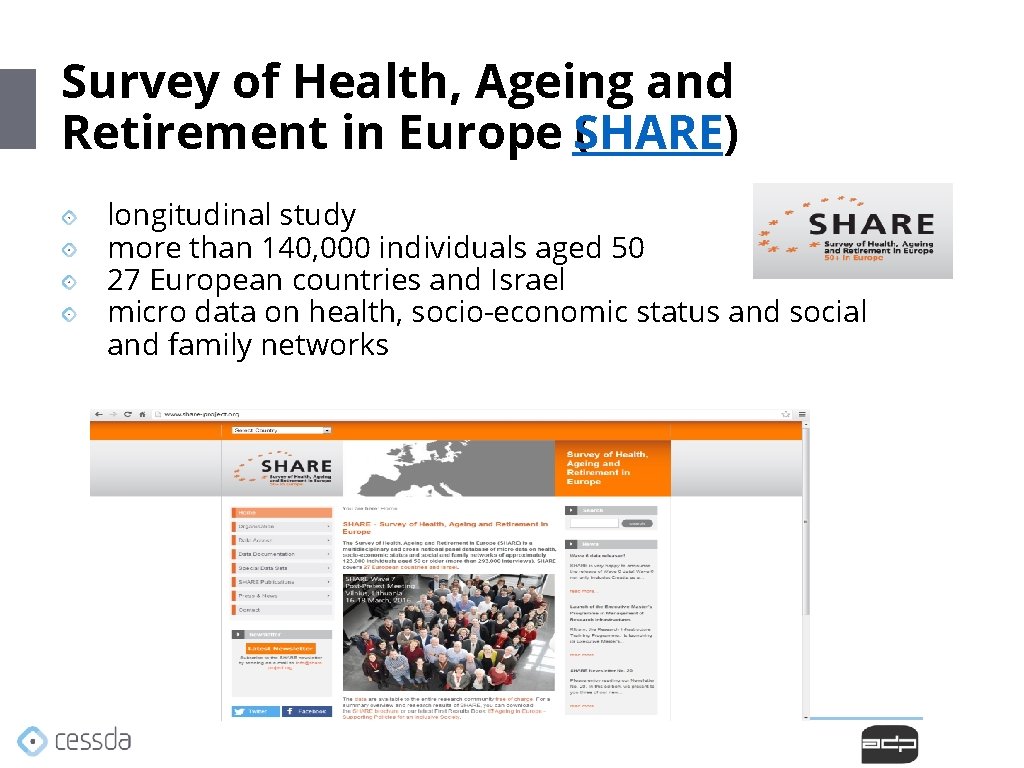
Survey of Health, Ageing and Retirement in Europe S( HARE) longitudinal study more than 140, 000 individuals aged 50 27 European countries and Israel micro data on health, socio-economic status and social and family networks
Examples: Longitudinal studies Household panel studies following households over time and asking questions on a broad range of topics such as household composition, employment, earnings, health, social and political participation and life-satisfaction German Socio-Economic Panel (SOEP) Understanding society (and the British Household Panel Study) Swiss Household Panel
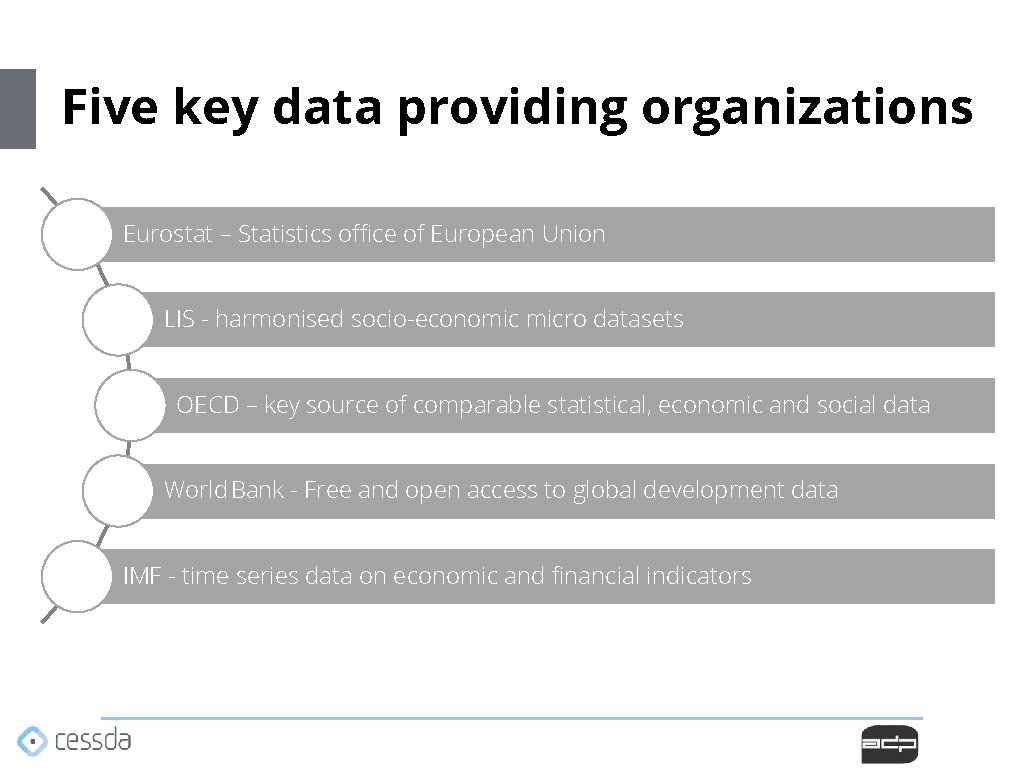
Five key data providing organizations Eurostat – Statistics office of European Union LIS - harmonised socio-economic micro datasets OECD – key source of comparable statistical, economic and social data World Bank - Free and open access to global development data IMF - time series data on economic and financial indicators
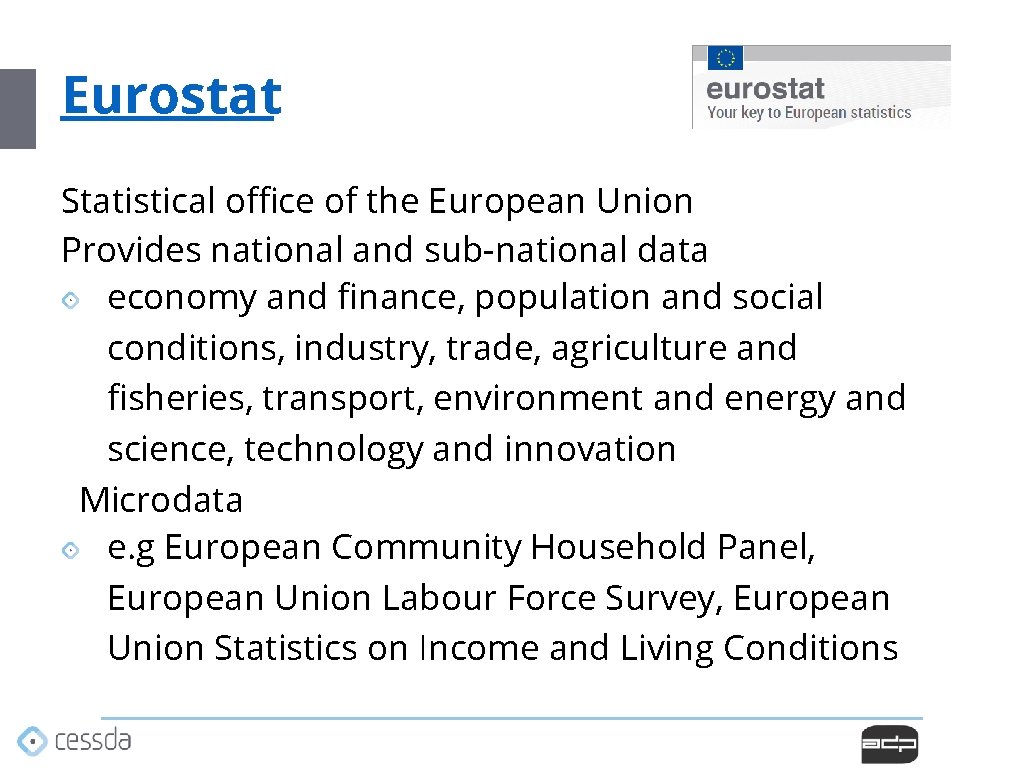
Eurostat Statistical office of the European Union Provides national and sub-national data economy and finance, population and social conditions, industry, trade, agriculture and fisheries, transport, environment and energy and science, technology and innovation Microdata e. g European Community Household Panel, European Union Labour Force Survey, European Union Statistics on Income and Living Conditions
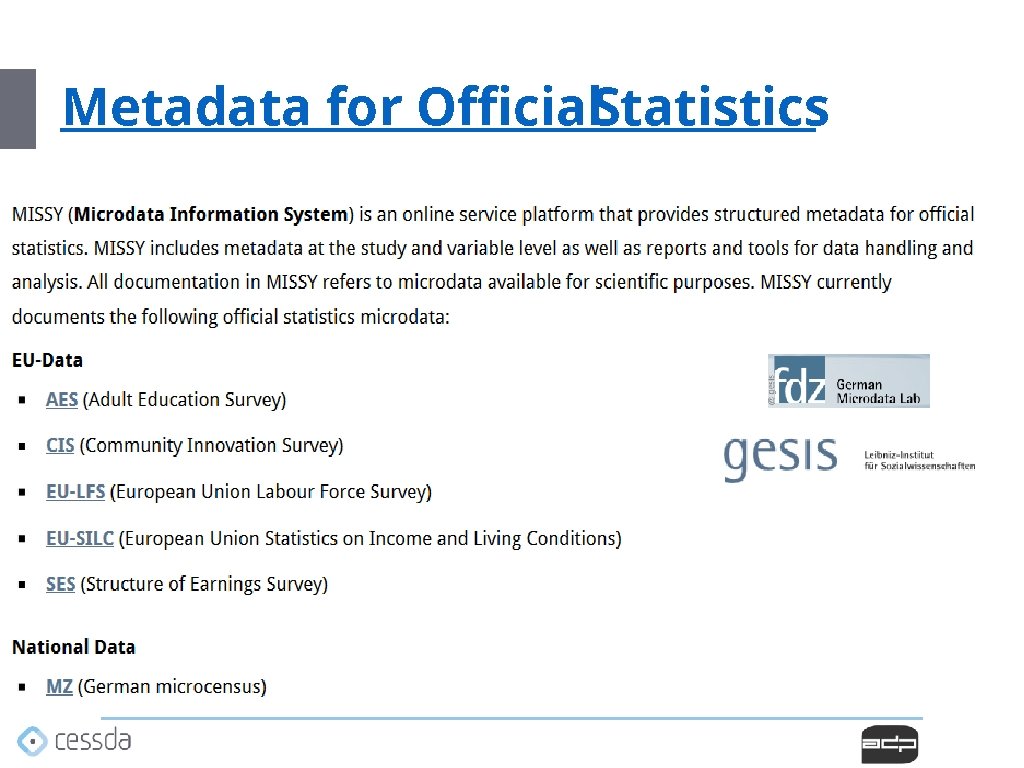
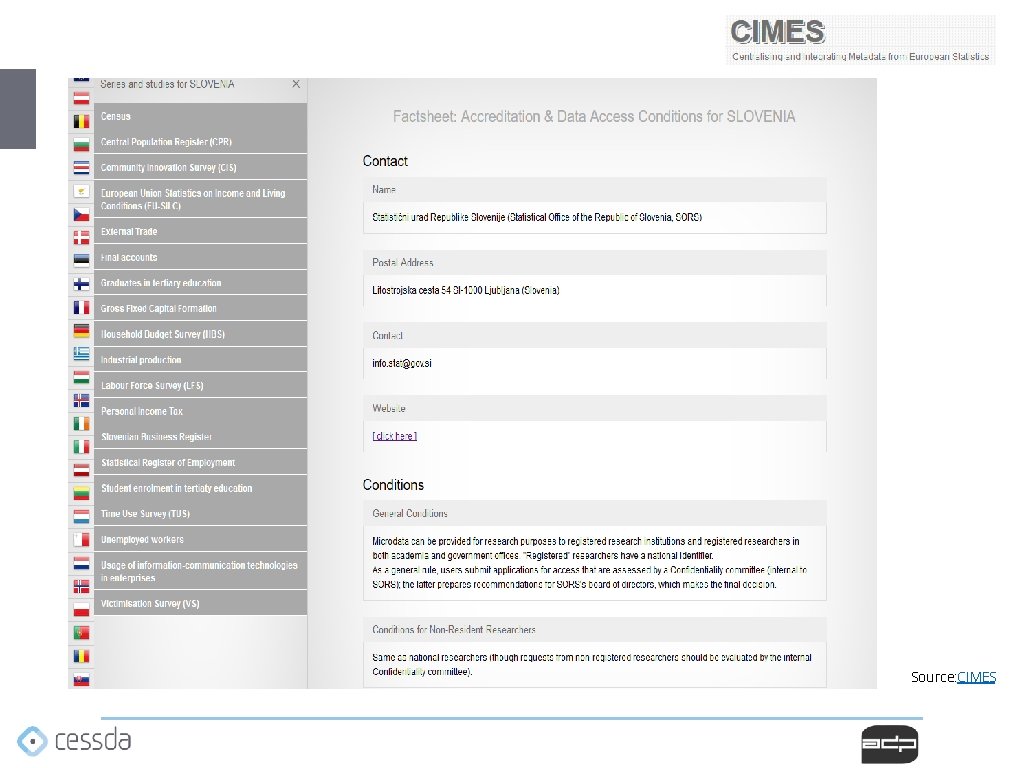
Metadata for Official. Statistics
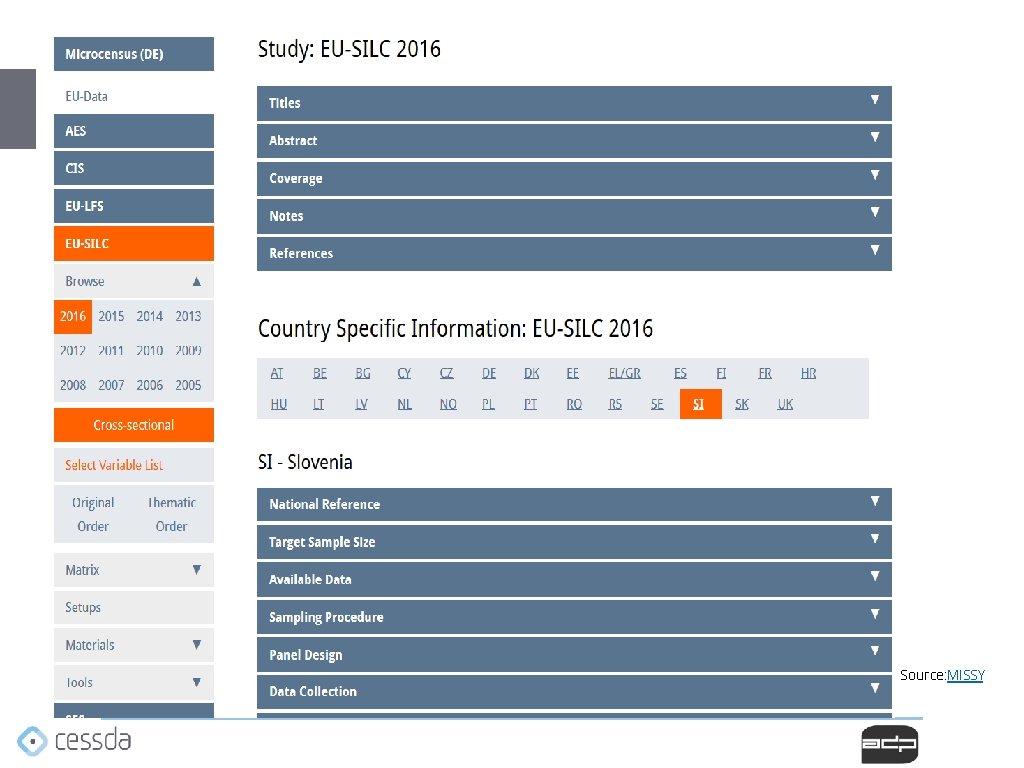
Source: MISSY
Source: CIMES
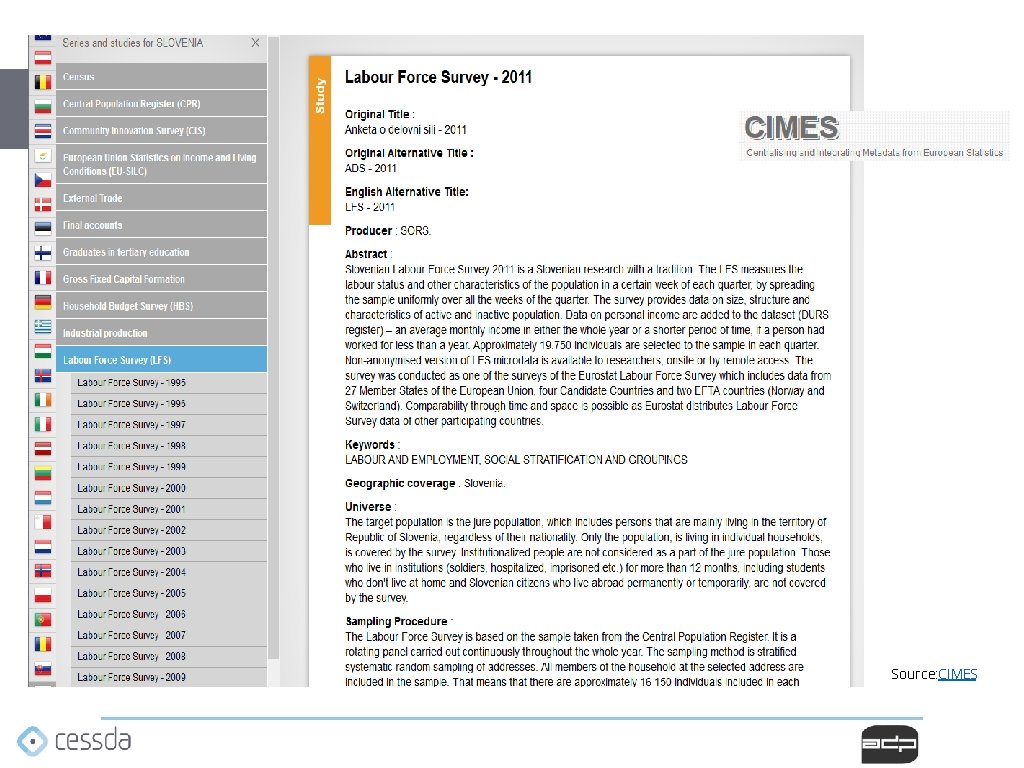
Source: CIMES
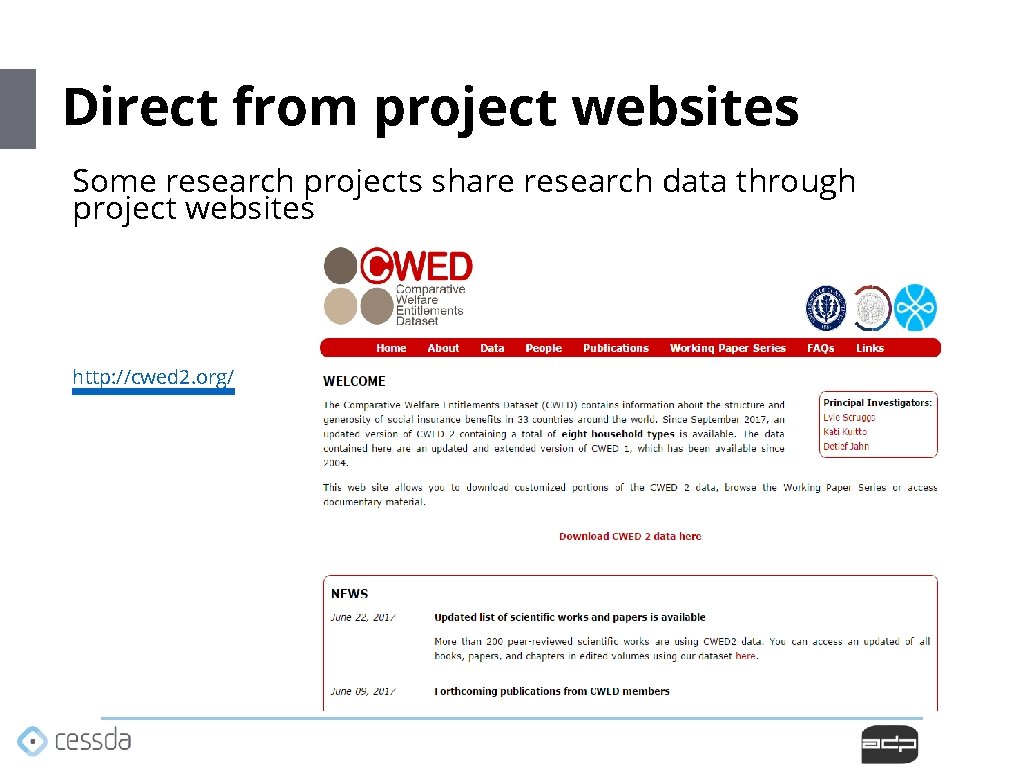
Direct from project websites Some research projects share research data through project websites http: //cwed 2. org/
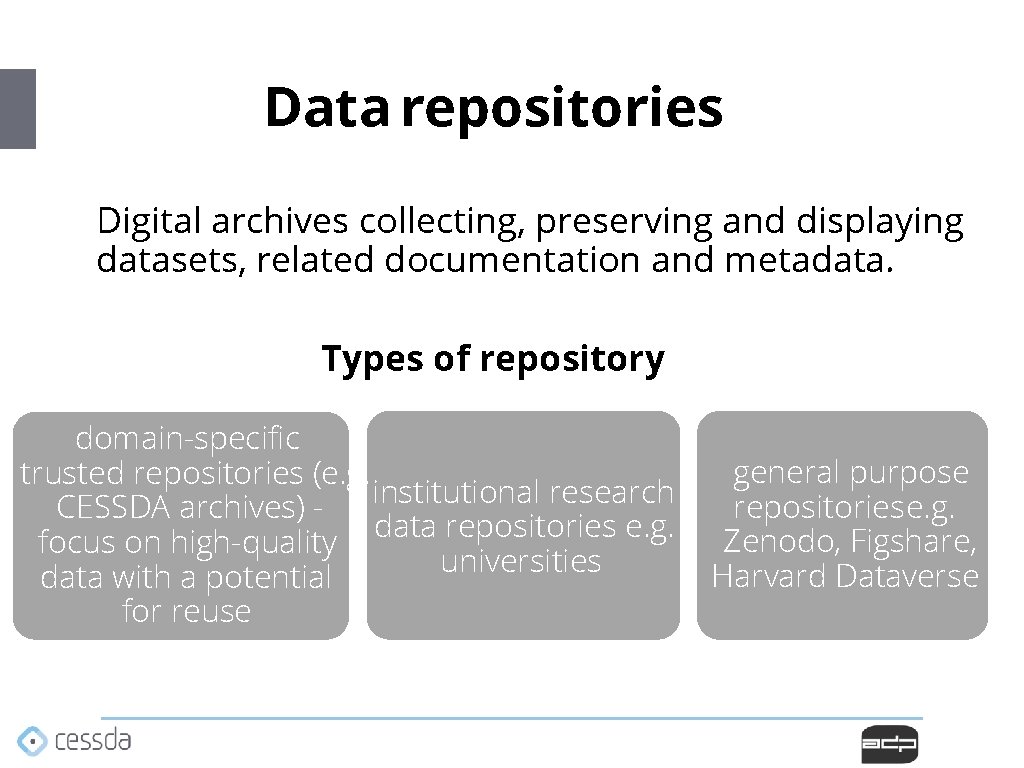
Data repositories Digital archives collecting, preserving and displaying datasets, related documentation and metadata. Types of repository domain-specific trusted repositories (e. g. institutional research CESSDA archives) data repositories e. g. focus on high-quality universities data with a potential for reuse general purpose repositories e. g. Zenodo, Figshare, Harvard Dataverse
A registry of research data repositories Search by subject, content type and country for data archives with a certificate (a trusted repository), open access or for data sets that have a persistent identifier
CESSDA Training Working Group (2017)
Identify what you need
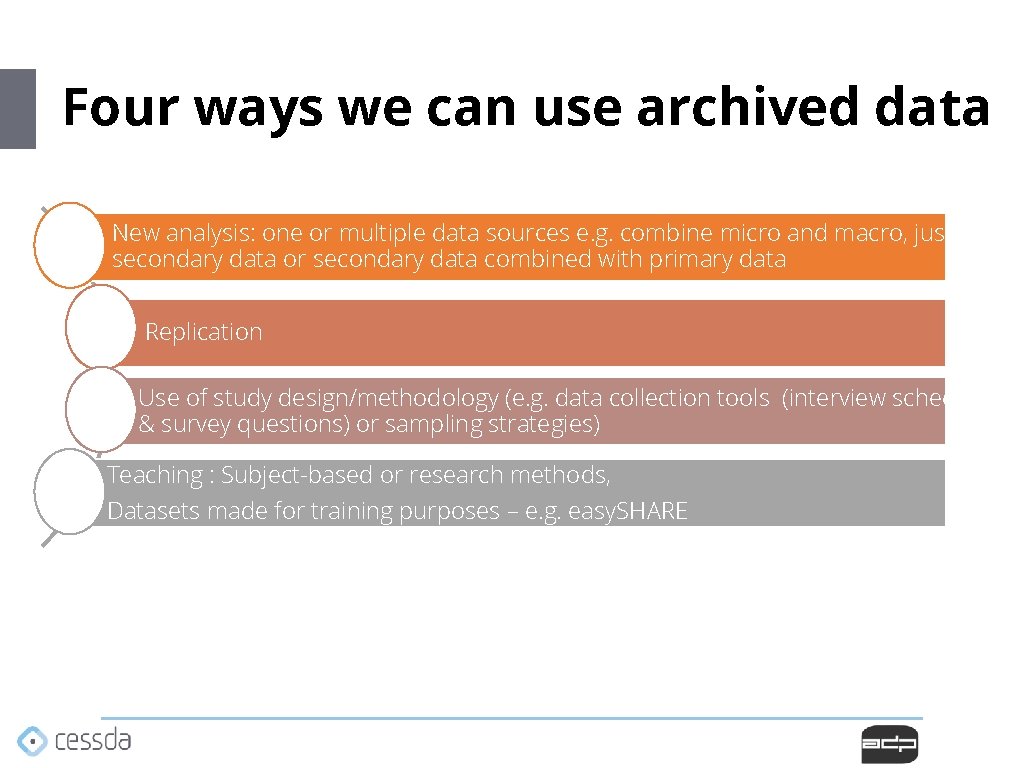
Four ways we can use archived data New analysis: one or multiple data sources e. g. combine micro and macro, just secondary data or secondary data combined with primary data Replication Use of study design/methodology (e. g. data collection tools (interview schedules & survey questions) or sampling strategies) Teaching : Subject-based or research methods, Datasets made for training purposes – e. g. easy. SHARE
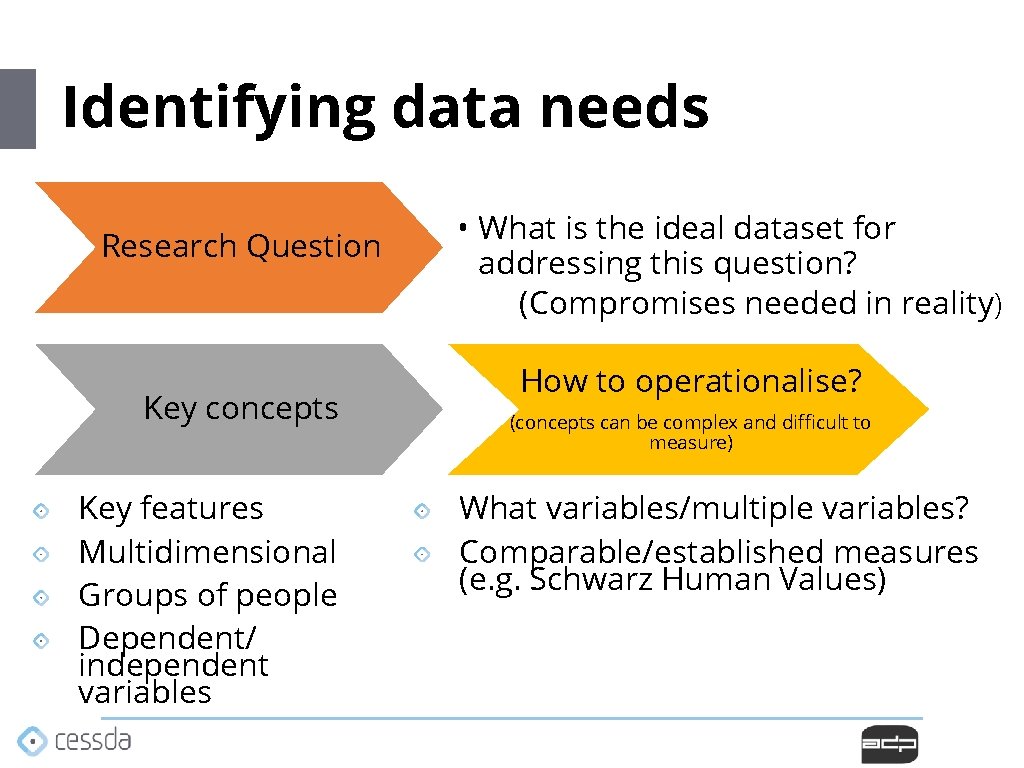
Identifying data needs Research Question Key concepts Key features Multidimensional Groups of people Dependent/ independent variables • What is the ideal dataset for addressing this question? (Compromises needed in reality) How to operationalise? (concepts can be complex and difficult to measure) What variables/multiple variables? Comparable/established measures (e. g. Schwarz Human Values)
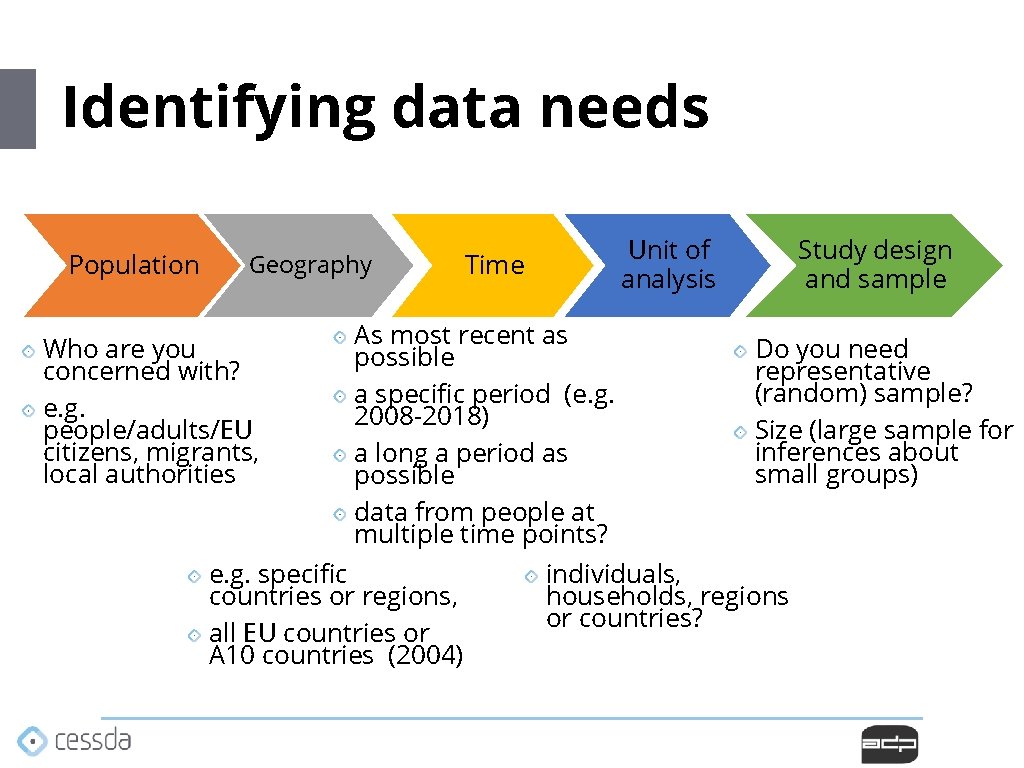
Identifying data needs Population Geography Who are you concerned with? e. g. people/adults/EU citizens, migrants, local authorities Unit of analysis Time As most recent as possible a specific period (e. g. 2008 -2018) a long a period as possible data from people at multiple time points? e. g. specific countries or regions, all EU countries or A 10 countries (2004) Study design and sample Do you need representative (random) sample? Size (large sample for inferences about small groups) individuals, households, regions or countries?
Activity Identify data needs Task: identify data needs - Evaluating data worksheet
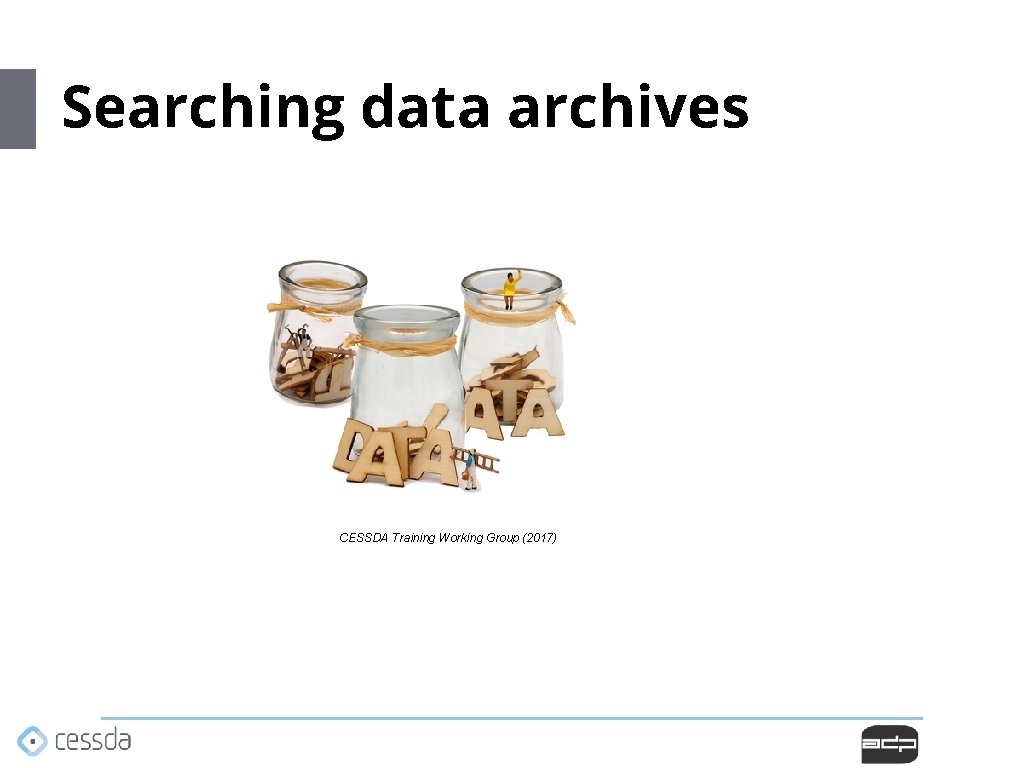
Searching data archives CESSDA Training Working Group (2017)
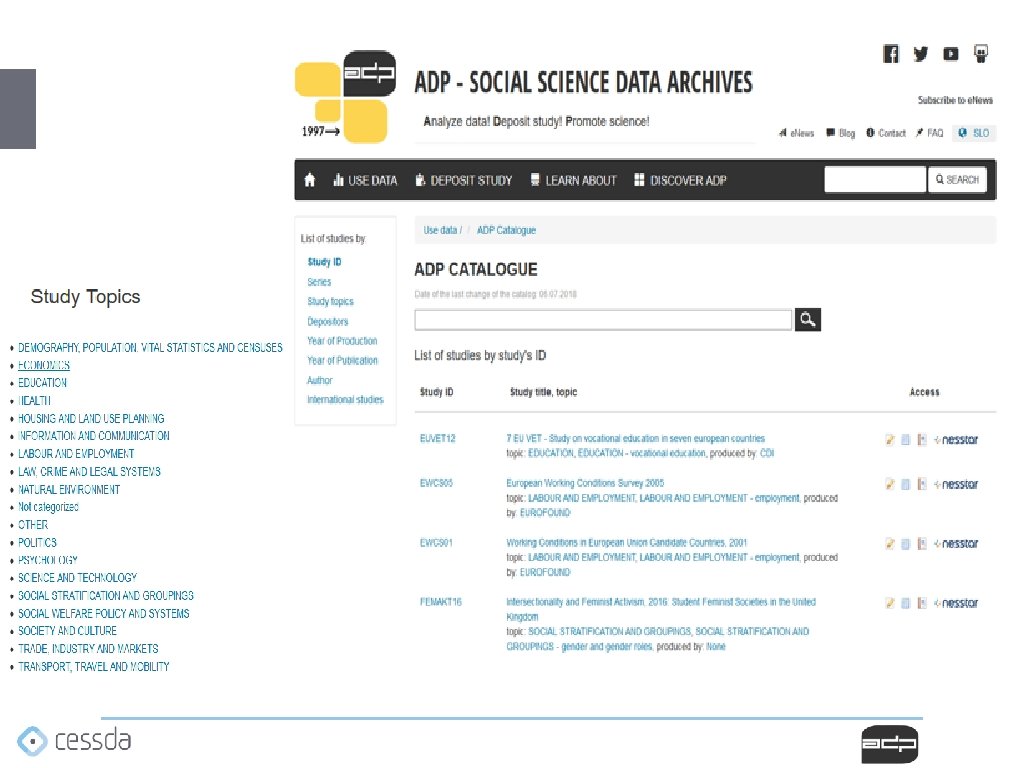
Three types of search Search for data on a topic Search for a specific dataset Browse data collections by type or theme
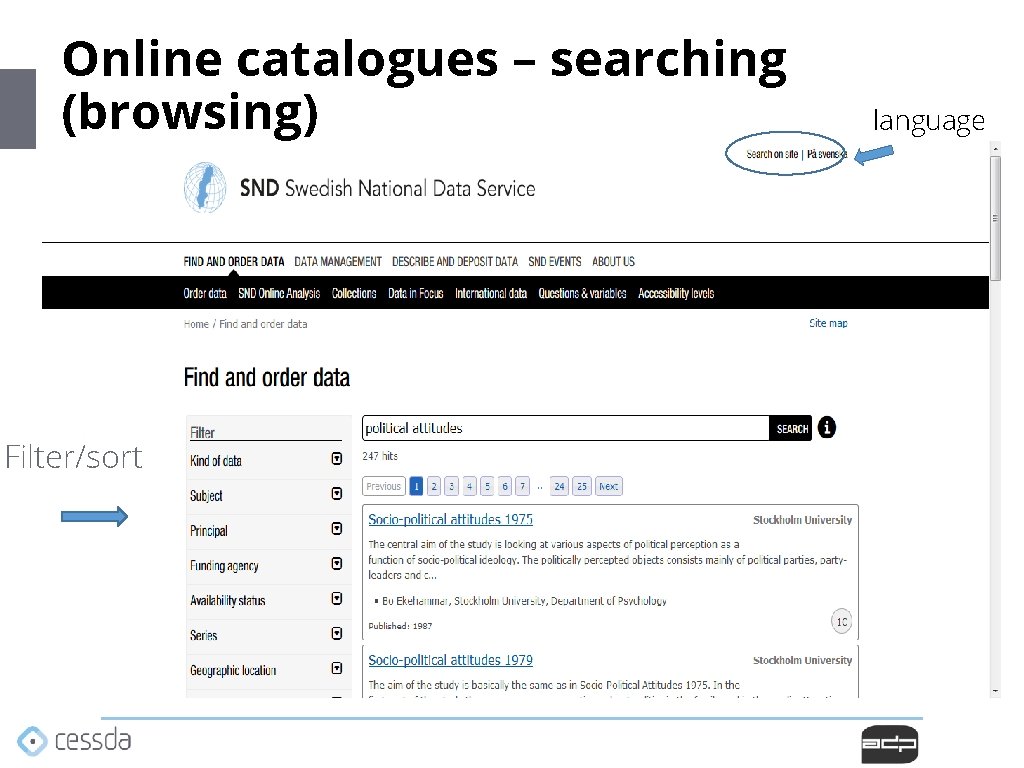
Online catalogues – searching (browsing) Filter/sort language
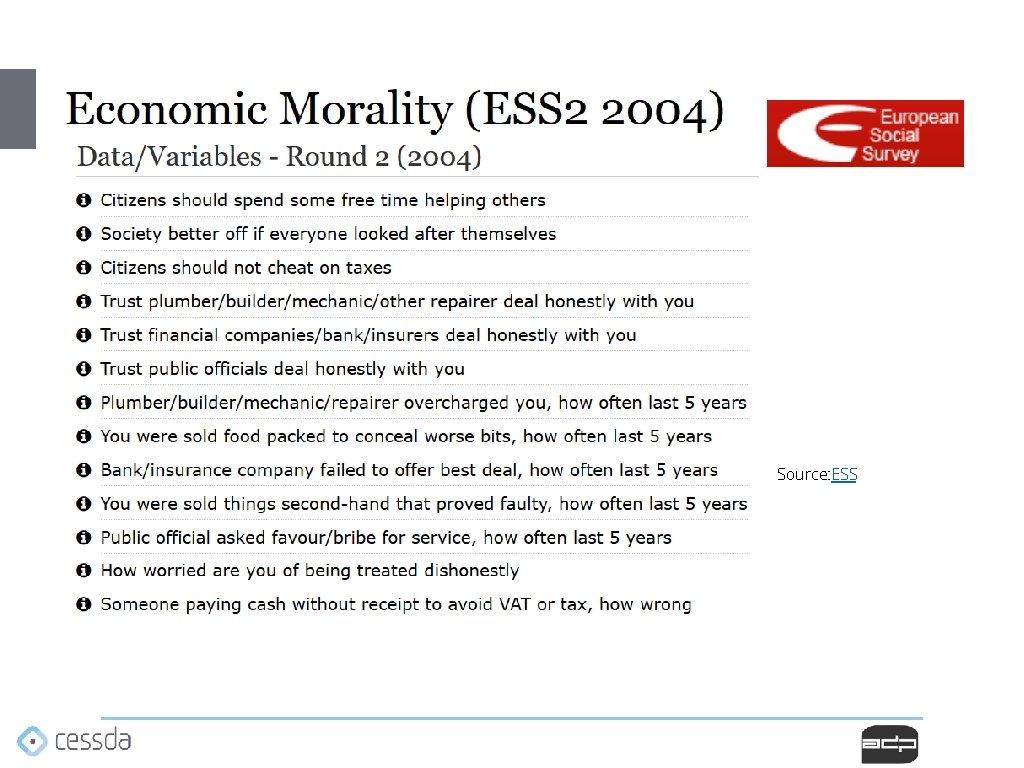
Source: ESS
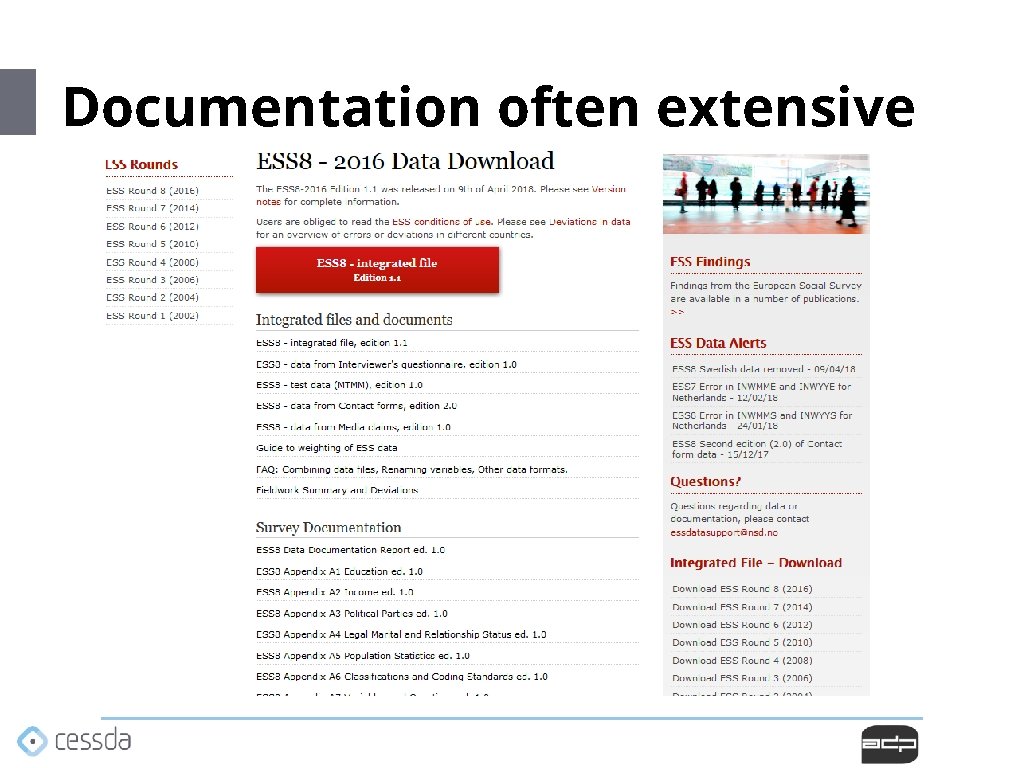
Documentation often extensive
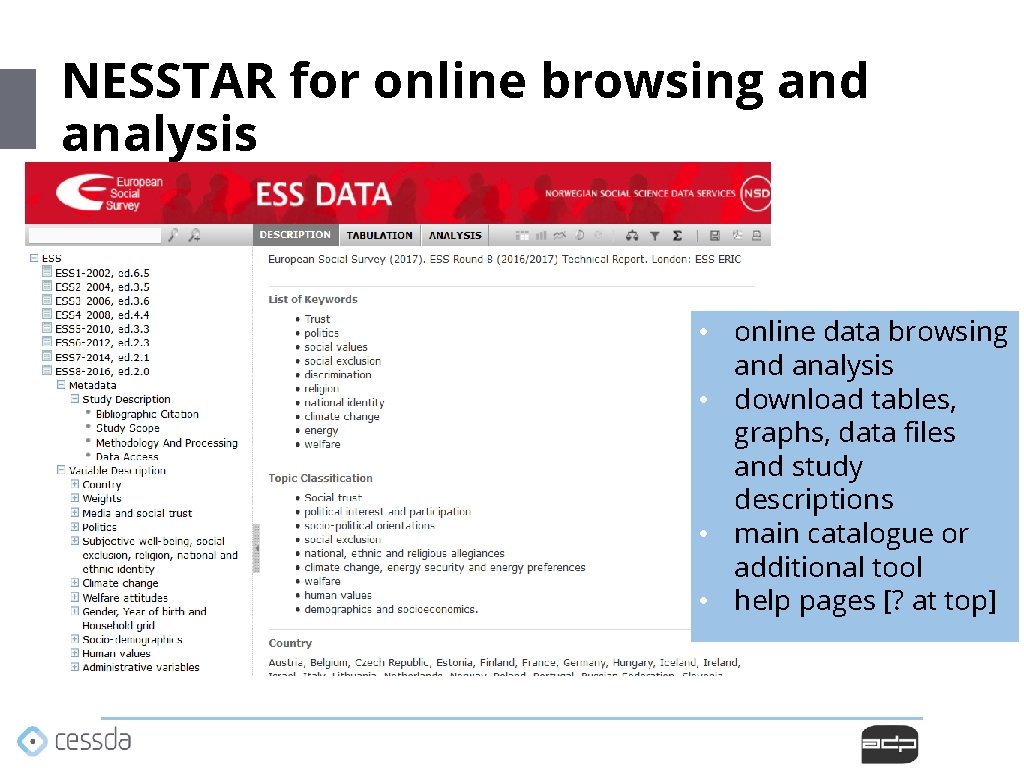
NESSTAR for online browsing and analysis • online data browsing and analysis • download tables, graphs, data files and study descriptions • main catalogue or additional tool • help pages [? at top]
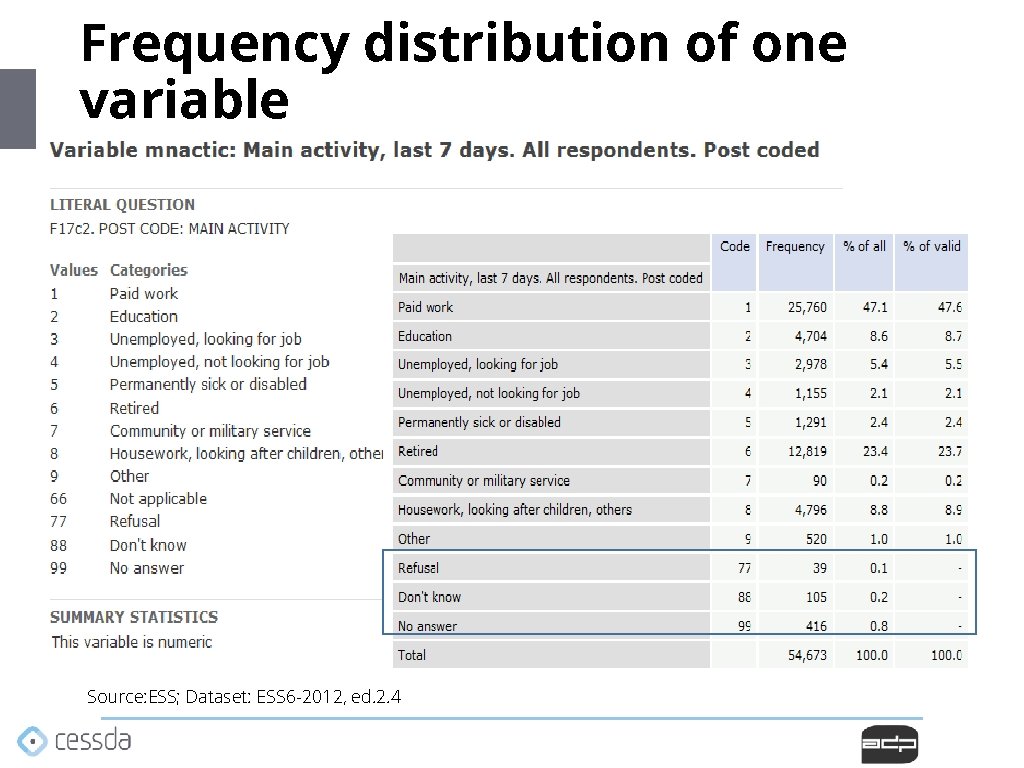
Frequency distribution of one variable Source: ESS; Dataset: ESS 6 -2012, ed. 2. 4
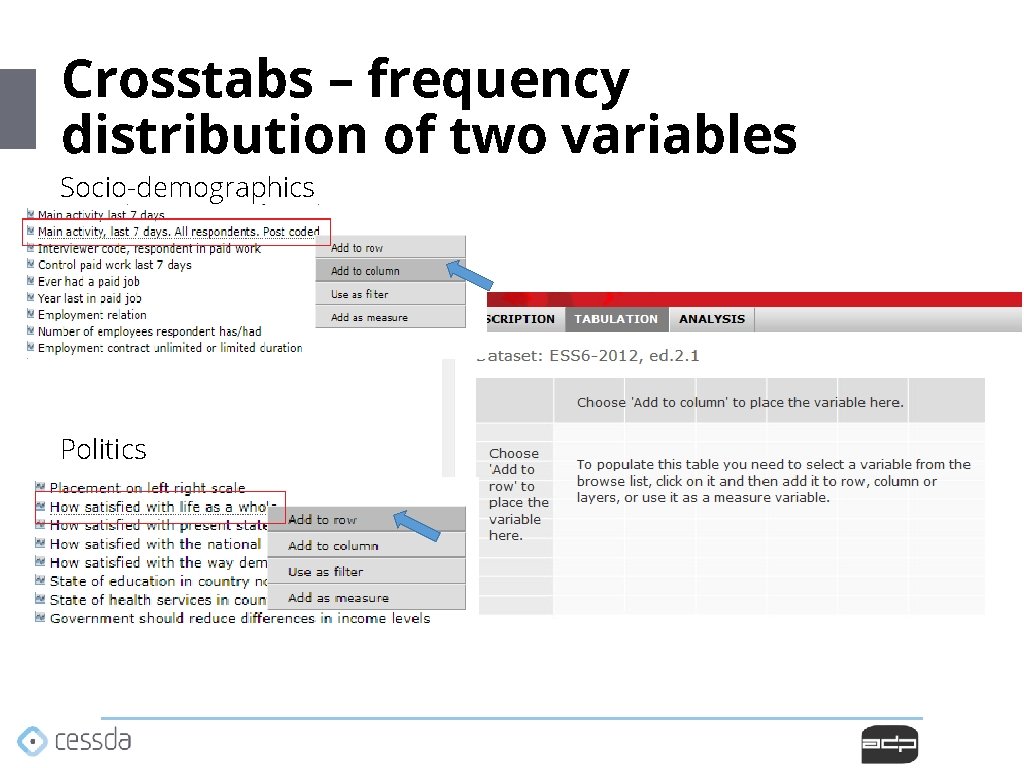
Crosstabs – frequency distribution of two variables Socio-demographics Politics
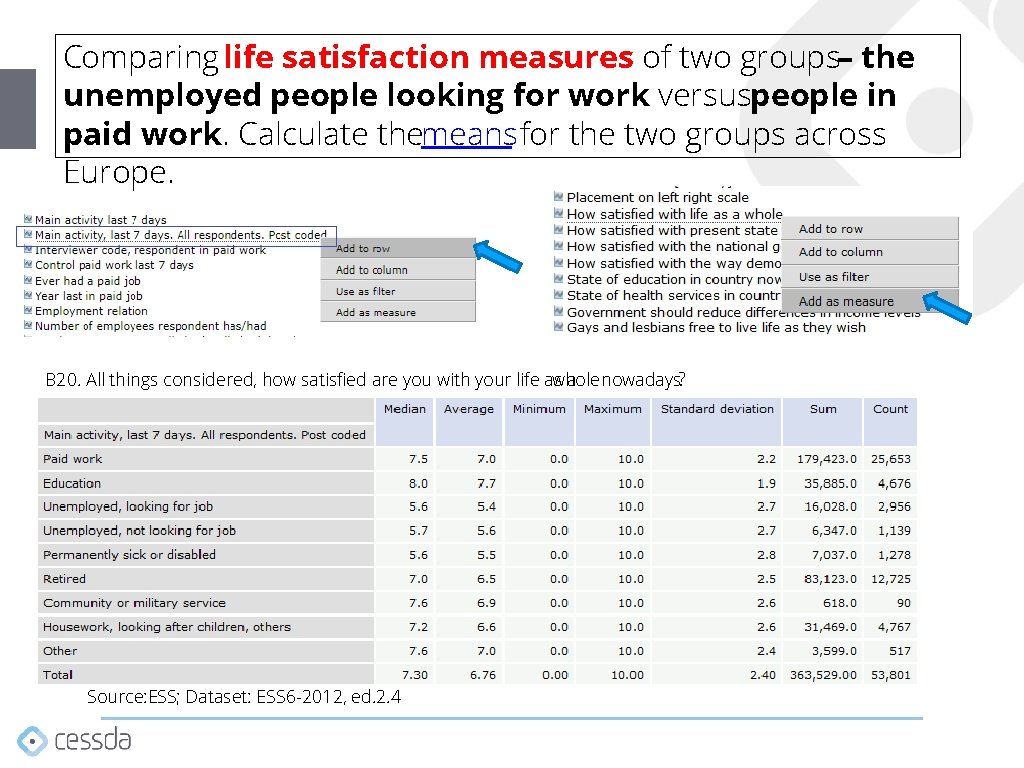
Comparing life satisfaction measures of two groups– the unemployed people looking for work versuspeople in paid work. Calculate themeans for the two groups across Europe. B 20. All things considered, how satisfied are you with your life as whole a nowadays? Source: ESS; Dataset: ESS 6 -2012, ed. 2. 4
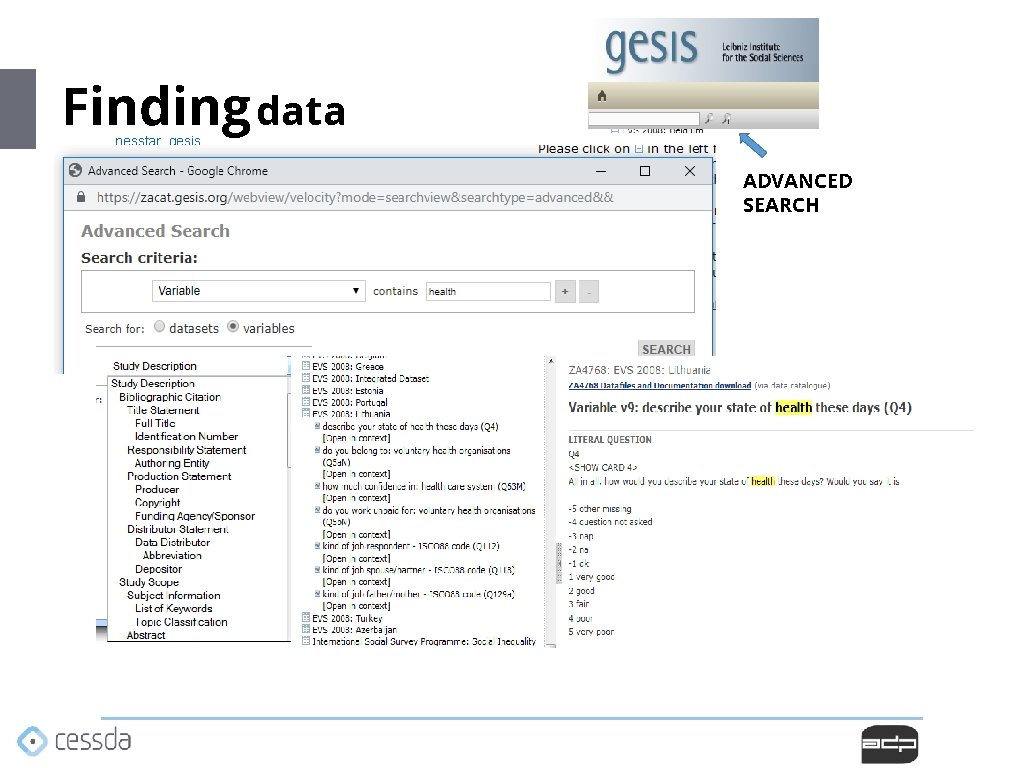
Finding data nesstar_gesis ADVANCED SEARCH
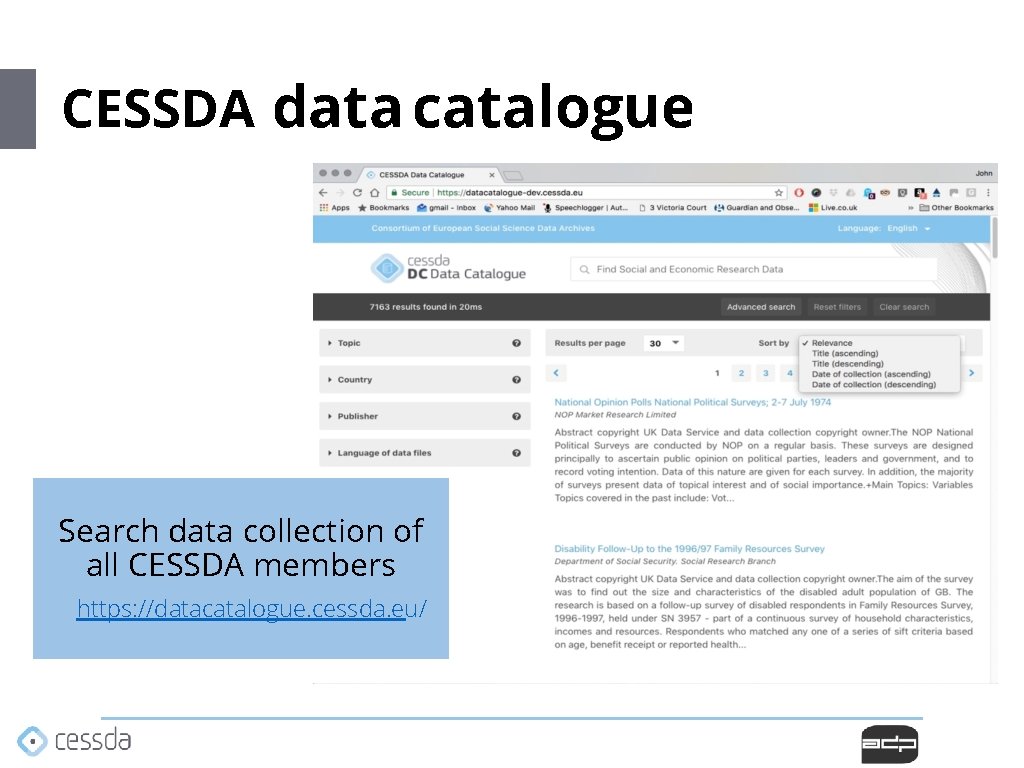
CESSDA data catalogue Search data collection of all CESSDA members https: //datacatalogue. cessda. eu/
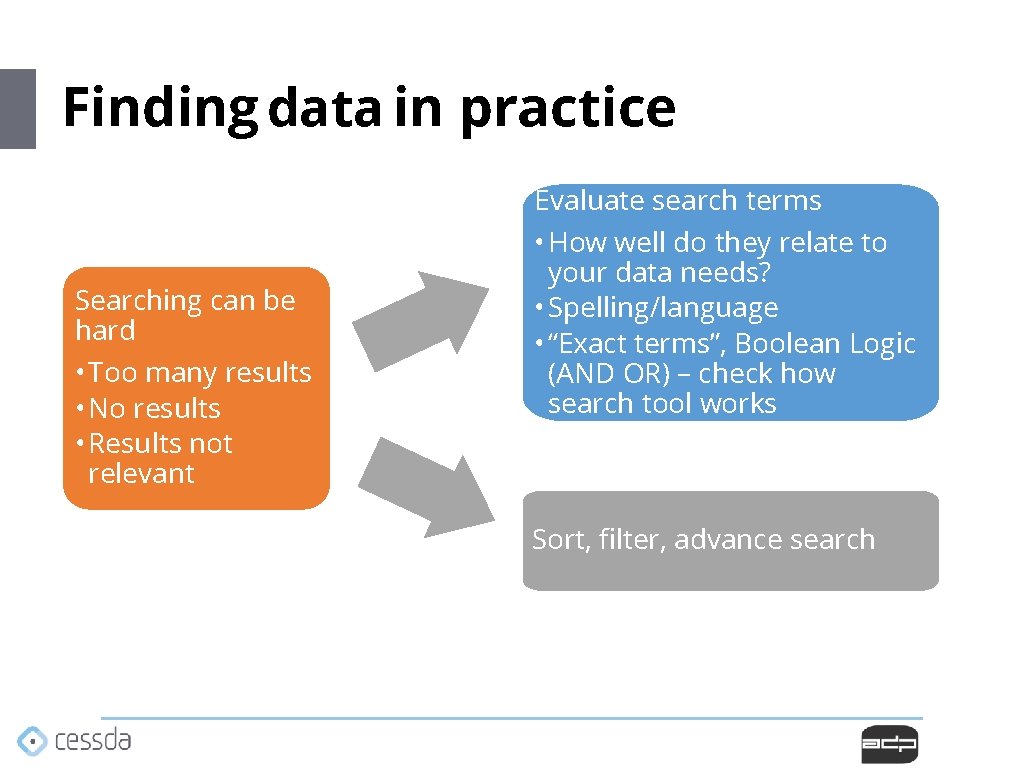
Finding data in practice Searching can be hard • Too many results • No results • Results not relevant Evaluate search terms • How well do they relate to your data needs? • Spelling/language • “Exact terms”, Boolean Logic (AND OR) – check how search tool works Sort, filter, advance search
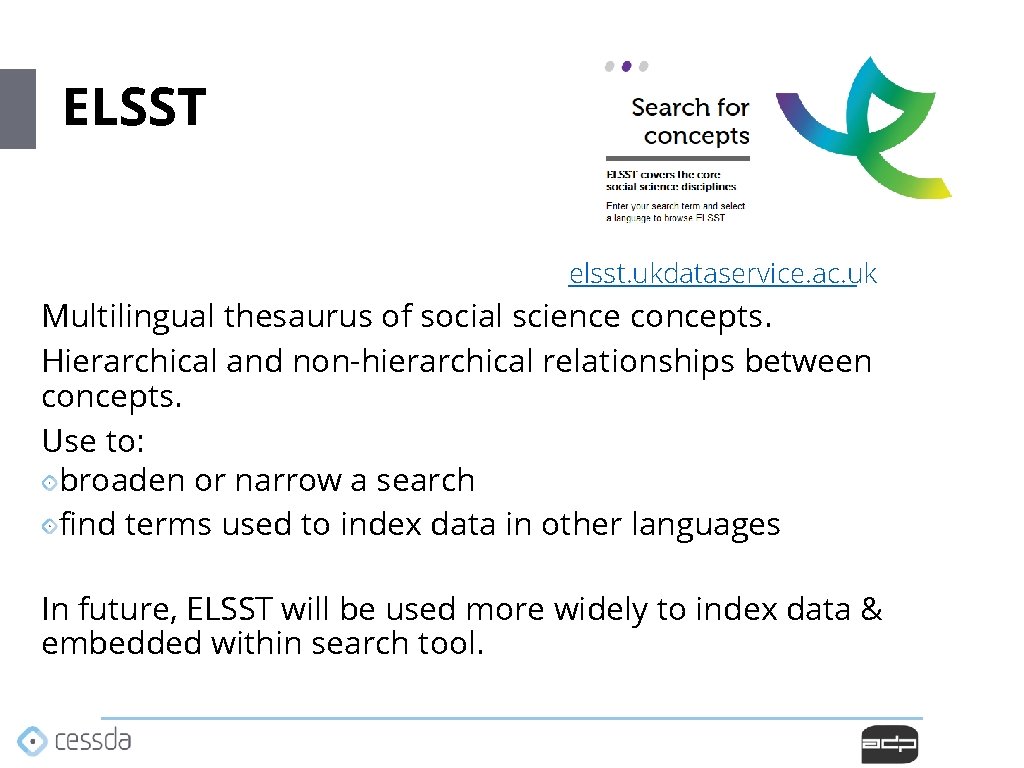
ELSST elsst. ukdataservice. ac. uk Multilingual thesaurus of social science concepts. Hierarchical and non-hierarchical relationships between concepts. Use to: broaden or narrow a search find terms used to index data in other languages In future, ELSST will be used more widely to index data & embedded within search tool.
Activity Searching for data Task Search for data using a data catalogue • Any national data service • See CESSDA for links: www. cessda. eu/Consortium
Evaluating data: quality and usefulness
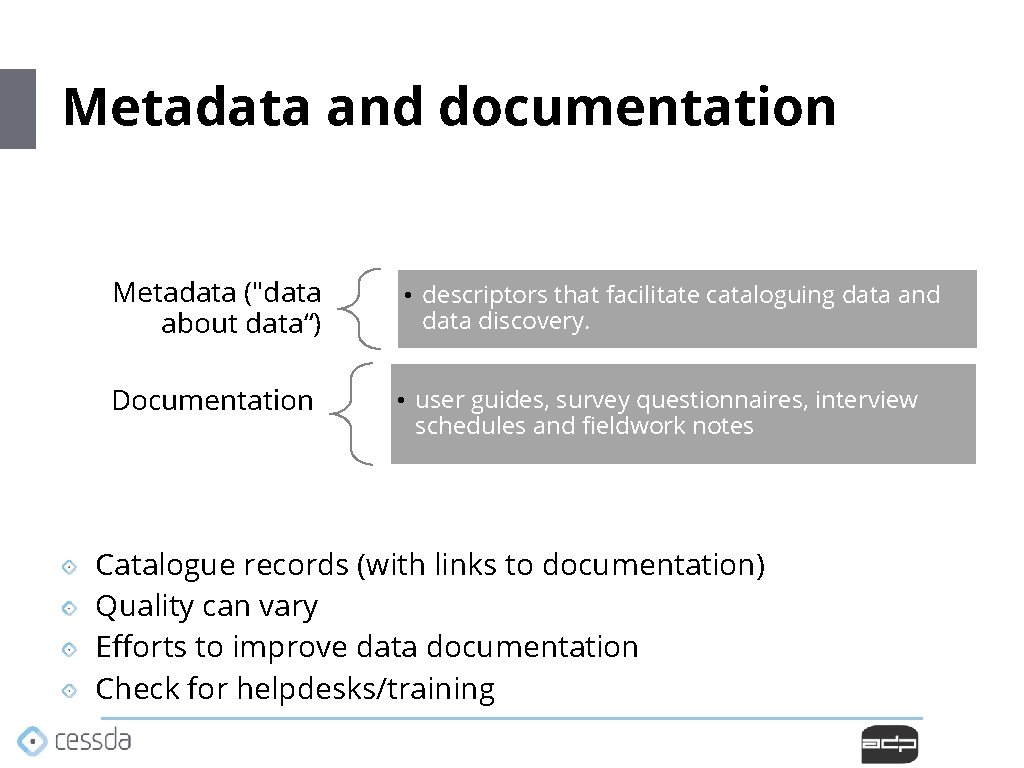
Metadata and documentation Metadata ("data about data“) • descriptors that facilitate cataloguing data and data discovery. Documentation • user guides, survey questionnaires, interview schedules and fieldwork notes Catalogue records (with links to documentation) Quality can vary Efforts to improve data documentation Check for helpdesks/training
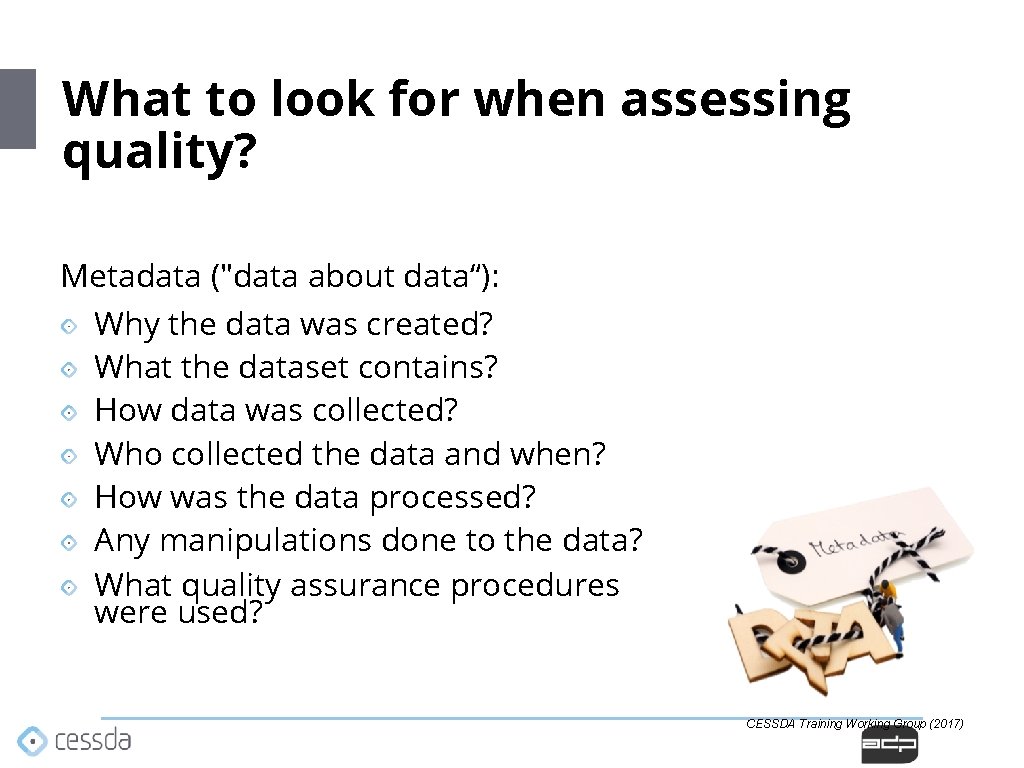
What to look for when assessing quality? Metadata ("data about data“): Why the data was created? What the dataset contains? How data was collected? Who collected the data and when? How was the data processed? Any manipulations done to the data? What quality assurance procedures were used? CESSDA Training Working Group (2017)
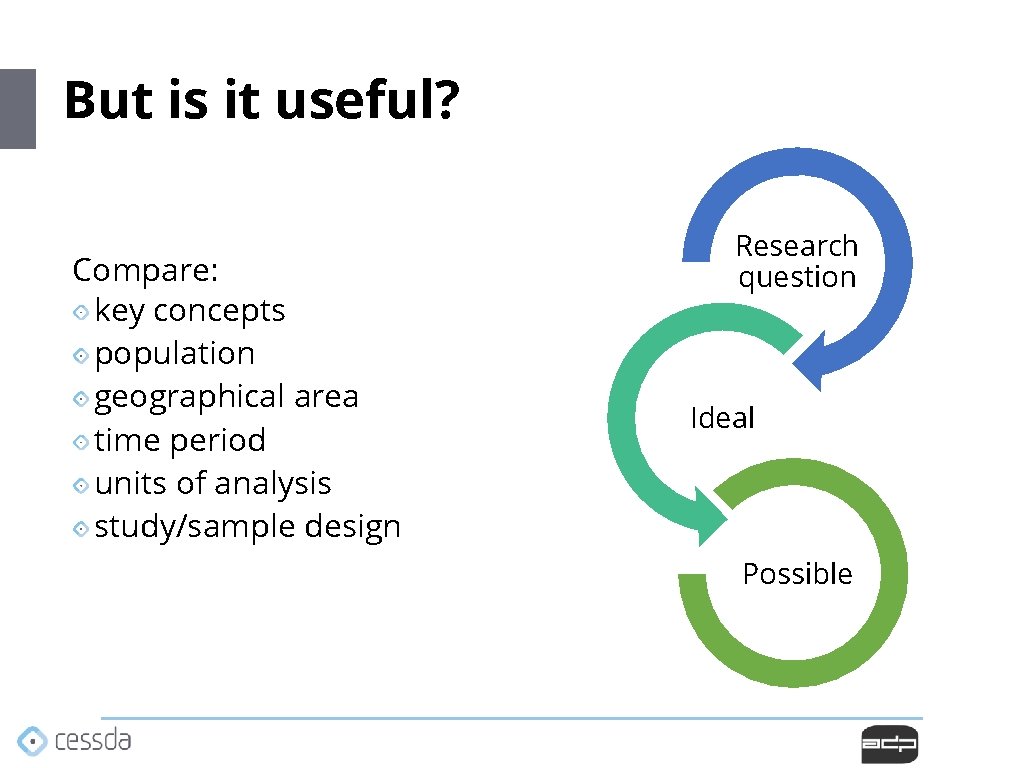
But is it useful? Compare: key concepts population geographical area time period units of analysis study/sample design Research question Ideal Possible
Accessing data Now finally, I’ve found some great data, how to I get it? Licenses Access process Getting started CESSDA Training Working Group (2017)
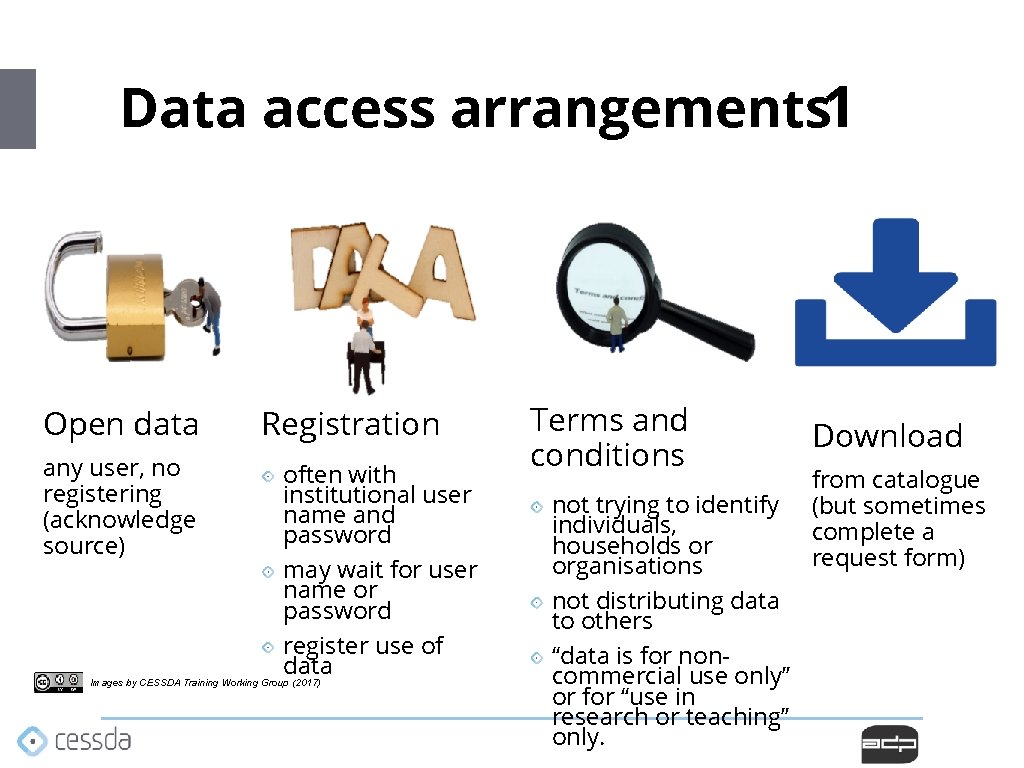
Data access arrangements 1 Open data any user, no registering (acknowledge source) Registration often with institutional user name and password may wait for user name or password register use of data Images by CESSDA Training Working Group (2017) Terms and conditions not trying to identify individuals, households or organisations not distributing data to others “data is for noncommercial use only” or for “use in research or teaching” only. Download from catalogue (but sometimes complete a request form)
Data access arrangements 2 Sometimes permission from the data owners required (= a additional stage) Sensitive or confidential data = more strict (and lengthy) process Some services operate a dedicated safe room or safe access service Access by users outside the country can be prohibited for confidential data Free (except for commercial use and supplementary services) If you are unsure, ask the relevant data service for help.
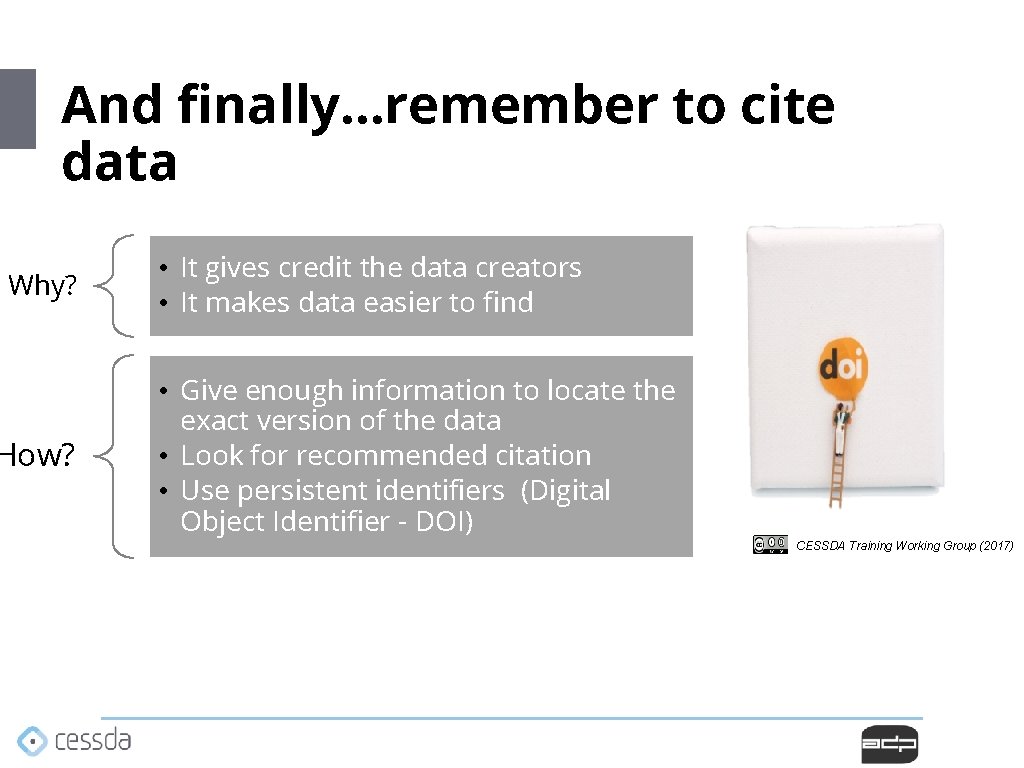
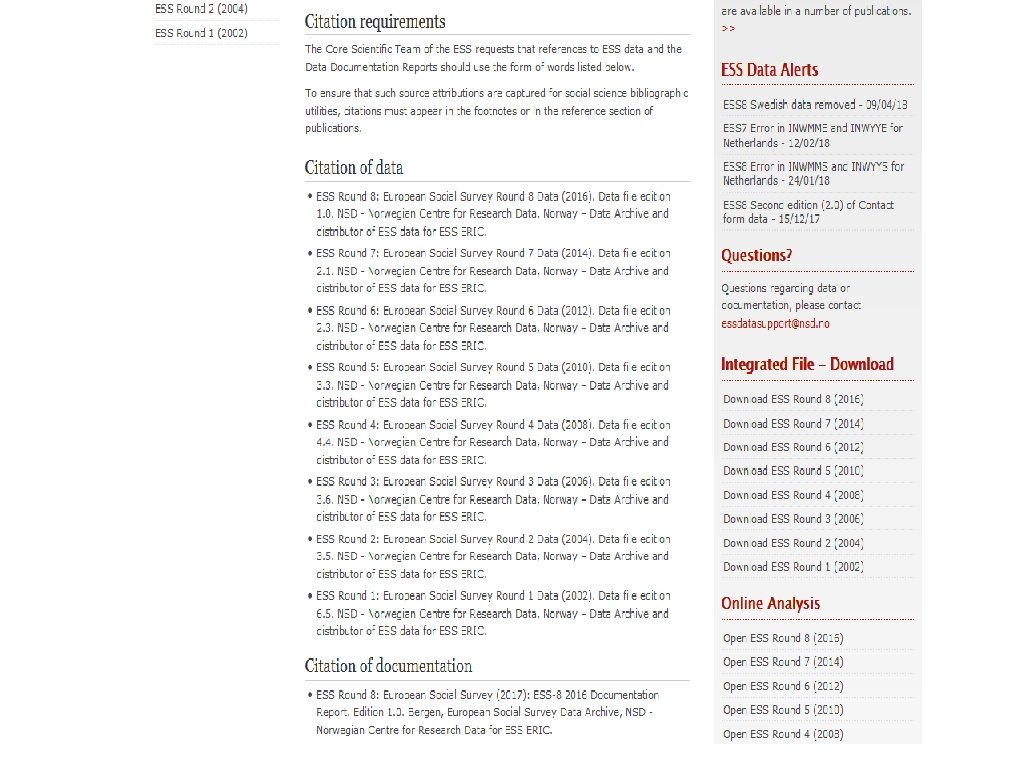
And finally…remember to cite data Why? How? • It gives credit the data creators • It makes data easier to find • Give enough information to locate the exact version of the data • Look for recommended citation • Use persistent identifiers (Digital Object Identifier - DOI) CESSDA Training Working Group (2017)
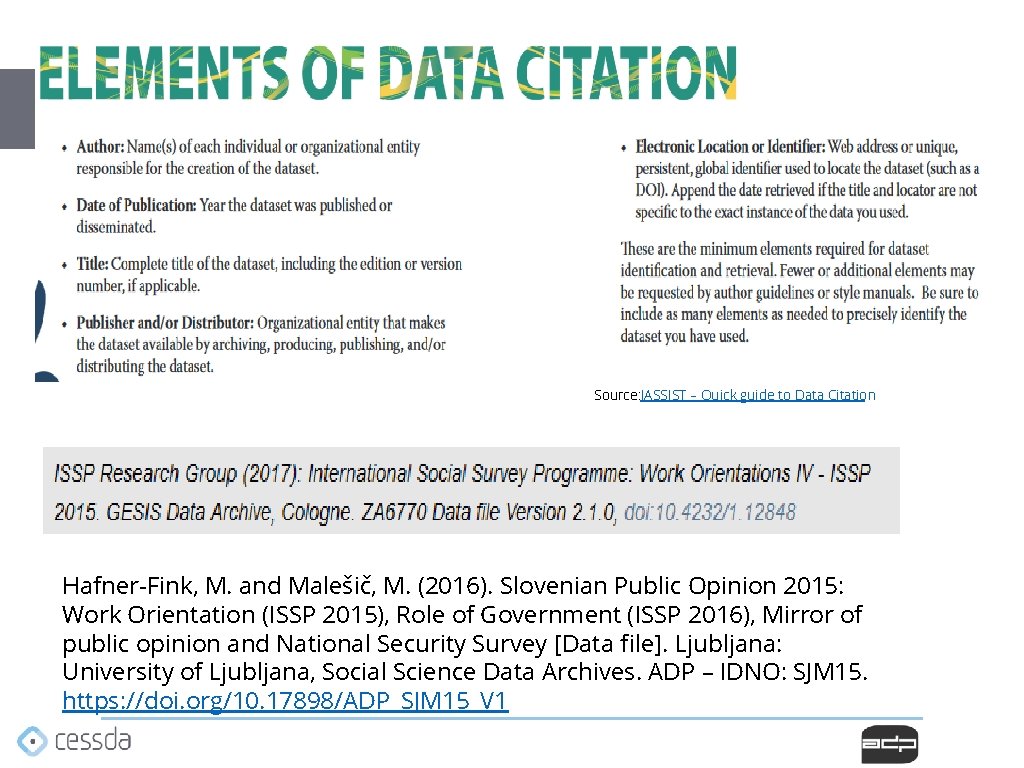
Source: IASSIST – Quick guide to Data Citation Hafner-Fink, M. and Malešič, M. (2016). Slovenian Public Opinion 2015: Work Orientation (ISSP 2015), Role of Government (ISSP 2016), Mirror of public opinion and National Security Survey [Data file]. Ljubljana: University of Ljubljana, Social Science Data Archives. ADP – IDNO: SJM 15. https: //doi. org/10. 17898/ADP_SJM 15_V 1
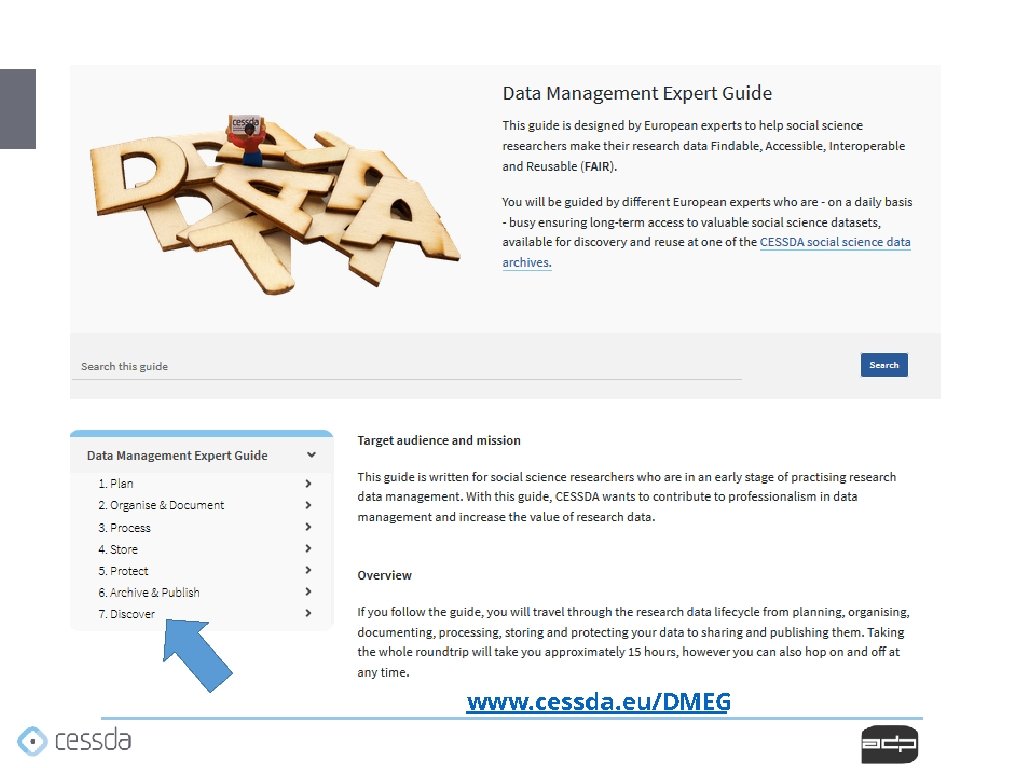
www. cessda. eu/DMEG
More literature – Quick reference guide: Using administrative data for research – Quick reference guide: Social media and research – Guidelines on the use of social media data in survey research - Data Management Expert Guide (CESSDA)
Questions? Pictures from CESSDA Training Working Group (2017). CESSDA Data Management Expert Guide . Bergen, Norway: CESSDA ERIC.