
How to Engage In a Multicultural Environment Implications





- Slides: 21
How to Engage In a Multicultural Environment: Implications for Korean Society With emphasize on Middle-east Culture ASSIST PROF. DR. HOSSEIN OLYA BUSAN, SOUTH KOREA 11. NOV. 2016 1
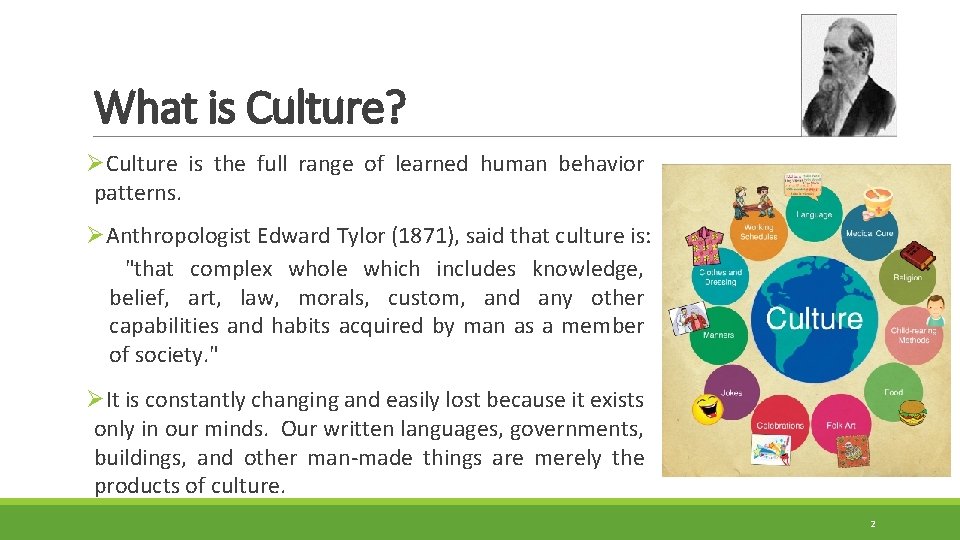
What is Culture? ØCulture is the full range of learned human behavior patterns. ØAnthropologist Edward Tylor (1871), said that culture is: "that complex whole which includes knowledge, belief, art, law, morals, custom, and any other capabilities and habits acquired by man as a member of society. " ØIt is constantly changing and easily lost because it exists only in our minds. Our written languages, governments, buildings, and other man-made things are merely the products of culture. 2
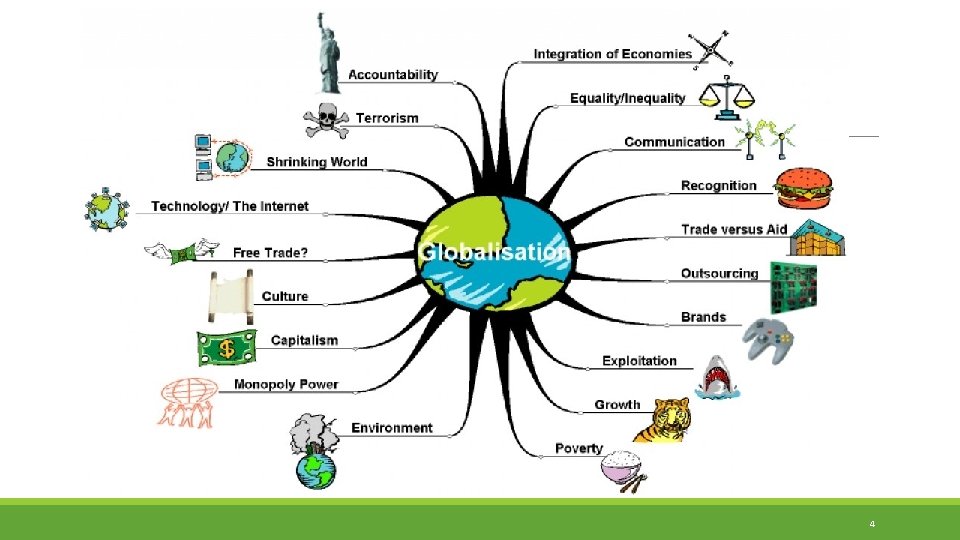
Globalisation ‘‘Globalisation refers to the multiplicity of linkages and interconnections that transcend the nation-states (and by implication the societies) which make up the modern world system. It defines a process (emphasis added) through which events, decisions, and activities in one part of the world can come to have significant consequences for individuals and communities in quite distant parts of the globe. Nowadays, goods, capital, people, knowledge, images, communications, crime, culture, pollutants, drugs, fashions, and beliefs all readily flow across territorial boundaries. Transnational networks, social movements and relationships are extensive in virtually all areas of human activity from the academic to the sexual. ’’(Mc. Grew, 1992, pp. 65– 66). 3
4
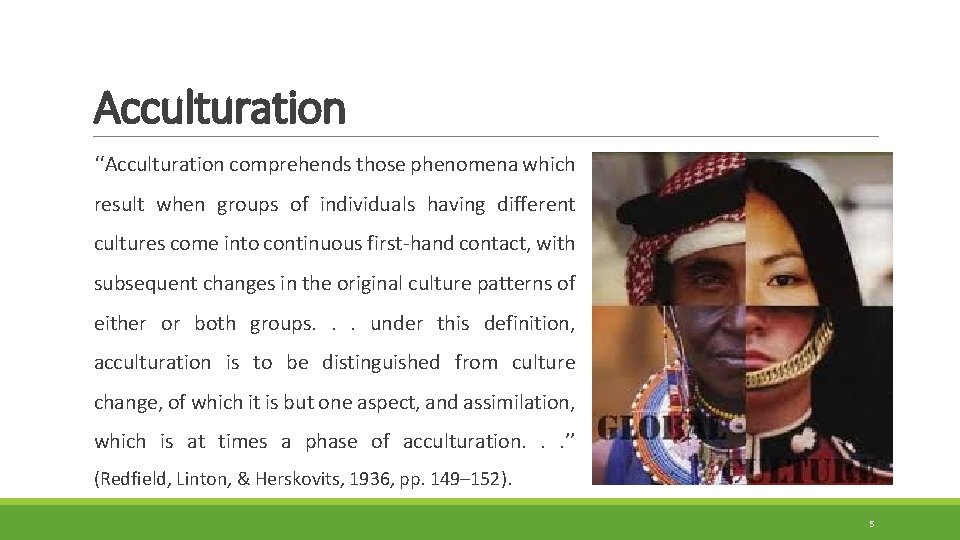
Acculturation ‘‘Acculturation comprehends those phenomena which result when groups of individuals having different cultures come into continuous first-hand contact, with subsequent changes in the original culture patterns of either or both groups. . . under this definition, acculturation is to be distinguished from culture change, of which it is but one aspect, and assimilation, which is at times a phase of acculturation. . . ’’ (Redfield, Linton, & Herskovits, 1936, pp. 149– 152). 5
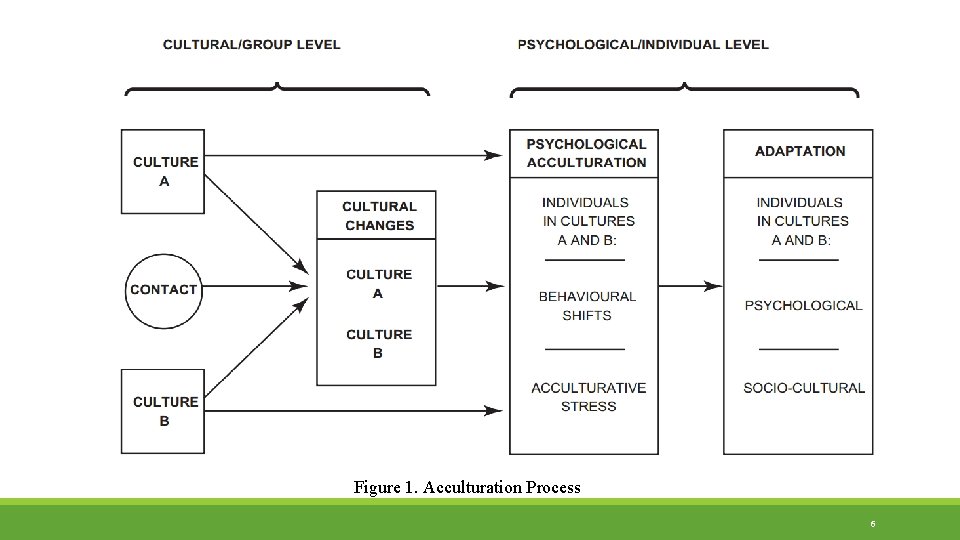
Figure 1. Acculturation Process 6
Acculturation Strategies (Berry, 2008) 7
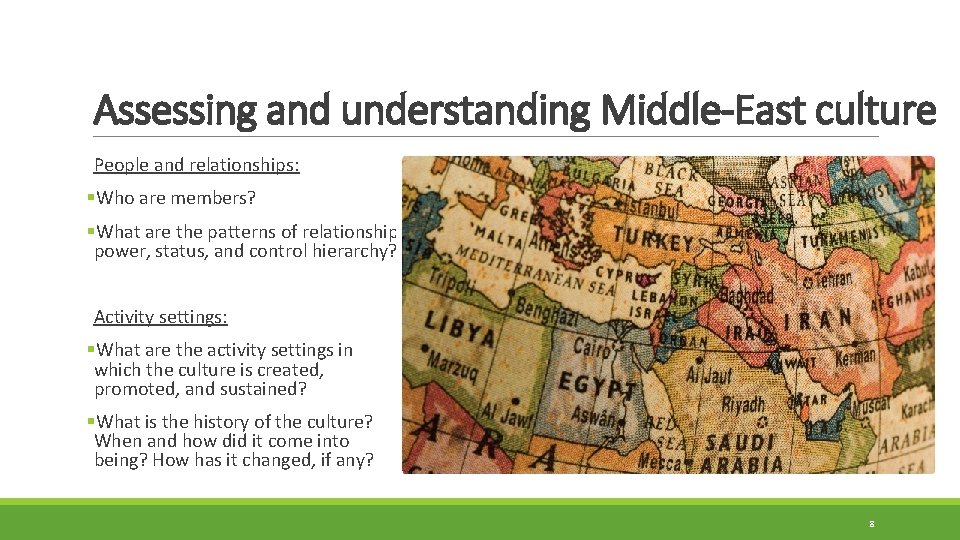
Assessing and understanding Middle-East culture People and relationships: §Who are members? §What are the patterns of relationship power, status, and control hierarchy? Activity settings: §What are the activity settings in which the culture is created, promoted, and sustained? §What is the history of the culture? When and how did it come into being? How has it changed, if any? 8
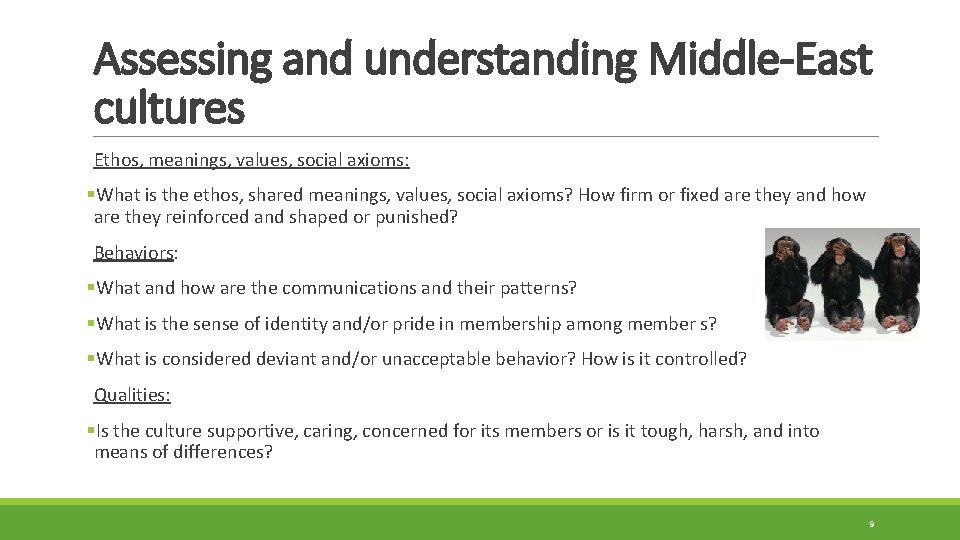
Assessing and understanding Middle-East cultures Ethos, meanings, values, social axioms: §What is the ethos, shared meanings, values, social axioms? How firm or fixed are they and how are they reinforced and shaped or punished? Behaviors: §What and how are the communications and their patterns? §What is the sense of identity and/or pride in membership among member s? §What is considered deviant and/or unacceptable behavior? How is it controlled? Qualities: §Is the culture supportive, caring, concerned for its members or is it tough, harsh, and into means of differences? 9
Practical Implications for Korean Language & communication Foods & Halal Products Hang out with other foreigners Training the locals and front office employees Identify, create, offer, and deliver the values (e. g. , Hitchhiking, job, respect, etc. ) Application of Social Media (e. g. Airbnb, Couch. Surfing, and so on). Branding (planning, regulations, campaigns, education, events, and Festival) 10
Language Communication Information Announcement Services 11
Foods & Halal Products VS 12
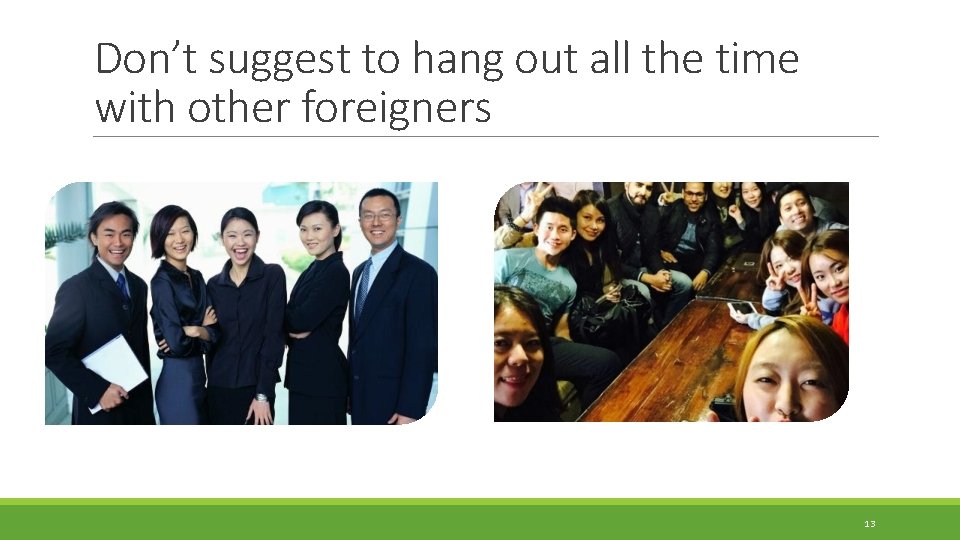
Don’t suggest to hang out all the time with other foreigners 13
Training the locals and front office employees 14
Identify, create, offer, and deliver the values 15
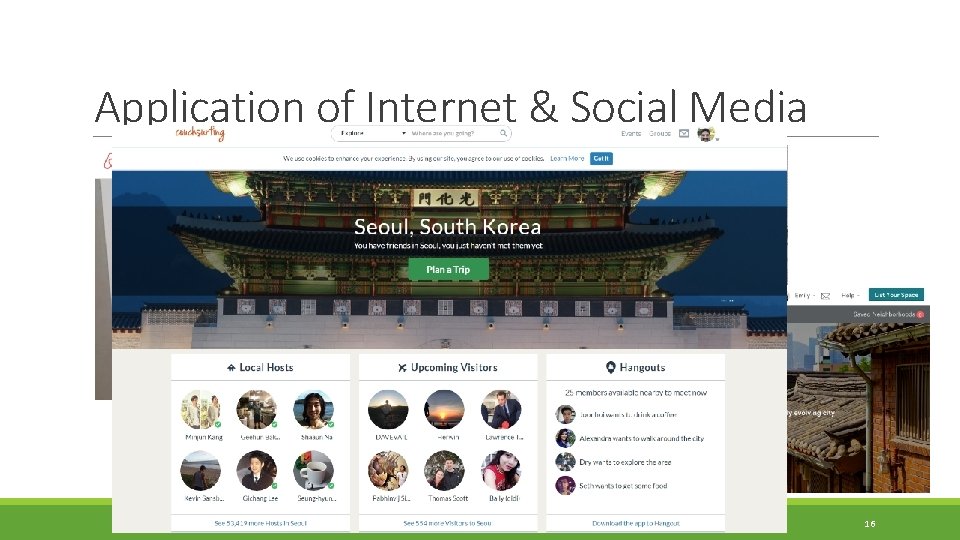
Application of Internet & Social Media 16
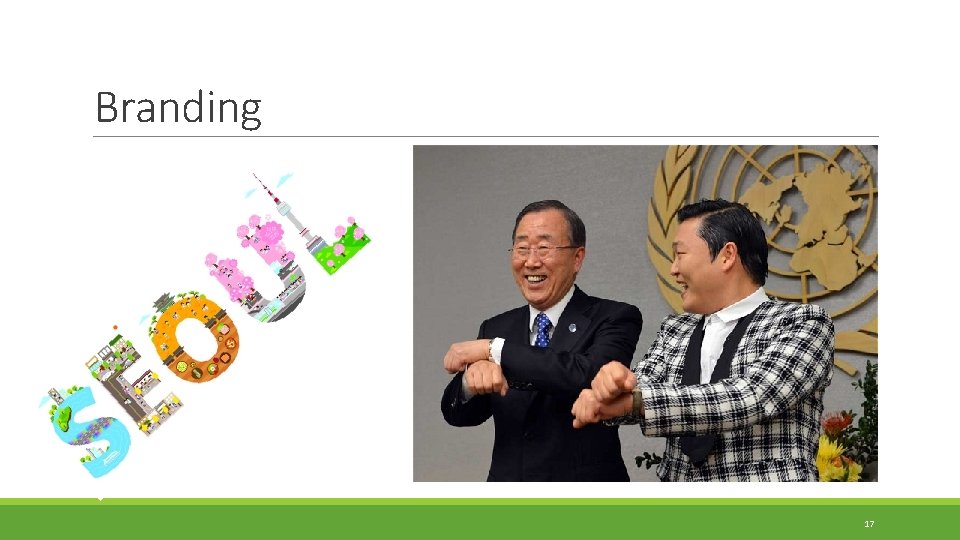
Branding 17
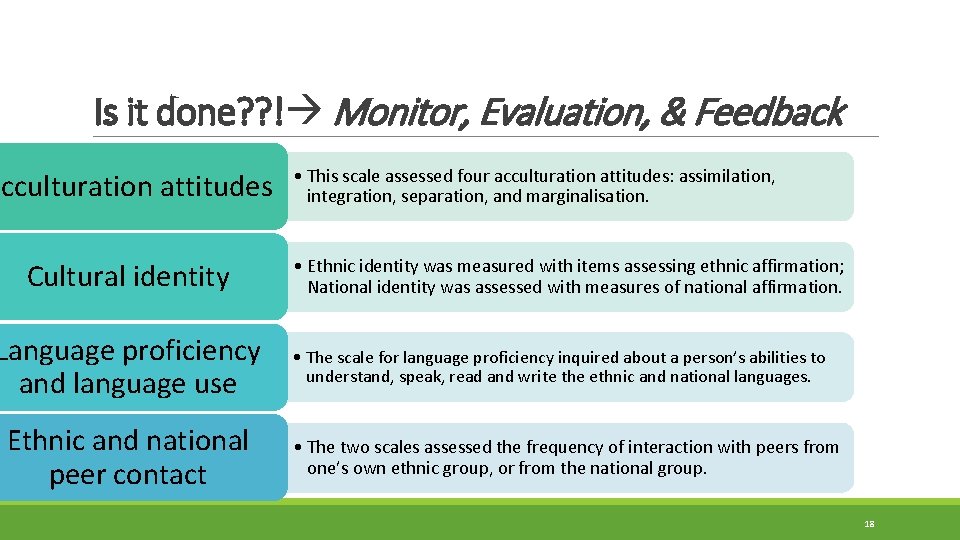
Is it done? ? ! Monitor, Evaluation, & Feedback Acculturation attitudes Cultural identity Language proficiency and language use Ethnic and national peer contact • This scale assessed four acculturation attitudes: assimilation, integration, separation, and marginalisation. • Ethnic identity was measured with items assessing ethnic affirmation; National identity was assessed with measures of national affirmation. • The scale for language proficiency inquired about a person’s abilities to understand, speak, read and write the ethnic and national languages. • The two scales assessed the frequency of interaction with peers from one’s own ethnic group, or from the national group. 18
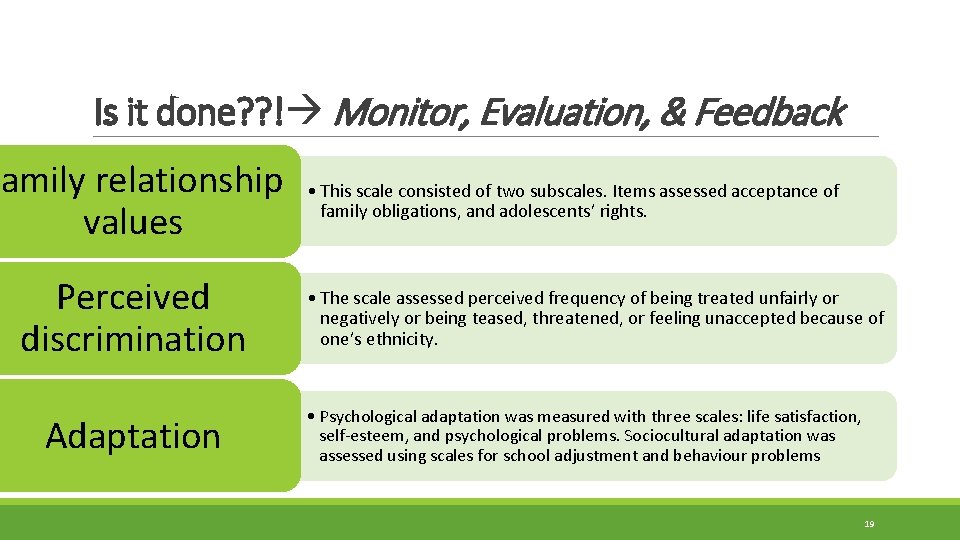
Is it done? ? ! Monitor, Evaluation, & Feedback Family relationship values Perceived discrimination Adaptation • This scale consisted of two subscales. Items assessed acceptance of family obligations, and adolescents’ rights. • The scale assessed perceived frequency of being treated unfairly or negatively or being teased, threatened, or feeling unaccepted because of one’s ethnicity. • Psychological adaptation was measured with three scales: life satisfaction, self-esteem, and psychological problems. Sociocultural adaptation was assessed using scales for school adjustment and behaviour problems 19
References v. Berry, J. W. (2008). Globalisation and acculturation. International Journal of Intercultural Relations, 32(4), 328 -336. v. Marsella, A. J. (2005). Culture and conflict: Understanding, negotiating, and reconciling conflicting constructions of reality. International Journal of Intercultural Relations, 29(6), 651 -673. v. Sam, D. L. , & Berry, J. W. (2010). Acculturation when individuals and groups of different cultural backgrounds meet. Perspectives on Psychological Science, 5(4), 472 -481. vhttp: //anthro. palomar. edu/culture_1. htm vhttp: //www. roadjunky. com/1498/10 -ways-to-assimilate-and-integrate-with-a-foreign-culture/ 20
Thank you for attention Hossein GT Olya, Ph. D. College of Hospitality & Tourism Management, Sejong University, Seoul Webpage: www. olyah. com Email: Olyah@sejong. ac. kr Google Scholar, Twitter, Research. Gate, Linkedin. Associate Editor, The Service Industries Journal (SSCI) 21