
HOW TO EAT FRIED WORMS BY THOMAS ROCKWELL
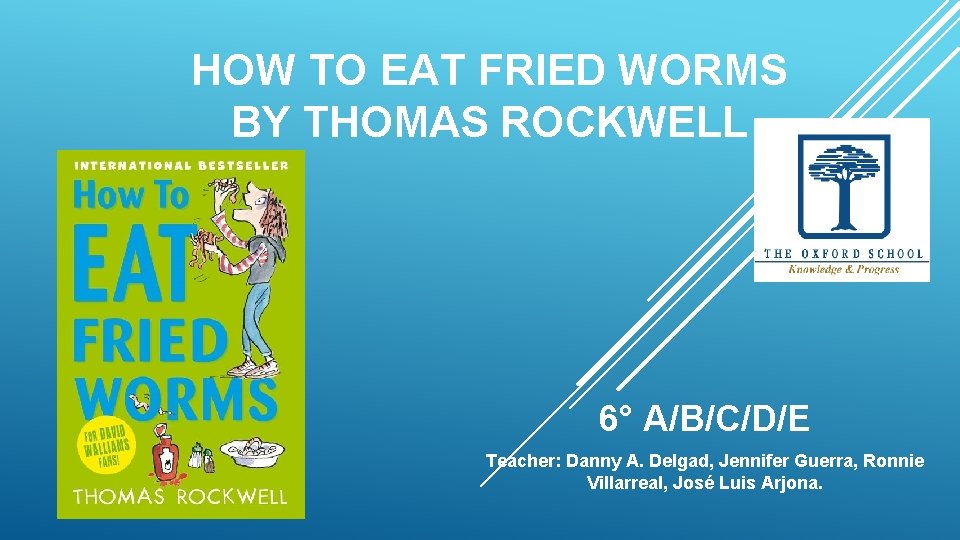
HOW TO EAT FRIED WORMS BY THOMAS ROCKWELL 6° A/B/C/D/E Teacher: Danny A. Delgad, Jennifer Guerra, Ronnie Villarreal, José Luis Arjona.
BEFORE WE READ Have you ever done something on a dare? What was it? Is it a good idea to accept dares or make bets? Why or why not? Have you ever eaten anything unusual, like insects, snakes, octopus, or worms? Why not? Has a friend of yours ever cheated on something like a test or to win a game or a bet? How did you feel about this friend after that? Why do people gamble?

WHAT IS IT ABOUT? When Billy claims he’ll eat anything, his friends challenge him to a bet that he can’t eat fifteen worms in fifteen days. At first Billy needs lots of mustard, ketchup and horseradish to get the worms down, but before the fifteen days are over, he has learned to like them.
POINT OF VIEW Thomas Rockwell tells his novel “How to Eat Fried Worms” in the third-person omniscient perspective. Rockwell’s novel follows the misadventures and struggles of Billy, Alan, and their friends as their lives come to revolve around the worm bet. The third-person narrative allows Rockwell to describe thoughts, feelings, and actions of each of his characters to the reader, even when the characters themselves do not know what the others are thinking or doing.
MAIN CHARACTERS Alan: This character bets Billy 50$ to eat the 15 worms. Billy: This character eats the fifteen worms in the bet. Joe: This character also bets Billy and says that Billy cant eat the 15 worms.
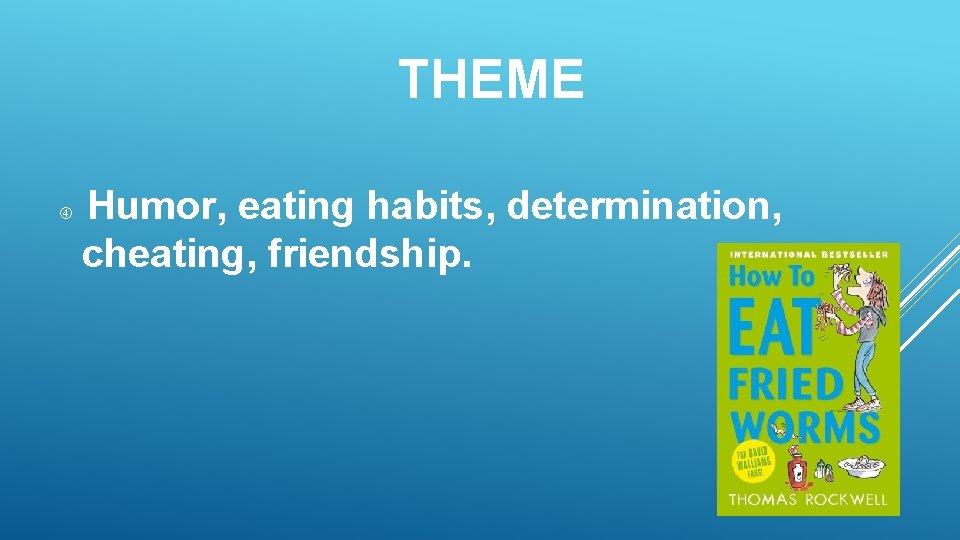
THEME Humor, eating habits, determination, cheating, friendship.
SETTING Gratton is a rural town in New York not far from New York City. The town seems to consist of small farms, meadows, and quiet neighborhoods. Billy and his family live on a small farm and have an old barn, while a few blocks over, Alan, Joe, and Tom live in suburban housing. The town is close enough to New York City to allow day trips to New York, such as when Billy, Alan, and Joe go to see a Mets game, but also rural enough to allow for barns and farmland.
- Slides: 7