
How to Draw a Systems Diagram StepbyStep Instructions
How to Draw a Systems Diagram Step-by-Step Instructions for a Simple Example
Basic Steps to Follow: 1. Identify components of system: – Things – Events – Measured Value/Data 2. Characterize the behavior of the system components: – Are they static? – How do they change with time? Sketch graphs! 3. Identify linkages and connections between components. 4. Draw the linkages between system components, indicating feedback loops. 5. As you draw components and connections on the diagram, make sure that you have included all of the relevant components. – Add new components and connections as needed. – Pay attention to the level of detail you are including – is a component or connection too specific for the diagram you are making?
A Simple Example: Heating a Room
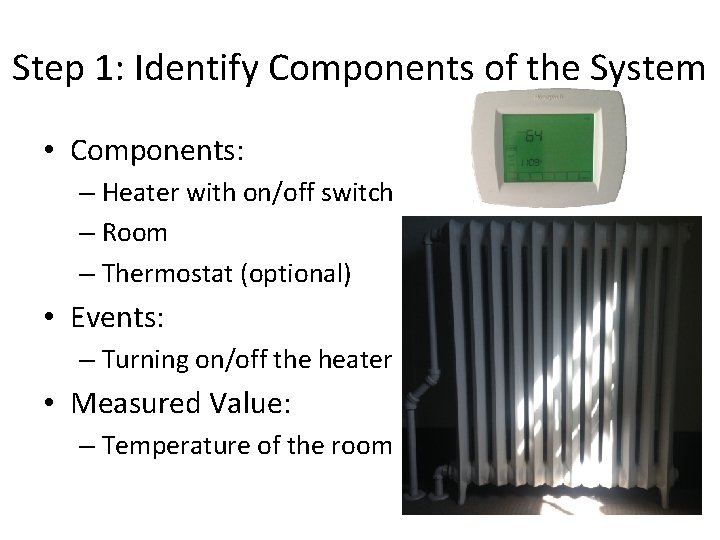
Step 1: Identify Components of the System • Components: – Heater with on/off switch – Room – Thermostat (optional) • Events: – Turning on/off the heater • Measured Value: – Temperature of the room
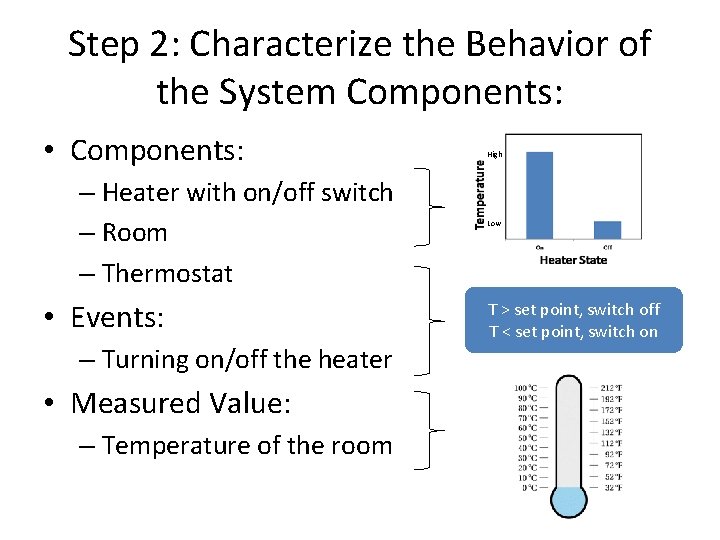
Step 2: Characterize the Behavior of the System Components: • Components: – Heater with on/off switch – Room – Thermostat • Events: – Turning on/off the heater • Measured Value: – Temperature of the room High Low T > set point, switch off T < set point, switch on
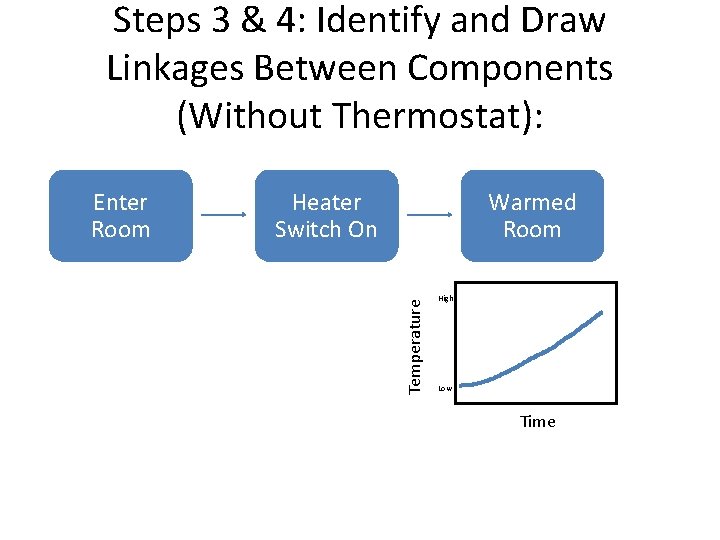
Steps 3 & 4: Identify and Draw Linkages Between Components (Without Thermostat): Heater Switch On Warmed Room Temperature Enter Room High Low Time
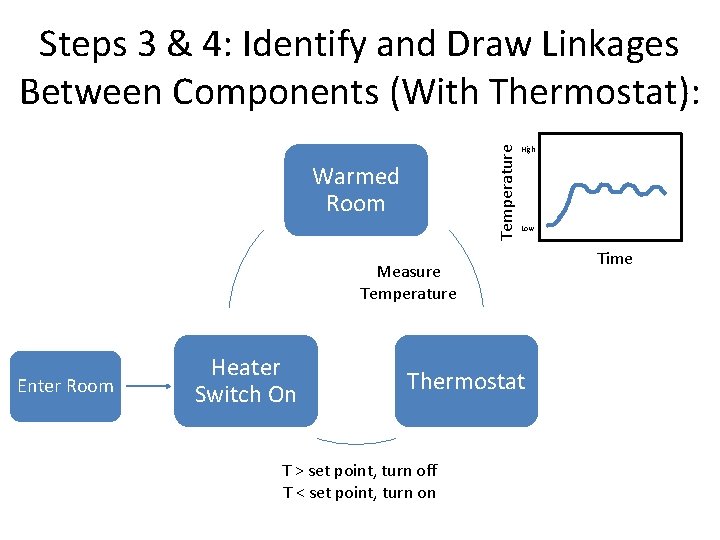
Temperature Steps 3 & 4: Identify and Draw Linkages Between Components (With Thermostat): Warmed Room High Low Measure Temperature Enter Room Heater Switch On Thermostat T > set point, turn off T < set point, turn on Time
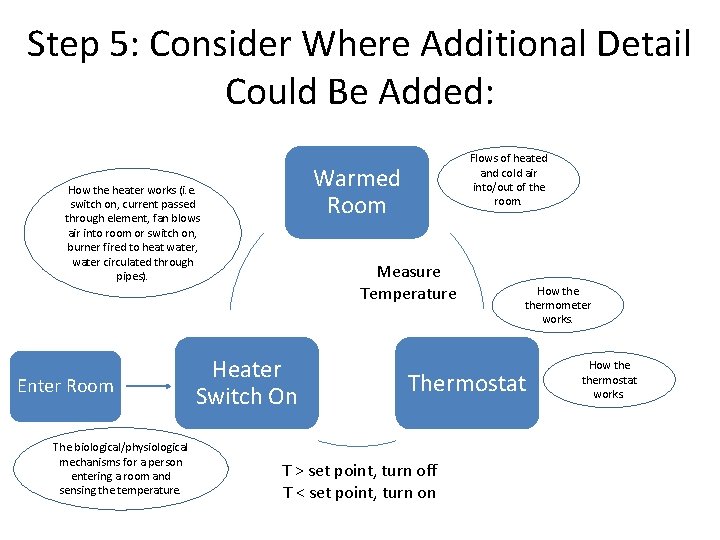
Step 5: Consider Where Additional Detail Could Be Added: Warmed Room How the heater works (i. e. switch on, current passed through element, fan blows air into room or switch on, burner fired to heat water, water circulated through pipes). Enter Room The biological/physiological mechanisms for a person entering a room and sensing the temperature. Flows of heated and cold air into/out of the room. Measure Temperature Heater Switch On How thermometer works. Thermostat T > set point, turn off T < set point, turn on How thermostat works.
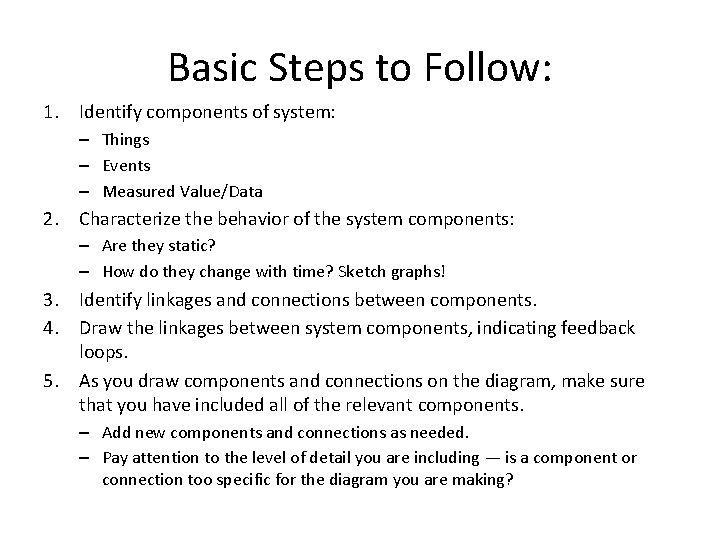
Basic Steps to Follow: 1. Identify components of system: – Things – Events – Measured Value/Data 2. Characterize the behavior of the system components: – Are they static? – How do they change with time? Sketch graphs! 3. Identify linkages and connections between components. 4. Draw the linkages between system components, indicating feedback loops. 5. As you draw components and connections on the diagram, make sure that you have included all of the relevant components. – Add new components and connections as needed. – Pay attention to the level of detail you are including — is a component or connection too specific for the diagram you are making?
- Slides: 9