
How to do science Step 1 Questioning You
- Slides: 14
How to do science
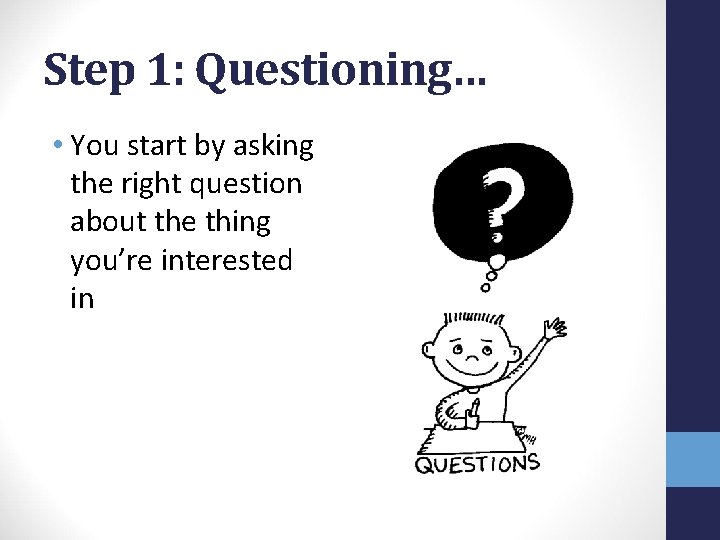
Step 1: Questioning… • You start by asking the right question about the thing you’re interested in
Questioning Skills • Scientific questions need to be answered by observations or evidence • Remember, if questions cannot be answered by gathering evidence, it’s not science • Questions should identify a relationship or a factor you can investigate
Hints for Writing Questions • If your question is general, break it down into questions that can be investigated one at a time • Good questions begin with: • What is the relationship between…? • What factors cause…? • What is the effect of…?
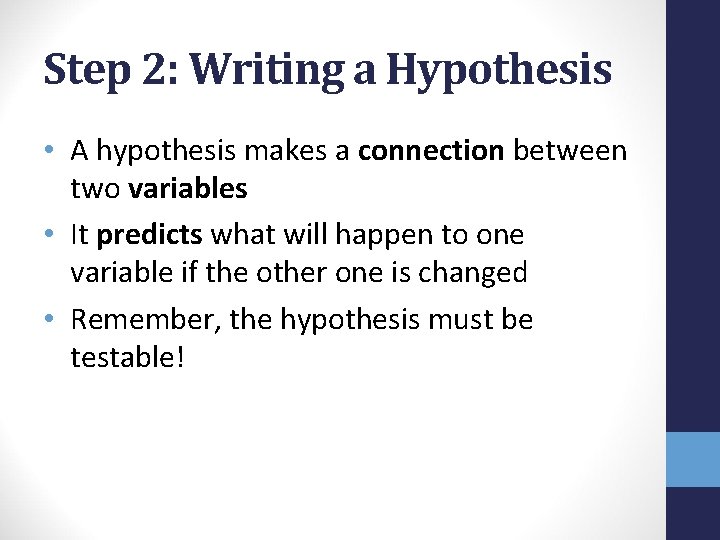
Step 2: Writing a Hypothesis • A hypothesis makes a connection between two variables • It predicts what will happen to one variable if the other one is changed • Remember, the hypothesis must be testable!
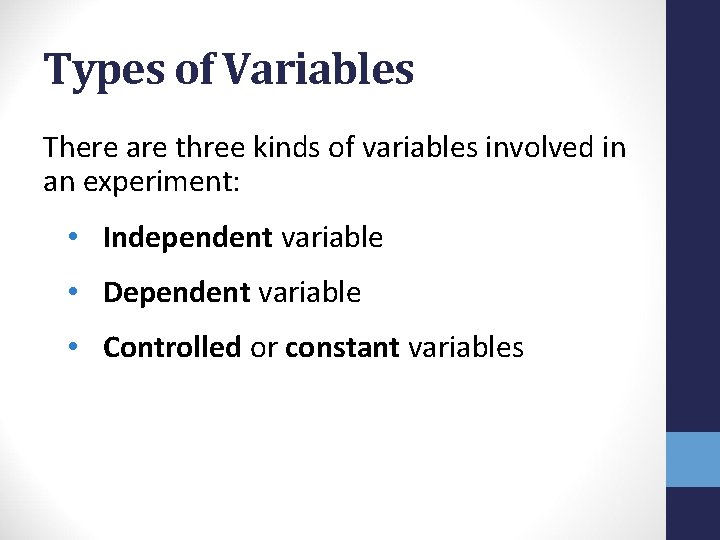
Types of Variables There are three kinds of variables involved in an experiment: • Independent variable • Dependent variable • Controlled or constant variables
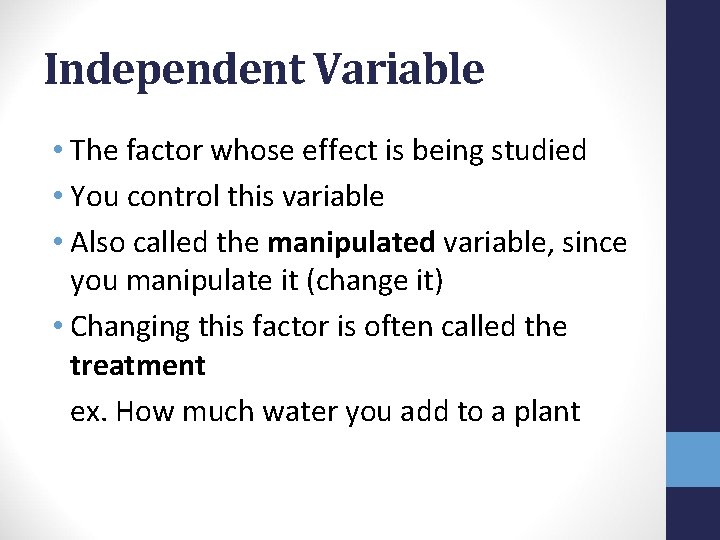
Independent Variable • The factor whose effect is being studied • You control this variable • Also called the manipulated variable, since you manipulate it (change it) • Changing this factor is often called the treatment ex. How much water you add to a plant
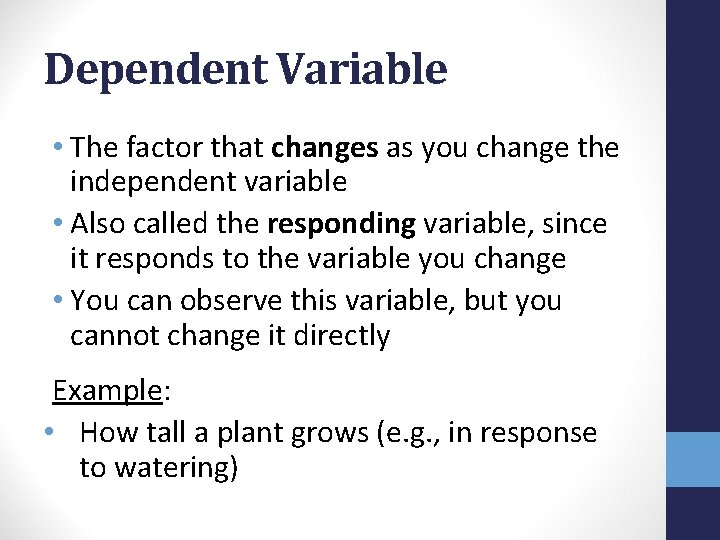
Dependent Variable • The factor that changes as you change the independent variable • Also called the responding variable, since it responds to the variable you change • You can observe this variable, but you cannot change it directly Example: • How tall a plant grows (e. g. , in response to watering)
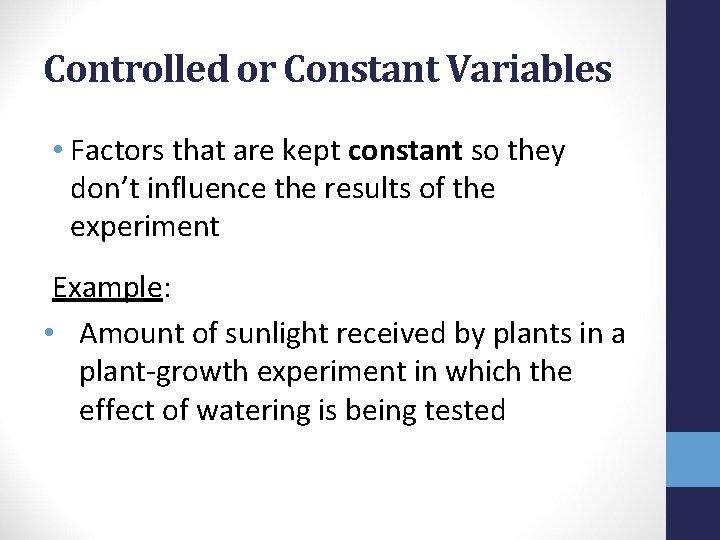
Controlled or Constant Variables • Factors that are kept constant so they don’t influence the results of the experiment Example: • Amount of sunlight received by plants in a plant-growth experiment in which the effect of watering is being tested
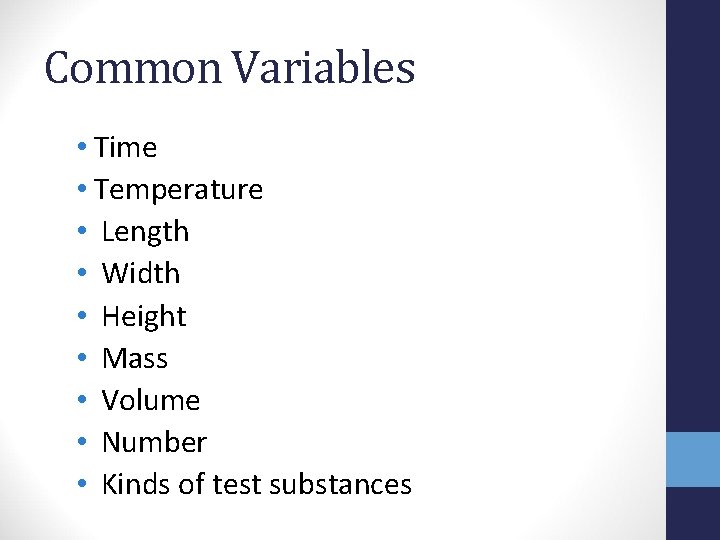
Common Variables • Time • Temperature • Length • Width • Height • Mass • Volume • Number • Kinds of test substances
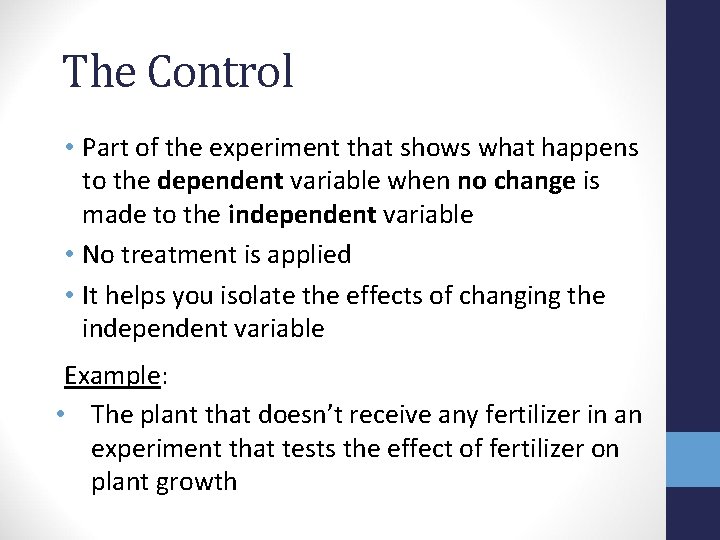
The Control • Part of the experiment that shows what happens to the dependent variable when no change is made to the independent variable • No treatment is applied • It helps you isolate the effects of changing the independent variable Example: • The plant that doesn’t receive any fertilizer in an experiment that tests the effect of fertilizer on plant growth
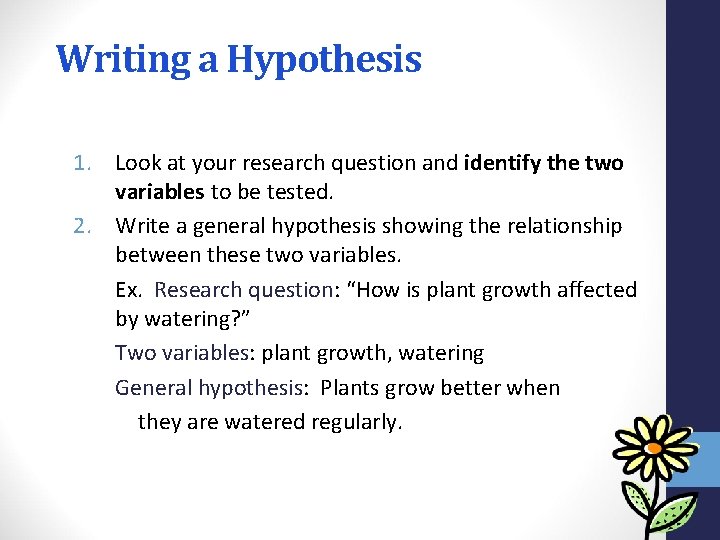
Writing a Hypothesis 1. Look at your research question and identify the two variables to be tested. 2. Write a general hypothesis showing the relationship between these two variables. Ex. Research question: “How is plant growth affected by watering? ” Two variables: plant growth, watering General hypothesis: Plants grow better when they are watered regularly.
Refining a Hypothesis 3. Make your hypothesis testable by making the variables more specific ex. Plant growth → Plant height (mm) Watering → Adding different amounts of water (m. L/day) 4. Write your refined hypothesis: Plants will grow taller if they are given at least 100 m. L of water daily.
Adding a Reason to Your Hypothesis • A sophisticated hypothesis often includes a reason for the predicted relationship Ex. Since water is needed for cell division and cell growth, plants will grow taller if they are given at least 100 m. L of water daily.