
How to Develop an ADA Self Evaluation Transition


- Slides: 20
How to Develop an ADA Self. Evaluation & Transition Plan Jodi Petersen FHWA Division Civil Rights Program Manager
Self-Evaluation n Required of all entities n Rehabilitation Act of 1973 n n USDOT Implementing Regulations (49 CFR 27) Americans w/Disabilities Act of 1990 n DOJ Implementing Regulations (28 CFR 35)
Self-Evaluation n Purpose & Scope n n Identify barriers in programs & activities that prevents persons with disabilities from access (includes evaluation of policies/practices) Key – provide equivalent access to the maximum extent feasible
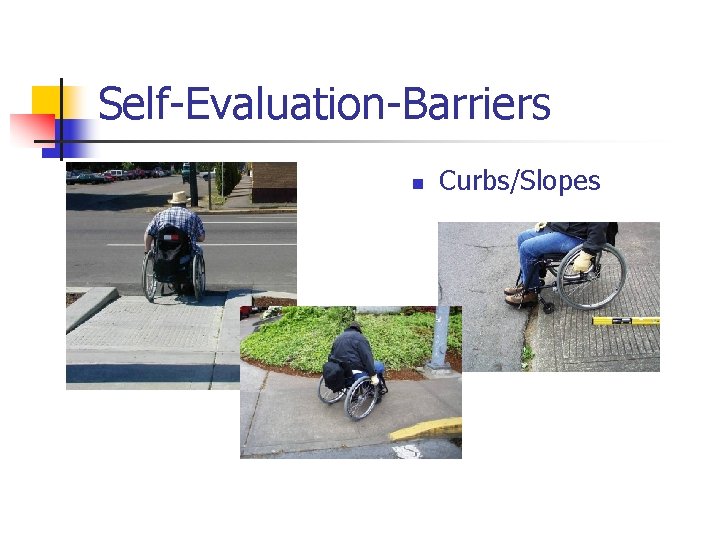
Self-Evaluation-Barriers n Curbs/Slopes
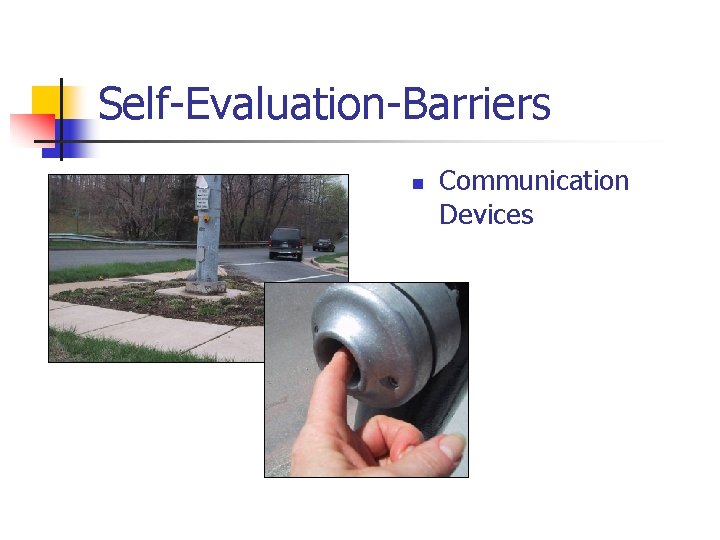
Self-Evaluation-Barriers n Communication Devices
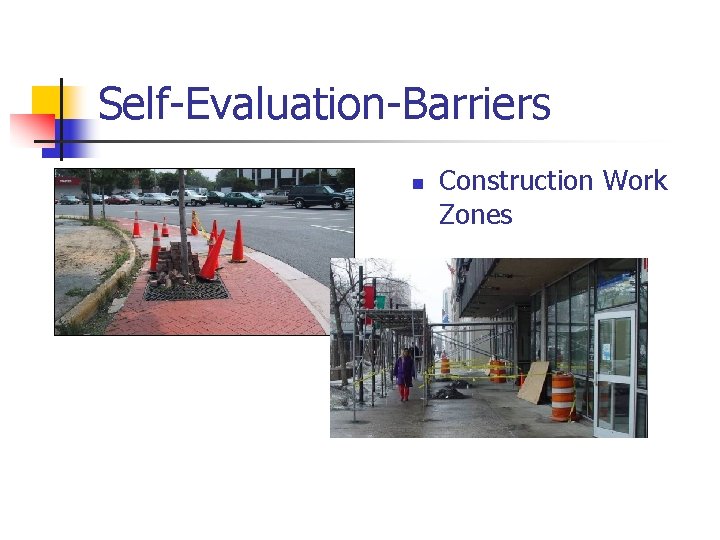
Self-Evaluation-Barriers n Construction Work Zones
Self-Evaluation n Identifying Barriers within public right-of-way n n n n Curbs Sidewalks Pedestrian Crossings Pedestrian Signals Shared Use Trails Parking Lots Bus Stops
Self-Evaluation n Developing the Evaluation n Agency commitment n n Funding Staff resources (i. e. , survey/maintenance staff, interns) or contract with knowledgeable consultants
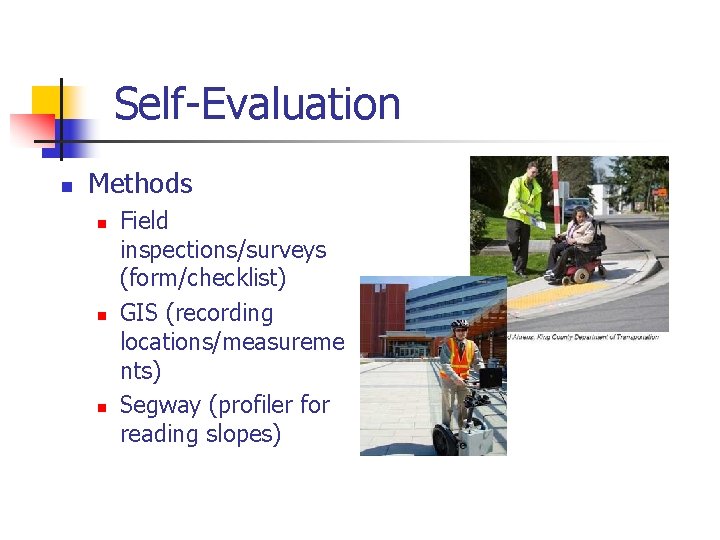
Self-Evaluation n Methods n n n Field inspections/surveys (form/checklist) GIS (recording locations/measureme nts) Segway (profiler for reading slopes)
Self-Evaluation n Critical Areas to Evaluate n n n Public right-of-way accessing government offices, medical facilities, downtown core areas, school zones, residential areas, et al Rest Areas, parks, shared use trails Access to public buildings (permit/licensing offices, public meeting rooms, etc. )
Self-Evaluation n End Result n n n Inventory (and details) of facilities where structural modifications are needed to make facilities accessible to persons with disabilities Foundation for Transition Plan Maintain in file/available for public inspection for 3 yrs from date of completion
Transition Plan n Required by Rehabilitation Act and the ADA n n 50 plus employees (entire agency) Public input
Transition Plan n Purpose & Scope n n n Set forth steps necessary to complete modifications identified through selfevaluation (those areas not covered in a previously developed plan) Provide a schedule for completing modifications DOJ reference to Program Access Plan
Transition Plan n Content (at a minimum) n n n Identify physical obstacles Describe the methods to make facilities accessible Specify the schedule for achieving completion (if longer than 1 year, identify steps to be taken each year but as expeditiously as possible)
Transition Plan n Content (cont. ) n n n Identify official responsible for implementation of plan Estimated Cost of each modification Status column to record completion date
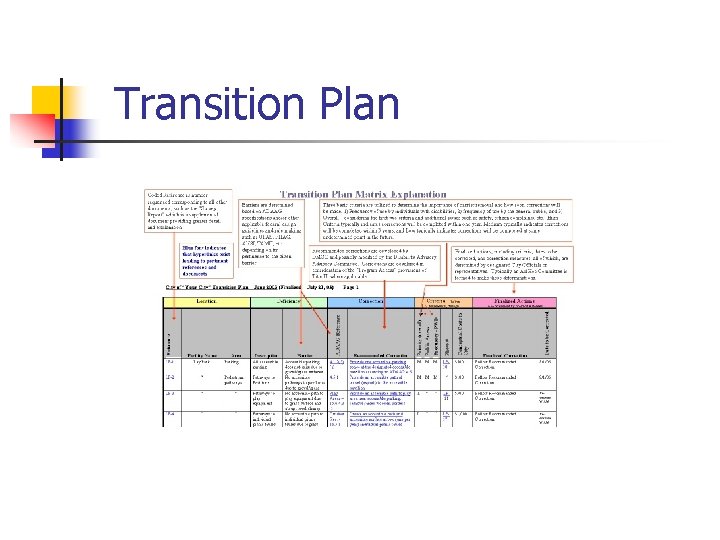
Transition Plan
Transition Plan n Examples of Plans n n Rancho Cordova, CA Sacramento, CA
Transition Plan n Important things to remember n n n Prioritize modifications (using same criteria as self-evaluation) Coordinate/integrate schedule of modifications with planned alterations (paving, building, utility work) Inform/educate persons with authority over budget/prioritizing projects
Transition Plan n Important things to remember n n n Transition Plan is a living document – evolving planning & monitoring tool As boundaries grow, so does the need to incorporate acquired facilities into Self. Evaluation/Transition Plan process Special Requests/Complaints & Transition Plan schedule
Questions