
How to Develop a Rubric Jason Peake A

How to Develop a Rubric Jason Peake
A rubric is a set of rules that. . . n Shows levels of quality. n Communicates standards. n Tells students expectations for task. n Are NOT checklists (yes or no answers).
Parts of a Rubric n Dimensions, referred to as criteria, encompass the knowledge, skills, and understanding to be assessed. n Indicators specify the evidence used to judge the degree to which the dimension is mastered. n Rating Scales discriminate among the various levels of performance.
Steps in Rubric Development n Determine learning outcomes. n Each rubric item should focus on a different skill. n Evaluate only measurable criteria. n Ideally, the entire rubric should fit on one sheet of paper. n Reevaluate the rubric. (Did it work? )
Advantages of Using a Rubric n n n Lowers students’ anxiety about what is expected of them. Provides specific feedback about the quality of their work. Provides a way to communicate expectations and progress. Ensures all student work is judged by the same standard. Disengages the “halo” effect and its reverse. Leads students toward quality work.
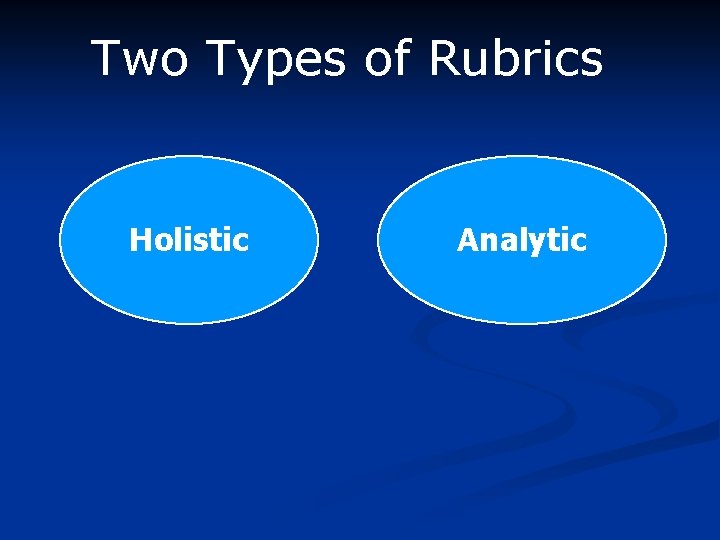
Two Types of Rubrics Holistic Analytic
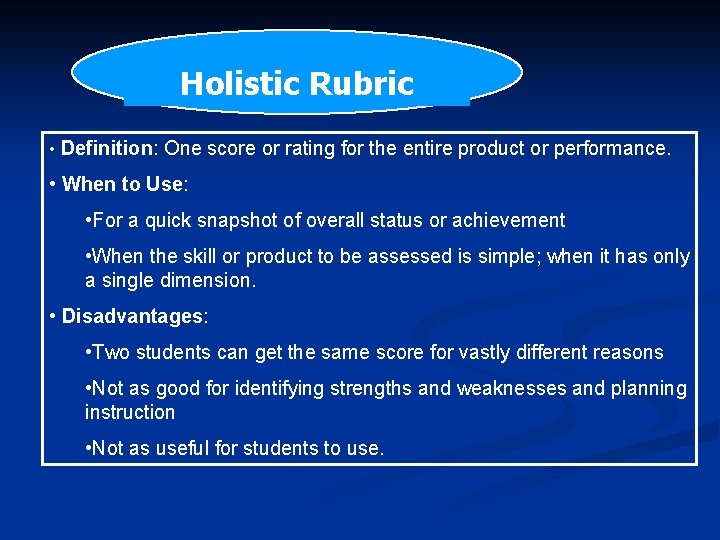
Holistic Rubric • Definition: One score or rating for the entire product or performance. • When to Use: • For a quick snapshot of overall status or achievement • When the skill or product to be assessed is simple; when it has only a single dimension. • Disadvantages: • Two students can get the same score for vastly different reasons • Not as good for identifying strengths and weaknesses and planning instruction • Not as useful for students to use.
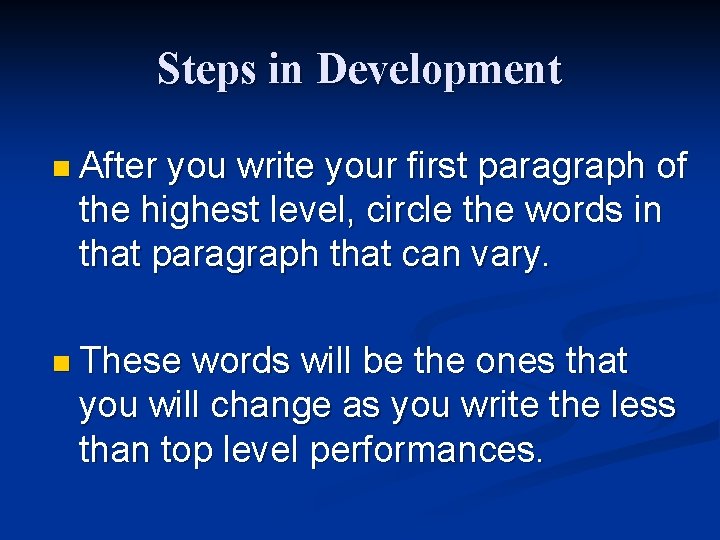
Steps in Development n After you write your first paragraph of the highest level, circle the words in that paragraph that can vary. n These words will be the ones that you will change as you write the less than top level performances.
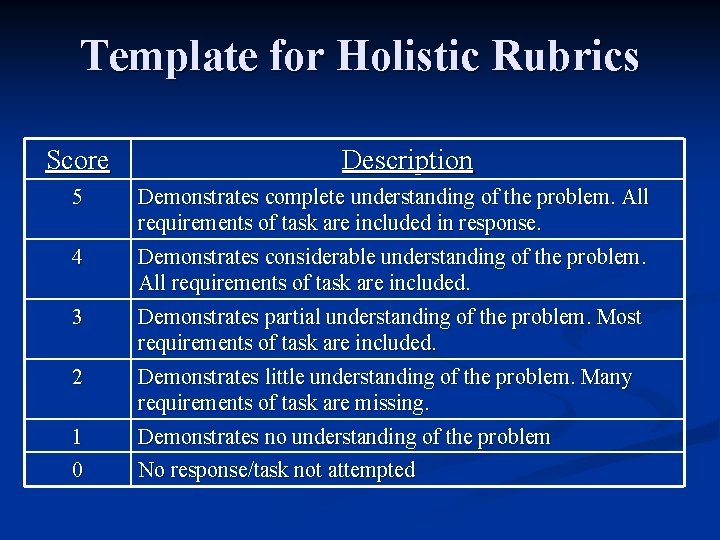
Template for Holistic Rubrics Score 5 4 3 2 1 0 Description Demonstrates complete understanding of the problem. All requirements of task are included in response. Demonstrates considerable understanding of the problem. All requirements of task are included. Demonstrates partial understanding of the problem. Most requirements of task are included. Demonstrates little understanding of the problem. Many requirements of task are missing. Demonstrates no understanding of the problem No response/task not attempted
Analytical Rubric • Definition: Several scores or ratings for a product or performance. Each score represents an important dimension or trait of the performance or product. • When to Use: • Planning instruction – show relative strengths and weaknesses. • Teaching students the nature of a quality product or performance – they need the details. • Detailed feedback to students or parents. • For complicated skills, products, or performances, for which several dimensions need to be clear. • Disadvantages: • Scoring is slower. • Takes longer to learn.
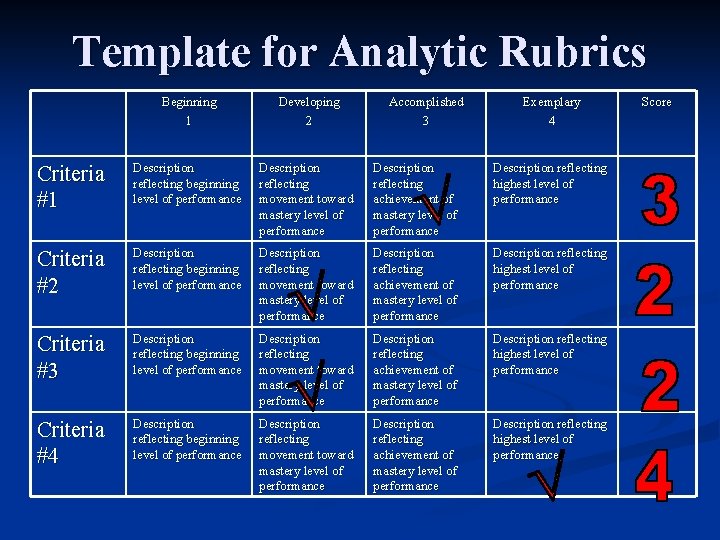
Template for Analytic Rubrics Beginning 1 Developing 2 Accomplished 3 Exemplary 4 Criteria #1 Description reflecting beginning level of performance Description reflecting movement toward mastery level of performance Description reflecting achievement of mastery level of performance Description reflecting highest level of performance Criteria #2 Description reflecting beginning level of performance Description reflecting movement toward mastery level of performance Description reflecting achievement of mastery level of performance Description reflecting highest level of performance Criteria #3 Description reflecting beginning level of performance Description reflecting movement toward mastery level of performance Description reflecting achievement of mastery level of performance Description reflecting highest level of performance Criteria #4 Description reflecting beginning level of performance Description reflecting movement toward mastery level of performance Description reflecting achievement of mastery level of performance Description reflecting highest level of performance Score
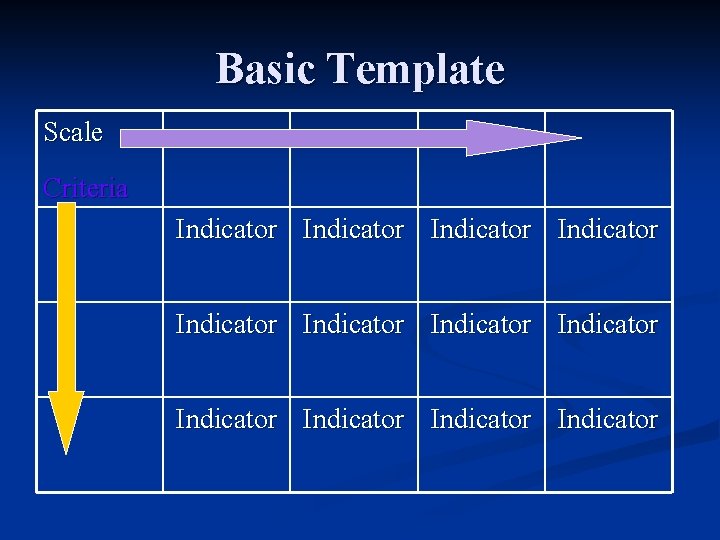
Basic Template Scale Criteria Indicator Indicator Indicator
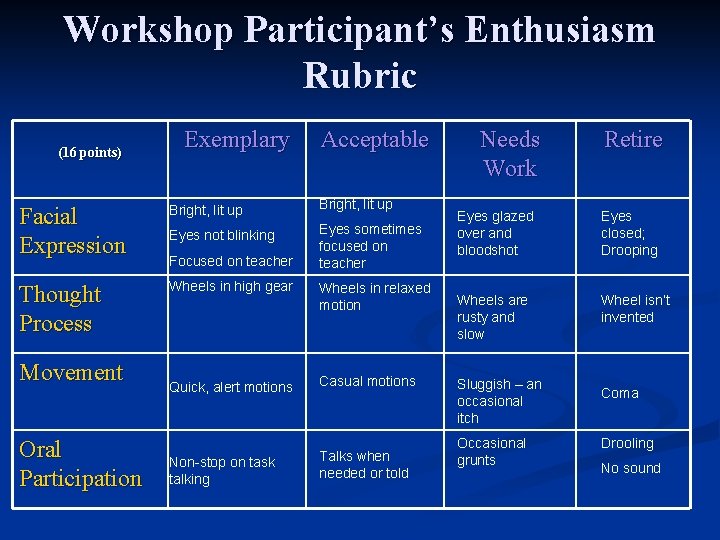
Workshop Participant’s Enthusiasm Rubric (16 points) Exemplary Acceptable Facial Expression Bright, lit up Eyes not blinking Eyes sometimes focused on teacher Thought Process Wheels in high gear Wheels in relaxed motion Quick, alert motions Casual motions Non-stop on task talking Talks when needed or told Movement Oral Participation Focused on teacher Needs Work Retire Eyes glazed over and bloodshot Eyes closed; Drooping Wheels are rusty and slow Wheel isn’t invented Sluggish – an occasional itch Occasional grunts Coma Drooling No sound
Remember: n Adapt your rubric to the task at hand. n Apply the scoring system that best suits you. n Start small (keep adding and changing when necessary) n Students should receive the assignment and rubric at the same time.
SOME THOUGHTS n n n Determine appropriate and acceptable evidence of learning? Match the assessment method with the task Show students models for what we are asking to do Give descriptive feedback about student performance Don’t over-rely on just one mode of assessment such as formal unseen examinations Use a variety of assessments
“Assessment should always have more to do with helping students grow than with cataloging their mistakes. ” Carol Tomlinson
- Slides: 16