
How To Determine The Integrity of an Ethernet

- Slides: 20
How To Determine The Integrity of an Ethernet Line Design Team 7 Mark Jones Sedat Gur Ahmed Alsinan Brian Schulte Andy Christopherson
Introduction § Ethernet History and Structure § Time Domain Reflectometry § Active Link Cable Diagnostics § Digital Spectrum Analysis § Power-over-Ethernet Detect § Output Data
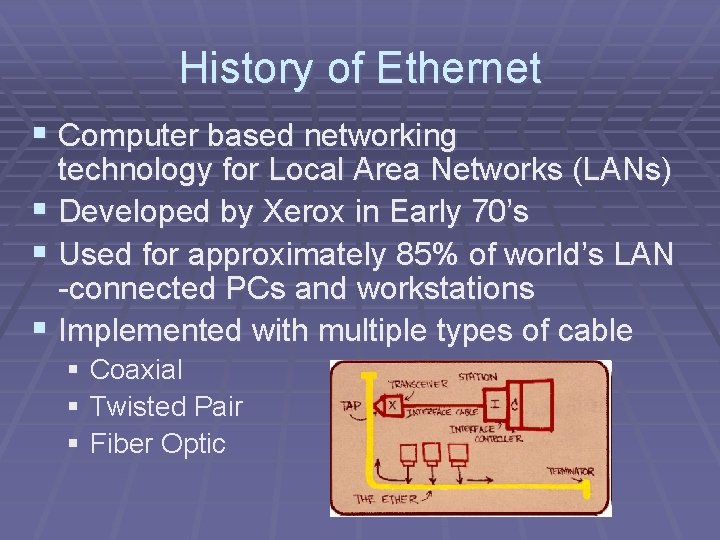
History of Ethernet § Computer based networking technology for Local Area Networks (LANs) § Developed by Xerox in Early 70’s § Used for approximately 85% of world’s LAN -connected PCs and workstations § Implemented with multiple types of cable § Coaxial § Twisted Pair § Fiber Optic
Twisted Pair Wires § Used in many Ethernet and § § § telephone systems Receiver takes the difference between the wire pair Any interference in signal will be canceled out Advantages § Cables are thin, easy to run throughout building § Flexible § Cheap to manufacture § Disadvantages § Resistance to electromagnetic interference depends on pair twisting scheme used
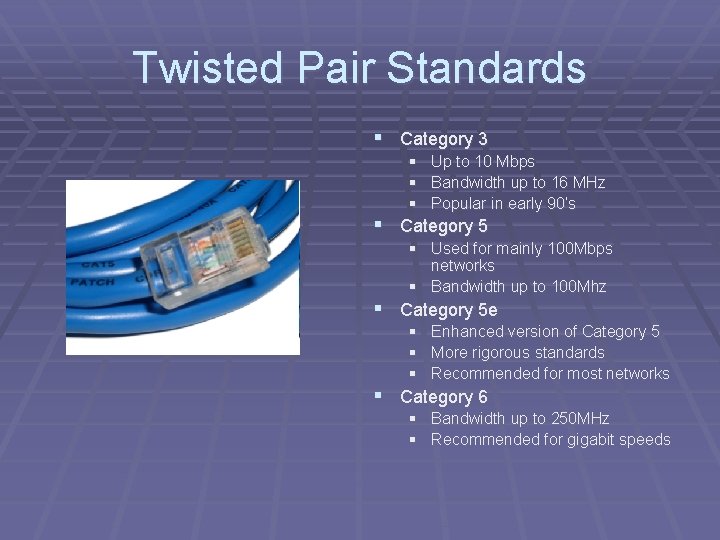
Twisted Pair Standards § Category 3 § § § Up to 10 Mbps Bandwidth up to 16 MHz Popular in early 90’s § Category 5 § Used for mainly 100 Mbps networks § Bandwidth up to 100 Mhz § Category 5 e § § § Enhanced version of Category 5 More rigorous standards Recommended for most networks § Category 6 § Bandwidth up to 250 MHz § Recommended for gigabit speeds
So what kind of errors are we looking for? § Opens and Shorts § Cable impedance mismatch § Bad connectors § Terminations mismatches § Water damage § Any other discontinuities § Also can find cable length
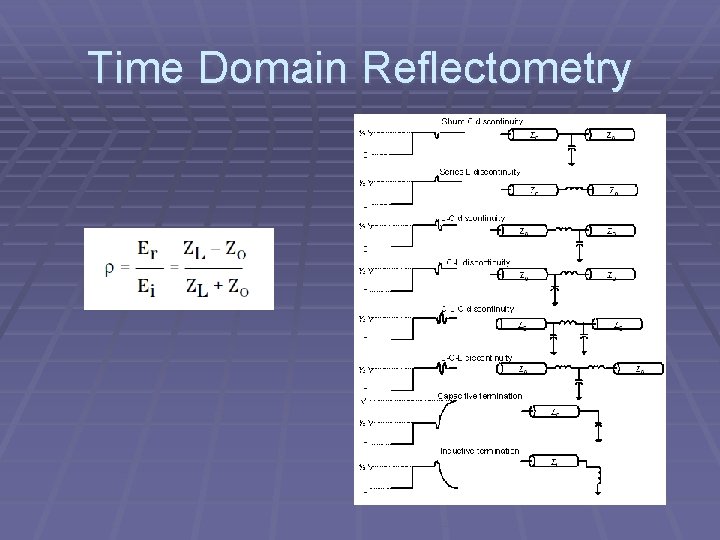
Time Domain Reflectometry § Will diagnose opens, shorts, cable impedance mismatch, bad connectors, termination mismatches, etc. § Uses reflections to find these errors and their locations
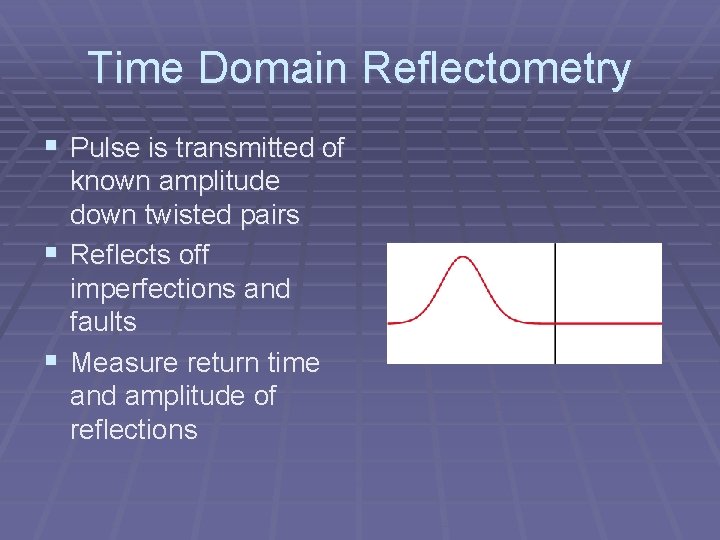
Time Domain Reflectometry § Pulse is transmitted of known amplitude down twisted pairs § Reflects off imperfections and faults § Measure return time and amplitude of reflections
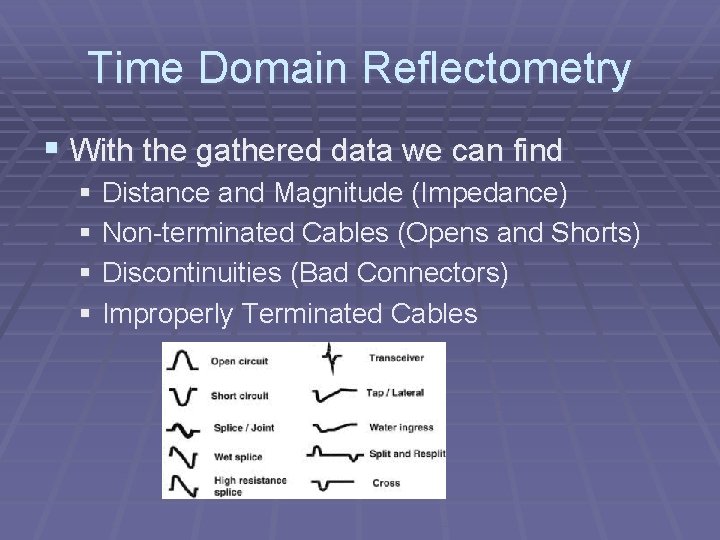
Time Domain Reflectometry § With the gathered data we can find § Distance and Magnitude (Impedance) § Non-terminated Cables (Opens and Shorts) § Discontinuities (Bad Connectors) § Improperly Terminated Cables
Time Domain Reflectometry
Active Link Cable Diagnostics § Use of passive digital signal processing § Will find cable length with active cable § Uses predefined parameters based on the cable properties § High accuracy cable length
Spectrum Analysis § Analog Spectrum Analysis § Uses a variable band-pass filter § Digital Spectrum Analysis § Uses Discrete Fourier Transform § Results in frequency spectrum of our signal
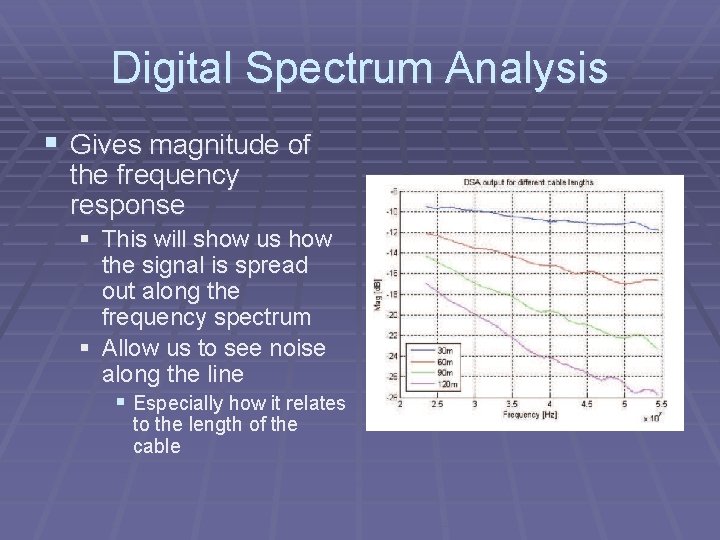
Digital Spectrum Analysis § Gives magnitude of the frequency response § This will show us how the signal is spread out along the frequency spectrum § Allow us to see noise along the line § Especially how it relates to the length of the cable
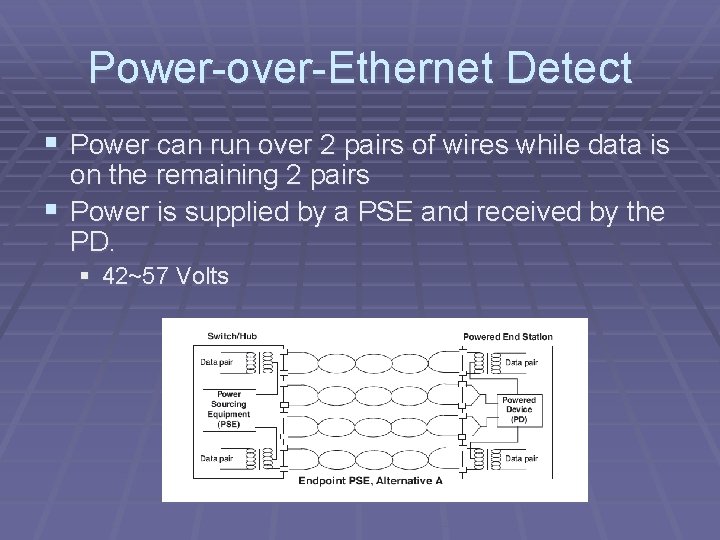
Power-over-Ethernet Detect § Power can run over 2 pairs of wires while data is on the remaining 2 pairs § Power is supplied by a PSE and received by the PD. § 42~57 Volts
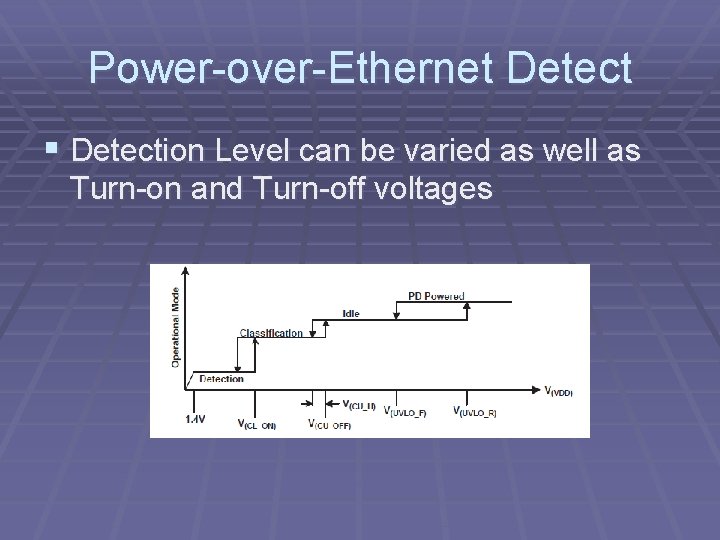
Power-over-Ethernet Detect § Detection Level can be varied as well as Turn-on and Turn-off voltages
PHY to MAC Communication § PHY Layer § Transmission of raw bits, not logical data § MAC Layer § Logical communication
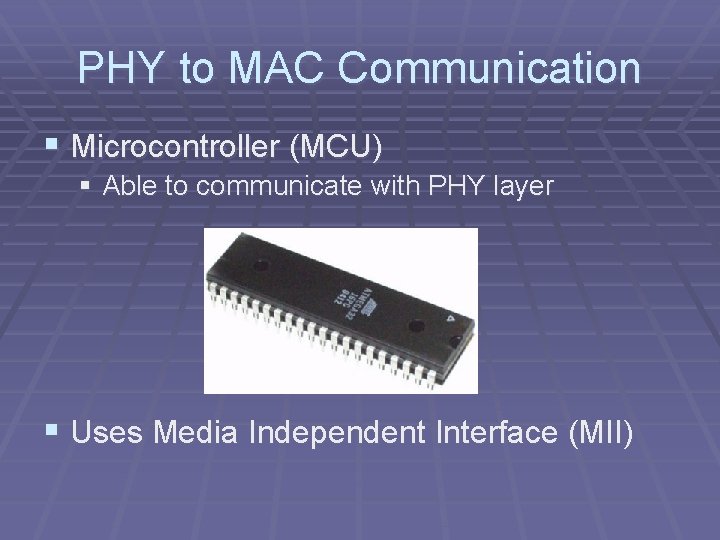
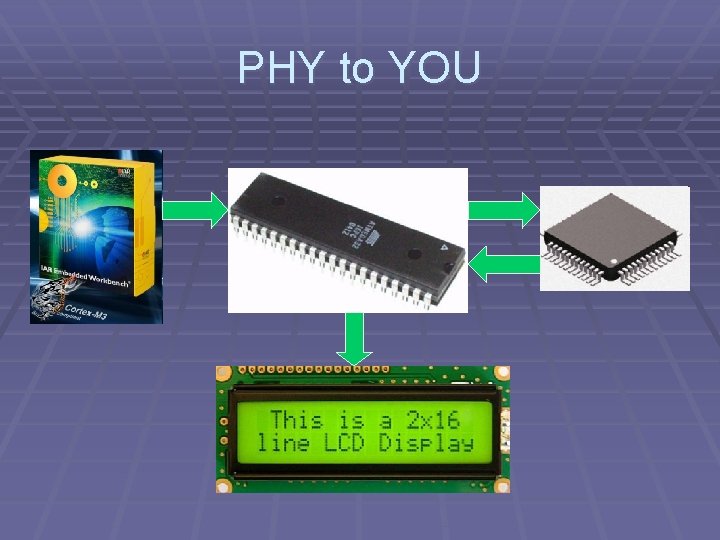
PHY to MAC Communication § Microcontroller (MCU) § Able to communicate with PHY layer § Uses Media Independent Interface (MII)
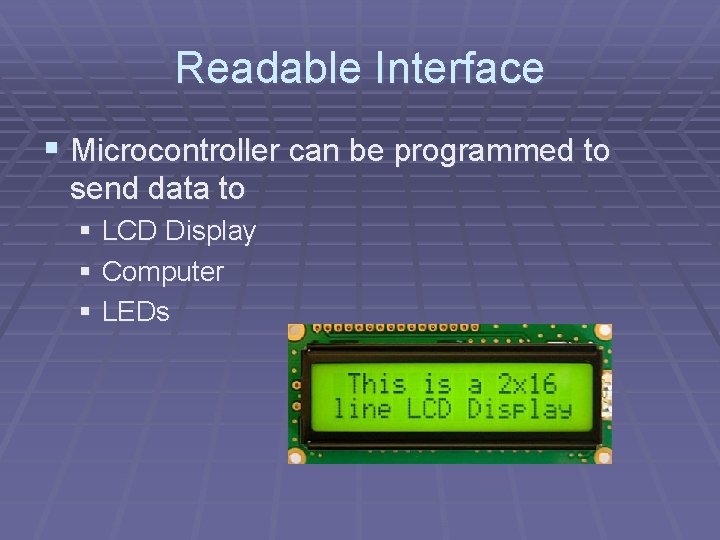
Readable Interface § Microcontroller can be programmed to send data to § LCD Display § Computer § LEDs
PHY to YOU
Conclusion § Ethernet History and Structure § Time Domain Reflectometry § Active Link Cable Diagnostics § Digital Spectrum Analysis § Power-over-Ethernet Detect § Output Data § QUESTIONS?