
How to Determine the Atomic Structure of Isotopes

- Slides: 13
How to Determine the Atomic Structure of Isotopes and Ions 8 th Grade Earth and Space Science Class Notes Mrs. Liberatore
What Is An Isotope? • Isotope – atoms of the same element with different atomic masses • All atoms of the same element MUST have the same number of protons, however, the number of neutrons may vary.
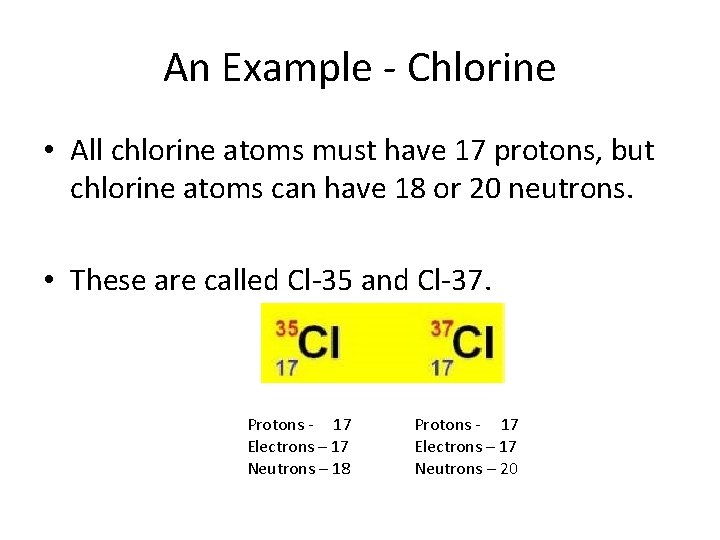
An Example - Chlorine • All chlorine atoms must have 17 protons, but chlorine atoms can have 18 or 20 neutrons. • These are called Cl-35 and Cl-37. Protons - 17 Electrons – 17 Neutrons – 18 Protons - 17 Electrons – 17 Neutrons – 20
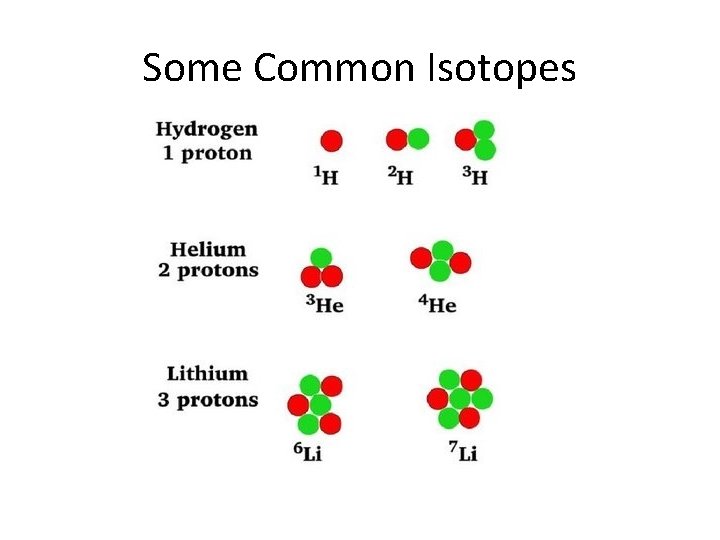
Some Common Isotopes
How Do You Know Which Isotope You Have? • The number at the end of the isotope name is the mass of the isotope. • Remember this is equal to the number of protons + neutrons in the atom. • The mass number you see on the periodic table is actually the average of the mass numbers of the isotopes of an atom. • This is why it appears as a decimal!
Steps to Determining the Atomic Structure of an Isotope 1. Use the atomic number to determine the number of protons and electrons in a neutral atom. 2. Use the atomic mass that is attached to the isotope name to determine the number of neutrons in the isotope of the atom.
Let’s Practice! Determine the atomic structure of Carbon-14. • Protons: ? (use the atomic number) • Electrons: ? (use the atomic number) • Neutrons: ? (use isotope mass – atomic number)
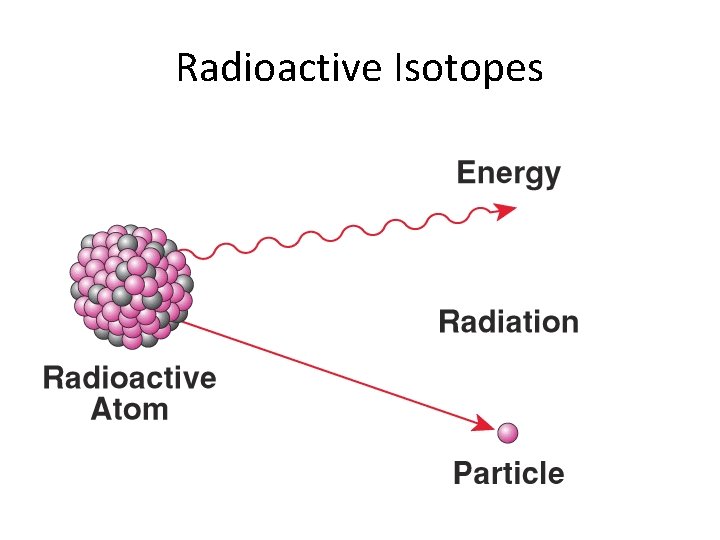
Radioactive Isotopes • The nuclei of some isotopes are unstable and tend to break down. When they do, the isotope emits energy in the form of radiation. • There are different types of radioactive decay: – A nucleus can lose protons and neutrons. – A proton can change to a neutron. – A neutron can change to a proton. • When you change the number of protons in an atom, you change the element! – Example: polonium-218 will decay over time to become bismuth-214
Radioactive Isotopes
What Is An Ion? • Ion – An atom that has gained or lost an electron or electrons • Why do they do this? – To become stable…. more on this later!
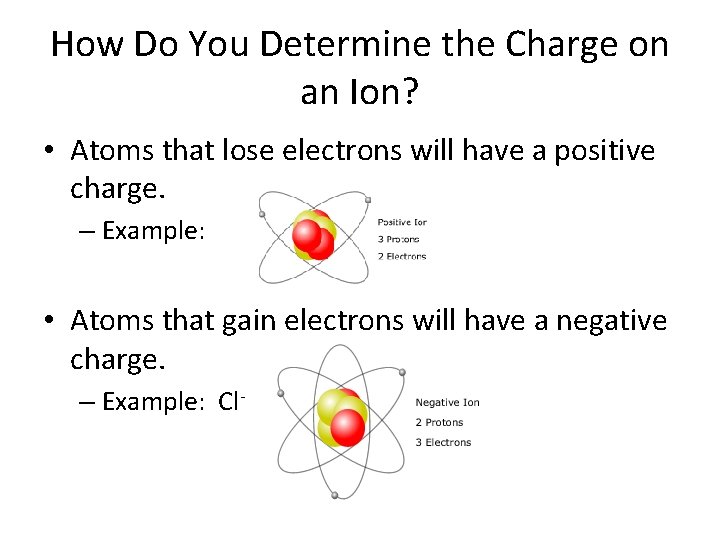
How Do You Determine the Charge on an Ion? • Atoms that lose electrons will have a positive charge. – Example: • Atoms that gain electrons will have a negative charge. – Example: Cl-
Steps to Determining the Atomic Structure of an Ion 1. Use the atomic number to determine the number of protons and electrons in a neutral atom. 2. Use the (atomic mass – atomic number) to determine the number of neutrons. 3. Adjust the electron number to make the ion. – If an ion is negative, add electrons. – If an ion is positive, subtract electrons.
Let’s Practice Determine the atomic structure of Na+. • Protons: ? (use the atomic number) • Electrons: ? (use the atomic number, the adjust for charge) • Neutrons: ? (use atomic mass – atomic number)