
How to Detect and Exploit NonAdherence to Guidelines

- Slides: 99
How to Detect and Exploit Non-Adherence to Guidelines? Panel Session on Decision Support - II How to Detect and Exploit Non-Adherence to Guidelines? 3. 45 -- 5. 15 PM Med. Info 2013, August 20 -23, 2013, Copenhagen, Denmark
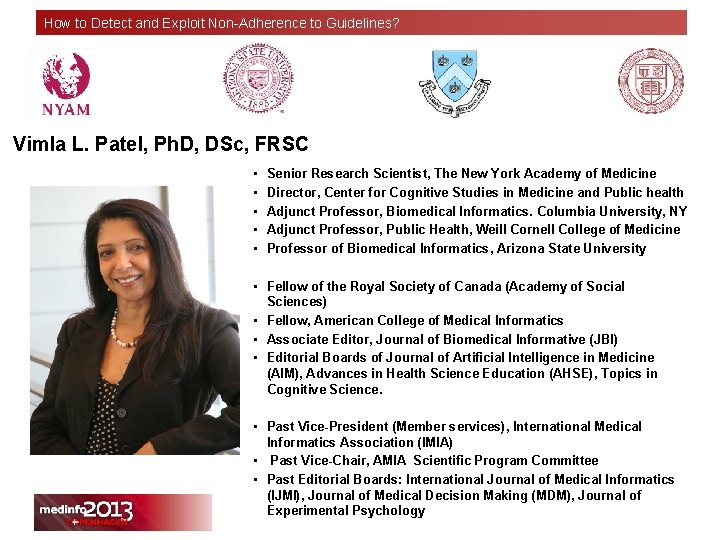
How to Detect and Exploit Non-Adherence to Guidelines? Vimla L. Patel, Ph. D, DSc, FRSC • • • Senior Research Scientist, The New York Academy of Medicine Director, Center for Cognitive Studies in Medicine and Public health Adjunct Professor, Biomedical Informatics. Columbia University, NY Adjunct Professor, Public Health, Weill Cornell College of Medicine Professor of Biomedical Informatics, Arizona State University • Fellow of the Royal Society of Canada (Academy of Social Sciences) • Fellow, American College of Medical Informatics • Associate Editor, Journal of Biomedical Informative (JBI) • Editorial Boards of Journal of Artificial Intelligence in Medicine (AIM), Advances in Health Science Education (AHSE), Topics in Cognitive Science. • Past Vice-President (Member services), International Medical Informatics Association (IMIA) • Past Vice-Chair, AMIA Scientific Program Committee • Past Editorial Boards: International Journal of Medical Informatics (IJMI), Journal of Medical Decision Making (MDM), Journal of Experimental Psychology
How to Detect and Exploit Non-Adherence to Guidelines? Panel Overview The panelists will address the following issues: • How to detect non-adherence to guidelines? • How to detect structural changes in guideline adherence (with or without decision support) over time? • Why do patients and providers deviate from guidelines? • How can deviations inform us about opportunities for guideline improvement and customization? • How should organizational and social barriers to guideline improvement be managed?
How to Detect and Exploit Non-Adherence to Guidelines? Panelists Vimla L. Patel- Center for Cognitive Studies in Medicine and Public Health, The New York Academy of Medicine, USA • To Adhere or Not? : Role of Deviations from Standard Protocols in Complex Trauma Environments Ameen Abu-Hanna- Department of Medical Informatics, University of Amsterdam, The Netherlands • Guideline Adherence and Implication for Decision Support Mor Peleg- Department of Information Systems, University of Haifa, Israel • Process Mining Methods and the Effects of Guideline Personalization Silvana Quaglini- Laboratory of Biomedical Informatics, School of Engineering, University of Pavia, Italy • “True and False” Non-Compliance and Cultural Bias
How to Detect and Exploit Non-Adherence to Guidelines? Panel Outline Moderator: Vimla L. Patel, Ph. D, DSc • Introduction: 5 minutes • Panelists: 15 minutes each • Discussion: 25 minutes
How to Detect and Exploit Non-Adherence to Guidelines? To Adhere or Not? : Role of Deviations from Standard Protocols in Complex Trauma Environments Vimla L. Patel, Ph. D, DSc, FRSC Center for Cognitive Studies in Medicine and Public Health The New York Academy of Medicine Paper presented at Medinfo 2013 Copenhagen, Denmark August 19 -23, 2013
How to Detect and Exploit Non-Adherence to Guidelines? Following Standards • Software development regulations • Standard protocol for military operations • Guidelines for cockpit negotiations in Airline transportation • Guidelines for Cardiac Resuscitation • Standard procedures for Trauma management
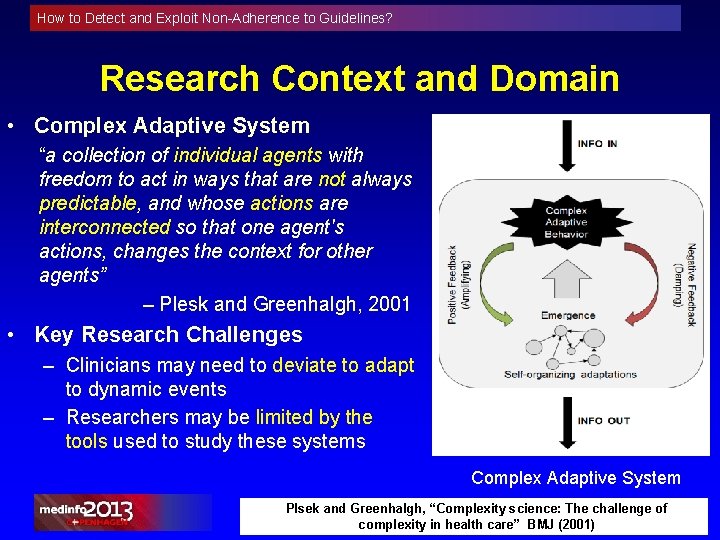
How to Detect and Exploit Non-Adherence to Guidelines? Research Context and Domain • Complex Adaptive System “a collection of individual agents with freedom to act in ways that are not always predictable, and whose actions are interconnected so that one agent's actions, changes the context for other agents” – Plesk and Greenhalgh, 2001 • Key Research Challenges – Clinicians may need to deviate to adapt to dynamic events – Researchers may be limited by the tools used to study these systems Complex Adaptive System Plsek and Greenhalgh, “Complexity science: The challenge of complexity in health care” BMJ (2001)
How to Detect and Exploit Non-Adherence to Guidelines? Simulation Training and ACLS
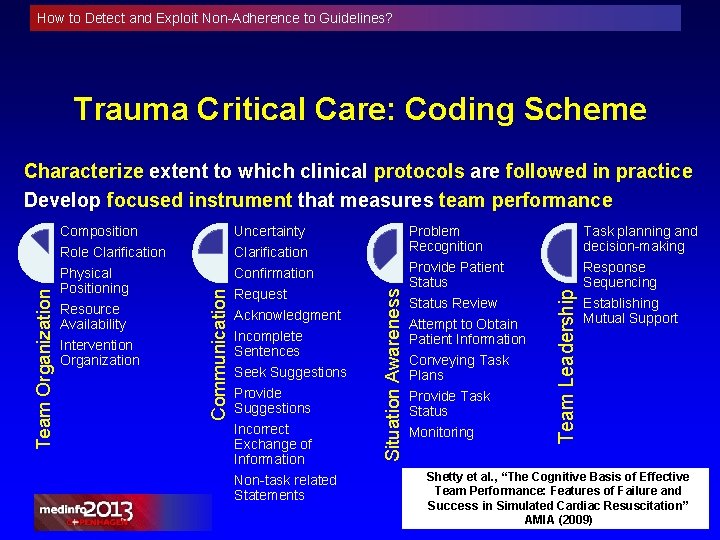
How to Detect and Exploit Non-Adherence to Guidelines? Trauma Critical Care: Coding Scheme Role Clarification Physical Positioning Resource Availability Intervention Organization Confirmation Request Acknowledgment Incomplete Sentences Seek Suggestions Provide Suggestions Incorrect Exchange of Information Non-task related Statements Problem Recognition Provide Patient Status Review Attempt to Obtain Patient Information Conveying Task Plans Provide Task Status Monitoring Team Leadership Uncertainty Situation Awareness Composition Communication Team Organization Characterize extent to which clinical protocols are followed in practice Develop focused instrument that measures team performance Task planning and decision-making Response Sequencing Establishing Mutual Support Shetty et al. , “The Cognitive Basis of Effective Team Performance: Features of Failure and Success in Simulated Cardiac Resuscitation” AMIA (2009)
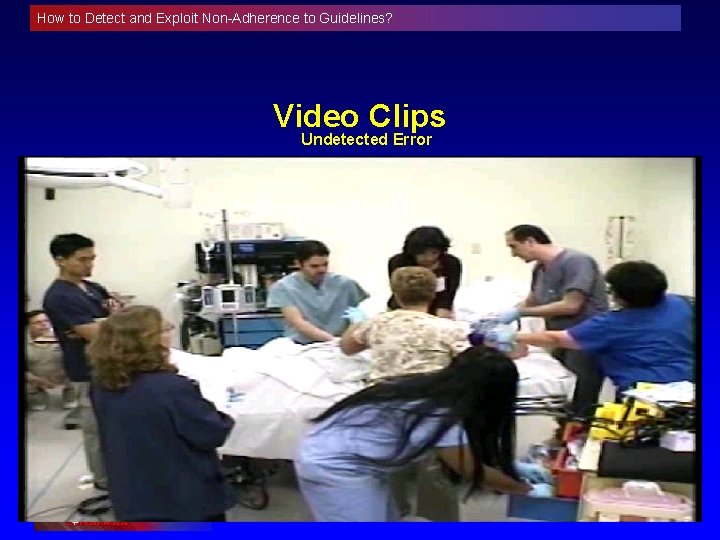
How to Detect and Exploit Non-Adherence to Guidelines? Video Clips Undetected Error
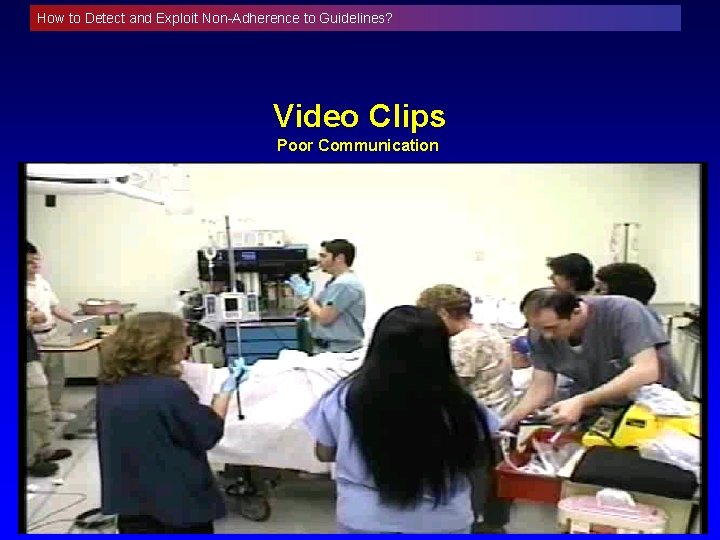
How to Detect and Exploit Non-Adherence to Guidelines? Video Clips Poor Communication
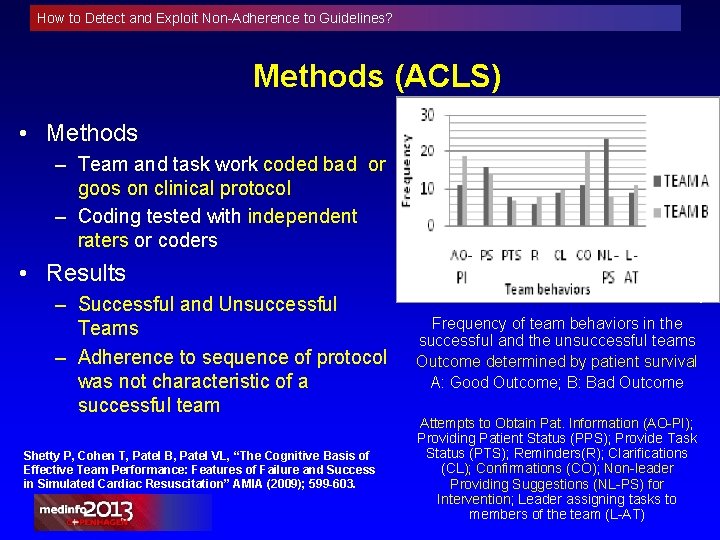
How to Detect and Exploit Non-Adherence to Guidelines? Methods (ACLS) • Methods – Team and task work coded bad or goos on clinical protocol – Coding tested with independent raters or coders • Results – Successful and Unsuccessful Teams – Adherence to sequence of protocol was not characteristic of a successful team Shetty P, Cohen T, Patel B, Patel VL, “The Cognitive Basis of Effective Team Performance: Features of Failure and Success in Simulated Cardiac Resuscitation” AMIA (2009); 599 -603. Frequency of team behaviors in the successful and the unsuccessful teams Outcome determined by patient survival A: Good Outcome; B: Bad Outcome Attempts to Obtain Pat. Information (AO-PI); Providing Patient Status (PPS); Provide Task Status (PTS); Reminders(R); Clarifications (CL); Confirmations (CO); Non-leader Providing Suggestions (NL-PS) for Intervention; Leader assigning tasks to members of the team (L-AT)
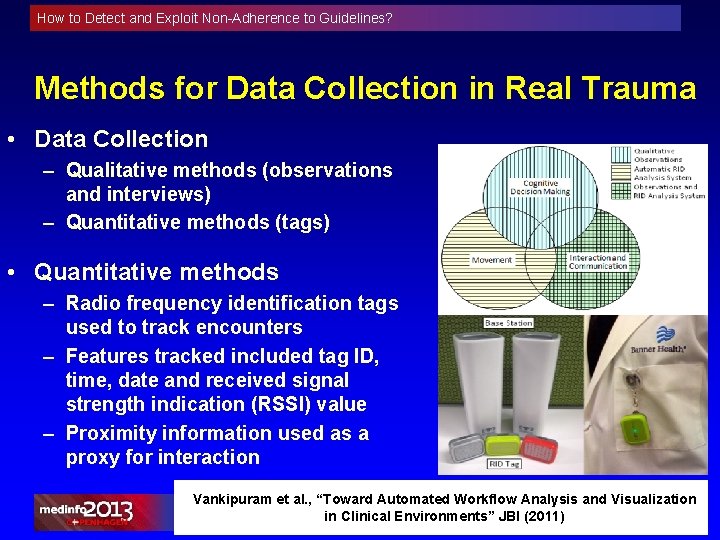
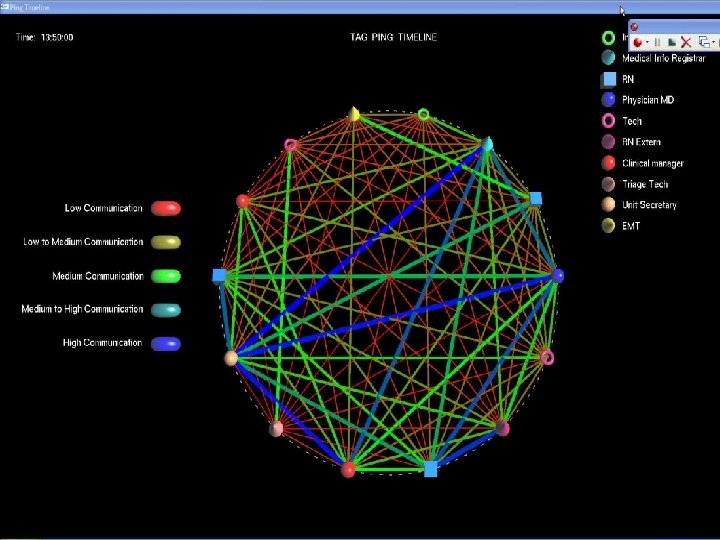
How to Detect and Exploit Non-Adherence to Guidelines? Methods for Data Collection in Real Trauma • Data Collection – Qualitative methods (observations and interviews) – Quantitative methods (tags) • Quantitative methods – Radio frequency identification tags used to track encounters – Features tracked included tag ID, time, date and received signal strength indication (RSSI) value – Proximity information used as a proxy for interaction Vankipuram et al. , “Toward Automated Workflow Analysis and Visualization in Clinical Environments” JBI (2011)
How to Detect and Exploit Non-Adherence to Guidelines?
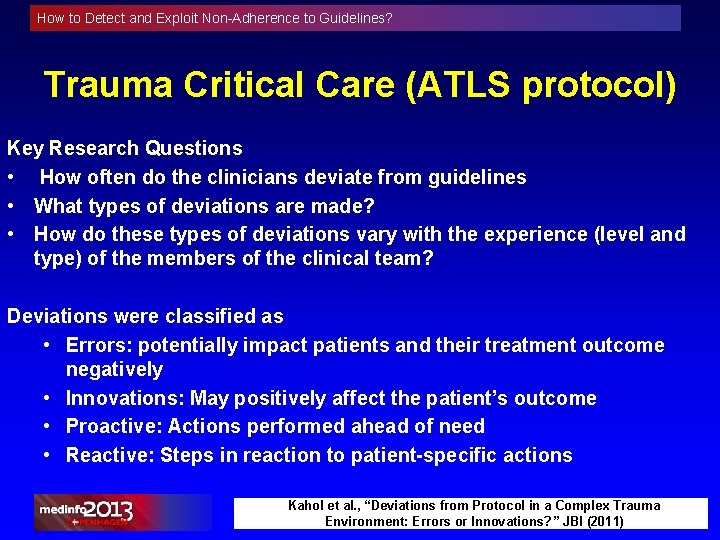
How to Detect and Exploit Non-Adherence to Guidelines? Trauma Critical Care (ATLS protocol) Key Research Questions • How often do the clinicians deviate from guidelines • What types of deviations are made? • How do these types of deviations vary with the experience (level and type) of the members of the clinical team? Deviations were classified as • Errors: potentially impact patients and their treatment outcome negatively • Innovations: May positively affect the patient’s outcome • Proactive: Actions performed ahead of need • Reactive: Steps in reaction to patient-specific actions Kahol et al. , “Deviations from Protocol in a Complex Trauma Environment: Errors or Innovations? ” JBI (2011)
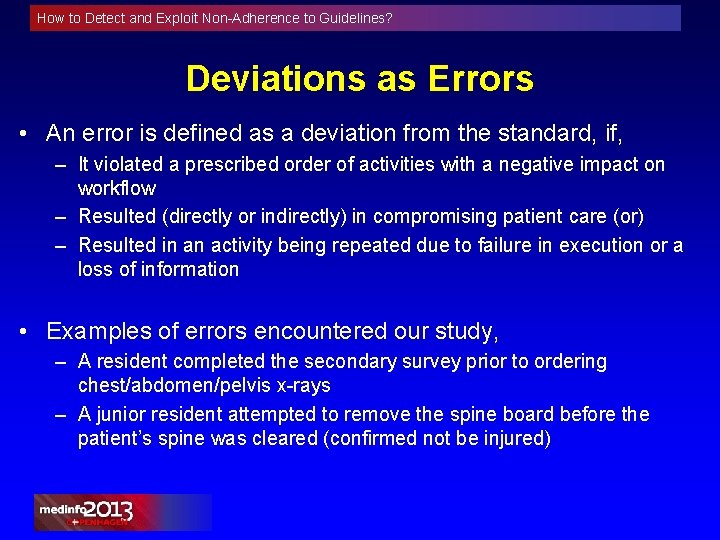
How to Detect and Exploit Non-Adherence to Guidelines? Deviations as Errors • An error is defined as a deviation from the standard, if, – It violated a prescribed order of activities with a negative impact on workflow – Resulted (directly or indirectly) in compromising patient care (or) – Resulted in an activity being repeated due to failure in execution or a loss of information • Examples of errors encountered our study, – A resident completed the secondary survey prior to ordering chest/abdomen/pelvis x-rays – A junior resident attempted to remove the spine board before the patient’s spine was cleared (confirmed not be injured)
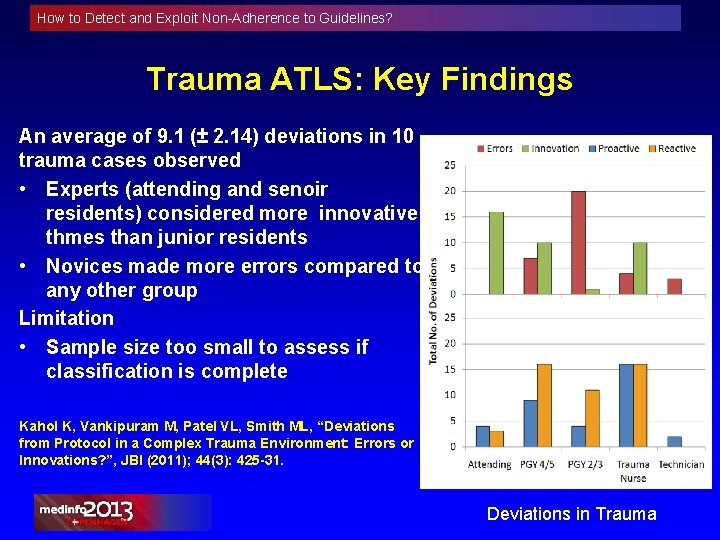
How to Detect and Exploit Non-Adherence to Guidelines? Trauma ATLS: Key Findings An average of 9. 1 (± 2. 14) deviations in 10 trauma cases observed • Experts (attending and senoir residents) considered more innovative thmes than junior residents • Novices made more errors compared to any other group Limitation • Sample size too small to assess if classification is complete Kahol K, Vankipuram M, Patel VL, Smith ML, “Deviations from Protocol in a Complex Trauma Environment: Errors or Innovations? ”, JBI (2011); 44(3): 425 -31. Deviations in Trauma
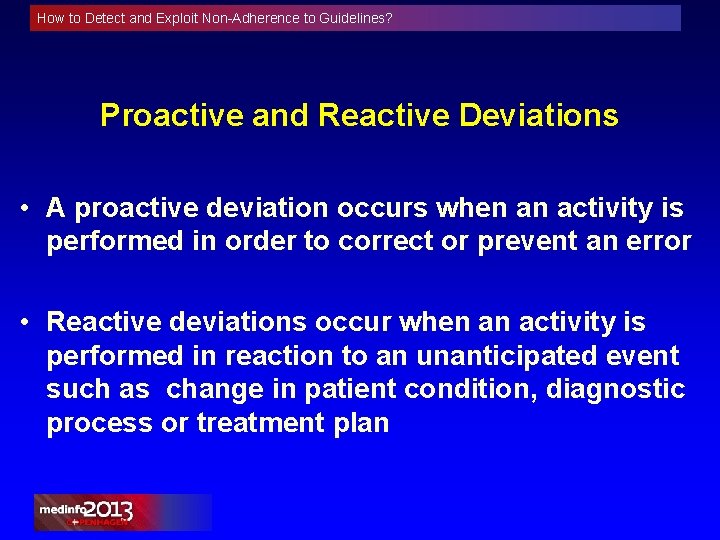
How to Detect and Exploit Non-Adherence to Guidelines? Proactive and Reactive Deviations • A proactive deviation occurs when an activity is performed in order to correct or prevent an error • Reactive deviations occur when an activity is performed in reaction to an unanticipated event such as change in patient condition, diagnostic process or treatment plan
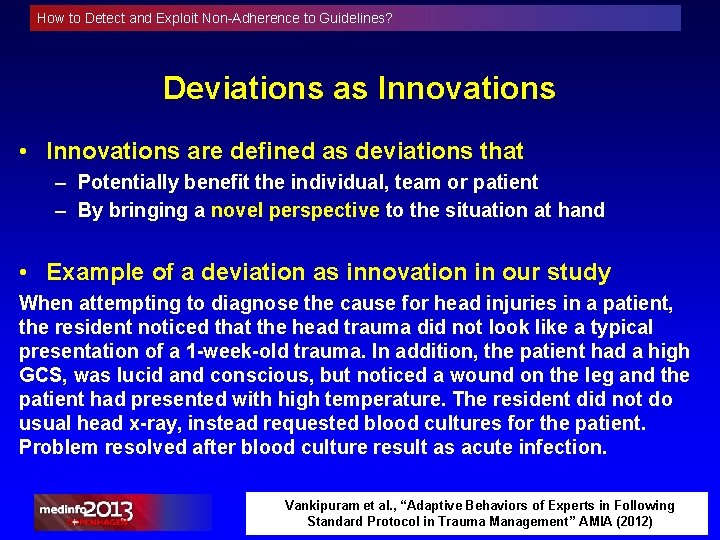
How to Detect and Exploit Non-Adherence to Guidelines? Deviations as Innovations • Innovations are defined as deviations that – Potentially benefit the individual, team or patient – By bringing a novel perspective to the situation at hand • Example of a deviation as innovation in our study When attempting to diagnose the cause for head injuries in a patient, the resident noticed that the head trauma did not look like a typical presentation of a 1 -week-old trauma. In addition, the patient had a high GCS, was lucid and conscious, but noticed a wound on the leg and the patient had presented with high temperature. The resident did not do usual head x-ray, instead requested blood cultures for the patient. Problem resolved after blood culture result as acute infection. Vankipuram et al. , “Adaptive Behaviors of Experts in Following Standard Protocol in Trauma Management” AMIA (2012)
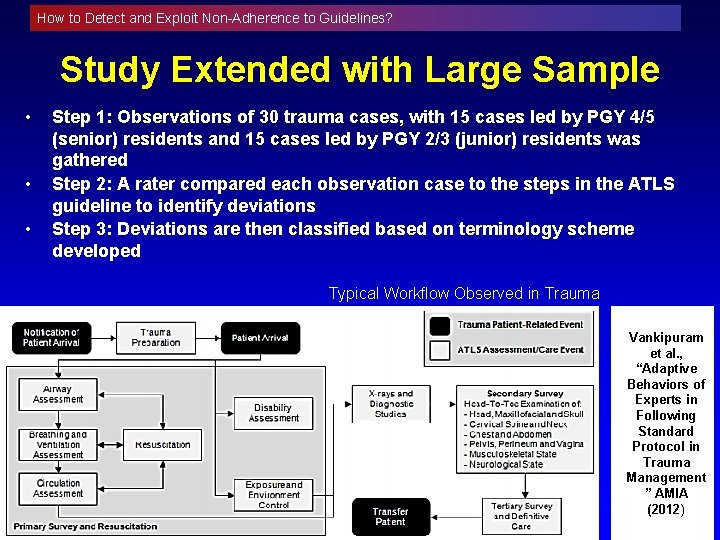
How to Detect and Exploit Non-Adherence to Guidelines? Study Extended with Large Sample • • • Step 1: Observations of 30 trauma cases, with 15 cases led by PGY 4/5 (senior) residents and 15 cases led by PGY 2/3 (junior) residents was gathered Step 2: A rater compared each observation case to the steps in the ATLS guideline to identify deviations Step 3: Deviations are then classified based on terminology scheme developed Typical Workflow Observed in Trauma Vankipuram et al. , “Adaptive Behaviors of Experts in Following Standard Protocol in Trauma Management ” AMIA (2012)
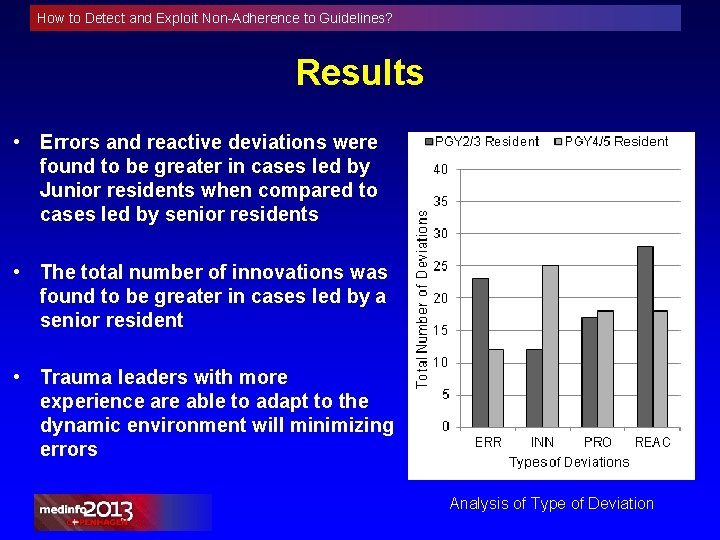
How to Detect and Exploit Non-Adherence to Guidelines? Results • Errors and reactive deviations were found to be greater in cases led by Junior residents when compared to cases led by senior residents • The total number of innovations was found to be greater in cases led by a senior resident • Trauma leaders with more experience are able to adapt to the dynamic environment will minimizing errors Analysis of Type of Deviation
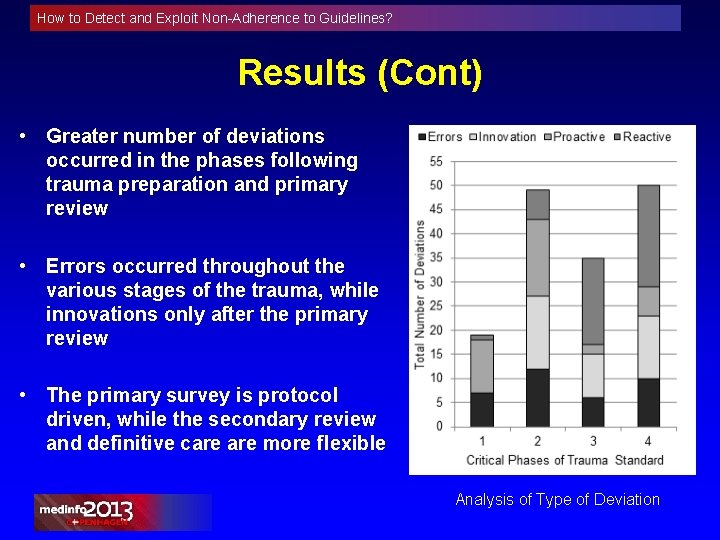
How to Detect and Exploit Non-Adherence to Guidelines? Results (Cont) • Greater number of deviations occurred in the phases following trauma preparation and primary review • Errors occurred throughout the various stages of the trauma, while innovations only after the primary review • The primary survey is protocol driven, while the secondary review and definitive care more flexible Analysis of Type of Deviation
How to Detect and Exploit Non-Adherence to Guidelines? Conclusions • Guidelines and standards are important, but deviations are also important in complex, dynamic conditions – To detect deviations to standards, need methods that capture dynamic situations – Deviations leaning towards innovations produce new knowledge for updating guidelines • Experts most often deviate from standards in uncertain emergency conditions to innovate or create new knowledge – Novice under similar situations generate errors
How to Detect and Exploit Non-Adherence to Guidelines? Thank You vpatel@nyam. org http: //ccsmph. nyam. org
Ameen Abu-Hanna, Ph. D • Full professor of Medical Informatics • Head of Department of Medical Informatics, Academic Medical Center, University of Amsterdam • Principle Investigator • Past vice-chair Educational Board of Medical Informatics • Associate Editor JBI, board member MIM • AIME past president
How to detect and exploit non-adherence to guidelines: Guideline Adherence and Implication for Decision Support Ameen Abu-Hanna
Challenge #1 Providing “operational semantics” for non-adherence
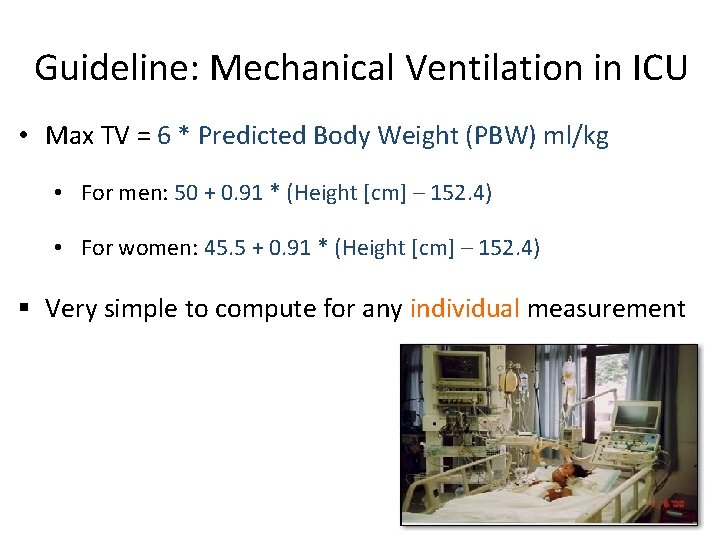
Guideline: Mechanical Ventilation in ICU • Max TV = 6 * Predicted Body Weight (PBW) ml/kg • For men: 50 + 0. 91 * (Height [cm] – 152. 4) • For women: 45. 5 + 0. 91 * (Height [cm] – 152. 4) § Very simple to compute for any individual measurement
Would you alert physicians based on: • • • Each individual measurement of non-adherence? % measurements in which VT > 6 ml/kg PBW? % of time? % measurement/time in last 15/30/60/120 mins? Area under curve (includes distance from target) Trend? Eslami S, de Keizer NF, Abu-Hanna A, de Jonge E, Schultz MJ. J Crit Care. 2012
Notes • Many other guidelines require such considerations, especially feedback loopguidelines such as blood glucose control • These difficulties arise also when comparing adherence (between e. g. 2 strategies) Eslami S, de Keizer NF, de Jonge E, Schultz MJ, Abu-Hanna A. Critical Care 2008.
Challenge #2 What if we can’t calculate adherence for a patient online?
How to act when information is missing? • We have a rule when to act on tidal volume non-adherence • But the system does not know patient’s gender or height • What now?
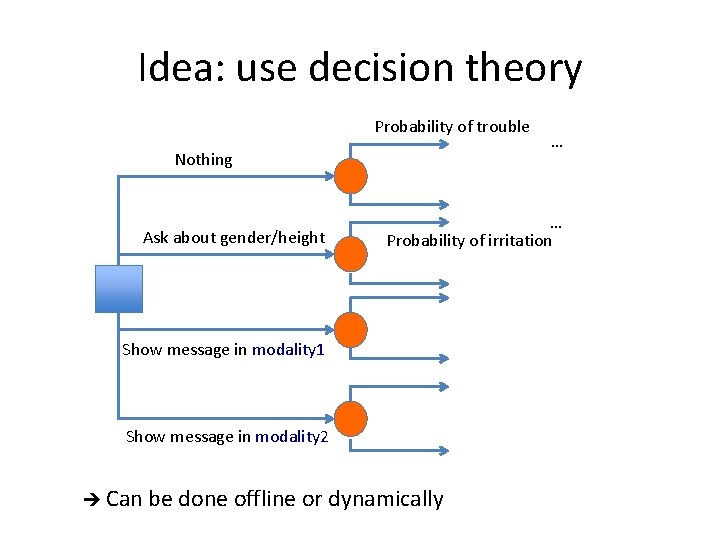
Idea: use decision theory Probability of trouble Nothing Ask about gender/height … Probability of irritation Show message in modality 1 Show message in modality 2 Can … be done offline or dynamically
Challenge #3 What happens over time?
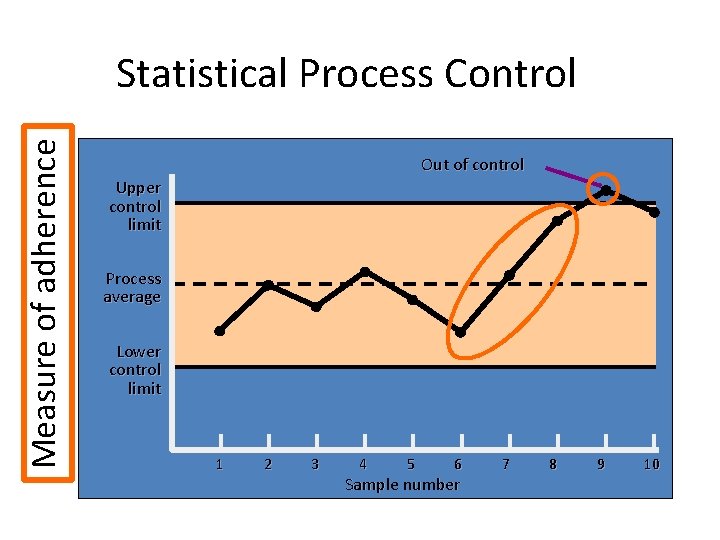
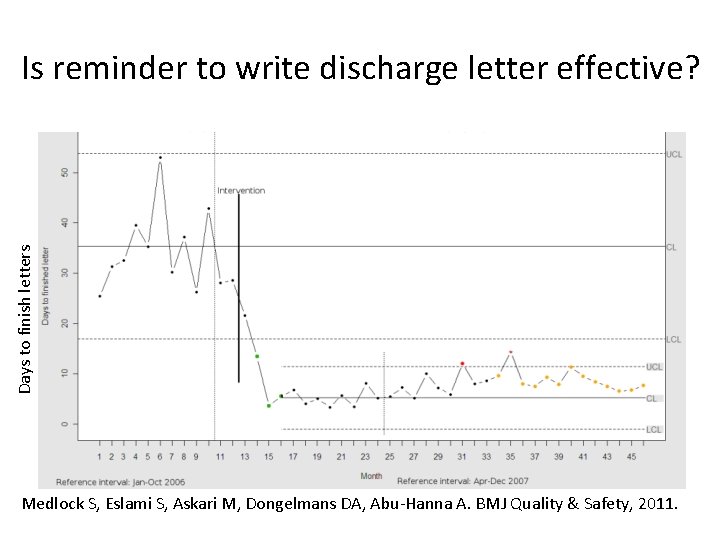
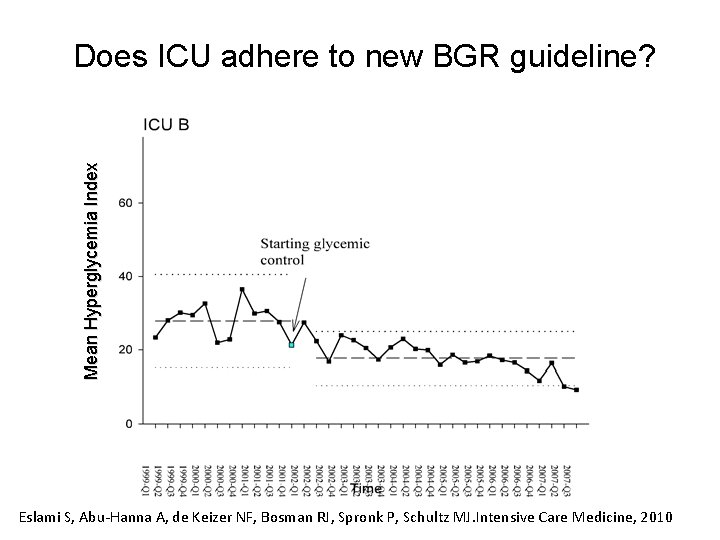
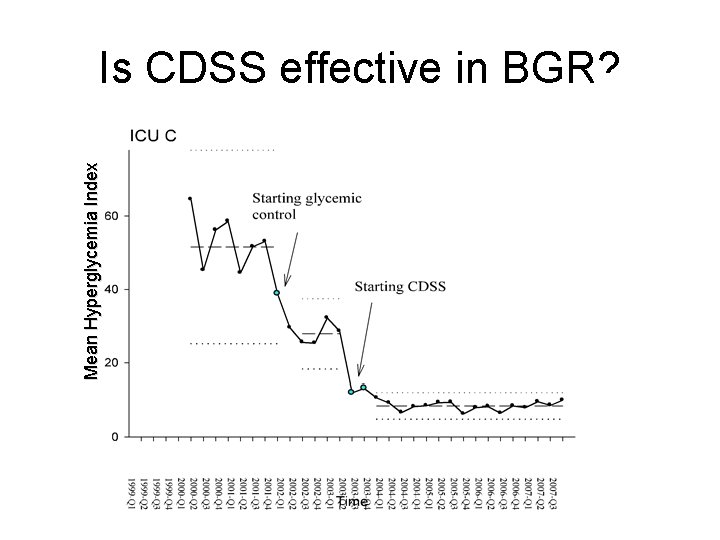
Adherence is not static • It can change over time • A powerful tool to scrutinize adherence over time is Statistical Process Control • SCP charts integrate: – Intuitive graphics – Easy statistical inference
Measure of adherence Statistical Process Control Out of control Upper control limit Process average Lower control limit 1 2 3 4 5 6 Sample number 7 8 9 10
Days to finish letters Is reminder to write discharge letter effective? Medlock S, Eslami S, Askari M, Dongelmans DA, Abu-Hanna A. BMJ Quality & Safety, 2011.
Mean Hyperglycemia Index Does ICU adhere to new BGR guideline? Eslami S, Abu-Hanna A, de Keizer NF, Bosman RJ, Spronk P, Schultz MJ. Intensive Care Medicine, 2010
Mean Hyperglycemia Index Is CDSS effective in BGR?
Challenge #4 Understanding factors associated with adherence
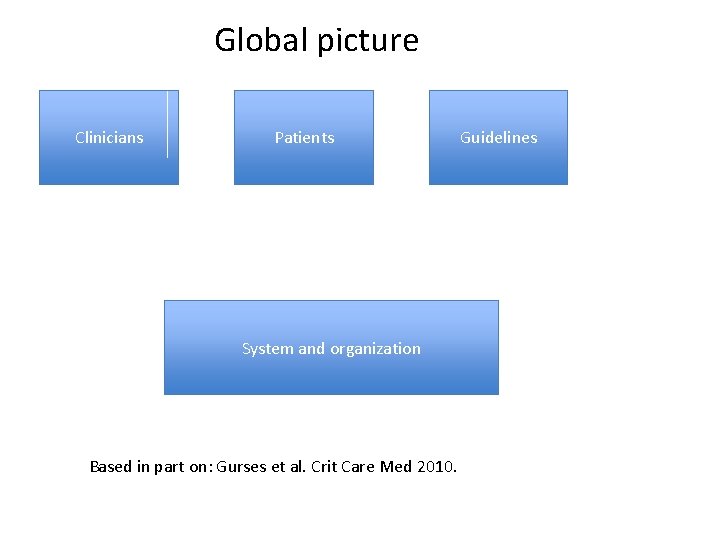
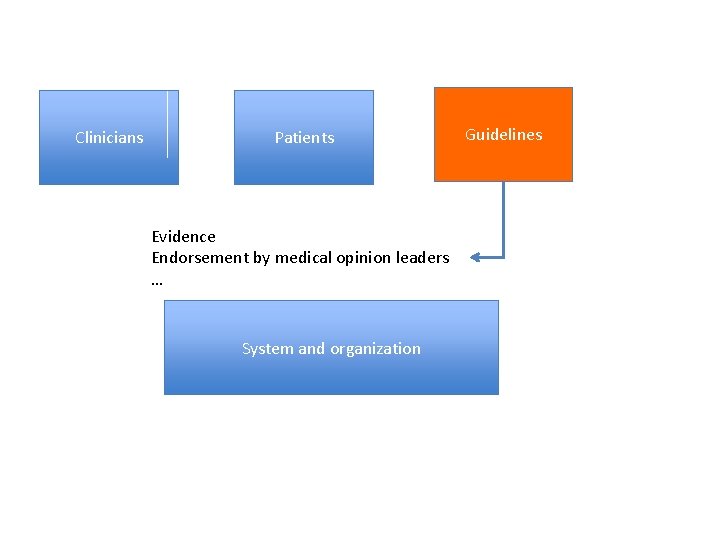
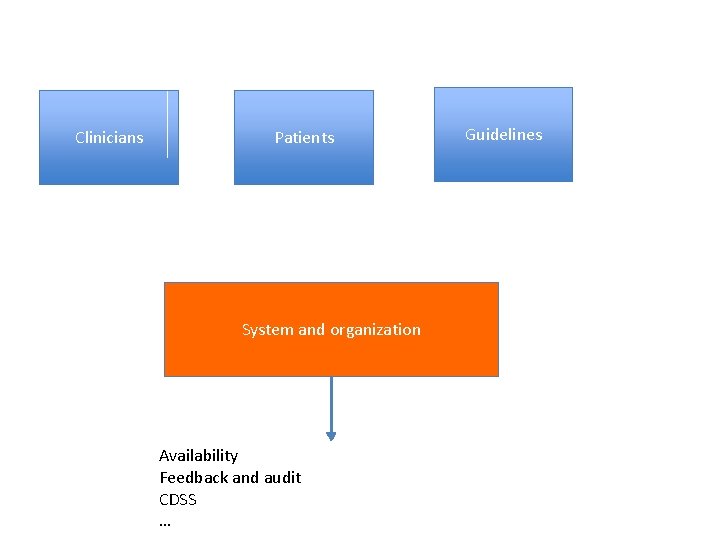
Global picture Clinicians Patients System and organization Based in part on: Gurses et al. Crit Care Med 2010. Guidelines
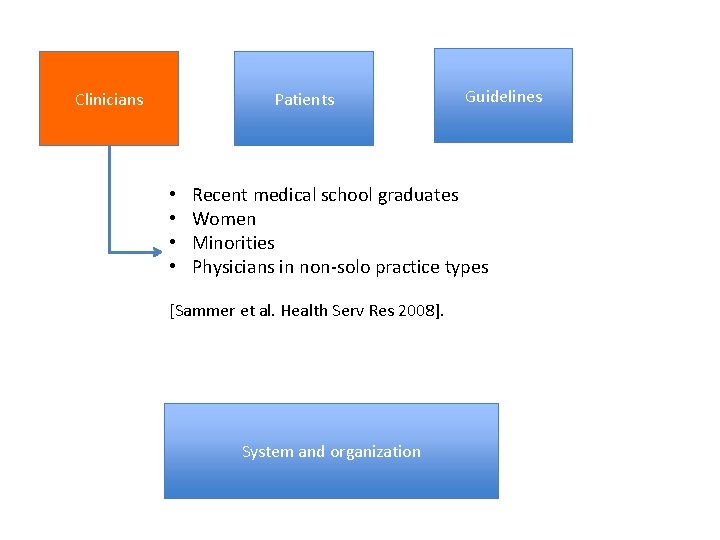
Clinicians Patients • • Guidelines Recent medical school graduates Women Minorities Physicians in non-solo practice types [Sammer et al. Health Serv Res 2008]. System and organization
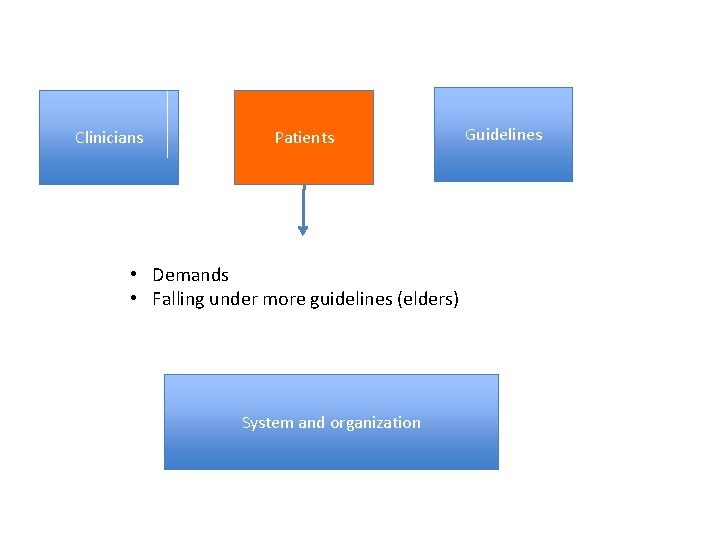
Clinicians Patients • Demands • Falling under more guidelines (elders) System and organization Guidelines
Clinicians Patients Evidence Endorsement by medical opinion leaders … System and organization Guidelines
Clinicians Patients System and organization Availability Feedback and audit CDSS … Guidelines
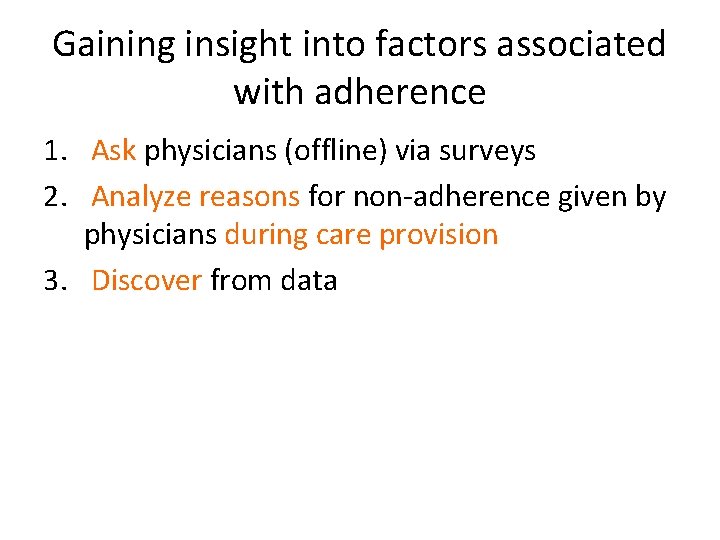
Gaining insight into factors associated with adherence 1. Ask physicians (offline) via surveys 2. Analyze reasons for non-adherence given by physicians during care provision 3. Discover from data
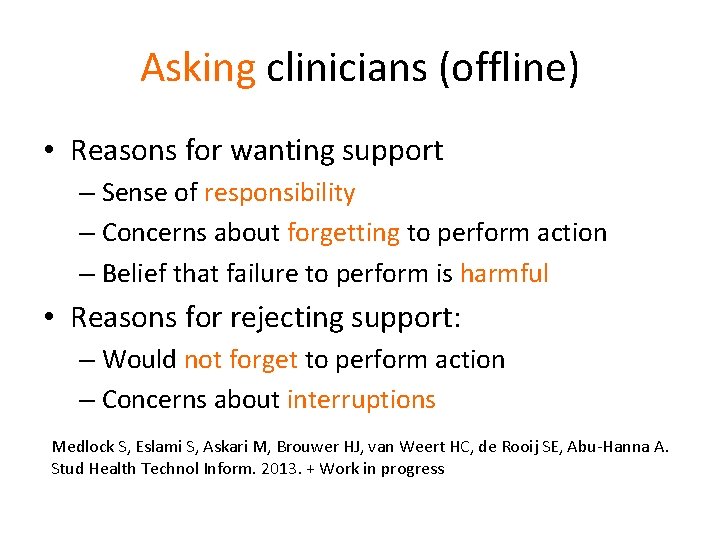
Asking clinicians (offline) • Reasons for wanting support – Sense of responsibility – Concerns about forgetting to perform action – Belief that failure to perform is harmful • Reasons for rejecting support: – Would not forget to perform action – Concerns about interruptions Medlock S, Eslami S, Askari M, Brouwer HJ, van Weert HC, de Rooij SE, Abu-Hanna A. Stud Health Technol Inform. 2013. + Work in progress
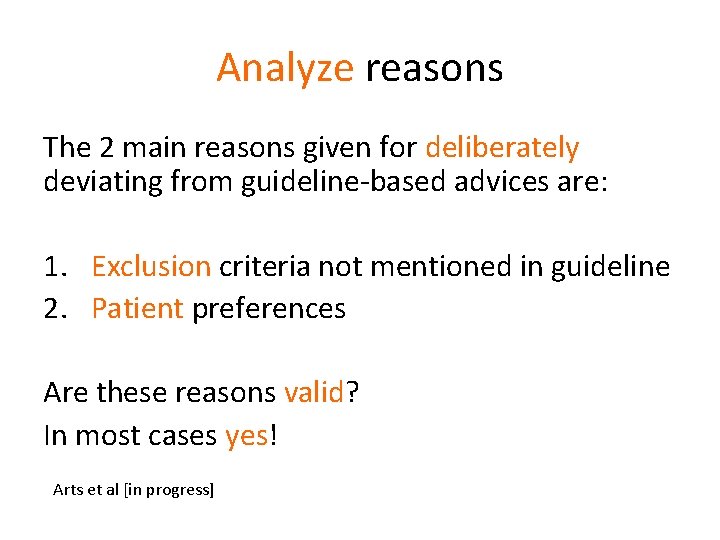
Analyze reasons The 2 main reasons given for deliberately deviating from guideline-based advices are: 1. Exclusion criteria not mentioned in guideline 2. Patient preferences Are these reasons valid? In most cases yes! Arts et al [in progress]
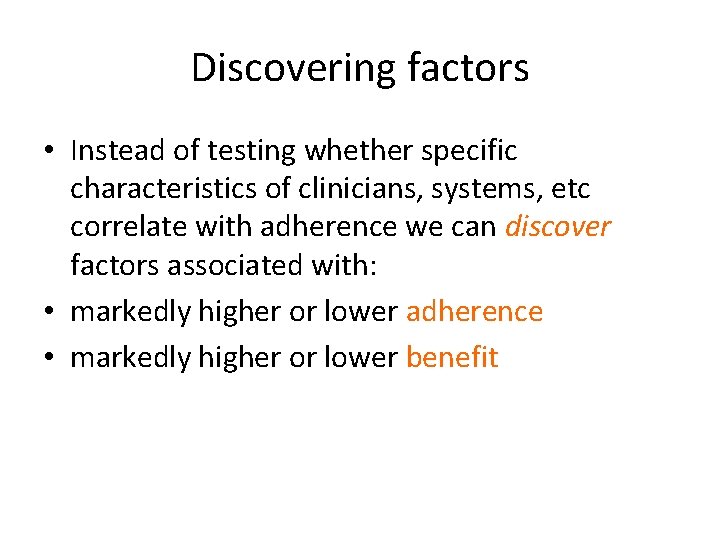
Discovering factors • Instead of testing whether specific characteristics of clinicians, systems, etc correlate with adherence we can discover factors associated with: • markedly higher or lower adherence • markedly higher or lower benefit
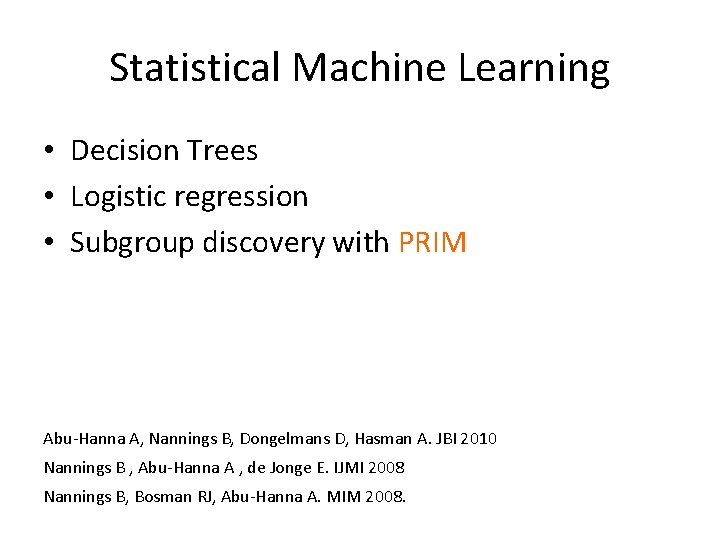
Statistical Machine Learning • Decision Trees • Logistic regression • Subgroup discovery with PRIM Abu-Hanna A, Nannings B, Dongelmans D, Hasman A. JBI 2010 Nannings B , Abu-Hanna A , de Jonge E. IJMI 2008 Nannings B, Bosman RJ, Abu-Hanna A. MIM 2008.
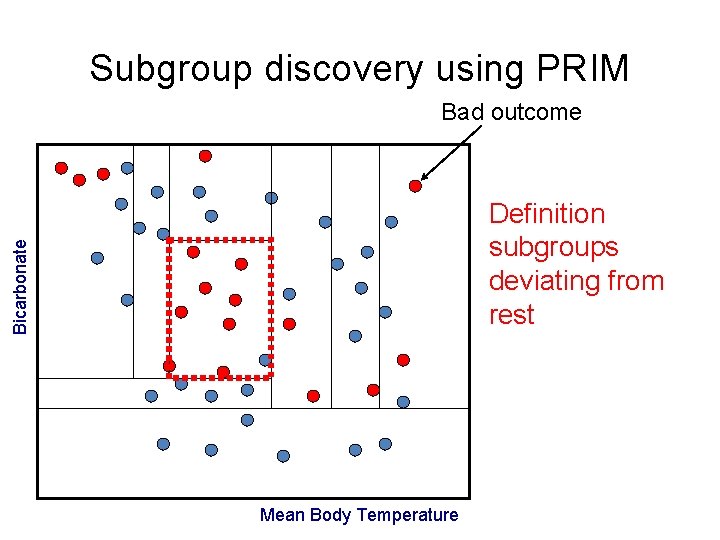
Subgroup discovery using PRIM Bad outcome Bicarbonate Definition subgroups deviating from rest Mean Body Temperature
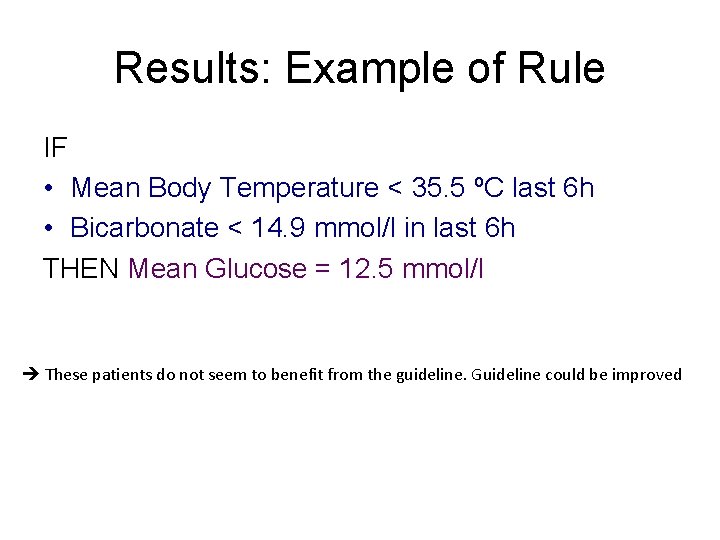
Results: Example of Rule IF • Mean Body Temperature < 35. 5 ºC last 6 h • Bicarbonate < 14. 9 mmol/l in last 6 h THEN Mean Glucose = 12. 5 mmol/l These patients do not seem to benefit from the guideline. Guideline could be improved
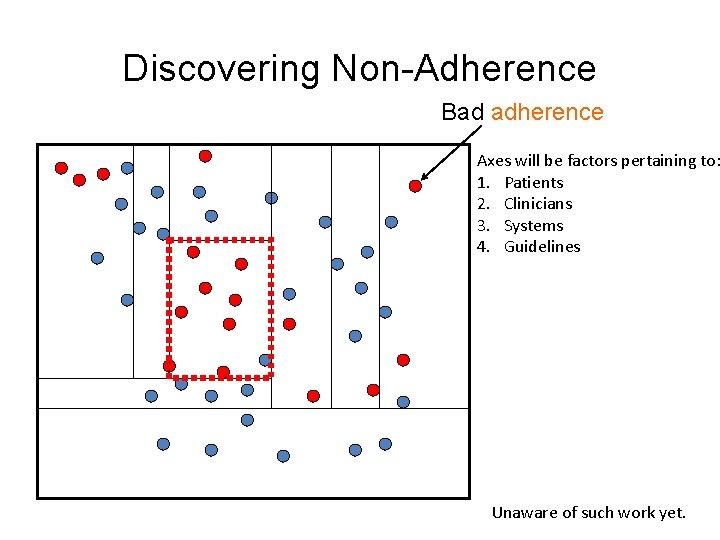
Discovering Non-Adherence Bad adherence Axes will be factors pertaining to: 1. Patients 2. Clinicians 3. Systems 4. Guidelines Unaware of such work yet.
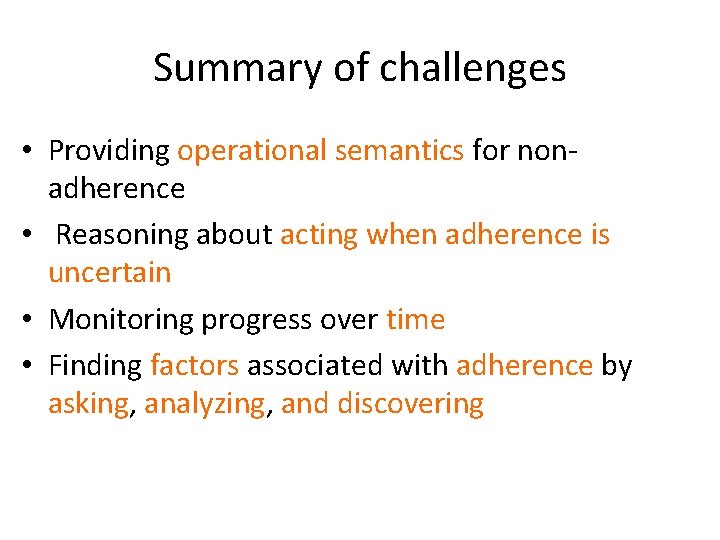
Summary of challenges • Providing operational semantics for nonadherence • Reasoning about acting when adherence is uncertain • Monitoring progress over time • Finding factors associated with adherence by asking, analyzing, and discovering
Thanks! a. abu-hanna@amc. uva. nl
Mor Peleg, Ph. D • Associate Professor, University of Haifa, Israel • Coordinator, Mobi. Guide FP 7 ICT European Commission Project • Recipient of 2005 AMIA New Investigator Award • Member, American Medical Informatics Association Awards Committee • Member of the Israeli Medical Informatics Association • Editorial Boards of Journal of Biomedical Informative (JBI), Methods of Information in Medicine (MIIM ), International Journal of Computers in Healthcare, The Open Medical Informatics Journal • Co-chair Process Support in Healthcare (Pro. Health) Workshop • Co-chair Knowledge Representation for Healthcare (KR 4 HC) • Member American Association of Clinical Endocrinologists Advisory Committee for Electronic Implementation of guidelines • Member Deontics Scientific Advisory Board • Past Chair, Dept. of Information Systems, University of Haifa • Past PC Chair of Artificial Intelligence in Medicine (AIME 2011)
How to detect and exploit nonadherence to guidelines: process mining methods and the effects of GL personalization Mor Peleg University of Haifa Medinfo, August 22, 2013
Outline Process mining for GL care process improvement The effects of guideline personalization and patient empowerment on process evolution Insights from the Mobi. Guide project When are deviations useful?
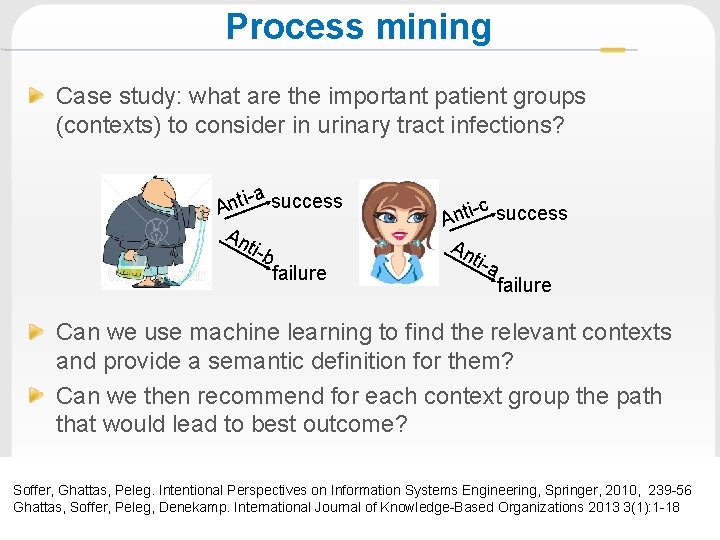
Process mining Case study: what are the important patient groups (contexts) to consider in urinary tract infections? i-a Ant success An ti-b failure i-c Ant success An ti-a failure Can we use machine learning to find the relevant contexts and provide a semantic definition for them? Can we then recommend for each context group the path that would lead to best outcome? Soffer, Ghattas, Peleg. Intentional Perspectives on Information Systems Engineering, Springer, 2010, 239 -56 Ghattas, Soffer, Peleg, Denekamp. International Journal of Knowledge-Based Organizations 2013 3(1): 1 -18
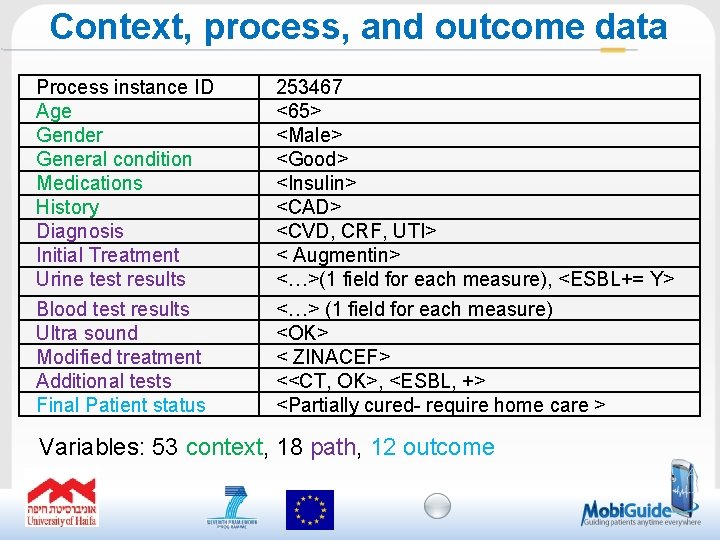
Context, process, and outcome data Process instance ID Age Gender General condition Medications History Diagnosis Initial Treatment Urine test results Blood test results Ultra sound Modified treatment Additional tests Final Patient status 253467 <65> <Male> <Good> <Insulin> <CAD> <CVD, CRF, UTI> < Augmentin> <…>(1 field for each measure), <ESBL+= Y> <…> (1 field for each measure) <OK> < ZINACEF> <<CT, OK>, <ESBL, +> <Partially cured- require home care > Variables: 53 context, 18 path, 12 outcome
Finding context groups The context of the patient affects the right process path for him and the outcome Can we work backward to discover the contexts that predict path and outcome? Cluster cases with similar process paths and outcomes (two-step clustering of SPSS) Find a semantic definition for the contextual data of similar cases (Chi-squared Automatic Interaction Detection [CHAID])
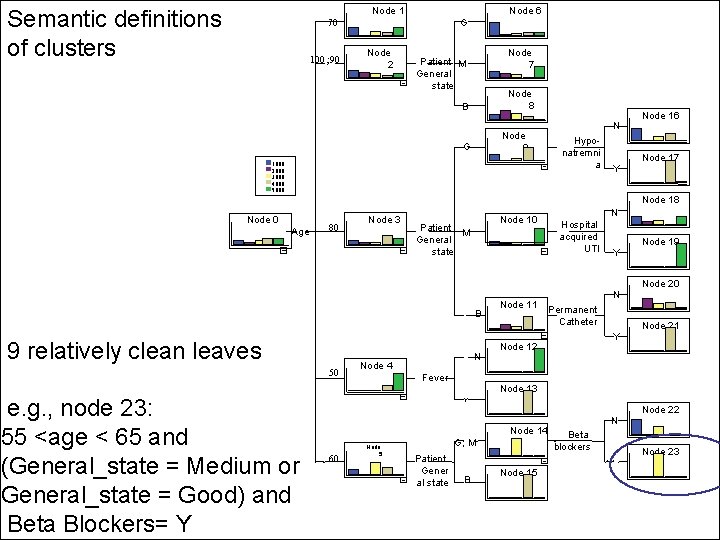
Node 1 Semantic definitions of clusters Node 6 G 70 100 ; 90 Node 2 Node 7 Patient M General state Node 8 B Node 9 G 1. 000 2. 000 3. 000 4. 000 5. 000 N Hyponatremni a Y Node 16 Node 17 Node 18 Node 0 Age 80 Node 3 Node 10 Patient M General state N Hospital acquired UTI Node 19 Y Node 20 B 9 relatively clean leaves 50 e. g. , node 23: 55 <age < 65 and (General_state = Medium or General_state = Good) and Beta Blockers= Y N Node 4 Fever Node 11 N Permanent Catheter Node 21 Y Node 12 Node 13 Y Node 22 Node 14 60 Node 5 G; M Patient Gener al state B Node 15 N Beta blockers Node 23 Y
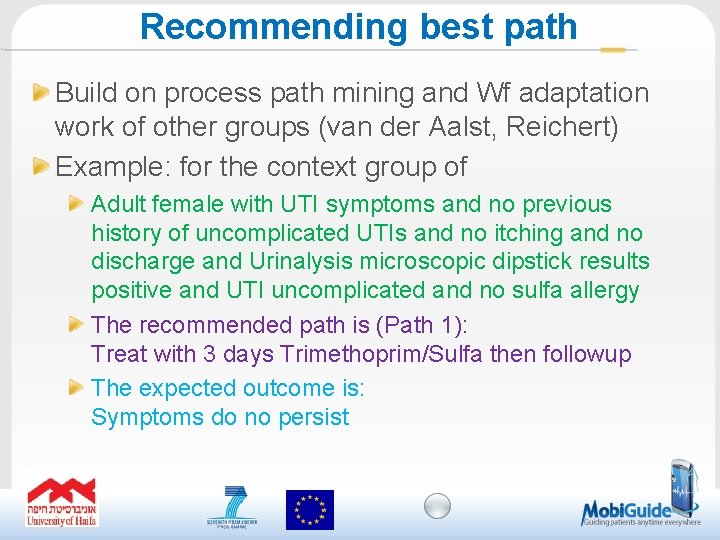
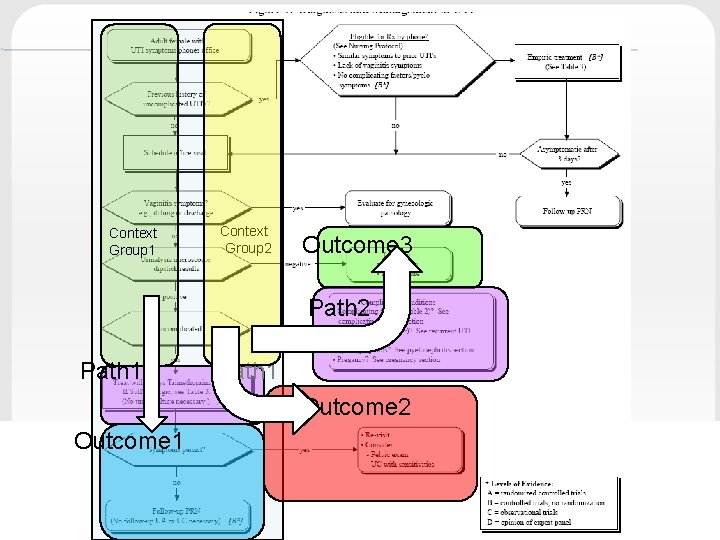
Recommending best path Build on process path mining and Wf adaptation work of other groups (van der Aalst, Reichert) Example: for the context group of Adult female with UTI symptoms and no previous history of uncomplicated UTIs and no itching and no discharge and Urinalysis microscopic dipstick results positive and UTI uncomplicated and no sulfa allergy The recommended path is (Path 1): Treat with 3 days Trimethoprim/Sulfa then followup The expected outcome is: Symptoms do no persist
Context Group 1 Context Group 2 Outcome 3 Path 2 Path 1 Outcome 2 Outcome 1
Outline Process mining for GL care process improvement The effects of guideline personalization and patient empowerment on process evolution Insights from the Mobi. Guide project
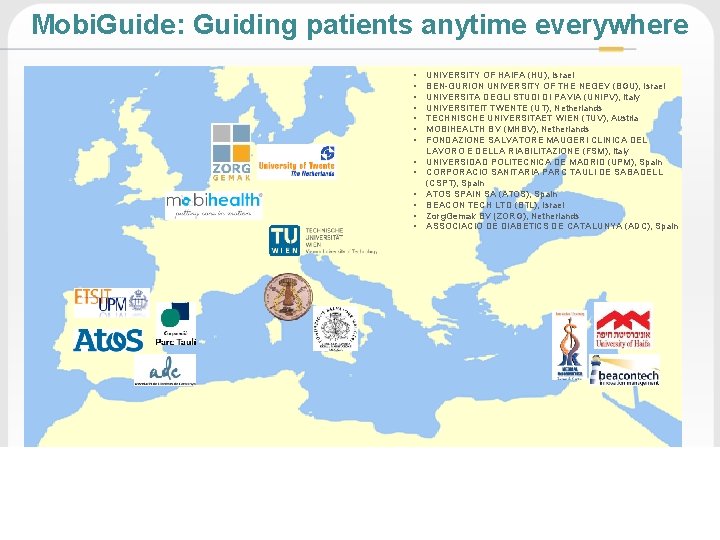
Mobi. Guide: Guiding patients anytime everywhere • • • • UNIVERSITY OF HAIFA (HU), Israel BEN-GURION UNIVERSITY OF THE NEGEV (BGU), Israel UNIVERSITA DEGLI STUDI DI PAVIA (UNIPV), Italy UNIVERSITEIT TWENTE (UT), Netherlands TECHNISCHE UNIVERSITAET WIEN (TUV), Austria MOBIHEALTH BV (MHBV), Netherlands FONDAZIONE SALVATORE MAUGERI CLINICA DEL LAVORO E DELLA RIABILITAZIONE (FSM), Italy UNIVERSIDAD POLITECNICA DE MADRID (UPM), Spain CORPORACIO SANITARIA PARC TAULI DE SABADELL (CSPT), Spain ATOS SPAIN SA (ATOS), Spain BEACON TECH LTD (BTL), Israel Zorg. Gemak BV (ZORG), Netherlands ASSOCIACIO DE DIABETICS DE CATALUNYA (ADC), Spain 67 Partner’s logo
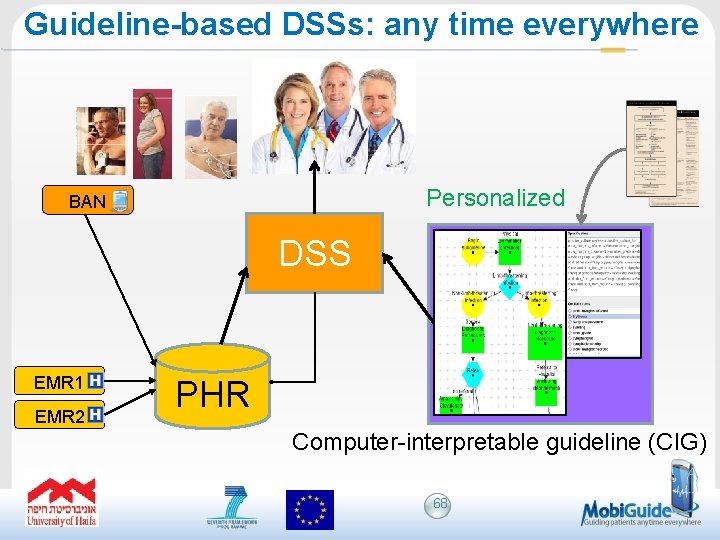
Guideline-based DSSs: any time everywhere Personalized BAN DSS EMR 1 EMR 2 PHR Computer-interpretable guideline (CIG) 68
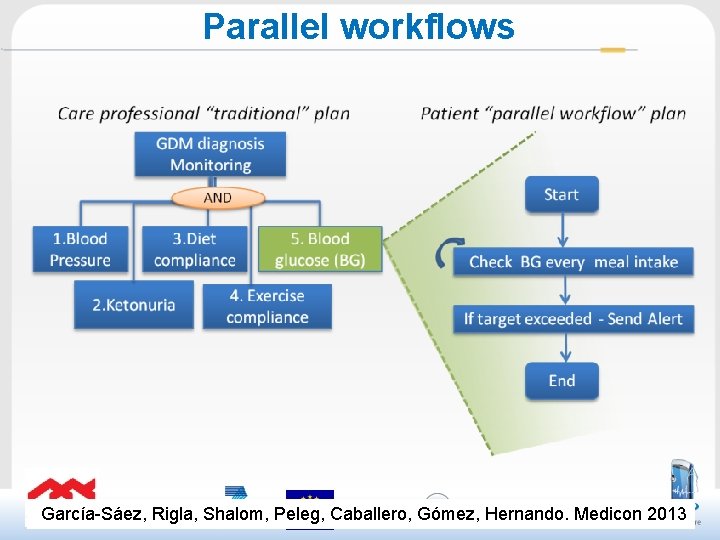
Parallel workflows García-Sáez, Rigla, Shalom, Peleg, Caballero, Gómez, Hernando. Medicon 2013
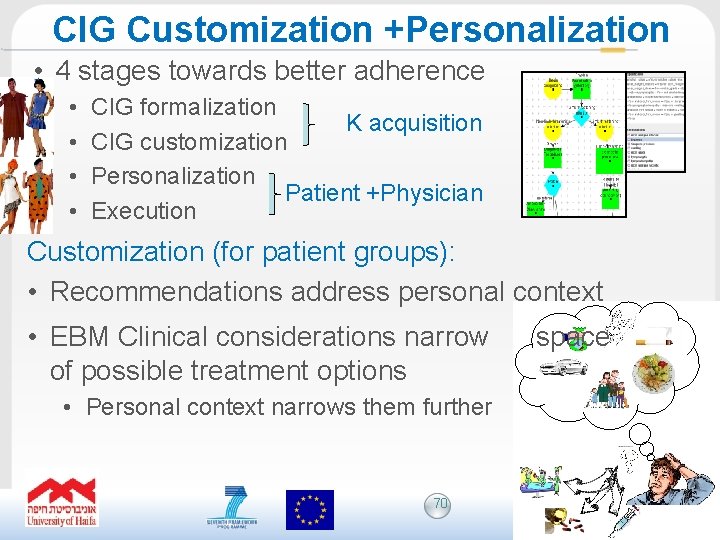
CIG Customization +Personalization • 4 stages towards better adherence • • CIG formalization K acquisition CIG customization Personalization Patient +Physician Execution Customization (for patient groups): • Recommendations address personal context • EBM Clinical considerations narrow space of possible treatment options • Personal context narrows them further 70
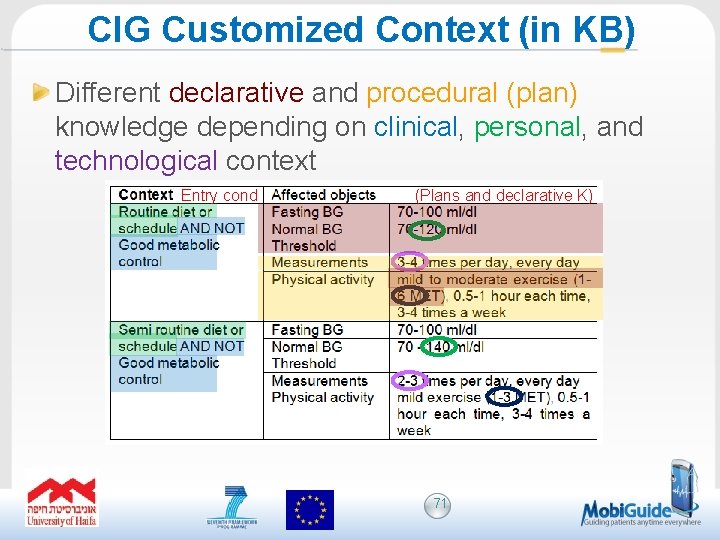
CIG Customized Context (in KB) Different declarative and procedural (plan) knowledge depending on clinical, personal, and technological context Entry cond (Plans and declarative K) 71
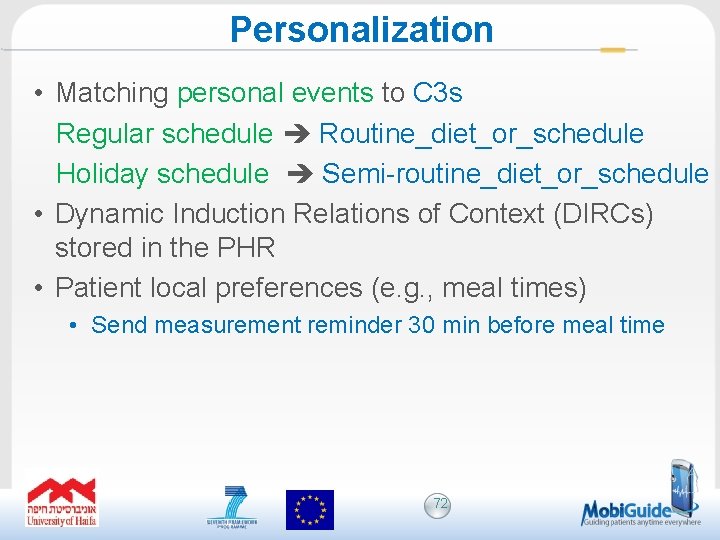
Personalization • Matching personal events to C 3 s Regular schedule Routine_diet_or_schedule Holiday schedule Semi-routine_diet_or_schedule • Dynamic Induction Relations of Context (DIRCs) stored in the PHR • Patient local preferences (e. g. , meal times) • Send measurement reminder 30 min before meal time 72
Conclusion Process mining can suggest GL care process improvements for specific patient context, based on learning from outcomes of path deviations Delivering DSS to patients on mobile apps requires designing parallel workflows Guideline customization adds the effect of non clinical context (e. g. , personal context) Customized GLs can be personalized to specific patient preferences and context
Questions? http: //www. mobiguide-project. eu/ morpeleg@is. haifa. ac. il 74
Silvana Quaglini, Ph. D • Laboratory of Biomedical Informatics “M. Stefanelli, ” Pavia • Full Professor, University of Pavia, Italy • Medical Informatics • Decision Analysis in Medicine • Coordinator, joint post-graduate master in clinical engineering with Policlinico San Matteo, Pavia • Adjunct Professor, post-graduate master course, Medical Informatics, University of Florence, Italy • Member of the Italian Strokeforum society • Program Committee AIME (Artificial Intelligence in MEdicine) • Program Committee MIE (Medical Informatics Europe) • Consultant, CBIM (Consortium of Bioengineering and Medical Informatics) • Fellow, GNB, National Group of Bioengineering • Past PC Chair of Artificial Intelligence in Medicine (AIME 2001) Author’s Name Angelo Nuzzo Event, Place, Year IIT@SEMM, Milan, 2011
How to detect and exploit non-adherence to guidelines: “true and false” non-compliance and cultural bias Silvana Quaglini Dept of Electrical, Computer and Biomedical Engineering University of Pavia, Italy UNIVERSITÀ DI PAVIA
Exploiting (false and true) non-compliance detection • To improve § GL formalization § GL content § GL compliance • To show hard-to-remove cultural biases Author’s Name Angelo Nuzzo Event, Place, Year IIT@SEMM, Milan, 2011
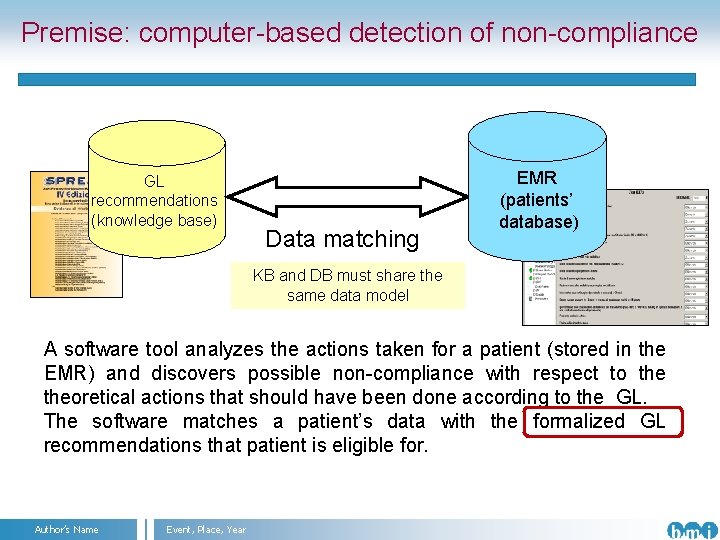
Premise: computer-based detection of non-compliance GL recommendations (knowledge base) Data matching EMR (patients’ database) KB and DB must share the same data model A software tool analyzes the actions taken for a patient (stored in the EMR) and discovers possible non-compliance with respect to theoretical actions that should have been done according to the GL. The software matches a patient’s data with the formalized GL recommendations that patient is eligible for. Author’s Name Angelo Nuzzo Event, Place, Year IIT@SEMM, Milan, 2011
There are common mistakes in GLs formalization that result in wrong recommendations and in “false non compliance” detection Author’s Name Angelo Nuzzo Event, Place, Year IIT@SEMM, Milan, 2011
Are we sure that automatically detected non compliances are real non compliances? Example from stroke GL In patients at high risk of deep venous thrombosis (i. e. presenting with plegic limbs, or reduced consciousness, or obesity or previous lower-limb venous diseases) prophylaxis with heparin […] is recommended starting since hospital admission This recommendation was associated with a big number of non compliances. The explanation came from motivations given by apparently non-compliant physicians Author’s Name Angelo Nuzzo Event, Place, Year IIT@SEMM, Milan, 2011
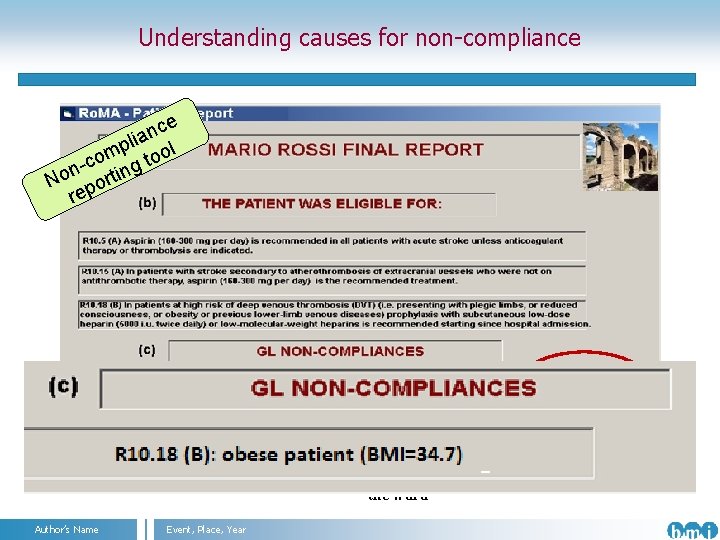
Understanding causes for non-compliance e c n lia l p m too o c n- rting o N po re Mr. Rossi is obese, but he’s always walking around, in his room and in the ward Author’s Name Angelo Nuzzo Event, Place, Year IIT@SEMM, Milan, 2011
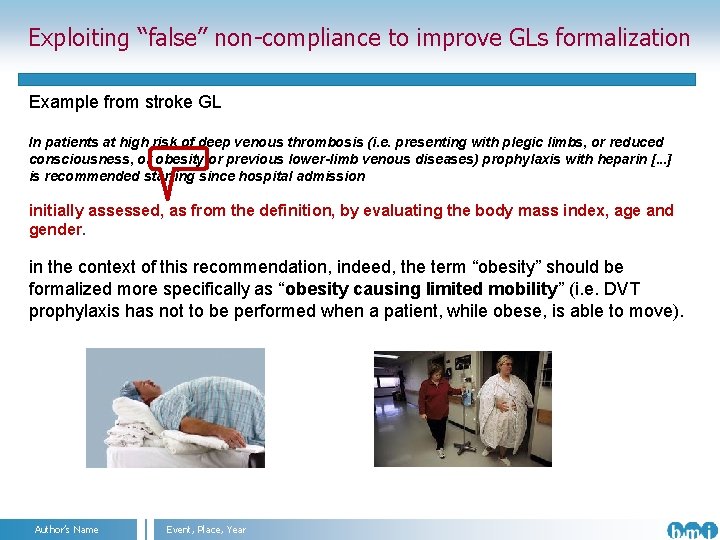
Exploiting “false” non-compliance to improve GLs formalization Example from stroke GL In patients at high risk of deep venous thrombosis (i. e. presenting with plegic limbs, or reduced consciousness, or obesity or previous lower-limb venous diseases) prophylaxis with heparin [. . . ] is recommended starting since hospital admission initially assessed, as from the definition, by evaluating the body mass index, age and gender. in the context of this recommendation, indeed, the term “obesity” should be formalized more specifically as “obesity causing limited mobility” (i. e. DVT prophylaxis has not to be performed when a patient, while obese, is able to move). Author’s Name Angelo Nuzzo Event, Place, Year IIT@SEMM, Milan, 2011
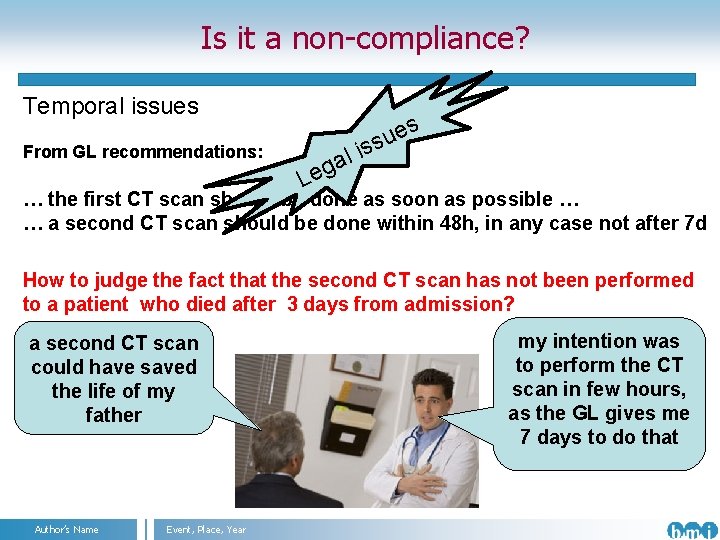
Is it a non-compliance? Temporal issues From GL recommendations: s e u s s i al Leg … the first CT scan should be done as soon as possible … … a second CT scan should be done within 48 h, in any case not after 7 d How to judge the fact that the second CT scan has not been performed to a patient who died after 3 days from admission? a second CT scan could have saved the life of my father Author’s Name Angelo Nuzzo Event, Place, Year IIT@SEMM, Milan, 2011 my intention was to perform the CT scan in few hours, as the GL gives me 7 days to do that
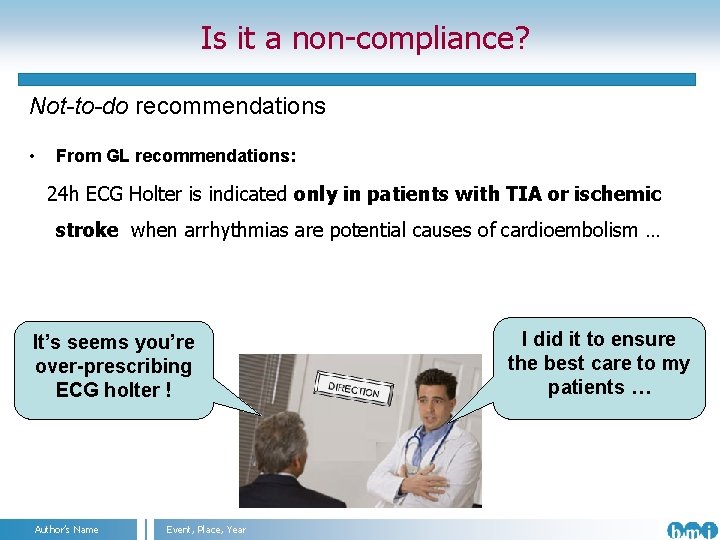
Is it a non-compliance? Not-to-do recommendations • From GL recommendations: 24 h ECG Holter is indicated only in patients with TIA or ischemic stroke when arrhythmias are potential causes of cardioembolism … It’s seems you’re over-prescribing ECG holter ! Author’s Name Angelo Nuzzo Event, Place, Year IIT@SEMM, Milan, 2011 I did it to ensure the best care to my patients …
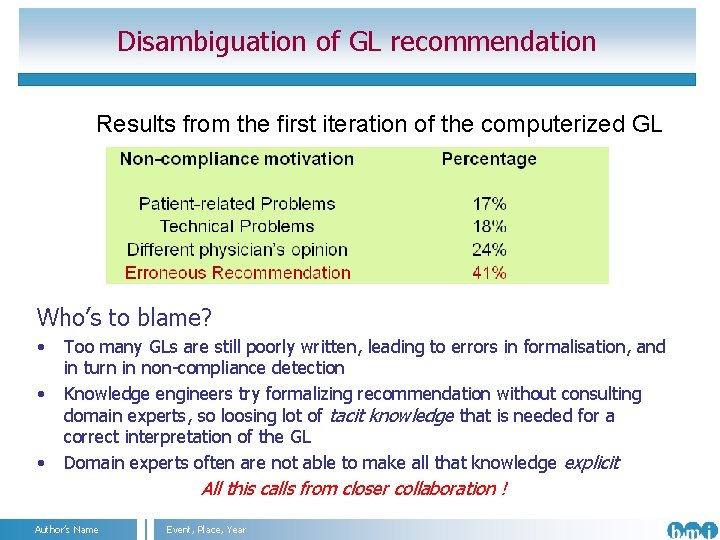
Disambiguation of GL recommendation Results from the first iteration of the computerized GL Who’s to blame? • • • Too many GLs are still poorly written, leading to errors in formalisation, and in turn in non-compliance detection Knowledge engineers try formalizing recommendation without consulting domain experts, so loosing lot of tacit knowledge that is needed for a correct interpretation of the GL Domain experts often are not able to make all that knowledge explicit All this calls from closer collaboration ! Author’s Name Angelo Nuzzo Event, Place, Year IIT@SEMM, Milan, 2011
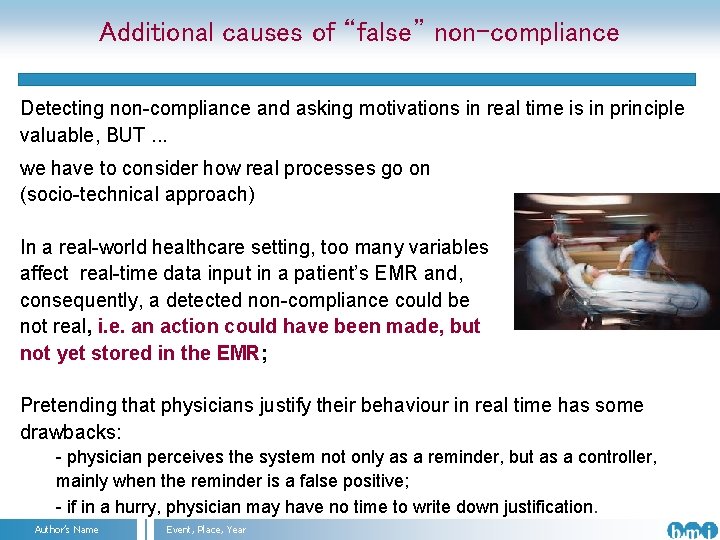
Additional causes of “false” non-compliance Detecting non-compliance and asking motivations in real time is in principle valuable, BUT. . . we have to consider how real processes go on (socio-technical approach) In a real-world healthcare setting, too many variables affect real-time data input in a patient’s EMR and, consequently, a detected non-compliance could be not real, i. e. an action could have been made, but not yet stored in the EMR; Pretending that physicians justify their behaviour in real time has some drawbacks: - physician perceives the system not only as a reminder, but as a controller, mainly when the reminder is a false positive; - if in a hurry, physician may have no time to write down justification. Author’s Name Angelo Nuzzo Event, Place, Year IIT@SEMM, Milan, 2011
Exploiting “True” non compliance Hypothesis: The GL is correctly formalized, data are correctly entered into the EMR. In this case, a detected non compliance is a true non compliance • Non compliance statistics • Comparison of non compliance among different hospitals to improve compliance “by competition” • Correlation of non compliance with health outcomes Author’s Name Angelo Nuzzo Event, Place, Year IIT@SEMM, Milan, 2011
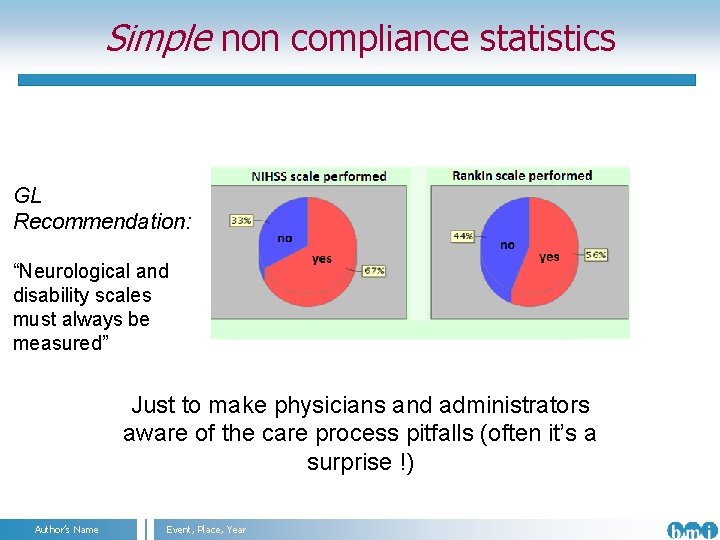
Simple non compliance statistics GL Recommendation: “Neurological and disability scales must always be measured” Just to make physicians and administrators aware of the care process pitfalls (often it’s a surprise !) Author’s Name Angelo Nuzzo Event, Place, Year IIT@SEMM, Milan, 2011
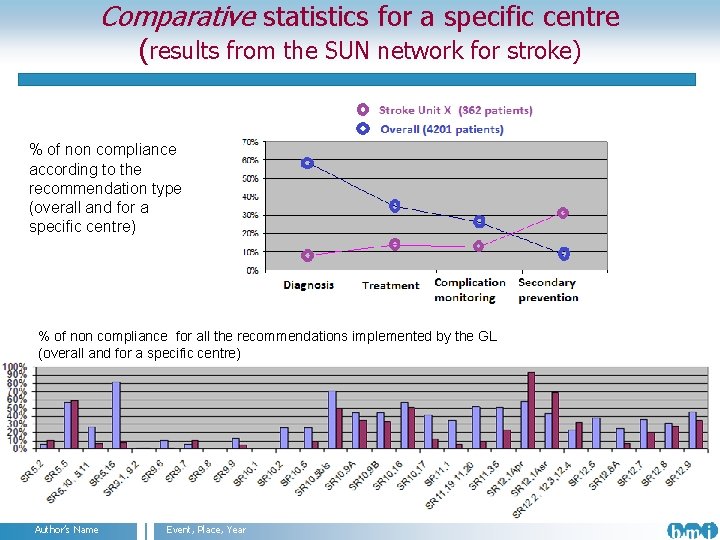
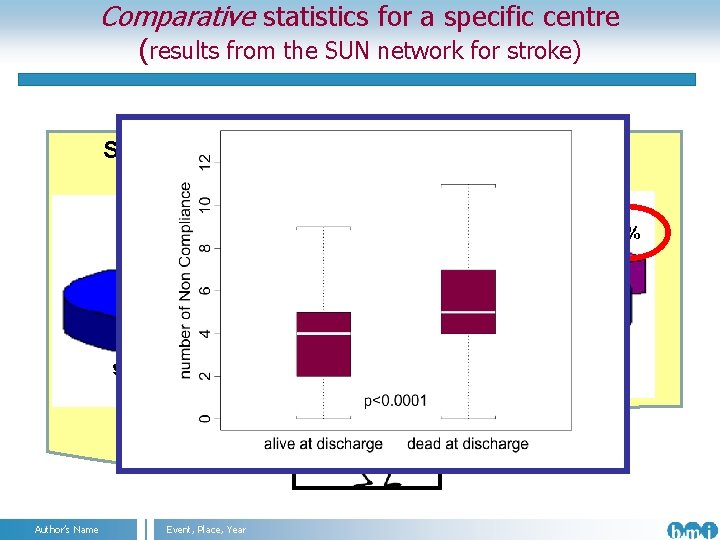
Comparative statistics for a specific centre (results from the SUN network for stroke) % of non compliance according to the recommendation type (overall and for a specific centre) % of non compliance for all the recommendations implemented by the GL (overall and for a specific centre) Author’s Name Angelo Nuzzo Event, Place, Year IIT@SEMM, Milan, 2011
Comparative statistics for a specific centre (results from the SUN network for stroke) Same level centers avg performance Author’s Name Angelo Nuzzo Event, Place, Year IIT@SEMM, Milan, 2011 Your performance
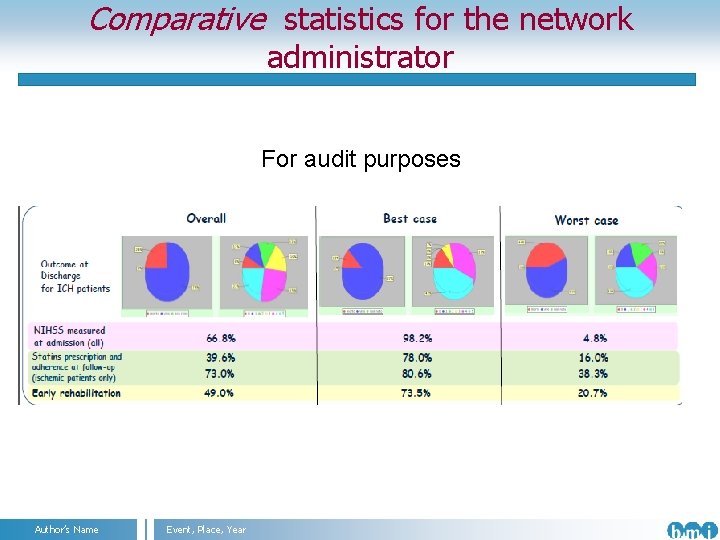
Comparative statistics for the network administrator For audit purposes Author’s Name Angelo Nuzzo Event, Place, Year IIT@SEMM, Milan, 2011
GL compliance and cultural bias Step back to clinical trials, that are the major source of clinical evidence on which guidelines are based Author’s Name Angelo Nuzzo Event, Place, Year IIT@SEMM, Milan, 2011
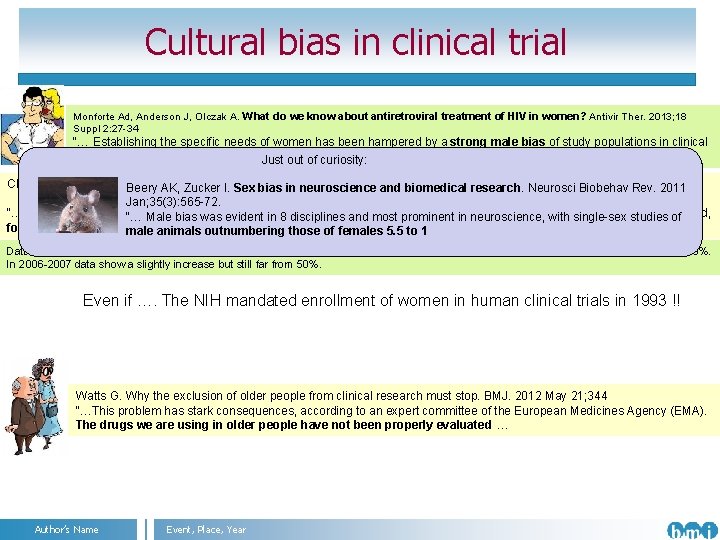
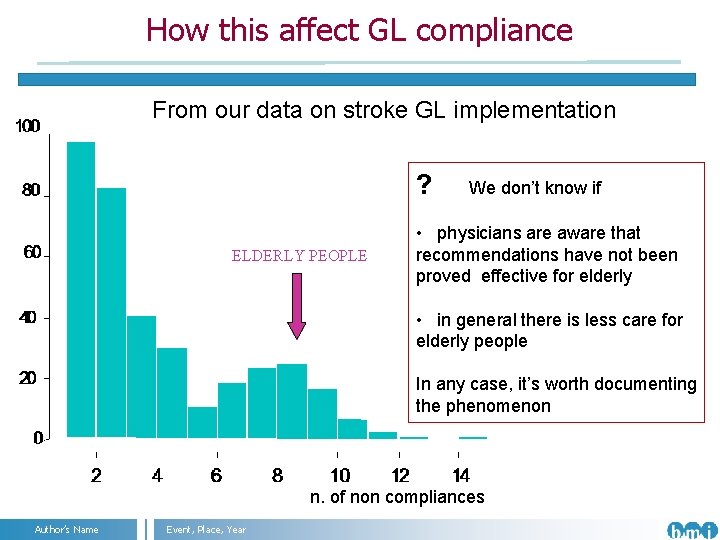
Cultural bias in clinical trial Monforte Ad, Anderson J, Olczak A. What do we know about antiretroviral treatment of HIV in women? Antivir Ther. 2013; 18 Suppl 2: 27 -34 “… Establishing the specific needs of women has been hampered by a strong male bias of study populations in clinical trials resulting in a lack of female-specific data …” Just out of curiosity: Chaves AC, Seeman MV. Sex selection bias in schizophrenia antipsychotic trials. J Clin Psychopharmacol. 2006 Oct; 26(5): 489 -94. Beery AK, Zucker I. Sex bias in neuroscience and biomedical research. Neurosci Biobehav Rev. 2011 Jan; 35(3): 565 -72. “…The sex prevalence of schizophrenia is approximately equal, and yet clinical trials of new therapeutic drugs have been conducted, “… Male bias was evident in 8 disciplines and most prominent in neuroscience, with single-sex studies of for the most part, with male participants…” male animals outnumbering those of females 5. 5 to 1 Data from Food and Drug Administration(FDA) showed that percentage of women in phase I and II clinical studies in 2000 -2002 were only 25%. In 2006 -2007 data show a slightly increase but still far from 50%. Even if …. The NIH mandated enrollment of women in human clinical trials in 1993 !! Watts G. Why the exclusion of older people from clinical research must stop. BMJ. 2012 May 21; 344 “…This problem has stark consequences, according to an expert committee of the European Medicines Agency (EMA). The drugs we are using in older people have not been properly evaluated … Author’s Name Angelo Nuzzo Event, Place, Year IIT@SEMM, Milan, 2011
How this affect GL compliance From our data on stroke GL implementation ? We don’t know if ELDERLY PEOPLE • physicians are aware that recommendations have not been proved effective for elderly • in general there is less care for elderly people In any case, it’s worth documenting the phenomenon n. of non compliances Author’s Name Angelo Nuzzo Event, Place, Year IIT@SEMM, Milan, 2011
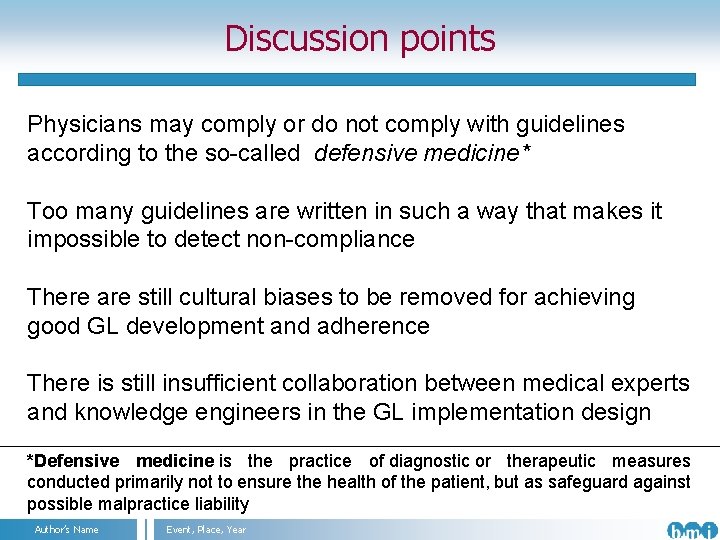
Discussion points Physicians may comply or do not comply with guidelines according to the so-called defensive medicine* Too many guidelines are written in such a way that makes it impossible to detect non-compliance There are still cultural biases to be removed for achieving good GL development and adherence There is still insufficient collaboration between medical experts and knowledge engineers in the GL implementation design *Defensive medicine is the practice of diagnostic or therapeutic measures conducted primarily not to ensure the health of the patient, but as safeguard against possible malpractice liability Author’s Name Angelo Nuzzo Event, Place, Year IIT@SEMM, Milan, 2011
Thank you for your attention Author’s Name Angelo Nuzzo Event, Place, Year IIT@SEMM, Milan, 2011
Thank you for your attention Physicians may comply or do not comply with guidelines according to the so-called defensive medicine* Too many guidelines are written in such a way that makes it impossible to detect non-compliance There are still cultural biases to be removed for achieving good GL development and adherence There is still insufficient collaboration between medical experts and knowledge engineers in the GL implementation design Author’s Name Angelo Nuzzo Event, Place, Year IIT@SEMM, Milan, 2011
How to Detect and Exploit Non-Adherence to Guidelines? Statements for Discussion 1. Standards interfere with innovations 2. Social norms are more powerful than policies in guideline adherence 3. Leaders (experts) are likely to non-adhere to protocols with greater success
How to Detect and Exploit Non-Adherence to Guidelines? Statements (continued) 4. There will usually not be enough detailed information in EHR in order to allow process mining to find useful path and outcome patterns 5. Doctors should not try to deviate from the recommendations that have the highest evidence of being effective in order to address personal patient considerations 6. Patients’ deviations from recommendations should be exploited in order to add contextualized recommendations to clinical guidelines